Showing posts with label grisly murder of journalist Jamal Khashoggi. Show all posts

Saturday, October 05, 2019

Murder And Murderers

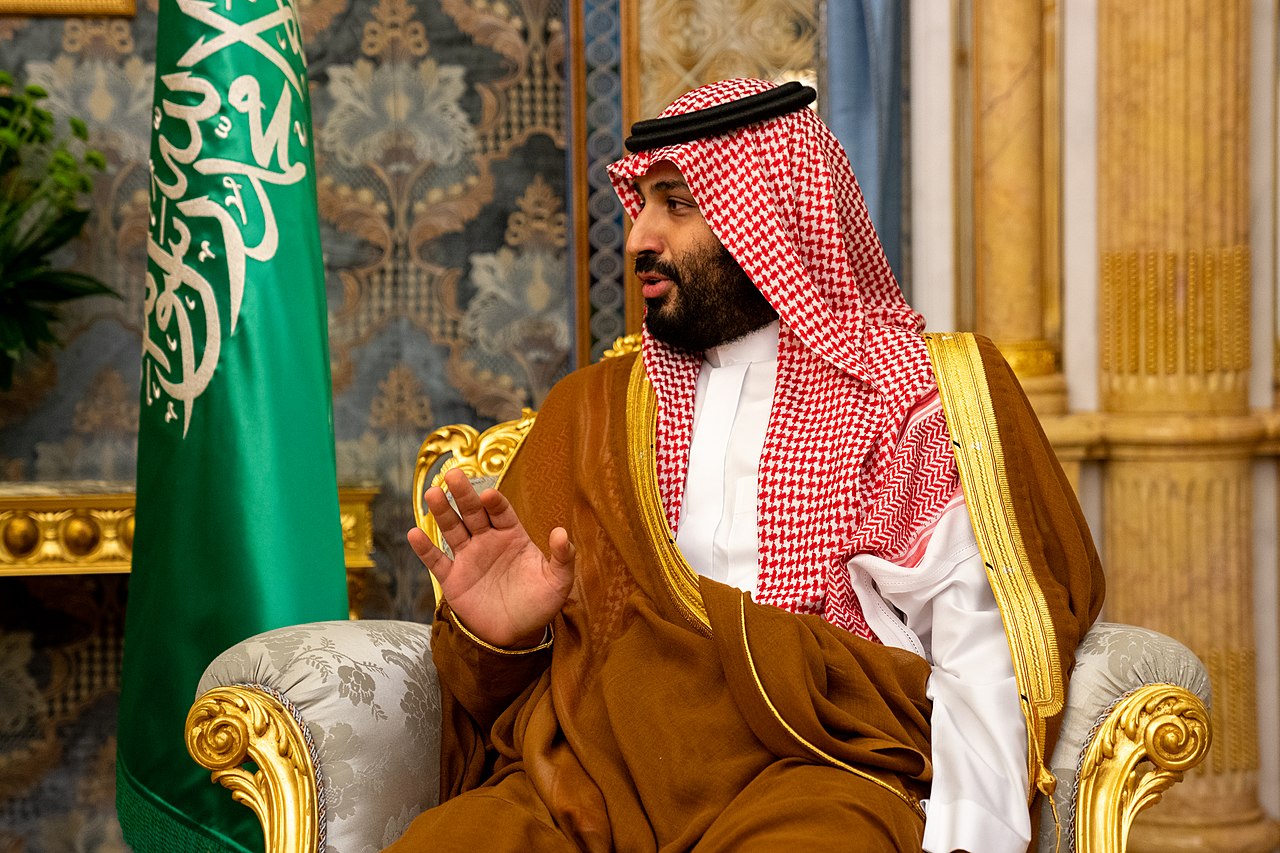
Saudi Crown Prince Mohammad bin Salman (State Department via Wikimedia Commons)
by Lawrence Wilkerson
Last week, Human Rights First and others hosted a panel discussion on Capitol Hill aimed at keeping the brutal murder of Washington Post journalist and Virginia resident Jamal Khashoggi in the forefront of Americans’ thoughts as the one-year anniversary of his death approached. Eleven Members of Congress—five senators and six representatives—made appearances that were more than cameos. They offered serious statements concerning the murder and the perpetrators thereof, the Saudis. Several even declared Mohammad bin Salman, the young Saudi crown prince whose strategic mistakes are embroiling the Kingdom in possibly its worse morass since its creation, culpable of ordering the murder. The majority of the U.S. Intelligence Community backs them up. The important question is: how do those of us who care obtain redress?
As the policy-related attachments to the current military spending bill, the National Defense Authorization Act, or NDAA, make their way through the conference process now occurring with regard to that some $740 billion defense authorization, we need to take note that two such attachments concern respectively Khashoggi’s murder and, very much connected, the horrible war in Yemen. These two attachments, along with several other contentious policy matters, will be the difficult issues in the conferencing process, not the almost three-quarters of a trillion dollars allocated to the military. That part is a done deal.
The Khashoggi policy issue is contained in the provisions of Subtitle K of HR 2500 (the NDAA).  These provisions mirror legislation labeled the Saudi Arabia Human Rights and Accountability Act (HR 2037), which was sponsored by Tom Malinowski (D-NJ) and Ann Wagner (R-MO) and passed the House with an overwhelming bipartisan majority, 405 to 7.  Members of both parties have spoken out repeatedly about the need for accountability for the Khashoggi murder. A companion bill (including the same language) was introduced in the Senate with bipartisan support by Senators Chris Coons (D) and Lindsey Graham (R) (S. 2351).
These NDAA provisions take a measured approach to seeking accountability for Khashoggi’s murder. They properly balance accountability for a gruesome murder with the need to maintain a relationship, for now at least, with Saudi Arabia. The provisions do require a determination of those responsible for the gruesome crime—an approach championed by present and former chairs and ranking members of the Senate Foreign Relations and House Foreign Affairs committees. The provisions also include visa restrictions on those determined to be responsible, subject to a national interest waiver by the president.
The NDAA provisions also include an “off-ramp”:  a statement of precisely what steps the authorities in Riyadh must take in order to terminate the visa restrictions. These steps, such as ceasing the detention and torture of women’s rights activists, enjoy bipartisan support.
The debate over the war in Yemen is more complex. What is now attached to the NDAA (the Khanna-Smith-Schiff-Jayapal amendment) reiterates what was contained in the War Powers Resolution legislation that passed both the House and the Senate but was vetoed by President Trump in April. Most vital in that legislation—and now in the amendment to the NDAA—is the reassertion by the Congress of its Constitutional responsibility vis a vis the war power. That reassertion in the specific case of the heinous war in Yemen would demand that the President cease U.S. support for the prosecutors of that war, principally the Saudis and the Emiratis.
In addition to the killing and wounding of tens of thousands of Yemenis by U.S.-supplied bombs, there are several reasons this particular action is past due. The war has caused a cholera outbreak that is now responsible for the deaths of thousands of Yemenis; rampant starvation that has killed tens of thousands, many of them women and children; and the utter devastation of what was already barely adequate infrastructure in Yemen. Each of these by itself would necessitate a swift end to this war. The conflict is now seen by the region’s people as a proxy war, with the Saudis and the Emiratis acting on behalf of the United States in its increasingly dangerous approach to Iran, which has further diminished U.S. credibility and power in this critical region of the world.
Moreover, the Saudi/Emirati alliance is losing the war—thus, the U.S. is losing the war. Too many lost wars can bring down empires. Consider the retinue: Afghanistan, Iraq, Libya, Syria, and now Yemen.
The only certain way to end this conflict and end it swiftly is to forge a political solution. That can be achieved far more readily if the U.S. withdraws its indispensable support for the war and directs Riyadh to settle its grievances at the diplomatic table. The UAE seems to have already caught a glimpse of this inescapable reality, if its recent actions are any guide. Thus, to bring the right pressure to bear on the White House, the policy provisions on Yemen attached to the NDAA need to stay where they are and accompany the full bill to passage.
In fact, on both policy issues—Khashoogi’s murder and the Yemen War—the results of the conferencing should be—must be—to leave the legislation much as it is and to let it ride. Let it ride to a vote, a vote that President Trump will find extremely difficult to veto.
That vote just might begin the process of achieving justice and accountability for Khashoggi’s murder and bringing an end to one of the most bitter and destabilizing conflicts in the world.
Lawrence Wilkerson served 31 years in the U.S. Army, retiring as a colonel.  He is the Distinguished Visiting Professor of Government and Public Policy at the College of William & Mary.

Monday, July 01, 2019

World Should Support UN Khashoggi Report


World Should Support UN Khashoggi Report
TEHRAN (FNA)- The United Nations expert on extrajudicial killings has called for an international investigation into Saudi journalist Jamal Khashoggi’s death, excoriating the UN for its “paralysis” and Saudi Arabia for its handling of the case.
Presenting the conclusions of her five-month investigation to the Human Rights Council, Agnes Callamard, the UN expert, said that Khashoggi was killed last year in an operation that was carefully planned and endorsed by high-level Saudi officials.
Saudi Arabia had taken some measures to investigate the crime but had failed to address the chain of command, Callamard said, including the role of Crown Prince Mohammed bin Salman, who American intelligence officials have concluded ordered the killing. “A UN criminal investigation is essential in order for these central questions to be addressed,” she said.
Khashoggi’s fiancée, Hatice Cengiz, also urged the United Nations secretary general, António Guterres, to use his influence to garner support for an international investigation. “I want to know who ordered the killing of Jamal and who else knew,” she said in a brief statement to the council. “I want to know where is his body.”
It is now an established fact that Khashoggi was deliberately killed at the hands of state actors and journalists around the world are increasingly seeing the same fate. What’s more, Callamard has determined that Saudi Arabia is “responsible” for the “extrajudicial” murder of Washington Post writer Khashoggi.
This killing was a result of an elaborate mission involving extensive coordination and significant human and financial resources. It was overseen, planned, and endorsed by high level officials and it was premeditated. The right to life is a right at the core of international human rights protection. If the international community ignores targeted killing designed to silence peaceful expression, it puts at risk the protection on which all human rights depend.
Since it occurred at a consulate in Turkey, the killing cannot be considered a “domestic matter” and violates the Vienna Convention on Consular Relations as well as the prohibition against extraterritorial use of force in times of peace, making it an international crime.
There is now the need to establish a UN criminal investigation to ensure the delivery of justice, as the inquiry undertaken by the Saudi authorities was woefully inadequate. The investigation carried out by the Saudi authorities failed to address the chain of command. It is not only a question of who ordered the killing - criminal responsibility can be derived from direct or indirect incitement or from the failure to prevent and protect.
As always, Saudi Arabia continues to deny its involvement and rejected the new report, stating that it is based on “prejudice and pre-fabricated ideas.” While the killing of Khashoggi was brutal, his story is just one of many cases of targeting journalists around the world. This execution is emblematic of a global pattern of targeted killings of journalists, human rights defenders, and political activists.
According to Reporters Without Borders (RSF), 80 journalists were killed, 348 imprisoned, and 60 held hostage in 2018, reflecting an unprecedented level of violence against journalists. Javier Valdez Cárdenas, a Mexican journalist who investigated cartels, was killed in May 2017.
Just days after, Valdez’s colleagues and widow began receiving messages infected with a spyware known as Pegasus, which was bought by the Mexican government from Israeli cyber warfare company NSO Group. According to the NSO Group, Pegasus is only sold to governments for the purposes of fighting terror and investigating crime. However, digital watchdog Citizen Lab found 24 questionable targets, including some of Mexico’s most prominent journalists.
The program has also been used elsewhere by repressive governments such as Saudi Arabia and the United Arab Emirates which target and imprison human rights defenders for their social media posts. In Canada, critic of the Saudi regime and friend of Khashoggi, Omar Abdulaziz, was also infected with the spyware by a Saudi Arabia-linked operator.
However, the time is now for the UN to urge Saudi Arabia to release those imprisoned for their opinion or belief and to undertake an in-depth assessment of the institutions that made the crime against Khashoggi possible. There are clear signs of increasingly aggressive tactics by Saudi Arabia, using Israeli spyware to permanently silence those who criticize the regime. The international community must take stock of these hostile environments, it must take stock of the findings of the UN investigation into the killing of Khashoggi.
Denunciations are important, but they are no longer sufficient. The international community must demand accountability and non-repetition. It must strengthen protections and prevention urgently. Silence and inaction will only cause further injustice and suffering.

Monday, March 11, 2019

Saudi Arabia, Pakistan, and the Bomb

by 

Drawing by Nathaniel St. Clair
On February 19, the Democratic majority of the House Oversight and Reform Committee released an eye-opening interim report.  Based on testimony from “multiple” whistleblowers, the report reveals that the Trump Administration is engaged in a frenzied dash to push through a sale of nuclear reactors to Saudi Arabia without consulting Congress.
Several of the individuals who are promoting the deal, including our old friend General Michael Flynn, are Trump cronies both inside and outside the administration who stand to make a killing if the deal goes through.  If only Iran had had the sense to buy nukes from friends of Trump, it would never have faced sanctions or the threat of a US invasion.
Selling nuclear reactors to the Saudis should cause alarm.  The kingdom claims that it needs nuclear reactors (it has none currently) in order to meet its rising energy needs.  However, the House interim report states that “experts worry that transferring sensitive U.S. nuclear technology could allow Saudi Arabia to produce nuclear weapons that contribute to the proliferation of nuclear arms throughout an already unstable Middle East.”  The Saudis are insisting that the agreement give them the right to enrich uranium and reprocess plutonium from spent nuclear reactor fuel.  Enrichment and reprocessing capability would enable the Saudis to go in a short time from a peaceful, civil nuclear program to producing a bomb.  During an interview which aired on the March 18, 2018 “60 Minutes,” Crown Prince Mohammad bin Salman (“MBS,” as he is known), said: “Saudi Arabia does not want to acquire any nuclear bomb, but without a doubt if Iran developed a nuclear bomb, we will follow suit as soon as possible.”
There is no sign that any of this troubles Trump.  Nothing the Saudis do gets a rise out of the president.  (Maybe Trump just likes anyone in white robes.)  Congress, however, including many Republicans, has had enough of the Saudis.  Like most of us, Congress was appalled by the October 2, 2018 murder of Washington Postwriter Jamal Khashoggi, apparently on Bin Salman’s personal orders.  Trump, on the other hand, retains his doglike fidelity to the crown prince.  One suspects Trump would defend the crown prince even if Bin Salman had shot Khashoggi in the middle of New York’s Fifth Avenue.
On February 13, in a stunning rebuke to the president, the House voted 248-to-177 to invoke the War Powers Resolution and end US support for the Saudis’ genocidal war on Yemen. The measure now goes to the Senate.
Congress may tighten the requirements for nuclear cooperation agreements such as Trump’s prospective reactor sale to the Saudis.  Nuclear cooperation agreements (“123 agreements”) are regulated by the Atomic Energy Act of 1954.  Unfortunately, the Atomic Energy Act does not actually require Congress to assent to a nuclear transfer.  Congress, however, can veto a transfer.  New legislation, pointedly named the Saudi Nuclear Proliferation Act, would change that.  The bill, introduced in the Senate on Feb. 28, strengthens the Atomic Energy Act by requiring that transfers of US nuclear technology to Saudi Arabia be approved by Congress.
If Trump’s nuclear deal dies, as it should, Russia, China, South Korea, and France have also submitted bids to build the Saudi reactors.  Each one of these alternate suppliers has fatal drawbacks.  Henry Sokolski, Executive Director of the Nonproliferation Policy Education Center, writes that “If Saudi Arabia buys Russian, it is all but asking Moscow to let Iran know exactly what the kingdom is doing in the nuclear realm.” Reactors which China and France are building overseas are behind schedule and over-budget.  South Korea’s reactors incorporate American technology, which means that Congress has the power under the Atomic Energy Act to block a Saudi-Korean reactor sale.
The New York Times‘ Nicholas Kristof observes:
Trump seems to believe that the Saudis have us over a barrel: If we don’t help them with nuclear technology, someone else will. That misunderstands the U.S.-Saudi relationship.  The Saudis depend on us for their security, and the blunt truth is that we hold all the cards in this relationship, not them.
The Pakistan Connection
There may be an easier way for the Saudis to acquire nuclear weapons than building their own. I ran across these paragraphs in a postby an Indian blogger:
The Saudis are virtually bankrolling the Pakistani economy — $3 billion in cash, another $3 billion in oil (with deferred payment facility) and anywhere around $20 billion in investments — which makes Pakistan a vassal state.
Besides, the UAE, which is closely aligned with Saudi Arabia, is chipping in with another $6.2 billion aid package.
That’s a lot of cabbage. How will Pakistan pay it back?  One way is by giving Saudi Arabia a bomb.
Rumors of an arrangement or understanding under which Pakistan would transfer nuclear weapons to the kingdom go back to the 1970s when Saudi Arabia provided funding for Pakistan’s nascent nuclear bomb project.  On November 22, 2018, in a story titled “Saudis Want a U.S. Nuclear Deal. Can They Be Trusted Not to Build a Bomb?” the New York Times noted that
The Saudi government provided the financing for Pakistan to secretly build its own nuclear arms…. That financial link has long left American intelligence officials wondering if there was a quid pro quo: that if Saudi Arabia ever needed its own small arsenal, Pakistan could provide it….
The Times goes on to say that there may be an understanding that if Saudi Arabia requests troops from Pakistan, those troops will bring nukes with them.
Some reports allege the RSAF [Royal Saudi Air Force] keeps a couple of aircraft permanently deployed in Pakistan to be able to deliver the bomb to Riyadh on short notice if the King asks for them [sic]. It is impossible to know if these reports have any veracity but the idea makes sense.
Pakistan and Saudi Arabia deny that they have a nuclear agreement.  However, Simon Henderson, an energy expert with the Washington Institute for Near East Policy, agrees that
Saudi Arabia probably already has a nuclear weapons capability, courtesy of Pakistan.  The assumption is that Pakistan’s nuclear-tipped missiles could be sent to the kingdom, either to boost Saudi deterrence against Iran or to safeguard part of Pakistan’s strategic force in time of crisis with India….
Pakistan is currently in a crisis with India, one which may escalate to nuclear war.  For decades, Pakistan has trained, equipped, and given safe haven to jihadi groups which it uses as proxies for attacks on India. On February 13, an attack by militant group Jaish-e-Mohammad in Indian-occupied Kashmir killed 40 Indian paramilitary police.  India has accused Pakistan of backing Jaish-e-Mohammad.
Since then, each side has carried out air attacks on the other’s territory, and each nation has claimed to have shot down the other’s warplanes.  There has been firing across the Line of Control that divides Kashmir between Pakistan and India.  Pakistan Prime Minister Imran Khan has met with the country’s National Command Authority, which controls Pakistan’s nuclear arsenal.  The crisis could spiral into a full-scale war. [1]
The Man with the Golden Gun
Christopher Clary and Mara E. Karlin predicted in 2012 that it is “likely that Pakistan will provide nuclear weapons technology [to Saudi Arabia] if it is seeking to replace U.S. aid following a possible future rupture in the relationship [with the US].”  Complaining that the Pakistanis “don’t do a damn thing for us,” President Donald Trump slashed $300 million of aid to Pakistan in September.  Like his predecessors in the Oval Office, Trump has wearied of Pakistan’s empty promises to crack down on militant groups which attack NATO forces in Afghanistan. Bush and Obama tried using financial pressure to force Pakistan to sever its ties with militants.  Now it’s Trump’s turn to try what has never worked in the past.  The danger is that US pressure could backfire, driving Pakistan closer to Riyadh.
Contrast the royal treatment Pakistan is receiving from Riyadh.  MBS made a state visit to Pakistan in February.  During his two-day visit, the Pakistanis treated the Saudi crown prince like a rock star.  Pakistan lavished MBS with gifts, including—no joke—a gold-plated submachine gun.  Pakistan’s jubilance is understandable.  Bin Salman has promised Pakistan $20 billion in Saudi investments, throwing a lifeline to Pakistan which is in one of its recurrent fiscal crises.  Commentators say that MBS has cemented Pakistan’s membership in the Sunni alliance against Iran.
We are left with a puzzle.  Suppose it’s true that Saudi Arabia can get nukes from Pakistan at any time just like ordering a pizza.  Does that mean that the Saudis are telling the truth and only want nuclear reactors in order to generate electricity?  Then why is Riyadh insisting on ENR as part of a nuclear cooperation agreement with Washington?  Is the Saudis’ rumored “understanding” with Pakistan bogus?  Maybe, maybe not.  If Riyadh does have an understanding with Pakistan it’s in order to hedge against Iran going nuclear.  Riyadh may now have decided to build its own bomb in order to hedge against a possibly unreliable Islamabad—hedging on top of hedging.
The Saudis cannot be trusted with nuclear reactors.  Yet despite the revelations from the House Oversight Committee’s report, the Trump Administration appears still to be moving ahead with the sale.  As recently as February 12, President Trump personally met with representatives from America’s nuclear industry.  This is only to be expected from a president not given to playing anything safe.  Or smart.
Notes.
[1]  Pakistan-backed militants are also making trouble for Iran.  A suicide attack on February 13 killed 27 members of Iran’s elite Islamic Revolutionary Guard Corps.  This was “one of the deadliest attacks in years to strike Iran,” according to the New York Times.  The Pakistan-based Jaish al Adl(“Army of Justice”), which the Timeswrites has ties to Al Qaeda, has claimed responsibility for the attack.  Iran’s Sistan-Baluchestan Province, where the attack took place, borders Pakistan.
Charles Pierson is a lawyer and a member of the Pittsburgh Anti-Drone Warfare Coalition.

Sunday, October 28, 2018

Khashoggi Case to Result in Bin Salman’s Overthrow: Analyst

By
 IFP Editorial Staff
 

A senior political analyst says the recent murder of Saudi dissident journalist Jamal Khashoggi in Istanbul will probably lead to the overthrow of the Kingdom’s Crown Prince Mohammed bin Salman as a compromise between the US and its regional allies.
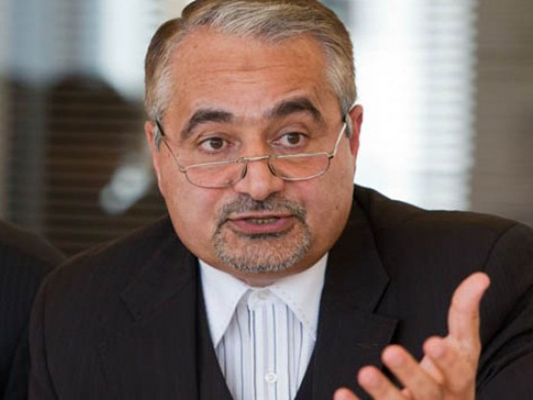
Seyyed Hossein Mousavian, a senior fellow at Princeton University and a former Iranian diplomat, maintains that Saudi Arabia was forced by the White House to admit that Khashoggi had been killed in its consulate in Turkey as the US was under huge international pressure over its ally’s crime.
Seyyed Hossein Mousavian
According to Mousavian, the US will not sacrifice its lucrative business with Saudi Arabia over the Khashoggi case, but will finally have to accept the removal of the ambitious crown prince as a compromise.
Mousavian made the comments in a recent interview with Khabar Online news agency, the full text of which follows:
Q: What is your analysis of Khashoggi’s death? Some believe that the murder was intentional and carried out with the main goal of tarnishing Saudi Arabia’s face in the world.
A: It’s not a correct hypothesis. The mainstream media and reliable sources in the US and Europe have no doubt that a team of Saudi commandos had been dispatched by Saudi Crown Prince Mohammed bin Salman to Istanbul to carry out the murder. It is not clear yet whether or not the order of Khashoggi murder was issued earlier or not. There is a possibility that the team was assigned to merely kidnap Khashoggi but he was killed in clashes with the team’s members. Then the team may have decided hurriedly to dismember his dead body with or without coordination with Riyadh and left Istanbul immediately.
Q: How do you see Saudi Arabia’s confusion in dealing with the case?
A: Saudi Arabia confirmed Khashoggi’s murder for three reasons. First, the Turkish government had key information on the murder and was not ready to bargain over it because this could seriously damage its political and security reputation.
Second, the Washington Post daily was determined to unveil the hands behind the murder and to this end, it had the support of other mainstream media like the New York Times and CNN.
Third, the Turkish intelligence and security apparatus began to leak the details of the murder gradually through Aljazeera TV channel and a number of leading Turkish media. Aljazeera played a key role in provoking the world’s public opinion against Saudi Arabia. Through this scenario, Qatar took a heavy revenge against Saudi Arabia over its isolation plot. Finally, the pressures on the White House forced Trump to send his Secretary of State to Riyadh to urge Saudi officials to accept responsibility for Khashoggi’s murder and vow to punish the perpetrators.
Q: How do you see the future of the US-Saudi relations? Can the US impose sanctions on its regional ally?
A: It goes without saying that the Khashoggi case could hamper the two sides’ relations but they won’t ever sacrifice the ties for such a case. Of course, if Washington comes under pressure, it would sacrifice bin Salman to its own interests but it would never abandon Saudi Arabia as its ally in the region.
Q: How do you assess Turkey’s role in the case? Is Turkish President Recep Tayyip Erdogan trying to gain concessions over the case? Shall we say that the US is using Turkey as a proxy to handle the case?
A: Unlike previous cases, Erdogan has dealt with Khashoggi’s murder deliberately. He was angry with bin Salman and Trump. Now he has punished them severely by focusing on the case. But the more sensitive section of the case is still untold. Ankara has information that confirms bin Salman’s complicity in the case. If Ankara keeps disseminating information on the case, Washington will have no way but to topple bin Salman. Otherwise, it has to give big concessions to Turkey.
Q: What is your idea about the international reactions particularly those of Arab states as well as the silence of many others?
A: The Arab world is a dead and useless world and we shouldn’t expect anything considerable from them. Most of the Arab states not only remained silent towards the US decision to relocate its embassy from Tel Aviv to Jerusalem-al-Quds but also cooperated with Tel Aviv behind the curtain.
Q: How can Iran take advantage of the current political situation in the region? As we know, Russia has stepped into the fray to drag Saudi Arabia into its court against the US. What is your analysis about the issue?
A: Iran has reacted deliberately. If Iran had rushed to show reactions against Riyadh, the western media would point the finger of blame at our country instead of Saudi Arabia. They would also revive all the accusations they had levelled against us over the past four decades. Today, the Israeli lobby groups in the US are highly active to alleviate Washington’s pressure on Saudi Arabia under this pretext that Iran will gain benefit if Saudi Arabia comes under pressure. I think the fate of bin Salman is at the hand of Washington. Tehran and Moscow will have no say in this issue.
Q: How do you see the future of this international controversy? How can it be ended?
A: This is not just a murder. The earlier mistakes by bin Salman like his war on Yemen, taking Lebanese Prime Minister Saad al-Hariri as hostage, putting sanctions on Qatar and arresting tens of Saudi prince have cast doubt on his ability to serve as the Saudi king. Now, the murder of Khashoggi serves as putting a match to a barrel of gunpowder. Khashoggi was one of the main contributors of Washington Post and his murder shocked the world. So, all mainstream media in the US and the world have been mobilized to overthrow bin Salman.
This comes as the US national interests require that Saudi Arabia remains its main ally. So, the issue has become more complicated. It seems that, at the end of the day, bin Salman may be toppled and the US won’t go further.

Tuesday, October 23, 2018

Human pigs find pleasure in fights so avoid them when possible

By: Martin Love

Human pigs find pleasure in fights so avoid them when possible
TEHRAN, Oct. 22 (MNA) – Oddly enough, but not surprisingly, I had a bit of an altercation this past week with one Josh Block on Twitter. I hurled a condemnation at a post of his, and he hurled one back at me and called me an “anti-Semite” and a bit more.
To his invective, I did not respond, recalling British play writer George Bernard Shaw who wrote decades ago that tangling with pigs was bound to be unproductive and that pigs actually LIKE a fight, that fighting with them gives them pleasure.
Who is Block, or should I say “Blockhead”? Well, he is CEO and president of an organization called The Israel Project, based in Washington and Jerusalem, that is a lobbying organization providing pro-Zionist talking points to the public and to journalists aimed at giving people a “more positive public face” to Israel. Block formerly worked for several hawkish, pro-Zionist lobby groups in the US including AIPAC.
Given headlines around the world claiming that Saudi Arabia under Muhammad bin Salman had carried out the grisly murder of journalist Jamal Khashoggi, a Saudi citizen who was writing for the Washington Post, Block was going whole hog, literally, to try to exonerate the theocratic dictatorship over the apparent murder of Khashoggi.
 Block tweeted that Khashoggi was “a radical Islamic terrorist who was close to Osama bin Laden, ISIL, and Hamas who wanted to overthrow the Saudi ruling royals who oppose both Sunni terrorists, sponsored by Turkey and Qatar, as well as Iran’s Shia terrorist armies and allies.”
Block is about as twisted as anyone can be, so let’s just make a few honest, valid points. 
First of all, Khashoggi was by all accounts a Saudi patriot and as far as Arab journalists go, which could be debatable as a general matter anyway, a good one for decades. He was quite liked by colleagues at the very “establishment” and largely pro-Israel Washington Post, for one thing. His last column for the paper, printed I think after his disappearance, focused almost exclusively on his insistence that the Arab world, and especially Saudi Arabia, promote a free press, or at least a much freer one than has been witnessed in many years. 
Another point must be that, even if it has not been trumpeted in the Western media, Saudi Arabia has funded “terrorists”, Sunni terrorists, like no other Arab country, particularly of late in Syria, and Israel (and the US) has also funded and supported terrorists with arms and money, including al-Qaeda (however it may have been renamed) as well as ISIL – all with the aim to topple Assad in Syria and other alleged “enemies” of chaos in the Mideast.
 Israel has frequently sheltered ISIL and other terrorists with other organizations near the Golan, and given medical attention to those in need of it. As for the US, Trump and even Obama aided ISIL repeatedly in Syria – all the while falsely claiming that the US was IN Syria to destroy ISIL. In fact, were it not for Iran and Russia and of course the Syrian army, ISIL would still be rampaging, and what remnants of ISIL that still remain in Syria, well, they are sheltered to some extent near US troops in the east of that country.
In any event, it’s a positive that some in the US Congress are condemning MBS and Saudi Arabia for Khashoggi’s murder, and also at least hinting about a need to cut at least some ties to the Saudis and even, possibly, withdrawing support for the Saudi-led war on Yemen.
One big obstacle is that the Saudis could threaten the so-called “Petrodollar” in retaliation and also dump further arms purchases from the US but don’t expect much from the Trump Administration in this respect unless pressure is augmented by world opinion. Trump has been careening back and forth between condemnation of the current Saudi leadership and trying to cast blame for the murder on some alleged “rogue” Saudi elements or individuals in an effort to exonerate MBS.
As for aggressive Jewish/Zionists lobbyists like Josh Block, their primary concern in trashing Khashoggi and lying about him and virtually suggesting that he deserved to be murdered, is all tied up with the Zionist desire for the US to lead a war on Iran – which could not be started or executed without the full support and participation of Saudi Arabia.
 Because, simply, it would hardly look at all good for the Israelis and the US alone to launch a military attack on Iran. World condemnation would be off the charts and could well end US and Zionist aggressions in future. The Khashoggi matter, if it does result in real condemnation of the Saudis and MBS by the US, severely disrupts those in Israel and the US Neocons who have been pushing for a war on Iran.
As for MBS himself, he is not and never has been a serious social (or any other kind of) reformer. Anyone who spends a billion dollars on a yacht and a palace or something in Europe is frankly not worthy of respect on that alone. It was almost funny this week to hear New York Times columnist Tom Friedman, who was charmed by MBS and wrote glowingly about alleged “reforms” MBS was going to institute, struggling to defend himself in light of the apparent fact of the murder of a well-known Arab journalist who worked at the primary rival of the New York Times. People like Friedman and others of his ilk, apologists for Israeli criminality, should live in infamy.