Showing posts with label Naftali Bennett. Show all posts

Tuesday, December 10, 2019

Israel’s War Minister Naftali Bennett Threatens Iran

By Stephen Lendman

Israeli ruling authorities are the most extremist in Jewish state history. Arab MKs aside, the vast majority of Knesset members are militantly hardline racists, threatening regional peace and stability.
New Right party head Naftali Bennett earlier held various ministries, including Education, Economy, Religious Services and Diaspora Affairs.
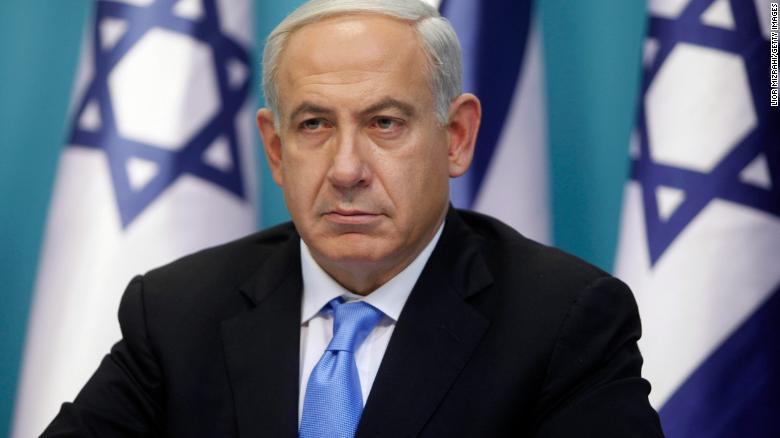
In early November, Netanyahu appointed him war minister, giving up the portfolio he held, a way for the embattled prime minister to buy Bennett’s loyalty, the move unrelated to security issues at a time Israel’s only foreign threats are invented. No real ones exist.
At the time, Haaretz said Netanyahu and Bennett struck “a cynical bargain” even for Israel’s extreme politics, a move the PM hoped would aid his political survival.
Bennett represents settler interests. The son of US immigrants, he’s one of Israel’s super-rich class.
Earlier he led the Jewish state’s hardline Yesha Council umbrella group, representing settler interests. It replaced Gush Emunim (Block of the Faithful).
GE adherents believed all Judea, Samaria, and Gaza land belongs exclusively to Jews, the view shared by Yesha Council hardliners.
Expanding settlements and displacing their longtime Palestinian residents reflects core Israeli policy.
Bennett earlier encouraged settlers to shoot Palestinians, saying “(a)gainst the cowardly Arab terrorism, a wave of Jewish courage is rising to defeat it.”
He bragged about “kill(ing) lots of Arabs in my life (during military service). There’s no problem with that,” he stressed.
Earlier he said “(t)he time has come to say Israel is ours to go from strategic defense to a process of initiating the implementation of Israeli sovereignty over the territories under Israeli control in Judea and Samaria,” adding:
“We need to mark this as a strategic objective and stop the misunderstood message sent from Israel abroad.”
“The approach that I’m promoting is reasonable, sane. In the Middle East, we don’t have the luxury to indulge in fantasy.”
Seeing no prospect of Israeli/Palestinian peace, he called for “realism” on what’s achievable – regardless of world opinion, international law and fundamental Palestinian rights.
He opposes a two-state solution and Palestinian self-determination, wanting occupation harshness maintained.
In an earlier NYT op-ed, he said the following:
“(A) Palestinian state, if established, would be taken over by ISIS, Hamas and Islamic Jihad (as) a launching pad for attacks against our citizens…It is a risk Israel cannot take (sic).”
Over the weekend he threatened Iran, saying:
“We are telling the Iranians: Syria will become your Vietnam. If you don’t leave, you will become entrenched and you will bleed because we will work without hesitation to remove aggressive forces from Syria (sic),” adding:
“It is no secret that Iran is trying to establish a ring of fire around our country (sic). It is already based in Lebanon and is trying to establish in Syria, Gaza and more (sic).”
“We need to move from containment to attack.”
His remark followed Israel’s latest preemptive airstrike on Syrian targets near the Iraqi border on Saturday, an area struck many times before.
Separately, Israeli foreign minister Israel Katz said terror-bombing Iran is “an option — threatening to “launch hundreds of Tomahawk missiles at Tehran,” adding:
“We will not allow Iran to acquire or stockpile nuclear weapons” it doesn’t have or seek in stark contrast to nuclear armed and dangerous Israel.
“If that is the last option, we will act militarily. The threat of sanctions is not enough. The only deterrent is a military threat directed against” Tehran, said Katz.
The myth of an Iranian nuclear or other threat is a longstanding canard. Left unexplained is that Iran hasn’t attacked another country in centuries.
It threatens none now except in self-defense if attacked, it legal right under binding international law the US, NATO, Israel, and their imperial allies breach time and again with impunity.
Award-winning author Stephen Lendman lives in Chicago. He can be reached at lendmanstephen@sbcglobal.net. He is a Research Associate of the Centre for Research on Globalization (CRG)
His new book as editor and contributor is titled “Flashpoint in Ukraine: US Drive for Hegemony Risks WW III.”

Friday, November 01, 2019

70 years of shooting refugees

Jake Batinga
Despite Israel’s brutality, Palestinians have insisted for seven decades that the right of refugees to return home be upheld. 
Ashraf AmraAPA images
Since March 2018, weekly protests – known as the Great March of Return – have been held in Gaza.
The demonstrators are insisting that people uprooted by Zionist forces during the Nakba – the 1948 ethnic cleansing of Palestine – be allowed to go home. This right of return has been recognized by United Nations General Assembly resolution 194, passed in December 1948.
Israel has responded brutally to demands that this basic right be upheld. More than 210 Palestinians have been killed during the Great March of Return and more than 9,000 have been injured by live fire.
As well as insisting that the right to return be respected, Palestinian refugees have occasionally attempted to exercise that right over the past seven decades. In doing so, they have been treated with extreme violence.
In the years following the adoption of UN resolution 194, large numbers of people living in Gaza tried to cross the boundary with Israel, a newly established state. In an Orwellian turn of phrase, the Israeli authorities designated these returning refugees as “infiltrators.”
In his book Israel’s Border Wars, the historian Benny Morris writes that the so-called infiltration was “a direct consequence of the dispossession of hundreds of thousands of Palestinians.”
Refugees sought to reunite with family, tend crops, recover lost possessions and, of course, see their old homes.

Firing “at anything that moved”

Israel’s Border Wars was published in 1997 – seven years before Morris argued that Zionist forces should have expelled all Palestinians in the 1940s. Despite his attempts to defend ethnic cleansing, Morris has never repudiated the important facts he had previously unearthed.
And we can continue to learn a considerable amount from his work about crimes committed in the name of Israel and its state ideology Zionism.
He recounts, for example, how Israel operated a “free fire” policy on refugees seeking to return home. According to Morris, Israeli forces “fired at anything that moved” and often executed injured refugees “on the spot.”
Between 2,700 and 5,000 refugees were killed under the free fire policy, the vast majority of whom were unarmed civilians, from 1949 to 1956. Furthermore, “no Israeli soldier, policeman, or civilian was ever tried for shooting and killing an unarmed Arab infiltrator,” Morris writes.
While Palestinian refugees were slaughtered for attempting to exercise their right of return, Israel’s parliament, the Knesset, passed the cynically titled “Law of Return” in 1950. It granted Jews from around the world the right to gain Israeli citizenship and live in Israel.
Immigrants to Israel, many of whom were Holocaust survivors, often settled in the vacant homes of Palestinian refugees.
Another policy implemented against Palestinian refugees seeking to go home was known as “retaliation.”
Israel “retaliated” by raiding villages in Jordan, Egypt, Gaza, and Syria. These raids were meant to punish communities that had allegedly helped returning refugees.
In his book The Iron Wall, the historian Avi Shlaim writes that the reprisals were effectively “a form of collective punishment against whole villages.”
One notable case of “retaliation” occurred during October 1953 in the Jordanian village of Qibya.
According to Shlaim’s book, Israeli commandos raided Qibya, forced the residents to stay in their homes, then blew up the houses with everyone still inside. At least 69 people were killed, most of them women and children.
The leader of this raid was a young commander named Ariel Sharon, who would later be dubbed the “butcher of Beirut” for his role in the 1982 mass slaughter at Sabra and Shatila, Palestinian refugee camps in Lebanon.

Shifting the blame

Israel has consistently sought to shift the blame for its own violence.
In the 1950s, the Israeli government blamed Arab governments and Palestinian refugees themselves. According to Shlaim, Israel claimed that the killing of civilians was a “legitimate form of self-defense.”
Identical – or almost identical – words are used by Israel’s political leaders today.
Benjamin Netanyahu, Israel’s prime minister, has invoked “self-defense” to try and justify the killing of unarmed protesters in Gaza. After one Israeli massacre in Gaza last year, Netanyahu claimed the state was acting “to protect its sovereignty and the security of its citizens.”
When a video was broadcast which showed Israeli troops gleefully cheering and laughing as a sniper shoots a protester, Israeli politicians rushed to defend the troops.
Avigdor Lieberman, then Israel’s defense minister, stated that the sniper in the video “deserves a commendation.” Naftali Bennett, also a government minister at the time, said that “judging soldiers because they are not expressing themselves elegantly while they are defending our borders is not serious.”
Today, the Israeli government smears Gaza protesters as “terrorists.” Benny Morris has noted how “infiltrator” – the term applied to Palestinian refugees seeking to go home – quickly became synonymous with “terrorist.”
And just as the Israeli authorities tried to evade responsibility for its attacks on Arab neighbors in the 1950s, today’s politicians try to blame Hamas for the deaths of protesters in Gaza.
Lieberman has alleged that “no innocent civilians” have taken part in Gaza’s protests, which he has nicknamed the “march of terror.” All the protesters, according to Lieberman, have been Hamas members.
Another pattern can be discerned. Palestinians fought for their rights in the years immediately following the Nakba, as they are doing in the 21st century.
Israeli brutality continues – and so does the struggle against it.
Jake Batinga is a California-based writer and activist. He lived in the occupied West Bank city of Hebron, while working with the International Solidarity Movement, documenting human rights abuses by the Israeli army and settlers.

Monday, December 03, 2018

Netanyahu’s Predicament: The Era of Easy Wars is over

When Israeli Prime Minister, Benjamin Netanyahu, ordered his army to carry out a limited operationin the besieged Gaza Strip on November 12, he certainly did not anticipate that his military adventure would destabilize his government and threaten the very survival of his right-wing coalition.
But it did, far more than the multiple police investigations into variouscorruption cases involving Netanyahu’s family and closest aides.
Thanks to the botched operation in Gaza which led to the killing of seven Palestinians and an Israeli army commander, Netanyahu’s coalition has begun to disintegrate, merely needing a final push for it to collapse completely.
It all began with the resignation of the country’s extremist Defense Minister, Avigdor Lieberman, who quit his post, two days after the Gaza attack, in protest of the country’s ‘surrender’ to Palestinian Resistance.
The even more extreme, far-right leader, Naftali Bennett, was expected to pounce on the opportunity and follow suit. He did not, in a calculated move aimed at capitalizing on the fact that he had suddenly become the government’s ultimate kingmaker.
Now, Netanyahu’s once stable coalition is hanging by a thread, with the support of only 61 members in the Knesset.
This means that the coalition’s once comfortable majority is now dependent on a single MK. One wrong move, and Netanyahu could find himself forced into snap elections, a choice that, at least for now, he dreads.
Netanyahu’s options are growing limited. It seems that the age of striking Gaza with impunity in order to score political points with Israeli voters, is, perhaps, over.
While much political commentary is being dedicated to Netanyahu’s future and the dirty politicking of his right-wing coalition, Israel’s burgeoning problem is bigger than any single individual.
Israel’s ability to win wars and translate its victories to political concessions from Palestinians and Arabs have been greatly hampered, and this fact has little to do with Netanyahu’s supposed ‘weakness’, as his Israeli detractors often claim.
Some Israeli politicians, however, still refuse to accept that the violence paradigm is changing.
Almost every time that Israel has attacked Gaza in the past, Israel’s own politics factored greatly in that decision.
Gaza has been used as a stage where Israel flexed its muscles and displayed the latest of its war technology.
The 2014 war – dubbed ‘Operation Protective Edge’ – was, however, a wakeup call for the over-confident Israeli leaders.
More than 2,300 Palestinians were killed in that war and over 17,000 were wounded, the vast majority of them being civilians.
While that is quite consistent with the Israeli war trajectory, the number of Israeli casualties indicated a changing trend. 66 Israeli soldiers were killed in that war, and only a few civilians, indicating that the Palestinian Resistance has abandoned the randomness of its past tactics and grown bolder and more sophisticated.
Four years since that war, coupled with a particularly harsh stage of the siege – which has been imposed on Gaza since 2007 – did not change the equation. In fact, the fighting that was instigated by the latest Israeli attack further accentuated the fact.
As Israel pounded Gaza with a massive bombing campaign, Gaza fighters filmed a rare attack using anti-tank missiles that targeted an Israeli military bus on the Israeli side of the fence.
Hours later, a truce, facilitated by Egypt, was announced, to the relief of Netanyahu and the jubilation of Palestinians, who marched in their thousands celebrating the end of fighting.
Considering the disproportionate military power and desperate humanitarian situation in Gaza, it makes perfect sense why Palestinians perceived the outcome as a ‘victory’.
Israeli leaders, not only on the Right but the Left as well, attacked Netanyahu, who understood that continued fighting would lead to another major war, with most unpredictable outcomes.
Unlike Lieberman, Bennett and others, Netanyahu’s political strategy is not only driven by attempting to pacify Israel’s angry public – many of whom protested the Gaza truce in various parts of the country.
The Israeli Prime Minister has a twofold political outlook: laboring to politically divide Gaza from the West Bank, and maintaining a degree of ‘stability’ that would give time and space for American political maneuvering in preparation for Donald Trump’s so-called ‘Deal of the Century.’
Moreover, Israel’s growing challenge in Syria and Lebanon makes a prolonged military operation in Gaza quite dangerous and unsustainable.
But the pressure on the home-front is relentless.
74 percent of the Israeli public is ‘dissatisfied’ with Netanyahu’s performance in the latest round of fighting in Gaza, according to an Israel Television News Company poll released soon after the truce was announced.
Yet Netanyahu has no other option but to commit to the truce in Gaza, which, as per Israeli political logic, means that he must stir trouble elsewhere to send a message of strength and prowess to the disquieted public.
This is precisely why Netanyahu renewed his threats of ethnically cleansing the population of Khan al-Ahmar in the Occupied West Bank.
“It will be demolished very soon,”he declared, in an attempt to move the conversation from Gaza to elsewhere, and to regain the confidence of his right-wing constituency.
While Gazans are getting a badly needed respite, however fleeting, Khan al-Ahmar residents will now become the main target for Israel’s political violence and chauvinism.
The question is how long will Israel be able to sustain this violent paradigm and what will it take for the international community to hold Tel Aviv accountable?
As for Palestinians, Gaza has demonstrated that only Resistance, popular or otherwise, works. It is the only language that registers with Israel, who must understand that the age of easy wars is long gone.
– Ramzy Baroud is a journalist, author and editor of Palestine Chronicle. His latest book is The Last Earth: A Palestinian Story (Pluto Press, London, 2018). He earned a Ph.D. in Palestine Studies from the University of Exeter and is a Non-Resident Scholar at Orfalea Center for Global and International Studies, UCSB.