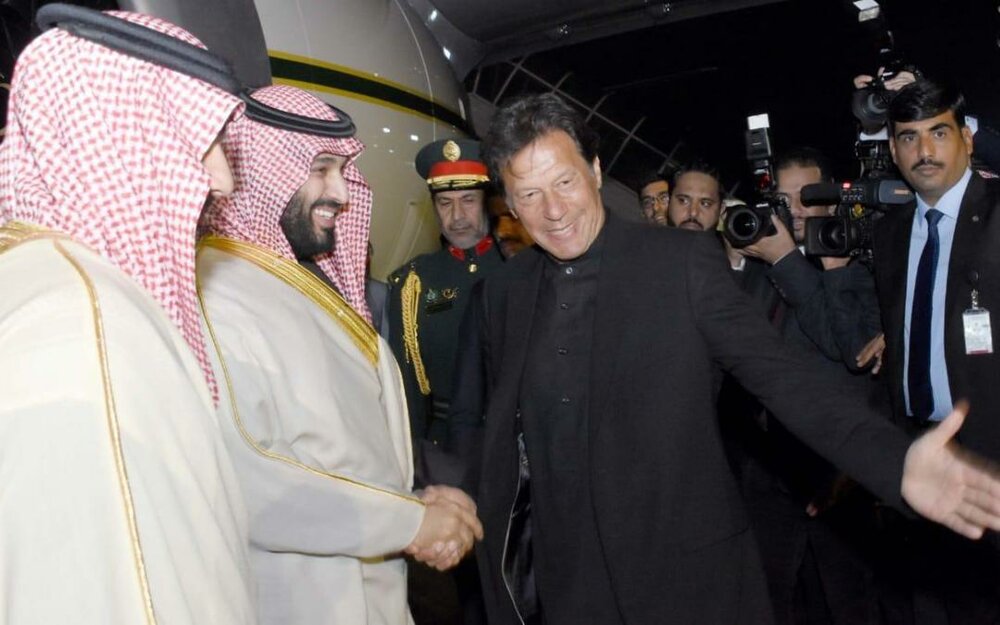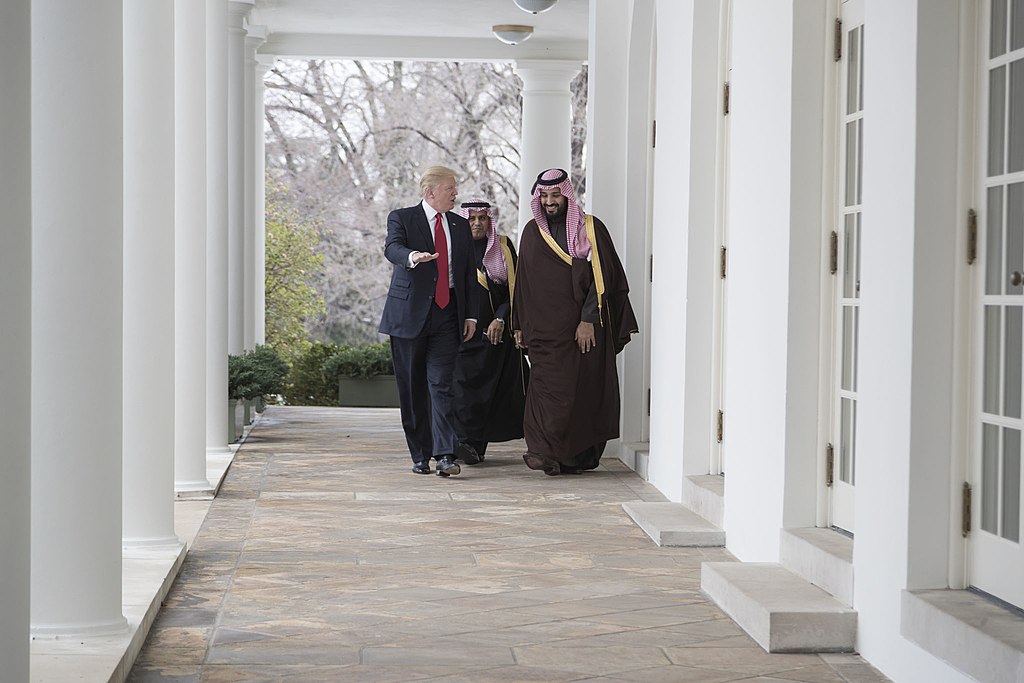
Donald Trump and Mohammad bin Salman (White House)
by Gary Sick
The Middle East has reverted to a kind of primitive savagery. The states of the region had historically treated their citizens with casual brutality, in the interest of preventing dissent, but the ferocious civil wars and interstate conflicts since the so-called Arab Spring in 2011 have introduced a new level of viciousness reminiscent of the Middle Ages.
Despite the civilized terminology of modern international relations, the old rule that “might makes right” is very much alive and well in the interactions of states. Take the word siege. It has a nice medieval ring to it, with images of armored knights planting their battle flags around some fortified town, trying to starve them into submission. But there are at least three full scale sieges going on in the Middle East today. They may lack the colorful appurtenances of the distant past, and they involve entire states rather than fortified towns, but the purpose is just as grim as any knightly undertaking.
Yemen
When Mohammad bin Salman (MbS), the 29 year old son of the newly ascendant king of Saudi Arabia, was appointed Minister of Defense in 2015, one of his first major acts was to intervene in the Yemeni civil war. His primary instrument of war was the immensely expensive, high tech Saudi air force. He also assembled a coalition of forces, starting with his neighbor in the United Arab Emirates, which provided ground forces and training for foreign fighters and tribal militias.
From the beginning, the Saudi pilots came in for intense criticism since their bombs seemed to hit almost everything except military targets. Factories, markets, dairies, and farms were hit, sometimes repeatedly, in addition to wedding parties, mosques, and apartment buildings. The Saudis insisted that they were not responsible for most of these events, even though their coalition’s planes dominated the air.
Part of this, indeed, could be attributed to pilot error and collateral damage. But a pattern emerged. Saudi Arabia and its allies established selective blockades of Yemeni ports, on the grounds of preventing Iran or others from smuggling armaments into the country. This resulted in lengthy delays of imported wheat and other foodstuffs. This, together with destruction of food production and delivery within the country resulted in near famine. Inadvertently or not, two-thirds of the Yemeni population today would be near starvation without UN assistance. Destruction of water supplies and hospitals has resulted in the greatest cholera outbreak in the world.
Regardless of the cautious and neutral language of diplomacy, it is a siege.
Qatar
Two years later, in June 2017, the UAE and Saudi Arabia suddenly announced a total boycott of the energy-rich peninsular state of Qatar. They accused Qatar of supporting the Muslim Brotherhood and sponsoring terrorist activities. By this time the two Mohammads (bin Salman, MbS, of Saudi Arabia and bin Zayed, MbZ, of the UAE) both dominant political figures in their two countries, had joined up with Donald Trump. Trump initially applauded their plot, even though the largest U.S. airbase in the Middle East was located just outside Doha, Qatar. Over time the United States has moved to a more neutral position, but the boycott has persisted. All air traffic into and out of Qatar has been reduced to a single narrow passage; all movement of goods across Qatar’s land borders has been blocked; and transshipment of goods via ports of the blockading states has been prohibited.
Qatar is a tiny state with vast financial resources. Saudi Arabia and the UAE made no secret of their expectation that Qatar would succumb to their pressure in a matter of weeks. Two years later, Qatar has adapted and seems to have weathered the crisis. However, the siege continues.
Iran
In May 2018, the United States announced its withdrawal from the JCPOA (Joint Comprehensive Plan of Action) otherwise known as the Iran nuclear deal. At the time, Iran was in compliance with the terms of the deal, which had been negotiated by the United States together with the other permanent members of the UN Security Council and Germany, and ratified unanimously by the Security Council. On Trump’s watch, the United States reimposed the sanctions that had been removed as part of the deal and then imposed a harsh additional set of sanctions, including a total ban on the Iranian oil trade and the criminalization of large parts of the Iranian government and economy.
President Trump said that the purpose of this unprecedented siege of a UN member state was to drive Iran back to the negotiating table for a more comprehensive agreement. His aides did not openly dispute the president, but they made it very clear that their objective was to remove the theocratic regime in Tehran. Secretary of State Mike Pompeo recently summarized the purpose of the Maximum Pressure campaign as follows: “We have applied enormous pressure to enable the Iranian people to change the direction of their leadership.” The president said he was prepared to meet Iranian leaders and negotiate without preconditions; his aides set some daunting conditions and said that negotiations would take place “when circumstances are right.”
On one point there is agreement. Iran’s economy is suffering. GDP is down; inflation is up; businesses that rely on imports or exports are facing collapse; and critical items, even including medicine, are in dwindling and uncertain supply. The Iranian government, however, appears to be in little danger. Demonstrations have largely ceased, and the external threat seems to have prompted some rallying around the flag. Hardliners, who take profit and vindication from external interference, are ascendant.
Who Pays the Price?
So there are three sieges presently being pursued in the Middle East. None of them appears to be accomplishing its stated purpose, and each of them could be ended tomorrow. But the siege-masters are unwilling to acknowledge any error, and they seem to believe that any sign of weakness would raise questions about their own might.
So all three seem destined to be drawn out affairs, not unlike medieval campaigns to take a well-fortified castle. The warriors in their planes and the policymakers in their comfortable offices will make their calculations and persevere. And just like the Middle Ages, it will be the little people caught between might and right who will pay the price.
The Middle East has reverted to a kind of primitive savagery. The states of the region had historically treated their citizens with casual brutality, in the interest of preventing dissent, but the ferocious civil wars and interstate conflicts since the so-called Arab Spring in 2011 have introduced a new level of viciousness reminiscent of the Middle Ages.
Despite the civilized terminology of modern international relations, the old rule that “might makes right” is very much alive and well in the interactions of states. Take the word siege. It has a nice medieval ring to it, with images of armored knights planting their battle flags around some fortified town, trying to starve them into submission. But there are at least three full scale sieges going on in the Middle East today. They may lack the colorful appurtenances of the distant past, and they involve entire states rather than fortified towns, but the purpose is just as grim as any knightly undertaking.
Yemen
When Mohammad bin Salman (MbS), the 29 year old son of the newly ascendant king of Saudi Arabia, was appointed Minister of Defense in 2015, one of his first major acts was to intervene in the Yemeni civil war. His primary instrument of war was the immensely expensive, high tech Saudi air force. He also assembled a coalition of forces, starting with his neighbor in the United Arab Emirates, which provided ground forces and training for foreign fighters and tribal militias.
From the beginning, the Saudi pilots came in for intense criticism since their bombs seemed to hit almost everything except military targets. Factories, markets, dairies, and farms were hit, sometimes repeatedly, in addition to wedding parties, mosques, and apartment buildings. The Saudis insisted that they were not responsible for most of these events, even though their coalition’s planes dominated the air.
Part of this, indeed, could be attributed to pilot error and collateral damage. But a pattern emerged. Saudi Arabia and its allies established selective blockades of Yemeni ports, on the grounds of preventing Iran or others from smuggling armaments into the country. This resulted in lengthy delays of imported wheat and other foodstuffs. This, together with destruction of food production and delivery within the country resulted in near famine. Inadvertently or not, two-thirds of the Yemeni population today would be near starvation without UN assistance. Destruction of water supplies and hospitals has resulted in the greatest cholera outbreak in the world.
Regardless of the cautious and neutral language of diplomacy, it is a siege.
Qatar
Two years later, in June 2017, the UAE and Saudi Arabia suddenly announced a total boycott of the energy-rich peninsular state of Qatar. They accused Qatar of supporting the Muslim Brotherhood and sponsoring terrorist activities. By this time the two Mohammads (bin Salman, MbS, of Saudi Arabia and bin Zayed, MbZ, of the UAE) both dominant political figures in their two countries, had joined up with Donald Trump. Trump initially applauded their plot, even though the largest U.S. airbase in the Middle East was located just outside Doha, Qatar. Over time the United States has moved to a more neutral position, but the boycott has persisted. All air traffic into and out of Qatar has been reduced to a single narrow passage; all movement of goods across Qatar’s land borders has been blocked; and transshipment of goods via ports of the blockading states has been prohibited.
Qatar is a tiny state with vast financial resources. Saudi Arabia and the UAE made no secret of their expectation that Qatar would succumb to their pressure in a matter of weeks. Two years later, Qatar has adapted and seems to have weathered the crisis. However, the siege continues.
Iran
In May 2018, the United States announced its withdrawal from the JCPOA (Joint Comprehensive Plan of Action) otherwise known as the Iran nuclear deal. At the time, Iran was in compliance with the terms of the deal, which had been negotiated by the United States together with the other permanent members of the UN Security Council and Germany, and ratified unanimously by the Security Council. On Trump’s watch, the United States reimposed the sanctions that had been removed as part of the deal and then imposed a harsh additional set of sanctions, including a total ban on the Iranian oil trade and the criminalization of large parts of the Iranian government and economy.
President Trump said that the purpose of this unprecedented siege of a UN member state was to drive Iran back to the negotiating table for a more comprehensive agreement. His aides did not openly dispute the president, but they made it very clear that their objective was to remove the theocratic regime in Tehran. Secretary of State Mike Pompeo recently summarized the purpose of the Maximum Pressure campaign as follows: “We have applied enormous pressure to enable the Iranian people to change the direction of their leadership.” The president said he was prepared to meet Iranian leaders and negotiate without preconditions; his aides set some daunting conditions and said that negotiations would take place “when circumstances are right.”
On one point there is agreement. Iran’s economy is suffering. GDP is down; inflation is up; businesses that rely on imports or exports are facing collapse; and critical items, even including medicine, are in dwindling and uncertain supply. The Iranian government, however, appears to be in little danger. Demonstrations have largely ceased, and the external threat seems to have prompted some rallying around the flag. Hardliners, who take profit and vindication from external interference, are ascendant.
Who Pays the Price?
So there are three sieges presently being pursued in the Middle East. None of them appears to be accomplishing its stated purpose, and each of them could be ended tomorrow. But the siege-masters are unwilling to acknowledge any error, and they seem to believe that any sign of weakness would raise questions about their own might.
So all three seem destined to be drawn out affairs, not unlike medieval campaigns to take a well-fortified castle. The warriors in their planes and the policymakers in their comfortable offices will make their calculations and persevere. And just like the Middle Ages, it will be the little people caught between might and right who will pay the price.