Showing posts with label Mideast. Show all posts

Tuesday, December 10, 2019

Berlin seems to know better what helps ease Mideast tensions

Hossein Ziaee*

Of importance from different aspects is German government’s simultaneous rejection of two requests by the US and France demanding Berlin to join the [anti-Iran] maritime coalition to, as claimed by Washington, ensure security in the Persian Gulf.
In his recent official statement, German Foreign Minister Heiko Maas announced that Berlin will send its forces to the Persian Gulf only in case of receiving the request from the EU.
Thus, expressing its interest in pursuing a “European initiative”, Berlin has stressed that it does not seek to embark on perilous political and military adventures in the highly sensitive Middle East region.
However, now that France’s Defense Minister Florence Parly, by deploying 650 French soldiers in Abu Dhabi, has officially announced the Emirati capital as the military headquarters of her country’s forces, her German counterpart, Annegret Kramp-Karrenbauer has said that sending German troops to the Strait of Hormuz is conditioned on the EU confirmation while voicing support for the French initiative.
In fact, unlike Washington and Paris, Berlin is still stressing the importance of adopting realistic strategies and, by highlighting the greater effectiveness of political solutions in resolving international conflicts, is emphatically advocating its methodical and distinct approach for the peaceful alleviation of global crises.
This comes as, further exacerbation of global conflicts will be the sole outcome of proposals by the US and France to create failed and ineffective coalitions on the one hand, and refraining from recognizing Iran’s legal rights in the region on the other.
Undoubtedly, the Islamic Republic of Iran and its international partners, such as China and Russia, will, by performing a joint military maneuver in the Indian Ocean and Persian Gulf, stress their firm determination to protect their common interests and give a rational and strong response to the West’s excessive demands.

*Hossein Ziaee is a freelance Iranian journalist.

Wednesday, February 06, 2019

Iran’s Foreign Policy Needs Paradigm Change:

Transition from Middle Eastern Terror to Geo-economics of Asian Hope

Massoud Mousavi Shafaei
Faculty Member at Tarbiat Modarres University & Political Economy Researcher
Unlike the era of the Cold War, when concentration of power within framework of a bipolar world system was considered as a major feature, we are now witnessing multiple power centers under the present international conditions. As a result, analysts have been talking about a multipolar system or even a non-polar world system. The main effect of multiplicity of power centers is fluidity of international system and emergence of new conditions for action in various regional environments. This is true because both the ability and determination of traditional big powers (mostly Western) for direct engagement in regional conflicts have decreased so that they are more inclined toward indirect presence in those conflicts and setting the direction for a fluid regional balance of power. For this reason, at the present time, emerging and regional powers have tuned into active actors and are trying under new conditions to boost their power and influence. Under these circumstances, the dominance of a geo-economic logic and opportunities for cooperation and prosperity, which are embedded in it, have brought relative order and stability to some regions, including East Asia. On the opposite, the dominance of the geopolitics of terror has brought instability, war and conflict to some other regions, including the Middle East. In the meantime, due to its international role and geographical position, Iran is situated between two regions, which follow two different logics. The first region is Asia in its general sense, which seems to be heading toward geo-economics of hope, with the second region behind the Middle East, which is now engulfed by the geopolitics of terror.
The necessity and importance of a major turn in Iran’s foreign policy from the geopolitics of the Middle Eastern terror to the geo-economy of Asian hope is due to the fact that we are currently witnessing incremental, accumulated and contagious crises in the Middle East. As a result, talking about any form of cooperation, especially economic cooperation and convergence and establishment of a cooperative regional order under such conditions is more similar to a lame joke. Under these critical conditions, if we extended the scope of our analysis beyond the Middle East and Southwest Asia, we would see other regions where the framework for cooperation and rivalry has been defined on the basis of a geo-economic logic in such a way that relative order and stability has been maintained in those regions. Therefore, two main arguments can be put forth in this regard:
1.    Making an effort to rebuild the regional order in the Middle East within framework of the logic or paradigm of geopolitics and through military and security domination is very difficult, if not impossible. This region is now trapped in all kinds of conflicts that arise from the geopolitics of terror. There are many ethnic and religious conflicts, terrorism, collapse of governments, civil wars, and so forth in the region, which are incremental, accumulated and contagious in nature and depict a picture that foretells endless conflicts. Under the present circumstances, the outlook for the reconstruction of the regional order seems improbable, because neither the big powers have the ability and resolve to build a new order here, nor suitable conditions are in place for establishment of a hegemonic order by a single regional powers, nor there is any promising outlook for creation of a cooperative order.
2.    Due to its geographical position, Iran is situated between two regions, which follow two different logics. The first region is Asia in its general sense and with its own geo-economic logic, with the second region being the Middle East, with its own geopolitical logic. We are all aware of difficulties of making a paradigm change in Iran’s foreign policy, but as geopolitical, military and security conflicts escalate in the Middle East and Southwest Asia, the necessity and importance of turning toward Asian geo-economic structures is felt more than before,. It is evident that this paradigm change does not mean that Iran should end its influence in the Middle East, because as a result of geographical and geopolitical realities, Iran’s presence in the Middle East is vital for protecting the country’s national security. The meaning of paradigm change is a subjective and objective development, which would be able to prioritize the country’s spheres of influence (the Middle East, Southwest Asia, Central Asia…) and type of influence (security, military, economic, cultural…) in line with the Islamic Republic’s national interests. In the second step, limited resources of the country must be allocated in an optimal manner, and policies aimed at achieving goals (not just oriented toward fulfilling obligations) be adopted in order to guarantee sustainable security and national prosperity of the country.

Thursday, November 29, 2018

Bold counter moves even if naïve are worth marginal examination at least

By Martin Love
NORTH CAROLINA - President Rouhani and other leaders in Iran have lately been appealing for unity among all Muslims to counter the threats posed by the Israelis and the U.S. and the Saudis to sow yet more chaos in the Middle East. No one can argue against the idea of such unity, but aside from a few discrete periods in Islamic history the effective unity of the “ummah” has been and seems to remain a chimera, a least when viewed from any purely political angle.
In the lands where Islam as a religion has expanded and dominated since the Ummayad and later the Abbasid caliphates, even in periods when the “West” was not meddling and forcing its imperialistic pretensions, as especially in the past century when the last serious Muslim “empire”, the Ottoman one, dissolved, Islamic polity has rarely been unified as an entire, powerful bloc.
 The Middle East and beyond to the Far East has been too ethnically and politically diverse to realize the grand ideal of true Islamic unity at least as regards the kind of unity that could not be disrupted and split politically by internal factions and frictions and the impositions of Western imperialism.
Rouhani has recently claimed that the U.S. is “more isolated than ever” over its multitude of sanctions and not just on Iran and that the sole answer to it all must be Muslim solidarity, and that includes solidarity with the Saudis who he says are perceived by Iranians as “brothers” whom Iran is ready to help defend against “terrorism, aggressors, and superpowers”.
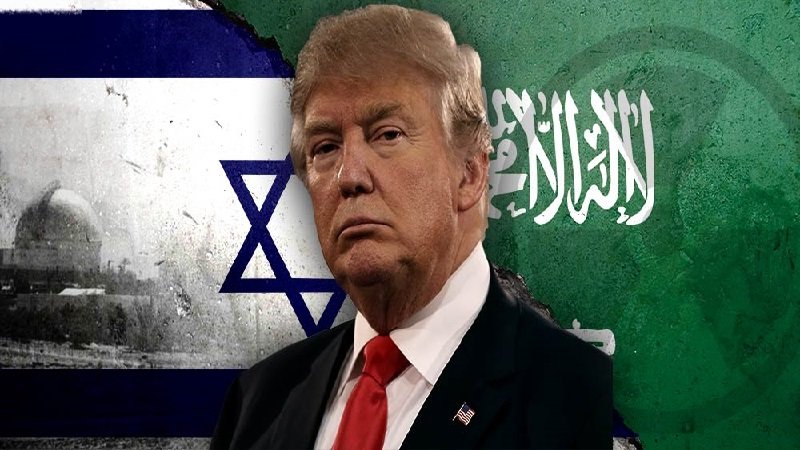
It certainly has not escaped President Rouhani, and should not escape anyone, that the Trump Administration looks primarily like an extortion racket. For example, the price tag for Trump not punishing the Saudis and specifically Muhammad bin Salman, the idiot “prince”, for what appears to be a direct order to murder Jamal Khashoggi back in early October, is an expenditure eventually by the Saudis of $450 billion in additional purchases of U.S. goods, particularly arms, to enrich the coffers of the U.S. Military Industrial Complex (and Trump’s domestic standing) which has become a big but bad part of the entire U.S economy – exactly what President Eisenhower warned against in 1961.
President Rouhani apparently, and rightly so, considers this extortionist demand by Trump little more than a “humiliation” and not just of the Saudis, but of Muslims generally. He cited a cynical statement by Trump a couple years ago that Saudi Arabia was a “milk cow” for U.S. interests. Rouhani is exactly correct in his attempt to point out to the ignorant Saudis that they have also been played by the U.S. as well as by the Israelis, who seem to be directing U.S. foreign policy like never before in the Middle East.
But this is all destined to eventual failure, because just as the U.S. grows more isolated worldwide, so also does Arabia under the Saudis. The utter absence of a moral compass in the U.S. under Trump, in Israel under the Likud maniacs, and in Saudi Arabia under MBS, reminds one of the words of Martin Luther King during the Civil Rights struggle in the U.S. who said that while the arc of history is long, it bends (ultimately) towards “justice”. Maybe the arc of history does not bend towards complete and full “justice”, but justice does present itself to some extent at least in time as history has proven.
But so much remains unclear. Dealing with this is tortuous. Will Iran be able to suffer through this sanction period and maintain some level of acceptable internal unity and stability? Will Europe and China and Russia manage to erect alternative economic mechanisms to dilute the effect of sanctions and not just those burdening Iran? Will the U.S. economy enter another recession soon and expose Trump’s wild claims of “success” as President as falsehoods, which they are?
 Will even the expanding Boycott, Divestment and Sanctions movement against the Zionists eventually force Israel towards real democracy and the dismantling of “apartheid” in somewhat the same manner that abhorrence of South Africa’s apartheid led to its dissolution there? These and many other questions remain to be answered and answers are eagerly awaited.
In any event, Trump and those who are advising him on Mideast policy, are certainly insane. If, for example, the aims of the Trumpists are in fact a change of government in Iran and submission to U.S. demands, why in the Hell are they championing a known terrorist cult, the MEK? Do they really believe, or can they believe, that the MEK would ever be an acceptable alternative to Iranians? This alone spells out what Trump and his Zionist pals really seem to want: disorder and chaos, not eventual harmony among nations.
And one must wonder what Iran might do going forward to best counter and further expose the U.S. IF U.S actions and postures are as claimed based on concerns about international or just national “security”, what if, say, Iran’s leaders came right out and stated, backing up President Rouhani’s gestures of goodwill to Muslim “brothers”, that its policies have been and will remain entirely defensive in character. Additionally, with acceptable quid pro quos (such as lifting sanctions and that just for starters), Iran might reduce its presence in Syria and Iraq and even its support of Hizballah and as well reduce its defensive efforts with rocketry (as it did with the JCPOA with regard to nuclear technology). 
No question any such bold suggestions or moves would be starkly courageous and perhaps even dangerous to Iran, but it seems a certainty that the U.S., Zionists and Saudis and others would have to respond positively – or else become so further “isolated” as to lose ALL credibility and respect worldwide. Yes, obviously, ideas such as these may be quite naïve and preposterous, but at the margin, they may be worth study.

Wednesday, November 28, 2018

A Big Step for a Greater Israel

A Big Step for a Greater Israel

Eric S. MARGOLIS
Hardly anyone noticed. The Trump administration quietly changed America’s long-held position on Syria’s strategic Golan Heights while attention was focused on the raucous political carnival in Washington. Though barely noticed, the policy change had enormous importance and will lead the United States into a lot of future Mideast misery.
The Golan Heights is a volcanic plateau that abuts Syria, Israel, Jordan and Lebanon. The plateau rises abruptly from the plain of Galilee, providing dominance of the entire region. To the north, Mt Hermon rises to over 9,000 feet (2,814 meters); the plateau slopes down at its southern extremity.
Golan provides the headwaters of the Jordan River and 15-20% of Israel’s water from its snow-capped north. Israeli artillery atop Golan can hit Damascus and its airport. Electronic intelligence systems on Golan look down onto southern Syria, intercepting all communications and detecting troop movements.
The plateau is quite fascinating. I have walked most of the Israeli-held side, observing dug-in tanks, artillery and small forts surrounded by anti-tank ditches. Burned out wrecks of Syrian tanks and armor litter the countryside. I’ve also walked the Syrian side and explored the wrecked Syrian town of Kuneitra that was leveled by the Israelis in 1967.
Israel seized Golan in the 1967 Arab-Israeli War and annexed the plateau in 1981. Almost all of Golan’s Arab population was driven out by the Israelis. The UN and US demanded that Israel return Golan to its rightful owner, Syria. After 1981, Israel moved over 20,000 settlers onto Golan to cement its control of the strategic heights and its water sources.
During the 1973 Arab-Israeli War, Syrian forces came close to pushing Israeli forces off Golan. Both sides suffered heavy casualties. For still unknown reasons, the Syrian armored offensive abruptly halted just as it reached the western edge of the plateau overlooking northern Israel.
My understanding is that Soviet recon satellites saw Israel deploying its nuclear bombs and missiles from their cave shelters. Moscow warned ally Syria that it risked nuclear attack by Israel unless its forces halted their advance so the Syrian offensive stopped on the verge of tactical success. This allowed Israel to concentrate enough reserve armored divisions to successfully counter-attack and drive Syria from the heights.
Since 1973, America’s policy has been to demand Israel relinquish Golan while quietly allowing US tax deductible funds to expand Jewish settlements on the plateau. Israel even reportedly offered to return Golan in exchange for a peace deal with Syria, but the secret terms of the deal were too onerous for Damascus.
The Trump administration abruptly changed US Mideast policy. First, it announced the US Embassy would move from Tel Aviv to Jerusalem, meaning that it rejected the idea of a Palestinian state with its capital in the old city of Jerusalem. Now, the White House has quietly accepted permanent Israeli control of Golan, though it violates international law and past US policy.
It’s clear that US Mideast policy is firmly under the control of the neocons aligned to Israel’s expansionist far right parties. In fact, it is impossible to see any difference between the policies of Israel’s hard rightwing leader, Benyamin Netanyahu, and President Donald Trump. They are joined at the hip. A coterie of pro-Israel lawyers and property developers from New York City have completely taken control of Mideast policy.
More important, what the change in US Golan policy means is that Trump & Co are giving a green light to further Israeli territorial expansion. Now that Washington, which decries Russia’s much more justified annexation of Crimea, has approved the illegal annexation of Golan, what could be next? Likely further chunks of southern Syria, an invasion of Lebanon and annexation of its water resources.
Saudi Arabia and its little ally, the United Arab Emirates, have already been given a green light by Washington to carve out strongholds in Yemen and along the strategic Red Sea coast. This is the Mideast ‘peace’ settlement that candidate Trump promised; an increasingly close alliance with the Mideast’s most reactionary states, notably the murderous Saudi regime. This bodes ill for the United States.

Monday, December 09, 2013

From Bahrain to Ukraine: Hail the Western Salesmen of Subversion and Deception

From Bahrain to Ukraine: Hail the Western Salesmen of Subversion and Deception
FINIAN CUNNINGHAM


The Manama Dialogue held in Bahrain at the weekend – attended by US Defense Secretary Chuck Hagel and Britain’s Foreign Secretary William Hague, among other senior Western officials – is presented with gravitas and self-importance as a forum to «earnestly» discuss «security issues» in the Middle East and beyond.
In reality, the event – held in the Bahraini capital, Manama – is nothing but a talking shop of fake concepts, hollow posturing and boilerplate verbosity. A talking shop, complete with garish window dressing and manikins, to hide the gruesome nature of the real Western political business that goes on in the basement of the oil-rich region.
Like the general position of Washington and London towards the Persian Gulf Arab regimes, the Manama Dialogue is all about selling propaganda and deception to cover the most brutal facts of life, sold with the guise of genial, virtuous vendors.
One of these brutal facts is that the Western governments are fully complicit in the repression of their Persian Arab clients against their own people. Another brutal fact is that it is Western governments and their Persian Arab clients who are fuelling insecurity and violence across the Middle East, as in Syria, Iraq and Lebanon, by covertly supporting extremist regime-change mercenaries, such as Al Nusra and the Islamic State of Iraq and Levant, both of which are linked to Al Qaeda.
Yet another brutal fact is that the Persian Gulf is one of the most militarized and insecure locations in the world, partly because of Western support for illicitly nuclear-armed Israel, and partly because of reckless weapons sales by America and Britain to the tinderbox region. 
Nevertheless, senior representatives of the war-dealing Western states have the audacity to address a conference in the region on «peace and security».
Like a parallel universe, speakers and delegates were ensconced in a plush hotel by their Bahraini hosts to hold forth on democracy, rule of law and terrorism. Meanwhile, a few kilometres away from the venue, the Western-backed Bahraini regime was deploying its riot police to club and gas peaceful pro-democracy supporters. The protesters were trying to exercise their universal right to freedom of peaceful assembly and expression – the same human rights that Washington and London repeatedly declare they are champion retailers of.
These rights have been systematically denied to Bahraini civilians for the past three years (and before) by the US and British-backed absolute monarchy in Bahrain.  Since February 2011, when the pro-democracy movement rekindled in the Persian Gulf kingdom, regime forces have killed nearly 100 civilians, some of whom died under torture during detention; hundreds have been maimed with grotesque injuries, such as the loss of eyes and limbs from shot gun pellets; infants and elderly have been poisoned in their homes from the deliberate, excessive use of tear gas; and thousands of families have been plunged into misery because fathers and sons have been locked up in jails without a semblance of due legal process.  All this barbarity is done with the tacit support of Washington and London, and with the shameful indifference of the Western news media.
For a tiny population of only 600,000 native Bahrainis (an expatriate foreign worker population is of the same size) the toll of brutality and suffering inflicted by the Khalifa regime has been immense. And in this fierce assault on the mainly Shia population, the Bahraini rulers have been fully assisted by Saudi Arabia, which sent troops into the neighbouring island back in March 2011 to crush the pro-democracy demonstrations. Saudi troops have remained in Bahrain ever since – albeit covertly, by donning Bahraini uniforms. Washington and London are fully apprised of the situation. In fact, it was the US and Britain that gave the green light to the House of Saud to embark on the crushing of protests in Bahrain, just as the Saudi rulers have been doing in their own Eastern Province and other parts of that oil-rich kingdom.
It is instructive to compare and contrast what is happening in the Ukraine and the official Western response. The protests in Kiev have evidently been driven by a determined minority, using violent and organized subversion, and calling for the overthrow of the elected authorities.  This is not the exercise of international human rights, as in Bahrain; in the case of the Ukraine, it is a call to sedition.
Furthermore, the agitating groups in the Ukraine, such as the Fatherland Party and the neo-fascist Freedom Party, are known to have well-established logistical links to foreign agencies that are committed to fomenting regime change in targeted nations. These agencies include the American CIA and the benign-sounding National Endowment for Democracy. Certainly, the methodical tactics of disruption deployed recently against government buildings in Kiev strongly imply a covert military input…
To upbraid the Ukrainian state for responding with a heavy-hand in the face of this wanton subversion against its sovereign authority, as Western governments have charged, is at best naive and at worst blatant propaganda to distort the real situation.
Apparently, innocent civilian bystanders were caught up in the melee and incurred injuries. There were, however, no deaths, and Ukrainian Prime Minister Mykola Azarov later issued a public apology for police conduct. Since the height of the commotion a week ago, the demonstrations in the Ukrainian capital have subsided. This pattern again implies that the protests and public were manipulated for an ulterior agenda – an agenda that was not merely about expressing dissent against the government’s EU rejection, but rather was more sinister in scope, namely to destabilize the state.
The contrast with Bahrain could hardly be more lucid. Here the «authorities» are an unelected regime comprised largely of one family – the al Khalifas, headed by a self-appointed king, Hamad bin Issa al Khalifa. His hereditary successor will be his eldest son, Crown Prince Salman. The Bahraini regime rules by absolute decree with the guise of a consultative «parliament» that is «elected» through a heavily gerrymandered process.
The Bahraini regime and its foreign supporters – Washington, London and Saudi Arabia – have claimed that the largely peaceful pro-democracy protests are manipulated by foreign agents. It is claimed that these agents include Shia Iran and the Lebanese resistance movement, Hezbollah. The US and British governments do not reiterate this too often or loudly because they know full well that the accusation is an utter figment of imagination. There is not an iota of evidence for the involvement of Iran, Hezbollah or any other foreign agency in the Bahraini demonstrations. These protests have been sustained for nearly three years simply by the civilian population’s own desire to have the right to democratically elect a government, rather than being lorded over by a corrupt and venal crony family racket. 
Unlike the Ukraine, Bahrain is a simple and straightforward case of democracy being brutally denied to a civilian population that has remained peaceful despite relentless provocation from an unelected regime.
The double standards and hypocrisy of the Western governments and the mainstream news media as shown by the differing response to events in the Ukraine and Bahrain is glaring. A short-lived bid to sow chaos in the Ukraine by a provable foreign-backed subversion against an elected government is given the highest profile by Western governments and media as «a noble bid for democracy against an autocratic regime». Whereas in Bahrain, a sustained pro-democracy movement by unarmed, peaceful civilians against a brutal, unelected autocrat is, well, simply ignored by the West.
Indeed, Bahrain is not merely ignored by the West. It is indulged and tacitly backed to the hilt by Washington and London.  The attendance of such prominent figures as Chuck Hagel and William Hague at the Manama Dialogue in Bahrain at the weekend – during which they spouted platitudes about security, democracy and rule of law – is the US and British government’s way of reassuring the Bahraini and Saudi regimes of their ongoing support to crush democracy. 
Meanwhile, Chuck Hagel announced during the weekend forum that the US has no intention of scaling back its military presence (read: arms sales) in the Persian Gulf despite the recent diplomatic detente with Iran. «Diplomacy, must be backed up with military power,» Hagel told delegates. The Pentagon chief also disclosed that the US was going ahead with the sale of 15,000 anti-tank missiles to Saudi Arabia worth $1 billion. These missiles will probably end up in the hands of Al Qaeda militants waging a war of terror against Syria for the Western-backed objective of regime change in that country.  Ironically, and ludicrously, the British Foreign Secretary William Hague warned delegates that «extremists» operating in Syria (with the covert support of the US, Britain and Saudi Arabia among others) present a grave security threat to the Middle East region and Europe.
Outside the Manama conference, where peaceful protesters were having their heads cracked open by Bahraini riot police, one banner held up by the crowd read: «Why do Western governments not support calls for democracy in Bahrain?»
What a cruel joke. Western governments do not support democracy in Bahrain – or anywhere else for that matter – because they make money from oil and arms sales by supporting dictatorships, and from crushing and subverting democracy. Bahrain and the Ukraine are just two examples of the general concept. Despite their polished and preening rhetoric, Washington and London are nothing but the salesmen for subversion and deception.