Showing posts with label Hanif Ghafari. Show all posts

Monday, March 18, 2019

Anger of American citizens from the White House

By Hanif Ghaffari 

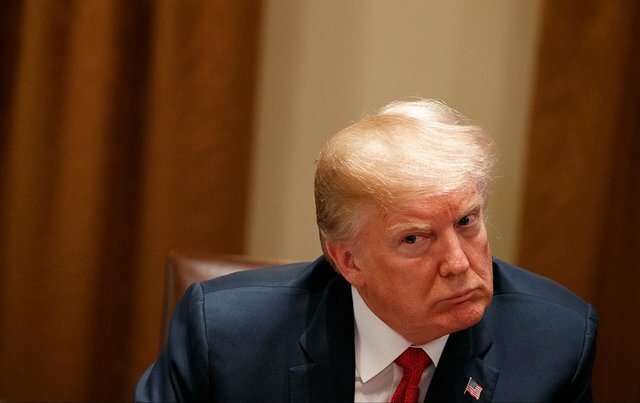
TEHRAN - Although U.S. President Donald Trump vetoed the congressional decision using his special powers, the U.S. president's move has led to anger and discontent among U.S. citizens. Currently, American citizens call the White House a symbol of the violation of democracy in the United States.
 On Friday, President Trump vetoed a measure to block his national emergency declaration. The measure passed the House and Senate with bipartisan support. Numerous polls suggest Trump’s decision was popular among his Republican base. But his decision to use executive authority to fund a wall along the southern border is opposed by a clear majority of the public.
During his recent actions, Trump showed that the opinion of American citizens is not important to him. Since the onset of tension between the White House and the Congress over the provision of wall-payment on the Mexican border, Trump was well aware of public discontent over this issue. Polls in the United States also confirm this.
As Washington Post reported: That is reflected in six polls taken from early January to early March. By roughly a 2-to-1 margin, Americans oppose Trump’s decision to use emergency powers to build a border wall. That’s a wider margin than the Senate resolution to overturn Trump’s declaration of a national emergency, which passed 59 to 41.
The most recent poll on the issue comes from Monmouth University and was in the field between March 1 and 4. Monmouth found 65 percent of Americans disapproved of Trump “declaring a national emergency in order to use funding designated for the U.S. military to build a wall along the Mexican border.”
As noted above, other surveys conducted in the United States also show this. In January, Monmouth asked a similar question but didn’t include the part about “using designated military funds to pay for the wall.” Opinion barely budged between then and now. Disapproval now is 65 percent vs. 33 percent approval; then it was 64 to 34.
Across the months, questions with slightly different wording generated nearly identical results. Near the end of February, an NBC News-Wall Street Journal poll found 60 percent of registered voters disapproved of “Trump’s decision to declare a national emergency” “to build a wall of over 200 miles along the U.S.-Mexico border.”
 Shortly before that, NPR-PBS NewHour-Marist found 61 percent who disapproved of “Trump declaring a national emergency to build a wall along the U.S.-Mexico border.”
Looking to the beginning of February, CNN found 66 percent of respondents agreed Trump “should not declare a national emergency in order to build a wall along the border with Mexico.” And a Washington Post-ABC News poll from early January found an identical 66 percent who opposed “Trump using emergency powers to build a wall along the U.S.-Mexico border.”
 The Post-ABC poll question included language saying, “Presidents can declare a state of national emergency, giving them special powers to take action without approval from Congress.”
The emergency declaration is quite unpopular among Democrats and most independents, though it is favored by a majority of Republicans. In the most recent Monmouth poll, 93 percent of Democrats and 71 percent of independents disapproved of Trump declaring a national emergency, while 73 percent of Republicans approved.
 Those opinions were largely consistent with January’s Monmouth poll, in which 93 percent of Democrats and 66 percent of independents disapproved while 71 percent of Republicans approved. Finally, the latest action by Donald Trump showed how false democracy is in USA. Trump's disregard for the wishes of the majority of Americans shows this clearly.

Monday, February 04, 2019

The ambiguous future of European Union

By Hanif Ghafari
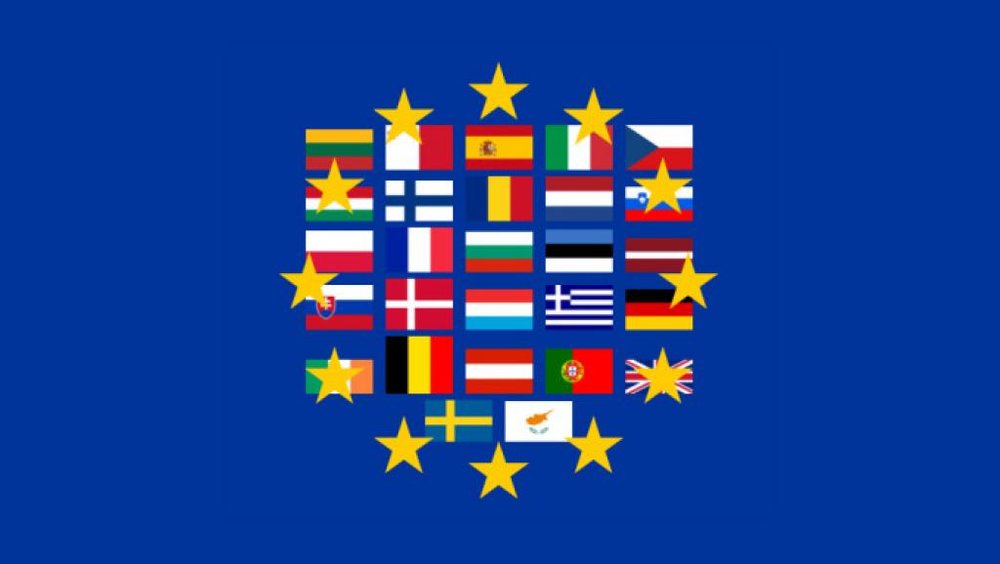
TEHRAN - Economic, security, social and political crises in Europe continue. On the other hand, the next four months will be the European Parliamentary elections: elections that are expected to be successful in those nationalist and extremist groups.
 Under these circumstances, the "future of the European Union" has no clear prospect! Many analysts and experts in the field of international relations are cautious about the political existence of the European Union and the Eurozone.
Meanwhile, the political situation of European leaders is not clear. What is happening today in France, Germany, and the United Kingdom reflects this fact. Although French President Emmanuel Macron has withdrawn from the fuel tax laws, the "Yellow Vests" continue to follow their demands of the Elysees Palace, taking out to the streets of Paris and other cities. Indeed, what is happening in Europe? Is "the collapse of United Europe" still an "abstract idea"? Or has it become an "objective reality" under the influence of past years' events in Europe? In this regard, there are some points that should be taken into consideration: 
1-As emphasized at the beginning of this note, The European Union is now under a critical pressure! The constant political, social and security crises have raised the vulnerability of this block. On the other hand, European leaders have clearly lost control over issues such as "Brexit" and "European economic crisis". It shouldn't be forgotten that ten years of austerity policies and a reduction in the general budgets of the Eurozone member states had bad results for the European citizens, and the signs of the economic crisis can be still seen throughout Europe.
2-Many European leaders feel incapable of solving existing crises. It should be noted that EU leaders like Merkel and Macron do not have a common understanding of what is going on in this series! On the other hand, if the nationalist and anti-European parties achieve absolute or relative victory in the 2019 European Parliamentary elections, the situation in the European Union and the eurozone will become harder.
Eu is faced with a serious problem called the growth of nationalism and Right extremism. These anti-immigration movements, which, after the failure of European governments to resolve the economic crisis as well as the imminent crisis of immigration in 2015, have gained a lot of supporters, are planning to conquer the European Parliament and government, and then put an end to the "United Europe" and its symbols such as "the Euro currency" and "Schengen Agreement.
At the moment, EU leaders are worried about the outcome of this year's parliamentary elections.
 In the 2014 parliamentary elections, more than 100 nationalist and far-right extremists managed to find the way to the European Parliament. This time, nationalists may win even more seats in the European Parliament. In this case, the social and political power of nationalist and anti-immigration movements in Europe will be increased. Consequently, the existence of United Europe's foundation will be directly targeted. This is a threat that has already shadowed Brussels (the headquarters of the European Union).
Finally, the fate of the European Union and the Eurozone are tied to the European Parliamentary elections. Will these elections mean the revival of the European Union or the beginning of its collapse? The answer to this question will be determined in the near future.

Monday, August 06, 2018

Despair of Trump against Iran's power

By Hanif Ghafari


TEHRAN – U.S. President Donald Trump and his Foreign Minister Mike Pumpo have recently called for talks with the Islamic Republic of Iran. Even Trump took a step further and spoke with Iran on "negotiated without preconditions". Recent Trump positions and U.S. officials about Iran have been addressed by many international analysts. Many analysts believe that Trump does not have the power to confront "powerful Iran."
Analysts rightly believe that Trump, though, can manage "White House behavior" over other international issues, he will not be able to handle the behavior of actors such as the Islamic Republic of Iran. Regardless of what the approach and purpose behind the recent paradoxical behavior of American officials lies behind, there is a key word that can not be overlooked in analyzing the recent 40-year history of Iran and the United States: "A Powerful Iran."
"Powerful Iran" is not an abstract concept, but the output and product of a full realistic calculation by most American strategists. Many analysts believe that the behavioral paradox of Trump and other U.S. officials towards Iran is due to their confusion in dealing with the "powerful Iran."
In other words, Trump insists on opposing the Islamic Republic of Iran, and on the other hand, he is deeply concerned about the consequences and consequences of this confrontation.
In order to better understand the concept of "powerful Iran," it is better to escape Brzezinski's statements during his lifetime. Brzezinski warned the White House at the beginning of the third millennium, while former U.S. President George W. Bush was raging for Iran that United States will have to learn the rules of the game alongside our country while identifying Iran's power.
We are currently in 2018. Trump now seems to be confused with Iran's power any time. Undoubtedly, if Tramp continues to play its dangerous game against Iran, it will face the costs and consequences of this. It is not unreasonable that many American strategists and theorists warn Trump about the consequences and consequences of the conflict with Iran. This is happening again now. Undoubtedly, people like John Bolton and Mike Pumpo will become symbols of the failure and failure of the Trump government against Iran in the near future.
Undoubtedly, as much as the United States will delay in identifying the concept of a "mighty Iran", the severity of Washington's defeat against Iran will be greater. A topic that even the closest people to Trump can not deny.