Showing posts with label Dr.Zafar Bangash. Show all posts

Monday, July 01, 2019

US-Iran Standoff

Trump traps himself in his own rhetoric
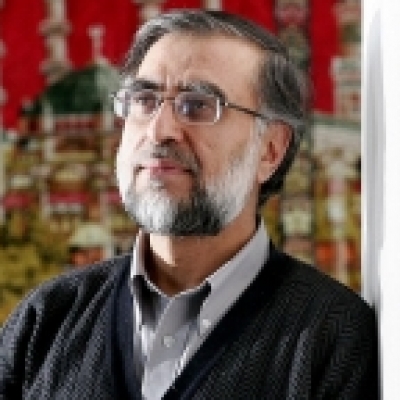
Zafar Bangash
 Wars are no trifle matter; they are extremely destructive and cause a lot of deaths. They are easy to start but difficult to end. Equally critical, their outcomes are unpredictable, as any general who has participated in a war would confirm.
The world has witnessed this madness for decades, pursued unilaterally by the war dogs in Washington. The latest example of this was the US aggression against the Islamic Republic of Iran on June 20. It deliberately sent a spy drone into Iranian airspace. Despite repeated warnings from Iran’s Revolutionary Guards Corps (IRGC) aerospace division, American operators of the spy plane refused to take heed. The IRGC brought it down at 04:05am over Iranian airspace. Another surveillance plane, the P-8 with 35 people on board accompanying the drone was spared.
The Americans immediately resorted to lies. They claimed that the drone was flying over international waters. On June 21, Iran put on display the plane’s debris it had collected in its territorial waters. At first, the US navy said it had collected the plane’s debris but later changed its story saying because of “high winds and strong current” it was unable to do so! Iran also provided the plane’s coordinates: 8 km from Iran’s coastline and well within Iran’s territorial waters of 12 nautical miles.
There were other lies that the Americans peddled. They alleged that President Donald Trump had ordered air strikes against three Iranian targets but rescinded the order when his generals told him of the number of casualties (150 deaths) they would cause. Trump’s concern for Iranian casualties would be touching, if it were true. Since when has any US official ever cared about people’s lives in other countries? Their graveyards are full of civilians murdered by America’s mad dog bombers.
Second, it was alleged that Trump had sent a message to Tehran via Oman offering to hold talks but he gave a short deadline. On June 22, Iran’s Supreme National Security Council (SNSC) spokesperson Kei-van Khosravi rubbished this claim telling the Islamic Republic of Iran Broadcasting (IRIB) no US message had been received. An attempt was made to lend credibility to this lie by claiming that the British news agency, Reuters, had spoken to “unnamed Iranian officials” who had “confirmed” receipt of the message. When news outlets resort to taking cover behind “unnamed sources,” one can be certain that this is an attempt to peddle a lie to advance a certain narrative!
What the latest attempted aggression against Iran shows is that the US, led by gangsters and outlaws, is a rogue regime. Nothing would be achieved by talking to such criminally dishonest people. If Trump can walk away from a multilateral, internationally endorsed agreement, how can Iran accept a bilateral agreement with Trump?
He harbors the illusion that he can shoot his way to the negotiating table with Iran. The US is already at war with Iran and has been for 40 years since the victory of the Islamic Revolution. The latest salvo in this ongoing war was fired in May 2018 when Trump unilaterally withdrew from the multilateral agreement on Iran’s nuclear program. He then re-imposed a raft of illegal sanctions that were lifted as part of the 2015 agreement in return for Iran capping its uranium enrichment. Tehran also accepted intrusive inspections of its nuclear facilities.
Called the Joint Comprehensive Plan of Action (JCPOA), it was ratified by UN Security Council resolution 2231 (July 20, 2015). The JCPOA was concluded after years of intense negotiations involving Iran and six other countries: the UK, France, Russia, China, the US and Germany plus the European Union.
By walking away from the multilateral deal Trump said he wanted to negotiate Iran’s missile program as well as its support of what he termed “terrorist groups” in the region. By this he means Iran’s support for Hizbullah in Lebanon, Hamas and Islamic Jihad in Palestine and the Ansarallah fighters in Yemen. These movements are struggling for their rights and dignity against foreign invaders, aggressors, and occupiers.
File photograph of a US Navy RQ-4A Global Hawk surveillance drone. Something similar to this was shot down by the Islamic Revolutionary Guard Corps for violating Iranian airspace. The cost of the drone, which was so cavalierly deployed over Iranian airspace in order to spark a provocation to go to war against the Islamic Republic, to the US taxpayer is somewhere between $110–220 million depending on the type of spy equipment and cameras on board. Trump’s Republican Party hacks are the ones who always harp on fiscal responsibility and how the federal budget doesn’t have several millions to pay for social welfare programs, yet they don’t think twice when it comes to spending trillions for making war and lavishing billions on defense contractors like Northrop-Grumman (who manufactures this drone). Taking off from a US airbase in the UAE, the drone was flying at some 60,000 ft with its transponder off, in violation of international aviation conventions of which the US is a signatory; a universal signal for suspecting untoward activity is an unidentified flying vehicle with its transponder disengaged.
Iran has consistently dismissed Trump’s demands to open negotiations on any of these issues that were not part of the nuclear deal. Besides, Tehran will never accept any limitations on its defensive capabilities, especially from a regime that possesses thousands of nuclear weapons, has used them twice on Japan and in the words of former US President Jimmy Carter, has been at war for all of its 242-year history except 17 years. Iran, on the other hand, has not attacked any country in the last 250 years.
American rulers, however, are not rational beings. They claim US exceptionalism. Thus, Trump has intensified pressure by re-imposing sanctions on Iran and threatening countries that buy its oil or participate in banking transactions or trade with it in any way. Most countries, especially the Europeans, while claiming to uphold the nuclear deal, have withdrawn from normal commercial dealings with Iran. They have advanced the ludicrous excuse that their companies are acting “independently” and trying to protect their interests.
Despite US withdrawal, Iran strictly adhered to its side of the bargain for more than a year in hopes that the Europeans would come up with a mechanism to mitigate the negative effects of US sanctions. Apart from empty promises, the Europeans have done nothing. Frustrated by Europe’s foot-dragging, Tehran announced in May that it would lift some of the limits on uranium enrichment since the other signatories have failed to uphold their side of the bargain. It still gave a 60-day notice (due to end on July 8) for European countries to come up with a solution to the negative effects of Washington’s unilateral and illegal sanctions.
No doubt US sanctions have hurt Iran, especially its people since its oil exports have been badly affected. This is what several Iranian officials have called “economic terrorism.” There is no other way to describe it. Trump’s stated purpose is to economically strangle Iran and force it to the negotiating table.
This is the new war tactic as outlined by Colonel (retired) Max Manwaring, professor (emeritus) of Strategic Studies at the US Army War College in Pennsylvania and a leading US military strategist. He has dubbed it fourth and fifth generation warfare. His fundamental thesis is that based on US experience in Afghanistan and Iraq, it is no longer necessary to wage direct war with any country. Strangle a target country’s economy through sanctions, create internal unrest to force people to stage an uprising against the government to overthrow it, and install people in power who would do America’s bidding.
This strategy was successful in a number of countries but faced its first major failure in Syria, thanks largely to the support provided by Hizbullah, Iran, and Russia. The war on Syria was meant to secure Zionist Israel’s preeminence in the region. Its ultimate objective was to destroy Iran’s Islamic government.
The leadership in Iran has made clear that they would not remain idle in the face of US aggression. If attacked by any country, they would retaliate with full force. Such retaliation would not be limited to one country: Saudi and Emirati oil fields would go up in smoke. US and Zionist assets in the region will also face Iran’s military might. Tehran has many options and allies and its forces are absolutely capable of achieving these objectives.
More critically, Iran will not allow itself to be strangled economically. Iranian leaders have repeatedly stressed that if they cannot export oil nobody else would either. Iran controls the narrow Strait of Hormuz.
Let us look at this scenario in some detail. At its narrowest, the Strait of Hormuz is 21 nautical miles. Since Iran claims 12 nautical miles as its territorial waters and Oman also claims 12 nautical miles, it means at its narrowest point, this is not “international water.” Thus any shipping vessels — oil tankers or military — will have to seek Iran’s permission to use the waterway.
Islamic Iran’s strategic advantage: in case it is attacked, it can choke off the Strait of Hormuz within literally minutes, halting 35% of the world’s oil supply, thereby leading to a global economic meltdown.
Iran can simply declare the Persian Gulf a war zone and block passage to all ships. The immediate result would be insurance for tankers going through the roof. To reinforce the message, a couple of cargo ships can also be sunk in the waterway.
Since 30% of the world’s oil passes through the Strait of Hormuz, its closure would result in oil prices hitting $200 or more per barrel. Some have even speculated $1,000/barrel (Goldman Sachs, as per Pepe Escobar writing in Strategic Culture(June 20, 2019)). According to this well-informed analyst, “As I previously reported, shutting down the Strait of Hormuz would destroy the American economy by detonating the $1.2 quadrillion derivatives market; and that would collapse the world banking system, crushing the world’s $80 trillion GDP and causing an unprecedented depression.”
And if a shooting war were to start, the twin apartheid regimes in the region — Zionist Israel and their Wahhabi cousins in Arabia — would also be consigned to the dustbin of history. Both the Zionists and the Wahhabis know this. Muhammad bin Salman, the idiotic clown prince of Saudi Arabia even offered to pay for America’s war on Iran. American generals seem to have more sense than starting a shooting war with Iran. They cannot rescue their troops from the ragtag bands of Taliban fighters in Afghanistan, what chance would they have against the highly motivated Revolutionary Guards and Basij fighters?
Iran would simply not allow itself to be strangulated. Presidential elections in the US are due next year. The eruption of any shooting war would blow up whatever little chance Trump may have of re-election. The barking war dogs around him — Mike Pompeo and John Bolton — have gotten louder in frustration.
But if Trump wants to have even a remote chance of re-election, he should quarantine these mad dogs and abandon the failed policy of sanctions and threats against Iran. He should accept the JCPOA and fulfill America’s obligations under it. He should immediately lift the illegal sanctions against Iran and return to normal conduct, difficult as it may be for the ill-mannered Trump.
Washington’s mad dogs of global war have trapped him in a corner. Iran will not rescue him; he must find a way out.

Saturday, March 02, 2019

Why the West hypes China’s Rise

Chinese identity lost between communism and capitalism

By Tahir Mahmoud

Standing in line to board a plane from China to Malaysia and seeing Chinese tourists managing their US dollars and Malaysian ringgits in their wallets, reminded this writer of a great political feat pulled off by the old fox, war criminal Henry Kissinger. One of his greatest Machiavellian tricks was his ability to create a split between China and the Soviet Union. By separating the two powerful communist states from each other and forcing them to compete, Washington gained the upper hand against the Soviet Union during the Cold War. It led to the collapse of the Soviet Union and ushered in the unipolar world order, albeit for a short time.
Before proceeding further, let us be clear. This is not to deny that China has made great strides in many fields, but these are not as dramatic as they appear to be when viewed in the broader context of development elsewhere. So, why does one constantly hear or read in the corporate media about Chinese greatness? Let us look closer.
China is certainly a great regional power but it seems a majority of its citizens still trust the US dollar more than the Chinese Yuan. In Asia, one can easily exchange Chinese currency into any local currency. Yet Chinese tourists to Malaysia take US dollars with them, not their own currency, the Yuan. Sure, there could be some econometric explanations but this does not change the fact that even the Chinese middle class sees the US dollar as international king. It is highly unlikely that US citizens traveling to Malaysia would carry Chinese, British, or Japanese currencies; they will simply take US dollars.
There are several reasons why the West is constantly beaming the message of a fast-rising China. One is that by promoting contemporary China, the West is indirectly promoting its own superiority. China has become powerful only after accepting the supremacy of Western neo-liberal capitalism. Beijing operates a Western capitalist system with a Chinese twist.
By promoting China’s achievements since it sided with NATO against its ideological comrade, the Soviet Union, the subtle message that cannot be ignored is that there is no alternative to the Western political and economic world order. Even China had to accept neo-liberal capitalism.
Having lived in the Soviet Union, this writer cannot help but think how Lenin and Trotsky would view Chinese “communism.” They would dismiss it as a sham. If the term “munafiq communist” were applicable, it would certainly apply to China.
The observation about Chinese tourists heading to Malaysia is a small but important symptom of the limitations of China’s influence. Over the past 40 years, the Chinese ruling elite have not been able to create their soft-power appeal. Chinese studying abroad are becoming more liberal, Western-oriented, and are not converting anyone to Confucianism or communism.
According to the Council on Foreign Relations, “the number of Chinese Protestants has grown by an average of 10 percent annually since 1979. By some estimates, China is on track to have the world’s largest population of Christians by 2030.” This data indicates a significant weakness in the Chinese model. China has a rich indigenous philosophical tradition. If the Chinese have been unable to use their centuries old philosophical wealth to counter the philosophical and intellectual inconsistencies of Christianity, they will not be able to counter the most successful religion (din — way of life) of our times: liberalism. The success of liberalism is not only grounded in its sophisticated intellectual tradition but also in the fact that most powerful imperialist state systems lend material support to advance it.
China’s lack of soft-power highlights the fact that Beijing’s growing ambitions will be advanced primarily through hard power, something the Wilson Center has also pointed out. It appears that the Chinese regime does not understand the nature of soft power, much less how to advance it in a sophisticated manner that involves creating a narrative of exceptionalism. A good example of this would be the reportsgiven by Iranian journalists who traveled to China in 2018 under the All-China Journalists Association 2018 Belt and Road Journalists Forum. The Iranians were not impressed by what they saw. The default impression of China in Iran is that of curiosity. If China is unable to impress its trading partners, how would it impress societies that have a default negative impression of China?
The crude handling of the Uighur Muslim minority in China is probably the most obvious sign of backwardness of the Chinese political model. Its archaic approach is a sign of public policy weakness. It also creates an automatic negative impression of the Muslim world, which pretty much surrounds China.
Chinese global expansion in the new multi-polar world order is a positive phenomenon only if it can be properly utilized. China’s split with the Soviet Union was a positive development for the US only because Washington was able to utilize it to its advantage. Do Muslim socio-political entities possess the same type of political prudence? The broad answer is no. However, the current leadership in Malaysia, Pakistan, Turkey, and Iran does offer some hope. Together, the four Muslim countries possess a somewhat principled leadership that has the popular support of their respective people. They should begin to formulate a joint China policy. The bitter experience of dealing with the US should be a sobering lesson for the Muslim world.
Washington pursued a policy that fostered divisions and led to the subjugation of powerful Muslim states. Beijing will adopt a similar approach. With China in the driver’s seat, a tragic situation may arise for Muslims. They might rue the day when Washington was dominant. As pointed out by the director of the Institute of Contemporary Islamic Thought, Zafar Bangash, “It was the Muslims who brought down the USSR, but it was not the Muslims that filled in the power vacuum. It is Muslims who are bringing down Washington’s imperialist supremacy, but it is not Muslims who are filling the power vacuum.”

Thursday, January 03, 2019

“Naya” (new) Pakistan, Old Habits!

Zafar Bangash


Unlike the rest of the country, Pakistan’s capital city Islamabad is well planned. Since it was built from scratch, there was time to prepare a master plan. It has wide roads and broad boulevards but it would be wrong to assume that all is well. Parts of Islamabad are beginning to acquire the same scruffy look that characterizes other cities across the country. Traffic is just as chaotic and piles of rubbish with the ubiquitous plastic bags litter large parts of the city. It seems most Pakistanis lack basic civic sense. The rubbish they produce is someone else’s responsibility to clean up.
But, first things first: there is a new government in power. The new official mantra is tabdili (change). The only tabdili people have seen is an increase in the price of goods. The new government was forced to increase the price of gas, petrol, and electricity. This has had a chain reaction starting with a precipitous fall in the value of the rupee vis-à-vis the US dollar. Not only has the price of imported goods (petrol, for instance) gone up but also that of home grown produce such as onions, potatoes, fruit, lentils, and flour. When people ask why prices have gone up, they get a standard reply: “the dollar has gone up in value!”
Prime Minister Imran Khan and his Pakistan Tehrik-e Insaf (PTI) led government have inherited an economic mess. The mega-thieves that ruled Pakistan over the previous 30 years have robbed the country and stolen hundreds of billions of dollars of its wealth. This wealth has been stashed away in numbered Swiss accounts or used to buy luxury properties in such places as Britain, France, the US, and perhaps even Canada. The crooks had devised elaborate schemes to hide their fingerprints. One involved using the ID cards of poor people and opening bank accounts in their names. Tens of pushcart vendors’ names have surfaced with billions of rupees in their accounts. These poor people have never seen even 100,000 rupees in their life, much less billions. This was one of the schemes used by Asif Ali Zardari, former president — yes, this blighter made it to the highest office in the land — and husband of slain former Prime Minister Benazir Bhutto. She was a darling of the West but no less crooked than her thieving husband.
It is, however, the Sharif brothers and their poisoned offspring that have done the greatest damage to Pakistan. Their cases are before special courts even while they proclaim innocence. The family patriarch, Muhammad Sharif had started as a small time scrap metal dealer. He gained notoriety for buying steel pegs stolen from railway tracks (these pegs are used to secure the wooden planks on which the railway track is anchored!). From these humble beginnings, the family went on to become mega-industrialists, not because of any business acumen but by indulging in massive theft of state resources. They have now acquired global holdings and are multi-billionaires.
There is a simple way to deal with these crooks: hang them in public as happened in Iran after the Islamic Revolution in 1979. China has also dealt with its own corrupt people by shooting them in the head. It has gone a step further: culprits are first charged the price of the bullet! Pakistan, however, is not a revolutionary country. Despite claims of a naya Pakistan, things are pretty much the same as before.
Take the case of the judiciary. There is an activist chief justice (about to retire) who has made a habit of inspecting hospitals, schools, colleges, government offices, etc. He has even established a fund to build the Bhasha Diamer dam and sought donations. Chief Justice Saqib Nisar has also commented on the government’s performance or lack thereof.
While all the things the honorable chief justice has done are admirable, the question is: why is he indulging in such activities? Should he not concentrate on his own job? The judiciary is in a mess; there are hundreds of thousands of cases pending in courts that need urgent attention. The lawyers and most judges are corrupt. The chief justice would be better advised to concentrate on his own department to sort out the mess there and refrain from other activities. He comes across not as head of the judiciary but as a politician on a campaign trail. If the honorable chief justice is interested in politics, he is welcome to join the fray after he retires from the bench. Until then, he should confine himself to matters judicial.
The chief justice is not alone in indulging in extracurricular activities. This is a common disease in Pakistan. Almost everyone indulges in everyone else’s work; few concentrate on fulfilling their own responsibilities. Not surprisingly, little useful gets done. For an average person, it is not what the chief justice, the prime minister or the army chief says or does, his bottom line is how much more he has to pay for the bare necessities of life.
Welcome to naya Pakistan where things remain pretty much the same!
Zafar Bangash is Director of the Institute of Contemporary Islamic Thought (ICIT).

Saturday, December 01, 2018

Iqbal and the Liberation of the Muslim Mind

Why the reconstruction of Islamic thought was important

Zafar Bangash
This is an abridged version of a paper presented by ICIT Director Zafar Bangash at the International Iqbal Society, Canada Chapter in Whitby (near Toronto) on 11-3-2018.
Allama Muhammad Iqbal (aka Iqbal Lahori in Iran) was one of the greatest Muslim thinkers of the 20th century. Born into a very modest family in Sialkot on November 8, 1877 (under British colonial rule at the time), he was a gifted child and brilliant student, winning top marks at university. Following his early education in Sialkot, he moved to Lahore where he lived — barring his brief three-year sojourn in Britain and Germany for further studies — until his death on April 21, 1938.
While best known as the “poet of the East,” Iqbal used poetry as a means to deliver a message whose purpose was the awakening of Muslims in British colonial India. Every year, his admirers celebrate his birthday and highlight his contribution to Muslim political thought as well as recite his stirring poetry, paying tribute to him.
To understand the significance of Iqbal’s contribution, it is important to bear in mind the time period in which he was born. Muslims had ruled India for nearly 1,000 years before the British displaced them from power. A last ditch attempt to wrest control back from the British colonialists failed in 1857. The defeat proved debilitating for Muslims. They began to see subservience to the British raj as a permanent condition. Their physical subjugation was compounded by their mental slavery into which they fell.
For the Hindus, British colonialism made little difference; it merely meant a change of masters from “brown” Muslims to the “white” British! They viewed this change as an improvement in their status at the expense of their former rulers.
In 1905, Iqbal went to England for further studies. During the three years he spent abroad (in England and Germany), he took a degree from Cambridge University (he was enrolled at Trinity College), was also called to the Bar at Lincoln’s Inn in the same year (1906), and then within two years, he did his PhD in philosophy from the Ludwig Maximilian University in Munich (German). Naturally, he had to first learn the German language. In Germany, he also gained much greater insight into the works of such German scholars — poets, literary critics, and philosophers — as Goethe, Heine, and Nietzche. With a sharp intellect, he gained a critical understanding of their thought and ideas, many of which he disagreed with.
On his return journey to India, he visited Spain and made a point of going to the Masjid of Qurtubah. His sensitive nature was deeply troubled by the loss of these jewels of Islam. He wrote stirring poems lamenting their loss. The visit also inspired him to compose Shikwa (lament or complaint) to Allah (swt). In it, he asked Allah why the Muslims who had sacrificed so much for the glory of Islam were now in such a bad state. He complained to Allah for abandoning His faithful servants. It is poetry at its finest.
His Shikwa led to Jawab-e Shikwa (response to the lament). In the latter poem, he imagines what Allah (swt) would say to the Muslims. Iqbal then enumerated the Muslims’ many failures including their indulgence in rituals instead of living up to the spirit of Islam, and sectarianism into which they have fallen. Alas, many of these failings still plague the Muslim world. In fact, they have become much worse resulting in sectarian killings.
But Iqbal was not given to pessimism. As a great revolutionary thinker, he sought ways to awaken the Muslims from their slumber. He first analyzed the prevailing situation of Muslims. Finding it totally unsatisfactory, he set out to identify the causes of such decline. While pointing out how they could regain their lost glory — by reviving the commitments that had brought them to power in the first place — he identified the destiny they must seek. And he began showing the way of getting there. For this, he had to dispel the despondency that had engulfed Muslims and give them hope for a brighter and more hopeful future.
Unlike most Muslims in India including some of the leading political figures, Iqbal did not surrender to the status quo. While born under colonialism, he refused to be its slave. He spent his life struggling to break out of its subjugation. He realized that the British would finally depart India but what would follow next could be equally bad for Muslims. There was the potential for them to become a permanent minority in Hindu dominated India.
Those familiar with the history of British India of the time know that there were many attempts at creating Hindu-Muslim harmony. All such attempts failed for two principal reasons: first, the Hindu leadership (Gandhi, Nehru, Patel, et al.) was completely insincere. They simply played the Muslims along, doing little to prevent anti-Muslim pogroms perpetrated by Hindu extremists led by such fascist outfits as RSS and Shiv Sena. The second reason for failure to achieve amity between Muslims and Hindus was the totally divergent outlooks of the two communities.
This is called shared memory. The concept needs elaboration because it has profound implications for one’s outlook in life. Shared memory is linked to both historical experiences but more importantly to ideas.
Today, there are two opposing worldviews of history. Muslims believe that ideas make history. The West holds exactly the opposite point of view: that history makes ideas. Does it matter, and if so, how?
Muslims trace their history to the emergence of Islam in Arabia and the Prophet’s Sunnah; everything flows from these two. It was the ideas of Islam that changed the course of history, not the history of Arabia. The inhabitants of that land had for centuries wallowed in jahiliyah and are reverting back to it today. By extension, Muslims consider the history of al-Andalus shaped by our original ideas as much belonging to us as we consider Arabia, Palestine, and Kashmir, for instance.
Let us look at it another way. Consider the people living in North America today, or more specifically what is called the United States of America. Three distinct groups can be identified (for this analysis, we will set aside the Hispanics and other minorities since their presence in the US is more recent): (i) Native Peoples or First Nations; (ii) European colonizers; and (iii) African Americans.
The First Nations have lived on the continent since time immemorial. They have a very different perception of shared memory compared to the European colonialists. The African Americans have their own perception of shared memory. For instance, the Europeans view Columbus as an explorer and hero; the First Nations see him as an intruder and mass murderer. For African Americans, their shared memory is one of dislocation from Africa and a long period of slavery and oppression.
As El Haj Malik Shabazz (aka Malcolm X), one of the greatest revolutionaries in the US, put it when he was asked why he did not consider himself to be an American, “If I am sitting at a table where your plate is full of food and mine is empty, would I be called a diner? I am not an American, I am the victim of Americanism!”
This also captured the plight of Muslims in India. Hindus and Muslims, two communities living side by side in India even in the same neighborhood, had very different outlooks on life because of their different shared memories.
For Muslims, Arabia, the Muslim East, and Central Asia, even al-Andalus, formed part of their common history and memory while the Hindus’ outlook was/is shaped by Ramyana and other mythical Hindu tales. Proximity of neighborhood had little to do with their outlooks. The two pursued very different goals because of different shared memories.
True, others had preceded Iqbal in realizing the Muslims’ separate identity. The former, however, looked at it within a single Indian polity. Only Iqbal articulated it in the form of a separate homeland for the Muslims. He outlined this view in his historic address to the All India Muslim League conference in Allahabad in December 1930 that he was invited to chair.
He talked about the ethos, values, and spirit of Islam and stressed that Muslims have a separate identity and must, therefore, have a separate state, at least in northwest India. This was a totally revolutionary proposal and it took some time to sink in but he had put his finger on the problem and proposed a solution — the only solution — of the growing threat to the very survival of Muslims in India.
For more than a decade, Muhammad Ali Jinnah had worked tirelessly to promote Hindu-Muslim amity and understanding. He was frustrated in these efforts by the deviousness of Hindu leadership. Unable to make much headway, he abandoned the quest and went to England to practice law (he was a successful barrister).
It was Iqbal who urged Jinnah to return to India and lead the movement for the creation of a separate homeland for Muslims that constituted some 200 million people out of a total population of 700 million in India (Iqbal did not give a name to this new country. It was Chaudhry Rahmat Ali, a student at Cambridge University who coined the name Pakistan. It quickly gained currency. Within 10 years of Iqbal’s Allahabad address, the All India Muslim League passed what came to be called the “Pakistan Resolution” in March 1940 at Lahore. It formally called for a separate homeland for the Muslims of India. While Iqbal had passed away two years earlier, Jinnah said were he alive, he would be pleased with the resolution.
But Iqbal did not merely throw the ball in Jinnah’s lap. He used his immense talents through poetry to motivate people to achieve their rights. Why poetry? If Iqbal were living today, he would probably have hundreds of millions of Twitter followers and perhaps the same number on Facebook. But he was born in a different age. At that time, poetry was one of the most effective means of motivating and mobilizing people. He also used it to unite the Muslims.
To consider just one example, during the Italian invasion of Tripoli (Libya) in 1911, there was a young lady named Fatimah bint ‘Abdullah who would go around providing water to the resistance fighters. She was martyred in the process. Recalling her sacrifices, Iqbal wrote a poem about her that he recited at the Badshahi Masjid in Lahore. During his stirring recital, he moved the audience to tears.
Iqbal’s breadth of vision was impressive. He covered such topics as the Muslims’ liberation of North Africa and Spain, and Mawlana Jalal al-Din al-Rumi’s thought (that greatly inspired him); he urged the Afghans to recognize their own glory in poverty and he wrote a poem addressed to the youth of Iran titled, Aye Jawanaan-e Ajm, Jaan-e mun wa Jaan-e Shuma (in Zabur-e Ajm).
In this poem, Iqbal made the prescient remark that he could see a man that would come to break the chains of slavery of the Iranian people. The particular couplet is:
Me rasad mardi keh zanjeera ghulaman bishkunad (A man will come to break the chains of your slavery),
Deeda um az roozan-e dewar-e zindan-e shuma (I see this through the wall of your prison).
One cannot help but admire Iqbal’s foresight for he predicted the Islamic Revolution in Iran led by Imam Khomeini nearly 70 years before it actually occurred. It is all the more remarkable since Iqbal had never set foot in Iran. Despite this, his greatest and best poetry is in the Farsi (Persian) language. This explains why Iqbal is so greatly admired in Iran. Leading intellectuals and thinkers quote him extensively.
Iqbal realized that the youth of society are the ones who will carry the mission forward. So his poetry addresses the youth in particular trying to inspire and motivate them. There are absolutely stirring lyrics that would inspire any reader, not just the youth.
He was a brilliant man whose message needs to be widely circulated, especially in today’s grim environment when Muslims are being persecuted and killed everywhere.

Friday, November 02, 2018

Islamabad, IMF, and Overseas Pakistanis

Expats a valuable untapped resource for country’s debt crisis

Zafar Bangash

Contours of the economic policy of the newly elected Pakistani government are beginning to come into focus. After weighing various options, it appears Islamabad has decided to seek $12 billion or more in loans from the International Monetary Fund (IMF). Second, the government announced that it would implement measures to facilitate remittances from overseas Pakistanis to increase foreign ex-change reserves.
Finance Minister Asad Umar met the IMF chief Christine Lagarde in Indonesia last month where he made a formal request for a bailout package. It will be the 19th IMF handout in Pakistan’s history and will no doubt come with stiff conditions. A team from the Fund is expected in Islamabad on November 7 to review Pakistan’s economic situation and lay down the conditions. IMF loans do not come cheap; it is almost like handing key economic decisions to foreigners for the duration of the loan agreement.
Speaking to the media on October 13, Umar said the government will have to take difficult decisions. He admitted these would be painful for the people but insisted they are necessary under international commitments to get out of the current dire economic straits. In fairness to the new government, it has inherited the economic mess from its predecessors but it must now deal with it.
Prime Minister Imran Khan’s government has not ruled out seeking help from friendly countries but so far this has not resulted in any significant amounts coming in or being pledged. During his visit to Saudi Arabia — the second in four weeks — to attend the Future Investment Initiative (FII) conference in Riyadh (October 23–24), it was announced that Saudi Arabia would provide $3 billion in foreign currency support for a year to address Pakistan’s balance-of-payments crisis. The Kingdom also agreed to provide Islamabad a one-year deferred payment facility for import of oil, worth up to another $3 billion. This will remain in place for three years and will be reviewed thereafter.
Addressing the FII conference on the opening day (October 23), Khan outlined Pakistan’s potential. It has 100 million people under the age of 35, he said. The country’s enormous mineral wealth — estimated at some $10 trillion — has remained untapped because of the volatile security situation. This is the direct result of the US war of terror resulting in the destabilization of Pakistan and the resultant social problems.
The security situation has finally been brought under control, thanks to the sacrifices of Pakistan’s security forces. Khan also admitted that corruption has been a major impediment to overseas investment in the country. He stated that his government was tackling this problem as well.
The Saudi pledge of $3 billion would take care of only one-fourth of Pakistan’s immediate needs. Imran Khan may also seek more help from China that he plans to visit in the next few weeks after visiting Malaysia. He has repeatedly stressed that he would like to avoid an IMF bailout package, aware that it would come with stiff conditions, but whether he can do so is a different matter.
His other option, to appeal to overseas Pakistanis, has not yielded the amounts the new government had hoped for and in the needed time frame. There are several impediments in the way and the new government, if it wishes to tap into this potential, must address these.
On average, overseas Pakistanis remit between $20–23 billion annually through banks. An equal or larger amount is remitted through unofficial channels. Thus, there is enormous potential from this source.
Pakistan’s export earnings, by comparison amount to some $20 billion annually. The government recently announced several incentives to encourage export growth. This is sensible but the government has to address the concerns of overseas Pakistanis as well if it wants to reap full benefits from this source.
So far, overseas Pakistanis have been treated as cash cows. Whenever a calamity has struck Pakistan, appeals have been made for help. This emotional blackmail has repeatedly worked but it would be unwise to rely on it indefinitely. Instead, sound policies must be put in place in order to attract investment from overseas Pakistanis, just like any other foreign investors.
There are an estimated 10 million people of Pakistani origin that reside and work in different parts of the world. The vast majority — 60% — works in the Muslim East. This is also the group that is the most marginalized and mistreated. Largely poor unskilled laborers, their plight is terrible. They are grossly exploited by employers in the Muslim East and have few if any rights.
Those residing in Europe and North America — the US and Canada — are quite affluent, educated, and well established. These people not only have vast resources but also much-needed skills that Pakistan urgently needs. So what is preventing them from investing in Pakistan?
In September, Pakistan’s Chief Justice Saqib Nisar touched on this by saying that overseas Pakistanis are the victims of land and property mafias, often their own relatives. While he urged the government to address this issue, he did not spell out what needs to be done. Justice Nisar spoke a day after Lord Nazir Ahmed, a vocal member of the British House of Lords, had raised the same issue in his widely televised speech in Multan.
Here is what is urgently needed. The government must set up separate courts that would deal exclusively with land and property disputes affecting overseas Pakistanis. Clear instructions must be given to the courts to settle these matters within one year. The present court system, bequeathed by British colonialists, is outdated and so constipated that nothing is resolved for decades. Anyone who has visited these courts comes away thoroughly dejected. It is a nightmare to enter these chambers of horror.
If this issue is addressed in earnest, the Pakistani government would see that overseas Pakistanis would invest heavily in the country’s development. After all, overseas Chinese and Koreans did exactly that with spectacular results.
Emotional appeals or band-aid solutions would no longer work. It makes little sense for people to struggle and strive to earn a decent living and then see their hard earned income usurped by thieves and mafias, even if they are members of their own family.

Overseas Pakistanis are not asking for favors; they are only asking for fairness. Is that too much to ask?

Monday, September 24, 2018

Zafar Bangash: Peace comes with justice, adherence to international norms and standards

Dr. Zafar Bangash, Director of the Institute of Contemporary Islamic Thought (ICIT), in an interview with The Islamic World Peace Forum (IWPF) commented on peace and justice on the occasion of International Day of Peace.

IWPF: Given the slogan of the UN General Assembly this year, in line with the International Day of Peace (September 21, 2018), which is The Day’s theme for 2018, is “The Right to Peace - on the 70th Anniversary of the Universal Declaration of Human Rights,” what practical measures do you propose to materialize this slogan?

With so many wars raging in the world, most of them in the Muslim world, peace is needed more than ever. Peace, however, will only be achieved when there is justice and adherence to international norms and standards. The injustices inflicted on people in different parts of the world, whether in Palestine, Kashmir, Afghanistan, Yemen, Syria, etc. are contrary to the stated objectives of the Universal Declaration of Human Rights. The very regimes that proclaim these objectives the loudest are also the biggest violators.

Wars and injustices will only end when foreign occupiers or instigators and promoters of terrorists abandon their aggressive and inhumane practices. There is no peace because predatory powers, led by imperialists, Zionists and their regional allies want to impose their will on other people.

The United Nations can play an effective role if member states get together to uphold the principles enshrined in the UN Charter. This year’s theme provides a good opportunity for the UN to live up to its lofty principles.

Given recent developments in the world and in the region (Daesh, Saudi attacks in Yemen, war crimes of Zionists in the region, Syria and insecurity and instability in the Middle East) what are the international requirements for creating a world full of peace and security?

The essential prerequisite for peace in the world is that laws should apply equally to all. There should be no distinction between the powerful and the weak. If militarily powerful countries are held accountable for their aggression and crimes, then there would be greater possibility of peace. But this requires strong institutions that can implement the rules. At present, unfortunately, such institutions are weak and function only at the behest and pleasure of powerful states. So long as this situation prevails, the chances of peace and security will remain slim.

In light of the objectives and measures of the Islamic World Peace Forum in the field of establishing just peace in the world, what measures do you propose for promoting just peace discourse in the world?


Throughout the world, there are people opposed to war and aggression. These people exist even in the countries that are guilty of perpetrating war crimes and crimes against humanity. A major effort should be made to link up with such people whether they are in North or South America, Europe, Asia or Africa. World public opinion should be mobilized by linking with such people to strengthen the peace movement globally. A powerful, united global peace movement can have a major impact on the policies of their respective governments and block their aggressive moves and warmongering.  

Do you think that international organizations and international human rights defenders responsible for establishing peace in the world have not been able to act with true responsibility for peace in the world?

Unfortunately, international organizations and human rights defenders have failed in fulfilling their responsibilities to establish peace. Many human rights organizations selectively target some countries but deliberately overlook or downplay the crimes of others. We can immediately cite the example of several countries. Human rights organizations either ignore or downplay the abuses perpetrated by such countries as the United States, Britain, France, Germany, the Netherlands, Saudi Arabia and Zionist Israel. As long as there is selective concern, there will be little peace or security in the world.

Every country guilty of human rights abuses should be named and shamed, and a campaign launched to boycott such countries. This would most specifically apply to countries like the US, a number of European countries, Zionist Israel and Saudi Arabia. If the major violators are held accountable for their misdeeds, there would be much greater chance of others falling in line.