Showing posts with label Dr Elias Akleh. Show all posts

Tuesday, October 01, 2019

Rouhani’s Hormuz Peace Endeavor

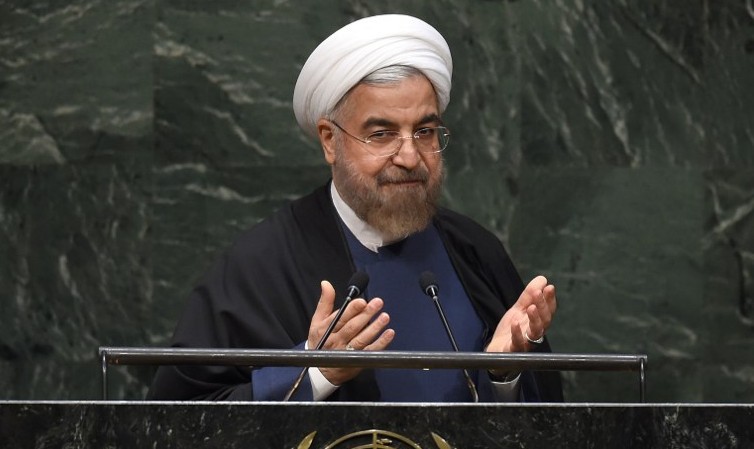
Comparing Iranian president Hassan Rouhani’s speech with that of President Trump’s at the 74th United Nations General Assembly Session this week one cannot but notice the stark differences between their tones, their goals and their contents.
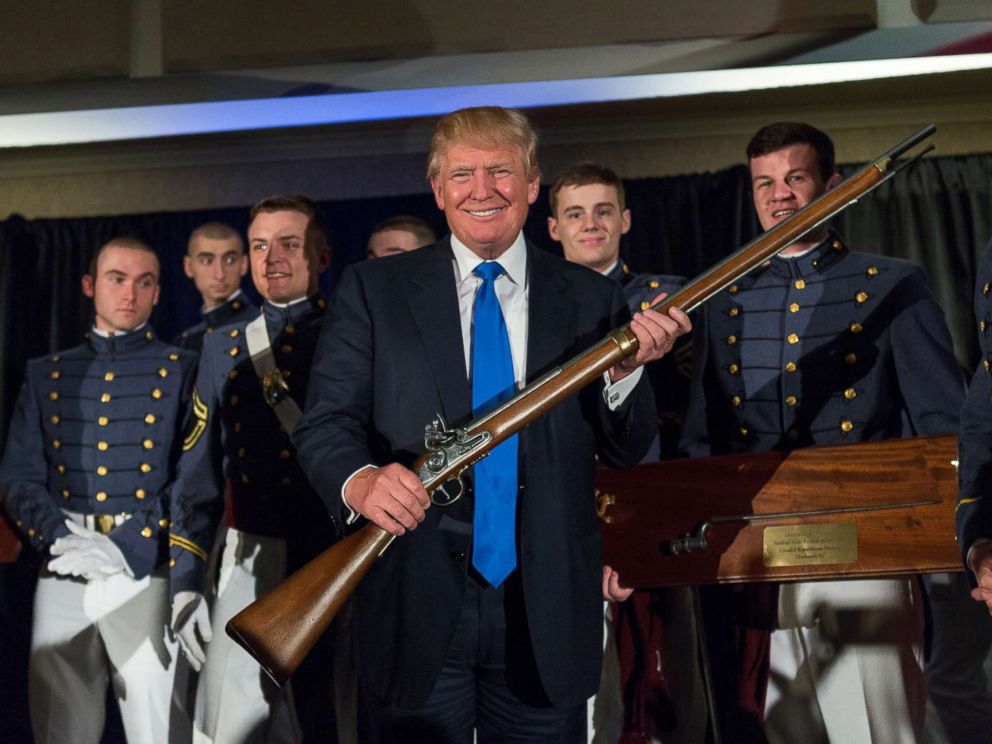
In his deliberately monotonous speech Trump expressed delusional elitist self-grandeur and righteousness as the leader of the global mightiest military power, portraying it as a protectionist global police force that has the right and the capability to enforce specific policies other countries have to adopt and pay for under the guise of paying their fair share for the tremendous defense burden that America had born.
In an implied threat he stressed the fact, that since his election, his administration had spent $2.5 trillion to completely rebuild an unrivaled military power to make the US by far the most powerful nation. Yet he does not see himself as one of the leaders, whom he criticized as those, who thirst for control thinking they are destined to rule over others, nor one of those, who squander the nation’s wealth on nuclear power and the means to deliver them.
Targeting the ever-growing China’s second global economy, Trump announced the placing of massive tariffs on more than $500 billion worth of Chinese goods as part of what he called an ambitious campaign to reform international trade system to make it balanced and reciprocal, stressing that the World Trade Organization needs to be reformed. Here, again, Trump is trying to inforce specific policies that will affect many other countries include the USA itself besides China.
Trump ignored the fact that American corporations had convinced previous administrations to legalize and facilitate the outsourcing of American factories and American jobs to cheaper and more lenient regulating countries such as China. Such outsourcing had caused the high rate of unemployment, the devastation of the middle class, and the growing huge crisis of homelessness, whose existence he totally ignores. Instead he bragged about the fake economic growth, alleged unemployment rate and job creation especially among the minorities, and the claim of 2.5 million Americans allegedly have been lifted out of poverty during his administration.
Trump accused leaders of many countries of suppression, corruption, murder of their own citizens, war-mongering and global terrorism. Focusing specifically on Iran, Trump accused Iran of being the greatest security threat facing peace loving nations. Projecting America’s very well-known record of creating and supporting terrorist groups, as reported many times by armswatch, he accused Iran of being “the first world sponsor of terrorism” with a record of death and destruction fueling tragic wars both in Syria and Yemen. Ignoring the fact that Iran has not attacked any country for the last 300 years, and had helped its neighbors fighting terrorist groups, Trump accused Iran of blood lust when world history is full of documented American blood lust all over the world, perpetrated recently in most South Asian countries, in every Middle Eastern state, in most Africa and in Latin America.
Trump accused Iran of squandering its nation’s wealth on nuclear weapons and the means to deliver them although the American CIA itself and IAEA report that Iran is compliant to the NPT and to the JCPOA agreements and has all its facilities open to IAEA inspections. Trump justified US withdrawal from Iran’s nuclear deal because it is a terrible deal (all Obama’s administration’s deals are bad deals to Trump) that did not include ballistic missiles. In reality it was the best deal for the US since it did not put any reciprocal limitations on the American nuclear weapons program nor on those of the other four countries as it did on Iran’s nuclear program. Let us not forget that previous American administrations was helping Iran, during the Shah’s regime, developing nuclear weapons program.
Trump justified imposing the highest level of sanctions on Iran Central Bank and Sovereign Wealth Fund due to the alleged Iranian attack on Saudi Arabian oil facilities. The US as well as many other countries have failed to provide any tangible evidence of Iran’s responsibility of the attack, and had totally ignored the Houthis’ claimed responsibility of it. The Houthis had demonstrated in the last few months their military capabilities when they bombed other Saudi oil facilities that were not then attributed to Iran.
The real reason behind American animosity towards Iran was revealed when Trump accused Iran of being anti-American and anti-Semitic calling Israel a malignant cancer tumor that has to be removed and eradicated, something the US will never allow. The anti-Semitic accusation here is actually anti-Zionist not anti-Jewish. Trump as well as all the western leaders, ignores the fact that outside of Zionist occupied Palestine (Israel) Iran has the largest Jewish community in the world, living peacefully with a representative Jewish Member of Parliament. The worst anti-Semites is Zionist Israel, whose distorted religious creed and political zeal are against Semitic Arabs; for Arabs are the real Semites while most Zionist Israelis are Ashkenazi.
As for anti-American feelings and death to America chants, these are normal reactions to hostile aggressive American policies towards Iran that included the 1953 toppling of the democratically elected Mossaddeqh’s government, the opposition to the 1979 revolution, the American support to 1980-88 Iraq’s war against Iran, and the 40 years economic sanction wars. Let us also not forget the calling to bomb Iran to the Stone Age by many American and Israeli officials and major news media.
In his speech Iranian President Hassan Rouhani, in contrast to Trump, called for mutual trust, commitment to signed international deals, neighborly mutual respect, dialogue, unity and cooperation to achieve regional peace and stability without any interference into the internal affairs of neighboring countries, and to guarantee the security of free oil flow from each gulf country. He affirmed that Iranian, not foreign, forces are the major security and stabilizing factor for the freedom of navigation in the Persian Gulf, Strait of Hormuz and Sea of Oman.
A great part of his speech was a comparison between the disruptive American interference in the region and the stabilizing security-promoting Iranian efforts. He hinted that such American interference had inflamed the Middle East with wars of extremism, Fanaticism, terrorism and occupation. He saluted all the freedom fighters, who do not surrender to tyranny in countries like Afghanistan, Iraq, Syria, Yemen, and Palestine, describing the Palestinians as the biggest victims of Zionist occupation, discrimination, appropriation of land, settlement expansions and killings. He accused successive American administration of supporting this Zionist terror with Trump recently recognizing al-Quds (Jerusalem) as capital of Israel and acknowledging the Syrian Golan Heights also as part of Israel.
Compared to this American destructive injustice, Iran had worked to promote peace in the area such as its cooperation with Russia and Turkey through Astana Conferences to promote peaceful resolution in Syria, and had also cooperated with the UN to facilitate reconciliation talks among Yemen parties with the four European countries resulting in the Stockholm Peace Accord concerning the Yemeni Hodeida port.
Rouhani described the American administrations as addicts to economic sanctions against Iran for the last 40 years that had also affected many other countries as well. He described these sanctions as economic terror attacks and international banking piracy, whose goal is to deprive Iran from participating in the global economy. He asserted that these sanctions were ineffective and had succeeded only in motivating Iran to depend on its own national resources that led to innovative solutions resulting in economic independence and growth rather than bankruptcy.
Rouhani explained that Iran promotes moderation reminding the Assembly of Iran’s sponsor of the initiative of the World Against Violence and Extremism (WAVE) four years ago in this same assembly. The JCPOA is another case in point. The deal was the outcome of two years of intensive multilateral negotiations, overwhelmingly applauded by the international community, and endorsed by the Security Council as a part of Resolution 2231. As such, it belongs to the international community in its entirety, and not to only one or two countries. The deal can become a new model for global interactions based on mutual constructive engagement between all nations.
Rouhani accused the US of violating UNSC resolution 2231 when it unilaterally withdrew from the JCPOA. Such an action constitutes a breach of the sovereignty, political and economic independence of all the world’s countries. By violating its international commitments, Trump’s administration had only destroyed its own credibility and undermined international confidence in negotiating with it or accepting its word or promise.
Despite the American withdrawal Iran remained committed to the deal giving the Europeans the opportunity to fulfil their commitments. Yet so far Europe seems not capable of fulfilling their commitments leaving Iran no choice but to rely on its own strength as Rouhani explained. Maybe Iran would take Trump’s advice to think of Iran first as he thinks of America first.
Although Rouhani had emphasized that Iran will never negotiate under sanctions, he left a door open when stating that the only way for negotiations to begin is to return to previous commitment and compliance. If the US is satisfied with the JCPOA, which is a minimum, then Iran will accept it, and it could be accomplished through the supervision of the IAEA. It is left to the US to reconsider.
Rouhani explained that the Iranian security doctrine is based on the establishment of peace and stability in the Persian Gulf and providing freedom of navigation and safety of movement in the Strait of Hormuz and in the Sea of Oman. He explained that the free flow of oil and other energy resources through these areas can be guaranteed when the countries of the region participate together to build a security umbrella covering all regional countries. So he proposed the forming of a “Coalition of Hope; a Hormuz Peace Endeavor” to promote peace, stability, progress and welfare for all countries of the region and to enhance mutual understanding and peaceful and friendly relations amongst them.
He proposed further that this coalition should be based on important principles such as the compliance with goals and principles of the UN, mutual respect, dialogue and understanding, respect for territorial integrity and sovereignty, inviolability of international borders, peaceful settlements of all differences, and more importantly; two fundamental principles of nonaggression and non-interference in the domestic affairs of each other. He added that the UN presence is necessary for the creation of international umbrella in support of this coalition.
Rouhani explained that the most effective peace coalition is that which is formed by the neighboring countries in the Gulf region. Any similar coalition under the centrality and command of foreign forces would be a clear example of interference in the affairs of the region. A foreign coalition would be in contravention to the right of free navigation and the right to development and would escalate tensions, further complicate conditions increasing the mistrust in the region, and would jeopardize regional peace and security.
Rouhani emphasized that such security will not be achieved by American military presence nor by interventions using American weapons. He explained that after 18 years of American intervention in the region the US has miserably failed to even reduce acts of terrorism. The US has miserably failed in Afghanistan, in Iraq and in Syria. The security of the region is a larger matter than the US could handle while Iran had managed to terminate the scourge of Da’ish (ISIS) terrorists with the assistance of neighboring nations and governments.
He emphasized further that security cannot be purchased or supplied by foreign governments, rather it can be achieved by the cooperation of the neighboring countries. America is not in the neighborhood, and as the Arabic saying goes “seek good neighbors before buying a home” he explained.
Rouhani addressed the Saudis advising them that when Yemeni self-defense reaches the Saudi area of Hejaz then they should seek the original warmonger for punishment, rather than spewing unsubstantiated accusations against the innocents. He advised that the security of Saudi Arabia can be guaranteed by the termination of aggression on Yemen rather than spending their fortune on expensive American weapons and inviting foreign troops to defend them.
Rouhani warned that the region is at the edge of collapse; a single plunder can fuel a huge fire. He warned that Iran will respond decisively and strongly to any sort of aggression to its sovereignty and territorial integrity. He underscored that Iranian defense capabilities including missile systems are solely defensive deterrents for the maintenance of regional peace and stability. The ultimate peace and security in the whole Middle Eastern region passes through inward democracy and outward diplomacy.
Instability and extremist violence have only been exacerbated in the region through the military interventions of extra-regional actors; the US, who try to sell ever more of their deadly weapons to other states by accusing Iran of fomenting instability. The security of the region shall be provided when the American military pulls out of it leaving the Gulf States to handle their own security by themselves. Rouhani stated.
Rouhani concluded his speech with a message from the Iranian nation: let us invest in hope for a better future rather than in war and violence, let us return to justice, to peace, to law, to commitment and promise, and finally to the negotiating table.
Iran’s call for the initiative of the Alliance of Hope; Hormuz Peace Endeavor, could be a very successful and practical method of creating a peaceful and secure Middle East enhancing and securing global economy. Yet, it is very idealistic and hard to achieve in our still imperialist might is right world.
Dr. Elias Akleh is an Arab American from a Palestinian descent. His family was evicted from Haifa, Palestine, after the 1948 Nakba when the Zionists stole his family’s property. Then the family was evicted again from the West Bank during the 1967 Naksah, after the Zionist, again, occupied the rest of Palestine.

Friday, September 20, 2019

Trump’s Empty Locked and Loaded Posture

Major Saudi Arabian oil facilities of Abqaiq (Buqayq) and Khurais, east of capital Riyadh, were attacked last Saturday, September 14. The attack could be considered the most devastating in modern history affecting not just Saudi Arabia but also the global economy. Abqaiq, operated by the Saudi oil giant ARAMCO, is the largest oil processing facility in the world. It is reported to process about 7 million barrels of oil per day.
The immediate result of the attack resulted in slashing down of Saudi oil production down to 50%. This is equivalent to 5% of the global production of crude oil. Oil prices had already jumped to almost $65 per barrel and is expected to hover around $73 per barrel early 2020 assuming no new attacks against other oil facilities would take place.
To minimize the effect of such high prices within Saudi Arabia itself, Al-Saud ruling family, who owns ARAMCO, has shut off the 350 thousand barrel per day oil pipeline to Bahrain, and released its oil reserve to compensate for the loss. Unfortunately, the Saudi reserve may last only 37 days less than the amount of time that may take for experts to evaluate the damage, not mentioning the length of time to clean up the facilities, order new equipment and material, and rebuild the facilities. This may take a year of non-stop extensive labor if not any longer.
The extent of the damage is far worse than what Saudi Arabia would confess. The long-lasting repercussions on Saudi Arabia and on the world market will unfold gradually with time. We already are seeing one major effect namely that Saudi Arabia has been turned from an oil-producing to an oil-consuming country. On Thursday 19th, Saudi Arabian ARAMCO had asked Iraq’s State Oil Marketing Organization (SOMO) for some 10 million barrels of Basra Light, to load in October and November to compensate for Saudi’s loss of oil production. This is also reported and confirmed by Wall Street Journal.
The Saudi Dammam Marine Traffic office reported that there are at least 11 giant oil tankers docked at the port not knowing when they will be loaded with crude oil. It is also expected to receive fewer oil tankers than usual to dock at Saudi ports in the next few months. Oil tankers will be directed to other oil-producing countries. Such uncertainty will increase the cost of doing business and of insurance premiums for the tankers.
This particular attack caused the Saudi Exchange Market to plummet 5%, and will definitely push foreign investors to withdraw from Saudi economy due to lack of adequate security, and due to threats of possible further attacks that might directly hit their investments.  Saudi Arabia could witness a repeat of the 2018 investors’ withdrawal worth of approximately $80 billion when investors such as JPMorgan, Blackstone, Ford, Standard Charter and Credit Suisse among others did not participate in the Davos in the Desert Conference, also known as the Future Investment Initiative, which put MBS’ dream project; NEOM, on indefinite hold. Those withdrawals increased the Saudi 2018 budget deficit to $35 billion. Spending billions on weapons purchase to continue the war on Yemen had also contributed greatly to the deficit.
The attack had come in a crucial time; a few weeks before Saudi’s plan to offer 5% of ARAMCO’s stocks to the market. The value of the stocks has been greatly reduced causing a huge loss to the royal family, who owns the company.
Saudi Aramco’s  R&D Center in Dhahran, Saudi Arabia. (Source: Saudi Aramco)
This attack came as an expected consequence of the war against Yemen. Saudi Arabia and UAE had formed what was called Saudi Alliance to restore the Saudi puppet Abdrabbuh Mansur Hadi back to power in Yemen. A Houthi led revolution deposed Hadi, who fled to Saudi Arabia. The Saudi Alliance forces consist mainly of Sudanese and Ethiopian mercenaries led by some Saudi and Emirati military officials supervised, directed and armed by American, British, French and Israeli military and intelligence officers.
Let us be clear about the war on Yemen. It is a genocidal imperialist war incited by the Western power…
Let us be clear about the war on Yemen. It is a genocidal imperialist war incited by the Western power to gain control over the strategic Bab el-Mandab Straight controlling the southern entrance to the Red Sea, to control the strategic Socatra Island in the Gulf of Aden, and the oil and the rich mineral resources in the Yemeni mountains.
Contrary to the expectations that the war against Yemen would take only few months to accomplish its goals, it is now in its fifth year and is still going strong and with opposite than the expected results. It has been a genocidal devastating war with the Americans fueling and navigating fighter planes bombing every Yemini city, all infrastructures, governmental and civilian institutions including schools, hospitals, markets, factories, farms and even wedding and funeral processions. This genocidal war included soliciting Israel’s help to drop two nuclear bombs on Sana’a in May 2015. It also included an economic blockade killing civilians through starvation and preventable diseases.
Having the legitimate right of self-defense the Houthis stood up against Saudi aggression. Born in the country, used to its harsh climate, familiar with its rugged mountains, and defending country and families they started by rebelling and inflicting heavy casualties on the Saudi mercenaries, who are not familiar with the harsh terrain of Yemeni mountains. Then they manufactured and improved ballistic missiles and explosive-laden drones; long-range precision targeting controlled flying bombs.
Missiles and drone aircraft are seen on display at an exhibition at an unidentified location in Yemen in this undated handout photo released by the Houthi Media Office on September 17, 2019. Houthi Media Office
Unlike Saudi fighter planes that bombed Yemeni civilian targets, Houthis bombed Saudi military targets; airports for military fighters and military bases. Lately, they started bombing Saudi monarchy owned ARAMCO targets to affect heavy cost on the kingdom.
On May 14 of this year, the Houthis sent 10 drones to attack oil pumping stations west of the Saudi capital Riyadh, at Dawadmi and Afeef, disrupting the flow of oil through a 1,200 kilometer pipeline that carried crude oil from Saudi Arabia’s main eastern oil fields to the Red Sea port city of Yanbu in the West. This vital pipeline has a capacity of at least five million barrels per day.
On August 17th the Houthis again used ballistic missiles and drones targeting the Shaybah oil field near the border with the UAE, as well as the Dammam exporting complex in Saudi Arabia’s Eastern Province. Shaybah oil field produces about one million barrels of crude oil a day.
These two particular attacks demonstrated the long-range reach of the Houthis’ drone program. The Houthis had demonstrated that a new rule of military engagement has been achieved. Saudi Arabia can no longer bomb Yemeni targets with impudence and without any retaliatory action. The Houthis now can retaliate by sending their drones to bomb any target deep in the Saudi kingdom including its capital Riyadh.
Yet, instead of learning the lesson and continue peace negotiations with the Houthis, the Saudis, on September 7th, sent their fighter planes to the Yemeni city of Dhamar to bomb what they claimed to be a drone manufacturing facility. Unfortunately, the Saudis relied on faulty intelligence, and instead, they bombed a prison holding their own mercenaries, who were waiting for a prisoners exchange deal.
…with the ability to manufacture 6 such drones per day the Houthis are warning that more devastating attacks would target deep in Saudi territories if Saudi Arabia does not cease its aggression.
The Houthis’ devastating response came one week later, on Saturday, September 14th, when ten of their drones struck ARAMCOs’ oil facilities of Abqaiq and Khurais 12,000 kilometers deep on the eastern side of Saudi Arabia. Yahia Sarie; the military spokesman for the Houthis announced in a televised broadcast that the Houthis, with the help of on the ground intelligence from local operatives, were able to target the oil facilities with ten drones in pinpoint accuracy. He also explained that with the ability to manufacture 6 such drones per day the Houthis are warning that more devastating attacks would target deep in Saudi territories if Saudi Arabia does not cease its aggression. He also warned UAE that it could face similar attacks if it does not withdraw its mercenaries.
Having encouraged and benefited from arms sale to Saudi Arabia to perpetuate such war crimes these leaders have no right at all to condemn the legitimate Yemeni’s right of self-defense.
I was not surprised to see some Arab leaders, as well as European and American leaders, who stood watching the Saudi war crimes against Yemen during the last five years with their mouths shut without any criticism or condemnation, suddenly wake up and condemn the attack on the oil facility calling it a terrorist attack. Their conscience, if they have any, responds only to personal financial rather than to humanitarian loss. Having encouraged and benefited from arms sale to Saudi Arabia to perpetuate such war crimes these leaders have no right at all to condemn the legitimate Yemeni’s right of self-defense.
What surprised me instead, is their pathetic perspective of the Yemenis as undeveloped non-industrial and non-innovative people denying them the intelligence and the ability to manufacture their own defensive weapons. They claimed that drone technology and manufacture is beyond Yemeni intellectual capability. We did not hear such claim after the two drone attacks against ARAMCO facilities at Dawadmi and Shaybah, instead, the Saudi kept justifying their further extensive air raid as their willingness to destroy drone factories.
It might help to remember that many Yemeni military engineers had in the past been militarily trained and university graduates of the old Soviet Union, of today’s Russia, of North Korea, of East Germany and other eastern European countries. It takes only one scientist to teach others how to manufacture missiles and drones. Teenagers of today are learning how to build drones from the internet.
On Wednesday, September 18th, during a Saudi press conference the recently assigned energy minister Prince Abdulaziz bin Salman downplayed the extent of the damage to the oil facilities claiming that the facilities will be back in full production by the end of the month. This total nonsense aimed at providing a false sense of security in an attempt to maintain the price of crude oil as is. If you have watched the internet videos of the oil-blazed Abqaiq facility covering the sky with black smoke you would have an idea how devastated the attack was.
During the same press conference the Saudi defense ministry spokesman Lt. Col. Turki al-Malki accused Iran of the attack alleging that Iran had used very sophisticated missiles; way beyond the capability of the Houthis, to strike the oil facilities. Al-Malki claimed that Iranian made twenty-five delta-wing drones and missiles, used in the attack, came from north to south direction. Iran is north of Saudi Arabia while Yemen is on the south. He showed what he claimed as broken parts and unexploded missile collected from the site as proof that they were Iranian made. One should notice that these alleged parts were not charred by the huge blaze of the site, which cast serious doubts over this claim.
Colonel Turki al-Malik displays equipment he said was used to attack a Saudi Aramco oil facility
The absurd claim that the drones and missiles are allegedly Iranian made alludes that the attack was Iranian. Using the same logic we could conclude that the US has been attacking Yemen because Saudi Arabia had used American weapons to bomb Yemen.
The other absurd claim that the drones came from the north while the Patriot system is directed to the south is supposed to explain the failure of the system to detect the drones. It is known that radars work on a 360 degree fashion to detect any incoming flying object. If the radar was able to detect the drones; no matter which direction they came from, it would be easy to re-direct the Patriot missile system towards that direction unless they did not have Patriots protecting the facilities.
The American initial response to the attack was Trump’s emphatic claim that the US is “locked and loaded”; ready to punish the culprits. He tweeted on Sunday: “Saudi Arabia oil supply was attacked.  There is reason to believe that we know the culprit, are locked and loaded depending on verification, but are waiting to hear from the Kingdom as to who they believe was the cause of this attack, and under what terms we would proceed!”
The CIA trained to lie and habitual lying Secretary of State Mike Pompeo hastened to repeat the American mantra of “Iran did it” even before the dust had settled in the Saudi oil facilities, before any examination or investigation of the facilities, and without any tangible proof or evidence. The US is ashamed to confess that its prized Patriot missile defense system and its very sophisticated satellites have miserably failed to detect the “rudimentary” cheap Houthi drones that flew 12,000 kilometers in Saudi territory without being detected. Such scandalous failure is bad business for the American military-industrial complex and needs to be concealed, otherwise other countries would resort to buying the Russian S-300/S-400 system as Putin had suggested to Saudi Arabia similar to what India and Turkey had done.
Iran had denied its responsibility of the attack, yet supported Yemenis’ right for self-defense. Iran does not benefit from attacking Saudi Arabia. Iranian officials had many times called on Saudi royal family to join Iran in a local alliance to safeguard the security of the Persian Gulf. The Iranians have the power and the courage to claim any military action they may take as we had seen when they shot down the American Global Hawk spy drone last June.
Besides the accusations of the habitually lying Pompeo and the American fake news media hinting about Iranian responsibility, no American military or political officials had directly blamed Iran. European and Asian leaders as well had also stated that there was no proof that Iran bombed the oil facilities. They all claimed that the origin of the drones is still unknown although the Houthis had claimed responsibility.
Trump had downplayed the effects of the attack on American consumer falsely claiming that the US is producing enough of its own oil, and it does not need Saudi oil. He authorizing the release of oil from the Strategic Petroleum Reserve as needed. According to reports by the US Energy Information Administration (EIA) the US oil production in 2018 was about 17.71 million barrel per day, while its consumption was about 20.5 million barrel per day.
To reduce the expected economic effects of the attack on the American economy the Federal Reserve chairman; Jerome Powell, announced on Wednesday 18th that due to expected economic continuous expansion on a moderate rate the Fed will lower the interest rate down to between 1.75% – 2%. This is the second time this year the Fed had reduced the interest rate.
Trump is an arms salesman. He just wants to keep milking his Saudi and Emirati cows further.
Trump admitted that the US has been selling weapons to Saudi Arabia, but the US has no defense treaty with the country, thus the US is not obliged to come to its defense. Trump has no interest in going to war against Iran on behalf of Saudi Arabia. Let us remember that he refrained from responding to Iranian downing of the American drone. Trump is an arms salesman. He explained that if Saudi Arabia needs protection it has to pay for it; buying more American weapons. And paying in billions, Saudi Arabia has been doing for the last five years but did not get the anticipated protection.
Trump does not want to take the US to war as he stated. He just wants to keep milking his Saudi and Emirati cows further. So he sent his Secretary of State Pompeo to Saudi Arabia and to UAE to discuss how buying more weapons would improve the security of their kingdoms. At the same time, as a face saving, he instructed his Secretary of Treasury; Mnuchin, to “substantially increase” the ineffective sanctions against Iran.
The so-called Saudi Alliance, and in fact the whole world, should not ignore the Houthis’ military capabilities and resolve to inflict a definite more devastating attacks deep in the Saudi territory that will affect the whole world, and should take this attack as a serious warning message to stop the war on Yemen.

Friday, September 06, 2019

Sins of The Arab Leaders

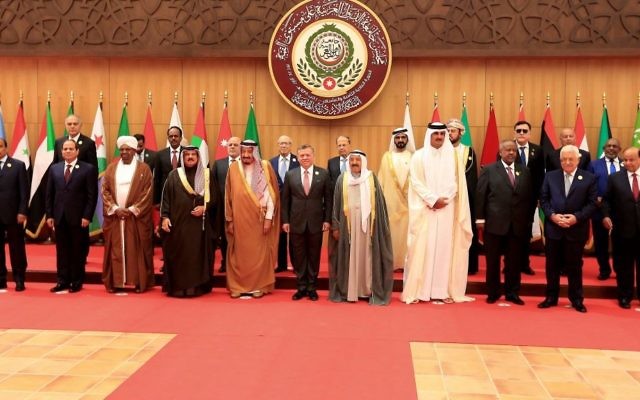
An American friend asked me the following question: How is it that the large Arab World that extends from the Persian Gulf east all the way to the Atlantic Ocean west, and from Turkish border north to the Indian Ocean south with all its wealth of oil and gas, and spending trillions of dollars acquiring American, British and French sophisticated weapons could not stop Zionism from occupying Palestine and is still unable today to defeat the tiny terrorist state of Israel?
Due to the Zionist controlled and poor American education system, and the Zionist control over the media, it is difficult for the average American to understand the modern Arab history in general and the Palestinian cause in specific. You have to live it in order to understand the depth of the real history especially the vast oral history and the undocumented events.
The Middle Eastern region was inhabited by many separate Arab Bedouin tribes until they were united by the Islamic rule in 661 A.D and became a part of the Islamic Umayyad Caliphate that extended from India east all the way to Spain west, covering Middle Eastern and north African regions. This situation lasted for more than 600 years under different forms of Islamic Caliphates until 1362 A.D. when the Ottoman Empire took over governing the whole Middle Eastern region for 400 years until the beginning of WWI.
According to the Sykes-Picot Agreement, Britain and France divided The Middle East into different mandates and installed their own Arab puppet rulers. Britain, also, gave Palestine to Zionist Jews. To maintain their British gold salaries and their ruling positions over their perspective region (state) those installed Arab puppets had tacitly accepted and agreed to sacrifice Palestine to the Zionists. Fearing for their rules from popular revolts those Arab leaders, pretending to oppose the unjust and illegal 1948 UN Partition Plan of Palestine, sent few troops; a total of 20 thousand Arab soldiers to Palestine to fight the 80 thousand Zionist terrorist militias. The real goal for these troops was not to destroy the unilaterally declared terrorist state of Israel, rather to prevent Israel from occupying territories assigned to a Palestinian state according to the Partition Plan. Arab leaders wanted a buffering Palestinian state preventing Zionist expansion.
Since 1948 until this very day, most of Arab leaders including the Arab League, although pretending to support the Palestinian cause, have not only abandoned the Palestinians to face Zionist genocidal terror alone as if they were non-Arab foreign population, but also had covertly conspired against them and against any Arab organization or government that would support them.  They shared the Israeli first Prime Minister; Ben Gurion’s, false hope, who said that the “old [Palestinians] will die and the young will forget.” Yet the Palestinian successive new generations are still carrying the keys for their grandfather’s homes in Palestine, and are more aggressively fighting for their freedom and for their right of return.
Here follows a short history of the sins of some Arab leaders:
Saudi rulers: Their history started with Hussein ibn Ali Al-Hashemi, who was the Sharif (ruler) of Mecca in the Arabian Peninsula, who entered into agreement with the British, known as Hussein-McMahon Agreement, where he agreed to enter WWI on the British side and lead an Arab revolt against the Ottoman Empire, in return Britain would help him establish a Pan-Arab State in the Middle East. After the defeat of the Ottoman Empire Sharif Hussein discovered that Britain had betrayed him by entering into agreement with France (Sykes-Picot agreement) in order to divide the region among themselves, and by Balfour Declaration promising Palestine to the Zionists.
Due to Hussein’s opposition to this betrayal the British supported and armed Abdul Aziz Al-Saud with his extremist Wahhabi militias, to topple Hussein in 1925 and to establish the Kingdom of Saudi Arabia in 1932. For the British support Abdul Aziz wrote a letter to sir Percy Cox, the British High Commissioner, expressing his agreement to hand over Palestine to Zionist Jews. It is important to mention, here, that Al-Saud family is originally Jewish (Arabic sourceEnglish source) from the city of Isfahan, whose founding grandfather was called Mordechai bin Abraham bin Moshe Al-Donamy, who changed his name to Marikhan Al-Saud when immigrated to the Arabian Peninsula.
It has to be said that policies of the successive Saudi kings had the most drastic effects in spreading political chaos, divisions, hatred, wars and destructions within the Arab states generally and the worst detrimental effect on Palestine specifically for the sole benefit of the Zionist Israeli project.
In 1945 King Abdul Aziz shifted allegiance from Britain to the USA; the main supporter to Israel. Although reports indicated that the Saudi king expressed his opposition to the Israeli project to President Roosevelt during their meeting on the USS Quincy destroyer, yet the secret Saudi Israeli intelligence cooperation and military collaboration continued as has been revealed many times lately.
This military collaboration, exposed by Foreign Affairs, was played in 1964 in Yemen during the North Yemen civil war when an Israeli military pilot; Aryeh Oz, conducted 14 air drops of Saudi weapons to Yemeni royalists. Such military air collaboration is still going on today in the Yemeni theatre. Israeli air force planes were reported delivering Israeli weapons; missiles and other military equipment to Saudi Khamis Mushait base in Asir. Israeli officers were also reported killed by Yemeni’s Scud missiles targeting this base. During the present Saudi war against Yemen Israel, with the agreement of Saudi king, took this opportunity to test its tactical nuclear weapons and to help the Saudi king when in May 2015 Israeli military pilots dropped nukes on Sana’a, Yemen.
In 1966 the Saudi king Faisal bin Abdel Aziz sent a letter to the American president Lyndon Johnson urging him to push Israel to attack Egypt, Jordan, and Syria and to occupy Gaza, Sinai, the West Bank, and the Golan Heights, thus ending the Palestinian cause and disrupting Egyptian President Nasser’s plans to form an Arab Union.  The king also urged Johnson to establish a Kurdish state in Iraq. This was a push towards the 6 days war in 1967.
Saudi Arabia had also provided military intelligence to Israel during its 2006 war in Lebanon. In 2014 it was reported that Saudi Arabia had financed most of Israel’s weapons build up and paid $1 Billion for the assassination of Iranian nuclear scientists. According to Panama Papers Saudi king Salman bin Abdul Aziz helped finance the election campaign of Israeli Prime Minister Netanyahu in 2015.
It is known to the whole world that Saudi Arabia partnered with Qatar, Turkey, Israel and the US in creating, financing and arming all the terrorist groups; ISIS and its off shoots, to destroy Syria even before Qatar former Prime Minister Hamad bin Jassim’s confession.
Saudi anti-Arab posture in support to Israel was not exclusive to the ruling family. Saudi princes, business men, and clergy had many times expressed their support to Israel blaming Palestinian resistance and Intifadas. The statements of Saudi billionaire Al-Walid bin Talal during an interview with the Kuwaiti paper “Alqabas” was just one example. Al-Walid expressed his support to Israel against the Palestinian Intifada, and called for a Saudi Israeli coalition against what he called the Iranian threat.
The myth of the Iranian threat is being widely used by the Saudi, Israeli and American politicians and media narratives in an attempt to divert attention from the real Israeli threat to the region. The Saudi Israeli political and military cooperation has come to the open, and is been claimed as an example to follow for the rest of the Gulf States to face the Iranian threat. As part of this Saudi Israeli military cooperation the two countries formed a joint militia to control the Red Sea. Lately Saudis are seeking to acquire Israeli Iron Dome missiles in an attempt to stop Yemeni rockets.
The Saudi treachery against Arabs and cooperation with the terrorist Israeli state would fill volumes. It has come recently to the open, and one needs only follow the news to understand its depth.
Egyptian rulers: Saudi rulers are not the only Arab traitors. Egyptian rulers had also played the same role. Gamal Abdel-Nasser was the only genuine leader who pushed for Arab unity and supported the Palestinians. He created and supported the Palestinian Liberation Organization (PLO) under the leadership of Yasir Arafat. Yet, he was betrayed and is suspected to be assassinated rather than dying of a heart attack.
After Nasser’s death (assassination) Muhammad Anwar el-Sadat became the president. Sadat got rid of all the influential Egyptian politicians by either forced retirement or by imprisonment, and turned Egyptian economy upside down by divorcing the Soviet Union and cozying up to pro-Israel USA. Sadat is known for two accomplishments (sins); the 1973 October war and peace treaty with Israel.
After the 6 Days War the Suez Canal was closed against international traffic. This closure was costly for the western corporations as well as for Egypt.  The 1973 October War was Henry Kissinger’s (then the American Secretary of State) plan to fix this problem. This war was a conspiracy between Sadat and Kissinger in order to re-open the Suez Canal for business and to destroy the Syrian military forces (Alan Hart’s “Zionism, The Real Enemy of The Jews; Volume II). This conspiracy was also confirmed in a memo by Vladimir Vinogradov; the Soviet Ambassador in Cairo:
“Sadat entered into conspiracy with the Israelis, betrayed his ally Syria, condemned the Syrian army to destruction and Damascus to bombardment, allowed General Sharon’s tanks to cross without hindrance to the western bank of the Suez Canal, and actually planned a defeat of the Egyptian troops in the October War.”
After the cease fire Sadat visited Israel giving a speech in the Knesset, and entered into peace agreements that was culminated in 1979 with Camp David Accords providing free passage to Israeli ships through Suez Canal and recognizing the Strait of Tiran and the Gulf of Aqaba as international waterways. Such recognition, plus the Egyptian exit from the Israeli Arab conflict were great gains for Israel. With the Egyptian army neutralized the whole Israeli army was free to focus on the PLO in Lebanon that eventually led to the 1982 Israeli invasion and devastation of Lebanon.
In 1981 Sadat was assassinated and was succeeded by Hosni Mubarak, who ruled Egypt for 30 years. Besides being Egyptians, Mubarak’s family members are also British citizens. Besides his oppressive rule and theft of around $134 billion of Egyptian wealth, Mubarak was a good friend for Israel. He sold Israel Egyptian natural gas for a lot cheaper than the global market price. His wife; Suzanne Mubarak, received $300 million Israeli bribe in order to affect changes in the Egyptian educational curriculum, especially in historical and religious studies, to reflect positive attitude towards Israel.
Mubarak instigated enmity against Palestinians especially in Gaza Strip, who used to be Egyptian citizens before 1967. When Israel enforced a siege against Gaza Strip in 2007, Mubarak joined Israel in the siege and closed Rafah Crossing; the only life line left for Gaza. Worse than that he constructed in 2009 an underground steel barrier on the Egyptian border with Gaza, and flooded Gaza’s food smuggling tunnels.  As a mediator between Fatah and Hamas Mubarak actually sabotaged any possible compromise between the two parties.
Abdel Fattah El-Sisi became the Egyptian president in 2014. He is a Sephardi crypto Jew; the son of a Moroccan Jewish mother; Malikah Titani, and the nephew of Uri Sabbagh; a member in David Ben Gurion’s political party. He was the only surviving Egyptian captain of the 1999 crash of EgyptAir 990 because he changed his flight plan at the last minute. There were 33 Egyptian military officers, including three Egyptian nuclear scientists, on the plane returning from military training in the US.
El-Sisi had accused Hamas of terrorism and tightened the siege against Gaza. He evacuated and destroyed the whole town of Rafah on the Gaza/Egypt border to create an 8 miles buffer zone to destroy Gaza tunnels and to choke and starve Gaza Palestinians. He gave ownership of the two strategic islands; Sanafir and Tiran on the Red Sea, to Saudi Arabia, who in turn turned them to Israel. The two islands control the sea passage to ports of Aqaba in Jordan and Eilat in Israel. El-Sisi claims that Egypt is mediating Hamas/Fatah reconciliation talks for unification when the facts show that El-Sisi is actually sabotaging these reconciliation attempts to keep Palestinians divided.
After eliminating any real political opposition (former head of armed forces Sami Anan, human rights lawyer Khaled Ali, former prime minister Ahmed Shafik, and army colonel Ahmed Konsowa)  El-Sisi won 2018 election with 97% of votes; a suspicious percentage used by previous Egyptian presidents as a proof of popularity. Yet, voters’ turnout was only 41%. The election featured only one other candidate – himself an ardent El-Sisi supporter.  Running against El-Sisi was Moussa Mustafa Moussa, chairman of the liberal El-Ghad Party, and an El-Sisi loyalist. Mousa was just a placeholder to give election a democratic face.
Jordanian kings: In 1921 Trans-Jordan (Jordan) was carved out of the Ottoman Empire and became a British protectorate according to Sykes-Picot agreement. The British installed Abdullah bin Hussein bin Ali as the ruler with his tacit agreement and acceptance of the establishment of a Jewish homeland in Palestine. King Abdullah met several times with Golda Meier, then the representative of the Jewish Yishuv, and formed what was known as a Hashemite-Zionist Accord, according which the Zionist would occupy more Palestinian land that allotted to them by the Partition Plan, while Abdullah would grab the West Bank under his rule. This was done in 1948. On his way to pray in Al-Aqsa Mosque in Jerusalem and then to meet some Israeli generals afterwards, King Abdullah was assassinated by a nationalist Palestinian.
Hussein bin Talal; the grandson of King Abdullah, became king of Jordan in 1952 when he was still 17 years old. He was raised and educated under the pro-Israel British supervision. He was a graduate of the British Harrow School and the Royal Military Academy Sandhurst. The salaries of his administration as well as his own salary were paid originally by the British government and later on by the successive American administrations. As an employee he had to follow his employer’s orders.
Many successful diaspora Palestinians, who returned home to establish businesses/factories in the West Bank to improve the economy faced two major obstacles. First, they would not get licenses or permits for their businesses unless they establish the business in the East Bank of Jordan and mainly in the capital Amman. The second is that the fees for such a business license include an under-the-table large bribe or part ownership to ministers in charge. These indicate a foreknowledge of the future Israeli occupation of the West Bank that took place in 1967.
I lived through the Six Days War.  Contrary to the reports, Israeli, not Jordanian, army initiated the attack. My house overlooked the main battle for Jerusalem. On a high hill in my town there was a Jordanian military base strategically overlooking the whole Jerusalem city. Before any shot was fired this military base was completely evacuated, and the military trucks drove to the East Bank on an old desert road south passing the city of Hebron. Few Palestinian soldiers defied the withdrawal orders and engaged the invading Israeli tanks on the opposite hill until they ran out of ammunition. Israeli warplanes saturated the area with napalm bombs.
After the war I was told by a distant relative, who was a captain in the Jordanian army based in Amman, that his brigade was loaded unarmed in closed trucks and driven to Jericho to face the Israeli army. He was told that they would receive arms there. But no arms were delivered, and eventually he ordered his troops to go home.
After March 1968 Karameh Battle when PLO fighters and the Jordanian army rebelled an Israeli incursion against the town, the PLO grew in number and in arms. When in September 1970 the Popular Front for the Liberation of Palestine (PFLP) hijacked three passenger planes to a deserted Jordanian air field King Hussein came under American pressure to destroy PLO bases in Jordan. Using imported Israeli “uzi” machine guns the Jordanian army was able to destroy PLO bases and evict Arafat out of Jordan.  This was known as Black September.
King Hussein conducted separate secret contacts with Israeli officials including Moshe Dayan, Yigal Alon, Yitzhak Rabin, and Golda Meier. He used to fly his own helicopter to Israeli-occupied Jerusalem or cross the border at Aqaba/Eilat ports for these meetings. Before October 1973 War he warned Golda Meier of the impending attack.
The present King Abdullah II is not better than his father nor his grandfather. With his salary being paid by the American administration Abdullah has to jump according to American orders. His kingdom has been a major conduit for Israeli products to the Arab World. Jordan is working with Israel on the Two Seas Canal; known also as Red Sea-Dead Sea Water Conveyance, whose declared purpose is to save the Dead Sea from evaporation, while its long term concealed purpose is to be a preliminary water canal connecting the Red Sea to the Mediterranean through Occupied Palestine (Israel) to circumvent the Egyptian Suez Canal. The kingdom had announced in September 2016 that it will import gas (Palestinian stolen gas) from Israel for $10 Billion, despite Algiers’ offer to provide Jordan with all needed gas for much lower prices.
Worse than that is the Jordanian Israeli American military cooperation against Syria. Irbid; a Jordanian city adjacent to the southern Syrian border, had a military operation center that included Jordanian, Israeli and American military officers, who worked together training new ISIS recruits before entering the Syrian territory. Jordan had also sent 12 of its military captains to Israel in September 2016, where they met with Israeli military officials in the Israeli military academy in the city of Netanya according to Israeli Yede’ot Ahranot. Such Jordanian Israeli intelligence cooperation is still going on under the guise of fighting terrorist groups.
Palestinian leaders: Many consider Yasser Arafat as a Palestinian freedom fighter hero. Actually, he was the worst that had happened to the Palestinians. He accepted the Israeli occupation of Palestine, and had virtually initialed his approval stamp on Balfour Declaration when he signed the Oslo Accord. Balfour gave a “promise” for a Jewish home land, a land he had no right to promise, then Arafat fulfilled  Balfour’s promise, and ignoring the rights of Palestinian land owners, he even gave Zionists more Palestinian land; land he never had any right to give away.
One should have the courage to state clearly that Arafat was a corrupt military dictator. Since taking over the PLO in 1969 he insisted on having total control over all decisions and finance without any accountability. Although he was selected as the leader of the PLO through devious methods, Arafat was never officially elected/selected by Palestinians under Israeli occupation or in refugee camps to represent them. He had forced his representation on them.
Many would be surprised to learn that Arafat had long accepted the Israeli occupation of Palestine, and all what he wanted was a small part of it for Palestinians; a two-state solution. This was a solution that Palestinians would not originally accept, and Arafat had to gradually sell it to them. In 1968 he came up with a political programme for a democratic state of Palestine; one-state solution, where Jews and Arabs live together with equal rights. In February 1974 the Central Council of the PLO issued the “Working Paper” calling for Arab and international recognition of Palestinian right to establish a national authority on any lands that can be wrested from Zionist occupation. This is a two-state solution, yet without any stipulation about Jerusalem. (Alan Hart: “Arafat: Terrorist or Peacemaker?”)
Arafat was a lousy politician. He was not able to gain Jordanian love and respect that led his PLO to be kicked out of Jordan in 1970 Black September. Rather than learning from his Jordanian experience he did the same mistake in Lebanon; a mistake led to his discharge from the country in 1982 civil war. Unlike the rest of Arab leaders, who distant themselves from Iraqi Saddam Hussein after his invasion of Kuwait in 1990, Arafat rushed to meet and to embrace him hoping for more financial support. Although the embrace is an Arab cultural greeting, yet it had cost Arafat the anger of Arab Gulf leaders and their financial aid.
Arafat’s worst mistake: most detrimental to Palestinians, was his signature on Oslo Accords in 1993. During the Arab/Israeli peace negotiations the Arab team was divided; each Arab country negotiated separately with Israel, leaving the Palestinian negotiating team in a weaker position. In his rush to achieve a political victory, Arafat circumvented the Palestinian negotiating team and signed the Oslo Accords without studying its deliberate contorted legal statements and its dangerous loopholes. The Accords granted Israel full and unconditional recognition and right to exist on usurped Palestinian land but no promise for a Palestinian state, no recognition of UNSC resolutions 242 (Israeli withdrawal from 1967 occupied territories), no recognitions of UNSC resolution 194 (Palestinian right of return), no end to Israeli occupation, no freeze on Israeli illegal colonies (settlements), and no reparations for all the destroyed Palestinian towns and for all the Palestinian massacres perpetrated by Israel.
More dangerous than that was when Arafat labeled Palestinian struggle for freedom and independence as acts of terrorism and violence and pledged PLO’s commitment to protect Israel’s security. In what is known as the “exchange of letters” between Arafat and Rabin, Arafat stated in his September 9th, 1993 letter that:
“The PLO recognizes the right of the State of Israel to exist in peace and security …. The PLO renounces the use of terrorism and other acts of violence and will assume responsibility over the PLO elements and personnel in order to assure their compliance to prevent violations and discipline violators …”
Trained by the American general Keith Dayton, the Palestinian security forces became Israel’s proxy police force suppressing Palestinian dissent and arresting many Palestinian activists. Arafat surrendered the fate of his Palestinian Authority and the fate of his people to Israeli whims when he agreed that Israel will function as the Palestinian tax collecting agency before depositing money into PA’s accounts.
Despite all of his political concession to Israel Arafat was poisoned by polonium; a radioactive substance, to clear the way for a more agreeable and a more conciliatory dictator; Mahmoud Abbas.
Abbas is the worst Palestinian traitor. He conducted secret negotiations with the Israelis leading to the devastated Oslo Accords. Arafat did not trust him and initially denied him entry to the West Bank. Later, the US and Israel forced Abbas onto Arafat and onto the Palestinians in March 2003 as a prime minister of the Palestinian National Authority.  A power struggle issued between Abbas and Arafat over the control of the Palestinian Security Services that led Abbas to resign 130 days later in September 2003. After Arafat was “removed” in November 2004, and after the removal of better suitable successors such as Marwan Barghouti, who was imprisoned by Israel, Abbas won the planned fake presidential election in January 2005. He is still the president today even though his term had expired in January 2009.
Farouk Kaddoumi; a co-founder of Fatah and later Chairman of Fatah’s Central Committee, accused Abbas and Mohammed Dahlan; head of the Preventive Security Forces in Gaza at the time, of conspiring with Ariel Sharon to assassinate Arafat and other Palestinian officials (Arabic source). He is also accused of conspiring with Israel in the assassination of Khalil al-Wazir; a military leader and cofounder of Fatah. Al-Wazir was assassinated by Israeli assassins in Tunis in April 1988. Abbas was living next door to al-Wazir and had ordered his guards not to save al-Wazir.
Abbas is a worse dictator than Arafat. He was welcomed by butcher Ariel Sharon in his speech to AIPAC, and by former Israeli cabinet minister; Efraim Sneh, who call him “the most courageous partner we have had.” As the president of Palestinian Authority, the Chairman of the PLO, and the Chairman of Fatah, Abbas controlled the three powers of legislative, judicial and executive, thus virtually controlling every aspect of Palestinian life; politically, security, financially, economically and even socially. He immediately got rid of Arafat’s old guards by either forced retirement or imprisonment.
Abbas and his two sons; Yasser and Tarek, were so corrupt stealing Palestinian money and monopolizing major businesses that led Fatah to lose the 2006 legislative elections to Hamas. Abbas, then, and Mohammed Dahlan planned the failed military insurrection in Gaza against Hamas that led to Palestinian division; Abbas in West Bank and Hamas in Gaza Strip.
Abbas’s policies are core-Zionist anti-Palestinian. He surrendered his right to the town of his birth; Safad. The Zionist colonies (settlements) in the West Bank and al-Quds had quadrupled from 230,000 occupiers in 2005 to more than 750,000 occupiers in 2018 without any serious objection by the PA.  He considered “security cooperation” with Israel; protecting Israelis rather than Palestinians, a very SACRED matter in his own words, which led to suppression of all Palestinian dissent, the capture of many Palestinian resistant fighters, and imprisonment and torture of many Palestinian activists by Abbas’s security guards as reported by Arab Organization for Human Rights in the UK (AOHRUK). Abbas has turned Fatah from once self-claimed liberator to oppressor of Palestinians.
During his dictatorship the Palestinian budget deficit skyrocketed to $15 billion in 2018. He forced early retirement and cut down employees’ salaries to almost 50% and eliminated many public jobs raising unemployment to 56%. He suppressed freedom of speech and issued cyber-crimes law to suppress electronic dissent. He withheld money and humanitarian aid due to Gaza Strip, and defended and supported Israeli wars against Gaza in 2008/9, in 2012 and in 2014.
The Palestinian peace negotiators continued their fruitless charade negotiation with Israelis giving up more land to Israel while gaining virtually nothing to a point where chief negotiator Sa’eb Erekat stated that they offered Israel the “biggest Yerushalayim in history.”
During his meeting with president Trump in September 20th. 2017 Abbas expressed his willingness to accept Trump’s peace deal (Deal of the Century), yet Trump announced after two months his administration’s plans to move the American embassy to al-Quds (Jerusalem) declaring the city the capital of Israel.
With Arab leaders like these how could Palestinians regain their homeland and their freedom, and how could Arabs unite into united Arab states under one administration? With leaders like these, who needs enemies?
Dr. Elias Akleh is an Arab American from a Palestinian descent. His family was evicted from Haifa, Palestine, after the 1948 Nakba when the Zionists stole his family’s property. Then the family was evicted again from the West Bank during the 1967 Naksah, after the Zionist, again, occupied the rest of Palestine.