Showing posts with label Christianity and Judaism. Show all posts

Tuesday, November 20, 2018

Why Evangelical Christians Are Obsessed With Israel

It’s not because they love the Jews.

People often point out the Republican’s solidarity with Israel as the reason they couldn’t possibly be antisemitic. The problem, however, is that these right-wingers and evangelical Christians don’t genuinely care about the Jews. Their obsession with Israel, as with most obsessions, is a very selfish one.
They believe that they will be blessed if they “support Israel.” It’s merely another thorny tendril of prosperity teaching in America.
Growing up in the late 80s/early 90s, the only church I frequently attended was a Messianic congregation for Jews and Gentiles in the suburbs of Minneapolis. This is where I got a firsthand look at the Conservative’s pro-Israel agenda.
The congregation was led by Jewish men, but most of the members were gentiles. And most of these gentiles were Christians who were for whatever reason “on the fringe.”
Honestly, Messianic Judaism attracts an awful lot of weirdos, and this congregation was terrible at keeping them out. They didn’t even try.
The problem with fringe people infiltrating the community is that they tend to go for conspiracy theories, and fall for any system that says they’re special and elite. The messianic movement appeals to many types of people, but one dangerous type includes those who want the hallowed distinction of practicing “real Christianity.”
Such folks join the messianic movement like it’s a secret club. They’re proud to be in some inner circle learning what so many other Christians don’t know. It’s a very selfish mentality.
Even as a child, I felt torn because it felt like I was surrounded by adults who merely play-acted at Judaism. The church was of course, a church, and not a synagogue. They chose Jewish words and blessings when it suited them--the same goes for religious garb. Nothing was authentic. The people were decidedly Pentecostal and some just happened to inappropriately wear tallit.
As years passed, the messianic movement gained momentum only because of the Hebrew roots movement. Many Christian churches wanted to learn about the Judaic traditions which the original Christians practiced.
Perhaps it could have been a noble cause, if it hadn’t been so damn selfish. Because at the same time, mega-rich televangelists like Benny Hinn and John Hagee began this very insidious teaching that America and Israel have an intertwined destiny, and that God wants America to stand with Israel. God would bless America, as long as we stood by Israel. It became practically as strong a belief as any in the pro-life movement. And it wasn’t about helping others, but helping themselves.
My mother was a part of this Pentecostal pro-Israel agenda. They spoke in tongues and believed Israel as a state and political power could do no wrong. So she was upset when I began attending a very different kind of messianic synagogue in my twenties. One that made waves for being “too Jewish.”
This is how you know where a Christian really stands with the Jews. Do they support the state or the people? The reality is that evangelical Christians who are pro-Israel are merely using Israel for their own political gain. And that’s why they cannot handle any criticism of Israeli politicians, but lose their shit about messianic Jews who don’t believe in the Trinity.
My mother freaked out about my attending shabbat and havdalah services with people who didn’t  put God into her evangelical box. Again, it was “too Jewish" and not Christian enough. Too liturgical. Christians like my mother didn’t have a whole lot of appreciation for the focus on authenticity. They’d prefer to enjoy their Christmas and Hanukkah.
They sure as hell don’t want to know about the antisemitic roots of their Christian traditions, including why they eat ham on Easter. They want to have fun at a Jewish seder at Passover, and then go to their regularly scheduled Easter egg hunts too. They don’t want to do the work involved with cleaning and searching for chametz.
Never mind the fact that the New Testament discourages mixing politics and religion. Nevermind the fact that Jesus, er, Yeshua is never shown to have the desire to be a political leader. Evangelical Christians are stubbornly political and preoccupied with the frivolous belief in pro-Israel blessings.
The uncomfortable reality is that evangelical Christians see America as the Israel that never was. They believe that God chose Israel to be His people, and so they’ve got to join the team too. Except that means the Jewish people got God wrong and failed to follow Jesus. So it’s up to American gentiles to pick up the slack and behave better as God’s “grafted in” people.
I wish I was joking, but that’s the genuine mindset. After all, that’s why God allowed the holocaust to happen according to John Hagee--because Jews got God wrong and needed to come back to Him. In Israel. Magical Israel.
A very specific kind of Christian has been pandering to Israel for the past few decades, and it isn’t because they love the Jews or care about human rights. They don’t believe human rights violations have ever been committed by Israel. Many of these people refuse to give Palestinians any human rights because of these beliefs. (Ironically, most of my messianic, “too Jewish”friends disagree and support human rights for all.)
It’s because the evangelicals care about themselves. It’s self-indulgence and a helluva lot of privilege. And to claim that this administration cannot possibly be antisemitic because Ivanka Trump is married to Jared Kushner is about as helpful as any white person saying, “Hey, I can’t be racist because I’ve got brown friends!”
Evangelical Christians are obsessed with Israel but absolutely tone deaf when it comes to supporting the Jewish people. Just in case you need an example of how bad it gets, Vice President Mike Pence campaigned for the GOP in Michigan and asked Loren Jacobs to lead the rally in prayer. Pence identified Jacobs as a leader of the Michigan Jewish community, and the moment was intended to honor and remember the Jewish victims of the Pittsburgh Synagogue shooting.
Except that Jacobs isn’t really a Jewish leader at all. He’s one of the fringe Messianic Jews who in fact “disparages Jewish tradition.” Not only that, but even the Messianic Jews say he doesn’t speak for them.
Loren Jacobs is not a Jewish leader in any way, shape, or form. He’s just another Christian play-acting at tiny pieces of Judaism so he can hope to convert more Jews for Jesus. But that’s the kind of Jew our administration feels is worthy of leadership. Someone who can’t be mistaken for being too Jewish.
After all, evangelical support for Israel is all about being on God’s side. You know, the white, American, Christian one.

Tuesday, August 14, 2018

Impact of Colonization in Twentieth Century West Asia

Even from the dawn of the recorded history of mankind, West Asia was one of the centre stages of human activity. This region has seen many sorts of people of different heritage, culture, religion etc. West Asia over the course of human interference was exposed to many conquests and was part of several kingdoms and empires. The West Asian region was often referred as the holy land for three major religions Islam, Christianity and Judaism. Claim by different monotheistic religious groups have led to conflictual situations which resulted in massive bloodshed for centuries. When talking about West Asia, the prime attribute that accompanied the region are political instability and conflict; and that is something that the West Asian region and the twentieth century had in common.
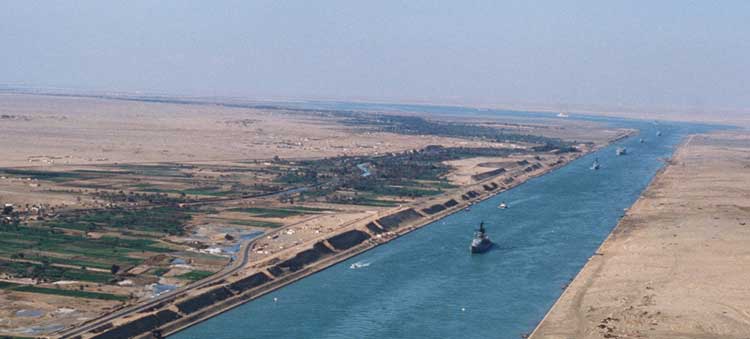
(Suez Canal, Egypt. The 1956 crisis situation between Anglo-French colonial powers and Egypt eventually resulted in a diplomatic defeat for the colonial powers.)
Owners of the region
In the beginning of the twentieth century, not all West Asian countries were colonised, for instance, Saudi Arabia, Ottoman Empire (present day Turkey) etc. The main colonial conquerors in the region were primarily the English and French, and not all English and French possessions in the region were treated with same status of ‘colonies’. It varied according to the occupier’s history with the possession, strategic importance of it, and how well they contribute to the plans of colonial powers; for instance, Sultanate of Egypt was a “protectorate” of British Empire during the period of 1914-1919. Several other territories were also controlled by colonial powers directly or indirectly according to the ease in managing these territories. West Asian region was largely under British influence or control during a major period of twentieth century. West Asia was crucial to British Empire, as it provided access to its much larger and productive colony, India; especially after the construction of Suez Canal. French control over the region was limited compared to the British, but their nature of engagement with the region was similar to that of the British.
World Wars, Cold War and West Asia
Arab revolt against the Ottoman Turks was a direct result of certain colonial assurances given to the Arab population. After the fall of Ottoman Empire, the West Asian region falls primarily under the control of the British Mandate, which was eager to secure its position at the centre of the world. British interests in West Asia, was to secure their access to Indian Ocean through which a large chunk of their trade was going through, and the ease of access to their biggest colony, India. During the Second World War, both British and French faded, in terms of economic and military power. Their power projection abilities shrank on a large scale as their military assets took a severe hit. The changing power equations of the world were also visible in the West Asia, the influence and control that these colonial powers had in this region started to fade on a greater scale. The growing urge for freedom from most of its colonies such as India, combined with its war shattered economy’s limited ability to reinforce their colonial expeditions limited their colonial expectations during the mid twentieth century.
Soon after Second World War, when most of the West European powers sided with the Americans, the colonial masters started to concede more towards the idea of ‘free world’ where the idea of colonialism is not favoured. The American pressure to give freedom to many of the colonies also made them loose their ‘grip’ over these territories. But the colonial way of giving freedom to many of these territories were not easy as thought. Many mutually contradicting assurances given by colonial powers to different interest parties were a major concern; for instance, the formation of Jewish homeland in the British administered Palestine which created a serious havoc across the region and still is one of the complex issues of the region.
Cold War, at its peak was very much reflective in the West Asian region. Several wars fought between Israeli-Arab forces were a clear mirror image of the power struggle between United States and USSR, especially the 1973 Yom Kippur war, which was absolutely a testing ground of weapons made by these two blocks. During the latter half of the twentieth century many West Asian countries gained independence from their colonial masters, even though these colonial powers tried to influence their former colonies. Suez Canal crisis, caused as a result of collusion done by Anglo-French powers with Israel is a clear example how different colonial powers tried to influence these countries by asserting their advantage in the region.
Israel, biggest impact of colonization in West Asia
The atrocities done by some European countries towards Jewish people strengthened the plea or cry for a Jewish homeland in the holy land of Palestine. Still the Zionist efforts to institute a Jewish homeland was now reinforced or superseded with some European concerns for instituting a safe haven for Jewish people far away from the non-friendly European elements. Formation of the state of Israel was one of the biggest reasons of instability in West Asia as the European initiative for Israel were quite unacceptable to nearby Arab Countries and it forced the resident Palestinian people into a status of statelessness and refuge. At present nearly 7 million Palestinians live with the status of refugees making them the largest refugee population all over the world.
Redrawing the Boundaries and Futuristic Concerns for Oil
As mentioned earlier in the case of Israel, just as any colonial territories, it was the colonial masters who decided the boundaries of the newly independent countries sometimes heeding to the concerns of the subject territory or sometimes according to the interests of the colonial powers. This carelessness towards the sentiments of local population while determining the boundaries created many problems in the future, such as wars, exoduses etc. The discovery of oil in many parts of West Asia, for instance the discovery of oil in Iran made the importance of West Asia to increase from the status of a ‘transit point to larger colonies’, to the status of a ‘strategic asset’. Gradually with the rise of American and European dependency of West Asian oil, the geo strategic importance of the region rose to an important source of supplies, both for military and civilian purposes. While the importance of oil, in the economic growth of these countries increased, the efforts to control the production sites were also on a rise. Several of these efforts, resulted in the instability of the region as the colonial interests differed the national interest of the newly formed West Asian countries.
Thus colonialism, in the twentieth century, had a great influence in the political stability, economic development of the West Asian region. Oil was a great concern for them, as the unchecked supply of oil was needed to support the intended economic growth which the colonial powers were trying to achieve. Ambitions of the Colonial powers influenced the West Asian region, and the transformed West Asia from a transit point between continents or a barren battleground to an important geo strategic location also happened place in the twentieth century.
Cyriac S Pampackal, currently a post graduate student in International Relations and Politics, at the School of International Relations and Politics, Mahatma Gandhi University, Kottayam, Kerala.