Showing posts with label Suez Canal. Show all posts

Tuesday, March 05, 2019

The Queen's Secret (2)

In the previous episode, we talked on the formation of Britain and its political regime. This time we will dwell upon the coming to power of Elizabeth II, the 93-year-old queen of the country.
Between the two World Wars, in the waning days of the British colonialist power, Elizabeth Alexandra Mary Windsor was born in London on April 21, 1926. In those days, nobody imagined that the newborn girl would one day become the Queen of the country. Her father Albert was the second son of George V. In 1936, George V died and his elder son Edward became the king as Edward VIII. The new king fell in love with and wanted to marry with a divorced American woman called Wallis Simpson. However, according to the British Church, the second marriage was possible only when the former spouse had died. But Simpson's husband was alive and she was not allowed to marry again.
This was not the first time that the marriage of the English king was making a problem. In the 16thcentury, Henry VIII faced problem when he wanted to divorce his wife and marry with another woman; since in those days, the English obeyed the Roman Catholic church which deemed divorce as forbidden. Thus, the king separated the English church from the papal authority and called himself as the head of religion in England; hence he decreed the permission for divorce. His chief minister was executed due to his opposition to the action.
The licentiousness of Edward VIII coupled with the reports of the British intelligence staff on the immorality of Wallis Simpson caused scandal for the residents of Buckingham Palace. Edward VIII would oppose the policies of the British government, too. The prime minister's threatening on resignation of the cabinet and reluctance of the parties to form a government forced Edward to resign on December10, 1936. Thus, his brother Albert ascended the throne as George VI. Now Elizabeth was the heir apparent of Britain. Three years after the breakout of WWII, Europe and some other countries were plunged in war.
Buckingham Palace is the residence of the British royal family. With an area of 77 thousand square meters, it has 775 rooms, 760 windows, 1514 doors and 800 personnel. Behind the doors, a woman lives who has been the longest reigning monarch and everything in Britain leads to her. Britain or United Kingdom is the name given to a land which comprises England and the usurped lands of Scotland, Wales and Northern Ireland. Elizabeth II is considered the queen of the Commonwealth countries (aka the lands which had long been colonized on gunpoint during the last centuries). Some of these colonies got their independence and possessed separate government and parliament; while the head state is considered the chief political person in their system and exercises its influence on them through the appointment of a governor general. The governor general is indeed the representative of the Queen in the country and enjoys a position superior to that of the prime minister of the country. These are called the Commonwealth countries. Antigua and Barbuda, Barbados, Trinidad and Tobago, Saint Kitts and Nevis, Saint Vincent and the Grenadines, Jamaica, Australia, Papua New Guinea, New Zealand, Canada and Granada are among these countries. All of these countries are under London's influence especially while voting in the UN.
MI6 is one of the most horrific intelligence apparatuses in the world. The British media pretend that this apparatus is working under the government and the Queen has no influence on them while in reality it is the tool in the hand of the Queen and has staged many coups in different countries. Perhaps Iran was the first country where the British Queen thought of wielding her trans-border power. In 1953, Britain in complicity with the US, toppled the legal government of Mohammad Mosaddeq and reinstated the Shah. After the coup, the British Queen entered the scene in 1961 in favor of the coup leaders and the illegal despotic regime of Shah. She came to Iran to show that she was ready to preserve the Iranian monarchy at any cost.
Egypt was the second destination of the Queen's intervention abroad. Gamal Abdel Nasser annulled monarchy and nationalized the Suez Canal after taking power. Both of the governments of Iran and Egypt were opposed to the illegal Zionist regime of Israel. Iran severed political ties with Israel and Abdel Nasser intended to bring Israel to its knees. Was the Queen supporting the royal system in Egypt? In response, it should be said that shortly after the nationalization of the Suez Canal, the British Royal Army fought alongside France and Israel against Egypt with the permission of Elizabeth II. The onslaught of the colonialist countries against the Egyptian nation caused grave scandal for the Queen. The designation of Harold Macmillan to premiership by the Queen, without referring to the votes of the conservative majority party, stirred ample criticism against the Queen. In 1963, with the resignation of Macmillan, the Queen appointed Alec Douglas-Home as the next prime minister. Thus, the Queen showed that the appointment and dismissal of ministers is actually in the hand of the Queen and she doesn’t consider it necessary to abide by the majority vote.   

Tuesday, August 14, 2018

Impact of Colonization in Twentieth Century West Asia

Even from the dawn of the recorded history of mankind, West Asia was one of the centre stages of human activity. This region has seen many sorts of people of different heritage, culture, religion etc. West Asia over the course of human interference was exposed to many conquests and was part of several kingdoms and empires. The West Asian region was often referred as the holy land for three major religions Islam, Christianity and Judaism. Claim by different monotheistic religious groups have led to conflictual situations which resulted in massive bloodshed for centuries. When talking about West Asia, the prime attribute that accompanied the region are political instability and conflict; and that is something that the West Asian region and the twentieth century had in common.
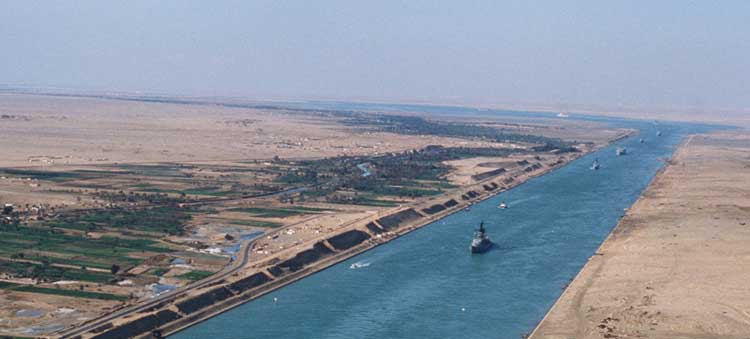
(Suez Canal, Egypt. The 1956 crisis situation between Anglo-French colonial powers and Egypt eventually resulted in a diplomatic defeat for the colonial powers.)
Owners of the region
In the beginning of the twentieth century, not all West Asian countries were colonised, for instance, Saudi Arabia, Ottoman Empire (present day Turkey) etc. The main colonial conquerors in the region were primarily the English and French, and not all English and French possessions in the region were treated with same status of ‘colonies’. It varied according to the occupier’s history with the possession, strategic importance of it, and how well they contribute to the plans of colonial powers; for instance, Sultanate of Egypt was a “protectorate” of British Empire during the period of 1914-1919. Several other territories were also controlled by colonial powers directly or indirectly according to the ease in managing these territories. West Asian region was largely under British influence or control during a major period of twentieth century. West Asia was crucial to British Empire, as it provided access to its much larger and productive colony, India; especially after the construction of Suez Canal. French control over the region was limited compared to the British, but their nature of engagement with the region was similar to that of the British.
World Wars, Cold War and West Asia
Arab revolt against the Ottoman Turks was a direct result of certain colonial assurances given to the Arab population. After the fall of Ottoman Empire, the West Asian region falls primarily under the control of the British Mandate, which was eager to secure its position at the centre of the world. British interests in West Asia, was to secure their access to Indian Ocean through which a large chunk of their trade was going through, and the ease of access to their biggest colony, India. During the Second World War, both British and French faded, in terms of economic and military power. Their power projection abilities shrank on a large scale as their military assets took a severe hit. The changing power equations of the world were also visible in the West Asia, the influence and control that these colonial powers had in this region started to fade on a greater scale. The growing urge for freedom from most of its colonies such as India, combined with its war shattered economy’s limited ability to reinforce their colonial expeditions limited their colonial expectations during the mid twentieth century.
Soon after Second World War, when most of the West European powers sided with the Americans, the colonial masters started to concede more towards the idea of ‘free world’ where the idea of colonialism is not favoured. The American pressure to give freedom to many of the colonies also made them loose their ‘grip’ over these territories. But the colonial way of giving freedom to many of these territories were not easy as thought. Many mutually contradicting assurances given by colonial powers to different interest parties were a major concern; for instance, the formation of Jewish homeland in the British administered Palestine which created a serious havoc across the region and still is one of the complex issues of the region.
Cold War, at its peak was very much reflective in the West Asian region. Several wars fought between Israeli-Arab forces were a clear mirror image of the power struggle between United States and USSR, especially the 1973 Yom Kippur war, which was absolutely a testing ground of weapons made by these two blocks. During the latter half of the twentieth century many West Asian countries gained independence from their colonial masters, even though these colonial powers tried to influence their former colonies. Suez Canal crisis, caused as a result of collusion done by Anglo-French powers with Israel is a clear example how different colonial powers tried to influence these countries by asserting their advantage in the region.
Israel, biggest impact of colonization in West Asia
The atrocities done by some European countries towards Jewish people strengthened the plea or cry for a Jewish homeland in the holy land of Palestine. Still the Zionist efforts to institute a Jewish homeland was now reinforced or superseded with some European concerns for instituting a safe haven for Jewish people far away from the non-friendly European elements. Formation of the state of Israel was one of the biggest reasons of instability in West Asia as the European initiative for Israel were quite unacceptable to nearby Arab Countries and it forced the resident Palestinian people into a status of statelessness and refuge. At present nearly 7 million Palestinians live with the status of refugees making them the largest refugee population all over the world.
Redrawing the Boundaries and Futuristic Concerns for Oil
As mentioned earlier in the case of Israel, just as any colonial territories, it was the colonial masters who decided the boundaries of the newly independent countries sometimes heeding to the concerns of the subject territory or sometimes according to the interests of the colonial powers. This carelessness towards the sentiments of local population while determining the boundaries created many problems in the future, such as wars, exoduses etc. The discovery of oil in many parts of West Asia, for instance the discovery of oil in Iran made the importance of West Asia to increase from the status of a ‘transit point to larger colonies’, to the status of a ‘strategic asset’. Gradually with the rise of American and European dependency of West Asian oil, the geo strategic importance of the region rose to an important source of supplies, both for military and civilian purposes. While the importance of oil, in the economic growth of these countries increased, the efforts to control the production sites were also on a rise. Several of these efforts, resulted in the instability of the region as the colonial interests differed the national interest of the newly formed West Asian countries.
Thus colonialism, in the twentieth century, had a great influence in the political stability, economic development of the West Asian region. Oil was a great concern for them, as the unchecked supply of oil was needed to support the intended economic growth which the colonial powers were trying to achieve. Ambitions of the Colonial powers influenced the West Asian region, and the transformed West Asia from a transit point between continents or a barren battleground to an important geo strategic location also happened place in the twentieth century.
Cyriac S Pampackal, currently a post graduate student in International Relations and Politics, at the School of International Relations and Politics, Mahatma Gandhi University, Kottayam, Kerala.

Tuesday, June 06, 2017

Israel’s occupation was a plan fulfilled

By Ilan Pappe

Palestinian refugees continued to cross into Jordan after the Allenby Bridge
between Jordan and the West Bank had been bombed on 8 June,
the fourth day of the 1967 war. (UNRWA)


In June 1967, I was 12 years old. I recall helping to fill sandbags to fortify the entrance to our home in Haifa in preparation for war. The army was already geared towards war and official Israel terrified its society and supporters around the world, as Zionist leaders did in 1948, with warnings of another Holocaust.
Just recently, I finished writing a book about this period, The Biggest Prison on Earth: A History of the Occupied Territories.
Through the work on this book, I realized that the Israeli manipulation of Jewish fear in 1967 was even more cynical than it was in 1948, when the Jewish leadership genuinely could not foresee the results of its decision to ethnically cleanse Palestine.
The cabinet meetings reveal a group of politicians and generals, who ever since 1948 looked for a way of rectifying what they deemed was the gravest mistake of the otherwise triumphant “war of independence”: the decision not to occupy the West Bank.
In 1948, the West Bank had been left in Jordanian hands due to a tacit understanding between the Zionist leadership and the Hashemite Kingdom so eloquently described by historian Avi Shlaim in his book Collusion Across the Jordan.

The occupation lobby

There was a proper lobby in Israel pushing the government at various historical junctures to find a pretext to occupy and annex the West Bank. It was made of ideologues who deemed the West Bank as the heart of the ancient homeland without which it could not survive, and of strategists who firmly believed the Jordan River was a natural bulwark in the way of invading armies from the east.
They nearly had their way twice before 1967. In 1958, the pretext was the possible “radicalization” of Jordan. The US vetoed such an act. In 1960, Israeli threats against Syria and constant frictions in the north created a chain of events that provided another opportunity.
The plot unfolded in 1960, as it would in 1967. The tension in the north led Egyptian president Gamal Abdel Nasser to react by dispatching forces to the Sinai and closing the maritime route to Eilat, which runs up the narrow Gulf of Aqaba.
In 1960, it was Israeli Prime Minister David Ben-Gurion who prevented that crisis from developing into a war or a pretext for occupying the West Bank; after masterminding the 1948 expulsion of more than 750,000 Palestinians, he had no desire to incorporate another million and a half into Israel.

A preventable war

Ben-Gurion was ousted from meaningful political life in 1963. In that year, the preparations for a possible occupation of both the West Bank and the Gaza Strip were stepped up. Over the next four years, the army prepared detailed plans for the eventual takeover of these territories.
We have no access to the military plans, but we do have access to the legal plans that were drafted from 1963 onwards detailing how to rule the lives of millions of Palestinians: military judges in waiting, legal advisors, military governors and rulers and a firm legal infrastructure to run life from the very moment of occupation. Intelligence on possible resistance and its leaders were properly gathered so that a swift takeover would evolve from the outset of the occupation.
And the moment was not long in coming. The Israeli rhetoric and actions against Syria intensified in 1966 and 1967.
The inevitable next crisis unfolded in May 1967. The Greater Israel lobby, which included most of the army generals and the young Labor Party ministers, was determined not to let that opportunity slip. As with any escalating conflict, there are multiple exit points. Nasser followed in 1967 the same policy he pursued in 1960. He, as well as the Soviet Union, with which he was allied, took seriously the Israeli threats to attack Syria and he wished to reopen the Palestine question.
Alas, as in 1948, Egypt’s war rhetoric did not match its military capacity or preparations. Worse was the situation of King Hussein of Jordan. When Israel assaulted the Egyptian air force on the morning of 5 June 1967, he still hoped that a symbolic retaliation (to which he was committed under his defense agreements with Egypt and Syria) would exonerate him from the allegation of treason and save the West Bank. He was wrong on both counts.
The war was preventable. However, the Israeli military and political elite made sure that every exit point would be blocked and no one would stand in the way of fulfilling the Zionist vision of Judaizing the whole of historic Palestine.

A plan fulfilled

The total collapse of the Arab armies that enabled Israel to get as far as the Suez Canal and nearly occupy Damascus was a bonus the Israelis did not predict. But the occupation of the West Bank and Gaza Strip was a plan fulfilled: it was not the freak outcome of a very successful war.
The takeover plans of previous years enabled Israel to install its military rule over the West Bank and Gaza immediately after the war. The system was already successfully imposed on the Palestinian minority in Israel – those Palestinians who had survived the ethnic cleansing two decades earlier and remained inside the “Jewish state.”
Now the system and the people operating it were transferred to rule a new Palestinian group. The new version was even worse: it was built on the sheer power of the army to control every aspect of life, violating in the process basic human and civil rights.
The means of maintaining this rule have changed, but it is still intact and there is no intention to end its existence.
This year, yet another generation of this evil bureaucracy begins its term in office in operating the system. It has been resisted by the Palestinians, including in the form of the uprisings, or intifadas, that began in 1987 and 2000, and will still be resisted. But the international system has not condemned the occupation sufficiently to bring it to an end.

Joining in the occupation

Immediately after the war, Moshe Dayan, the defense minister, opened the West Bank to Israelis.
We joined in as a family. Our guides were from the “Israel Exploration Society,” founded in 1913 in an attempt to substantiate the Zionist claim for Palestine with archaeological finds.
With such tour guides, you see what allegedly had been there thousands of years ago, but you do not see the present. You gaze at ancient ruins while ignoring the humanity around them. The early Zionists, pre-state, were taken on a similar tour upon their arrival to the “land without people.”
The year 1967 became the closure for 1882, the date of the first Zionist colony in Palestine. But now it was colonization de luxe done by a rich and powerful Jewish state.
The destruction of Qalqilya, the expulsion of the refugees from destroyed camps near Jericho and the ethnic cleansing in Jerusalem were events I only read about later on, although they were visible to us when we marched through the West Bank as an army of tourists “redeeming” our ancient homeland.
The military and political elite in Israel already in June 1967, whether on the left or the right, regarded the West Bank – and some even the Gaza Strip – as an integral part of future Israel. The debate was how to achieve it without incurring international, and in particular American, rebuke, and without granting citizenship to the millions of Palestinians living there.
This is why colonization of the West Bank and the Gaza Strip began very early on, allowing Israel to annex de facto any part of the territories it desired. This annexation was carried out through the confiscation of Palestinian land and, where necessary, expulsions.

Israel’s charades

Two charades unfolded which helped to mesmerize the world and overlook the Israeli strategy on the ground. As a teenager, I partook in the first one and as a young student played an active role in the second.
The first was the charade of an internal debate in Israel between so-called “redeemers” and “custodians,” otherwise known as the divide between the right and the left in Israeli society. The right asserted that the West Bank and Gaza Strip were “redeemed” and should be annexed, the left that they should be in custody until peace is concluded.
Until then, both camps agreed on the “unification of Jerusalem” – a city whose boundaries Israel expanded deep into the West Bank as it settled more territory – as well as on the need to settle the Jordan Valley and to keep the Palestinians under military rule.
As a youngster, like so many in the world who should have known better, I believed genuinely this was an ideological debate on war and peace.
I also bought into the second charade that was manipulated from above: the “peace process.” The main message from Israel was that its actions were temporary, even when it was settling vast areas of the occupied territories, and that its violations of basic human rights were short-term necessities that would stop once peace came.
The process moved nowhere, and when it moved as we saw in 1993 – with the “breakthrough” of the Oslo accords between Israel and the Palestine Liberation Organization – it really moved backwards.
However, it provided time and immunity to solidify the strategy of deepening the colonization with irreversible facts on the ground.
Naïve “custodians” like myself were the ones sent abroad to sell the “process.” I was even ready to represent Peace Now, the main extra-parliamentary custodian movement of the left, while pursuing my doctoral studies in the UK (although I was dismissed from the group very early on for meeting openly with PLO representatives in London at a time when it was forbidden).
In fact, these meetings helped me to wake up to the wider historical and ideological contexts of Israel’s actions in 1967 and after.
From abroad, ironically, it was much easier to look directly at the inhumanity and suffering Zionism caused in its century in Palestine. It was a farewell from me to the Israeli Zionist left.

Gentle question

Fifty years on, the Zionist left is unfortunately the force the official international community relies on to bring peace. However, most Israelis have stopped playing the first charade of left and right – each with their own excuse or explanation.
Many of them also believe there is no need anymore to play the second charade. Official Israel is no longer worried about how to avoid international rebuke.
Implementing incremental genocide against the Palestinians in Gaza did not move the powers that be, and the ongoing colonization of the West Bank and the siege of Gaza remain Israel’s best means of fulfilling the vision of a Greater Israel. As long as Israeli leaders face no consequences, they will continue to pursue their vision of a Greater Israel.
If this vision can be implemented through a partition of the West Bank into bantustans – apartheid South Africa-style enclaves where Palestinians are given nominal autonomy but no real control – this is also fine in the eyes of most of the Jewish electorate. (This is why optimistic two-staters can quote again and again the high figure for those in Israel who say they believe in a two-state solution and yet vote mainly for parties that oppose it.)
So why is the world still playing the charade? For regular readers of this publication, the answers are clear and there is no need to repeat them.
But at this moment of commemoration, let us approach those who we deem decent and knowledgeable as friends of ours – those friends and comrades who still talk about the two-state solution, the Israeli “peace camp” and the “peace of the brave” – and gently ask them how long will they play a charade, while the reality of colonization and oppression becomes harsher by the day and can only be stopped when as many people as possible give power to the truth.
The author of numerous books, Ilan Pappe is professor of history and director of the European Centre for Palestine Studies at the University of Exeter.