
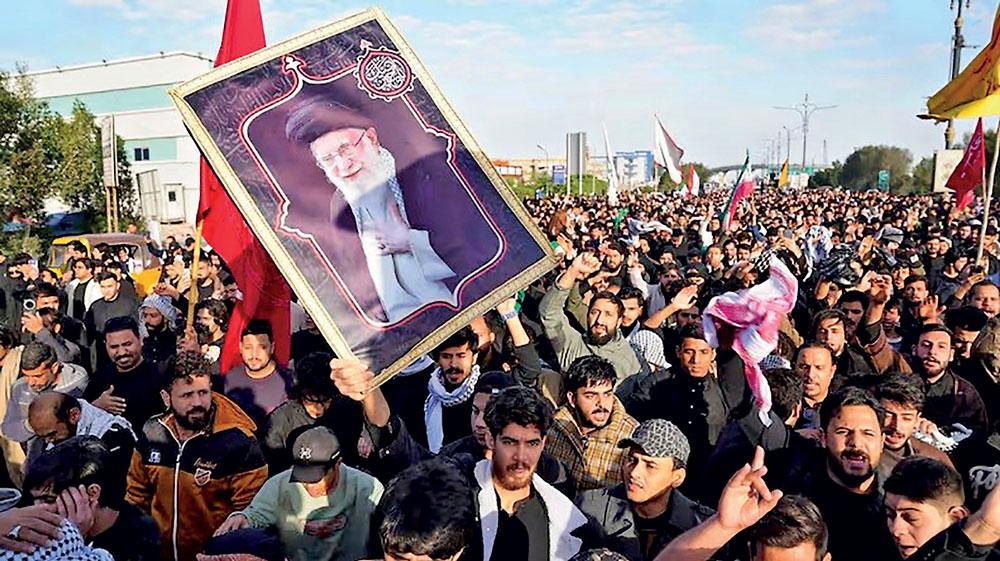
The 2026 escalation, characterised by the killing of Iran’s Supreme Leader and the subsequent retaliatory strikes across the Gulf Cooperation Council (GCC) states, has shattered the social and political contract between Washington and its Arab partners
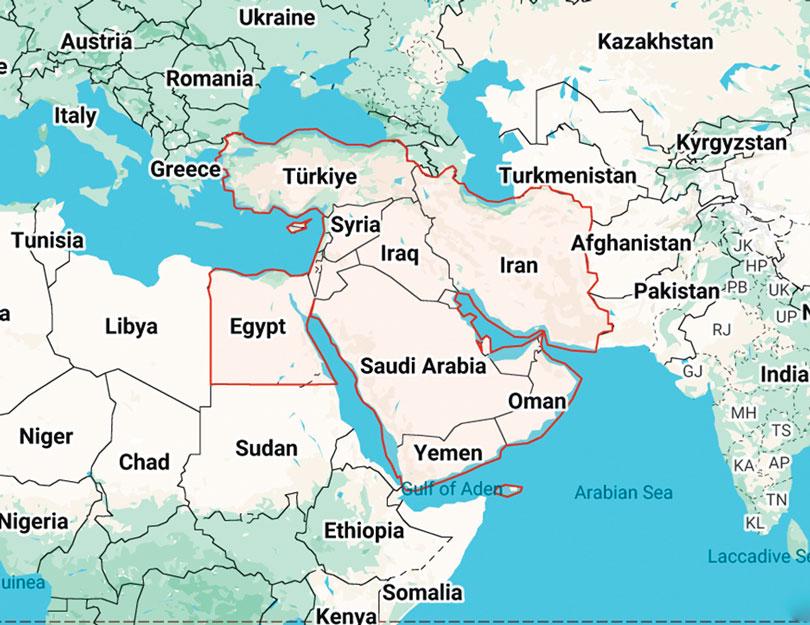
- For host nations like Qatar, UAE, Qatar, Kuwait, Saudi Arabia and Bahrain, the presence of U.S. bases is no longer seen as a “security umbrella”
- For years, Gulf States hosted U.S. troops under the assumption that this presence would deter Iranian aggression
- With the sudden decapitation of the Iranian leadership, the region faces the “Libya Scenario” on a massive scale
- We are seeing the early stages of a “Maritime Corridor” security pact that excludes the U.S
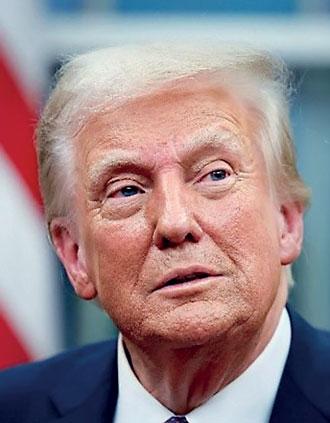
USA President Donald Trump |

For nearly eight decades, the United States military presence in the Middle East has been the cornerstone of global energy security and regional “stability”—a stability often defined by American interests. However, the 2026 escalation, characterised by the killing of Iran’s Supreme Leader and the subsequent retaliatory strikes across the Gulf Cooperation Council (GCC) states, has shattered the social and political contract between Washington and its Arab partners. The convergence of the ongoing humanitarian catastrophe in Gaza and the perceived “recklessness” of pre-emptive strikes on Iran have created a climate where the re-establishment of U.S. bases may no longer be politically tenable for Arab monarchies.
1.The Gaza Catalyst and the “Genocide” Narrative
The foundational shift in Arab public opinion did not begin with the strikes on Tehran, but with the protracted conflict in Gaza. Throughout 2024 and 2025, the perceived American “blank check” for Israeli military operations deeply alienated the Arab “street.”
Public Sentiment: By early 2026, polls across Jordan, Egypt, and Saudi Arabia showed favourable views of the U.S. dropping to single digits. The term “genocide” became a fixture of regional diplomatic rhetoric, making any government seen as facilitating the U.S.-Israeli military machine vulnerable to domestic unrest.
The Complicity Trap: For host nations like Qatar, UAE, Qatar, Kuwait, Saudi Arabia and Bahrain, the presence of U.S. bases is no longer seen as a “security umbrella” but as a “complicity trap.” Public anger has turned these bases into symbols of the very forces Arab citizens believe are destabilising their kin.
2.The Failed “Security Umbrella” and Iranian Retaliation
A critical turning point occurred on February 28, 2026, when Iran responded to U.S.-Israeli strikes by targeting U.S. assets in the UAE, Qatar, and Bahrain.
The Myth of Protection: For years, Gulf States hosted U.S. troops under the assumption that this presence would deter Iranian aggression. The 2026 conflict proved the opposite: the bases acted as “magnets” for Iranian missiles.
Economic Paralysis: The targeting of Dubai International Airport and the closure of the Strait of Hormuz by Iran in early March 2026 sent oil prices into a frenzy. Arab nations found their economies held hostage by a war they explicitly stated they did not want.
The “Neutrality” Blockade: Reports from late February 2026 indicate that several Gulf allies, fearing Iranian retaliation, actively blocked the U.S. from using their airspace for offensive strikes. This “de facto” eviction during a time of war suggests that the strategic utility of these bases has evaporated.
3. The Pre-emptive Strike on Iran: A Strategic Miscalculation?
The U.S. and Israel justified their 2026 campaign as a necessary measure to prevent a nuclear-armed Iran and dismantle its proxy network. However, the execution of “Operation Epic Fury” was viewed by many Arab capitals as a violation of sovereignty that prioritised Israeli hegemony over regional peace.
Destabilisation of the Oil Market: The disruption of energy infrastructure—not just in Iran, but across the GCC—undermined the “Vision 2030” style economic diversification plans of Saudi Arabia and its neighbours.
The Vacuum of Leadership: With the sudden decapitation of the Iranian leadership, the region faces the “Libya Scenario” on a massive scale. Arab nations now view the U.S. as an “arsonist” rather than a “fireman,” creating chaos without a viable post-war plan.
4.The Pivot to the East: China and Russia’s Opportunity
As the U.S. military footprint becomes a liability, a vacuum is opening that Beijing and Moscow are eager to fill.
The “Broker” Alternative: Unlike Washington, China has positioned itself as a neutral commercial partner. The destruction of Iranian infrastructure—much of it linked to China’s Belt and Road Initiative—has framed the U.S. as a destroyer of development.
The Security Realignment: We are seeing the early stages of a “Maritime Corridor” security pact that excludes the U.S., potentially involving a coalition of regional powers (Turkey, Saudi Arabia, Egypt) working with Eastern powers to secure the Strait of Hormuz.
5. The Impossible Re-establishment: Why Bases May Not Return
Once the current kinetic phase of the war subsides, the “re-establishment” of the status quo will face three insurmountable hurdles:
a. Sovereignty Costs: Arab leaders now realise that hosting a U.S. base gives Washington a “kill switch” over their national security. The domestic political cost of renewing these leases is now higher than the benefit of the American defence guarantee.
b. The “Israel-Centric” Policy: The 2026 war cemented the view that U.S. Middle East policy is fundamentally an extension of Israeli security needs. Arab nations, seeking a “Middle Way,” can no longer justify being the staging ground for Israeli-led regional reshuffling.
c. Technological Obsolescence: The success of Iranian low-cost drone swarms against high-cost U.S. missile defences (as seen in the February 2026 attacks) has raised questions about whether large, stationary bases are even defensible in the modern age.
Conclusion: A Post-American Middle East
The Iran-USA-Israel war of 2026 may be remembered as the final chapter of the “American Century” in the Middle East. The combination of humanitarian outrage over Gaza, the physical vulnerability of host nations to Iranian retaliation, and the perceived recklessness of American pre-emptive strikes has broken the trust necessary for a foreign military presence.
While the U.S. may retain a “lily pad” presence or offshore naval assets, the era of massive, semi-permanent “cities” like Al Udeid or Camp Arifjan is likely coming to an end. The Middle East is moving toward a fragmented, multipolar security architecture where the stars and stripes are no longer the primary colors on the map.
(The writer is a battle hardened Infantry Officer who served the Sri Lanka Army for over 36 years, dedicating 20 of those to active combat.
In addition to his military service, Dr. Perera is a respected International Researcher and Writer, having authored more than 200 research articles and 16 books. He holds a PhD in economics and is an entrepreneur and International Analyst specialising in National Security, economics and politics. He can be reached at sirinimalb@hotmail.com)

No comments:
Post a Comment