
By Palestine Chronicle Staff
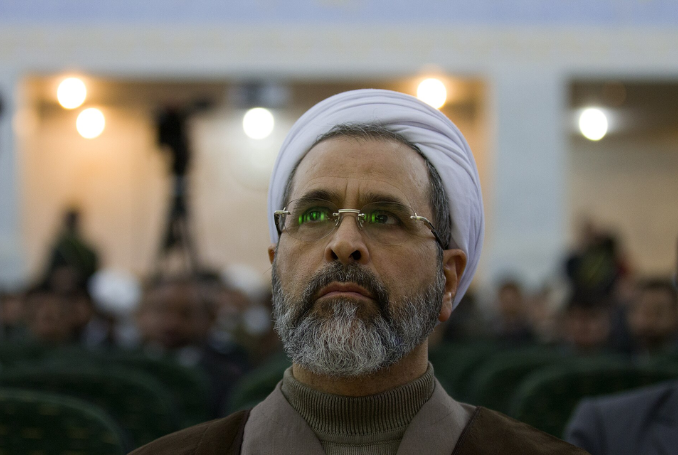 Sheikh Alireza Arafi. (Photo: Mostafa Meraji via Wikimedia Commons)
- Arafi, a senior Qom cleric with deep institutional reach, steps into Iran’s interim leadership at a historic crossroads.
Key Takeaways
- Alireza Arafi appointed to Iran’s interim leadership council under Article 111.
- Veteran cleric rooted in Qom’s seminary establishment.
- Holds senior positions in the Assembly of Experts and Guardian Council.
- Long career blending religious scholarship and institutional authority.
- His rise reflects continuity within Iran’s clerical power structure.
From Meybod to the Center of Power
Sheikh Alireza Arafi was born in 1959 in Meybod, in Iran’s Yazd province, into a clerical family closely tied to the religious networks that shaped the Islamic Republic.
His father, Ayatollah Mohammad Ibrahim Arafi, was a respected preacher and scholar who maintained connections to the revolutionary clerical circles surrounding Ayatollah Ruhollah Khomeini.
Arafi moved to Qom at a young age to pursue religious studies. Qom is not merely a theological city; it is the intellectual and ideological engine of the Islamic Republic.
There, Arafi immersed himself in Islamic jurisprudence, philosophy and advanced religious sciences. Over time, he attained the rank of mujtahid, a senior jurist qualified to independently interpret Islamic law — a distinction that places him among the higher echelons of clerical authority.
Unlike some clerics whose influence rests primarily on public sermons or political charisma, Arafi built his career within institutions.
Friday Prayer Leader
Arafi’s prominence expanded significantly in the 1990s when he was appointed Friday prayer leader in his hometown — an important symbolic role often reserved for figures trusted by the leadership.
In 2015, he became Friday prayer leader in Qom itself, a position of far greater weight. Delivering the Friday sermon in Qom carries national religious and political significance, signaling recognition within the clerical hierarchy.
Beyond sermons, Arafi has shaped Iran’s religious education system. He served for years as president of Al-Mustafa International University, an institution that trains foreign seminarians and promotes Shi’a scholarship globally. His tenure there placed him at the center of Iran’s transnational religious outreach.
In 2016, he was appointed head of Iran’s nationwide seminary network, overseeing religious education across the country. That role further embedded him within the structural backbone of clerical authority.
His influence extends into constitutional governance. He serves as a jurist member of the Guardian Council, the powerful body that vets electoral candidates and reviews legislation for conformity with Islamic law and the constitution.
In 2022, he was elected to the Assembly of Experts, the body responsible for appointing and, if necessary, dismissing the Supreme Leader. In 2024, he rose to become Second Deputy Chairman of that assembly.
A Figure of Continuity
Following the assassination of Sayyed Ali Khamenei, Iran activated Article 111 of its constitution, forming a temporary leadership council composed of the president, the head of the judiciary and a jurist selected by the Expediency Discernment Council. That jurist is now Arafi.
His appointment signals continuity rather than rupture. He is not identified with factional populism or overt political maneuvering. Instead, he represents the embedded clerical establishment that has underpinned the Islamic Republic for decades.
(PC, Iranian media, Al Mayadeen)

No comments:
Post a Comment