Friday, April 02, 1999

Kalim Siddiqui Memorial Seminar: legacy of an intellectual giant

By Zafar Bangash

It is fitting that the first Kalim Siddiqui Memorial Seminar to be held in London, on April 11, should discuss the theme: “The Global Islamic Movement - 20 years after the Islamic Revolution.” The movement and the Revolution were close to Dr Kalim’s heart; indeed, they were the essence of his life’s work which his colleagues and associates will discuss during the Seminar.
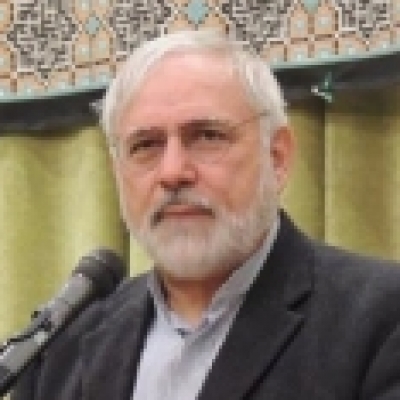
Through his writings and speeches, Dr Kalim (left) defined and analysed the concept of the global Islamic movement. He defined it as the “divine instrument of change”, its task in this era being to overthrow the present colonial- imposed order in Muslim societies through the process of Islamic Revolutions leading to establishment of Islamic States.
He postulated that the Islamic movement and the Islamic State are parts of a whole. The Islamic State, he pointed out, is the culmination of the struggle of the Islamic movement; it is the duty of every Muslim to strive to achieve it. Although the State can be destroyed, the Islamic movement cannot, for the movement, at its broadest level, consists of the Ummah itself, and all Muslims are its members and activist by definition.
Aware of his failing health, Dr Kalim described his last book, Stages of Islamic Revolution, as his ‘last will and testament.’ In it, he outlined the stages through which the Islamic movement must pass in order to establish an Islamic State. The Islamic Revolution he defined as that point in the struggle at which all forces converge to overthrow the previously established political order.
From Dr Kalim’s writings, two points stand out as essential for the Islamic movement: an intellectual revolution in Muslim political thought, and study of the Seerah of Allah’s Messenger from a power perspective. He devoted his life’s effort and writing to both. He was anxious to clear the fog of confusion that has engulfed Muslim thinking as a result of borrowing ideas of the west. He was unrelenting in his criticism of the nation-State structure, the political party approach and other accoutrements of western political thought. The consistency of his thought is striking. He did not have to adjust his postulates, because time and experience simply validated all of them. Kalim Siddiqui Memorial Conferences have been held regularly in South Africa over the last three years because that is where he passed away on April 18, 1996, shortly after attending an international conference on ‘Creating a New Civilization of Islam.’ He called South Africa his second home because of the respect and love that the Muslims of South Africa showed for him. Britain, where Dr Kalim lived throughout his adult life and where he did most of his academic work, has not had such conferences or seminars since his death. The only exception was the Memorial Conference jointly convened by the Muslim Institute and the Muslim Parliament of Great Britain in November 1996. Those familiar with events of the past three years in London would know the reasons for the lack of such activity since then.
Unfortunately, some of the institutions he left behind have become embroiled in disputes which remain to be fully resolved. The sorry state to which the Muslim Parliament has been reduced is perhaps the most depressing result of these disputes; it has had no session since 1996 and no meeting of members since 1997. Some institutions, like the Crescent International, have emerged unscathed; others are beginning to be nursed back to life. The important point is that at least some of the work has continued, alhumdulillah. The Institute of Contemporary Islamic Thought (ICIT) is a new vehicle establised to take up the work in the post-Revolution period. The new situation demands a fresh start. It takes up the development of Dr Kalim’s projects from where the Muslim Institute left off; the Institute’s work had, in any case, been largely overshadowed by the high-profile activities of the Muslim Parliament during the last years of Dr Kalim’s life. The 25-year history of Dr Kalim’s thought was dedicated to research into the contemporary, revolutionary Islamic movement, working in many different sectors all over the world. Essentially he wanted to generate an intellectual revolution in Muslim political thought as the foundation for Islamic revolutions which he expected would come decades later. Iran’s Islamic Revolution in 1978-79 changed the timescale of Muslim history. Dr Kalim and his team threw themselves into studying and understanding the phenomenon of Iran’s Islamic Revolution, and explaining it to Muslims outside Iran in terms easily understood by all Muslims.
The intellectual interpretation of the Islamic Revolution apart, Dr Kalim also set out to practically serve the Islamic Revolution and the global Islamic movement. This was done through relaunching the Crescent International as a ‘newsmagazine of the Islamic movement’ as well as holding seminars around the world. The seminars and conferences have continued since his death. Apart from the annual conferences in South Africa, the ICIT and Crescent International have organised conferences in Pakistan as well. Journalism courses have also been held for the past two years in South Africa. Plans are underway to extend these activities to Pakistan as well.
The most important task to which urgent attention needs to be paid is the Seerah Project. Dr Kalim was working on a proposal to organise a World Seerah Conference before he passed away. He had outlined a tentative programme for such a conference. This is the challenge facing those who wish to pursue his work and to take it to the next stage.
The Kalim Siddiqui Memorial Seminar in London this month is intended not only to pay tribute to him but to relaunch his intellectual work. He always emphasised that the movement and its work were more important than individuals and institutions. Relaunching his work for the service of the movement and the pleasure of Allah subhanahu wa ta’ala is the best tribute that could be paid to him. The Institute of Contemporary Islamic Thought and Crescent International invite all Muslims interested in any aspect of the Islamic movement, however broadly defined, to join us in this work.
[Zafar Bangash is Director of the Institute of Contemporary Islamic Thought.]
Muslimedia: April 1-15, 1999


Zafar Bangash

Wednesday, July 01, 1998

Time to reconsider the Seerah

By Muhammad H. al-'Asi


The phrase 'Islamic history' is a misnomer. Muslims do not really have Islamic history per se. There is history about Islam which is the product of non-Muslim, and often anti-Muslim, minds. This is true from the wars and battles of epic Islamic military encounters to the political and international relationships that extended from the dynasties of 1300 years ago to the present time.
The same is true about contemporary writings about the attempts to re-establish an Islamic world order, beginning with the Islamic Revolution in Iran, passing through the era of Islamic resistance and jihad in Afghanistan, Chechenya, Lebanon and the Balkans. Traversing the Islamic transformation afoot in Sudan to observing the fight-to-the-finish in Algeria (Muslims versus kuffar and munafiqeen), along with the meandering of Islamic tendencies in Turkey around the infamous legacy of Mustafa Kamal 'Ataturk' and secularism, one gets to the valiant Islamic confrontation with Israeli and Indian chauvinism and jingoism in Palestine and Kashmir. None of these recent and contemporary Islamic movements have never been effectively placed in an Islamic context and presented from an Islamic point of view. Even the records of the last semblance of Islamic political authority, represented by the Ottoman State with all its mistakes and deviations, is still inaccessible and thus non-presentable from an Islamic perspective. The archives are the best kept secret of the Turkish secular nation-State. Some pertinent information about the following issues is needed. Why Muslims fought at Yarmuk the way they did; why Muslims took on the Mongols at 'Ain Jalut the way and in the manner they did; why Muslims began to lose their grip on Andalusia (the Iberian subcontinent) which resulted in the infamous Inquisitions; why Muslims were forced to retreat from the outskirts of Vienna (Austria) twice; why Muslims failed to break the back of the caste system in the Indian subcontinent; and why Muslims expanded their belief/creed system to as far afield as Indonesia but lost their political/ideological system as close to home as in the land of the first Qibla and the third Haram (Palestine). We may never have accurate and detailed understanding of all these developments because Muslims have not been the gatekeepers of their own domain, or the spokepersons of their own affairs and their own destiny!
Whatever the ebbs and flows of history over this time span of some 1400 years, the fact remains that the details and particulars of the lifetime of our beloved and honourable Prophet, upon whom be peace, are still luminous and shining. We have volumes of detailed information and literature that expand upon his exemplary life. We have an abundance of narrations found in the books of hadith and Seerah: Ibn Hisham, Tabaqat Ibn Sa'd, Tarikh al-Tabari, Tarikh al-Ya'qubi, Maghazi al-Waqidi, al-Mas'udi, Ibn Kathir, and Ansab al-Balathuri to Al-Halabi, Abi al-Fida, al-Miqrizi, and Ibn al-Athir. In addition to these, there are contemporary commentators and narrators of the Prophet's Seerah such as the late Muhammad al-Ghazali, Mustafa al-Siba'i, Muhammad Izzat Darwazah, Jawad Ali, Muhammad Husein Heykel, and Muhammad Sa'id Ramadan al-Buti, among so many others.
The information that we have about the actions, movements and decisions of the Prophet is so overwhelming that putting all the pieces together has become something like a jig-saw puzzle, if we were to try to relate his calculations and determination to the reality and circumstances of his time and age.
What is conspicuously absent from this information pile-up is any analysis of the Prophet's decisions from a power perspective. It is because of this obvious delinquency on behalf of Muslim historians and writers that we have a conceptual vacuum into which the Orientalists rushed with their 'left' and 'right' theories to interpret to us, to the world at large, and the character, priorities, and objectives of our and mankind's last Prophet, upon whom be peace.
It is now time for the Muslims to take a disciplined and logical, and simulateously coherent and integrated, look at the prophetic decision-making process in light of the facts of 'power' that seldom change from one generation to the next.
Such well-known facts as the Prophet's seclusion before his heavenly commission in the grotto of Hira for as long as one month every year - according to some sources - have to be reconsidered in light of power considerations. These considerations are relevant to all who are active in society the way the Prophet, upon whom be peace, was before the age of 40 when he recieved his first words from heaven.
Note that the first people to become Muslims after the Prophet, upon whom be peace, received revelation from on high were his wife Khadijah (a female in the nomadic and tribal configuration of power), then his cousion Ali (who was no more than ten years old at the time, a boy in the same power configuration of nomadic Arabia), then Zaid ibn Harithah who was a former slave who had been set free and adopted by the Prophet... all these were individuals whose power in Makkan society was restricted, Khadijah as a female, Ali a mere boy, and Zaid, a slave!
Further down the road, and from a power perspective, why did the Prophet, upon whom be peace, stay for 13 years in Makkah without any visible power, power base, or power influence? What determined his asylum escape to Medina? Was it not sheer power as the power factions of Makkah finally, after 13 years of the Prophet's challenge to their vested interests and to their self-serving status quo, decided unanimously to assassinate the Prophet, upon whom be peace, which is another expression of the ultimate use of power: bloodshed.
Was the Prophet's move from Makkah to Medina a reaction to their power alliance to kill him; or was it his realization that he had exhausted all remaining means to win them (the Makkan society) to the divine programme of Islam? This meant a power shift from the aristocracy of Makkah to the pioneers of a new Islamic world order.
Another issue of power significance is the decision of hitherto inimical forces in Medina to form a full fledged political and military reality in Medina on the basis of the Qur'an, Islam, and the Prophet's leadership. Do Islam and the Prophet's Seerah advocate free-wheeling tabligh and da'wah, as many sincere but naive Islamic missonaries think today as they go from one land to the next for one week, 40 days, or even months on end without even once focusing on the issue of power? If the Qur'an, Islam and the Prophet are reduced to this open-ended tabligh we would never be able to consolidate the heavenly trust into the power structure that the Prophet finally anchored into Medina with all the sacrifices, battles, and wars on which it was built.
We also have to take a hard look at the Islamic relationships with the mushrikeen and Yahud in Medina and in the Arabian Peninsula from a power point of view. Was it necessary to expel Bani Qaynuqa', Bani al-Nadir, and Bani Qureitha from the Islamic State in Medina? Wouldn't the Muslim Gandhis want to tabligh these mushriks and Yahud to death? What else can Muslims do besides tabligh when there is no power concept to Islam, the Qur'an, and the Prophet?
Then why do we have a Prophet who launched, supervised and participated in scores of military operations, followed by hundreds of military expeditions and movements? Had his Seerah been free of the elements of power, there may be an excuse for some pacifist or conscientious objection here and there; but the hard fact of the Prophet's Seerah is that power is an integral and essential component of State and society building.
The exercise of power is implicit also in the Prophet's dispatched emissaries to the powers of his time: Byzantium, Persia, and Egypt towards the end of his reign... In fact, there is no aspect of the Prophet's example which cannot be better understood by factoring in the power consideration. This is because power is a fact of life.
There are many, if not all decisions of the Prophet that have to be reconsidered and reconstructed on the basis of an imminent power struggle that has never been absent when a Prophet or an Imam stands up and declares the superiority of Allah's power over all the man-made and man-imagined powers of the world.
If and when the Seerah and Sunnah of the Prophet, peace be upon him, are freed from the restricted framework in which they are presently studied, they will come alive with new dimensions and new frontiers. Until this is done, Muslims everywhere struggling for the establishment of Islamic societies and an Islamic world order will be handicapped and held-back by the failures of their own understanding of the message and example Allah has given his creations and servants.
The writer is Imam, Washington mosque, USA.


Muhammad H. al-'Asi

Monday, June 01, 1998

The road back to Palestine

By Kalim Siddiqui


This is a unique and historic occasion. By convening this conference, the Islamic Republic of Iran has fulfilled its role as the only Islamic State on the map of the world today. At present the Arab States are being herded into a so called 'peace conference' on Palestine. They will sooner or later, sign the formal surrender of Palestine to its zionist occupiers, but in fact to the United States of America.


Immediately after the victory of the Islamic Revolution in Iran, Imam Khomeini ordered that the last Friday in Ramadan be observed as Al-Quds Day. It was also a decade ago that the first Al-Quds conference was held in Tehran. In Iran at least there has been no confusion on the central issues of the conflict over Palestine. The same however cannot be said about the situation outside Iran.
The tragedy of the colonial period is not only that Muslim lands and peoples were colonised and that control over the physical assets of the Muslim Ummah passed to western powers; the greater tragedy is the fact that Muslims have also lost their once famous sense of history, sense of direction and clarity of thought and purpose. This is demonstrated by the difficulty even the people of Palestine have in defining their situation. Some regard it as a 'Palestinian Problem', others call it an 'Arab problem', and only a handful think of Palestine as the land of Islam and all Muslims. Even in Iran where this confusion does not exist, there is little understanding of the historical process that will eventually reclaim Palestine.
Palestine, as I understand it, is only an extreme case of a global phenomenon. This phenomenon is the penetration of the west into the House of Islam. Only in Palestine has this penetration taken the form of the replacement of a Muslim population under the flag of zionism. The history of zionist claims on Palestine is well known and does not require repetition or refutation but what is not generally known, or not often remembered and understood by the Muslims, is that the defeat and dismemberment of the Othmaniyyah State and the creation of the modern Arab nation States under client rulers such as the Al-Saud were all steps leading up to the creation of the State of Israel.
Ben Gurion once referred to the Arab States as 'Israel's first line of defence'. The implication is clear: the Arab States are not the enemies of Israel; the true enemy of Israel lies beyond the Arab States. Only this interpretation makes sense of the remark that the Arab States are Israel's first line of defence. Who, then, is the enemy?
Ben Gurion knew, and the western sponsors of Israel knew, that zionism is merely a flag of convenience for western occupation of Palestine. The west regards the occupation of Palestine essential for their long term goal of stopping and aborting any challenge to their world supremacy originating in Islam. Thus their Arab States are an effective barrier against Islam in this area and against Islam beyond the Arab world as well. It is Islam that the west regards as its enemy, not the Palestinians or Arabs or Ba'athists or any other permutation of Arab or Muslim nationalism.
Indeed, some of the nationalist movements are also part of the first line of defence for Israel and the west's penetration of the house of Islam. This is certainly the case with the PLO. Israel, by refusing to deal with the PLO [this was in 1990/91 - Editor], makes everyone, including the Palestinians believe that Palestinian nationalism is a real threat to the Israeli State; while the western powers, including the US and the [erstwhile]Soviet Union, by insisting that Israel must deal with the PLO, achieve the goal of keeping Muslims and world attention diverted from their enmity of Islam.
This western guile also helps to marginalise the 'Palestine problem' as a peripheral issue on the Mediterranean coast of the vast Arab world. In this way the fact that Israel is a dagger in the heartland of Islam is conveniently bypassed and hidden from public view. Non-Arab Muslim opinion has been conditioned to regard Palestine as an Arab problem, and the Arab States also insisting that PLO is the only representative of the Palestinian people, have succeeded in reducing it to a dispute over the sharing of land between the Jews and Palestinians.
It is important therefore, that the cloud of confusion is lifted and the problem is defined in its proper historical context. This is the west's hatred and enmity of Islam and the defeat and dismemberment of the House of Islam at the hands of the west. The creation of Israel was only the final and most arrogant act in political penetration and domination of the House of Islam by the west. It follows, therefore, that Palestine can only be reclaimed by reversing the process by which it was lost. This means that all parts of the House of Islam have to be reclaimed from western control and domination; the final act of this process of reclamation will be the dismantling of the Israeli State.
I have deliberately used the word 'reclamation' rather than 'liberation'. This is because 'liberation' implies a simple act of pushing out the colonialists while the task in hand is much more extensive. When, for instance, land is reclaimed from the sea it has to be desalinated and a fresh topsoil laid over it before it can be put to productive use. 'Liberation' or simple 'independence' leaves the land unfit for its original culture and civilisation. In all the post-colonial States the colonial culture and western civilisation have continued to flourish after 'liberation' or 'independence'.
Only in Iran has the Islamic Revolution gone on to complete the task of reclamation. This was possible because the political thought of the Islamic Revolution and its leadership owed nothing to the colonial period. Both the political thought and leadership of the ulama emerged from deep down the history and culture of Islamic Iran. Thus the Islamic Revolution was not an agreed or negotiated 'independence' but a forceful, powerful and uncompromising reassertion of the political culture and civilisation of Islam. Iran, therefore, is the only part of the House of Islam that has been totally reclaimed from the domination of western culture and civilisation.
Once the need for the reclamation of all parts of the House of Islam is understood, we also know that the only way to achieve this goal is through a succession of Islamic Revolutions. For Islamic Revolutions to occur in other parts of the world we have to come to terms with a new set of realities. These are summarised below:
  1. The 'Islamic' parties that emerged during the colonial period suffer from the same disabilities as the nationalist parties that achieved negotiated liberation or independence. Such 'Islamic' parties are now in the service of Al-Saud, and indirectly of the United States. They are therefore, irrelevant and can form no part of the new revolutionary Islamic movement.
  2. The new Islamic movement must flow directly from the conceptualisation of the experience in Iran. A new political thought derived from the Islamic Revolution in Iran alone can provide a solid foundation for the new global Islamic Movement.
  3. The Islamic State of Iran is the most successful manifestation of the political power of Islam achieved by Muslims anywhere in more than 1,000 years. This does not mean that the Islamic State of Iran has no faults or that the shape and form the Islamic State has taken in Iran is perfect. All this means is that the shape, form and structure the Islamic State has achieved in Iran is of sufficient power and stability that it has earned the right to our support over a prolonged period of improvement and growth.
  4. The power and stability achieved by the Islamic State in Iran is also of a sufficient quality to act as the central political reality in the Ummah. As such, the new Islamic State in Iran has taken the duty to act as leader of the new global Islamic movement for the reclamation of all parts of the House of Islam from the clutches of the house of kufr.
  5. Those Muslims in the world who recognise that an Islamic State of sufficient power and stability has come into being have a duty to give their total allegiance to that Islamic State and its leadership.
  6. It follows from this that the Vali-e-Faqih in Tehran is also the leader of the Global Islamic movement.
The six points outlined above are the foundations on which any plan to reclaim any part of the Ummah must be based, including the reclamation of Palestine. We must also remember that in some ways such nation-States as Egypt, Lebanon, Syria, Jordan, Iraq and Saudi Arabia are at present just as 'lost' to Islam as Palestine. Palestine cannot be reclaimed on its own; Palestine can only be reclaimed as part of the process of the total reclamation of the entire area.
Indeed, it may well be that Palestine can only be reclaimed after the heartland of Islam surrounding Palestine has first been reclaimed and reconsolidated into Islam. Thus victory in Palestine will mark the end of this struggle, not its beginning. The victory of Islam in Iran has been the first step on a long journey; the victory in Palestine will mark the final triumph of Islam over the west. To reach Palestine we must first reclaim the land surrounding Palestine. The Arab States, Israel's first line of defence, must be claimed before physical access to Palestine can be obtained.
This is the logic of history. There is no other road back to Palestine.
(This paper was first presented by the late author at a conference in Tehran in December 1990. Later it was presented at the Palestine Conference in Tehran in October 1991. Dr Kalim's observations are profound. He predicted the Arab regimes' formal surrender to the zionists years before these rulers actually did so).

50 years of zionist forgery and land grab

By Zafar Bangash


One of the biggest injustices of the twentieth century - the fiftieth anniversary of the establishment of the State of Israel - is being celebrated in a manner bordering on the scandalous. The implantation of the zionist entity in Palestine has been rightly described asal-Nakba (the catastrophe) by Palestinians.
The hoopla surrounding Israeli celebrations conveniently ignores the fact that Palestine was stolen by European Jews in connivance with the European powers, primarily Britain but also France (and later the US) to create a western beach-head in the heartland of Islam. This was only made possible by driving out the indigenous population - the Palestinians - from their ancestral lands, through terror and mass murder.
The zionists have peddled the mythology of turning 'deserts into orchards' with the active collaboration of the west. Their claim to Palestine is based on a complete perversion of historical facts sprinkled with Biblical references to geography. The zionists - most of them secular fanatics who have nothing to do with Judaism - have reduced the Bible to a real estate manual.
The zionist colonial settler enterprise was launched by shedding the blood of the Palestinians. It has been sustained through terror, the most common characteristic of the zionists, for 50 years. More than 475 Palestinian towns and villages were completely wiped out. There is no trace left of them anymore.
Soon after the June 1967 war, Moshe Dayan, the one-eyed Israeli general, had boasted to a group of visiting Jews from the US that the present generation had expanded the boundaries of the State of Israel this far. Now it was upto the next generation to take them further. He also candidly admitted that hundreds of Palestinian villages and towns had been wiped out.
Contrary to zionist propaganda, now admitted even by some Israeli historians, the Palestinian inhabitants of these once-thriving towns did not flee on orders from the Arab regimes. They fled in the face of the zionist terror machine. Deir Yasin (April 9, 1948) was but one example of numerous zionist atrocities perpetrated against innocent civilians. Palestinian women were parade naked in the streets. Many of them were bayoneted to death before their bodies were dumped in wells. At least 750,000 Palestinians were expelled from their homes in this campaign to settle European Jews in Palestine. This obscenity is being celebrated today as a great achievement.
Many leaders of the zionist terrorist gangs - Menachem Begin, Yitzhak Shamir et el - later became prime ministers of the 'only democracy in the Middle East'. The 'most powerful democracy' in the world - the US - has such a close relationship with the 'only democracy' that massive annual handouts are bestowed upon it even while American citizens are denied many of their basic needs.
The zionist State receives between US$4 to US$6 billion annually in aid (grants and loans) from the US. In the first 20 years of Israel's existence (1948-1968), it received only $348 million. But in the next 20 years, this shot up to $82 billion. The last 10 years have witnessed further burgeoning of these handouts.
As a colonial settler enterprise, Israel does not meet the standard test for such an entity. Traditionally, colonial possessions not only stand on their own feet but also remit large sums, in goods and money, to the mother country. The zionist entity, on the other hands, thrives as a parasite on the American body. Without American handouts, it cannot survive. Israel is America's biggest welfare recipient.
If the zionist State cannot survive without US handouts, American politicians cannot survive without Jewish support in the US. This symbiotic relation was alluded to by US vice president Al Gore on April 30 when he joined Israeli celebrations in Tel Aviv. 'We Americans feel our ties with Israel are eternal,' Gore said lyrically. He might as well have said 'without Jewish votes and money, I cannot win the presidency in the year 2000.'
There is another factor that binds the US and Israel. Two hundred years ago, European settlers in America pushed westward, expanding their frontiers at the expense of the Native peoples. Today, the indigenous population of America is found only on reservations. The zionists are pursuing exactly the same policy, only with much greater ruthlessness and efficiency. Many Americans see in the zionists the same 'enterprising' spirit that led to their own expansion.
Gore reflected this in his speech when he showered praise on Israel. 'As I lift up my eyes tonight and see the whole house of Israel, I recognize you.' Indeed. Gore could see his own forefathers in the crowd. 'And I remember the prophecy of Ezekiel - that God would raise you up... and restore your land.' Politicians are prone to hyperbole but Gore was telling blatant lies.
The land belongs to the Palestinians even if Gore was still in diapers when the zionists stole it. And as for God's fulfilling His promise to the zionists, surely God did not mean the gangsters, hustlers, mass murderers and torturers who rule the zionist State today.
Israel is the only country in the world where torture of political prisoners is not only legal but its supreme court actively endorses it. Palestinians are held without trial under what is euphemistically called 'administrative detention.' The maximum period is six months but it is routinely extended. There are Palestinians who have been held without charge or trial for four or five years.
While the western media routinely present Israel as a beleaguered State in a sea of hostile neighbours, it is the only nuclear power in the region with more than 200 nuclear weapons. Its army has grown to 600,000 and it can deploy more than 2,800 tanks and 700 combat planes, according to the Jaffee Centre for Strategic Studies at Tel Aviv University.
This gives it a formidable military muscle against the Arab armies which it has defeated in almost all the wars. But since 1982, Israel's military has found itself mired in less glorious adventures, including the costly 1982-1985 invasion of Lebanon and its attempts to crush the intifadah from 1987 to 1994.
In Lebanon it got a bloody nose at the hands of the Hizbullah, whose spirit of sacrifice put the fear of God into the pleasure-loving zionist thugs. Instead of confronting the Islamic fighters, the zionists bombard Lebanese villages using long-range artillery and planes.
Hostage-taking is also a favourite ploy of the zionists. Literally hundreds of Palestinians and Lebanese are incarcerated in the Khiam concentration camp where torture is rampant. Similarly, Palestinians held without trial are also tortured in prisons inside what is called Israel.
If young Palestinians are incarcerated, their leaders are expelled from their own land. It is ironic that alien occupiers from eastern Europe and America should expel people from their own homes and land where their forefathers have lived for millenia.
The zionists are also extremely sadistic. Young children are targeted for special wrath. Thousands of Palestinian children have been brutally beaten up by the gun-toting zionists. Young stone-throwing Palestinians have been buried alive; others have had their bones broken with rocks, on direct orders from Yitzhak Rabin, the Nobel peace prize winner!
During the intifadah, the zionist occupiers frequently used tear gas in confined spaces, resulting in hundreds of pregnant Palestinian women suffering miscarriages. Another of their favourite ploys is to mix flour and kerosene in Palestinian homes, making it unfit for consumption.
Despite such cruelties, the zionists have failed to break the spirit of the Palestinians. Every Israeli cruelty brings out an even greater determination to stand up to the occupiers.
As the Israeli military historian Martin Van Creveld of the Hebrew University in Jerusalem admitted, 'An army which fights against the weak, becomes weak itself.' He went on: 'In these instances, the army is the sure loser because its victories are without honour and its defeats are always humiliating.'
Israeli soldiers no longer wish to serve in Lebanon, Ghazzah or the West Bank. An army sergeant candidly admitted 'We have to hide from reservists the fact that they're going to serve in the Gaza Strip or they simply don't show up.' The time is not far off when Israeli soldiers would not wish to live in Palestine either.
Already, Israel is the least safe place for Jews anywhere in the world.

Sunday, November 16, 1997

Symbiotic relationship between illegitimate Arab rulers and their western masters

Zafar Bangash
A BRUTAL FRIENDSHIP: THE WEST AND THE ARAB ELITE By Said K Aburish. Published by Victor Gollancz, London, UK. 1997. pp. 414. Hbk: UK20.00.
Out of the ashes of the Ottoman empire emerged not an ‘Arab nation’, as envisioned by the champions of Arabism, but division of the Middle East into Arab nation-States. As if this were not bad enough, an additional blow was delivered by the creation of the Zionist State of Israel in Palestine. The misery of the people in the Middle East can be traced to these developments in the early part of this century.
The sordid role played by the colonial powers - Britain and France - since before the first world war, and by the US since the second - is carefully analyzed by Said Aburish in this highly readable book. Written in journalistic style, it is fast-paced and therefore, interesting.
His irreverant expose of Arab rulers stands in sharp contrast with their almost saintly image projected by court/official handouts and uncritically accepted by most of the mainstream media in the west. While he dismisses all regimes as illegitimate, Aburish identifies three types of rulers in particular in A brutal friendship: the west and the Arab elite: those viewed as friendly to the west, those opposed, and the ‘floaters.’
The west’s ‘friends’ are easy to identify: kings Fahd and Husain, president Husni Mubarak of Egypt, the Gulf shaikhs and even king Hasan of Morocco in the Maghreb. These rulers have always done the west’s bidding, some more than others.
Those on the enemy list - colonel Mu’ammar Qaddafi of Libya and Saddam Husain of Iraq - are not there because of their undemocratic credentials. They are considered enemies because they refuse to toe the western-prescribed path. The floaters include people like Hafez al-Asad of Syria and Yassir Arafat of the Palestinian Authority.
The wishes of the people in the Middle East do not matter; only the interests of the west are important. Besides, enmity is personalised to the rulers - Qaddafi and Saddam. ‘Questioning the lack of legitimacy of unfriendly regimes would inevitably extend such scrutiny to friendly ones’ (p.13), says Aburish.
The best example of this was witnessed on the eve of the Gulf War in 1990-1991 when US president George Bush personalised the entire campaign to Saddam by demonising him as ‘worse than Hitler.’ As Aburish points out, quite correctly, the west would be happy to have someone equally terrible in power in Iraq as long as he obeyed the west’s orders.
The author in fact goes on to provide ample evidence to show that Saddam - yes the ‘worse-than-Hitler Saddam’ - was the creation of the west itself because it suited their purpose at the time. Initially, Saddam had to be weaned away from the Soviet Union; later, he was needed to fight Iran after it had undergone an Islamic Revolution overthrowing the Shah, another western client.
Islamic Iran was viewed with alarm by the west’s client regimes in the Middle East and it had to be fought and contained. This task was assigned to Saddam who was provided money by fellow Arab rulers and weapons and chemical and biological plants to manufacture the most lethal weapons known to mankind, by the west. The only condition was that these were to be used against Muslims who dared challenge western interests.
Once the Iraqi-imposed war came to an inconclusive end and Saddam refused to demobilise his army, he had to be defanged. The oil weapon was used through Kuwait to undermine the Iraqi economy. Saddam reacted angrily but walked into a trap the west, especially the US, had set for him.
Numerous books have been written about the Middle East. Most deal with the emergence of the regimes, their relations with the west and, of course, the Palestinian-Israeli question. Some also delve into the rise of Arab nationalism. Few authors, however, have focused on the nature of the regimes the way Aburish does.
Of Paletinian origin, Aburish’s book is unique in that he takes a broad sweep of all the regimes including Yassir Arafat’s Palestinian Authority. He not only calls them illegitimate but also finds them unresponsive to the wishes of the people. It is a devastating critique of the subservient Arab rulers and how they have willingly played as tools of the west in order to advance their narrow personal interests at the expense of their peoples.
Any analysis of the contemporary Middle East scene must take into account the nature of the regimes that have come to occupy the various pieces of real estate, the background of the Arab ruling elites, their policies, alliances, preferences, oil policy, relations or lack thereof with Israel and of course, the Palestinians.
While the incompetence, greed and corruption of Arab rulers have been well-documented elsewhere, what is interesting about Aburish’s latest book is that it breaks considerable new ground. He augments historically documented facts with experiences of which he has personal knowledge, such as the sale of US weapons to Iraq in the early seventies.
Especially interesting is his revelation of the deep links between Saddam Husain of Iraq and the west’s eagerness - Britain, France and the US - to promote him. ‘It was an American company, Pfaulder Corporation of Rochester, New York, which in 1975 supplied the Iraqis with a blueprint which enabled them to build their first chemical warfare plant’ (p.99). Aburish says that he is in possession of a copy of Pfaulder’s design. Even earlier, in 1958, the American Central Intelligence Agency (CIA) had provided the list of Iraqi elite who had to be eliminated in the coup against the popularly-elected government of Abdul Karim Kassem!
The author reveals that in 1983, he had personally taken a proposal for a US$230 million deal to purchase US-manufactured Harpoon missiles to save Saddam’s regime which was under pressure from Iran’s forces. The offer to supply the missiles had come from an American arms dealer who told Aburish that the US government would be favourably disposed to such an arrangement (p. 100-101). One needs to remember that the US was officially ‘neutral’ in the Iraq-Iran war!
Given the west’s current hysterical campaign against Saddam, it is interesting to note how western regimes created the monster that he became, all because it served their interests at the time. This is the central thesis of Aburish’s book. The policies pursued by the Arab rulers as well as the west have nothing to do with principle or the interests of the peoples in the Middle East. Every policy is predicated on the need to serve the west’s interests.
The Arab rulers and elites who came to occupy important positions in their respective governments understood this well. They, therefore, served western - mainly British and French interests in the early part, and later on, US interests - to remain in their good books. The west in turn ensured their survival as rulers.
This is best illustrated by the Arab regimes’ oil policy. First discovered in Bahrain in 1908, it was western multinationals, and behind them their governments, which actually determined oil prices. Even when windfall profits accrued to oil producers because of sudden price increases, the money was funnelled back to the west.
This was done in several ways, the most common of which was arms purchases, totally unnecessary as far as the Arab regimes were concerned. The Saudi regime continues to be the biggest arms purchaser in the world but as the Gulf War showed, these weapons were of no use to defend the country. Aburish points out that ‘according to London’s International Institute of Strategic Studies, the cost to maintain a Saudi soldier is five times the cost of maintaining an American soldier’ (p.106). One need hardly compare their competence levels.
Arms, in fact, have been the west’s favourite tool in advancing its policies, as Aburish shows. In the early part of this century, Britain used the supply of weapons to Husain I (better known as Sharif Husain of Makkah) to promote the Arab revolt against Turkey. When Sharif Husain demanded that Britain honour its pledge to make him the king of all the Arabs, the British simply switched sides, supporting his arch-rival, Abdul-Aziz ibn Saud.
Husain I was ditched and humiliated, forcing him into exile as Ibn Saud’s tribal allies crushed his army. Later, the British would turn the tables even on the Ikhwan - Ibn Saud’s supporters - and facilitate their massacre so that Abdul Aziz would become the undisputed ruler of Saudi Arabia (as opposed to the ruler of all the Arabs).
The division of the Middle East into petty fiefdoms is described in detail by Aburish who makes a telling point about how on the eve of the creation of the zionist State of Israel, the British had yet again played a treacherous role. The Egyptian army, equipped with British weapons, was denied spare parts resulting in disaster for Egypt’s campaign against Israel in 1948.
In Jordan’s case, it was even more ludicrous. The Jordanian army had 21 British officers. They made sure that the West Bank of Jordan (which should have formed part of Palestine under the UN partition plan) was occupied by Jordanian forces but that no soldier was allowed to enter any part of Palestine allocated to Israel (p. 96).
Aburish reveals not only king Husain’s zionist connections which have come under close scrutiny lately, but also his long-standing liaison with the CIA. It was former US president Jimmy Carter who admitted in 1977 that Husain was on the CIA payroll. Aburish provides the details, which are both revealing and fascinating.
He also details Fahd’s indiscretions, whether his laziness, heavy drinking or womanizing. It is a disgrace that a man of his character should carry the title of Khadim al-Haramain. The author shows that it is Saudi Arabia, more than any other oil producing country, which has deliberately kept oil prices low in order to appease the US. This is at a heavy price to Saudi Arabia itself.
Quotaing from the world bank report of 1983, Aburish writes: ‘the per capita income of an average Saudi declined from $14,600 in 1982 to $6400 in 1992, without factoring in inflation,’ (p.253). Similarly, in 1982, Saudi Arabia had a surplus of $142 billion; ‘currently its debt is somewhere between $60 billion and $120 billion.’
It is a most interesting book, full of useful insights about the behaviour, policies and traits of the most important players in the Middle East. Aburish has a soft corner for Gamal Abdel Nasser of Egypt and shares his nationalistic inclinations but this has not blurred his vision of Nasser completely. He admits, for instance, that Nasser, too, was working with the CIA. It was only after he had been ditched completely that he turned to the Russians.
Those interested in the affairs of the Middle East and wish to understand the reasons for the failures of Arab rulers will find this book highly useful.


Zafar Bangash