

News And Views
Showing posts with label Andalusia. Show all posts
Showing posts with label Andalusia. Show all posts
Friday, July 13, 2018
Conquest of Andalusia, rise of Islamic civilization in Europe

Wednesday, July 01, 1998
Time to reconsider the Seerah
By Muhammad H. al-'Asi

The phrase 'Islamic history' is a misnomer. Muslims do not really have Islamic history per se. There is history about Islam which is the product of non-Muslim, and often anti-Muslim, minds. This is true from the wars and battles of epic Islamic military encounters to the political and international relationships that extended from the dynasties of 1300 years ago to the present time.
The same is true about contemporary writings about the attempts to re-establish an Islamic world order, beginning with the Islamic Revolution in Iran, passing through the era of Islamic resistance and jihad in Afghanistan, Chechenya, Lebanon and the Balkans. Traversing the Islamic transformation afoot in Sudan to observing the fight-to-the-finish in Algeria (Muslims versus kuffar and munafiqeen), along with the meandering of Islamic tendencies in Turkey around the infamous legacy of Mustafa Kamal 'Ataturk' and secularism, one gets to the valiant Islamic confrontation with Israeli and Indian chauvinism and jingoism in Palestine and Kashmir. None of these recent and contemporary Islamic movements have never been effectively placed in an Islamic context and presented from an Islamic point of view. Even the records of the last semblance of Islamic political authority, represented by the Ottoman State with all its mistakes and deviations, is still inaccessible and thus non-presentable from an Islamic perspective. The archives are the best kept secret of the Turkish secular nation-State. Some pertinent information about the following issues is needed. Why Muslims fought at Yarmuk the way they did; why Muslims took on the Mongols at 'Ain Jalut the way and in the manner they did; why Muslims began to lose their grip on Andalusia (the Iberian subcontinent) which resulted in the infamous Inquisitions; why Muslims were forced to retreat from the outskirts of Vienna (Austria) twice; why Muslims failed to break the back of the caste system in the Indian subcontinent; and why Muslims expanded their belief/creed system to as far afield as Indonesia but lost their political/ideological system as close to home as in the land of the first Qibla and the third Haram (Palestine). We may never have accurate and detailed understanding of all these developments because Muslims have not been the gatekeepers of their own domain, or the spokepersons of their own affairs and their own destiny!
Whatever the ebbs and flows of history over this time span of some 1400 years, the fact remains that the details and particulars of the lifetime of our beloved and honourable Prophet, upon whom be peace, are still luminous and shining. We have volumes of detailed information and literature that expand upon his exemplary life. We have an abundance of narrations found in the books of hadith and Seerah: Ibn Hisham, Tabaqat Ibn Sa'd, Tarikh al-Tabari, Tarikh al-Ya'qubi, Maghazi al-Waqidi, al-Mas'udi, Ibn Kathir, and Ansab al-Balathuri to Al-Halabi, Abi al-Fida, al-Miqrizi, and Ibn al-Athir. In addition to these, there are contemporary commentators and narrators of the Prophet's Seerah such as the late Muhammad al-Ghazali, Mustafa al-Siba'i, Muhammad Izzat Darwazah, Jawad Ali, Muhammad Husein Heykel, and Muhammad Sa'id Ramadan al-Buti, among so many others.
The information that we have about the actions, movements and decisions of the Prophet is so overwhelming that putting all the pieces together has become something like a jig-saw puzzle, if we were to try to relate his calculations and determination to the reality and circumstances of his time and age.
What is conspicuously absent from this information pile-up is any analysis of the Prophet's decisions from a power perspective. It is because of this obvious delinquency on behalf of Muslim historians and writers that we have a conceptual vacuum into which the Orientalists rushed with their 'left' and 'right' theories to interpret to us, to the world at large, and the character, priorities, and objectives of our and mankind's last Prophet, upon whom be peace.
It is now time for the Muslims to take a disciplined and logical, and simulateously coherent and integrated, look at the prophetic decision-making process in light of the facts of 'power' that seldom change from one generation to the next.
Such well-known facts as the Prophet's seclusion before his heavenly commission in the grotto of Hira for as long as one month every year - according to some sources - have to be reconsidered in light of power considerations. These considerations are relevant to all who are active in society the way the Prophet, upon whom be peace, was before the age of 40 when he recieved his first words from heaven.
Note that the first people to become Muslims after the Prophet, upon whom be peace, received revelation from on high were his wife Khadijah (a female in the nomadic and tribal configuration of power), then his cousion Ali (who was no more than ten years old at the time, a boy in the same power configuration of nomadic Arabia), then Zaid ibn Harithah who was a former slave who had been set free and adopted by the Prophet... all these were individuals whose power in Makkan society was restricted, Khadijah as a female, Ali a mere boy, and Zaid, a slave!
Further down the road, and from a power perspective, why did the Prophet, upon whom be peace, stay for 13 years in Makkah without any visible power, power base, or power influence? What determined his asylum escape to Medina? Was it not sheer power as the power factions of Makkah finally, after 13 years of the Prophet's challenge to their vested interests and to their self-serving status quo, decided unanimously to assassinate the Prophet, upon whom be peace, which is another expression of the ultimate use of power: bloodshed.
Was the Prophet's move from Makkah to Medina a reaction to their power alliance to kill him; or was it his realization that he had exhausted all remaining means to win them (the Makkan society) to the divine programme of Islam? This meant a power shift from the aristocracy of Makkah to the pioneers of a new Islamic world order.
Another issue of power significance is the decision of hitherto inimical forces in Medina to form a full fledged political and military reality in Medina on the basis of the Qur'an, Islam, and the Prophet's leadership. Do Islam and the Prophet's Seerah advocate free-wheeling tabligh and da'wah, as many sincere but naive Islamic missonaries think today as they go from one land to the next for one week, 40 days, or even months on end without even once focusing on the issue of power? If the Qur'an, Islam and the Prophet are reduced to this open-ended tabligh we would never be able to consolidate the heavenly trust into the power structure that the Prophet finally anchored into Medina with all the sacrifices, battles, and wars on which it was built.
We also have to take a hard look at the Islamic relationships with the mushrikeen and Yahud in Medina and in the Arabian Peninsula from a power point of view. Was it necessary to expel Bani Qaynuqa', Bani al-Nadir, and Bani Qureitha from the Islamic State in Medina? Wouldn't the Muslim Gandhis want to tabligh these mushriks and Yahud to death? What else can Muslims do besides tabligh when there is no power concept to Islam, the Qur'an, and the Prophet?
Then why do we have a Prophet who launched, supervised and participated in scores of military operations, followed by hundreds of military expeditions and movements? Had his Seerah been free of the elements of power, there may be an excuse for some pacifist or conscientious objection here and there; but the hard fact of the Prophet's Seerah is that power is an integral and essential component of State and society building.
The exercise of power is implicit also in the Prophet's dispatched emissaries to the powers of his time: Byzantium, Persia, and Egypt towards the end of his reign... In fact, there is no aspect of the Prophet's example which cannot be better understood by factoring in the power consideration. This is because power is a fact of life.
There are many, if not all decisions of the Prophet that have to be reconsidered and reconstructed on the basis of an imminent power struggle that has never been absent when a Prophet or an Imam stands up and declares the superiority of Allah's power over all the man-made and man-imagined powers of the world.
If and when the Seerah and Sunnah of the Prophet, peace be upon him, are freed from the restricted framework in which they are presently studied, they will come alive with new dimensions and new frontiers. Until this is done, Muslims everywhere struggling for the establishment of Islamic societies and an Islamic world order will be handicapped and held-back by the failures of their own understanding of the message and example Allah has given his creations and servants.
The writer is Imam, Washington mosque, USA.
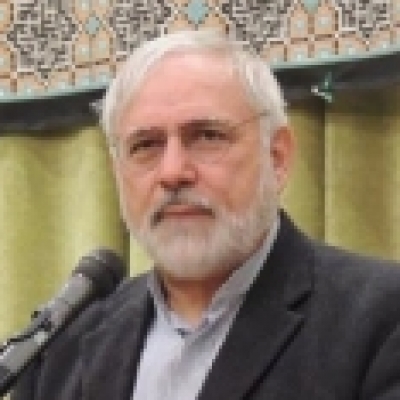
Muhammad H. al-'Asi
Subscribe to:
Posts (Atom)