Showing posts with label city of Isfahan. Show all posts

Sunday, December 08, 2019

CHURCHES IN ISFAHAN- JULFA AND VANK CATHRDRAL

       Shah Abbas the great was an international minded ruler. He received several foreign delegations especially European delegations, trade men, and diplomats. He was interested in news regarding other countries development. He wished to construct an advanced and prosperous country. Due to consultations with foreigners he realized that trade, business and technical affairs could create a more developed capital city and country. Armenians (a branch of Christians) who lived in Julfa of Azerbaijan area were transferred to Isfahan. They were settled in a rich village on the southwestern side of Isfahan.
Jolfa District1.jpg
   Jolfa District
       The village was called Julfa. Plots of lands were distributed among Armenians for agricultural proposes and also for construction of new small Armenian town. Some of Armenians were skilled in Technical affairs, and many in trade and business. Above all these aims, Armenians could develop very friendly atmosphere with Christians.
chuch2beitollahm2.jpg
          Soon Julfa became a prosperous community. Armenians were permitted to hold their own religious ceremonies and activities. Moslems were ordered to respect Armenians. If some body made problems for the new minorities he or she was punished severely.


Churchs.JPG


          Armenian merchants took trips to several European and Asian destinations for trade and business. Exchange of commodities, new knowledge about other advanced societies of that time was very important for Shah Abbas.
          Julfa is now a district of Isfahan, because the city has expanded and has converted many other villages to a city called Isfahan. Armenian merchants were among the richest citizens of Isfahan.
Church.JPG
          They were allowed to construct their own churches. Merchants had traveled to some of European cities, visited beautiful churches in other countries. Not only collected remarkable information regarding church buildings but also brought European artists and masters to Julfa. Today Julfa is one of the most expensive quarters of Isfahan but Armenians live in different metropolitan cities of Iran.
THE VANK CATHEDRAL
          The Vank church is the most beautiful and magnificent church in Iran. It is a master piece of architecture.
          Construction of this church started at the time of Shah Abbas the second. Expenses of building were mainly provided by Armenian merchants. Khajeh Stepanusian paid expenses of glorious paintings of interior parts of church. Major parts of these paintings were implemented by local Armenians who had learned the art in European countries and churches. Armenian artists and painters were deeply influenced by Italian and Dutch artists. All paintings are related to old and new testament and about holy life of Jesus Christ.
Jolfa church1.JPG
          Lower part of painting was ornamented with beautiful examples of square tile from 1710- 1716.
          Fortunately Armenians have preserved this treasury and weekly ceremonies are held in the church.
          Next to the church there is a remarkable museum. This rich museum shows a collection of various items dedicated by Armenians to the church.
Jolfa church2.JPG
          One of the most important parts of museum shows a series of commands and orders by different rulers, regarding Armenian society and their freedom. Beautiful testaments which have been adorned by fantastic paintings are shown in the museum.
          The church’s administrative building is located in the same campus.
          There are thirteen churches in Isfahan which belong to Armenians. Other prominent churches are Bethlehem church, St. Mary’s church and St. George’s church.
Jolfa church3.JPG 
          Armenians speak their own language (Armenian language). All of them speak Farsi too. The Armenian cemetery is also located on the slopes of Sofeh Mountain. They have their own clubs and societies. Like Christians they are free to produce, alcoholic beverages only among Armenian community. 

Friday, March 22, 2019

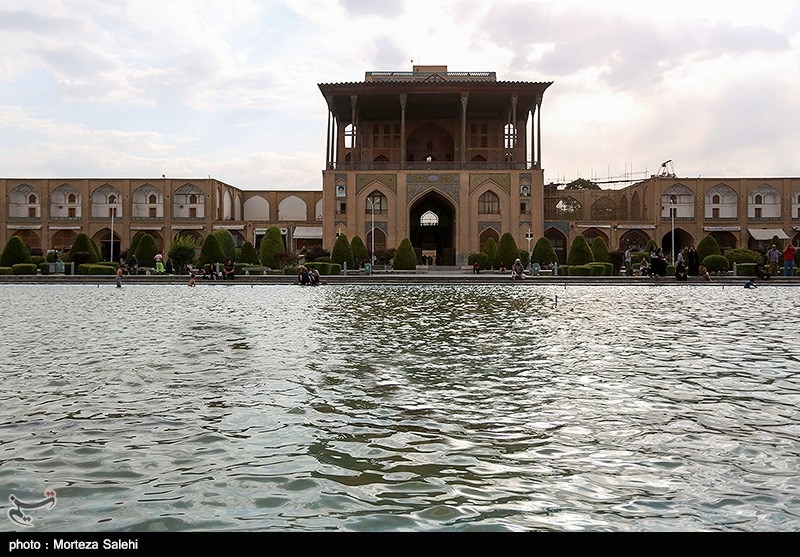
Ali Qapu: A Grand Palace in Isfahan, Iran

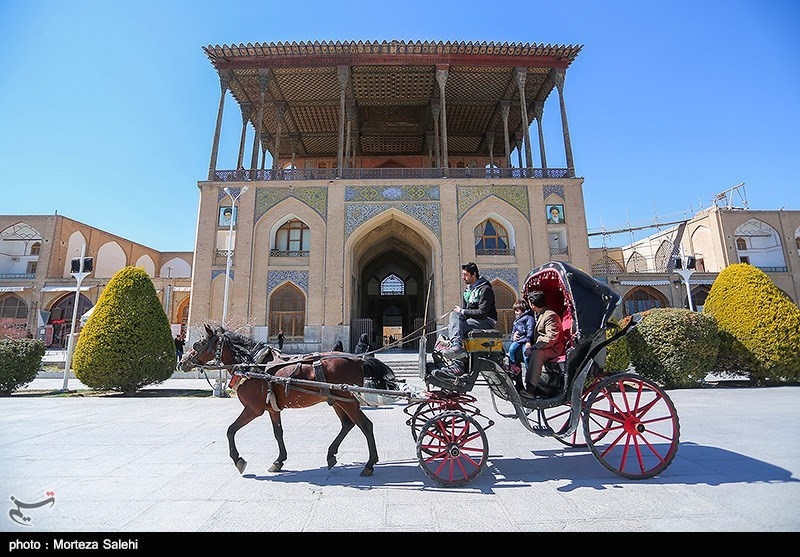
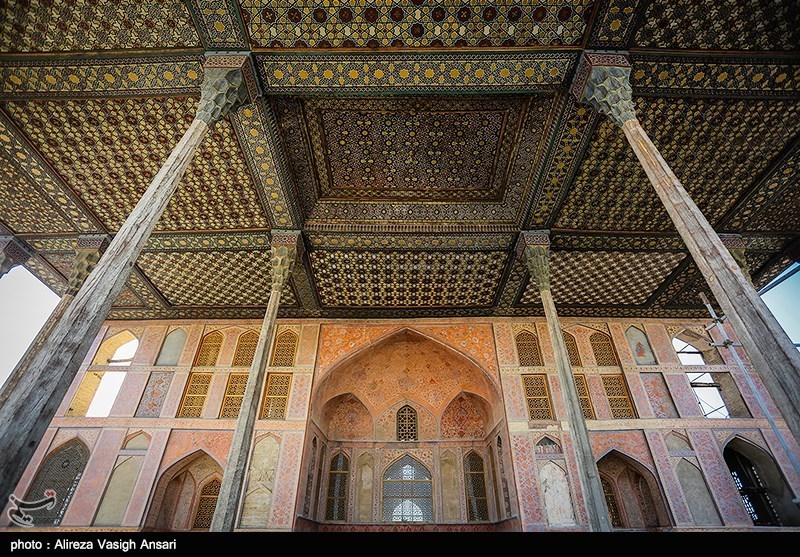
TEHRAN (Tasnim) - At the west of Maidane Immam (Naghsh-e Jahan) in Iran's central city of Isfahan, just in front of the Sheikh Lotfollah mosque, one of the most magnificent palaces of 17th century is located.

The Ali Qapu palace is well-known palace all over Iran. The first part of palace was built in 1597. It was used as a residential palace.
Shah Abbas the great, ordered to construct the palace on the site of palace and garden from the Timurid time. Shah Abbas’s palace was a four floors with a veranda.  Shah Abbas the second, expanded the palace and a music hall (room) was constructed on the top of palace.
The palace is about 38 meters high, the loftiest and tallest building in the 17th century.
There are 52 rooms, but because a long restoration most of rooms are closed to visitors.
Iranian empire, in 17th century was a serious rival to Ottoman Empire. European countries wished to create hostility between two empires. Their plans and plots were successful. In Istanbul of 17th century there was a palace with the same name.
Some of Isfahanologists believe that Shah Abbas the great highly respected the first Shiite Immam Ali. On the other hand Qapu is a Turkish word means,” the magnificent door”.
An old door was replaced from the shrine of Immam Ali in Najaf, to Isfahan. All people even the Shah, when they entered the palace dismounted from horses, in order to respect Immam Ali.
Shah Abbas considered himself as a real follower of Immam Ali. A beautiful door ornamented with gold, silver and other fine arts was made in Isfahan and dedicated to the holy shrine of Immam Ali which is located in Najaf Iraq.
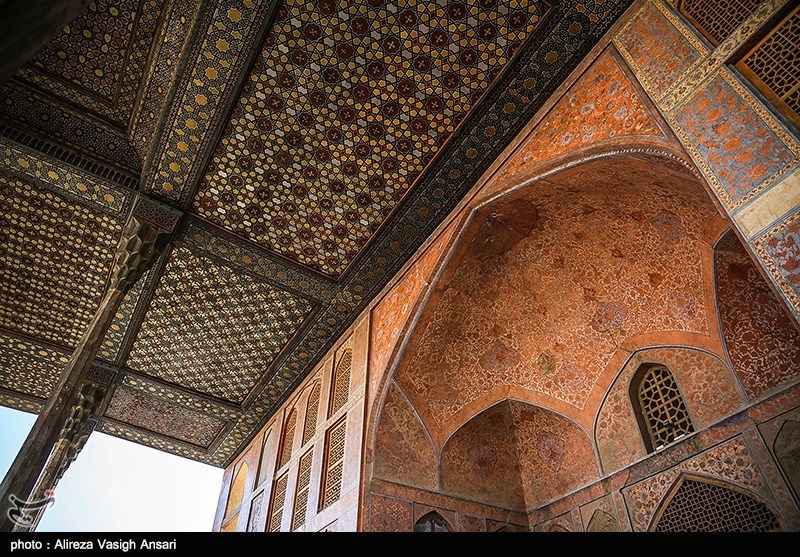
Ali Reza Abbasi the prominent artist has worked on glorious miniature paintings. The main reception hall and all other rooms were decorated with fabulous plaster work, plaster carving and miniature paintings.
There are two sets of staircases to the top floor. Staircases are very narrow only one Person can climb the stairs at the same time. On the west side of the fifth floor, there is a balcony facing to royal gardens, and the palace of Chehel Sotoun. Just on western side in the same neighborhood there is an old monument, called Tohid Khaneh. It was used by Dervishes at the time of Shah Abbas the great. This monument and all rooms enclosed the Tohid Khane’s courtyard, now are used as a part of the Faculty of Fine Arts of Isfahan.
Unfortunately some crazy visitors have damaged lower plaster and stucco works. One of the most attractive parts of the palace is the Verandah, in the third floor. A beautiful panoramic view of the Imam square, the Seljuk old town and also Isfahan can be seen.
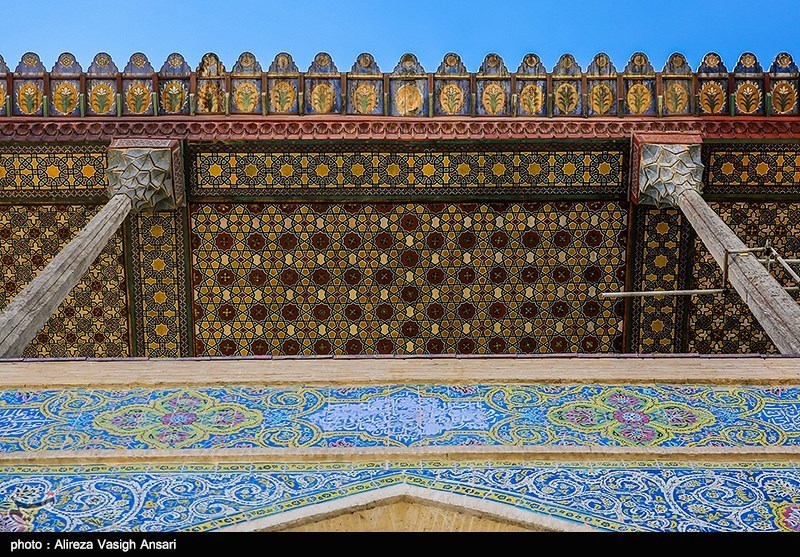
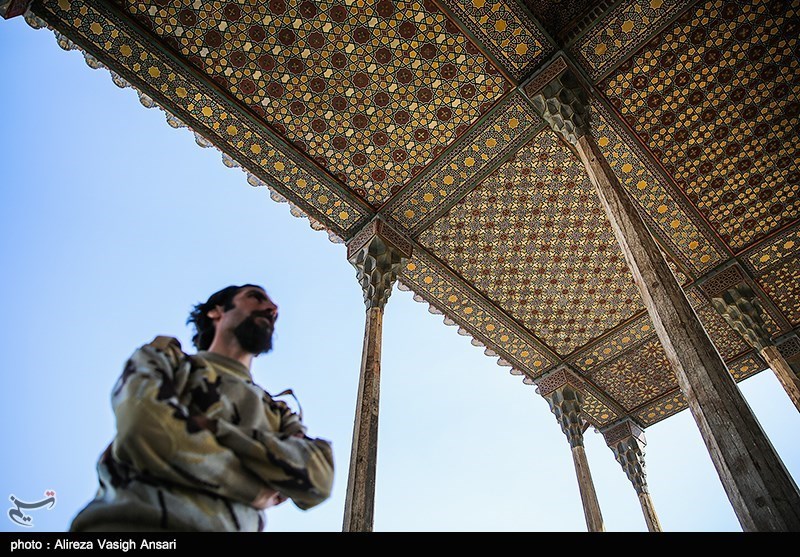
The verandah has 18 wooden pillars in three rows. The ceiling of verandah is a two shell roof. Inner shell is decorated with mirror, and paintings on wood. The outer shell is used as a protection shell. Originally, wooden pillars were decorated with mirror and painted inlaid wood. There is a remarkable pool in the centre of verandah made of copper plates and has fountains. For certain occasions the pool was filled with water, brought to the pool by bucket-wheel (Charkh Ab).
Water was collected from semi deep well and transferred to the pool. Beautiful certains covered three sides of verandah, when privacy needed. The royal family and their guests could watch polo games and different ceremonies from the verandah. On the west of verandah there is a magnificent throne hall decorated with fabulous plaster carvings and miniature painting.
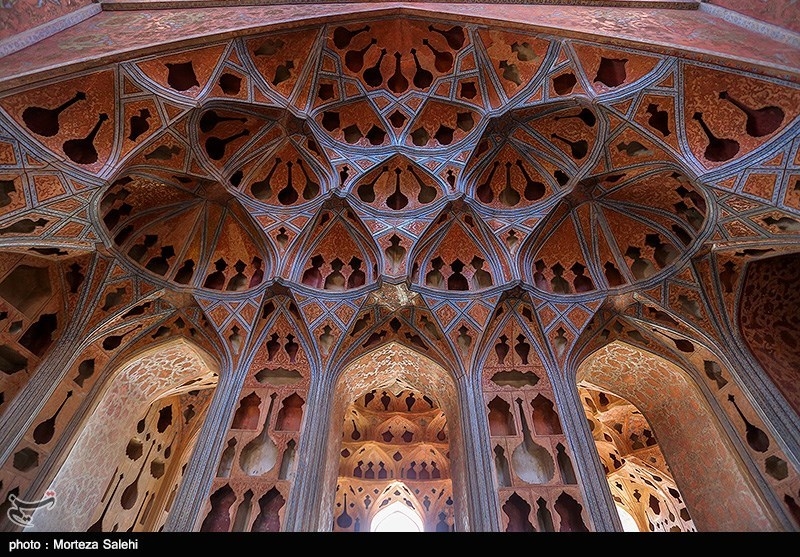
Reza Abbasi and his team of painters have left extraordinary paintings, especially on the ceiling. The last floor of the palace is famous as the music hall. The most unique plaster work has ornamented upper parts and the ceiling. Through this plasters work different imaginary shapes, such as flower vases, dishes, plates and bottle can be seen.
 Music hall’s ornamentation is a new decorative invention of Safavid era. Sad to say that in 19th century magnificent original paintings and gilded decorations were notched and destroyed and a new layer of inartistic plaster work covered original works.
The Ali Qapu palace was fundamentally restored and repaired by Iranian and Italian artists and masters. Different walls and pillars of palace have been strengthened by iron beams. 
Source: Isfahan .ir

Monday, January 14, 2019

Poland’s Ingratitude to Iran’s Historical Favours


By: Kayhan Int’l 

Both history and the trend of current developments bear testimony to the fact that Iran has neither been hostile towards Europe nor tried to interfere in the affairs of European states.
Yet Europe has not just not reciprocated Iran’s goodwill, but has never missed an opportunity to strike at Iran and at the interests of the Iranian people.
Our intention is not to refer to the wily fox called Britain, which is the source of Iran’s sufferings from the beginning of the 19th century up to the present era, when despite the triumph of the Islamic Revolution in 1979 that ended US hegemony in Iran, London has continued to gang up with Washington to plot against the Islamic Republic. 
We are also not concerned here about France’s unending open hostility towards Iranian people, right since Napoleon backtracked on his military pact with Fath Ali Shah Qajar during the Russian war of 1813 to seize the southern Caucasus region from Iran, and the current asylum Paris has provided to MKO terrorists whose hands are stained with the blood of at least 17,000 Iranians including senior officials.
It is rather unfortunate that the latest European state to join the bandwagon of the Great Satan and its devilish clients scheming against us, is – of all countries – Poland, which ought to be called "an ingrate” in view of our goodwill towards its people not just during World War 2 when we hosted over 120,000 Polish refugees but during the 16th and 17th centuries when Poland was attacked at least on 75 different occasions by the armies of the Ottoman Empire and the Crimean Tatars, with whom the Safavids refused to join in the incursions into Christian Europe despite sharing a common religion.
Poland still has a few survivors who remember the 1942 exodus of Polish people to Iran via the Soviet Union, and how despite political instability and famine in Iran at that time, the Iranian people welcomed the refugees with smiles and generosity. 
The city of Isfahan, which hosted many of the Polish refugees, has still persevered the cemetery, complete with a Christian Church and crosses on graves, of those of the Polish people who passed away during their stay in Iran.
Yet, despite this record of Iranian hospitality and goodwill, Poland has willingly agreed to the US demand to play host in its capital Warsaw – after which a street in Tehran is named – to a criminal conference of all those opposed to the Islamic Republic of Iran, and that too on February 13 and 14, during the 40th anniversary celebrations marking the triumph of the Islamic Revolution.
In response to such ingratitude Iran had no choice but to summon to the foreign ministry in Tehran Poland’s Chargé d’Affaires, Wojciech Unolt, to sound strong protest is helping the US in organizing the anti-Iran circus.
He was told: "This is a hostile measure by the United States against the Islamic Republic of Iran, and Poland is expected to avoid assisting the US in holding the conference.”
It was obvious, Unolt could not provide any proper or satisfactory answer. His faltering words that Poland has a different stance that the US and does not conform to the recent remarks made by US officials, failed to satisfy Iranian foreign ministry officials.
He was warned that the government of Poland should immediately compensate for the move or else face Iran will "inevitably take reciprocal measures”.
For the information of Poland, the Islamic Republic of Iran reserves the right to respond in the proper manner and is keeping all options on the table, which might be used if such a scandalous gathering goes ahead. 
If Warsaw is really sincere in its policy vis-à-vis Iran, as Unolt claimed at the foreign ministry in Tehran, then it should summon the courage to tell the gangster Mike Pompeo and his thuggish boss Donald Trump the Dotard, that the said meeting is cancelled and Poland will not be a party to any anti-Iranian plot.