Showing posts with label President Ronald Reagan. Show all posts

Friday, November 09, 2018

Trump, Gorbachev and the Fall of the American Empire

Trump, Gorbachev and the Fall of the American Empire
Raja MURTHY

“The only wealth you keep is wealth you have given away,” said Marcus Aurelius (121-180 AD), last of the great Roman emperors. US President Donald Trump might know of another Italian, Mario Puzo’s Don Vito Corleone, and his memorable mumble: “I’m going to make him an offer he can’t refuse.” Forgetting such Aurelian and godfather codes is propelling the decline and fall of the American empire.
Trump is making offers the world can refuse – by reshaping trade deals, dispensing with American sops and forcing powerful corporations to return home, the US is regaining economic wealth but relinquishing global power.
As the last leader of the Union of Soviet Socialist Republics (USSR), Mikhail Gorbachev’s perestroika (restructuring) led to the breakup of its vast territory(22 million square kilometers). Gorbachev’s failed policies led to the dissolution of the USSR into Russia and independent countries, and the end of a superpower.

This diminishing influence was highlighted when India and seven other countries geared up to defy Washington’s re-imposition of its unilateral, illegal sanctions against Iran, starting Monday.
The US State Department granting “permission” on the weekend to the eight countries to buy Iranian oil was akin to waving the green flag at a train that has already left the station.
The law of cause and effect unavoidably delivers. The Roman Empire fell after wars of greed and orgies of consumption. A similar nemesis, the genie of Gorbachev, stalks Pennsylvania Avenue, with Trump unwittingly writing the last chapter of World War II: the epilogue of the two rival superpowers that emerged from humanity’s most terrible conflict.
The maverick 45th president of the United States may succeed at being an economic messiah to his country, which has racked up a $21.6 trillion debt, but the fallout is the death of American hegemony. These are the declining days of the last empire standing.
Emperors and mafia godfathers knew that wielding great influence means making payoffs. Trump, however, is doing away with the sops, the glue that holds the American empire together, and is making offers that he considers “fair” but instead is alienating the international community – from badgering NATO and other countries to pay more for hosting the US legions (800 military bases in 80 countries) to reducing US aid.
US aid to countries fell from $50 billion in fiscal year 2016, $37 billion in 2017 to $7.7 billion so far  in 2018. A world less tied to American largesse and generous trade tarrifs can more easily reject the “you are with us or against us” bullying doctrine of US presidents. In the carrot and stick approach that largely passes as American foreign policy, the stick loses power as the carrot vanishes.
More self-respecting leaders will have less tolerance for American hypocrisy, such as sanctioning other countries for nuclear weapons while having the biggest nuclear arsenal on the planet.
They will sneer more openly at the hysteria surrounding alleged interference in the 2016 US presidential elections, pointing to Washington’s violent record of global meddling. They will cite examples of American hypocrisy such as its sponsorship of coups against elected leaders in Latin America, the US Army’s Project Camelot in 1964 targeting 22 countries for intervention (including Iran, Turkey, Thailand, Malaysia), its support for bloodthirsty dictators, and its destabilization of the Middle East with the destruction of Iraq and Libya.
Immigrant cannon fodder
Trump’s focus on the economy reduces the likelihood of him starting wars. By ending the flood of illegal immigrants to save jobs for US citizens, he is also inadvertently reducing the manpower for illegal wars. Non-citizen immigrants comprise about 5% of the US Army. For its Iraq and Afghanistan wars, US army recruiters offered citizenship to lure illegal immigrants, mostly Latinos.
Among the first US soldiers to die in the Iraq War was 22-year old illegal immigrant Corporal Jose Antonio Gutierrez, an orphan from the streets of Guatemala City. He sneaked across the Mexican border into the US six years before enlisting in exchange for American citizenship.
On March 21, 2003, Gutierrez was killed by friendly fire near Umm Qasr, southern Iraq. The coffin of this illegal immigrant was draped in the US flag, and he received American citizenship – posthumously.
Trump policies targeting illegal immigration simultaneously reduces the availability of cannon fodder for the illegal wars needed to maintain American hegemony.
Everything comes to an end, and so too will the last empire of our era.
The imperial American eagle flying into the sunset will see the dawn of an economically healthier US that minds its own business, and increase hopes for a more equal, happier world – thanks to the unintentional Gorbachev-2 in the White House.

Tuesday, October 30, 2018

Mohammed bin Salman is the next Saddam Hussein

By Ryan Costello & Sina Toossi


In the 1980s, the United States embraced a brutal Middle Eastern tyrant simply because he opposed Iran. Washington should not repeat the same mistake today.
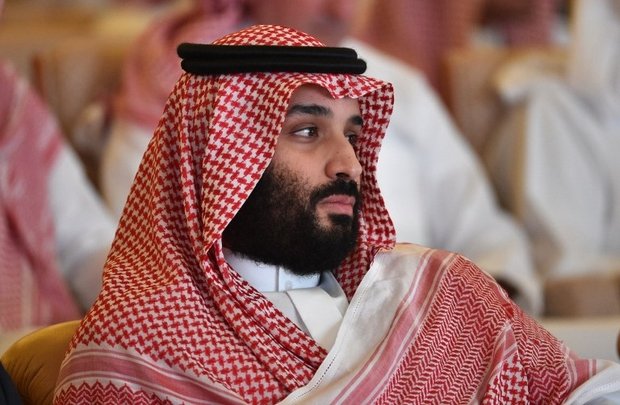
Saudi Crown Prince Mohammed bin Salman is reportedly shocked over the backlash to his government’s killing of Washington Post columnist Jamal Khashoggi. In a recent phone call with U.S. President Donald Trump’s son-in-law and advisor Jared Kushner, according to the Wall Street Journal, his confusion over official Washington’s furor “turned into rage,” as he spoke of feeling “betrayed by the West” and threatened to “look elsewhere” for foreign partners.
Saudi Arabia’s indignation at the United States would not be the first time an autocratic U.S. ally in the Middle East has assumed it could act with virtual impunity due to its alignment with Washington in countering Iran. Indeed, the Saudi prince’s meteoric rise to power bears striking similarities to that of a past U.S. ally-turned-nemesis whose brutality was initially overlooked by his Washington patrons: former Iraqi dictator Saddam Hussein.
Years before Saddam became Washington’s chief foe, he enjoyed significant support from the United States and other Western countries. This ended after he decided to invade Kuwait in 1990. However, the lead-up to that conflict and Washington’s earlier patronage of Saddam provide instructive lessons for U.S. regional policy today and the major risks of not responding forcefully to the assassination of Khashoggi.
Mohammed bin Salman’s gradual and brutal consolidation of power, marked by the detention and torture of his domestic rivals, evokes the “nation-changing assault on dissent within Iraq’s ruling party in 1979 by a young President Saddam Hussein,” Toby Dodge, a consulting senior fellow for the Middle East at London’s International Institute for Strategic Studies, told Bloomberg last year. “The concentration of power in one youthful, ambitious and unpredictable pair of hands is worrying now as it was then.” Washington’s steadfast support of Saddam during the 1980s not only enabled his rampage against his own people and neighboring countries, but also eventually threatened U.S. security interests.
The U.S. relationship with Saddam Hussein began in 1963, when, according to the former National Security Council official Roger Morris, the CIA under President John F. Kennedy “carried out in collaboration with Saddam Hussein” a coup to overthrow the government of Gen. Abdel Karim Kassem, who had five years earlier toppled Iraq’s pro-American monarchy.
However, U.S. ties with Saddam truly began to solidify in February 1982, when the Reagan administration removed Iraq from the State Department’s terrorism list, paving the way for providing military assistance to Iraq. This occurred roughly 17 months after Saddam’s invasion of Iran, while Iraqi forces were occupying the oil-rich southwestern Iranian province of Khuzestan that Iraq sought to annex. In December 1983, President Ronald Reagan dispatched Donald Rumsfeld as a presidential envoy to meet Saddam and set the stage for normalizing U.S.-Iraqi relations. U.S. support for Saddam during the war would grow to include, according to the Washington Post, “large-scale intelligence sharing, supply of cluster bombs through a Chilean front company, and facilitating Iraq’s acquisition of chemical and biological precursors.”
Saddam’s devastating use of chemical weapons during the Iran-Iraq War, both against Iranian military and civilian targets and on his own people, did not deter U.S. support. Rumsfeld’s meeting with Saddam took place despite Washington possessing firm evidence of Iraqi chemical weapons use beginning in 1983. Prior to Rumsfeld’s trip, on Nov. 1, 1983, senior State Department official Jonathan Howe had told Secretary of State George Shultz of intelligence reports showing that Iraq was resorting to “almost daily use of CW [chemical weapons]” against the Iranians.
Toward the end of the war, “U.S. intelligence was flowing freely to Hussein’s military,” according to a 2013 article in Foreign Policy, despite U.S. officials being “fully aware that Hussein’s military would attack with chemical weapons.”
According to declassified CIA documents, two-thirds of all Iraqi chemical weapons deployed during the war were used in the last 18 months of the conflict, when U.S.-Iraqi cooperation peaked. This included the March 1988 genocidal chemical weapons attack on the Iraqi Kurdish town of Halabja, which led to the deaths of as many as 5,000 civilians. Ironically, this attack would later be used by the George W. Bush administration in 2003 as part of its pretext for invading Iraq to eliminate the country’s by then nonexistent weapons of mass destruction.
A few months after the Halabja attack, in September 1988, Assistant Secretary of State Richard Murphy wrote in a memo on the chemical weapons question that “the U.S.-Iraqi relationship is … important to our long-term political and economic objectives.” Today, the Trump administration is echoing this language when discussing the U.S.-Saudi relationship, despite Saudi Arabia’s killing of Khashoggi and its devastating assault on Yemen, with U.S. Secretary of State Mike Pompeo recently proclaiming that Saudi Arabia is “an important strategic alliance of the United States” and that “the Saudis have been great partners in working alongside us.”
It was no surprise, then, that on the eve of Iraq’s invasion of Kuwait, Saddam felt he had unconditional backing from the United States. This impression was reinforced by Saddam’s meeting with then-U.S. Ambassador to Iraq April Glaspie on July 25, 1990, a week before his invasion of Kuwait. During their fateful encounter, according to a diplomatic cable summarizing the meeting, Glaspie stressed “President [George H.W.] Bush’s desire for friendship” and that “the president had instructed her to broaden and deepen our relations with Iraq.” When Saddam raised the issue of Kuwait, which he had been relentlessly threatening, Glaspie stated that the United States took “no position on these Arab affairs.”
To this day, academic experts such as the Harvard University professor and FP columnist Stephen M. Walt contend that “the United States did unwittingly give a green light to Saddam” to invade Kuwait—much as he invaded Iran—without a strong response from the United States. Walt adds that, contrary to some perceptions, Glaspie was “following the instructions she had been given” and that “she was doing what the Bush administration wanted at this crucial meeting.” U.S. diplomatic cables from Glaspie’s era also reveal, according to Germany’s Der Spiegel, that “Glaspie and her predecessor painted the regime in an extremely favorable light from the very outset, overlooked Saddam’s widely-known crimes, and were so influenced by mutual enmity for Iran as to be negligently uncritical.”
The United States was wrong to back Saddam simply because he opposed Iran, a mistake that has haunted it for decades. Not only were more than 500,000 U.S. troops required to dislodge Saddam from Kuwait, resulting in 382 U.S. military casualties, but it also placed the U.S. government on a warpath that resulted in the 2003 toppling of Saddam.
Today, the Trump administration’s reflexive support of Mohammed bin Salman is heading in the same direction as Washington’s ill-fated support of Saddam Hussein. Washington’s backing of Riyadh today even has the same justification: countering Iran. Trump has endorsed the crown prince’s purge of his domestic rivals and has given him carte blanche in his botched endeavors to rout the Houthis in Yemen while massacring civilians, turn Qatar into a vassal state, unseat the Lebanese prime minister, and punish Canada over a human rights complaint. The apparent order to assassinate Khashoggi is only the latest of Mohammed bin Salman’s reckless and impulsive decisions to which the United States has failed to react forcefully.
In the wake of Khashoggi’s killing, Trump administration officials have shamelessly warned that punishing the kingdom could jeopardize the escalating pressure campaign against Iran. A desire to bleed Iran shouldn’t once again overshadow a growing threat to the region: an unchecked, ambitious Saudi crown prince who has already presided over the decimation of Yemen and the butchering of a prominent journalist in his quest to consolidate absolute power.
Mohammed bin Salman, if allowed to ascend to the throne without facing any consequences from Washington for his outrageous behavior, will likely terrorize the region for decades, just as Saddam did. If Khashoggi’s brazen slaughter, carried out in utter disregard for international norms or the political cost for its allies, is a sign of a new Saudi playbook, the world may be facing an even greater threat than Saddam posed. Not only has the crown prince made clear his willingness to use force against neighboring countries, but his country also still enjoys vast oil wealth — giving him the ability to disrupt the global economy (although not to the extent of the 1973 Arab oil embargo) and threaten the profits of Western defense firms, given that the kingdom is the world’s third-largest military spender after the United States and China.
The Trump administration must act now to make it clear to the Saudi royal family that there will be severe consequences for such transgressions and end the unqualified support provided to Saudi Arabia. At a minimum, this should include an end to U.S. participation in the Yemen war, a halt to arms sales, and Magnitsky Act sanctions against all Saudi officials connected to Khashoggi’s killing.
(Source: Foreign Policy)

Saturday, October 27, 2018

A new nuclear arms race has begun

By Mikhail Gorbachev former president of the Soviet Union


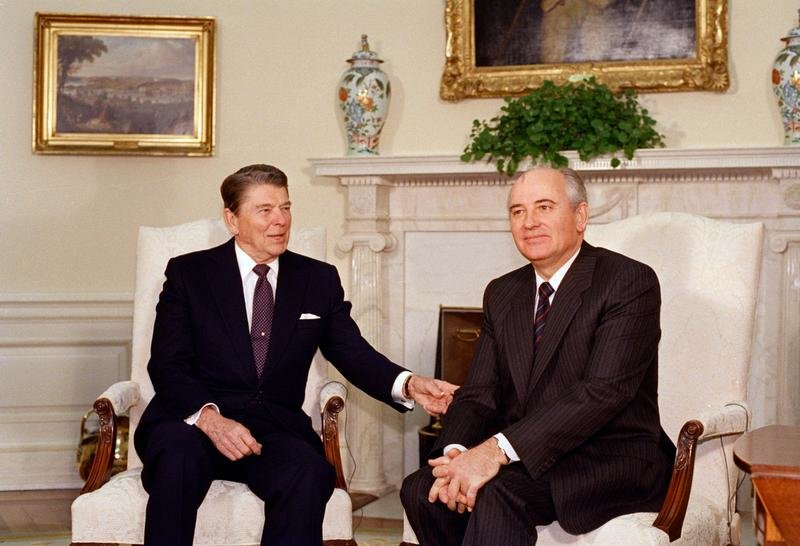
Over 30 years ago, President Ronald Reagan and I signed in Washington the United States-Soviet Treaty on the elimination of intermediate- and shorter-range missiles. For the first time in history, two classes of nuclear weapons were to be eliminated and destroyed.
This was a first step. It was followed in 1991 by the Strategic Arms Reduction Treaty, which the Soviet Union signed with President George H.W. Bush, our agreement on radical cuts in tactical nuclear arms, and the New Start Treaty, signed by the presidents of Russia and the United States in 2010.

There are still too many nuclear weapons in the world, but the American and Russian arsenals are now a fraction of what they were during the Cold War. At the Nuclear Nonproliferation Review Conference in 2015, Russia and the United States reported to the international community that 85 percent of those arsenals had been decommissioned and, for the most part, destroyed.

Today, this tremendous accomplishment, of which our two nations can be rightfully proud, is in jeopardy. President Trump announced last week the United States’ plan to withdraw from the Intermediate-range Nuclear Forces Treaty and his country’s intention to build up nuclear arms.
President Trump says he plans to withdraw from a nonproliferation treaty that I signed with Ronald Reagan. It’s just the latest victim in the militarization of world affairs.I am being asked whether I feel bitter watching the demise of what I worked so hard to achieve. But this is not a personal matter. Much more is at stake.

A new arms race has been announced. The INF Treaty is not the first victim of the militarization of world affairs. In 2002, the United States withdrew from the Antiballistic Missile Treaty; this year, from the Iran nuclear deal. Military expenditures have soared to astronomical levels and keep rising.
As a pretext for the withdrawal from the INF Treaty, the United States invoked Russia’s alleged violations of some of the treaty’s provisions. Russia has raised similar concerns regarding American compliance, at the same time proposing to discuss the issues at the negotiating table to find a mutually acceptable solution. But over the past few years, the United States has been avoiding such discussion. I think it is now clear why.

With enough political will, any problems of compliance with the existing treaties could be resolved. But as we have seen during the past two years, the president of the United States has a very different purpose in mind. It is to release the United States from any obligations, any constraints, and not just regarding nuclear missiles.

The United States has in effect taken the initiative in destroying the entire system of international treaties and accords that served as the underlying foundation for peace and security following World War II.

Yet I am convinced that those who hope to benefit from a global free-for-all are deeply mistaken. There will be no winner in a “war of all against all” — particularly if it ends in a nuclear war. And that is a possibility that cannot be ruled out. An unrelenting arms race, international tensions, hostility and universal mistrust will only increase the risk.

Is it too late to return to dialogue and negotiations? I don’t want to lose hope. I hope that Russia will take a firm but balanced stand. I hope that America’s allies will, upon sober reflection, refuse to be launch pads for new American missiles. I hope the United Nations, and particularly members of its Security Council, vested by the United Nations Charter with primary responsibility for maintaining international peace and security, will take responsible action.

Faced with this dire threat to peace, we are not helpless. We must not resign, we must not surrender.
(Source: The NYT)