
The war drums beating in Washington, Riyadh, and Tel Aviv when it comes to Iran have not been this loud since the lead-up to the war in Iraq in 2003.
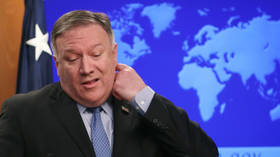
“An act of war,” Trump’s secretary of state, Mike Pompeo, proclaimed upon arriving in Saudi Arabia on a ‘working visit,’ a visit that will be largely if not solely taken up with discussions over what form the response to the missile strike against key Saudi oil installations on September 14 should take.
Pompeo’s bombastic pronouncement followed the trend set by his boss in the immediate aftermath of the attack. In one of his by now customary sabre-rattling tweets that do much to bring the English language into disrepute, Trump announced:
“Saudi Arabia oil supply was attacked. There is reason to believe that we know the culprit, are locked and loaded depending on verification, but are waiting to hear from the Kingdom as to who they believe was the cause of this attack, and under what terms we would proceed!”
Tehran has been implicated but denies any involvement or responsibility for the attack, while the Houthi rebels, engaged against the Saudis and their allies in a protracted conflict in Yemen, have claimed responsibility. Said Houthis, it should be pointed out, have carried out drone and missile strikes against strategic targets in the kingdom before, so it is conceivable that their claim to have been responsible for this attack carries with it the ring of truth.
New sales pitch? US makes the world’s ‘finest’ anti-air systems, but sometimes they just don’t work, Pompeo explains
Regardless of who was or wasn’t behind this missile and drone strike, against what is the largest oil processing facility in the world, it was an outstanding success militarily and, arguably, strategically.
It has exposed the weakness of the Saudis’ military defences, despite Riyadh spending huge amounts on weaponry, military equipment, and expertise from its US and UK allies in particular over the years, along with the vulnerability of the kingdom’s economic infrastructure.
More significantly, with the consequences of the attack reverberating beyond the region to produce a temporary spike in the price of crude on global markets, the attack shines an incredibly harsh light on the reckless policy the Trump administration has been pursuing when it comes to Iran.
With the economic noose that’s been placed by Washington around Iran’s neck and the dagger at its throat in the form of substantial US, British, and Israeli military assets deployed within striking distance of its territory, and with the Saudis adopting such an aggressive posture against the Islamic Republic, of course it does.
Yes, the Iranians have no doubt been supplying the Houthis with weaponry and no doubt also the expertise in how to use them in their conflict against the Saudi-led coalition in Yemen. What of it? Have the Saudis not supplied opposition groups in Syria with weapons? Have the British and Americans not been supplying the Saudis with weaponry and military expertise in support of its four-year-long and counting war in Yemen? And have those weapons not been responsible for killing thousands of civilians in that benighted and forsaken land?
Saudi air defenses like Patriot & Aegis don’t match their advertised properties, unfit for real combat – Russian Army (MAP)
There is only so much hypocrisy the world can be expected to take when it comes to the extent to which Washington and its allies assert the right to operate on the basis of ‘Do as I say, not as I do.’
Though Trump had recently begun to show signs of a return to some kind of sanity when it came to Iran, talking up the possibility of talking to Iranian President Hassan Rouhani, he remains a prisoner of a neocon establishment in Washington and his own dysfunctional approach to foreign policy.
As with North Korea, as with Venezuela, Cuba, Russia, and China (the list goes on), the notion that sanctions and tariffs can precede meaningful dialogue with a view to the normalisation of relations is not only absurd, it reduces statecraft to an exercise in backstreet thuggery.
Economic sanctions are a blunt instrument and a weapon of war in themselves. Indeed when it comes to Iran, to assert that they are ‘hurting’, as Trump so blithely put it not too long ago vis-à-vis the impact of US sanctions, this is to violate the bounds of understatement.
Since Trump drove a coach and horses through the JCPOA (Iran nuclear deal) in 2015, and for no other reason than his personal antipathy towards Obama, Iran’s oil exports have fallen by half. In the process, its currency has slumped and the price of basic foods have spiked, producing extreme hardship among a vast swathe of the population.
With the aforementioned military pressure Iran has come under added to the economic crisis which the country’s been plunged into, only the most rotten-minded could conceivably lay responsibility for the present uptick in regional tensions at Tehran’s door.
Tehran will commit to ‘all-out war’ if Iran is targeted by military strike, FM Zarif warns
Something’s got to give. Just as you can only apply so much pressure to a man’s throat before he kicks you in the shins, you can only asphyxiate a country of 80 million people so much before it strikes back. This is why I say that whether or not the Iranians were behind this attack, given all the circumstances, it wouldn’t be surprising if they were.
So, yes, the drumbeats of war are beating as loud as they ever have when it comes to a region that has become sadly all too used to the beat of those drums. However in this instance the Saudis and the Americans, and possibly Mr Netanyahu, know that escalation would be self-defeating in the extreme.
Iran is a hugely different proposition in 2019 than Iraq was in 2003. It possesses the ability and the will to do serious damage to anyone who would dare make the mistake of confusing the size of the dog in the fight with the size of the fight in the dog.
Whatever the outcome to this crisis, on its current course, there will be no winners, only losers.
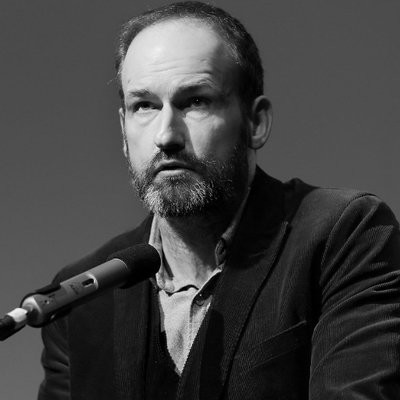
John Wight has written for a variety of newspapers and websites, including the Independent, Morning Star, Huffington Post, Counterpunch, London Progressive Journal, and Foreign Policy Journal.

