Showing posts with label Gaza Strip. Show all posts

Friday, November 29, 2019

How Western Media Bias Allows Israel to Get Away with Murder in Gaza

It is obvious that the Western media have maintained their blindspot on fairly reporting on Gaza and intentionally kept the truth from their readers.


An Israeli attack on Gaza was imminent, and not because of any provocations by Palestinian groups in the besieged, impoverished Gaza Strip. The Israeli military escalation was foreseeable because it factors neatly in Israel’s contentious political scene. The war was not a question of “if”, but “when”.
The answer came on November 12, when the Israeli military launched a major strike against Gaza, killing an Islamic Jihad Commander, Bahaa Abu al-Ata, along with his wife Asma.
More strikes followed, targeting what the Israeli military described as Islamic Jihad installations. However, the identities of the victims, along with damning social media footage, pictures, and eyewitness accounts indicate that civilians and civilian infrastructure were bombed and destroyed as well.
As of November 14, when a truce was announced, 32 Palestinians have been killed and over 80 wounded in the Israeli aggression.
What truly frustrates any meaningful discussion on the horrific situation in Gaza is the feeble response, whether by international organizations that exist with the sole purpose of ensuring world peace or by Western mainstream media, that ceaselessly celebrates its own accuracy and impartiality.
A most disappointing response to the Israeli violence was offered by Nickolay Mladenov, the United Nations Special Coordinator for the Middle East Peace Process.
Mladenov, whose job should have long been deemed pointless considering that no “peace process” actually exists, expressed his “concern” about the “ongoing and serious escalation between Palestinian Islamic Jihad and Israel”.
Not only Mladenov’s statement creates a moral equivalence between an occupying power, which instigated the war in the first place, and a small group of a few hundred armed men, it is also dishonest.
“The indiscriminate launching of rockets and mortars against population centres is absolutely unacceptable and must stop immediately,” Mladenov elaborated, putting great emphasis on the fact that “there can be no justification for any attacks against civilians”.
Shockingly, Mladenov was referring to Israeli, not Palestinian civilians. At the time that his statement was released to the media, there were already dozens of Palestinian civilians that had been killed and wounded, while Israeli media reports spoke of few Israelis who had been treated for “anxiety”.
The European Union did not fare any better. The EU parroted the same American knee-jerk response by condemning “the barrage of rocket attacks reaching deep into Israel”.
“The firing of rockets on civilian populations is totally unacceptable and must immediately stop,” a statement by the European bloc read.
Is it not possible that Mladenov and top EU foreign policymakers do not truly comprehend the political context of the latest Israeli onslaught—that embattled Israeli Prime Minister Benjamin Netanyahu is using military escalation as a way of fortifying his weakening grip on power.
Considering this, what is one to make of the poor media coverage, the inept analyses and the absence of balanced reports in major Western news media?
In a report published by the BBC on November 13, the British broadcaster referred to “cross-border violence between Israel and militants in Gaza”.
But Gaza is not an independent country and, per international law, it is still under Israeli occupation. Israel declared Gaza a “hostile territory” in September 2007, arbitrarily establishing a “border” between it and the besieged Palestinian territory. For some reason, the BBC finds this designation acceptable.
CNN, on the other hand, reported on November 13 that “Israel’s military campaign against Islamic Jihad” is entering its second day, while emphasizing the UN condemnation of the rocket attacks.
CNN, like most of its American mainstream counterparts, reports on Israeli military campaigns as a part and parcel of some imagined “war on terror”. Therefore, analyzing the language of US mainstream media with the purpose of underlining and emphasizing its failures and biases, is a useless exercise.
Sadly, US bias regarding Palestine has extended to mainstream media in European countries that were, to some degree, fairer, if not somewhat sympathetic, with the Palestinian peoples’ situation.
El Mundo of Spain, for example, spoke of a number of Palestinians—making sure to emphasize that they were “mostly militants”,—who “died” as opposed to “were killed” by the Israeli military.
“The escalation followed the death of Gaza’s armed branch leader,” El Mundo reported, failing once more to pinpoint the culprits in these seemingly mysterious deaths.
La Repubblica, which is perceived in Italy as a “leftist” outlet, sounded more like a rightwing Israeli newspaper, in its description of the events that led to the death and wounding of many Palestinians. The Italian newspaper used a fabricated timeline that only exists in the mind of Israeli military and decision-makers.
“Violence continued. Several rockets were thrown towards Israel by Gaza’s Islamic Jihad (militants), breaking the brief truce, according to (rightwing Israeli newspaper) The Jerusalem Post and to the Israeli army”.
It remains unclear what “truce” La Repubblica was referring to.
France’s Le Monde followed suit, reporting the same deceptive and cliched Israeli lines and emphasizing statements by the Israeli military and government. Interestingly, the death and wounding of many Palestinians in Gaza did not deserve a place on the French newspaper’s homepage. Instead, it chose to highlight a comparatively irrelevant news item where Israel denounced the labeling of illegal settlement products as “discriminatory”.
Maybe, one could have excused these across-the-board journalistic and moral failings if it were not for the fact that the Gaza story has been one of the most covered news topics anywhere in the world for over a decade.
It is obvious that the West’s “newspapers of record” have maintained their blindspot on fairly reporting on Gaza and intentionally kept the truth from their readers for many years so as not to offend the sensibilities of the Israeli government and its powerful allies and lobbies.
While one cannot help but bemoan the death of good journalism in the West, it is also important to acknowledge with much appreciation the courage and sacrifices of Gaza’s young journalists and bloggers who, at times, are targeted and killed by the Israeli army for conveying the truth on the plight of the besieged but tenacious Strip.
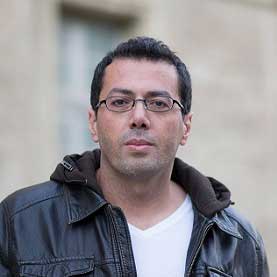
Ramzy Baroud

Ramzy Baroud is a journalist, author and editor of Palestine Chronicle. His latest book is The Last Earth: A Palestinian Story (Pluto Press, 2018). His latest book is The Last Earth: A Palestinian Story (Pluto Press, 2018). He earned a Ph.D. in Palestine Studies from the University of Exeter, and is a former Non-Resident Scholar at Orfalea Center for Global and International Studies, UCSB.

Monday, June 10, 2019

Facing the Facts: Israel Cannot Escape ICC Jurisdiction

By  
While it is true that Israel is not a signatory of the Rome Statute, Palestine has, since 2015, agreed to submit itself to the ICC’s jurisdiction.


The Chief Military Advocate General of the Israeli army, Sharon Afek, and the US Department of Defense General Counsel, Paul Ney, shared a platform at the ‘International Conference on the Law of Armed Conflict’, which took place in Herzliya, Israel between May 28-30.
Their panel witnessed some of the most misconstrued interpretations of international law ever recorded. It was as if Afek and Ney were literally making up their own law on warfare and armed conflict, with no regard to what international law actually stipulates.
Unsurprisingly, both Afek and Ney agreed on many things, including that Israel and the US are blameless in all of their military conflicts, and that they will always be united against any attempt to hold them accountable for war crimes by the International Court of Justice (ICC).
Their tirade against the ICC mirrors that of their own leaders. While Israeli Prime Minister Benjamin Netanyahu’s anti-ICC position is familiar, last April, US President Donald Trump virulently expressed his contempt for the global organization and everything it represents.
“Any attempt to target American, Israeli, or allied personnel for prosecution will be met with a swift and vigorous response,” Trump said in a writing on April 12.
While Trump’s (and Netanyahu’s) divisive language is nothing new, Afek and Ney were entrusted with the difficult task of using legal language to explain their countries’ aversion for international law.
Prior to the Herzliya Conference, Afek addressed the Israel Bar Association convention in Eilat on May 26. Here, too, he made some ludicrous claims as he absolved, in advance, Israeli soldiers who kill Palestinians.
“A soldier who is in a life-threatening situation and acts to defend himself (or) others (he) is responsible for, is receiving and will continue receiving full back-up from the Israeli army,” he said.
The above assertion appears far more sinister once we remember Afek’s views on what constitutes a “life-threatening situation”, as he had articulated in Herzliya a few days later.
The Gaza protesters “are led by a terrorist organization that deliberately uses civilians to carry out attacks,” Afek said.
Afek sees unarmed protests in Gaza as a form of terrorism, thus concurring with an earlier statement made by then-Israeli Defense Minister, Avigdor Lieberman, on April 8, 2018, when he declared that “there are no innocents in Gaza.”
Israel’s shoot-to-kill policy, however, is not confined to the Gaza Strip but is also implemented with the same degree of violent enthusiasm in the West Bank.
‘No attacker, male or female, should make it out of any attack alive,’ Lieberman said in 2015. His orders were followed implicitly, as hundreds of Palestinians were killed in the West Bank and Jerusalem for allegedly trying to attack Israeli occupation soldiers or armed illegal Jewish settlers.
Unlike democratic political systems everywhere, in Israel the occupation soldier becomes the interpreter and enforcer of the law.
Putting this policy into practice in Gaza is even more horrendous as unarmed protesters are often being killed by Israeli snipers from long distances. Even journalists and medics have not been spared the same tragic fate as the hundreds of civilians who were killed since the start of the protests in March 2018.
Last February, the United Nations Independent Commission of Inquiry on Gaza’s protests concluded that “it has reasonable grounds to believe that during the Great March of Return, Israeli soldiers committed violations of international human rights and humanitarian law. Some of those violations may constitute war crimes or crimes against humanity, and must be immediately investigated by Israel.”
In his attack on the ICC at the Herzliya Conference, Afek contended that “Israel is a law-abiding country, with an independent and strong judicial system, and there is no reason for its actions to be scrutinized by the ICC.”
The Israeli General goes on to reprimand the ICC by urging it to focus on “dealing with the main issues for which it was founded.”
Has Afek even read the Rome Statute? The first Article states that the ICC has the “power to exercise its jurisdiction over persons for the most serious crimes of international concern, as referred to in this Statute.”
Article 5 elaborates the nature of these serious crimes, which include: “(a) The crime of genocide; (b) Crimes against humanity; (c) War crimes; (d) The crime of aggression.”
Israel has been accused of at least two of these crimes—war crimes and crimes against humanity—repeatedly, including in the February report by the United Nations Independent Commission of Inquiry.
Afek may argue that none of this is relevant to Israel, for the latter is not “a party to the Rome Statute,” therefore, does not fall within ICC’s legal jurisdiction.
Wrong again.
Article 12 of the Rome Statute allows for ICC’s jurisdiction in two cases; first, if the State in which the alleged crime has occurred is itself a party of the Statute and, second, if the State where the crime has occurred agrees to submit itself to the jurisdiction of the court.
While it is true that Israel is not a signatory of the Rome Statute, Palestine has, since 2015, agreed to submit itself to the ICC’s jurisdiction.
Moreover, in April 2015, the State of Palestine formally became a member of the ICC, thus giving the court jurisdiction to investigate crimes committed in the Occupied Territories since June 13 2014. These crimes include human rights violations carried out during the Israeli war on Gaza in July-August of the same year.
Afek’s skewed understanding of international law went unchallenged at the Herzliya Conference, as he was flanked by equally misguided interpreters of international law.
However, nothing proclaimed by Israel’s top military prosecutor or his government will alter the facts. Israeli war crimes must not go unpunished; Israel’s judicial system is untrustworthy and the ICC has the legal right and moral duty to carry out the will of the international community and hold to account those responsible for war crimes anywhere, including Israel.

Ramzy Baroud

Ramzy Baroud is a journalist, author and editor of Palestine Chronicle. His latest book is The Last Earth: A Palestinian Story (Pluto Press, 2018). His latest book is The Last Earth: A Palestinian Story (Pluto Press, 2018). He earned a Ph.D. in Palestine Studies from the University of Exeter, and is a former Non-Resident Scholar at Orfalea Center for Global and International Studies, UCSB.

Sunday, April 28, 2019

Notre Dame of Gaza: Our Mosques and Churches are Also Burning

By 
The Al-Aqsa Mosque at the Haram al-Sharif, or Temple Mount
The media seem oblivious to the obliteration of everything we hold sacred in Palestine as Israel continues to blow up, bulldoze, and desecrate.

As the 300-foot spire of the Notre Dame Cathedral in Paris tragically came tumbling down on live television, my thoughts ventured to Nuseirat Refugee Camp, my childhood home in the Gaza Strip.
Then, also on television, I watched as a small bulldozer hopelessly clawed through the rubble of my neighborhood mosque. I grew up around that mosque. I spent many hours there with my grandfather, Mohammed, a refugee from historic Palestine. Before grandpa became a refugee, he was a young Imam in a small mosque in his long-destroyed village of Beit Daras.
Mohammed and many in his generation took solace in erecting their own mosque in the refugee camp as soon as they arrived to the Gaza Strip in late 1948. The new mosque was first made of hardened mud, but was eventually remade with bricks, and later concrete. He spent much of his time there, and when he died, his old, frail body was taken to the same mosque for a final prayer, before being buried in the adjacent Martyrs Graveyard. When I was still a child, he used to hold my hand as we walked together to the mosque during prayer times. When he aged, and could barely walk, I, in turn, held his hand.
But Al-Masjid al-Kabir—the Great Mosque, later renamed Al-Qassam Mosque—was completely pulverized by Israeli missiles during the summer war on Gaza, starting July 8, 2014.
Hundreds of Palestinian houses of worship were targeted by the Israeli military in previous wars, most notably in 2008-9 and 2012. But the 2014 war was the most brutal and most destructive yet. Thousands were killed and more injured. Nothing was immune to Israeli bombs. According to Palestine Liberation Organization records, 63 mosques were completely destroyed and 150 damaged in that war alone, oftentimes with people seeking shelter inside. In the case of my mosque, two bodies were recovered after a long, agonizing search. They had no chance of being rescued. If they survived the deadly explosives, they were crushed by the massive slabs of concrete.
In truth, concrete, cements, bricks and physical structures don’t carry much meaning on their own. We give them meaning. Our collective experiences, our pains, joys, hopes and faith make a house of worship what it is.
Many generations of French Catholics have assigned the Notre Dame Cathedral with its layered meanings and symbolism since the 12th century.
While the fire consumed the oak roof and much of the structure, French citizens and many around the world watched in awe. It is as if the memories, prayers and hopes of a nation that is rooted in time were suddenly revealed, rising, all at once, with the pillars of smoke and fire.
But the very media that covered the news of the Notre Dame fire seemed oblivious to the obliteration of everything we hold sacred in Palestine as, day after day, Israeli war machinery continues to blow up, bulldoze and desecrate.
It is as if our religions are not worthy of respect, despite the fact that Christianity was born in Palestine. It was there that Jesus roamed the hills and valleys of our historic homeland teaching people about peace, love and justice. Palestine is also central to Islam. Haram al-Sharif, where al-Aqsa Mosque and The Dome of the Rock are kept, is the third holiest site for Muslims everywhere. Yet Christian and Muslim holy sites are besieged, often raided and shut down per military diktats. Moreover, the Israeli army-protected messianic Jewish extremists want to demolish Al-Aqsa and the Israeli government has been digging underneath its foundation for many years.
Although none of this is done in secret; international outrage remains muted. In fact, many find Israel’s actions justified. Some have bought into the ridiculous explanation offered by the Israeli military that bombing mosques is a necessary security measure. Others are motivated by dark religious prophecies of their own.
Palestine, though, is only a microcosm of the whole region. Many of us are familiar with the horrific destruction carried out by fringe militant groups against world cultural heritage in Syria, Iraq and Afghanistan. Most memorable among these are the destruction of Palmyra in Syria, Buddhas of Bamyan in Afghanistan and the Great Mosque of al-Nuri in Mosul.
Nothing however can possibly be compared to what the invading US army has done to Iraq. Not only did the invaders desecrate a sovereign country and brutalize her people, they also devastated her culture that goes back to the start of human civilization. Just the immediate aftermath of the invasion alone resulted in the looting of over 15,000 Iraqi antiquities, including the Lady of Warka, also known as the Mona Lisa of Mesopotamia, a Sumerian artifact whose history goes back to 3100 BC.
I had the privilege of seeing many of these artifacts in a visit to the Iraq Museum only a few years before it was looted by US soldiers. At the time, Iraqi curators had all precious pieces hidden in a fortified basement in anticipation of a US bombing campaign. But nothing could prepare the museum for the savagery unleashed by the ground invasion. Since then, Iraqi culture has largely been reduced to items on the black market of the very western invaders that have torn that country apart. The valiant work of Iraqi cultural warriors and their colleagues around the world has managed to restore some of that stolen dignity, but it will take many years for the cradle of human civilization to redeem its vanquished honor.
Every mosque, every church, every graveyard, every piece of art and every artifact is significant because it is laden with meaning, the meaning bestowed on them by those who have built or sought in them an escape, a moment of solace, hope, faith and peace.
On August 2, 2014 the Israeli army bombed the historic Al-Omari Mosque in northern Gaza. The ancient mosque dates back to the 7th century and has since served as a symbol of resilience and faith for the people of Gaza.
As Notre Dame burned, I thought of Al-Omari too. While the fire at the French cathedral was likely accidental, destroyed Palestinian houses of worship were intentionally targeted. The Israeli culprits are yet to be held accountable.
I also thought of my grandfather, Mohammed, the kindly Imam with the handsome, small white beard. His mosque served as his only escape from a difficult existence, an exile that only ended with his own death.

Ramzy Baroud

Ramzy Baroud is a journalist, author and editor of Palestine Chronicle. His latest book is The Last Earth: A Palestinian Story (Pluto Press, 2018). His latest book is The Last Earth: A Palestinian Story (Pluto Press, 2018). He earned a Ph.D. in Palestine Studies from the University of Exeter, and is a former Non-Resident Scholar at Orfalea Center for Global and International Studies, UCSB.

Friday, January 25, 2019

INTERVIEW: Ilan Pappé: How Israel turned Palestine into the biggest prison on earth

A history of the Israeli occupation in the West Bank and Gaza Strip examines what military formulas are used to control Palestinian lives


A Palestinian demonstrator tries to destroy the wall separating the West
Bank city of Abu Dis from East Jerusalem in November 2015 (AFP)

Mustafa Abu Sneineh's picture

Mustafa Abu Sneineh
The Six Day War of 1967 between Israel and the Arab armies resulted in the occupation of the West Bank and Gaza Strip.
Israel sold the story of this war as an accidental one. But new historical documents and minutes from the archives show that Israel was well prepared for it.
In 1963, figures from the Israeli military, legal and civil administrations enrolled in a course at the Hebrew University in Jerusalem, to set up a comprehensive plan to deal with the territories that Israel would occupy four years later, and manage a million and half Palestinians living in them.
The motivation was the failure in how Israel dealt with the Palestinians in Gaza in its short-lived occupation during the Suez Crisis in 1956.
In May 1967, weeks before the war, Israeli military governors received boxes that contained legal and military instructions on how to control the Palestinian towns and villages. Israel would go on to transform the West Bank and Gaza Strip into mega prisons under military rule and surveillance.
Settlements, checkpoints and collective punishment were part of this plan, as the Israeli historian Ilan Pappé shows in The Biggest Prison on Earth: A History of the Occupied Territories, an in-depth account of the Israeli occupation.
Published on the 50th anniversary of the 1967 war, the book has been shortlisted for the Palestine Book Awards 2017, organised by Middle East Monitor, due to be announced in London on 24 November. Pappé spoke to Middle East Eye about the book and what it reveals.
Middle East Eye: How does this book build on your previous book, The Ethnic Cleansing of Palestine about the 1948 war?
Ilan Pappé: It is definitely a continuation of my earlier book The Ethnic Cleansing that describes the events of 1948. I see the whole project of Zionism as a structure not just as one event. A structure of settler colonialism by which a movement of settlers colonises a homeland. As long as the colonisation is not complete and the indigenous population resists through a national liberation movement, each such period that I'm looking at is just a phase within the same structure.
Although The Biggest Prison is a history book, we are still within the same historical chapter. It's not over yet. So in this respect, there should be probably a third book later on looking at the events of the 21st century and how the same ideology of ethnic cleansing and dispossession is being implemented in the new era and how it is resisted by the Palestinians.
MEE: You speak about ethnic cleansing taking place in June 1967. What happened to the Palestinians in the West Bank and Gaza Strip then? How was this different from the ethnic cleansing of the 1948 war?
IP: In 1948 there was a very clear plan to try and expel as many Palestinians as possible from as much of Palestine as possible. The settler colonialist project believed it had the power to create a Jewish space in Palestine that would be totally without Palestinians. It didn't really work that well but it was quite successful as you all know. Eighty percent of the Palestinians who lived within what became the state of Israel became refugees.
As I show in the book, there were some Israeli policymakers who thought maybe we can do in 1967 what we did in 1948. But the vast majority of them understood that the 1967 war was a very short war, it was for six days, and there was already television, and quite a few of the people that they wanted to expel were already refugees from 1948.
So, I think the strategy was not ethnic cleansing in the same way that it was implemented in 1948. It was what I would call incremental ethnic cleansing. In some cases they expelled droves of people from certain areas such as Jericho, the Old City of Jerusalem, and around Qalqilya. But in most cases they decided that military rule and a siege to enclose Palestinians in their own areas would be as beneficial as expelling them.
From 1967 until today, there is a very slow ethnic cleansing that probably stretches over a period of 50 years and it's so slow that sometimes it can only affect one person in one day. But if you look at the whole picture from 1967 till today, we're talking about hundreds of thousands of Palestinians that are not allowed to return to the West Bank or the Gaza Strip.
MEE: You differentiate between two military models that Israel uses: the open prison model in West Bank and the maximum security prison model in Gaza Strip. How do you define these two models? And are these military terms?
IP: I use these terms as metaphors to explain the two models that Israel offers to the Palestinians in the occupied territories. I insist on using these terms because I think the two-state solution is actually the open prison model.
The Israelis control the occupied territories directly or indirectly, and they try not to penetrate into the densely populated Palestinian towns and villages. They partitioned the Gaza Strip in 2005 and they're still partitioning the West Bank. There is a Jewish West Bank and a Palestinian West Bank which is no longer a coherent territorial area.
In Gaza the Israelis are the wardens that lock the Palestinians from the outside world but they don't interfere with what they do on the inside.
 Ilan Pappé

'We should talk about ethnic cleansing. We should find what replaces apartheid. And we have a good example in South Africa. The only way to replace apartheid is with a democratic system.'
The West Bank is like an open-air prison where you send petty criminals who are allowed more time to go outside and work outside. And there's no harsh regime inside but it's still a prison. Even the Palestinian President Mahmoud Abbas, if he moves from Area B to C, he needs the Israelis to open the gate for him. And that's for me very symbolic, the fact that the president cannot move without the Israeli jailer opening the cage.
There is, of course, a Palestinian response all the time to this. Palestinians are not passive and they don't accept it. We saw the first Intifada and the second Intifada, and perhaps we will see a third Intifada.  The Israelis say to the Palestinians, in a prison management mentality, that if you resist we will take away all your privileges, like we do in prison. You won't be able to work outside. You won't be able to move freely, and you will be punished collectively. This is the kind of the punitive side of it, collective punishment as retaliation.
MEE: The international community shyly condemn the building or expanding of Israeli settlements in the occupied territories. They do not consider it as a major part of Israel’s colonial structure as you describe in the book. How did Israeli settlements begin and was the basis of it rational or religious?
IP: After 1967 there were two maps of settlements or colonisation. There was a strategic map that was devised by the Left in Israel. And the father of this map was the late Yigal Allon, the main strategist, who worked with Moshe Dayan in 1967 on a plan to control the West Bank and the Gaza Strip. Their principle was strategic not so much ideological, although they believed that the West Bank belonged to Israel.
They were more interested in making sure the Jews did not settle in densely populated Arab areas. They said everywhere where Palestinians don't live in a concentrated way we can settle. So, they started with the Jordan Valley because in the Jordan Valley there are small villages but it's not dense like in other parts.
The problem for them was that at the same time they drew their strategic map, a new Messianic religious movement emerged, Gush Emunim, a religious national movement of Jews, who didn't want to settle according to the strategic map. They wanted to settle according to the biblical map. They had the idea that the Bible is a book that tells you exactly where the ancient Jewish cities are. And as it happens that map meant that Jews should settle in the midst of Nablus, Hebron and Bethlehem, in the midst of the Palestinian areas.
At first the Israeli government tried to control this biblical movement so that they would settle more strategically. But several Israeli journalists have shown that Shimon Peres, the minister of defence in the early 70s, decided to allow the biblical settlements. The Palestinians in the West Bank were exposed to two maps of colonisation, the strategic and the biblical.
The international community understands that according to international law it doesn't matter whether it's a strategic or biblical settlement, they're all illegal.
But what is unfortunate that the international community from 1967 accepted the Israeli formula that says "the settlements are illegal but it's temporary, once there is peace we will make sure that everything will be legal. But as long as there's no peace we need the settlements because we are still at war with the Palestinians.”
MEE: You say that “occupation” is not the accurate word to describe the reality in Israel, the West Bank and Gaza Strip. And On Palestine, a dialogue with Noam Chomsky, you criticise the term “peace process”. This is controversial. Why are these terms not accurate?
IP: I think that language is very important. The way you frame a situation can affect your chances of changing it.
We have been framing the situation in the West Bank in the Gaza Strip and inside Israel with the wrong dictionary and words. Occupation always means a temporary situation.
The solution for occupation is the end of occupation, the invading military goes back to its country, but this is not the situation either in the West Bank or in Israel or Gaza Strip. This is colonisation, I suggest, although it sounds like an anachronistic term in the 21st century, I think we should understand that Israel is colonising Palestine. It started colonising it in the late 19th century and is still colonising it today.
There is a settler colonial regime that is controlling the whole of Palestine in different ways. In Gaza Strip it controls it from the outside. In the West Bank it controls it differently in area A, B and area C. It has different policies towards the Palestinians in the refugee camp, where it does not allow the refugees to come back. That's another way of maintaining the colonisation by not allowing the people who were expelled to return. It is all part of the same ideology.
So I think the word peace process and occupation when they're put together create the false impression that all you need is for the Israeli military to get out of the West Bank and the Gaza Strip, and to have a peace between Israel and the future Palestine.
Now, the Israeli military is not in the Gaza Strip and is not in that area A. It's also hardly in area B, where it does not need to be. But there is no peace. There's a situation which is far worse than the one that was before the Oslo Accords in 1993.
The so-called peace process enabled Israel to do more colonisation, but this time with international support. So I suggest talking about decolonisation not peace. I suggest talking about changing the legal regime that governs the life of Israelis and Palestinians.
I think we should talk about an apartheid state. We should talk about ethnic cleansing. We should find what replaces apartheid. And we have a good example in South Africa. The only way to replace apartheid is with a democratic system. One person, one vote or at least a bi-national state. I think these are the kind of words we should begin to use, because if we continue to use the old words, we continue to waste time and effort and we won't change the reality on the ground.
MEE: What does the future hold for Israeli military rule over the Palestinians? Are we going to see a civil disobedience movement such as the one in Jerusalem back in July?
IP: I think that we will see civil disobedience not only in Jerusalem but all over Palestine, and this includes Palestinians inside Israel. The society itself would not accept forever this kind of reality. I don't know which means it will use. We can see what happens when you don't have a clear strategy from above that individuals decide to do their own liberation war.
'There was something impressive indeed in the case of Jerusalem when nobody believed that a popular resistance can force the Israelis to retract the security measures that they imposed in the Haram al-Sharif. I think that this may be the model. A popular resistance for the future'
There was something impressive indeed in the case of Jerusalem when nobody believed that a popular resistance can force the Israelis to retract the security measures that they imposed on the Haram al-Sharif. I think that this may be the model. A popular resistance for the future that is not all over the place but in different places.
The popular resistance continues all the time in Palestine. The media doesn't report it. But everyday people demonstrate against the apartheid wall, people demonstrate against the expropriation of land, people go on hunger strikes because they're political prisoners. The Palestinian resistance from below continues. The Palestinian resistance from above is on hold.