Showing posts with label Emile Nakhleh. Show all posts

Tuesday, August 06, 2019

Mohammad Bin Salman’s Waning Influence

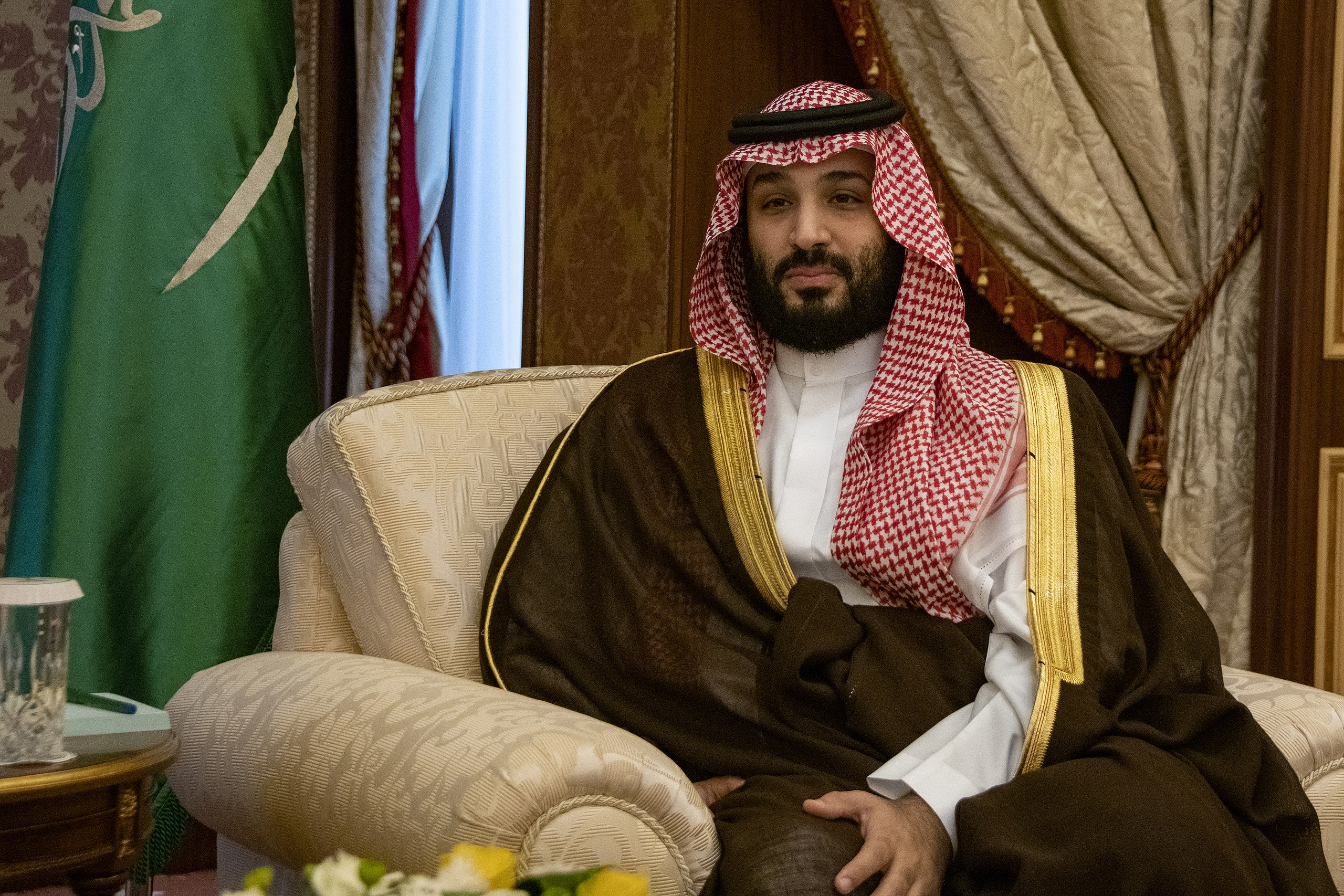
Mohammad bin Salman (U.S. State Department via Wikimedia Commons)
by Emile Nakhleh
The United Arab Emirates’ recent decision to withdraw from the Yemen war has left Saudi Crown Prince and de facto ruler Mohammad bin Salman (MbS) the sole key driver of that disastrous conflict. MbS’s friend, Abu Dhabi Crown Prince and de facto UAE leader Mohammed bin Zayed (MbZ), has left him to pick up the pieces. In the aftermath of MbZ’s action, MbS’s star seems to be dimming and his influence on the international scene is waning.
Frequent attempts by the United States Congress to halt American arms sales to Saudi Arabia and to hold MbS accountable for the murder of journalist Jamal Khashoggi have severely tarnished the Saudi leader’s reputation and standing. Although Congress has not been able to overcome President Trump’s veto and actually impede those arms deals, symbolic congressional action has long-term negative implications for MbS. Traditional American bi-partisan support for Saudi Arabia, which goes back to President Franklin Delano Roosevelt, has been reduced, because of MbS’s hubris and repression, to a personal relationship between the the Saudi autocrat and the current U.S. president and his son-in-law. 
The traditional bi-partisan support has all but faded, leaving the Saudi crown prince dependent on the goodwill and quid-pro-quo support of the Trump administration. MbS’s actions have, in effect, undermined long-term Saudi interests and whatever goodwill the kingdom used to have with the U.S. public. Once a new administration comes to Washington, demands to hold MbS accountable for his actions in Yemen and for Khashoggi’s gruesome murder will again resurface. The failure to override Trump’s veto aside, several senators have expressed negative views of the Saudi leader. The millions of dollars that MbS has spent in Washington to burnish his image have not served him well.
Israel-Palestine
The failure of Jared Kushner’s Israel-Palestine “Deal of the Century” plan at a Bahrain workshop in late June was another blow to the MbS brand. Kushner and MbS had hoped they would be able to persuade Arab leaders to attend the Bahrain event and hail Kushner’s economic plan on Palestine. But the leaders of Jordan, Egypt, Kuwait, and several other countries refused to sign on to the initiative. They argued that the economic portion of an Israel-Palestine peace deal must go hand in hand with a political component along the path of a two-state solution. As I have written previously on this blog, the Bahrain event fizzled and was reduced to a photo-op that failed to gain traction. MbS must have been stung by his inability to deliver Arab support to his friends in the White House.
If Israeli Prime Minister Benjamin Netanyahu wins next month’s national election and is able to form a government, he will be expected to cater to the extreme Israeli right. Instead of a deal with the Palestinians along the lines of Kushner’s ill-fated economic formula, Israel’s ultra-right politics would be consumed by talk about annexation of the occupied territories and a population transfer of Palestinians out of Israel. Despite his camaraderie with Kushner, MbS’s Arab credentials will be sullied. It’s ironic that the three-decade old Arab Peace Initiative, which calls for full Arab recognition of Israel in return for terminating the Israeli occupation on the basis of UN Security Council Resolutions 242 and 338, was initiated by another Saudi crown prince, MbS’s uncle Abdullah, and continues to be supported by his own father, King Salman. His special relationship with Kushner will not help him salvage his self-perceived image as a seminal Arab leader and his covert relations with Israeli intelligence and political leaders will not help him deliver Palestinian support.
If MbS truly believes in improving the lives of Palestinians, why doesn’t he join Qatar in funding economic development in the West Bank and Gaza and prove to the Palestinians that he is committed to their wellbeing? He could also initiate serious talks with the Israelis and Palestinians about the future of the two peoples “between the River and the Sea.” Otherwise, history will view him, like many other Arab leaders before him, as having fought the Palestinian cause to the last Palestinian.
Iran
The potential for restarting talks with Iran—through diplomatic efforts involving Oman and possibly the UAE—is another blow to MbS’s regional ambitions and hubris. The recent statement by U.S. Secretary of State Mike Pompeo that US forces will begin withdrawing from Afghanistan before next year’s elections could be a message to MbS about Iran. Although it’s easy to disagree with Trump on many foreign policy issues, one gets the impression from Pompeo’s announcement that Trump is not gung-ho about another war in the Middle East or a military confrontation with Iran. Tough talk toward Iran doesn’t mean that war is imminent.
The Wall Street Journal reported this week that an Emirati delegation went to Iran to discuss maritime security in that part of the Persian Gulf. The UAE, especially Dubai, is keen on keeping commercial shipping routes secure and on convincing international trade partners that it is safe to conduct commerce with the Arab states of the Persian Gulf.
Of course, peacefully resolving regional political tensions with Iran is the best guarantee for safe commerce in the Persian Gulf. Dubai, the most commercially driven emirate within the UAE, has traded with Iran for decades. Dubai also has a significant Shia minority and a relatively large number of successful businessmen of Iranian origins. It also has a history of prioritizing business above all. During the heyday of the Arab boycott of Israel, when blacklisted items like Coca-Cola and Ford cars could not be traded in the Arab world because of the boycott, one could always find them at the Dubai port. Mohammed bin Zayed’s animus toward Iran notwithstanding, in the modern history of Dubai commerce always trumps politics.
If the Wall Street Journal report is accurate, perhaps this is the message that the UAE delegation is taking to Tehran. Keeping the complexity and interconnectivity of regional issues in mind, it’s possible to imagine that the UAE peace delegation would expand its maritime security agenda to include Yemen, the nuclear deal, sanctions, and other thorny issues. Such talks could become more comprehensive if Oman and Kuwait join them. If the talks result in some sort of quiet rapprochement between Tehran and Washington, they could be the prelude to a new deal in which nuclear discussions would be a major component. If the Trump administration supports de-escalation and continues to give sanction waivers to major Iranian trade partners, it should become clear to MbS that Trump is not seeking a war with Iran.
If Washington and Tehran begin a serious conversation about the nuclear deal and the sanctions, then MbS’s regional wars and hostile machinations toward Iran and Shia Islam would have failed. His isolation would continue, and history would judge him as yet another failing corrupt, repressive Arab autocrat. His grand design for the region would be no more than a chimera, and his money-powered ambition to be a kingmaker on the world scene would evaporate.
Repression
In recent months, many U.S. senators have publicly admonished MbS for his repressive human rights record. The growing number of dissidents being executed in Saudi Arabia and Bahrain—where the Saudis have tremendous sway—has tarnished MbS’s reputation and standing. These executions are primarily sectarian in nature, directed against Shia citizens of both countries, and are generally based on illegal arrests, torture, coerced confessions, and sham trials. The Bahraini regime relies on Saudi military support as a tool in repressing their Shia majority.
With the recent announcement that U.S. troops are being sent back to Saudi Arabia, MbS will begin to feel the heat from the kingdom’s Wahhabi-Salafi religious flank. The religious opposition to the presence of “infidel” troops in the “Land of the Two Holy Mosques” in 1991 fueled Osama bin Laden’s terror campaign against the Saudi regime and the United States.
After the U.S.-led international coalition evicted Iraqi leader Saddam Hussein from Kuwait in 1991 and U.S. troops stayed on in Saudi Arabia, religious activists decried the presence of these troops on the basis of a hadith attributed to the Prophet Muhammad. Regardless of the authenticity of this hadith, radical Wahhabis believe that Muhammad said on his deathbed that only one religion shall exist in Arabia. Non-Muslim “infidel” troops, according to this view, should be expelled from the kingdom. In the early 1990s, this became the rallying cry for Bin Laden and al-Qaeda. This radical mantra could re-emerge as a terrible nightmare for MbS around which his opponents would coalesce.
In the aftermath of the UAE withdrawal from Yemen, MbS will be forced to re-examine the grand design he devised for himself and for the region. The design, which has been fueled by his economic largesse and perceived support from the Trump White House, is fading. Will MbS internalize the ensuing failure and act on it before it’s too late?
avatar

EMILE NAKHLEH

Dr. Emile Nakhleh was a Senior Intelligence Service officer and Director of the Political Islam Strategic Analysis Program at the Central Intelligence Agency. He is a member of the Council on Foreign Relations, a Research Professor and Director of the Global and National Security Policy Institute at the University of New Mexico, and the author of A Necessary Engagement: Reinventing America’s Relations with the Muslim World and Bahrain: Political Development in a Modernizing State. He has written extensively on Middle East politics, political Islam, radical Sunni ideologies, and terrorism. His recent writings on terrorism and contemporary regional politics are posted on LobeLog.com (https://lobelog.com/author/emile-nakhleh/). Dr. Nakhleh received his BA from St. John’s University (MN), the MA from Georgetown University, and the Ph.D. from the American University. He and his wife live in Albuquerque, New Mexico.

Wednesday, June 12, 2019

Trump’s Middle East Policy In Tatters

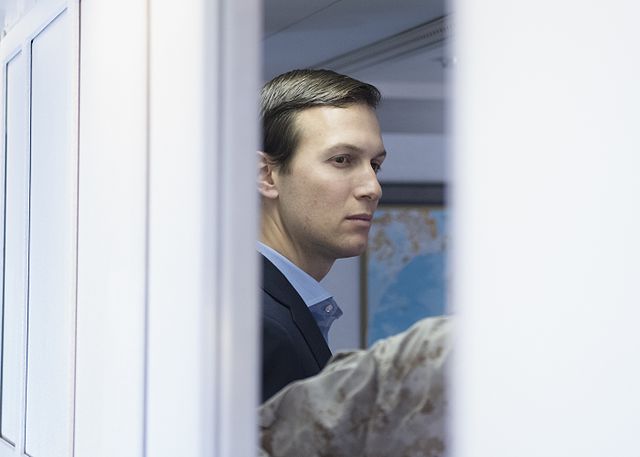
Jared Kushner (Wikimedia Commons)
The confluence of the Israeli snap elections, the Arab, Muslim, and Gulf Cooperation Council summits in Mecca this past weekend, and the upcoming “Bahrain Workshop” underscores the amateur nature of President Trump’s Middle East policy. The conundrum in which Washington finds itself illustrates the absence of any comprehensive thinking on the part of this administration toward Iran, the Arab world, and the Palestinian-Israeli conflict. In light of the recent Arab, Muslim, and GCC statements on the future of Palestinian-Israeli rapprochement and the need to have such a settlement grounded in the “two-state” and “land for peace” paradigm, whatever “Deal of the Century,” or parts of it, that Jared Kushner plans to reveal at the so-called Bahrain Workshop at the end of June will be dead on arrival. Arab, Muslim, and Palestinian leaders have already signaled their disapproval of the American approach, stating that economic support is welcome but statehood rights cannot be overlooked.
Even on Iran, although the Saudis were able to engineer a strong Arab, Gulf, and Muslim statement at the three summits against Iran, regional leaders are no longer sure or clear of the Trump administration’s real stand. The Saudi and Emirati leaders, together with Israeli Prime Minister Benjamin Netanyahu, have been clamoring for a war, presumably lead by the Americans. According to recent statements, however, the administration is backtracking on the rush to war. “Regime change,” according to Trump, is off the table, and the draconian and untenable conditions that Secretary of State Mike Pompeo had established earlier as a requirement for talks with Iran have been jettisoned. “We are prepared to engage in a conversation with no pre-conditions,” Pompeo said in a recent press interview. “We are ready to sit down.”
Netanyahu’s political future is the other wobbly pillar in Trump’s Middle East political edifice. Jared Kushner and Jason Greenblatt, the president’s special envoys dealing with the Israeli-Palestinian conflict, had banked on the Israeli prime minister’s solid standing in Israel and the Gulf region to help sell the plan through economic largesse. Netanyahu’s failure to form a government, resulting in snap elections to be held in the fall, and his legal troubles, with a looming indictment on corruption, have weakened his position, throwing the whole process in doubt.
Miscalculating on Iran
President Trump’s visceral animus toward Iran and his determination to bring the clerical regime to heel are based on three pillars: pulling out of the nuclear deal; imposing severe economic sanctions on Iran, especially the oil sector; and forming an Arab-Islamic-Israeli alliance with an eye toward containing Iran’s regional posture and activities. Trump’s hostility proved ephemeral.
The Iranian regime has not caved in. Other signatories of the deal—the four UN Security Council permanent members plus Germany—have opposed undermining the nuclear agreement and urged the Trump administration to settle America’s differences with Iran peacefully. To its credit, Iran for the most part continues to abide by the key requirements of the nuclear deal.
Although the harsh economic sanctions have dealt a blow to the Iranian economy, other nations have continued to trade with Iran, including buying its oil. The Iranian people’s perceived threat of regime change by the United States, the two Gulf Sunni Arab autocracies of Saudi Arabia and the United Arab Emirates, and the right-wing Israeli government has unified the Iranian people in defense of their national, sovereign Persian state.
Iranians who abhor the clerical regime are never sanguine about a foreign power declaring war on their country in order to remove their regime by force. Iran and the region still retain a vivid memory of the 2003 American invasion of Iraq. As the Bush administration discovered then, Iraqis dislike for their brutal regime did not translate into their liking a foreign invader. Iran is not any different.
By selling unprecedented amounts of sophisticated arms to Saudi Arabia and the UAE despite some congressional opposition, the Trump administration has hoped that these heavily armed regimes would force Iran to end its support for the Houthis in Yemen and capitulate. The war continues unabated, and the U.S.-supplied weapons to Riyadh and Abu Dhabi have been killing more civilians in Yemen. Without overtly admitting the failure of its gunboat diplomacy against Iran, the Trump administration seems to be searching for another course of action that does not threaten regime change but involves negotiations without preconditions.
Miscalculating on Israel-Palestine
The Israeli prime minister boasted recently that Trump has been the most supportive U.S. president of the state of Israel. What Netanyahu really meant to say was that Trump has been the biggest supporter of the ultraconservative, pro-occupation, and anti-Palestinian policies pushed by the current prime minister. President Trump, despite the opposition of most regional experts and former diplomats—for example, the two former U.S. ambassadors to Israel Daniel Kurtzer and Martin Indyk—and contrary to UN Security Council resolutions, declared Jerusalem the capital of Israel, moved the American embassy from Tel Aviv to Jerusalem, and accepted the “legality” of Israel’s control of the Golan Heights. The Trump-Pompeo State Department no longer uses “Occupied Territories” to describe the Israeli-occupied Palestinian lands in the West Bank.
Furthermore, the Trump administration has closed the Palestine Liberation Organization office in Washington and severely reduced its contributions to the United Nations Relief and Works Agency, which provides for Palestinian refugees’ relief and human development. President Trump has acquiesced in Israel’s continued economic tight grip on Gaza and the withholding of most taxes it collects on behalf of the Palestinian Authority in Ramallah.
The president has appointed his trusted adviser and son-in-law Jared Kushner to resolve the Israeli-Palestinian conflict. The envisioned plan—the so-called Deal of the Century—is reportedly grounded in economic aid to the Palestinians while dismissing their right to self-determination as a political community. Unfortunately, Jared Kushner is the least qualified “honest broker” interlocutor with the Palestinians. He has supported Israeli settlements in the West Bank and does not believe in the Palestinians’ right or ability to govern themselves in their own state alongside Israel. Kushner erroneously perceives the road to peace with the Palestinians going through Mohammed bin Salman (MbS) of Saudi Arabia and Mohammed bin Zayed (MbZ) of Abu Dhabi. He is also convinced that the expected billions of dollars from the Gulf states would buy off the Palestinians’ aspirations for statehood through some sort of a quisling leadership that would remain subservient to Israel for decades to come.
As Kushner discovered following the recent Arab-Muslim summits in Mecca, most participants reiterated their support for a two-state solution based on UN Security Council Resolutions 242 and 338, which were adopted following the 1967 and 1973 wars. Participants, including Gulf leaders, also support East Jerusalem as the capital of a future Palestinian state. Neither he nor his two key partners in the Gulf—MbS and MbZ—will be able to kill the idea of Palestinian statehood in the Arab psyche.
This is not to say that the two-state paradigm is at all achievable. In fact, more and more experts believe that this paradigm has faded and is being replaced by one area between the Jordan River and the Mediterranean Sea comprising two peoples—Israelis and Palestinians,  roughly six million each. Kushner will soon find out, whether at the Bahrain Workshop or in other forums, that unless he recognizes the political peoplehood of the Palestinians, no deal will succeed. Perhaps a Palestinian state is unachievable, but unless the Palestinians are involved in charting their future, together with other “honest brokers,” Kushner’s deal will fail. No plan for Israel and the Palestinians cooked up in Washington, Riyadh, and Abu Dhabi under the guise of fighting Iran will work.
Recapturing America’s indispensable role in the Middle East must conceptualize groundbreaking negotiations with Iran and a resolution of the Israeli-Palestinian conflict based on the right of the two peoples to live together in peace, dignity, and security. This effort can best be accomplished through international and regional collaboration. Its military and economic might notwithstanding, America cannot accomplish such a monumental task alone. Will Washington rise to the challenge or leave the region to others to fill the ensuing vacuum?