Syed Zafar Mehdi

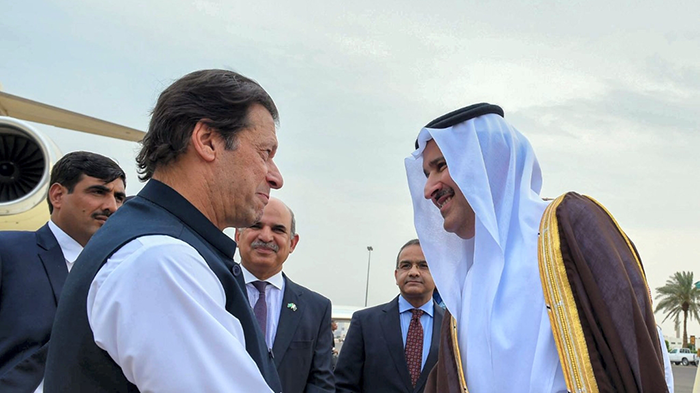
TEHRAN - Imran Khan led government in Pakistan has been in talks with the International Monetary Fund (IMF) to tide over an economic crisis. It has also approached its allies China and Saudi Arabia for funds, which has however raised a few eyebrows at home. It remains to be seen whether Khan will be able to resuscitate the flailing economy without compromising on country’s independent foreign policy and whether he will be able to strike a delicate balance in relations with Saudi Arabia and Iran.
Farrukh K Pitafi is an Islamabad based senior journalist, political analyst and talk show host. With over 20 years of television and print journalism, he is known for his distinct voice on global and local policy issues. In an interview to Tehran Times, Mr. Pitafi speaks about Pakistan’s economic crisis, and Imran Khan-led government’s foreign policy issues.
Following are the excerpts:
Q. Imran Khan has inherited a flailing economy that needs to be revived with funds. Do you believe Khan will be able to tide through this economic crisis?
A: Pakistan is no stranger to economic crises. We have endured many in the past and have always survived them. This too will pass. But history is no excuse for the lack of progress on the economic front. Two economic powerhouses that sit next to Pakistan, China and India, achieved their success in past few decades right before our eyes. So the country has to take a serious look at what ails its economy.
Immediately after assuming the office of Prime Minister Imran Khan constituted a set of taskforces meant to fix the country’s ailing economy. These taskforces include a taskforce on restructuring of civil service, one on austerity and restructuring of government, another on telecommunication. As the country’s priority is macroeconomic stabilization this is a good call to cut wasteful expenditures. Once that is achieved government can look at long term measures.
So far PM Khan’s cabinet choices, team building and list of priorities gives me hope that he can deliver on economy.
Q. After his second visit to Riyadh since taking over as the PM, Khan said he was sad about the Jamal Khashoggi incident but Pakistan was 'desperate' for funds. How would you decode these words?
A: While Khashoggi incident shook the world, in Pakistan it barely moved the needle. For reasons you have to look at the 17 years of fighting terrorism and the loss it incurred. Over eighty thousand dead, at least a few of whom were journalists. So, the entire country is desensitized to such controversies.
Pakistan’s economic condition, as we have established earlier, is really dire. Hence the country had to look wherever it could get help. When PM Khan chose to go to Saudi Arabia for the second time participants were dropping out of the Riyadh investment conference in solidarity with the slain journalist. But that only meant more visible opening for Pakistan to highlight its economic cause. The country availed the opportunity.
Q. Relations between Pakistan and its new all-weather ally China have improved considerably with CPEC, which has however distanced Washington from Islamabad. How do you view these changing political dynamics?
A: Pakistan-China relationship has and will go from strength to strength. But Washington is displaying a characteristic lack of imagination. This is not the age of cold wars.
If anything, Trump’s surprise victory should have convinced the Washington elite that the traditional paranoid worldview has no place in the realities of our time. That the world belongs to interdependence and collective security. Ergo there is no zero sum game between China and the US.
A hard-learnt lesson for Pakistan is that it should not build one relationship at the cost of another. The country has to take every relationship seriously and on merit. This is a country that managed to defy the western and Arab pressures during Iran-Iraq war and maintained a healthy friendship with Tehran despite being heavily invested in West’s war in Afghanistan against Soviet occupation.
When it comes to two of its closest allies, China and the U.S., Pakistan can maintain a healthy balance between the two and can even function once again as a bridge between them if such a need arises.
Q. U.S. unilateral withdrawal from Iran nuclear deal and diktat to countries to bring Iranian oil imports to zero has drawn angry reactions across the world. What's the popular opinion in Pakistan's intelligentsia circles regarding it and regarding Trump's policies?
A: Popular sentiment remains sympathetic to Tehran. Unity among Muslims and defiance of foreign inflicted suffering in the Muslim countries are some of the ideas that find a lot of traction here. Policies of governments can change but one thing cannot. The hearts of Pakistani citizens and Iranians are one. And I do not exaggerate.
As for intelligentsia, the question is of the paradigm every individual uses to view the world. There are those who are given to realpolitik. And those who think a better world is possible. To the latter, every setback offers a new opportunity.
After the unilateral withdrawal of the U.S., Iran can either wait for the end of Trump’s presidency or renegotiate the deal. The second option might be useful as it may offer some immediate relief to the beautiful people of Iran. But here is one fact of life that does not escape this scribe’s attention. A nation of such brilliance and full of competent people cannot be kept back for long. That is a given.
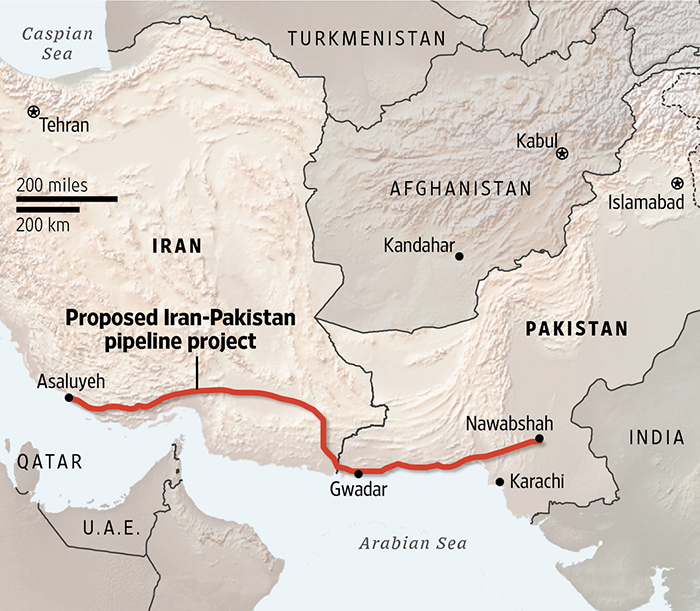
Q. According to reports, Pakistan-Iran gas pipeline project that was shelved by Nawaz Sharif government in 2015 apparently under Saudi pressure will be revived soon. How critical can it be in addressing Pakistan's energy crisis?
A: Pakistan is bound by international law and treaty obligations. Its economic volatility weakens its hand diplomatically and makes it prone to the U.S. pressures. Activation of IP gas pipeline will remain a pipedream till the time one of two things do not materialize – ease of U.S. sanctions on Iran and Pakistan regaining economic autonomy.
Remember Pakistan is faced with mounting Indian propaganda and while New Delhi uses its diplomatic muscle and mysterious influence on Trump and Washington elite, it unleashes its onslaught whenever Islamabad tries to behave proactively. India exploited the name of the then Iran-Pakistan-India (IPI) pipeline to seek nuclear deal as a concession from the U.S. and conveniently abandoned the project. Nevertheless, in view of waiver given to eight countries including India and China, Pakistan should use diplomacy to find a working solution on IP. The project is of great economic significance to Pakistan.
Q. In the initial few weeks Khan had reaffirmed his commitment to open a new chapter of relations with India but the overtures didn't last too long. What makes India-Pakistan relationship so complex?
A: India is known for its great diplomatic skill, imagination and economic might. Despite that influence sadly a baser instinct has seized control of the policy making apparatus in the country and stymied all imagination.
Right now it is preparing for the next general elections and it seems unlikely that it will be able to reciprocate any overtures from Islamabad. Pakistan waits for the day when the election cycles are over.
As for the complexity of the relationship, many books have been written on the matter and I will not be able to do justice to it in this limited space. Two issues, however stand out: cold war mentality and denial of each other’s identity.
Q. Do you see 'Naya Pakistan' (New Pakistan) taking shape under Imran Khan, the Pakistan envisioned by Mohammad Ali Jinnah and Sir Mohammad Iqbal?
A: Every century has its own dynamics. Pakistan is bound to follow the path laid out by the founder of the nation, Mohammad Ali Jinnah. Sir Mohammad Iqbal being the country’s national poet has special place in people’s imagination.
But as time passes, realities of life and of political world change. Many institutional concepts have changed or evolved since 1947. So the idea is to take the golden principles of the country’s founding fathers and adapt them to present times. Ergo, Naya (new) Pakistan.
The present government has been in power for roughly three months. In this duration what to talk of rebuilding a nation a new house is not finished. So we will have to wait and see. I am very hopeful.