Saturday, March 05, 2016

Wahhabism Is Power-Worship

By Izeth Hussain 
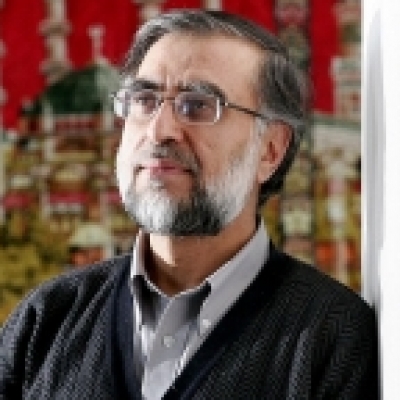
Izeth Hussain
Izeth Hussain
I want to argue in this article that Wahhabism is not as generally thought an atavistic movement designed to take Islam back to the middle ages in reaction to modernity but a movement meant to cope with modernity, and that its strategy for that purpose is to transform Islam into an ideology of power-worship. My thinking on this subject has in its background the fact that I read some decades ago in a great novel by Montherlant, something to the effect that the typical modern man, bereft of the dimension of the transcendental, has two legs one of which is a drive for money and the other a drive for power, the two legs on which the terrible fellow stomps along wreaking the unparalleled destruction that the world has witnessed since the beginning of the First World War in 1914.
But first of all I must clear up some confusions. I concluded my last article on a case for extirpating Wahabism by stating that the crucial question that has to be addressed is whether or not it is the IS, not Saudi Arabia, that practices Wahhabism in its full authentic form. I wrote further that that question can be resolved only by establishing whether or not characteristic IS practices, such as sex slavery, have their warrant in what Wahhab actually preached. If not, there would be a case for extirpating just the IS but not Wahabism itself. If, on the contrary, the IS is the full-blown authentic manifestation of Wahhabism the case for the international community persuading Saudi Arabia to abandon Wahhabism becomes, I think, unanswerable. It is pertinent to recall that in 2013 the EU officially declared that Wahhabism was the greatest source of international terrorism. We can safely assume that that declaration was backed by studies made by scholars and specialists. Therefore there was a case for the EU to persuade Saudi Arabia to abandon Wahhabism.
WahhabismHowever, Muslims who have been influenced by Wahhabism in Sri Lanka and elsewhere will give no weight at all to what the EU says. For that matter they give no weight at all to what the scholars of orthodox Islam have to say. What the latter have to say is more or less along the following lines. The Wahabis and their clones are utterly unscrupulous in finding substantiation for their tenets in the Koran and the hadiths and the Sunna. When it suits their purposes they read Koranic texts literally, ignoring the contexts that give full meaning to those texts. They are capable of perverse misreading of texts. They are given to using hadiths of very doubtful authenticity that are not included in the six canonical books of the hadiths. And so on. Consequently it can hardly be expected that finding warrant for IS tenets and practices in what Wahhab preached will lead to any useful conclusion. The Wahabis and their clones believe what they want to believe and they use texts towards that end.
The best strategy to move towards an extirpation of Wahhabism could be a three-pronged one: firstly, show that at the very core of Wahhabism there is nonsense and everything that flows from that core is nonsensical; secondly, that extreme violence and terrorism are of the essence of Wahabism; thirdly, that Wahabism is an unIslamic ideology of power under which the mass of the Muslims will become robotic power worshipers. In addition it will help if it can be shown that some Western forces have been behind the spread of Wahhabism right from the inception and right down to the IS.
I have already shown in earlier articles that at the very core of Wahhabism – the charge of saint worship and polytheism – there is nonsense. What flows from it, such as the sacking of Kerbela in 1801 including the massacre of 5,000 innocent men, women, and children, is also nonsense, moronic, brutal, subhuman nonsense, – and that’s at the core of Wahhabism and all its clones. I will now substantiate the point that extreme violence and terrorism are of the very essence of Wahhabism. Wahhab agreed to the stoning to death of an adulteress. According to Natana de Longbas, presently one of the foremost apologist s for Wahhabism, he did so very reluctantly because the woman was obviously mentally deranged: she repeatedly committed adultery and spoke about it openly. In her lengthy defense of Wahhab’s crime that I have read de Longbas fails to mention that Wahhab did not use the unanswerable argument that the Koran itself prescribes no more than 80 lashes as punishment for adultery and that he could not allow a Koranic provision to be overridden by a hadith of very doubtful authenticity. Nor does she mention that Wahhab failed to use the argument that stoning to death for adultery was very rarely put into practice in the long centuries since the death of the Prophet. I believe that during the many centuries of the Ottoman Empire, which prided itself on the strict observance of the sharia, stoning to death for adultery took place only once. The episode suggests that sadistic brutality was part of Wahhab’s personality. I have also brought out the disingenuousness that is at the core of Wahhabi apologetics, on which I remarked earlier in this article.
As for terrorism, it was there at the very inception of Wahhabism. Terrorism in its essence includes the indiscriminate killing of non-combatant innocents. It is said that Wahhab himself led the first Wahhabi terroristic attack, which was on the tomb of the brother of Caliph Omar who died a martyr’s death. That was followed by terrorist attacks on Najd villages in which Wahhab participated, it is said with the axe as his favorite weapon. The tradition of terrorism inaugurated by him had its first full flowering in the Kerbela massacre of 1801 and it continues to this day. The Saudis have been projecting a sanitized image of Wahhabism according to which its terrorism is an aberration, whereas the trut is that Wahhabism can always be expected to morph into terrorism. That is an important part of the case for the international community to persuade Saudi Arabia to abandon its championship of Wahhabism.
I come now to the question of Wahhabism as an ideology of power worship. In recent days more than one of my readers has sent me the text of a June 2015 article by Catherine Shakdam in which she argues that Wahhabism is not an atavastic throwback but a modernizing movement and compares it to movements in which mass massacres have occurred: the French Revolution in which well over a thousand were guillotined, and the mass massacres under Stalin, Mao, and Pol Pot. Others too, such as John Gray the philosopher, have argued a similar case after the Paris bombings. In support of that view I will point out that Wahhabism is not comparable to movements of religious reform and renewal through a return to the roots. Lutheranism led to nationalism, Calvinism led to capitalism, both led to a reinvigoration of Catholicism through the counter-Reformation, and Methodism and the chapel cults of Britain led to socialism. The Buddhist and Hindu reform movements of the late nineteenth century can be seen in a positive light, and so can the Islamic reform movement inspired by Jamaldin al-Afghani. But I can’t see anything positive in Wahhabism. In its latest manifestation, the IS, it is just a grisly, gory, savage horror. There is much more to be said on Wahhabism as power worship. I will conclude this article by recalling Yeats’ great prophetic poem which concluded, “What rough beast slouches towards Bethlehem to be born?”. The IS rough beast wants to slouch towards Mecca to be born.

Overview of Propaganda about Shiite’s Danger in Gaza

Alwaght- On February 23, 2016, the Al-Monitor news website published an interview with Sheikh Mahmoud Jouda, a Palestinian cleric who was born in 1960 in Rafah Refugee Camp. Educated in Sharia and Islamic Studies in Umm Al-Qura University in Mecca, Sheikh Jouda is the founder of Jamaat al-Muslimeen group in 1985.

The group is known among the Palestinians as Takfir wal-Hijra. The group promotes for separation of religion from politics. Sheikh Mahmoud Jouda has several times visited Iran to make research on Twelver Shiite Islam, for which he was several times detained and prisoned by the Egyptian government and the Israeli regime. Mahmoud Jouda has become a controversial figure after a couple of his photos, while posing with a Shiite clerics’ turban on his head and surrounded by a couple of special bodyguards, have been circulated on the social networks on January 20, 2016. At that time, it was known that his guards were actually members of Al-Saberin Movement, a Shiite resistant group affiliating to the Palestinian Islamic Jihad Movement. Also, in a video which has been sent online he was portrayed as being among a group whose members were having headbands of Ya Hussein, an Arabic phrase used by Shiite Muslims to invoke the memory of Imam Hussein. The video showed the sheikh while talking about the Iranian triumphs.

Commenting on the video, Sheikh Jouda has said that “the video was of the session of a campaign and the Ya Hussein headbands were distributed by a person. I was invited to the gathering and I didn’t know the attendees. But a couple of minutes after conducting the speech and putting a video on show the police forces have stormed the session and detained us. You could see that it was all pre-planned.”

It is worth noting that Sheikh Jouda, since 2013, has been widely known in Gaza due to his resemblance to Iran’s Imam Khomeini, the founder of the Islamic Republic. Besides, propagating the Ahl al-Bayt teachings, he is busy inviting for Islamic unity regardless of Shiite and Sunni branches of Islam. While mentioning on his website the good ties between the Iranian and Lebanese Shite clerics, Sheikh Jouda has admitted that he had good relations with Sunni clerics. In an interview with Al-Monitor he has said that after 20 years of activity he concluded in 2006 that:

“The party work destroys life and religion and it distances us from the major aim which is forming an Islamic government and fighting against oppression on the earth, therefore, we declared our renunciation for partisan work in 2006 as we realized that it leads people to a path that diverges from what they really want.”

Despite the fact that Ahmad Yousef, the advisor of Hamas leader Ismail Hanyeh, denied in 2011 that there was a growth in the number of Shiite Muslims in Gaza, the warns about the increase of the number of Shiite Muslims have been issued since 2011, the time of start of the Syrian crisis and before which Iran and the Palestinian movement Hamas enjoyed good relations. At that time, Abdul Rahim Hamad, a Sunni convert, said that the number of Shiite Muslims in Gaza Strip was several hundred. He added that the Shiites would soon start political activity in Gaza Strip and would play a significant role in the future of Gaza.

In fact, promotion for Shiite Islam has observed an increase when on May 31, 2014, a new group called Al-Saberin Movement declared existence in Gaza. The movement’s logo resembled that of Lebanon’s Hezbollah. Openly announcing that it was a Shiite group, the movement has chosen unity as its slogan. Actually, this movement is considered as an affiliate of Palestine Islamic Jihad movement and it is led by Hisham Salem, who has described the Al-Saberin as a non-religious group whose goal was to restore the Islamic unity. Such an issue has been taken by the Arab media as a pretext and theme for their propaganda to say that there were deep gaps between Iran and the Islamic Jihad movement, the root of which, according to the Arab media’s allegations, was Iran’s massive intervention in the regional developments, especially intervention in Yemen and Tehran’s struggles to challenge the balance of power through propagating Shiite Islam.

For example, the Islamic Jihad commanders have been quoted as saying that Islamic Jihad movement, and its leader Ramadan Abdullah specifically, have disparaged Iran’s support for Yemen’s Ansarulah movement, leading to Tehran’s cutting off financial support for the Palestinian group and causing a financial crisis for the it.

On January 9, 2016, the Islamic Jihad sources have noted that about 300 members of the movement had defected from the movement due to the financial crisis and joined the terror group ISIS. Some Arab media have reported that Ramadan Abdullah had left Tehran to Beirut in protest to the Islamic Republic’s policies in Yemen. Concerning the case, Mahfuz Monawar, a leader in Islamic Jihad movement, was interviewed by Aljazeera news network.

Answering to the question, Monawar has not denied that there were differences between Iran and the Islamic Jihad. He added that the reports about the case were “highly exaggerated and inaccurate.” He continued that Abdullah’s departure was something natural because the movement’s leadership had fixed headquarters. Monawar also noted that the approach of the movement was to refrain from intervening in the countries’ internal policies. Not giving details about the Al-Saberin Movement, Monawar has said that the movement was in full accordance with other Palestinian groups. Thanking Iran for supports, Monawar has called his movement’s relations with the Islamic Republic as positive.

He added that his movement had no intention to intervene in Iran’s policy. Therefore, the Arab media’s propaganda in 2016 has been fixated on saying that Iran was struggling to spread Shiite Islam in Gaza and that both Hamas and Islamic Jihad have been in an inactive and silent position in front of Tehran’s activities. While trying to imply that there are gaps between Iran and Hamas and the Islamic Jihad movements, the Arab media’s new propaganda describes establishment of Al-Saberin Movement as the last resort of the Islamic Republic concerning Gaza and Palestine issue. Jihad Halas, the head of zakat department of ministry of endowment in Gaza on February 29 has talked about destroying a large number of Shiite books. He cautioned against the threats posed to the Gaza young people by the Shiites, praying for God to save Gaza and its inhabitants from the evils and greed of the Shiite Muslims.

Sheikh Majdi al-Maqrebi, a Salafi cleric in Gaza, has also warned against the growth of the “danger of the Shiite Muslims”, calling Al-Saberin Movement as an Iran-backed group and asserting that Tehran and Hezbollah were the major funding sources of all groups of this kind in the region. Al-Maqrebi has added that Iran and Hezbollah have created a chain of groups under the name of resistance in Gaza.

With a regard to the focus of the media propaganda against the Shite Muslims and Al-Saberin Movement in Gaza, it must be said that such media eye preparing the ground for clash between the newly born Shiite minority and the Sunni Palestinian jihadi movements like Hamas and Islamic Jihad in Gaza. On the other hand, the Shiite Muslims could face a crisis in Gaza as the Salafi movements are trying to step in the case. Using the right strategies of promotion of unity between Shiite and Sunni Muslims, the Al-Saberin Movement and Sheikh Mahmoud Jouda have so far managed to open their way under the silence of resistant groups. However, the financial pressures and the possible interventions by external players like Saudi Arabia and the suggestions made by them for compensating for the resistant groups’ budget deficits could transform the Palestinian movements, pushing them to act to prevent shift of balance of power in Gaza Strip.

Wednesday, March 02, 2016

Subverting Muslim aspirations through terror groups

Zafar Bangash


Living in an Islamic state or striving to establish one is the religious obligation of every Muslim. This desire is especially strong among committed Muslims because it is based on a Prophetic hadith (saying) as well as the Prophet’s (pbuh) Sunnah. He (pbuh) established the first Islamic State in Madinah. The noble Qur’an commands all Muslims to obey the Messenger (pbuh) and follow his example (3:30, 4:59, 4:80, 33:21). Thus, striving to establish the Islamic state is part of the Muslims’ obligation in life.

Muslim scholars have written extensively about what constitutes an Islamic state, how it is to be established and what functions it must perform. This also explains why there was such a strong reaction among Muslims to the abolition of the khilafah — even though it had been reduced to a shell of its original — in the early 1920s in Turkey. Within a few short years, al-Ikhwan al-Muslimoon (Muslim Brotherhood) emerged in Egypt in 1928 with the aim of establishing the Islamic state (khilafah). Other movements — such as the Jama‘at-e Islami in the Indo-Pakistan subcontinent and Hizb al-Tahrir in Jordan/Palestine — emerged soon thereafter. All these movements made clear that establishment of the khilafah (Islamic state) was and remains a fundamental duty of Muslims.
Living in an Islamic state or striving to establish one is the religious obligation of every Muslim.
In Islamic terminology, the ruler of Muslims is called a khalifah. This title emerged after the noble Messenger (pbuh) left his earthly abode to join heavenly company. His successor was called khalifah al-rasul (successor to the Messenger of Allah – r), but it ultimately came to be called simply khalifah and has ever since been part of the Muslims’ lexicon. Every informed Muslim is aware of what it means.
True, the khilafah was subverted into mulukiyah (hereditary kingship) by ambitious individuals and clan leaders but the concept has been etched in the collective memory of Muslims ever since. It is this shared memory that the terrorist group, Da‘ish (aka as the Islamic State of Iraq and the Levant, ISIL; or the Islamic State of Iraq and Sham, ISIS; or simply the Islamic State, IS) has exploited. Did the terrorists conceive of this idea on their own? Ample evidence exists to prove that their Western masters, supporters, and financiers led them to this. The background of the terrorist group’s head man, the self-styled khalifah, Ibrahim al-Samarrai’s (who has adopted the name Abu Bakr al-Baghdadi) also confirms this. While at Buca Camp in Baghdad, after the notorious torture camp at Abu Ghraib was shut down following revelations of horrendous torture and sexual abuse of prisoners, Samarrai was allowed to mix freely with other prisoners.
The timing of ISIS’ emergence is important.
No other prisoner at the camp was afforded such privilege. What was special about al-Samarrai (Abu Bakr al-Baghdadi) to warrant such favoritism? He went about recruiting other prisoners right under the noses of the Americans (or with their approval, even coaching). This appeared to be part of the American plan to destabilize the region. Al-Baghdadi also recruited a large number of disbanded Ba‘thist soldiers nursing a grudge because they had been made redundant and the privileges they had enjoyed under Saddam’s regime simply evaporated. The Ba‘thists became eager recruits for al-Baghdadi’s Western-backed campaign. It was a totally unnatural alliance: secular Ba‘thists who had throughout their lives hounded Islamic activists and committed Muslims suddenly became bosom pals of the self-styled “Islamic State.”
The timing of ISIS’ emergence is important. Osama bin Laden was “officially” declared dead in May 2011 (other reports say he died in 2006 or even as early as 2001). Regardless of the exact date of Osama’s death, once the Americans officially announced it, there was need for another bogeyman to continue the so-called war on terror. This is nothing but a war on Islam but this time Western think tanks and policy-makers came up with a more enduring strategy. When an individual dies or is killed, he is removed from the scene permanently. An organization is much more enduring and complicated, hence the idea of the “Islamic State.” It also acts as a magnet for disgruntled and alienated Muslim youth in Western societies where they face endemic racism and discrimination.
By conceiving of this idea, it has achieved at a stroke a number of Western objectives. Ever since the Sykes-Picot Treaty (1916) and the Balfour Declaration (1917) were imposed on the Muslim world, especially the Muslim East (aka the Middle East), committed Muslims have been struggling to demolish these colonial-imposed plans. They want to undo the colonial-drawn borders dividing Muslims into nation-states like animals in a zoo. While a thin veneer of nationalism, imposed from the top, exists in all Muslim societies, beneath the surface the ethos of Muslim culture remains strong. It is this sense of solidarity that has been successfully exploited by Western policy makers, especially the imperialists and Zionists, in creating the so-called “Islamic State” in parts of Iraq and Syria.
Al-Baghdadi’s “Islamic State” project is more powerful and enduring than Osama bin Laden’s al-Qaeda outfit because the latter did not have any territory under its control. Osama was a guest on someone else’s land (Afghanistan) and while the Taliban provided him sanctuary, he was not entirely free to operate as he wished. Further, he was dependent on donations from wealthy donors in Saudi Arabia, Kuwait, and other places. Unlike al-Baghdadi, he did not have a direct source of income. The self-styled Islamic State has occupied large swathes of territory in Iraq and Syria where a number of major oil fields exist. Crude oil from these fields is smuggled through Turkey to international markets thus earning enormous revenues for the head-choppers and organ-eaters.
The fact that al-Baghdadi’s “Islamic State” has been so successful can be attributed to a number of other factors as well. Several Middle Eastern regimes, notably Saudi Arabia, Turkey, Jordan and Qatar are supporting and financing al-Baghdadi’s project. These would still not have made the project so successful, were it not for the direct and indirect backing of the US and Zionist Israel.
The takfiri project (thus named because they brand any Muslim they disagree with as kafir and, therefore, subject to execution) was conceived long before it erupted on the scene in June 2014. According to WikiLeaks documents, as early as 2005, the US had launched plans to destabilize the regime of Bashar al-Asad.
Further, in one of the Defense Intelligence Agency documents circulated among various government agencies including CENTCOM, the CIA, FBI, DHS, NGA, State Department and others in 2012, there is an astonishing admission that an “Islamic state” is desired in Eastern Syria to effect the West’s policies in the region. To quote from the formerly classified report dated August 12, 2012, “The West, Gulf countries and Turkey that support the [Syrian] opposition… there is the possibility of establishing a declared or undeclared Salafist principality in Eastern Syria (Hasaka and Der Zor), and this is exactly what the supporting powers to the opposition want, in order to isolate the Syrian regime…” Could the US and its allies’ position on the establishment of the takfiri state be any clearer?
The ISIS/ISIL takfiri project also confirms that nationalism does not appeal to the Muslim masses. Only Islam is a strong enough force to mobilize them for any cause. The imperialists and Zionists have realized this and are using it to advance their own strategic objectives in the most cynical manner.
The legitimate aspirations of Muslims for social and political justice have been harnessed to create mayhem and chaos in the Muslim East. Since Syria is an important component of the resistance front against Zionist Israel, it has been targeted because the Zionists have failed against Hamas and Hizbullah despite repeated attacks. This is part of the stillborn “New Middle East” project that the toothy former US Secretary of State Condoleezza Rice infamously claimed at the height of the Zionist onslaught on Hizbullah in July-August 2006. Iraq, Libya, and Syria lie in shambles, thanks to the takfiris’ rampage.
The ISIS/ISIL takfiri project also confirms that nationalism does not appeal to the Muslim masses.
Unfortunately, even some sincere Muslims have been sucked into the vortex of this Western-Zionist-Saudi created mayhem. The Muslims’ concern springs from their sympathy for fellow Muslims. This is admirable. To show empathy for and alleviate the suffering of Muslims is an Islamic obligation but that is no excuse to become part of the imperialist-Zionist project for regime change in Muslim countries, especially when the alternative is so horrific. Can any sincere Muslim truly say that the takfiris would be a better alternative to Bashar al-Asad in Syria despite his many faults and indeed even past crimes?
What the takfiris have also done, to their lasting shame and that of their backers, especially in the Muslim world — Saudi Arabia, Turkey, Qatar, Jordan etc. — is to present a horrible image of Islam. On the one hand, the takfiris’ crimes are successfully exploited by the imperialists and Zionists to demonize Islam and Muslims, and on the other, they put off many Muslims from the very idea of the Islamic state. They would rather not have head-choppers and organ-eaters as their rulers even if the present crop is grossly incompetent and terrible.
One only has to look at the mayhem in Libya to understand this. Are the Libyans better off today than they were under Mu‘ammar Qaddafi despite all his antics, eccentricity and yes, oppression?

If there are Muslims who believe that an Islamic state can be established on the skulls, bones and blood of innocent Muslims, then they had better examine their understanding of Islam. The killing of any innocent human being, much less a Muslim, is expressly forbidden in Islam. Those who hold a contrary view know either nothing about the teachings of Islam or they are agents of the enemies of Islam.

How The Ulema Are Perpetuating Male Hegemony In The Name Of Islam

By Zakia Soman & Noorjehan Safia Niaz
In our understanding the values of kindness, compassion and justice are the core values enshrined in the Quran. Clearly, hegemony is not an Islamic value and yet the experiences we have undergone in the course of our work in the last ten years give rise to certain fundamental questions.

Why are so many Muslims, particularly men, so hegemonic in their thinking? Why do most of them seem to think that reading, understanding and interpreting of the Quran is a sole male prerogative? They seem to think that Allah created men and women as unequal. This view of an unjust Allah is not acceptable to us and therein lies the crux of the Bharatiya Muslim Mahila Andolan’s (BMMA) existence.

Globally, eminent scholars such as the late professor Fatima Mernissi, Dr Amina Wadud, Dr Khalid Masood, Dr Ziba Mir Hosseini and several more have dedicated their lives to reading and interpreting the Quran to highlight that Allah is just and fair. Volumes have been written on the tawhidic framework about Allah as a uniting, harmonizing force. But the fact remains that these scholarly works that bring out the essence of Islam as a religion of peace and justice remain unheeded and are not referred to by large mass of people in Muslim societies.
Unfortunately, the dominant thought processes that control Muslim societies remain patriarchal. The traditions and practices followed are often in direct violation of the Quranic spirit of justice. The stranglehold of patriarchal hegemony in India and in South Asia has got exacerbated by the arrival of Salafi-Wahhabi ideologies that now threaten to become the mainstream in Muslim society. This ideology has led to further strengthening of the hegemony of patriarchal mindsets in our community. Practices such as triple talaq and halala are manifestations of this trend. But at the core of this thinking is a patriarchal mindset of male superiority and domination.

We want to refer here to the dominant common sense prevalent in the Indian Muslim community about men being superior to women. Islam gave equal rights to women over 1400 years ago; but have they been translated into reality? So long as the dominant common sense about male superiority dictates the mindsets and behavior of Muslims these rights will remain on paper.

In what has been a masterstroke the patriarchal forces have succeeded in attributing this subjugation and injustice to Islam through misinterpretations, distortions and lies. They have invented fiction, half-truths and references that equate women with cattle and allow the men to get away with the worst kind of atrocities against them. In the process they not only violate the basic tenets of Islam, they also help demonisation and stereotyping of the whole community.
They treat their wives, sisters, mothers and daughters unjustly and, even if unwittingly, help the Hindutva campaigns. The self-appointed custodians of Islam do greatest disservice to Muslims and to Islam. It is a pity that even some so-called educated Muslims blindly support these custodians thanks to the common sense about male superiority in Islam that they suffer from.

Why has there been no concerted effort so far to challenge these patriarchal custodians? Why is it that the Muslim women themselves had to initiate a challenge to these hegemonic elements? Why are the wise Muslim men not supporting Muslim women’s’ struggle for Quranic rights of justice and equality? Or are they forever going to allow the conservative clerics to keep deciding for all 17 crore of us? Are they not aware that Islam has no place for intermediaries between Allah and believers? And lastly, what legitimacy do they have to question Muslim women who stand up and fight for their Quranic rights?

We will recount here some direct evidence about the dominant Indian Muslim male thinking being hegemonic and in violation of Islamic values of justice and fairness. This is not to say that there are no exceptional and courageous Muslim men; all of us know many of them in our respective spheres. But as a whole, it is the patriarchal conservative thought process that dominates our conduct.

All of us Muslim women had come together in the aftermath of the communal violence of Gujarat in 2002 to unequivocally oppose the communal forces and to demand rehabilitation and justice for the survivors. Our work at the time was focused around fighting discrimination on communal basis and demanding equal citizenship for the largest minority.

As we began to know and learn about each other spread across different parts of the country we could at once identify a lot of common ground and the need for coming together as a national entity. We were all bold and gutsy women who had fought with their own adverse circumstances and were struggling for equal citizenship in our respective locations and local contexts.

After informal interactions spanning over nearly two years we realised that we shared a commonality of purpose and had a shared worldview. We felt that Indian Muslims were poor and backward despite the Constitutional guarantees. We agreed that we were denied our Quranic rights thanks to the nexus between the patriarchal forces in our community and various governments. We decided that we need to change the situation.

We were clear that women needed to take up the leadership of the Muslim community in India for so-called male leadership was responsible for the all-round failure. We formed the Bharatiya Muslim Mahila Andolan in January 2007. Our name was a very deliberated and considered exercise. We felt that we needed a name that spells out what we stood for. We were as Bharatiya as anyone else and we would not offer apologies for being Muslim and Bharatiya. Nobody can appropriate the word Bharatiya and exclude others.

We put together our worldview in the form of our mission document where we clearly stated that we believe in the values of justice, equality, pluralism and democracy enshrined in the Constitution of India. We also clearly stated that we saw no contradiction between these values and the Quranic values. We set forth to work on attaining our Quranic as well as citizenship rights. We clearly stated our solidarity with all those who are working for justice and equality in the country and the world.

We also stated that we believe in secularism, religious harmony and peaceful co-existence as opposed to communalism and intolerance. We wanted to develop an alternative voice of the Muslim community that was rooted in pluralism and mutual respect between communities. And we were clear that it should be a feminine voice as the regressive male voices had failed to achieve anything for Indian Muslims in sixty years after 1947.

We embarked on a journey towards our mission focusing on the citizenship rights of our excluded community. A campaign on Sachar Committee’s findings and implementation of the recommendations was taken up in the initial years nationally and in various states. As soon as we found some bearings and women started becoming our members in large members we were faced with the reality of legal discrimination against Muslim women.

Across all states women began coming to us saying: I was divorced orally; I was thrown out after triple talaq, where do I go with my children; I received a post card from my husband divorcing me; I was away at my parents’ home for two months and learnt that my husband has married another woman; my husband divorced me and now wants me back; the qazi is asking me to undergo halala (meaning, marry and consummate marriage with another man, divorce him, only then remarry your former husband) etc etc.

The sad reality of male hegemony that rules the roost in our community ostensibly in the name of Islam dawned on us! We could not have asked the women to just go away! We realised that the long-term solution lay in the codification of the Muslim personal law based on the Quranic tenets. And this brought us into direct confrontation with the established patriarchal forces who had always spoken in the name of religion. We are not attempting here to give a summary of our work; anyone interested reader can visit our website. (www.bmmaindia.com).

Every public meeting, every seminar, every program of ours takes us on a familiar pattern of responses from Muslim males. We have women participating in large numbers, giving their testimonies, their inputs on a range of issues such as Muslim personal law, government schemes, communal harmony, different happenings in society etc. Above all, they give us their trust.

But invariably at the end of the program a Muslim male stands up and begins teaching us about Islam as he perceives it. He takes it upon himself, in spite of his apparent ignorance of the issue, to teach us about Islamic tenets. He thinks it is his prerogative since he represents the male species in a room full of women! Often such wise men beat a retreat when ordinary women start retorting with evidence and confidence.

We see another interesting response pattern at different public hearings across the country of women who have been orally divorced. After hearing heart-rending testimonies of their suffering, when there is an open discussion towards the end a male would stand up. He would say in a satiric, authoritative or sometimes angry tone that all this talk about triple talaq is uncalled for since triple talaq is un-Islamic!

Then, some of us would ask: why then does it take place in our society? Why do we not have a law against it? To this he would have no answers. Our women leaders regularly get invited to speak at various fora. It is a common occurrence, especially if the gathering has large numbers of Muslim male participants, to be told that your views are ok but we need to consult scholars. Obviously, in their opinion a scholar is someone with grey hair and maybe a beard!

Nobody asks where these scholars are when a triple talaq takes place in their respective cities or mohallas! Nobody talks about the scholars’ moral obligation to act when practices like halala are found rampant in our society! Another common experience is being told by a male member of a largely Muslim audience: your views are ok but why are you not dressed in Islamic way? Pray what is the Islamic way, we ask, only to receive stock replies. Again we see male hegemony at play trying to hide behind Islamic dress this time!

The problem seems to be that these men are not used to the presence of empowered women in their midst, leave alone their opinions. And they take refuge behind an imagined version of Islam for they have no real arguments.
Sometimes some well-educated persons who are sympathetic to our work end up suggesting: your draft law on Muslim Personal Law is very good; why don’t you send it to some ulema for their approval? This is gross ignorance to say the least and in the ultimate analysis only strengthens the stranglehold of patriarchy.

In recent days when the Supreme Court took suo motu cognisance of our demands for reform in Muslim Personal Law, a well-known Muslim lawyer pleaded with the court to allow the male clerics to be party to the petition. We wonder why a Muslim lawyer of such eminence would think it fit to rope in the clerics for this. After all, is he not aware that the conservative clerics are the impediment to any solution? In fact they are not just part of the problem; they are the problem!

This section has stonewalled any talk of reform in Muslim Personal Law since 1947. In 1986 they raised a hue and cry over a pittance of Rs 125 being provided to 65-year-old Shah Bano as maintenance post divorce on the ground that this would put Islam and Muslims in danger! And yet if large sections of educated Muslims think that the male orthodoxy is the sole custodian of Islam there is something wrong here. This is rank patriarchal hegemony being passed off as Islam.


The authors are co-Founders of Bharatiya Muslim Mahila Andolan which has over 1 lac members spread across 15 states. The BMMA believes in the values of justice, equality, pluralism and democracy. It strives for equal citizenship of women as guaranteed by the Constitution of India. It works for the Quranic rights of muslim women and has been campaigning for reform in personal law. It believes in religious harmony and mutual respect between communities and works towards holding the state accountable towards its Constitutional obligations including secularism.

American presidential primaries: a circus full of clowns

Crescent International

American presidential primaries are meant to entertain people and make them believe that they have a say in whom they choose to be their next president. With money being the primary decider of such races, it is not surprising the statement 'America has the best democracy money can buy' has stuck. This year's primaries are laced with angry rhetoric and racism. It is all very scary.

New York, crescent-online.net
Wednesday March 2, 2016, 10:57 EST

There is an old saying that goes something like this: you can fool some of the people all the time; all the people some of the time but you cannot fool all the people all the time.

This is where the American people have made a mockery of this saying. They are fooled all the time and not just in one election cycle but year after year.

Take the latest primaries underway in the US. Yesterday’s primaries are dubbed ‘Super Tuesday’ because 11 states held primaries to elect delegates for each party’s candidate to the convention later in the year. True, Hillary Clinton on the Democratic side and Donald Trump on the Republican side were big winners but unlike Trump, Clinton does not have it all wrapped up; or at least not yet. There are 2302 delegates still to be decided. A Democratic frontrunner needs 2383 delegates to seal the nomination.

Trump’s emergence as the Republican frontrunner has caused panic in the party establishment as well as its big donors. His rhetoric has given respectability to racists and bigots. He wants to keep Muslims out of the US; he will build a wall along the US-Mexico border to keep illegal immigrants out and he would bomb any country that did not toe the US line.

Scary stuff but many in the Republican Party seem to love it. Trump has tapped into the anger among American right-wingers most of whom are woefully ignorant about most issues—domestic and foreign.

He refuses to denounce the Ku Klux Klan (KKK), the white supremacist group to which his father belonged. Is Trump a closet Klansman?

What is revealing is that Trump’s support does not come only from the south where racism is rampant; he also won a liberal state like Massachusetts. While he is way ahead of other contenders—Ted Cruz and Marco Rubio—the party establishment ha gone into panic.

It had ignored Trump so far assuming he was an aberration that would disappear after a while. He hasn’t; instead he has piled up such a lead that he appears unstoppable.

Both the Republican leader in the Senate, Mitch McConnell as well as House leader Paul Ryan denounced Trump in no uncertain terms but the two—and many more in the Republican Party—are no less racists than Trump. He says upfront what others mutter in private. He has also lowered the already low standard of political debate; he liberally dishes out dirt against his opponents: you are a loser; a liar; you have been bought etc.

On the Democratic side, while frontrunner Hillary Clinton won the most states—seven out of 11—Bernie Sanders’ victory in the remaining four gives him a shot—even if a long one—at the nomination. Going forward, most of the states are more amenable to his progressive political message.

Even in states that Clinton won, Sanders carried younger voters between the ages of 19 to 24 by a wide margin. He has tapped into the enthusiasm of younger voters, a phenomenon witnessed in Britain last year when Jeremy Corbyn won the Labor Party nomination coming from virtually nowhere at the start of the campaign.

This year’s American presidential election contest is breaking new ground. Trump is an outsider. If she wins, Hillary Clinton would become the first woman to get any party’s nomination for the presidency. The last time any woman came close was Geraldine Ferraro when Walter Mondale chose her as his vice presidential candidate in the 1984 presidential election against Ronald Reagan and George H W Bush. The Mondale-Ferraro ticket lost. The other woman to get the vice presidential ticket was Sarah Palin, the delightfully ignorant governor of Alaska, who was John McCain’s running mate in the 2008 presidential elections.

Sanders is Jewish although he is insists he is progressive. He is, except when it comes to Israel. Between the two—Hillary and Sanders—it is difficult to tell who is more Zionist. But then, this is how American politics function; you have to be 100% pro-Israel even if you are not 100% pro-US.

Muslims in the US are overwhelmingly in favor of Hillary Clinton. They were also overwhelmingly in favor of George W Bush in 2000. Be careful what you wish for.

While on the Democratic side, the choice is between Hillary Clinton and Bernie Sanders; on the Republican side Donald Trump seems to have sealed the nomination. If the Republican establishment tries to block his path, the party is likely to implode.

The year 2016 will turn out to be a very interesting, if somewhat scary year in American politics.

Donald TrumpHillary ClintonUnited StatesElections

Saturday, February 27, 2016

A Case for extirpating Wahabism

By Izeth Hussain


Verily God will not change the condition of men, till they change what is in themselves. – Koran – Sura 13 verse 14.

The main purpose of this article is to point out that there might be a case for action by Muslims, as well as non-Muslims constituting the international community as a whole, towards extirpating Wahabism and all its clones from off the face of the earth. I choose the word "extirpating" advisedly to mean a process of rooting out so that Wahabism will never ever again manifest itself on this earth. I have been provoked into arguing this case by the anti-Shia hate campaign for which our mosques have been misused over several weeks. I cannot see the slightest justification for this hate campaign. We have a small community of Shias in the form of the Borahs who have always had excellent relations with our Sunni Muslims consisting of the Moors, the Malays, and the Memons, and also with non-Muslim Sri Lankans. In addition there are a few hundred non-Borah Shias here, who took to Shi-ism mainly because they were enthused by Iran’s 1979 Revolution. They could be the target of the Wahabi hate campaign. But, as far as my enquiries reveal, they have not been aggressively pushing a Shia agenda nor have they been using unethical methods to increase their ranks.

What, then, is the explanation for the entirely gratuitous and utterly irrational anti-Shia hate campaign that has been sustained for several weeks, desecrating our mosques in the process? The question is an important one, because the answers to it could constitute some of the reasons why Wahabism should be extirpated. Part of the explanation is the intolerant and totalitarian mind-set of the Wahabis. They hold that not only non-Muslims but professing Muslims such as the Sunnis and the Shias – in short all those who don’t abide by Wahabi tenets – are in reality non-Muslims and should therefore be put to the sword. But according to the well-entrenched belief system of all non-Wahabi Muslims the shahada – the confession of faith that there is only one God and Mohammed is his Prophet – suffices to make a person a Muslim, and that is not something that should be questioned. The fierce fanatical intolerance of the Wahabis means that they cannot live in peaceful accommodation with other Muslims. They have been busy dismantling Sunni Islam in Sri Lanka, now they want to eliminate Shi’ism, and next they will want to destroy the Sufi orders that have traditionally structured orthodox Islam in Sri Lanka. Only the Kharijites of early Islam showed a like intolerance. They were quickly banned by other Muslims. It is time to ban the Wahabis.

Another part of the explanation is that the Islamic religious establishment here is under foreign influence, more precisely foreign control. Everyone knows that the spread of Wahabism in recent times is a manifestation of the might of the petro-dollar. Therefore the creation of a Shia problem in Sri Lanka, where there are no rational grounds for it at all, can be seen as something that is being done in promotion of a foreign agenda. So-called Shia-Sunni conflicts are raging in the Middle East, about which I must make a clarification. They are in reality majority-minority conflicts in which secular interests are involved and not sectarian conflicts between two different versions of Islam. The projection of those conflicts as sectarian might be seen as part of a program to demonize Shi’ism and Iran – which could lead according to some to the nuclear bombing of Iran, something devoutly wished for by the Zionists, Neocons, and Islamophobic groups. All that may be speculative. What is definite is that the Islamic religious establishment here has to put itself in the clear about the possible charge that it is serving a foreign agenda. That has to be done by showing that there are clear rational grounds for the anti-Shia hate campaign.

I come now to the question of action by Muslims as well as non-Muslims towards the extirpation of Wahabism and its clones. Why is this necessary? I have already given above one reason: the totalitarian intolerant outlook of Wahabis which means that as soon as they have the upper hand they will want to extirpate every other form of Islam, a process that we can see taking place right now under our noses in Sri Lanka. The other reason is that Wahabism is evil. I take seriously the hadith in which the Prophet foretold with stunning prescience the manifestation of the Horn of the Devil in the Najd – from where Mohammed Abdul Wahab hailed. In Islamic theological terms Wahabism is the work of Iblis. In secular terms, I mean by evil the drive to get joy by harming and destroying. I can substantiate that definition by many examples from art-works – notably cinema and fiction – but that is not necessary here.

I will substantiate that definition by showing what Wahabism has meant in actual practice. In an earlier article I have argued that at the very core of Wahabism there is nonsense, shown in confusion over the distinction between acts of veneration that are reserved for humans, including saints, and acts of worship that are reserved for the deity. It should be beyond dispute that out of well over a billion Muslims who engaged in acts of veneration towards saints not even one was guilty of polytheism. That is why Mohammed Abdul Wahab himself held that none of them would be consigned to eternal hell-fire, which would be the fate only of those who continued after him to engage in what he regarded as saint worship. But how can a practice that was sanctioned in orthodox Islam for 1,200 years become something that merits eternal hell-fire after Mohammed Abdul Wahab? That surely establishes, beyond dispute, that at the very core of Wahabism there is nonsense. It is arguable, however, that while the Wahabis believe sincerely that saint-worship is going on they are entitled to destroy certain tombs and other monuments. But what about the destruction of cultural artefacts that have been proudly preserved over many centuries, which have not even the remotest connection with polytheism? I think that attests to the destructive evil that is at the core of Wahabism.

The evil drive for taking joy in harming and destroying that is at the core of Wahabism is seen at its most striking in the horrors perpetrated by the IS: enforced marriage, the selling of females as sex slaves, concubinage, mass executions and indiscriminate massacres, the wholesale destruction of cultural artefacts and cultural sites, and so on. On this subject the world of Islam must face up to some inconvenient ugly facts. The whole of that world, including Saudi Arbia, have unequivocally condemned the IS as unIslamic. How, then, can we explain the ugly fact that the recruitment drive of the IS has been spectacularly successful in many parts of the Islamic world, and that those recruits are Wahabi devotees? Furthermore the IS declares that it is strictly practising the tenets of Wahabism unlike Saudi Arabia. Its educational system, it claims, is wholly Wahabi, in proof of which it shows that the text-books used in IS-run shools are the same as in Saudi Arabia.

The question that has to be faced by the islamic world is not whether there is a nexus between Wahabism and the IS. The question rather is whether or not it is the IS, not Saudi Arabia, that practices Wahabism in its full-blown authentic form. That question can be resolved only by showing whether or not characteristic IS practices, such as sex-slavery, have their sanction in the actual writings of Mohammed Abdul Wahab. If that is the case, the Islamic world has no alternative to moving towards the total extirpation of Wahabism from off the face of the earth, now and for evermore. Saudi Arabia has to be persuaded to abandon Wahabism. In this matter there is a convergence of interest between the West and the Islamic world: the former in ending the threat of IS terrorism, the latter in saving Islam from Wahabism. I must emphasize in conclusion that my anti-Wahabist advocacy has behind it the might and majesty of orthodox Islam, which was established in its full form around 1200 AD and has held sway over the greater part of the Islamic world since then. The apologists of Wahabism have behind them mainly the might of the petro-dollar. The eventual outcome is certain.

izethhussain@gmail.com

Thursday, February 25, 2016

Saudi Arabia: On the Brink of Disintegration


55345345The chaos, which its diabolical authors have brought to a number of Arab countries cynically calling it “the Arab Spring”, demonstrates that the process has not been completed and yet some other Middle East countries will fall under its bloody millstone. Arising quite suddenly in Tunisia (that more or less successfully escaped the spring winds), the chaos, backed up by the Western armed forces, moved to the formerly prospering Libya, which, currently, has ceased to exist as a whole state having fallen apart into three separate regions – Tripoli, Cyrenaica and Fezzan. The latest news reported by the global media evidence that the terrorist organisation, the Islamic State (IS), is planning to turn the Libyan territory in its own “jumping board” for penetrating and attacking European countries. In the north of Africa, only Egypt has held its ground; due to the enormous political experience of the Egyptian people and the determination of its army, it managed to remedy the situation in the very heart of the Arab world.

The situation is even worse in the Persian Gulf region where Bahrain at some point was occupied by Saudi troops, and that alone helped to suppress the violent riots of the Shiah who, according to different estimates, comprise over 70 to 80% of the population. But the fire of the riots is not extinct and from time to time its sparks serve as a reminder by burning Manama suburbs.

The situation is awful in Afghanistan, Iraq and Syria. The first two states fell victim to unprovoked aggression on the part of the USA, resulting in the loss of national identity and destruction of infrastructure. As the proverb goes, one fool makes many, and the leaders of Saudi Arabia, blinded by their incredible wealth and incorrect analysis of the situation in the region, wished to establish a regime in Damascus, which would be obedient to them. Until now, the Syrian people have been in hell fighting with countless mercenaries and defending their right to live and solve their own problems on their own, Syrian soil. The country is divided into parts, many cities and settlements have been demolished, several million Syrian nationals have left their homeland and are seeking asylum in other countries. But the Riyadh Wahhabi leaders are still not satisfied with that, and their task is to establish their own regime in Damascus, which would be obedient only to them, no matter if Syria continues to exist as a single state or is divided into several “subcomponents”.

However the logic of the history of the so-called “Arab Spring” is as follows: the point currently at issue is whether Saudi Arabia itself will exist within its previous borders or there will be several states in the Saudi territory, in compliance with the map of former lieutenant-colonel Ralf Peters. In this regard, it should be recalled that in June 2006 Ralf Peters, retired lieutenant-colonel working in the US National Military Academy, published prospective borders of the national states of the Greater Middle East in his article “Blood Borders” in the Armed Forces Journal. R.Peters’ last assignment was to the Office of the Deputy Chief of Staff for Intelligence in the US Department of Defense. He is one of the most well-known Pentagon authors and has published numerous works on strategy in US military and foreign policy editions. Though the aforementioned map does not reflect the Pentagon’s official point of view, it was used in educational programs for senior military officers of the NATO Defense College and could be quite easily used, alongside other maps, by the National Military Academy and military specialists in the sphere of planning.

At this very complicated period of its existence, possibly the most dangerous one since the moment when Saudi Arabia was created by Abdulaziz ibn Abdul Rahman ibn Faisal Al Saud (Ibn Saud), its current leaders do not display any skills, far-sightedness and political thinking. Moreover, they are doing everything possible in order that the earlier artificially created monarchy could be divided into several parts. Evidently, due to feeble mind and old age, the current Saudi King Salman ibn Abdulaziz Al Saud and his son Mohammad bin Salman Al Saud, the youngest Minister of Defense in the world, have been involved in three wars simultaneously or, as one may say, have begun a three-front war.

It is common knowledge backed by history, for example if we look at the history of Europe, that a state may succeed only if it leads one war and it will lose on two fronts. In 1870-1871, Prussia (Germany) only crushed France and imposed on it heavy war indemnity taking military actions on one front. However, during the World War I and World War II, Germany, which was already united by these times, undertook military actions on two fronts and was heavily defeated in both wars, with the impacts of those losses visible to this today. We might be absolutely astounded by the unreasonable behavior of the present Chancellor of Germany, Angela Merkel – if we were unaware of the fact that the German territory is still occupied by American troops and many American military bases are located there.

But it seems that Europe is too far from Saudi Arabia as the present Saudi leaders do not know the rudiments of history. Not surprisingly, due to this very fact they have got involved simultaneously in three complicated and cruel wars. The first war is, of course, the Syrian conflict, which has occurred and is being continuously fomented by the Saudis, who have spent hundreds millions of dollars on the creation and generous financing of terrorist groups such as the Islamic State, Jabhat al-Nusra, al-Qaeda, etc. At first glance, it may seem strange that these terrorist organisations just occasionally subject the Saudi regime to mild criticism for derogation from the norms of “real Islam”, but they do not go any far than that. For some reason, the terrorists do not take any military actions against the Saudis, though the terrorists, tempered in battle, need no more than three days to quickly cross the desert regions near the Saudi-Iraqi border in their Toyota trucks and occupy the main oil-bearing region of Al Hasa on the Persian Gulf shore. However that does not happen and the terrorists, for no reason whatsoever, do not leave the Syrian and Iraqi territory and prefer to die as a result of effective bombing by the Russian Military and Space Forces. Evidently, the Saudi leaders have generously sponsored not only the terrorists’ military activities but their death as well. But, given the low oil prices, the Saudi treasury will run empty earlier or later, and what will the enraged terrorists do then?

The second Saudi Arabia front comprises the unsuccessful military actions in Yemen where barefoot Houthis rebels are not only putting up adequate resistance to the Saudis and their satellites but also inflicting significant damage on them. This being the case, when the rebels are armed with rifles alone. Since March 26, Saudi Arabia, supported by military air forces of Bahrain, Qatar, Kuwait and the United Arab Emirates, has been carrying out a military air operation against the rebels using the most advanced arms supplied from the United States. The coalition was also joined by Egypt, Jordan, Morocco, and Sudan. According to UN data, 2,795 civilians died and 5,324 were wounded during escalation of the conflict. At that, Riyadh is widely using the USA banned weapons – cluster bombs. This was reported by the American organisation, Human Rights Watch, which insists on conducting a most thorough international investigation of the fact.

Experts are asking quite a reasonable question: what will happen when Iran supplies modern weapons to the rebels (as all the Saudi media are loudly sounding the alarm of these prospects). It will happen, sooner or later. In these circumstances, Yemen will easily regain the disputed territories that now form part of the Saudi provinces Najran, Jizan and Ha’il. Therefore, all the southern part of the modern Saudi Arabia will become the territory of Yemen, as was in the old times, and that might serve as the catalyst for disintegration of the whole kingdom.

The third front, on which the Saudis are fighting without any success, is the ill-thought-of tactics of decreasing oil prices. In this case, the Riyadh leaders blinded by their wealth and seeking to take possession of the whole of the global market, decided to oust the major oil-producing states like the USA, Russia, Iran, Venezuela, Nigeria, Norway from the market. As the time goes on and the competitors do not leave the oil market, the world is gradually becoming accustomed to low prices. But this, firstly, has struck a blow to the finances of Saudi Arabia, originally regarded as “the fat cat”. Now its economy is beginning to experience certain difficulties caused by the low prices, the enormous expenses of making war in Syria and Yemen and expenses of supporting large social payments and subsidies. There is a strain on the balance of payments and spending of state funds. The things have gone so far that there are rumours of privatization of the “sacred cow” – Saudi Aramco, the major donor of the economy.

It would seem that in these conditions, cutting external and non-core expenses (military operations expenses, financing terrorist organisations) and focusing on the economy would be a solution. However, the Saudi leaders, taking the bit between their teeth, are seeking a solution in yet new adventures. Some media reported that Saudi Arabia has taken the decision to start a land operation in Syria in the nearest future without waiting for the support from the other allies, as brigade General Akhmed al Asiri informed. This would be the case while the Saudis haven’t even succeeded in Yemen.

It is possible that Washington is deliberately drawing the Saudis into all kinds of adventures in order that changes in the state structure in the Arab Peninsula will occur sooner. There are up to $ 1 trillion worth of Saudi Arabia state funds stored in American banks, plus about half trillion dollars of private deposits. If Saudi Arabia falls apart it is almost impossible that any Saudi nationals will dare to make financial claims against Washington. The people who will be heads of the new states will be undoubtedly grateful to the United States and will need their assistance and supervision. For example, if the representative of the Hashemite delegation, the now ruling King of Jordan Abdallah II heads Hejaz, as his ancestors did for many centuries, and becomes the Custodian of the Two Holy Mosques, he will evidently retain good feeling towards Washington and its rulers.

Beyond any doubt, the new adventures and ill-conceived external and domestic initiatives, where the authorities resort to repressions and numerous executions in order to calm down the people, only serve to draw the historical outcome and the “Arab Spring” in the Arab Peninsula closer. It is possible that we will be witnesses to the situation where the last son of the great ibn Saud, who in olden days created Saudi Arabia, will become the last king of the desert monarchy in the Arab Peninsula.

Victor Mikhin, corresponding member of the Russian Academy of Natural Sciences, exclusively for the online magazine “New Eastern Outlook.”
https://journal-neo.org/2016/02/24/saudi-arabia-on-the-brink-of-disintegration/