Wednesday, October 31, 2018

Western Media Make One Death a Tragedy, Millions a Statist

Western Media Make One Death a Tragedy, Millions a Statistic
FINIAN CUNNINGHAM

The Western media coverage devoted to the murdered Saudi journalist Jamal Khashoggi proves the cynical adage that one person’s death is a tragedy, while millions of deaths are a mere statistic.
During the past four weeks since Khashoggi went missing at the Saudi consulate in Istanbul, the case has been constantly in the news cycle. Contrast that with the sparse coverage in Western news media of the horrific Saudi war in Yemen during the past four years.
The United Nations has again recently warned that 16 million in Yemen were facing death from starvation as a result of the war waged on that country by Saudi Arabia and its Gulf Arab partners, with the crucial military support of the US, Britain and France. That imminent death toll hardly registered a response from Western media or governments.
Last week, some 21 Yemeni workers at a vegetable packing plant near the Red Sea port of Hodeida were killed after US-backed Saudi warplanes launched air strikes. Again, hardly any condemnation was registered by Western governments and media pundits.
Admittedly, some politicians in the US and Europe are lately expressing disdain over the Saudi-led war and the possible culpability of Western governments in crimes against humanity.
Nevertheless, in proportion to the public concern devoted to the killing of Jamal Khashoggi there is a staggering indifference in relation to Yemen. How is possible that the fate of one man can provoke so much emotion and angst, while millions of children in Yemen appear to be shrugged off as “collateral damage”.
Partly, the circumstances of Khashoggi’s murder by a Saudi death squad are more easily visualized. His connections as a journalist working for the Washington Post also ensures ample interest from other media outlets. Photos of the 59-year-old Saudi dissident and his personal story of going to the consulate in Istanbul to obtain official papers for an upcoming wedding to his Turkish fiancĂ©e also provided a human identity, which then garners public empathy.
Another factor is the macabre plot to trap him, torture and dismember his body by a Saudi hit team who appear to have been acting on orders from senior Saudi regime officials. Khashoggi’s bodily remains have yet to be recovered which adds to the interest in the grisly story.
Regrettably, these human dimensions are all-too often missing in the massive suffering inflicted on Yemen. Thousands of children killed in air strikes and millions perishing from disease and starvation have an abstract reality.
When Western media do carry rare reports on children being killed, as in the Saudi air strike on a school bus on August 9, which massacred over 50, the public is still relatively insensate. We are not told the victims’ names nor shown photographs of happy children before their heinous fate.
However, the contrast between one man’s death and millions of abstract deaths – all the more salient because the culprits are the same in both cases – is not due simply to human callousness. It is due to the way Western media have desensitized the Western public from their appalling lack of coverage on Yemen.
The Western media have an urgent obligation because their governments are directly involved in the suffering of Yemen. If the Western media gave appropriately more coverage with human details of victims then it is fair to assume that there would be much greater public outrage over Yemen and an outcry for justice – at least in the form of halting arms sales to Saudi Arabia. Such calls are being made over the Khashoggi case. Surely, the same calls for economic and diplomatic sanctions should therefore be made with regard to Yemen – indeed orders of magnitude greater given the much greater scale of human suffering.
The Western news media have been shamefully derelict in reporting on Yemen’s horror over the past four years. One of the most despicable headlines was from the BBC which described it as a “forgotten war”. The conflict is only “forgotten” because the BBC and other Western news outlets have chosen to routinely drop it from their coverage. That omission is without doubt a “political” decision taken in order to not discomfit Washington, London or Paris in their lucrative arms trade with the Saudi regime.
Another way at looking at the paradox of “one death a tragedy, a million a statistic” and the Western media’s nefarious role in creating that paradox is to consider the fate of individuals facing death sentences in Saudi Arabia.
Take the case of female pro-democracy protester 29-year-old Israa al Ghomgham. Israa was arrested three years ago because she participated in peaceful protests against the Saudi monarchy. She and her husband Moussa al Hashem are facing execution any day by decapitation. Their only “crime” was to participate in non-violent street demonstrations in Saudi’s eastern provincial city of Qatif, calling for democratic rights for the Sunni kingdom’s oppressed Shia minority.
Another case is that of Mujtaba al Sweikat. He also is facing death by beheading, again because he was involved in pro-democracy protests against the absolute Saudi rulers. What makes his case even more deplorable is that he was arrested in 2012 at the age of 17 – legally a minor – when he was leaving the country to take up studies at Western Michigan University in the United States.
It is not clear if these individuals – and there are many more such cases on Saudi death row – will be spared by the Saudi monarchy in the light of the international condemnations over the Khashoggi killing. Any day, they could be hauled to a public square and their heads hacked off with a sword.
If we try to explain the disconnect in Western public reaction to the Khashoggi case, on one hand, and on the other, the massive misery of Yemen, one might invoke the cynical adage about a single death versus millions. But then how does that explain the apparent lack of public concern over the imminent death of individuals such as Israa al Ghomgham, her husband Moussa, or the student Mujtaba al Sweitat?
The tragedy of desensitized abstraction is not due to overwhelming numbers. It is primarily due to the willful omission – and worse, misinformation – by Western media on the barbarity of the Saudi regime and the crucially enabling support given to this regime by Western politics and economics.
The apparent disconnect is due to systematic Western media distortion. That’s not just a flaw. It is criminal complicity.
Finian CUNNINGHAM
Former editor and writer for major news media organizations. He has written extensively on international affairs, with articles published in several languages

Why Is Washington Backing Al-Qaeda and ISIL in Syria And Yemen?


Syria’s UN Ambassador Bashar al-Jaafari has once again denounced sanctions imposed on his country by the United States and the European Union, saying the bans are harming the Syrian people.
Jaafari told a Security Council session on Monday that foreign-backed Takfiri terrorists and the sanctions imposed by the US and the EU are inflicting suffering on the Syrian people.
On May 28, the EU extended its restrictive measures against the Damascus government until June 1, 2019. The sanctions currently in place against Syria include an oil embargo, restrictions on certain investments and a freeze of the assets of the Syrian central bank held in the EU. The EU bans are also in place on dozens of companies linked to the Syrian government.
Because of the bans, the US and the EU lack moral and ethical standards while dealing with today’s crises, particularly in the universal war against terrorism. But why should the US be willing to embark on such measures that end up in supporting Al-Qaeda and its offshoots like Nusra Front in Syria? It is not as strange as it may seem:
The US-led war on Syria has admittedly required Washington to partner up with “moderate militants” in pursuit of its colonial and aggressive foreign policy goals, including partitioning Syria and protecting Israel. But the war has produced too much evidence to keep the myth of "moderate militants" alive, even for pro-US experts and media. Though completely clear and globally condemned, this de facto alliance with terrorists and extremist groups, even ISIL, is necessary to facilitate the more long-term goals in the Middle East. This includes regime change in Iran.
That explains why the US is turning a blind eye to Al-Qaeda and ISIL and their crimes, and why President Trump says there will be no arms sales ban for Saudi Arabia despite the fact that its rulers were behind the grisly murder of journalist Jamal Khashoggi in the Saudi consulate in Istanbul on October 2.
As for Syria, and more specifically for the Idlib province, it suffices to state that according to President Trump’s Special Envoy to fight ISIL, “Idlib province is the largest Al-Qaeda safe haven since 9/11.”
US officials – including President Trump himself – keep warning the Syrian government not to re-take its own territory from Al-Qaeda control because if Idlib is re-taken by the Syrian army, Wasington or more specifically the Pentagon loses its major foothold in the country, meaning that the American, Saudi and Israeli dream of “regime change” for Syria will be buried altogether and that will be the last and probably most effective ring in the chain of victories of Syria and its allies, Iran and Russia, in burying the US scheme for Syria.
One of the last groups of ISIL fighters in Syria is around the Al-Tanf US military base which has operated illegally in Southeastern Syria - that is assessed as a strategic juncture at Syria's border with Iraq and Jordan - for the past two years. The US has no permission from the Syrian government to be there. Anytime Russia warns the US military in the region that it is about to launch an assault on ISIL fighters around the illegal US base, the US responds by sending in Marines and conducting live-fire exercises as a warning.
The US is occupying the region while it has turned a blind eye to ISIL and Al-Qaeda in the neighborhood as it helps to prolong the bloodshed, justify occupation, and protect Israel. Syria, Russia and Iran have been protesting at the US for allowing ISIL terrorists to operate in the region freely. The US has warned that it has imposed a no fly zone in the region on the pretext of protecting its military, but this has provided the ISIL with free movement without any worries about Syria and Russian air power.
The base that is also used by the US military troops to train Syrian anti-government militants is adjacent to The Rukban refugee camp, which now hosts about 50,000-60,000 people, at Al-Tanf district (Homs province) near the Jordanian border. The US has been hindering the delivery of UN humanitarian assistance to the area, while tens of thousands of refugees are dying of hunger. UN Undersecretary-General for Humanitarian Affairs Mark Lowcock said on Monday the United Nations is prepared to immediately send a humanitarian convoy to the al-Rukban camp once safe conditions for its passage can be ensured.
"The UN is ready and willing to proceed with the convoy immediately," Lowcock said, just days after a planned aid delivery was delayed due for security reasons. "Please, make the necessary arrangements to ensure the security of the humanitarian personnel and the accompanying convoy so it can proceed without delay".
Lowcock also said reports of insecurity along the planned delivery route had forced the UN and the Syrian Arab Red Crescent to postpone plans to deliver the aid on Saturday. Initially, UN, humanitarian workers along with the Syrian Arab Red Crescent, had planned to deliver aid to some 50,000 people, begin a vaccination campaign for around 10,000 children and conduct a rapid needs assessment during their visit to the camp, Lowcock stressed.
US troops are protecting ISIL and starving tens of thousands of people at Al-Tanf to admittedly train anti-government forces in quest for its regime change fantasies in Syria. Yet, this is not the only case of Washington's detrimental and lethal presence in the country. The United States' military forces have established a much wider presence along Eastern Syria to the North-East.
The same foreign policy game is being played in Yemen. The US-backed, Saudi-led war on the impoverished nation is benefiting Al-Qaeda. Washington and its allies have been fighting the Ansarullah (Houthi) movement that has been the only force fighting the Al-Qaeda terrorists in the country, while the Saudi-backed militants of Mansour Hadi have admittedly been working with Al-Qaeda in a number of regions to fight off Ansarullah popular movement. Again, the US helps Al-Qaeda in Yemen to prolong the war, justify occupation, protect Israel and Saudi Arabia, plunder Yemen’s energy resources, and fight the Iranian influence in the Peninsula.
Long story short, the United States and its regional allies are aiding ISIL and Al-Qaeda, which did attack the West and the region. But they justify such deadly ignorance on the pretext of containing Iran in the region - a country that hasn’t attacked its neighbors for more than two hundred years and is at the forefront of the war on terror in Syria.
Meaning, the US-led warmongers are supporting various terrorist groups for their regime change fantasies, and under international law they are complicit in war crimes and crimes committed against humanity by their terror proxies or due to their direct and indirect protection and support for internationally recognized terrorist groups.

Uphold multilateralism and promote common prosperity

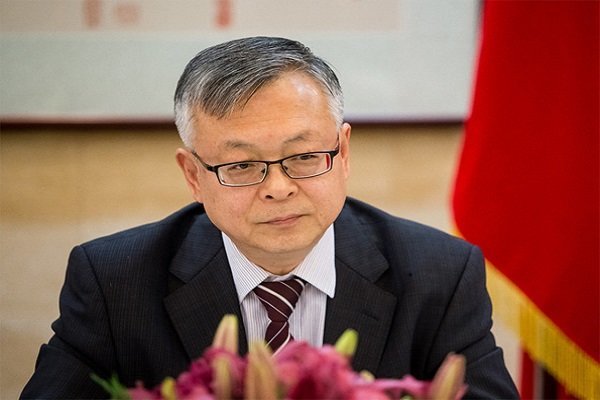
By Pang Sen Chinese Ambassador to Tehran
TEHRAN - Since the international financial crisis in 2008, the world has been undergoing major changes. A noticeable and worrying phenomenon is the resurgence of unilateralism, populism, protectionism, and isolationism. Voices against globalization is gathering momentum. Some countries have turned more inward-looking. Regional integration has slowed down and suffered setbacks.
The international situation is facing more instability and uncertainty. The international system and order established in the aftermath of the Second World War are experiencing severe challenges. Debates and concerns about global governance and future development intensified. Various ideas and proposals have surfaced.
In the face of profound changes in current international situation, we need to ask ourselves, multilateralism or unilateralism, which is the right option to address the complex global challenges and promote the security and welfare of mankind?  History has proven that the continuous expansion and interconnection of human activities is an irreversible trend. With advancement of industrial revolutions and rapid development of science and technology, especially the information technology today, the flow of people, goods, and information across the globe has reached an unprecedented scale, resulting in the increasing globalization and interdependence of nations. While greatly promoting the development of the world, globalization also produced complex impacts on the internal governance, stability, culture, interests and external relations of various countries. The benefits from globalization and the attitude towards it differ among nations. China believes no country can address the multiple challenges facing mankind single-handly. Countries need to work together in a responsible spirit so that common interests could be preserved.
Politically, we should respect each other. Discussion of issues of common concern should be conducted on an equal footing. Cold War mentality and power politics should be abandoned for the sake of building a world of lasting peace, based on partnerships, equality and mutual-understanding.
In the security field, we should commit ourselves to settling disputes and differences through dialogue. We need to join hands in the response to traditional and non-traditional threats, and oppose terrorism in all its forms. A new concept of common, comprehensive, cooperative and sustainable security should be fostered.
Economically, we should promote trade and investment liberalization and facilitation. To extend its benefits to all peoples, economic globalization needs to be more open, inclusive, and balanced. Multilateral trade system should be preserved to build an open world economy, and North-South development gap must be narrowed.
Culturally, we should respect the diversity of civilizations. The coexistence, exchange and mutual learning between civilizations should be encouraged. Dialogue among civilizations should be promoted with a view to strengthening the bond of friendship and peace.
Ecologically, we should adopt environment-friendly strategy, cooperate to tackle climate change, and protect our planet for the sake of human survival.
The world peace, stability and development require extensive cooperation in good faith among nations and effective functioning of international establishments. Unilateral actions such as withdrawal from international organizations and regimes have caused serious concerns of the international society. Recently, while provoking trade conflicts with many countries, the U.S. on various occasions made unwarranted accusations against China. It claims China meddles in its internal affairs and elections, stealing American intellectual property, launching cyber-attacks against America, and bringing Debt Trap to developing countries. Such remarks confuse the right and wrong and reveal deep-rooted cold-war mentality. China’s development is mainly owed to Chinese People’s hard work and mutually beneficial cooperation with countries around the world. The Chinese government has neither the time nor interest in meddling in U.S. internal affairs and elections. 
Since the implementation of reform and opening-up policy in 1978, China has made remarkable achievements. Over the years, China has contributed around 30% of global economic growth, ranking the first in the world. In the coming five years, China is expected to import $10 trillion of goods and service, attract $600 billion of foreign investment and make $750 billion of outbound investment. Chinese tourists will make 700 million oversea visits. China has set up more than 80 overseas economic and trade cooperation zones with countries along the “Belt and Road”, and created 244,000 job opportunities in these countries, among which more than 130,000 jobs every year in Africa. China is resolute in opening its door wider to the world. As a major move in opening its market, the first China International Import Expo will be held in November 2018 in Shanghai. It's China's firm belief that its development and the peace and prosperity of the world at large depend on an open global economy and a multilateral approach to world affairs.

Ignorance is the bane of humanity

By Martin Love
NORTH CAROLINA - U.S. citizens will likely not anytime soon hear the end of the horrible tale of the gunman who last week went into a Pittsburgh, Pa., synagogue and killed 11 Jews who were worshipping there.
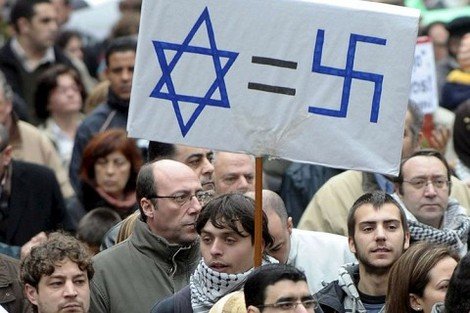
The gunman was a crazed white nationalist terrorist who no doubt had been listening to Trump for too long, but they don’t call what he did “terror”, which it is. Trump hardly appears as an anti-Semite given his overweening love affair with the Zionists, but his views generally are bound to stir up ignorant, racist whites, even neo-Nazis. It’s important to note that officially nothing is labeled “terror” unless some incident happens to be done by an “Islamist”, according to directives (since Trump took office) by the U.S. Department of Homeland Security.
 The very name of this governmental “department” established after 9/11 reeks of pretensions of “empire”: the notion that the U.S. physically is the “homeland” and everywhere else the U.S. has a presence, especially a military presence, are mere satellites – not truly sovereign nations. The concept is quite “Nazi” as with Germany under Hitler. And it is abhorrent, as is the U.S. under Trump.
I anyway posted a note to “Facebook” bewailing the fact that what the Zionists/Israelis have been doing is “terror”, too, and the same for what the Saudis have been doing to Yemen. “Friends” agreed, but then I don’t literally have “friends’ who are ignorant about the truth. Later, I posted a response to a Twitter conversation by a bunch of Zionist American Jews where I questioned whether what happened in Pittsburgh might be related to Zionist actions in the Mideast? The response was furious and immediate: I was labeled “anti-Semitic scum.”
My first response to this was: “I was working and living in a kibbutz in Israel before you were even born.” (Actually, during summer 1969.) That shut them up temporarily. But then someone noted that I had been writing columns for the Tehran Times, as stated on my Twitter page. And I got this response: 
“Iran just directly funds Hizballah, takes American citizens captive, attacks its neighbors, threatens Saudi and tries to get nuclear weapons. They aren’t called the Mad Mullahs for nothing. And you are on their payroll. Shame on you.” 
This comment revealed more abysmal ignorance and I continued responding:
“Iran is not perfect. No country is. Hizballah has protected Lebanon from repeated Israeli offensives and even occupations. It has no direct nuclear weapons program. Such a program has been a myth for many years. And Israel even takes dissident Jewish American captives sometimes. And NO, I take no salary as a writer.”
“We know why Iran has been sanctioned. But Iran has not on offense attacked another country in over 200 years. It also has the second largest Jewish population in the Middle East. Jews are treated far better in Iran as a minority than Arabs of whatever religion are treated west of the Jordan River, and they are not even a minority there. Duhhh.”
“It’s not Iran that is the pariah nation now. The pariah nations are Israel and Saudi Arabia and even the U.S.”
One response I received amid the verbal flurry was: “I don’t see Israel sanctioned by the U.S. for terrorism. I see Iran….” This response to my comments above demonstrated extreme ignorance with the implication that any country the U.S. sanctions has to be doing wrong. I further followed up with a comment that American Jews ought to visit the West Bank and Gaza and see first-hand for themselves the human rights abuses and war crimes perpetrated by the IDF. And I also stated that the Saudis were corrupt and cruel, that the Khashoggi murder was just one instance of such. And Khashoggi was a beloved Washington Post writer, etc. I added that I had been an editor for a bit for Aramco Magazine and learned to despise the Saudis, and that their variant of Islam was a “bloody joke”.
At any rate, it was clear what I was dealing with: Some American Jews (and others, but not all) who had bought hook, line and sinker the Zionist and Neocon propaganda about Israel and other Mideast countries. It was interesting that after I had posted my responses to their personal attacks, they went quiet, realizing that they were dealing with someone who knew far more than they about the Mideast, and had actually spent significant time in the region, including Israel. But the key point is that the attitudes expressed by these virulent people are so deeply entrenched that it is difficult to imagine how they can ever be relieved of their ignorance, and not just about Iran. Still, one must try when given the opportunity.
For beleaguered Iranians under U.S. economic sanctions, and for people of many other nations under sanction, it remains important to realize that many, many better-informed Americans do NOT agree with U.S. government postures even if they cannot really do much about them except vote, as during the upcoming mid-term elections to Congress on November 6th. The world will see how that goes soon enough.
 Meanwhile, magine the U.S. government under Trump as the Titanic headed inexorably and generally towards an iceberg, a reckoning, and perhaps incapable of turning away before disaster strikes. No country has probably ever been so badly advised by ignorant counsel and propaganda as the U.S. this century. 

Arbaeen trek, a march towards unanimity

By Maryam Qarehgozlou
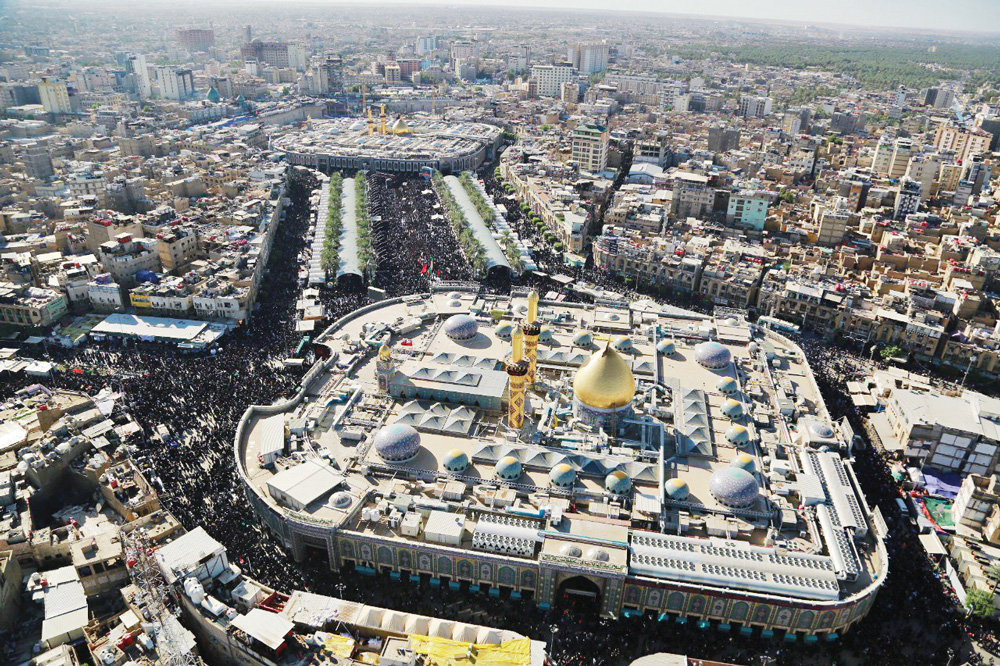
Once again pilgrims of different colors, race and religions set off on a long, peaceful march to show the world the overwhelming love they have for their Imam and all the virtues he stood for.
Over the past few years, solemn procession of mourners from a variety of ethnic backgrounds begin a long trek days prior to Arbaeen, the 40th days of Imam Hossein (As) martyrdom in the battle of Karbala in 680 AD, to revisit their pledge of support to the grandson of prophet Mohammad (PBUH).
The trek symbolizes of a peaceful utopia where no one is hungry or homeless. People are giving away free food and drinks, offering their houses to the pilgrims, and pilgrims themselves are treating one another like brothers and selflessly regardless of their social class, race, color, religion, etc. 
Thousands of mawkibs, stalls providing free of charge foods, beverages, accommodation, and medicines, are set up along the way to Karbala and the holy shrines as many believe that taking care of pilgrims of Imam Hossein (AS) and serving them is a religious duty.
    
Arbaeen pilgrimage is a large congregation of people and not just a specific group of people, everyone is welcomed to join. Toddlers, elderlies, even people with disabilities on wheelchairs participate in the march.   
Imam Hossein’s love seems to have redrawn all cultural boundaries and even after some 1400 years from his martyrdom in the hands of the tyrant Umayyad forces is now a symbol of universal compassion and freedom. 
While the gathering is religious in essence many nonreligious people also do take part in it. And that’s why despite media blackout especially in the West now over 20 million people whose heart goes out to Imam Hossein and his loyal companions, and in better words to peace and justice, attend one of the biggest gatherings of the world. 

Trump's Iran Policy: Rollback or Containment?

By Kaveh 
L. Afrasiabi

Trump's Iran Policy: Rollback or Containment?
In his recent article in Foreign Affairs, US Secretary of State Mike Pompeo has once again demonized Iran as a "rogue" and "outlaw" state that is hell-bent on "exporting its revolution" without any qualm about international norms, thus justifying his administration's policy of "maximum pressure" in order to convince the Iranian government to change its foreign and domestic politics and come to the negotiation table. Underscoring its determination to press ahead a "clear-eyed" aggressive Iran policy, the Trump administration has followed its unilateral exit from the Iran nuclear deal with several rounds of sanctions, with the oil and key financial sanctions to go into effect in early November, 2018.

Yet, while the White House rhetoric on Iran is crystal clear and denotes a familiar narrative since the Islamic Revolution of 1979, the exact policy orientation is however covered with ambiguity and, in fact, reflects constant oscillation between the two poles of containment and (confrontational) rollback. To elaborate, containment is a power balancing strategy aimed to limit the spread of influence of an adversary, which can be inferred from Trump's recent defense of Saudi Arabia as a "counterbalance to Iran." In contrast to containment, which has economic, political and even ideological ramparts or dimensions, rollback is an alternative foreign policy that is relatively more ambitious and takes the containment strategy to its logical conclusion, by prescribing "regime change" as a viable strategy to roll back the Islamic Revolution in Iran. There is, of course, no China Wall between the two strategies and it would be a mistake to view them as binary opposites or mutually exclusive. Rather, it is better for conceptual purposes to view rollback as a more hawkish strategy that precludes meaningful engagement with the targeted state, in this case Iran, that plays a role in containment strategy. Not only that, containment usually, as in the Cold War cases, implies the sub-strategies of detente, peaceful coexistence, and rapprochement, which are bracketed in the rollback strategy following the 'maximalist' aim of overthrowing the enemy by all means necessary, including economic warfare, covert and overt operations, and war.

Notwithstanding the above-said, Trump administration's Iran policy is caught by the tensions between the two horns of containment and rollback, reflecting policy division within the administration, between the policy hawks and policy doves. Trump himself has exhibited both impulses, sometimes simultaneously, thus reflecting a fundamental policy incoherence, despite the appearances to the contrary. Thus, whereas his maximalist rollback strategy is displayed by his frequent Iranophobic statements, Trump has also veered in the other direction by (a) offering to negotiate with Iran without preconditions, and (b) taking credit for noticeable changes in Iran's regional behavior. The latter is reflected in Trump's recent interview with the Wall Street Journal. In the aftermath of the Khashoggi affair, it may well turn out that the pressures on Trump to pursue a more 'balanced' Persian Gulf policy are working. This is not to say that US would abandon Saudi Arabia and or suddenly turn in favor of a "balanced equi-distance" from both Iran and Saudi Arabia; The sheer scope of US-Saudi ties and the animosity between US and Iran operate against such a scenario.

But a gradual shift by the Trump administration in favor of containment can, hypothetically speaking, materialize as a direct result of the failure of the rollback strategy to achieve its objectives, which require a 'coalition of willing" hitherto absent, in light of Europe's decision to defy Trump on the nuclear accord. That strategy's attempt to rouse the Iranian people against their political leaders has also gone nowhere and shows its structural weakness. In fact, the damage to previous containment strategy by an overzealous, yet ultimately doomed, rollback strategy cannot be ignored either.

Concerning the latter, suffice to say that if the Trump administration chooses to sanction SWIFT in order to completely cut off Iran from the international financial networks, then this may backfire with Europe and China and Russia and act as catalyst for the latter's pursuit of an alternative system. US dollar may then suffer and then instead of a successful rollback US strategy, we may witness a pushback against it in the international community that is presently fed up with US's 'bullying'. Perhaps this is why the US Treasury Secretary has been reluctant to take that fateful step, which has triggered a tsunami of opposition by the hawkish political voices in US, who are now accusing Trump's Iran sanctions as being "weak" and insufficiently powerful. These US hawks, headed by the national security adviser John Bolton, are inherently sold to rollback strategy as a viable approach, without bothering themselves with its limited chance of success and or side-effects in alienating the allies and countries such as India, which is seeking exemption from the US oil embargo on Iran, so far without much success.

Indeed, the reason the Trump administration has been sending contradictory signals on oil waivers to Iran oil importers such as India, Japan, and South Korea, is that it is concerned about Tehran's ability to remain economically afloat even with a reduced oil export, thus undermining its rollback strategy. At the same time, the administration is concerned about a spike in oil prices attributable to its sanctions on Iran in today's tight oil market, which in turn acts as another potential brake on its omnibus of rollback. The chips must fall in the end in favor of one or the other approach and, chances are, the dictates of economic and political pragmatism will gain the upper hands and remove the sanctions hammer from SWIFT and excluding oil exemptions. These are two key barometers of the priority of containment or rollback confrontation, in the cognitive map of Trump administration vis-a-vis Iran, which will likely become transparent shortly. Should Trump opt to appease his administration's Iran hawks by sanctioning SWIFT and refusing meaningful exemptions, then it must face the consequences of Iran's own countermeasures as well as the backlashes on the part of third parties who resent being subjected to arms-twisting by Washington in violation of their own national interests. By all accounts, Trump's rollback strategy is a risky gamble that does not serve US's foreign policy objectives either, as it is fundamentally based on a caricature of Iran's realities.

The Khashoggi Crisis: A blessing in disguise for Pakistan’s Imran Khan

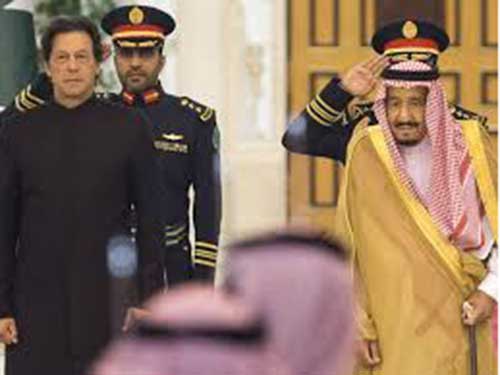
The death of Saudi journalist Jamal Khashoggi is proving to be a blessing in disguise for cash- strapped Pakistani Prime Minister Imran Khan. Mr. Khan’s blessing is also likely to offer Saudi Arabia geopolitical advantage.
On the principle of all good things are three, Mr. Khan struck gold on his second visit to the kingdom since coming to office in August.
Mr. Khan was rewarded for attending Crown Prince Mohammed bin Salman’s showcase investors conference in Riyadh, dubbed Davos in the Desert, that was being shunned by numerous CEOs of Western financial institutions, tech entrepreneurs and media moguls as well as senior Western government officials because of the Khashoggi affair.
Saudi Arabia declined Mr. Khan’s request for financial aid during his first visit to the kingdom in September but was willing to consider investing billions of dollars in a refinery in the Chinese-operated Arabian Sea port of Gwadar as well as in mining but was reluctant to acquiesce to Pakistani requests for financial relief.
Saudi Arabia’s subsequent agreement to provided finance is likely to help Mr. Khan reduce the size of the US$8-12 billion bailout he is negotiating with the International Monetary Fund (IMF).
Speaking in an interview before leaving for Riyadh, Mr. Khan said he was attending the conference despite the “shocking” killing of Mr. Khashoggi because “unless we get loans from friendly countries or the IMF, we actually won’t have in another two or three months enough foreign exchange to service our debts or to pay for our imports. So we’re desperate at the moment.”
Pakistan’s foreign reserves dropped this month to US$8.1 billion, a four-year low and barely enough to cover sovereign debt payments due through the end of the year. The current account deficit has swelled to about $18 billion.
Potential Saudi investment in the Reko Diq copper and gold mine as well as a refinery in Gwadar, both close to Pakistan’s border with Iran would give it a further foothold in the troubled province of Balochistan. Gwadar is a mere 70 kilometres down the coast from the Indian-backed Iranian port of Chabahar.
Pakistani militants reported last year that funds from the kingdom were flowing into the coffers of ultra-conservative anti-Shiite, anti-Iranian Sunni Muslim madrassahs or religious seminars in the region. It was unclear whether the funds originated with the Saudi government or Saudi nationals of Baloch descent and members of the two million-strong Pakistani Diaspora in the kingdom.
It was equally unclear how Saudi Arabia expected to capitalize on its rewarding of Mr. Khan in its competition with Iran for Pakistan’s favours.
Ensuring that Pakistan, home to the world’s largest Shiite minority, does not snuggle up too much to Iran has become even more crucial for Saudi Arabia as it seeks in the wake of Mr. Khashoggi’s death to enhance its indispensability to US President Donald J. Trump’s effort to isolate and cripple Iran economically, if not to engineer a change of regime in Tehran.
Mr. Trump sees Saudi Arabia as central to his strategy aimed at forcing the Islamic republic to halt its support for proxies in Yemen and Lebanon, withdraw its forces from Syria, and permanently dismantle its nuclear and ballistic missiles programs.
Saudi financial support means that Mr. Khan may find it more difficult to shield Pakistan from being sucked into the US-Saudi effort.
Insurgents last week kidnapped 14 Iranian security personnel, reportedly including Revolutionary Guards on the Iranian side of the border with Pakistan. Pakistan pledged to help liberate the abductees who are believed to have been taken across the border into Balochistan, long a militant and Baloch nationalist hotbed.
“Members of terrorist groups that are guided and supported by foreign forces carried this out through deceiving and bribing infiltrators,” the Guards said in a statement that appeared to blame Saudi Arabia and the United States without mentioning them by name.
The incident is likely to heighten Chinese concerns that in a worst-case scenario, Saudi investment rather than boosting economic activity and helping Gwadar get out of the starting blocks, could ensnare it too in one of the Middle East’s most debilitating conflicts.
China is further concerned that there would be a set of third-party eyes monitoring activity if and when it decides to use Gwadar not only for commercial purposes but also as a naval facility.
Saudi investment could further thwart potential Chinese plans to link the ports of Gwadar and Chabahar, a prospect that Pakistani and Iranian officials have in the past not excluded. With Saudi financial aid, that may no longer be an option that Mr. Khan can entertain.
Mr. Khan will have to take that into account when he travels to Beijing next week in a bid to secure Chinese financial support and convince Beijing to fast forward focusing the China Pakistan Economic Corridor (CPEC), a US$45 billion plus infrastructure and energy generation-driven Belt and Road crown jewel, on issues such as job creation, manufacturing and agriculture.
Mr. Khan appeared to anticipate in his interview with Middle East Eye on the eve of his participation in the Riyadh investment conference that he would have reduced leeway by blaming the United States for increased tensions with Iran and hinting that Pakistan did not want to be drawn into conflict with the Islamic republic.
Said Mr. Khan: “The US-Iran situation is disturbing for all of us in the Muslim world… The last thing the Muslim world wants is another conflict. The worrying part is that the Trump administration is moving towards some sort of conflict with Iran.”
Dr. James M. Dorsey is a senior fellow at the S. Rajaratnam School of International Studies, co-director of the University of WĂĽrzburg’s Institute for Fan Culture, and co-host of the New Books in Middle Eastern Studies podcast. James is the author of The Turbulent World of Middle East Soccer blog, a book with the same title and a co-authored volume, Comparative Political Transitions between Southeast Asia and the Middle East and North Africa as well as Shifting Sands, Essays on Sports and Politics in the Middle East and North Africa and just published China and the Middle East: Venturing into the Maelstrom