Showing posts with label iran's missiles program. Show all posts

Thursday, August 29, 2019

Iran Nuclear Accord: The Third Act is Now Starting

            The first act of the Iran Nuclear Accord took eight years. The backdrop kept changing from Geneva to Vienna but the actors were nearly all the same.  Except for the representative of the European Union it was an all male, middle-age cast with little comic relief, at least on stage.  The Joint Comprehensive Plan of Action, to give the play its formal name was signed in 2015 with polite applause and some anticipation of what the next acts might hold.
The second act started with the election of Donald Trump as the US President. He  was used to faster-paced TV shows and so left  the theater, saying that there were no lines concerning Iranian missiles.  The development of Iranian missiles is not a subject directly covered by the Iranian nuclear accord.  However, there is the Hague Code of Conduct aganst Ballistic Missile Production (HCOC) which came into force on 25 November 2002 which calls for restraint in their production, testing, and export.  The Hague Code could be strengthened although we have seen little leadership on the part of those States which have extensive missile programs.
One can understand the boredom of some.  The action was very slow.  The Iranians kept to the script, and IAEA atomic inspectors came periodically from Vienna but were largely nameless.  The Iranian economy did not improve dramatically and so some Iranian “hardliners” started wondering  who had written the play.  But as the Second Act continued, the drama started heating up. Off stage, one could hear war drums starting to beat. Armed conflicts continued in Syria and Yemen. One could hear the sounds of weapons off stage but rather close. Tankers with oil were menaced. Regional States not part of the Nuclear Accord such as Saudia Arabia and Israel were watching closely and even throwing some oil on the fire. As the Second Act ended, there was serious discussion of the possibility of a regional war.
Now the Third Act has started with two signs of hope that the drama will have a “happy end” or at least as “happy” as current world politics will allow. However, both signs of hope may require that we in the non-governmental world, stop being just spectators of the drama and ask to become actors as well and add lines to the script promoting negotiations in good faith.
The first sign of hope comes from Moscow.  On 23 July 2019, the Russian Government’s “Collective Security for the Persian Gulf Region” was presented in Moscow by the Deputy Foreign Minister, Mikhail Bogdanov.  Bagdanov stated that “ The main principles are incrementalism, multilateralism, and strict observation of international law, primarily the U.N. Charter and Security Council resolution.  The looming strategic challenge outlined is creating among all states in the region on an equal basis” a collective security institution.
The Russian proposal for Collective Security for the Persian Gulf follows closely the procedures which led to the 1975 Helsinki Final Act and the creation of the Conference on Security and Cooperation in Europe.  Bogdanov stressed multilateralism as a mechanism for all  involved in the assessment of situations, the decision-making process, and the implementation of decisions.
The second sign of hope comes from the decision within the G7 meeting which ended on 26 August 2019 to mandate the President of France to see what negotiations were possible to continue the Iran Nuclear Accord. This G7 agreement opens a door, at leat a bit, to renewed negotiations between the U.S.A. and Iran.  The first step may be to stop beating the war drums off stage. A second step will be to see what issues other than the Nuclear Accord can be discussed as the provisions of the Nuclear Accord are not really open to re-negotiation given the time it took to reach the original agrrement and the States involved.
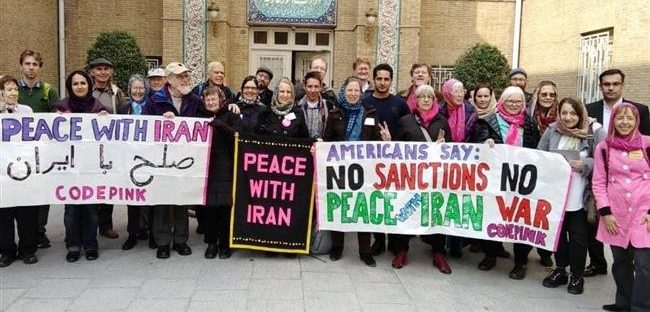
Thus, it is probably around the Russian proposal of a Helsinki-type regional security conference that non-governmental organizations, such as the Association of World Citizens, can play an active role.  NGOs were active during the nearly three years that the  Helsinki Accord was being negotiated.  After a short start in Helsinki, the negotiations moved to Geneva.  Although NGO representatives had no direct avenue into the  discussions, all the key States in the negotiations had Diplomatic Missions to the U.N. in Geneva.  We often knew diplomats at these Missions from our work in U.N. meetings, so ideas could be passed on to the Helsinki Final Act negotiators.  It is still too early to know how the Russian proposal will be acted upon.  However, the Russian proposals are a positive sign. We need to work to see what issues can be negotiated.  The Third Act is not written in advance.
Rene Wadlow, President, Association of World Citizens

Friday, June 28, 2019

The JCPOA And Exiting The Iran Crisis


by Paul R. Pillar
“No nuclear weapons,” declares President Trump, identifying that objective as his top priority regarding Iran. The contradiction with Trump’s own policy toward Iran is jarring. The starting point, and a continuing leitmotif, of that policy has been the administration’s reneging on, and effort to destroy, the Joint Comprehensive Plan of Action (JCPOA), the multilateral agreement that has the very purpose of preventing an Iranian nuclear weapon and that closed all possible paths to such a weapon. Among several counterproductive aspects of Trump’s Iran policy, this is probably the most glaring one.
Accompanying the administration’s obfuscation of other elements of the current standoff with Iran has been the promotion of the notion that the JCPOA somehow advanced, rather than set back and constrained, Iran’s nuclear program. Receptivity to that notion, especially within Trump’s political base, was nurtured by Republican opposition to the JCPOA before Trump entered office. Now the nurturing of that false notion continues with assertions by bellicose supporters of the administration’s path that the JCPOA was “smoothing Iran’s path to a nuclear weapon.” If disposing of fissile material, tearing out enrichment centrifuges, filling nuclear reactors with concrete, and all the other things Iran had to do to fulfill its up-front obligations under the JCPOA constitute smoothing, one wonders what roughing it would look like.
Misunderstanding an Agreement
Public understanding of the JCPOA has suffered from an uninformative discourse, again predating Trump, that has exhibited defensiveness on one side and shameless misrepresentation on the other. Even many defenders of the agreement consider it de rigueur to start any defense by acknowledging that the agreement is “flawed.” That’s a truism. Almost every international agreement is the result of give-and-take in negotiation and thus is “flawed” by definition, with no party getting every part of what it would consider a perfect, flawless result.
Although the JCPOA has required Iran to do major program-retrenching steps such as gutting nuclear reactors and enrichment cascades, it required nothing from the United States other than the lifting of sanctions whose very purpose was to induce Iran to take the kind of bomb-precluding measures that the JCPOA incorporates. Lifting those sanctions was a net plus, not a minus, for the United States in terms of not only nuclear nonproliferation but also trade, investment, and other economic considerations. Herein lies a legitimate reason–in addition to the anticipated handling of the issue by Republicans in the Senate—for not making the JCPOA a treaty. The agreement imposed no costs or constraints on Americans, as treaties can do in becoming part of the law of the land. Even without sanctions, no company was required to do any business with Iran if it didn’t want to.
To the extent that continued attacks on the JCPOA, by the administration and others, have any focus, they most often mention the “sunset clauses” according to which some of the limits placed on Iran’s program get relaxed after several years. Misrepresentation is rife here, too, as when the president makes the blatantly false assertion, “In seven years, that deal will have expired, and Iran is free to go ahead and create nuclear weapons.” The most important provisions of the JCPOA never expire. One is the basic prohibition on any creation, acquisition, or possession of nuclear weapons by Iran, thus reinforcing Iran’s pre-existing commitments under the Nuclear Nonproliferation Treaty. Another permanent provision is the highly intrusive and comprehensive inspection regime, which is the international community’s best possible assurance of immediately detecting any Iranian straying from its commitments.
Another common failure in discussion of the sunset clauses is true of much criticism of the JCPOA generally, which is the failure to compare it to the alternative. If you don’t like Iran being able to do things like producing larger quantities of low-enriched uranium six or eight or 10 years from now, how would you like to see Iran being able to do those same things right away? That was the alternative before the JCPOA was negotiated, when Iranians met increased international pressure in the form of economic sanctions by spinning increased numbers of centrifuges and producing increased amounts of fissile material, to an extent well beyond what would become the limits in the JCPOA. Now that same alternative is re-emerging, as Iran responds to the Trump administration’s wrecking of the JCPOA by preparing to pass those same limits.
Getting Out of a Box
The current imbroglio results from a Trumpian foreign policy that is largely about domestic politics and the rhetoric of domestic politics, without any serious thinking at the presidential level that could be called a plan or strategy. Trump got on his current course regarding Iran for two reasons. One was to oppose whatever Barack Obama did. Because the JCPOA was perhaps Obama’s most significant foreign policy achievement, it was automatically a target for destruction. The second reason was that Trump, as Fareed Zakaria has observed, has subcontracted U.S. Middle East policy to Israel and Saudi Arabia, to which one could add the United Arab Emirates. The subcontractors have their own reasons for wanting to keep Iran permanently ostracized, sanctioned, weakened, and loathed, and to prevent the United States from doing any sort of business with Tehran. Both of these drivers of the policy ultimately revolve, certainly for Trump, around domestic politics. Excoriating the JCPOA is the foreign policy equivalent of excoriating the Affordable Care Act in domestic policy. The subcontracting of regional policy to Iran’s regional rivals is intimately related to the money dimension and other dimensions of domestic politics.
Now Trump is in a box. He doesn’t seek a war, but he is where supporters and subordinates who do seek one want him to be. And he doesn’t know how to get out of the box.
The JCPOA was the product of exhaustive negotiations, punctuated by shouting matches between Secretary of State John Kerry and Iranian Foreign Minister Javad Zarif. It represents the most that could have been squeezed out of the bargaining space, given what each side considered its key objectives—even when the United States was backed by an international consensus, which it is not now. As far as nuclear issues are concerned, any exit from the box will have to involve either the JCPOA or something that looks very much like the JCPOA.
Of course, Donald Trump would never acknowledge that. But Trump’s demonstrated technique of describing minor changes as major breakthroughs—such as by replacing the North American Free Trade Agreement (NAFTA) with a renamed and slightly modified version of NAFTA and then claiming it as a major achievement—may suggest a way out.  Trump could claim a renamed and slightly modified version of the JCPOA as an achievement that is “far, far better” than anything Obama did. Getting to that point still would mean surmounting major obstacles, including the Trump administration’s enormous credibility deficit and continued fears in Tehran about being seen to negotiate from weakness.
If Trump had never embarked on his current course and instead had lived up to U.S. obligations under the JCPOA, then Iran also would continue to observe its own obligations under the agreement. There would be no talk about exceeding limits on enriched uranium. Iran would have no reason to seek military confrontation with a vastly superior military power. And if allowed to export oil as promised under the agreement, Iran would have no reason to risk disrupting the oil trade, such as by sabotaging tankers. Iran’s role in the current standoff is entirely a reaction to what the Trump administration is doing to Iran.
There may be a certain symmetry in how Trump’s distinctive brand of braggadocio—of describing minor measures as major achievements—offers what may be the only faint hope of getting him get out of a crisis that is wholly of his own making.