Showing posts with label SEATO in South East Asia. Show all posts

Thursday, July 04, 2019

What Shape will a Military Standoff Take in Asia?

AS44222

Over the last 70 years, countries in APAC (Asia Pacific) have shown rapid economic growth, thereby attracting more and more interest to this region from world players, which has resulted in a battle for influence among them in this part of the world. During this period, Japan was the first to embark on its path towards development and prosperity, then Taiwan, South Korea, Singapore and some other nations in South East Asia followed suit. At present China, India and a number of other countries have also set off on a similar journey.

For a long time, bilateral relationships served as the foundation that ensured regional security in Asia. However, the situation in this part of the world is constantly changing, and the nations in this region are becoming more and more interdependent from an economic and political perspective. Their military bodies are also starting to form alliances as a result. They are fostering closer ties in order to meet a common challenge of ensuring security and stability, which are key to a prosperous future built on sound principles. Currently, these relations are at the core of any efforts to create and develop joint plans, or to stage joint exercises and trainings.

As far back as 1951, a Western idea to form a military and political alliance capable of countering the threat posed by China (which was even then viewed by Washington as one of its key regional rivals) became a reality when three English-speaking nations signed the Australia, New Zealand, United States Security Treaty (ANZUS).

Four years later, the Southeast Asia Treaty Organization (SEATO) was established (with its headquarters in Bangkok, Thailand) and comprised of Australia, Great Britain, New Zealand, the USA, France, Thailand, Pakistan and the Philippines. The aim of this entity was to block any further gains made by national freedom movements in South East Asia and the Pacific Ocean region. However, soon after disagreements began among SEATO members, and in 1977 the organization was officially disbanded.

At present, only ANZUS continues to exist but it also has its issues. For example, when New Zealand refused to allow American ships carrying nuclear weapons to enter its ports, the bilateral agreement on cooperation between these two nations was severed.  Still, military units from all three member-states, i.e. the USA, Australia and New Zealand, took part in the Afghan and Iraqi military campaigns.

In the current climate and also because of a substantial rise in tensions between the USA and China, in recent years the United States has used its military alliance with Japan and South Korea in the APAC region as a strategic instrument in order to increase U.S. influence in Northeast Asia and to deter the DPRK, China and Russia. There have been increased efforts to reinforce it after the 15th annual inter-governmental forum on security issues in Asia Pacific (APAC), the so-called Shangri-La Dialogue (SLD), was held in Singapore in 2016. Hence, as early as 2016, the United States began to expand its military presence in the region with the 1st Armored Division comprising 3,500 soldiers in South Korea; sixteen F-35 ‘stealth’ combat aircraft based in a Marine Corps military facility in Japan; the largest U.S. navy destroyers (Zumwalt class), and sizable Wasp class amphibious assault ships carrying the newest fighter jets. Extensive and varied preparations to establish an Asian version of NATO, which will be headed by the United States, have also begun. Washington is actively striving to include Japan, Thailand, Vietnam, Australia, India, South Korea, Singapore, the Philippines and Malaysia in the new military alliance as its key members. The main aim of the new organization, as envisioned by U.S. strategists, is to counter China’s growing influence in the region.

As of recent, aside from anti-Chinese and anti-Russian military alliances, led by the United States, an openly anti-Iranian shift has become more evident, illustrated by, among other things, the fact that Washington is actively striving to create a so-called Arab NATO as well as an anti-Iranian coalition in the Persian Gulf.

It was, therefore far from unexpected that Iran’s Minister of Defense, Hossein Dehghan, suggested that Russia, India and China join their efforts to combat terrorism advocating takfirism during a Conference on International Security, held in Moscow in April of this year.

In the aforementioned climate, it is not surprising that the PRC and the Russian Federation, which openly oppose a unipolar world dominated by Washington from a political, economic and military perspective, also intend to create alliances and coalitions to rival the U.S. equivalents. The Shanghai Cooperation Organisation (SCO), founded in 2001 and comprised of China, Russia, Kazakhstan, Tajikistan, Kyrgyzstan and Uzbekistan, is one such alliance. It began at the signing of the Treaties on Deepening Military Trust and on Reduction of Military Forces in Border Regions by the heads of states of Kazakhstan, Kyrgyzstan, China, Russia and Tajikistan in 1996-1997. However, it is not a military alliance (as for example NATO is). The key aims of this organization are to improve stability and security in the vast region, where the member-states are located; to combat terrorism, separatism. extremism and drug trafficking; to enhance economic, cultural and scientific cooperation, and to prioritize joint energy projects.

During the Conference on Interaction and Confidence Building Measures in Asia (CICA), which was held for the 5th time since 1992 on 15 June in Tajikistan shortly after the Shanghai Cooperation Organisation Summit, Beijing made an important proposal. China’s leader Xi Jinping urged Asian nations to create a security organization similar to NATO. In his speech during the forum, Xi Jinping focused on the fact that Asian countries face common challenges from the viewpoints of security, national territorial integrity, and trade and economic development.

During this Conference, representatives of Russia as well as Vladimir Putin, the President of the Russian Federation, also criticized the current US approach that has enabled it to circumvent existing rules and norms recently. They supported the direct challenge issued by PRC’s leader to the United Stated, having reached a reasonable conclusion that the new steps taken by China to create an “Asian alliance” would certainly act as a counter-weight to the Asian version of NATO, headed by the USA.

Russian President Vladimir Putin reminded others at the Forum that enhancing security had become one of the key challenges for the multi-ethnic Asian continent: “Truly sustainable stability system in Asia can obviously be achieved only through settling existing crisis situations and conflicts, and persistently combatting the threat of terrorism. To do that, cooperation should be stepped up in identifying and neutralizing terrorist groups and cutting off their financing, including from drug trafficking. It is a priority to do everything in our power to prevent terrorists from getting hold of chemical, biological or other kinds of weapons of mass destruction, and to thwart propaganda of extremist ideas.” In addition, participants of CICA highlighted that the world, first and foremost from the perspective of economic ties, is becoming a battlefield where no rules apply primarily because of U.S. actions.

Currently members of CICA include the following nations: Azerbaijan, Afghanistan, Bangladesh, Bahrain, Vietnam, Egypt, Israel, India, Jordan, Iraq, Iran, Kazakhstan, Cambodia, Qatar, Kyrgyzstan, China, Mongolia, the United Arab Emirates, Palestine, Pakistan, South Korea, Russia, Tajikistan, Thailand, Turkey, Uzbekistan and Sri Lanka. In Dushanbe, the leaders of the following 13 nations were in attendance: Azerbaijan, Afghanistan, Bangladesh, Iran, Kazakhstan, Cambodia, Kyrgyzstan, China, Pakistan, Russia, Tajikistan, Turkey, Uzbekistan and Sri Lanka. Hence, the proposal, made by PRC’s leader, to create an “Asian alliance” has every chance of coming to fruition.

Valery Kulikov, expert politologist, exclusively for the online magazine ‘New Eastern Outlook’. 

Thursday, November 22, 2018

Trump seems to have no concept of a multipolar world: Jahanpour

By Javad Heirannia
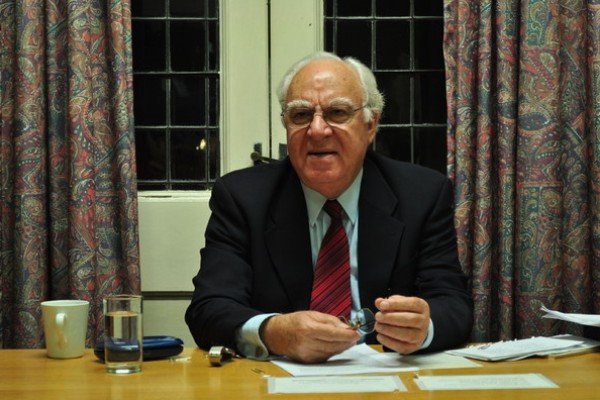
TEHRAN - Professor Farhang Jahanpour, part-time tutor on Middle Eastern affairs in the Department of Continuing Education, University of Oxford, and a member of Kellogg College says that The main reason for the idea of forming a joint European army “has been President Trump’s unilateral and ultra-nationalist approach that puts America first and, by implication, ignores the interests of other countries and tries to impose his views on them.”
Former Senior Research Scholar at Harvard adds that “He seems to have no concept of a multipolar world and he wishes to rule other countries like a global hegemon, in the same way, that he is trying to establish an imperial presidency at home.”
Following is the full text of the interview:
Q: The idea of forming a joint European army is not a new idea, but in recent days, with the comments of French President Emmanuel Macron and German Chancellor Angela Merkel and the reaction of Trump, it has assumed a new dimension. What are the reasons for the progress of this project by countries such as France and Germany?
A: The main reason for the European unease about the latest developments has been President Trump’s unilateral and ultra-nationalist approach that puts America first and, by implication, ignores the interests of other countries and tries to impose his views on them. He seems to have no concept of a multipolar world and he wishes to rule other countries like a global hegemon, in the same way, that he is trying to establish an imperial presidency at home. However, most countries of the world are reacting to that arrogant attitude and want to move towards a multipolar world based on the rule of law and respect for international treaties. 
Trump has withdrawn the United States from the landmark Paris Climate Accord that, in view of the rapid pace of global warming, many countries take very seriously. He withdrew the United States from the nuclear agreement with Iran, despite the fact that it was the result of two years of intense negotiations between seven countries, and was unanimously approved by the EU and the Security Council Resolution 2231. In defiance of UN resolutions, Trump moved the U.S. Embassy in Israel to Jerusalem, despite the fact that various international agreements have seen Jerusalem either as an international city or as the capital of a future Palestinian state. 
Trump has withdrawn America from a number of other important international agreements and organizations, including UNESCO, the Trans-Pacific Partnership, the UN Human Rights Council, etc. However, his latest withdrawal from the Intermediate-Range Nuclear Forces Treaty (INF), which prohibited the United States and Russia from possessing, producing or deploying medium-range ground-based cruise missiles, has particularly alarmed the European countries that see it as a very dangerous and provocative move. 
Trump withdrew from that treaty without any consultation either with the NATO allies or with Russia. “We’re going to terminate the agreement and we’re going to pull out,” Trump told reporters on October 20 during a campaign stop in Nevada. This is not the way that a law-abiding country should deal with international treaties or with its allies. Gorbachev who signed that agreement jointly with President Reagan told Russia’s Interfax News Agency: "Getting rid of the treaty is a mistake… All the agreements aimed at nuclear disarmament and limitation of nuclear arms must be preserved to save life on Earth."
Meanwhile, German Foreign Minister Heiko Maas said Washington should consider the consequences of pulling out of that international treaty, which he described as “an important pillar of our European security architecture."
Europe has been America’s loyal ally since the Second World War, but many Europeans have come to the conclusion that America, especially under Trump, is not treating them as allies, but as vassals. They also don’t like the unnecessary conflicts that Trump is inciting against Iran, Russia, China and others, and his unilateral sanctions on a number of countries, as well as putting pressure on U.S. allies to obey U.S. diktats and do the same.
Recently, reacting to some of the arrogant and interfering stances of the U.S. ambassador to Germany, the former German Chancellor Gerhard Schroeder told Die Welt: “When I look at the actions of the U.S. ambassador in Germany, I get the impression that he sees himself more as an occupation officer than as an ambassador of the United States in a sovereign state.” He also criticized U.S. trade policy, saying that Germany “cannot put up with being treated like an occupied country”.
Trump may be unhappy with the decision of the European countries to form a European Army but, above all, he should blame himself for this state of affairs. 
Q: Speaking to the "Europe 1" radio, French President Emmanuel Macron called for the formation of a real European military to counter Russia's threats and also independence from the USA. In the interview, the French president said: "We have to defend ourselves against Russia, China, and the even USA." Why does France now name the United States alongside China and Russia as a threat?
A: Because the United States is making excessive demands on its allies, without taking into account their long-term interests. During the Cold War, the United States formed a number of military alliances in different parts of the world to contain the former Soviet Union. They included NATO in Europe, CENTO in the Middle East and SEATO in South East Asia. 
 Those alliances boosted the status of the United States as the so-called “leader of the free world” and as the leading country in the capitalist camp. The members of those alliances were required to contribute to the cost of running those organizations allegedly to guarantee their collective security, but also to bolster the position of the United States as one of the two superpowers. 
With the collapse of the Soviet Union and the dismantlement of the Warsaw Pact, NATO should have been dismantled. In fact, Gorbachev was promised by President George H. W. Bush and his Secretary of State James Baker that if he dismantled the Soviet Union and agreed with the unification of Germany, NATO would not encroach upon former Soviet territory. However, contrary to those promises, America has brought most of the former Soviet Republics into NATO and has pushed its forces right up to the borders of Russia.
Not content with that, American governments have called on NATO members to spend 2% of their GDPs on NATO, and of course, purchase American weapons in order to maintain the compatibility of all their weapons. President Trump does not realize that NATO’s main function has been to bolster the US’s superpower status, and has complained that NATO members do not pull their weight and has demanded that all NATO members increase their contribution to 3% of their GDP. This has forced many Europeans to question the role of NATO in their security. This is why as the German Chancellor Angela Merkel, speaking to MEPs in Strasbourg on 13 November, said: “The time when we can rely on others has passed. We have to take our fate into our own hands if we want to defend our community.”
Q: Ursula von der Leyen, the German defense minister, recently said that the founding of the European Army and its future activities could not only increase the security of European countries but also solve international crises. If the joint European army carried out missions outside Europe in addition to missions inside Europe, Is this not a parallel with NATO?
A: I don’t believe that most European countries would like to dismantle NATO for the time being, but they simply wish to have more say about their own defense and to be able to act more independently. So, while they wish to strengthen their defense forces and also act more in harmony with the rest of the EU members, they will stay within NATO. But it can be said that in time a European force would act in parallel with NATO. 
Q: Trump has opposed the plan and in response to French President Macron's remarks called the formation of this army offensive. Due to Trump’s reaction and his renewed appeal to Europeans to give more money to NATO, can these disputes threaten NATO's future?
A: As I said earlier, I believe that with the collapse of the Warsaw Pact and the Soviet Union, NATO is obsolete. Instead of spending these insane amounts of money on warfare, the time has come to look for more peaceful means to ensure global security. 
A recent study has shown that since 2001, the United States alone has spent $5.9 trillion on wars and that it has been in a state of constant wars, sometimes waged through contractors. So, President Eisenhower's prediction about a military-industrial complex has been almost completely fulfilled. The continuation of the present insane course will not only create a great deal of devastation and loss of life, it may even lead to a global conflagration, which might spell the end of human civilization. 
Therefore, instead of forming a new military force, the greatest contribution that the Europeans can make is to wage a determined campaign to establish world peace through dialog and negotiation. The ideals of the United Nations were certainly very noble, but sadly many of them have remained unfulfilled. What we need now is a re-invigorated United Nations, an end to militarism and a new Human Rights Charter for all the people of the world, not the privileged few. 
The conflict between Europe and Russia has been artificially intensified in order to sell more arms. Many Europeans see Russia as a member of the European family of nations, and China and India as the two rising powers are also more interested in trade and economic development than in war and conflict. Europe can play a historic role by dismantling NATO, putting an end to militarism and starting a new world order.