Showing posts with label Mahatma Gandhi. Show all posts

Friday, October 12, 2018

Saving Gandhi On Gandhi Jayanti

Today is Gandhi Jayanti. If he were alive he would have been 149 year. Official celebrations are there. Narendra Modi is on an overdrive to ‘prove’ that he ‘inherit’ the legacy of Gandhi. His ‘swachchbharat’ campaign is nothing but an attempt to deviate from the real issues of the nation.
Gandhi has devotees and detractors both. Many people love his ‘spiritualism’ but in the Congress party those days many did not agree with his ‘spiritualism’ yet remained with him because his political battle. The fact is that even if we disagree with many of his views and I have critiqued him well in my articles and in my book recently published named as ‘ Rise and Role of the marginalised in India’s freedom movement’, Gandhi remain the person who influenced our political destiny in the 20th century. He was the person around whom the India’s political struggle revolved around during British Raj.
The crisis in India is making the icons as gods and put them above pedestal so that non can criticise them. It is not merely with Gandhi but others too. India today is a country of ‘camp’ followers who can be ‘rational’ about ‘others’ but mindlessly follow his ‘own’. We do not question our own because we feel that they are completely perfect. All the political leaders or human beings have negative sides too and they must be critiqued too where they fail. The attempt to make a super hero is a dangerous thing which disallow people to learn from the mistake.
Gandhi was the ‘first’ brand that the capitalist world created. In a democratic society you dont need these branding but when we inherit imported democracies, these brand are used to promote the political interest of the power elite. Branding is done carefully and the biggest casualty of branding is historical facts. Once a person become a brand, you can not discuss his failures or darker sides. That happened with Gandhi. State promoted him at the cost of others as if the freedom movement remained confined to him. Historian became his devotees who were not writing history text but ‘puranas’ and ‘mythologies’ and the result is that our children still feel ‘ de di hame aazadi bina khadag bina dhaal, sabarmati ke sant tune kar diya kamaal’. These are simple generalisation and over glorification of the person who was definitely the leader of our political movement.
Gandhi gave us political tool to fight against the might. One must learn from his skills of moblisation. You may differ with him but he had the capacity to bring together the huge number of political leaders from diverse cultural background. Congress became a movement when he said that it is not merely political battle but focus on villages including the issue of untouchability as well as those of the peasants. Before him Congress party was a Hindu upper caste party but to Gandhi’s credit, he ensure the representation of Muslims in it.
Gandhi knew the impact of symbolism. He knew that India’s masses would love an image of a saint or a sanyasi. He used the religious symbols. It was dangerous too and damaged us more than helping us but then for the short term gains of popularising mass movement he used everything. More than him, his devotees too made him a ‘miracle’ man. People used to do miracles in the name of Gandhi. The huge number of people that used to throng at Gandhi’s meeting were not necessarily politically enlightened people but came to see him as a miracle person as well as a messiah of the Hindustan. A person in the saffron robe even today is respected in our villages so you can imagine those years when literacy was virtually below 50& and poverty was rampant.
Gandhi emphasised his mission on two points. One, communal harmony and the other eradication of untouchability but he failed on both as he was looking for simpler solutions of these issues. The issues emerge from our prejudices and cannot be resolved through politically one upmanship of patronising approach or a photo-op. For untouchability he said that it was the ‘biggest’ sin of Hinduism but unable to respond how will it go. Will it go simply by a call ur a will it go with other means. He felt that Hinduism was great. Untouchability is sin but caste system is wonderful. How is it possible if caste system which is the root of untouchability, could be considered as wonderful. Unlike Dr Ambedkar, who wanted to challenge to power of religious text and their sanctity Gandhi silenced Ambedkar by saying that those who do not believe in the sanctity of Shastras can leave Hinduism and he would have no issue of their conversion to other religion.
Frankly speaking, Gandhi was a conservative do gooder. He grew up in Gujarat and saw the surroundings. He was definitely not a ‘philosopher’ who could challenge primitive cultural values. He was a political leaders who used different methods to engage people. These methods were over simplified by his bhakts but nevertheless, I would say, Gandhi was honest in many things. He did not hide things unlike our politicians and intellectuals today. He never hid his religiosity as he believed in them.
One of the worst decision of Gandhi was his behaviour towards Ambedkar during the round table conference. Gandhi was arrogantly humble when he denied Ambedkar even as a right to claim the leader of the Untouchables. Gandhi wanted to claim all the rights for him in terms of representation. We do understand that he wanted untouchables to remain the part of Hinduism and was doing his duty as a humble Hindu. Nothing wrong but to deny a great intellectual belonging to the community, who suffered the pain it, a right to speak for vast untouchable community, was Gandhi’s biggest blunder.
His second blunder was inability to accept his defeat at the Round Table Conference that gave Untouchables rights for separate settlement under the Communal Award in 1932. Gandhi Fasted against it in Pune and compelled Ambedkar for a compromise which was the the reason for political reservation.
Gandhi today is not alive because what he wrote or did. He is alive because he created a mass movement all over the country. As I said there were number of Gandhians, and others who got associated with him. He guided them in doing vocational work, engagement with the community. Perhaps, that was his biggest power. His second biggest power was creation of a responsible and accountable leadership. The congress leaders might have their own religious and caste prejudices but they were broadly honest.
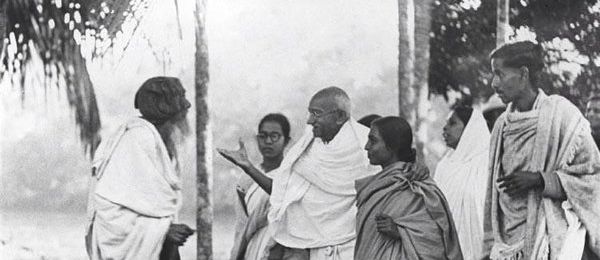
Gandhi’s historical hour was that in Noakhali during the beginning of our freedom when the nation saw huge communal carnage, people killing each others. When the political class was engaged and sitting in Delhi, he walked in the street of the city of Noakhali and called for peace and togetherness.
Gandhi’s was killed by hatemongers. All those who are enjoying power in his name. Remember, despite hatred, it was not Dalits, OBCs, Adivasis, Muslims who killed him but a brahmin Nathuram Godse. It is these hatemongers who celebrate Gandhi’s killing because he talked of peace and harmony which was the biggest threat to those who harvest their crop of hatred.
Remember Gandhi for his power in bringing people together. His strength in speaking the truth. His strength in not hiding his religiosity and yet talking about equal rights for all. His strength in mass moblisation and creating institutions. Mass movement as a biggest political movement is Gandhi’s power. And yet, dont make him God or a superhero. Learn from his failures too. Learning from failures provide us power and strength. Gandhi’s failure of not able to take the challenge of religious orthodoxy is costing the nation today.
The two issues he devoted his life are threatening us even today. Caste system is increasing and strengthening. He believed that the Savarnas should take care of the untouchables but the savarnas have shown that they wont change. They will continue to nurture their hatred and contempt against the Dalits. So, Gandhi definitely failed. He was trying to find solution of the untouchability from religion which actually created it. Without challenging the brahmanical institutions you can not bring any changes in India’s social system. Gandhi was a great man, an apostle of peace but he remained meek to brahmanical domination which is costing heavily to India, even today.
The communal hatred against which he fought lifelong is now spread all over like a virus. We failed to handle it because on both the side, Gandhi promoted religious leadership, wanted them to sit together. Secularism became Hindu Muslim Sikh Isaai sitting together. All men who never wanted to challenge the authority of their ‘religions’. All men who were happy with their ‘personal laws’. All men who were not keen on independent voices of women. All men who were not keen on caste questions inside their religions. And the result is that this sarv-dharma secularism has become the biggest threat in our attempt to create a united India.
India is at the cross road. It can not be at one man’s idea. It has to be a collective consciousness. It must learn from all. It need a constitutional morality today. This is the only way out. Let religion be just a personal affair. Let us not learn our moralities from religion. Gandhi actually addressed that constituency of people, which is huge in India who take guidance from religious leaders. Even today, Deras, Babas, Gurus are guiding our political parties. Will we challenge them. I am sure, Gandhi would not have done so but his inability to challenge religious wrongs is costing us today.
Gandhi will be live in India. Both for his great work as well as his dark sides too but he accepted his faults too. He might not have been a great, a giant but he died as a martyr and was killed by those paradoxically who claim to hail the brahmanical values which Gandhi could not challenge all his life.
Gandhi was essentially a man of masses. He got his strength by working with and engaging with people. A man of great humour, Gandhi remain active till his death. But after his death, the work that people should have been doing was actually done by the government. Pushing Gandhiism into our throat without ever questioning made Gandhi a figure of hatred among many. Remember, as long as an icon is in the hands of people, he will be great and revered but when government and power try to appropriate him for their political purposes, there are bound to happen murmurs and objections.
It is important for all of us to keep our icons out of the government control if we really wish to gain from their work and unite people against the forces of obscurantism and hatred. Always feel that these leaders were amidst political movement and taking decisions according to need and time so remembering their differences and focussing on their basic values, we can move ahead. Whether Gandhi or any other icons, the biggest dangers to their values are the ‘bhakts’ who make them superheros and any dissent of their values is considered as ‘antinational’ or anti people. Beware of Bhakts.
Vidya Bhushan Rawat is a social and human rights activist. He blogs at www.manukhsi.blogspot.comtwitter @freetohumanity Email: vbrawat@gmail.com

Where will you sleep? ( A question to Mahatma )

When communal frenzy
Was at its peak
And hatred led to
Massacres of Innocents
While India celebrated
It’s ‘ freedom at Midnight’,
You slept with
Strife – torn victims
When communal frenzy
Is at its peak ,
Caste conflicts, lynchings,
Communal violence
Continue unabated,
While those who supported
Your murderers
Are ‘ celebrating ‘ your birth anniversary
Where will you
Go to sleep?
Sheshu Babu is a writer

Monday, September 24, 2018

How Muslim’s Imam Hussein inspired non-Muslim elites?


ALWAGHT– “THINK NOT OF THOSE WHO ARE SLAIN IN GOD’S WAY AS DEAD. NAY, THEY ARE LIVING, FINDING THEIR SUSTENANCE IN THE PRESENCE OF THEIR LORD.” (QUR’AN 3:169) INDEED, THIS VERSE OF THE HOLY QUR’AN EXPLAINS THAT MARTYRDOM IN THE PATH OF GOD IS NOT EQUIVALENT TO DEATH, FOR THE BODY MAY PERISH BUT THE SOUL IS IMMORTAL.
Hussein bin Ali (Peace Be upon Him), the third Imam (infallible leader chosen by God) according to Shiite Islam, sacrificed his life and family to rectify the Islamic religion which was being distorted under the tyranny of those in power.
Imam Hussein’s small group of companions and family members (in total around 72 men and few women and children) confronted a large army of the then corrupt caliph, Yazid, in place named Krabla, Placed in today’s Iraq.
The Battle of Karbala lasted from morning to sunset on October 10, 680 (Muharram 10, 61 AH known as Ashura). The Yazid’s army under the command of Umar ibn Sa’ad martyred Imam Hussein and his companions, Including his six-month son Ali-e-Asghar, near the river of Euphrates, from which they were not allowed to get water.
The innocent infant was killed during while his mother Rabab and sister Sukaina were also present.

When water was cut off from Imam Hussein’s camp, all attempts to reach the Euphrates and return with water were to no avail. Imam Hussein’s last resort was to beseech Umar ibn Sa’ad’s army for water for the women and children. Ali-e-Asghar was extremely thirsty so Imam Hussein took him along, conceivably hoping they would show mercy at the sight of his suffering. However, Harmala, a member of Yazid’s army killed Ali el-Asghar with a three-headed arrow, according to history.

The Painting Shows Scene that Imam Hussein’s Infant Was Martyred by a Three-headed Arrow
Living in 7th century, Imam Hussein’s legacy spread after his martyrdom reaching almost every corner of the earth. Those who believed in the values of freedom and justice came to cherish and respect Imam Hussein.
Of those who were inspired by Imam Hussein’s struggle for justice is Mahatma Gandhi, preeminent leader of the Indian independence movement in British-ruled India and spiritual icon for many. Gandhi’s first Salt Satyagrah was inspired by Imam Hussain’s resistance to the tyranny of Yazid, the caliph at the time.

He writes: “My faith is that the progress of Islam does not depend on the use of sword by its believers, but the result of the supreme sacrifice of Hussain, the great saint.”
It is notable that Imam Hussein stood in the face of his oppressors. Although he was martyred in the Battle of Karbala, his voice resonated across distances and time. His martyrdom is commemorated to this day by millions of mourners on the day of Ashura. His martyrdom is believed to symbolize the victory of sacrifice over the sword.
Winner of the Nobel Prize in Literature, Rabindranath Tagore also described Imam Hussein’s approach to the pursuit of justice as exemplary.
 “In order to keep alive justice and truth, instead of an army or weapons, success can be achieved by sacrificing lives, exactly what Imam Husain did.”
Imam Hussein’s heroic endurance has also turned heads in the Western world, particularly among historians, writers, and scholars.
Charles Dickens, the English novelist, deduces from the events of Karbala that Imam Hussein had given up everything for the sake of Islam, the religion Prophet Mohammad, his grandfather had enlightened people with.
 “If Husain had fought to quench his worldly desires…then I do not understand why his sister, wife, and children accompanied him. It stands to reason therefore, that he sacrificed purely for Islam,” Dickens writes.
Edward G. Brown, the professor of Arabic and oriental studies at the University of Cambridge, praises Imam Husain in the following passage:
“… a reminder of the blood-stained field of Kerbela, where the grandson of the Apostle of God fell at length, tortured by thirst and surrounded by the bodies of his murdered kinsmen, has been at anytime since then sufficient to evoke, even in the most lukewarm and heedless, the deepest emotions, the most frantic grief, and an exaltation of spirit before which pain, danger and death shrink to unconsidered trifles.” [A Literary History of Persia, London, 1919, p. 227]
Considered the greatest British historian of his time, Edward Gibbon said in The Decline and Fall of the Roman Empire that the events of Karbala that led to the beheading of the revered Imam has the power to ignite the flames of compassion even in a heart of ice.
 “In a distant age and climate the tragic scene of the death of Hosein will awaken the sympathy of the coldest reader.”
Thomas Carlyle, Scottish historian and essayist, understands from the story of Karbala that the minority can be victorious over the majority.
 “The best lesson which we get from the tragedy of Karbala is that Husain and his companions were rigid believers in God. They illustrated that the numerical superiority does not count when it comes to the truth and the falsehood. The victory of Husain, despite his minority, marvels me!”
Peter J. Chelkowski, Professor of Middle Eastern Studies, New York University, summarizes the events of Karbala in a few lines.
 “Hussein accepted and set out from Mecca with his family and an entourage of about seventy followers. But on the plain of Kerbela they were caught in an ambush set by the … caliph, Yazid. Though defeat was certain, Hussein refused to pay homage to him. Surrounded by a great enemy force, Hussein and his company existed without water for ten days in the burning desert of Kerbela. Finally Hussein, the adults and some male children of his family and his companions were cut to bits by the arrows and swords of Yazid’s army; his women and remaining children were taken as captives to Yazid in Damascus. The renowned historian Abu Reyhan al-Biruni states; “… then fire was set to their camp and the bodies were trampled by the hoofs of the horses; nobody in the history of the human kind has seen such atrocities.” [Ta’ziyeh: Ritual and Drama in Iran, New York, 1979, p. 2]


The Battle of Karbala took place in 680 A.D. Yet, millions mourn the martyrdom of Imam Hussein to this day. The followers of Shiite Islam have been committed to ensure the remembrance of the person who sacrificed his life so that true Islam can live, and, in this remembrance, the story of Imam Hussein has spread across the world. Those who value freedom and justice have praised Imam Hussein even though there are not enough words that could do him justice.

Tuesday, September 18, 2018

If Maoist Violence Is Illegitimate How Is Hindutva Violence And State Violence Justified?

Co-Written By Swami Agnivesh and Sandeep Pandey
There was major police action against Sudha Bhardwaj, Gautam Navlakha, Varvara Rao, Vernon Gonsalves and Arun Ferreira on 28 August, 2018. Before this police arrested Professor Shoma Sen, Adocate Sudhir Gadling, Sudhir Dhawle, Mahesh Raut and Rona Wilson on 6 June. Even before this Dr. Binayak Sen, Soni Sori, Ajay T.G., Professor G.N. Saibaba and Prashant Rahi have been arrested and all these activists have been accused of having links with Maoists. Maoists are considered dangerous because they are thought to be plotting to destabilize the government and the five who have been most recently targeted are also accused of having planned to assassinate the Prime Minister. This charge is ridiculous because they are dedicated activists fighting for the rights of marginalized sections of our society and don’t really have the time to indulge in frivolous activity like planning an assassination. The cooked up charge is to justify the police action.
The Maoists are considered illegitimate because they support violence. Any violence cannot be justified in a democracy. However, the question is if violence is bad how is other kinds of violence more legitimate than the Maoist violence?
The history of right wing is replete with incidents of violence. How can we forget that the person with whom India’s identity is associated in the entire world and who lived the value of non-violence was murdered by people believing in Hindutva ideology? The Rashtriya Swayamsewak Sangh can never wash off this sin irrespective of however much Narendra Modi may have tried to coopt Mahatma Gandhi, Sardar Patel, Subhash Chandra Bose and Dr. B.R. Ambedkar instead of using the icons of Hindutva ideology Hedgewar, Golwalkar and Savarkar.
By demolishing the Babri Masjid on 6 December 1992 the RSS, Bhartiya Janata Party, Vishwa Hindu Parishad and Bajrang Dal have reignited the fire of communalism in this country after its partition in 1947 and have devilishly pushed the society towards Hindu-Muslim polarization for their political gain. The incident has caused irreparable damage to the politics and social fabric of this country. 17 Muslims were burnt alive during the Babri Masjid demolition and many people died in communal riots following the incident.
Demolition of Babri Masjid is responsible for inviting the problem of terrorism to India. The first terrorist incident in India, which were then called serial bomb blasts, occurred in 1993 in Mumbai as a reaction to Babri Masjid demolition. Many such incidents have taken place since then. Bomb blasts have also taken place which were plotted by the people subscribing to Hindutva ideology. What can be more cowardice than retired Major Ramesh Upadhyay and serving Lieutenant Colonel Prasad Srikant Purohit associated with Abhinav Bharat, an organization inspired by the Hindutva ideology of RSS, being part of conspiracy to explode bombs in their own country? On 8 September, 2006, 38 people died in explosions in Malegaon, Maharashtra and on 29 September, 2008, 10 people died in blasts at Malegaon and Modasa in Gujarat. Workers of Abhinav Bharat organization were made accused in both incidents. Bomb explosion on 18 February 2007 killed 68 persons in Samjhauta Express. The same year on 18 May in bomb explosions outside Mecca Masjid of Hyderabad 9 people were killed and 5 more became casualties in police firing. Abhinav Bharat again is believed to have a hand in these blasts. On 11 October, 2017 in bomb explosions at Khawaja Moinuddin Chisti’s dargah in Ajmer in which 19 people were killed. Bhavesh Patel and Devendra Gupta having connections with RSS were convicted for this incident with life imprisonment.
In 2002 in reaction to a fire in a coach of Sabarmati Express outside Godhra railway station communal violence took the lives of 1000-2000 people most of whom were Muslims. Leaders-workers of BJP, VHP and Bajrang Dal openly participated as perpetrators. It is believed that the then Narendra Modi government in Gujarat was directly or indirectly involved in fanning the violence. At least the police didn’t actively put an end to the violence. At that time PM Atal Behari Vajpayee had to admonish Narendara Modi to follow the righteous principles of governance. Because of his dubious role in the violence United States denied Narendra Modi a visa until he became PM.
Between 2013 and 2017 assailants associated with Sanatan Sanstha are suspected of having murdered in cold blood Dr. Narendra Dabholkar, Govind Pansare, Professor M.M. Kalburgi and journalist Gauri Lankesh essentially because they held and propagated views which were critical of the Hindutva ideology.
A new trend of violence was initiated after Narendra Modi ascended to power in Delhi. Muslims began to be lynched to death on suspicion of cow slaughter or for simply transporting cows. On 28 September 2015 Mohammed Akhlaq was lynched to death on the suspicion of having stolen and slaughtered a cow in Bisada village near Dadri. An announcement was first made from the loudspeaker of a temple to assemble the people before the assault. On 18 March 2016 in Latehar, Jharkhand cattle trader 32 years old Mazlum Ansari accompanied by 15 years old Imtiaz Khan when walking 8 oxen were lynched to death by members of a cow vigilante committee and dead bodies hung from a tree. On 1 April, 2017, 55 years old Pehlu Khan resident of Mewat, Haryana when returning after having purchased cows and calves from Rajasthan with five others was dragged out of his vehicle and lynched to death in front of his son’s eyes in Alwar by some people inspired by the Hindutva ideology. Pehlu Khan had the receipt of purchase of cattle and documents to show that they were being taken for the purpose of dairy. On 20 July, 2018 Rakbar Khan also from Haryana while taking two cows was lynched in Alwar and declared dead when brought to hospital. The police thought it fit to first take the cows to a gaushala before taking Rakbar to hospital.
Another type of incidents have been launched since Narendra Modi came to power in Delhi. Youth associated with Hindtuva ideology insist on taking out motorcycle rallies with national flags as well as saffron flags forcibly through the Dalit and Muslim localities and try to provoke violence. On 5 May, 2017 some Rajput youth took out a motorcycle rally through a Dalit locality ostensibly to garland a Maharana Pratap statue and in the ensuing violence a Rajput and a Dalit youth lost their lives. It is in connection with these incidents that Dalit youth leader Chandrashakhar Azad Ravan was kept in jail for more than a year including under National Security Act. On 26 January, 2018 some youth associated with Hindtuva ideology tried to take out a motorcycle rally through Abdul Hameed Chowk in Kasganj, where Muslim youth celebrate Republic Day every year. In the resulting violence a youth Chandan Gutpa was killed. The Bareilly District Magistrate Raghvendra Pratap Singh had to say on twitter, ‘It is becoming a strange tradition. Take out a rally forcibly through Muslim locality and raise Pakistan Murdabad slogans. Are they Pakistanis?’
So that there is no doubt that these incidents are not premeditated, on 7 July, 2018 in Hazaribagh central minister Jayant Sinha garlanded eight members of a cow vigilante group who are accused of lynching and were out on bail. On 19 April 2017 Sadhvi Kamal didi honoured Vipin Yadav, one of the accused in Pehlu Khan’s lynching case, and compared him to Bhagat Singh, Chandrashakhar Azad and Sukhdev. This shows that Sangh Parivar does not only justify the violence committed by its cadre but also glorifies it.
In addition there are incidents of state violence. On 11 July 2004, in Manipur 34 years old Thangjam Manorama was raped and killed by members of paramilitary force Assam Rifles. On 15 July 2017 Supreme Court ordered Central Bureau of Investigation to conduct enquiry into illegal encounters in Manipur by security forces. On 22 May 2018 when about 20,000 people marched toward the District Colletor’s office to protest against pollution caused by Vedanta company Sterlite in Thoothukudi in Tami Nadu, 13 people died in police firing.
If the civil society thinks that violence is illegitimate then all kinds of violence must be condemned and government should make an attempt to stop all such violence.
Swami Agnivesh and Sandeep Pandey are social activists