
By Yusuf Abdullah
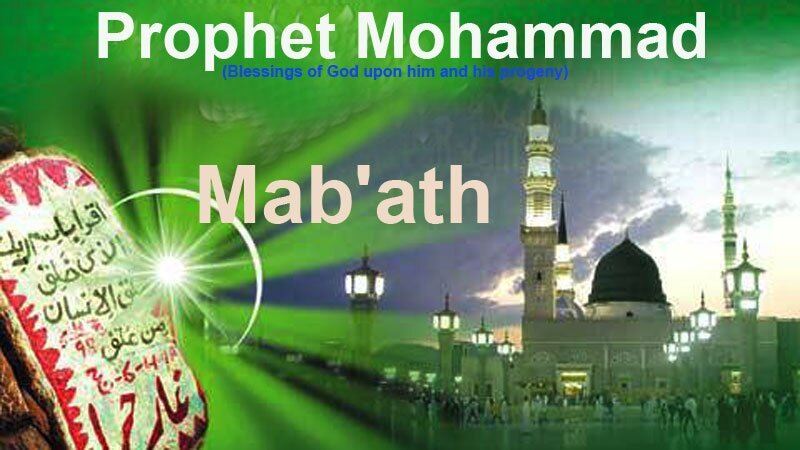
NIGERIA/ KANO - In the name of Allah who states “Read! In the name of your Lord who has created (all that exists). He has created man from a clot (a piece of thick coagulated blood). Read! And your Lord is the most generous. Who has taught (the writing) by the pen. He has taught man that which he knew not, “Q96:1-5
Peace and blessings of Allah be upon His noble servant, our master Muhammad, and his purified progeny. Recently, the Muslim-Ummah observed Yaumul Mab’ath, which historically denotes the very day the noble Messenger Muhammad (S) received the first revelation in the cave of Hira. No doubt, the mission is the source of light and development of the human race in its entirety. I am not going to be graphical on this as I had an intensive article on educational dynamism as undisputed pride of Islamic civilisation.
The idea is to appraise some missing links with regard to World Literacy Day, marked across the world. The rationale was to all towards basic literacy and its promotion. It is imperative to ask what literacy is. Are there types referred to by the UN declaration? And to what extent are other forms of literacy considered and strengthened? Literacy is simply the ability to read and write.
Thus, we have different types such as the Roman, Arabic, Chinese and Indian. The predominant Ajami, using Arabic letters, was widely used in Hausa land, long before the advent of colonialists to what later became Northern Nigeria. But on clear discrimination, the Roman literacy receives greater attention.
Then, we may appraise the links between literacy, education, and knowledge? Education is a process of imparting knowledge, information, and skills so that the recipient becomes a useful member of his/her society. While literacy was defined, knowledge refers to facts, information, understanding, and skills one acquires through education and experience. Therefore, education is a process through which knowledge is achieved by means of literacy as a common medium.
So, in the cause of this piece, education is viewed from this context. Educational dynamism is evidently complementary to the vicissitudes of human life from gathering and hunting to agricultural and industrial revolutions respectively. The contemporary achievements in science and technology owe their origin to this educational trend from positive and negative aspects such as the advancement in medicine and pharmacy and technology of destruction in the nuclear arms.
However, the scientific and technological advancement touching the world in agricultural mechanisation – boosting food production, improved medical care delivery, in addition to other fields that provide diverse employment opportunities to support the ever-increasing world population, is what many, wrongly or abusively, refer to as Western education. In contrast to geography and temporality, Sarwa (1994) defined education as a system which transmits the revealed and acquired knowledge to the younger generation of Muslims in order to prepare them for life and enable them to discharge their duties as vicegerents of Allah on earth, with the sole aim of achieving success here and in the hereafter.
So, it is an undisputed fact that Europe’s Renaissance after the Dark Ages was achieved in the light of the last revelation. What a beautiful pride to Islamic civilisation! Islam, as a religion, started in Arabia and steadily spread to Africa, Persia, and Asia to become the universal religion covering the Byzantines, the inheritors of Greek-Roman civilisations in the Eastern Mediterranean.
The Egyptians, Persians and other Asian groups have developed from Chinese and Indian civilisations. Such converts brought their intellectual legacies to the Islamic community. Thus, Muslim scholar’s uncovered literary and scientific legacy of ancient civilisation, which they critically assessed, translated, commented and documented. The attempt to learn from an earlier civilisation, was remarkably fostered during the Abbasid when the Baitul hikma -house of wisdom and Baitul tarjama – house of translation, were established.
The generous patronage accorded scholars and scholarship were very instrumental in furthering scholarly activities. With such efforts, Muslim preserved and revived the learning of the ancient world. It was a great service to humanity, especially in Greek learning as scientific studies had been neglected to decay for centuries in Europe.
If not for the effort of Muslim in translation and development on the works of ancient scholars, most would have been lost or destroyed before Europe’s emergence from dark ages. Although knowledge is relative and multifaceted in nature, the positive aspects, no doubt, originated from the light of heavenly revelation, most importantly the Last Messenger’s, not inclusive of the Arab age of ignorance as referred to by some Western philosophers. At this point, two historic testimonies are relevant:
President Obama’s “New beginning” at Cairo University, Egypt on 4th June 2009 by 1:10-2:05 am (local time) as released by his press secretary. ‘Thank you very much. Good afternoon. I am honored to be in the timeless city of Cairo, and to be hosted by two remarkable institutions.
For over a thousand years, Al – Azhar has stood as a beacon of Islamic learning; and for over a century, Cairo University has been a source of Egypt’s advancement. And together, you represent the harmony between tradition and progress. I’m grateful for your hospitality, and the hospitality of the people of Egypt. And I’m also proud to carry with me, the goodwill of the American people, and a greeting of peace from Muslim communities in my country: Assalaamu Alaykum. (Applause)… As a student of history, I also know civilisations debt to Islam. It was Islam – at places like Al-Azhar – that carried the light of learning through so many centuries, paving the way for Europe’s Renaissance and Enlightenment.
President Obama’s “New beginning” at Cairo University, Egypt on 4th June 2009 by 1:10-2:05 am (local time) as released by his press secretary. ‘Thank you very much. Good afternoon. I am honored to be in the timeless city of Cairo, and to be hosted by two remarkable institutions.
For over a thousand years, Al – Azhar has stood as a beacon of Islamic learning; and for over a century, Cairo University has been a source of Egypt’s advancement. And together, you represent the harmony between tradition and progress. I’m grateful for your hospitality, and the hospitality of the people of Egypt. And I’m also proud to carry with me, the goodwill of the American people, and a greeting of peace from Muslim communities in my country: Assalaamu Alaykum. (Applause)… As a student of history, I also know civilisations debt to Islam. It was Islam – at places like Al-Azhar – that carried the light of learning through so many centuries, paving the way for Europe’s Renaissance and Enlightenment.
It was innovation in Muslim communities – (applause – that developed the order of algebra; our magnetic compass and tools of navigation; our mastery of pens and printing; our understanding of how disease spreads and how it can be healed. Islamic culture has given us majestic arches and soaring spires; timeless poetry and cherished music; elegant calligraphy and places of peaceful contemplation. And throughout history, Islam has demonstrated, through words and deeds, the possibilities of religious tolerance and racial equality. (Applause).
I also know that Islam has always been a part of America’s story. The first nation to recognize my country was Morocco. In signing the Treaty of Tripoli in 1796, our second President, John Adams, wrote, “The United States has, in itself, no character of enmity against the laws, religion or tranquility of Muslims.” And since, our founding, American Muslims have enriched the United States.
They have fought in our wars, they have served in our government, they have stood for civil rights, they have started businesses, they have taught at our universities, they’ve excelled in our sports arenas and they’ve won Nobel Prizes, built our tallest building, and lit the Olympic Torch. And when the first Muslim American was recently elected to Congress, he took the oath to defend our Constitution using the same Holy Koran that one of our Founding Fathers -Thomas Jefferson- kept in his personal library. (Applause).
So, I have known Islam on three continents before coming to the region where it was first revealed. That experience guides my conviction that partnership between America and Islam must be based on what Islam is, not what it isn’t. And I consider it part of my responsibility as President of the United States, to fight against negative stereotypes of Islam wherever they appear. (Applause) …..Thank you. And may God’s peace be upon you. Thank you very much. (Applause)” In addition to the recent Obama’s testimony and Encyclopedia Britannica’s under civilisation, a great future spelling on the Islamic religious concept of Sir George Bernard Shaw in The Genuine Islam,’ Vol. 1, No. 8, 1936, already saw the light: “If any religion had the chance of ruling over England, nay Europe within the next hundred years, it could be Islam.
I have always held the religion of Muhammad in high estimation of its wonderful vitality. It is the only religion which appears to me to possess that assimilating capability to the changing phases of existence which can make itself appeal to everyone. I have prophesied about the faith of Muhammad that it would be acceptable to the Europe of today. The medieval ecclesiastics, either through ignorance or bigotry, painted Islam in the darkest colours.
They were, in fact, trained to hate the man, Muhammad, and his religion. To them, Muhammad was anti – Christ. I have studied him -the wonderful man, and in my opinion, far from being an anti-Christ, he must be called the savior of humanity. I believe that if a man like him were to assume dictatorship of the modern world, he would succeed in solving its problems in a way that would bring the much-needed peace and happiness. But to proceed, it was in the 19th century that honest thinkers like Carlyle, Gibbon, and Goethe, perceived intrinsic worth in the religion of Muhammad-already, even, at the present time many of our people have gone to his faith, and Islamisation of Europe may be said to have begun”.
On the light of the above verses stressing the significance of broad-based knowledge acquisition, the Prophet (s) has said “seeking of knowledge is obligatory upon every Muslim male and female” While commending all efforts towards justice without borders on the Zaria massacre and its aftermath, I use the medium to reiterate the urgent need for the unconditional of release of Shaikh Ibraheem el-Zakzaky and his disciples.
(Source: leadership)

