Showing posts with label Fajr International Film Festival. Show all posts

Saturday, April 27, 2019

Fajr Intl. Film Festival gives you a cinema of all flavors

Fajr Intl. Film Festival gives you a cinema of all flavors
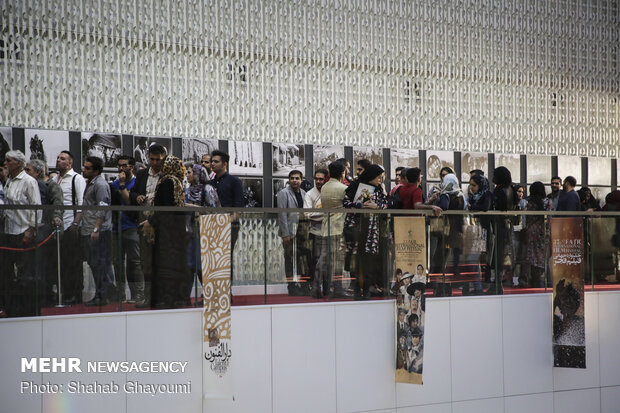
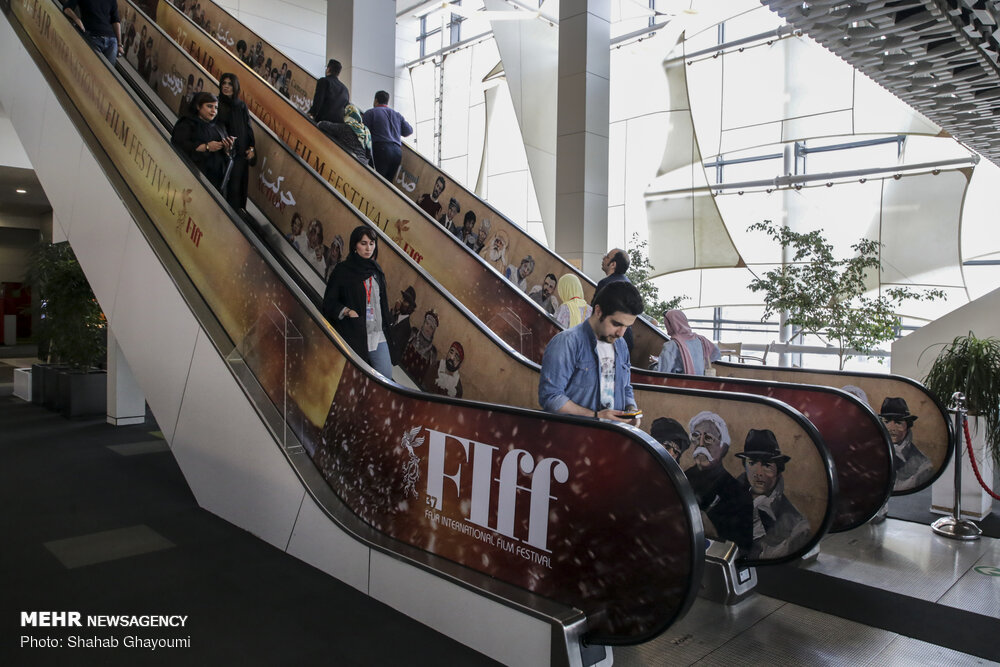
TEHRAN, Apr. 27 (MNA) – The 37th Fajr International Film Festival came to a close on Friday, after screening as many as 109 titles from 75 countries from near and far, offering the avid festival goers a cinematic concoction of all flavors.
After four years of having organized the international section of Fajr film festival as an independent event from its national section, one could now say with confidence that Tehran has come a long way in such a short span of time with its biggest international cinematic event and now is quite proud of it.
The Fajr International Film Festival has already proved its worth and credibility, establishing itself not just as a domestic venue for the Iranian festival goers who wish to experience a different kind of cinema, but also as a wider arena for hundreds of people around the world, who become guests for a two-week period to a diverse selection of movies from places that they have little to no exposure to. Fajr gives you a taste of high-quality, non-commercial movies from heterogeneous cultures, places that you have never been to, countries that you have had a stereotypical view on, or have been completely misinformed about. 
This year, the overall screening program, comprising 11 sections, had as many as 109 titles from 75 countries from near and far – distance or culture wise – from Russia, Turkey and China all the way to Egypt, Denmark and Argentina. The international competition section, called ‘Cinema Salvation’, included 15 feature films and 15 short films, with a jury panel of seven notable figures in the film industry.
Personally, I found this year’s lineup to have a more coherent structure compared to the previous edition; selected movies generally had solid executions, breath-taking cinematography, award-worthy acting, and most importantly, thought-provoking, smooth-flowing subject matters, which made them both ‘festival-worthy’ and ‘audience-friendly’.
Movies such as ‘Erased’, a Slovenian-Croatian-Serbian production directed by Miha Mazzini, or ‘Before the Frost’ by Danish filmmaker Michael Noer, kept the audience on the edge of their seats, breathless with anticipation, with their tense, solid unfolding of the events, at the same time as they painted a spectacular image of the sociocultural context of a particular period of time in a specific part of the world.
While Fajr is not a themed festival, more focused on diversity of representation instead, many movies in this year’s lineup shared a number of characteristics in common: children, adoption or future generations; environment; strong female characters; rejection of conventions and refusal to submit to a higher power; moving tales based on true stories, and characters with free, fighting spirits that didn’t give up, that kept looking for solutions in the face of challenges and dire situations.  
'Erased' directed by Miha Mazzini
My personal favorites in the International Competition section were ‘Erased’ and ‘Before the Frost’. ‘Erased’, the story of a Slovenian woman whose identity was erased, along with 26,000 others, in the wake of the country's independence from Yugoslavia in 1991. Refusing to be ‘invisible’, she did everything she could to get her identity, as well as her newborn baby, back, even going so far as to expose herself on national TV. ‘Erased’ was both informative of a historical incident that is possibly unknown to many people around the world, and it was at the same time a breathtaking story of a strong-willed character that kept pushing forward against a hostile tide.
‘Before the Frost’ directed by Michael Noer
‘Before the Frost’, a rural period piece taking place in a wretched part of backwoods Denmark, was noteworthy for its honest portrayal of an old father (played by Danish star Jesper Christensen) who would go to great lengths for the happiness of her daughter; yet, his own personal gains were not hidden from the watchful eyes of the viewer.
Still, the grand prix (Golden Simorgh for Best Film) went to ‘A Russian Youth’ by Alexander Zolotukhin; a unique take on the horrors of World War I from the viewpoint of a brave yet useless young boy, who keeps a steadfast grip on the falling world around him, even as he loses his sight and his hearing on the Eastern front.
‘A Russian Youth’ was supported by legendary director Alexander Sokurov’s own non-commercial film fund. Sokurov himself is no stranger to Fajr. He was a guest at the 34th FIFF, with his documentary ‘Francofonia’ (2015) in the screening program.
‘Before the Frost’ still managed to grab the Best Actor award for Jesper Christensen, who you might know from ‘Melancholia’ (Lars von Trier) or ‘Casino Royale’ (Martin Campbell).
The Best Script award went to Gernot Kraa and Oliver Haffner for ‘Wackersdorf’ from Germany; another wonderful tale about the environment, refusal to submit, and the power of public against the state wrapped neatly in a true story.
Martina Apostolova grabbed the festival’s Best Actress award for ‘Irina’ by Bulgarian director Nadejda Koseva; ‘Irina’ also features a strong female character that powers through the unpleasant surroundings of a small mining town. Her story is that of survival, as she needs to save her family from poverty by becoming a surrogate mother for money. 
Last year, the festival made headlines by hosting three-times Oscar winner, American director Oliver Stone, and legendary Italian actor Franco Nero. This time, the guest of honor was the renowned American screenwriter, director, and film critic Paul Schrader, who held a workshop on transcendental style in film, and attended a press conference at Charsou Cineplex on April 24. The legendary American filmmaker compared the atmosphere of Fajr with that of Toronto, Venice and Berlin, voicing surprise by the sheer size and dimensions of it. Talking about the Iranian cinema, he praised the works of the late Palme d'Or Abbas Kiarostami and two-time Oscar winner Asghar Farhadi, saying the Iranian natural cinema shows growth and it is full of sense of life. 
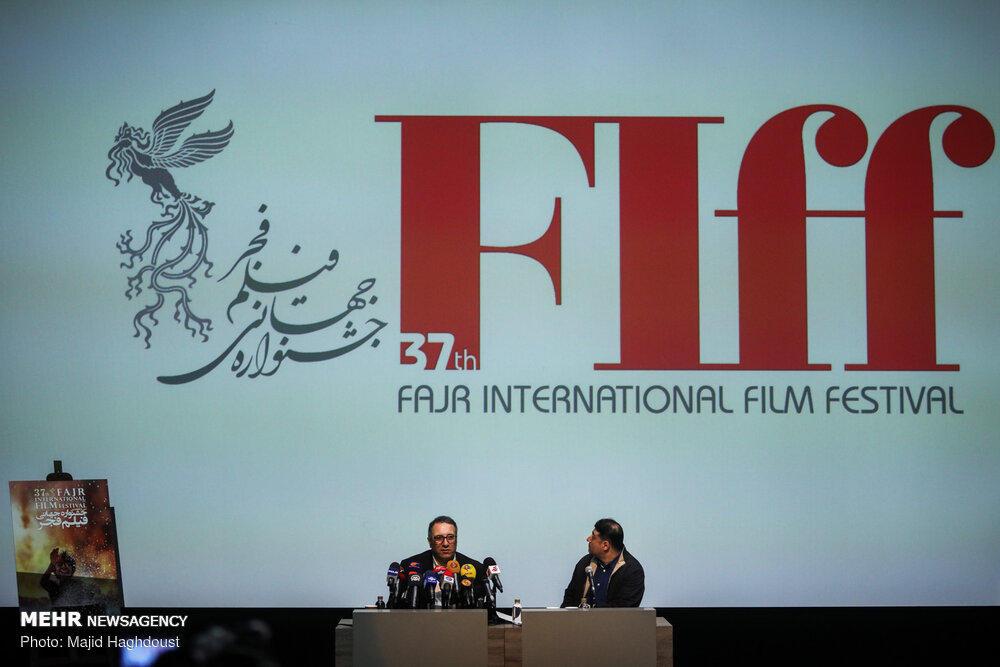
The 37th Fajr International Festival was presided over by 52-year-old award-winning director Reza Mirkarimi from April 18 to 26 in the Iranian capital Tehran. 

Thursday, April 25, 2019

Women have more powerful stories to tell, Indian director Praveen Morchhale says

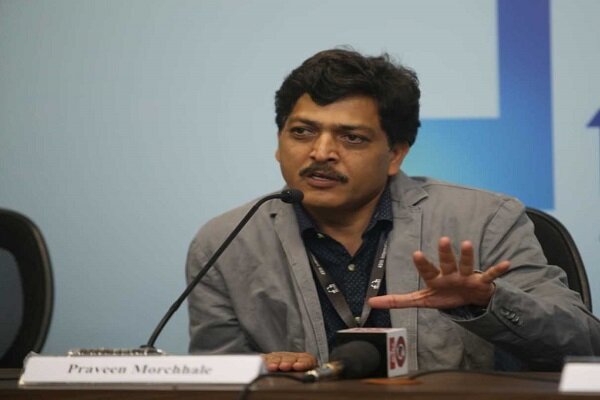
TEHRAN, Apr. 25 (MNA) – Indian director and script writer Praveen Morchhale, whose ‘Widow of Silence’ is competing at 37th FIFF in Tehran, believes that women have more powerful stories to tell, and cinema can play a role to improve their situation in the world.
Indian director, script writer, and film producer, Praveen Morchhale, is competing at the main competition section of the 37th Fajr International Film Festival in Tehran with his latest movie, ‘Widow of Silence’.
The film, which has recently snatched the Grand Jury prize for the ‘Best Feature’ at the 17th annual Indian Film Festival of Los Angeles, for its depiction of “a condition that most of the world doesn't get to see”, is the story of a woman named Aasia (Shilpi Marwaha) who is a 'half widow' in the trouble-torn Kashmir. ‘Half-widow’ refers to a woman whose husband, like many other men in this Indian-controlled region, was arrested and never returned. The movie, which, apart from the lead actress, uses non-professional local actors, shows Aasia’s struggles to obtain a death certificate for her husband as she goes through her work and the caring for her family.
Mr. Morchhale was present at the FIFF venue in Charsou Cineplex in downtown Tehran, and he was gracious enough to give some of his time for an interview with Mehr News that will follow. He was also accompanied by Iranian cinematographer Mohammad Reza Jahan-panah, who worked with him on ‘Widow of Silence’.
The Indian director attaches great significance to “the human aspect of the cinema, which is universal and can be seen and understood by anyone in the world.”
How were you introduced to Fajr International Film Festival?
I came here in 2015 as a guest for the festival when it was still held together with the national event. Later in Kolkata, my film was chosen by Mr. Esfandiari, who was a jury member in Kolkata where I won Best Film award. He told me to submit the film to Fajr and he would be happy to invite me. Beyond this introduction, I was also well aware of Fajr, since it is a very well-known film festival in Asia.
So, how does Fajr measure up to the other film festivals you have so far taken part in?
When comparing Fajr with other film festivals, one thing that immediately jumps to attention is the difference in the audience. Here in Iran, the festival goers are very knowledgeable about cinema, and I believe they have a deep understanding of cinema. Other than that, everything is well-organized here. The most important thing for any festival, though, is the selection of the movies, and I believe that Fajr’s lineup is very high-standard. So, if you take these three factors into consideration – audience, organization and film selection – then you can say that Fajr is perfect, and very special in comparison to other festivals.
You are very knowledgeable about the Iranian cinema, so my next question concerns that. Do you, both as a filmmaker and a participant at various film festivals, believe that the Iranian cinema – with its recent remarkable popularity around the world – is just a ‘festival-favorite’, or do you think that the productions also have what it takes to appeal to the taste of the general audience, for instance, those in India?
Nowadays, one can say with confidence that geographical boundaries no longer matter. Most of independent, high-quality films produced around the world are accessible to everyone on the digital platform and many other different mediums. In India, in particular, the Iranian cinema is held in high regard. It is a very ‘human’ and attractive cinema. On the other hand, it also depends on how you market your films. The independent cinema, for instance, needs a lot of money for a successful marketing, and in many cases, the filmmaker does not have that kind of money to publicize the film. But still, I think the Iranian cinema has been successful in spreading its influence throughout the world due to its high quality and appeal.
How do you compare the Iranian cinema to the contemporary cinema in India?
Discussing the Indian cinema, I believe, is a much wider topic, because Indian films are made in many languages, such as Tamil, Telugu, Malayalam, and there are many different film industries, with Bollywood being only one part of it. But as long as the independent cinema is concerned, I think the Iranian cinema is much ahead of its Indian counterpart, if you look at festival participation. But in the past three or four years, the Indian independent cinema has come a long way and made very fast progress. Now we have Indian films in important film festivals around the world, such as Venice, Cannes, Busan, etc. We have different cultures, with different attitudes to cinema, and different stories to tell, so I think it won’t be fair to compare the Iranian and Indian cinemas together. Each has its own unique identity, and both are flourishing.
'Widow of Silence' directed by Praveen Morchhale
Let’s talk about your movie, ‘Widow of Silence’, which is participating at both the International Competition and ‘Olive Branches’ sections of this year’s Fajr festival. Tell me about how it came to be.
Around two years ago, I came upon a piece of news about the situation of half-widows (whose husbands have disappeared but are not yet declared dead) in India. It really hurt me and I was quite surprised, because I’ve lived all my life in India and I never knew about this issue. So, I started doing research on the topic. It is a very human story, and sadly nobody knows about it. Here are these women who are suffering, and their struggles and strength should be brought to the world’s attention. So, I decided to make a movie about it.
What were the challenges that you encountered along the way while making the movie?
I don’t really think of any aspects of making ‘Widow of Silence’ as an actual challenge. The project was handled with great passion, and when you do something with passion and dedication, you don’t perceive any aspect of the job as a challenge. Whatever is thrown at us, we face it happily and try to solve it. If you focus on the challenge, then it starts to feel like a ‘burden’, and you most likely won’t be able to enjoy the process of producing the film.
But there were physical challenges about the area where we filmed. At night, the temperature would drop to zero, and we had electricity problems, as well as logistic problems. There were no hotels, just very small guest houses, but despite all this, we were all very happy while making the film.
When we talk about Indian cinema, almost everyone just thinks about Bollywood, what with how imposing and profitable the industry is. What steered you away from that path and pushed you toward the independent cinema? What motivated you to take on such heavy subject matters, like the terrors of war and women’s plights?
Bollywood, as you know, is very commercial, and its basic parameters is how much money they can make out of a story. If making more money means twisting the story or even diluting it, by putting in songs and dancing scenes that serve no purpose but entertainment, they will happily do it. For me, what matters is the human aspect of the cinema, which is universal and can be seen and understood by anyone in the world. I wanted to tell the story as it is from a neutral point of view; show what these women are going through. And for that I had to be true to the story and the subject matter, rather than creating something superficial. Bollywood may touch the surface of any subject, but the real issue will be lost somewhere.
So, does that mean that you see yourself as a filmmaker with a mission? The kind that feels the need to uncover the hidden truths and bring to attention what has been concealed or ignored?
As a filmmaker, you have some responsibility. Your cinema can be without a theme or a purpose, for entertainment only, or it can have some soul in it, something that makes the audience to think, and for me the latter is more important. I believe that my cinema should leave an impact or a deep impression on the audience, make them think about the issue the narrative is talking about.
You chose to work with an Iranian cinematographer, Mohammad Reza Jahan-panah, on ‘Widow of Silence’. How was the experience?
It was a wonderful experience. Mr. Jahan-panah is very humble, very knowledgeable, and very thorough in his craft and art, and very aesthetic. The most important thing that makes working with him very enjoyable is that he is very down-to-earth, without the usual arrogance you see in the film industry. His creativity added a lot to my film, and gave it a very good flavor. He also made a lot of contribution to bringing my vision into life.  
I look forward to working with him on future projects. In a few months, probably, we will be shooting a new movie together. The story is again centered in Kashmir, but it’s a very philosophical film, about life and death within a social and political community, from the point of view of a gravedigger. I hope the film will be a powerful representation about the situation in Kashmir, and that we will be able to commence the project very soon.
Women are at the center of your movie, ‘Widow of Silence’, as well as in several other films I had the opportunity to watch at this year’s festival. Do you think cinema can do something to help improve women's situation in the world?
I strongly believe that women are being discriminated against everywhere in the world, even in the most developed countries in Europe. Women still don’t have the kind of rights and status that they rightfully deserve. I believe that cinema has a strong role to play to bring these issues forward, and that women have more powerful stories to tell; they have a more powerful emotional, social and rational attitude toward everything rather than the men. They can have a very strong impact on the society, and through cinema they can achieve it very fast.
How was the audience feedback to your film at Fajr?
I received a very good feedback from my movie’s screening the other day. I believe that the ‘half-widow’ phenomenon is very new to the audience in Iran, because it is a very particular aspect in Kashmir only. At the same time, I think this human story is easily felt by everyone around the world, regardless of how particular the situation is. The movie was screened in Europe, America, Asia, and I believe everywhere the impact was the same. People have the same deep feeling and sympathy for the lead character. I had people coming up to me after the screening, whether in France or in South Korea or here in Iran, telling me how much the film had made them think about the situation of the half-widows. My kind of cinema is not too fond of words and the language barrier. I prefer to show the situation by images rather than by characters talking. This, I believe, helps the audience to feel like they are in the middle of the story, experiencing the situation alongside the characters. I take long shots, and use very little dialogue and camera angles, in a minimalist approach, to help the audience engage more closely with the images and feel like they are right there in the story.
What kind of filmmaker do you consider yourself? The kind that introduces a problem and throws his characters into the conflict just to watch how they react, or the kind that also shows the characters, and by extension the audience who are sharing the experience, a way out?
Some filmmakers may wish to put forward a problem and leave the solution to the audience, or some may wish to also provide the solution to that dilemma. When the film focuses on a particular solution, it runs the risk of limiting itself to a particular point of view, which may be right or wrong. I personally try to steer away from making judgments, and leave it up to the audience to decide what the right solution might be. On the other hand, when you provide the solution, there is nothing left to provoke the audience to think for themselves.
How has your experience been in Tehran and with your interactions with Iranians?
I’ve had a very nice experience in Tehran. People are very friendly and knowledgeable here, both the ones I interacted with at the festival venue and those outside.

Tuesday, April 23, 2019

FIFF place for meeting cultures: Chinese filmmaker

Tehran, April 22, IRNA – A Paris-based Chinese filmmaker believes that holding cultural events, such as Fajr International Film Festival, can be a big step forward to get nations closer to each other.

Li Jingxiang, director of the feature Spring Sparrow which is screened at the 37th Fajr International Film Festival (FIFF) in Tehran, in an exclusive interview with the Islamic Republic News Agency (IRNA) talked about the role of cultural figures and works in making people from different cultures across the world closer to each other.

'We are of different cultures, I am Chinese, but most of the spectators of my movie at the festival were Iranians, we all understand the story and the message of the film in a same way,' Li said.

'Cinema, music, and all other forms of arts share a characteristic that is understood by all cultures,' she said while describing the art as a common non-linguistic language for all people around the world.

Expressing gratitude for her film's well-reception at the FIFF, the Chinese film director and producer said, 'Filmmaking is a difficult task. It took me two years to make Spring of Sparrow. The festival invitation and the warm welcome by the audience were an encouragement to me and urging me to make further efforts.'

The Chinese filmmaker has previously made several short movies and documentaries.

When asked about the cinema of Iran, she said that the cinema conjures up the name of Abbas Kiraostami, the prominent Iranian filmmaker and the director of globally renowned works such as Where Is the Friend's Home?, Taste of Cherry, and Close-Up.

Speaking on the sidelines of the 37th FIFF, she described the event as a professional festival with an acceptable selection of films.

'The festival is a good place for introducing Iran, its culture and capacities to the world, and therefore an opportunity for filmmakers and specialists to communicate with each other for future cooperation.'

Li also expressed her willingness to cooperate with Iranian partners, if she is given any chance.

The 37th edition of FIFF, comprising of various sections, kicked off on April 18 and will run until April 26 in Charsou Cinema Complex in Tehran.

Wednesday, April 17, 2019

Tehran begins playing host to over 100 films at 37th FIFF

TEHRAN, Apr. 17 (MNA) – Curtains have raised on the 37th edition of Fajr International Film Festival in Tehran, inviting avid festival goers to its jam-packed screening program including 109 titles from 75 countries across the globe.
The 37th edition of Fajr International Film Festival opened at Felestin Cinema in downtown Tehran on Wednesday evening, with the screening of Ebrahim Hatamikia’s classic movie 'The Scout', originally released in 1990.
The movie, which is also included in the Classics Preserved section of this year’s cinematic event, is set during the 1980-1988 Iran-Iraq’s war, and tells the story of a young scout who joins the front-line to help his comrades single-handedly.
Last year, the festival’s curtain-raiser was Majid Majidi’s ‘Beyond the Clouds’ (2018); produced by Zee Studios and Namah Pictures, and starring Ishaan Khatter and Malavika Mohanan, Majidi’s India-set melodrama tells the story of a brother and sister who grew up in the slums of Mumbai. When Tara (Mohanan) is arrested on charges of attempted murder, her bond with her brother Amir (Khatter) is put to the test. AR Rahman composed the film score.
The 37th may be misleading. The Fajr has only started to grow comfortably into its own skin as an independent international event since 2016. Before that, the international section of Iran’s biggest cinematic event was a part of the national one, sorely overshadowed by the intimidating presence of Iranian productions that attract movie-goers like moths to a flame.
With 52-year-old award-winning director Reza Mirkarimi in charge, the Fajr International Film Festival has already made a name for itself among other longer-running festivals in the region, despite its fourth year of having been able to stand on its own feet. As many as 1,400 titles were submitted to this year’s secretariat, bespeaking the festival’s popularity among filmmakers across the globe. The line-up is neatly drawn for nine days of back-to-back screening of 109 titles from 75 countries from 11:30 in the morning to 22:15 for the last screening.
The international competition section, called ‘Cinema Salvation’, includes 30 foreign and Iranian feature and short films, from Russia, Denmark, China, Germany, Poland, India, Albania, Turkey, Argentina and many more countries whose cinematic trends are almost swallowed up by box-office darlings of Hollywood, as the largest and most profitable film industry in the world.
As such, Fajr film festival offers a breathing space for those high-quality productions from smaller film industries, many of which are either experiencing their global premiere, or are only screened at festival venues. Avid festival-goers may find joy and pride in the fact that they are among a lucky few who get the chance to watch a particular movie at Fajr.
The screening program, particularly for the competition sections, is focused on aesthetics and the message rather than entertainment; yet, the festival is not completely void of it. This year, a special section has been dedicated to contemporary comedies, including ‘How about Adolf?’ from Germany, or ‘Lajko – Gypsy in Space’ from Hungary. The 35th edition of FIFF had a special section for horror movies, with the screenings all scheduled for late in the evening. Needless to say, all show times were sold out.   
Fajr is by no means a red-carpet event. Yet, that does not mean that the event is averse to inviting A-listers. Last year, the festival made headlines by hosting three-times Oscar winner, American director Oliver Stone, and legendary Italian actor Franco Nero. This year, festival attendees will have the opportunity to catch renowned American screenwriter, director, and film critic Paul Schrader at his workshop on transcendental style in film during the festival time. Schrader is best known for his script about an obsessed New York City taxi driver in Martin Scorsese’s film Taxi Driver (1976) or Raging Bull (1980).
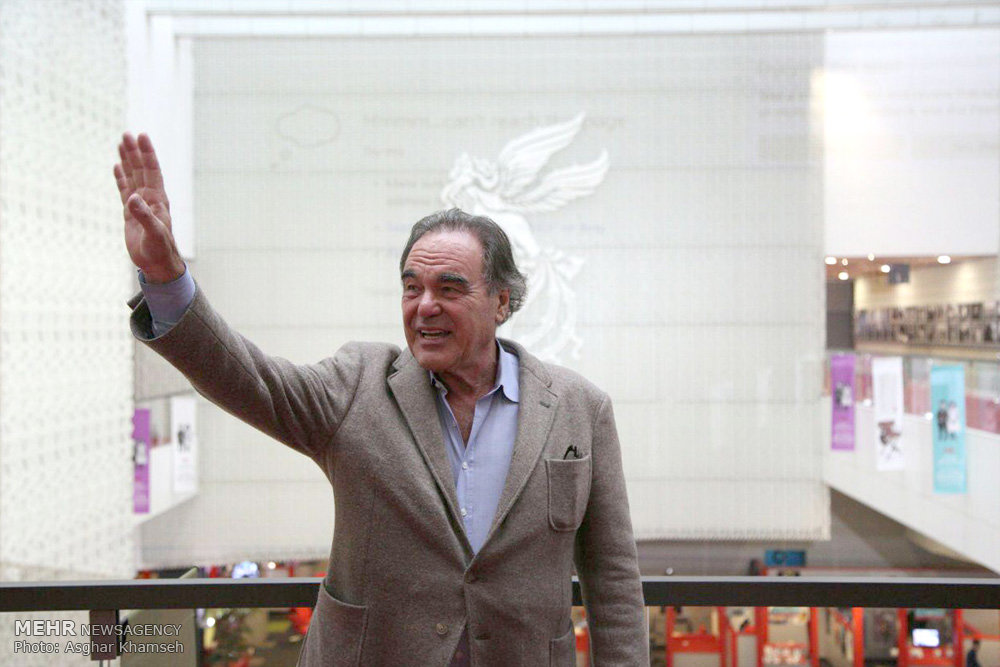
Oliver Stone, special guest of 36th FIFF in Tehran
Other special guests of the 37th FIFF include Italian cinematographer Luca Bigazzi, Dimitri Alips, international sales manager of Courant 3d Film Festival; Julie Bertucelli, who worked as assistant Director to a series of well-known directors including Krystof Kieslowski, Bertrand Tavernier, and Rithy Panh; Turkish writer and film critic Rıza Oylum, Romanian director and screenwriter Adina Pintilie, and Chinese producer and director Liu Xuan.
The sideline programs include 15 academic sessions and panel discussions with national and international university scholars and A-listers of the movie industry as key speakers, discussing the place of the Iranian cinema after the 1979 Revolution, and other cinema-related topics with the attendees. Many workshops will also be held on screenwriting, producing, directing, cinematography, editing and set design.
This year, all proceeds from tickets and sales of Fajr International Film Festival will be channeled to the national flood donation collection, according to FIFF Media and Communications manager.
The recent floods, which hit many provinces in Iran since March 19, have killed over 70 people, and caused damages to 438 urban houses and 87,000 village houses. The severity of the situation triggered widespread national and international humanitarian contributions.  
Kassirian, the FIFF Media and Communications manager, said in response to the country’s flood, and in collaboration with the Iranian Red Crescent Society, Fajr International Film Festival is extending a helping hand to fellow Iranians and families who are in dire need of help.
The Festival also plans to screen movies and teasers related to the works done by the Red Crescent Society and the difficulties its workers face during relief efforts and natural disasters. “The annual event is now being held as a donation drive and this will continue next year in collaboration with the Red Crescent Society,” he added.
The 37th Fajr International Film Festival, as Iran’s most anticipated international cinematic event, will roll out tomorrow at Charsu Cineplex and Felestin Cinema in downtown Tehran, and come to a close on April 26.
Last year, 'Aga' by Milko Lazarov, a co-production from Bulgaria, Germany, France, won the festival's grand prix. Winners of this year’s event will be announced during an award ceremony at Vahdat Hall on the last evening of the festival.