

“By protecting whistleblowers, sources, and online activists, we facilitate robust investigative journalism, hold government to account, protect the freedoms of speech, privacy and the press, and foster the most critical component of democratic society: an informed citizenry.” — Whistleblower and Source Protection Program
By Jimmysllama
This week Dutch journalist Rico Brouwer sat down with U.S. whistleblower attorney Jesselyn Radack in what turned out to be an absolute must-see interview. The two discussed topics ranging from what it’s like to represent some of the most hunted and hounded defendants in the nation, the perfect outcome for WikiLeaks publisher Julian Assange, and Edward Snowden’s best-selling book Permanent Record.
Blowing the whistle
Growing up, Jesselyn Radack always had a strong sense of right and wrong and she believed that a career path in law would enable her to make a difference in the world. She still believes that today and is now making a huge difference working in a niche area of law protecting and defending national-security and intelligence whistleblowers. She began her career at the Department of Justice as an ethics advisor who found out sooner rather than later that the U.S. government isn’t always as honorable as one might hope.
Her first case was John Walker Lindh, an American who converted to Sunni Islam at the age of 16, and later traveled overseas to join the Taliban. He was eventually captured in Afghanistan by U.S. allies and questioned by the CIA. Radack advised the government they couldn’t torture Lindh or interrogate him without an attorney. They did both. She then argued that they could use the “fruits” obtained from the interrogation for intelligence gathering but not to pursue a criminal case against him. They ignored the advice.
When the case went public and the judge demanded that the government turn over all documents pertaining to Lindh’s interrogation, the government withheld Radack’s advice, causing her to blow the whistle. She tried to give the documents to the judge but she had already resigned by that point so she eventually passed them to the media, causing the government’s case to collapse.
After her own experience with whistleblowing and the fallout that followed, Radack knew that the world needed an area of law for people like herself who were getting hammered by the U.S. government for blowing the whistle.
State of the DOJ and whistleblowing under Obama vs. Trump
When asked about the current state of the Justice Department, Radack responded that it has faced a number of challenges over the years, one of which is that high-level officials tend to ignore ethical advice. It’s good that they seek it but, as she pointed out, when they routinely ignore it, they’re just going through the motions and don’t actually care or mean it.
She also watched the DOJ change dramatically after the events of 9/11: The mission was no longer about changing things for the better but rather about complete government control, power, and secrecy — especially surrounding some of their most sensitive subjects like torture, war crimes, and surveillance. It was about using the DOJ’s power at the fullest level possible with as little restriction as possible.
The approach taken by federal prosecutors has also changed over time from the aggressive and adversarial approach Radack first saw when she was defending Thomas Drake to a more adequately restrained, low-key demeanor where both sides just want to do their job and realize that they’re on different sides of a very controversial issue. She believes that the disposition of any prosecutorial team is generally influenced by the prosecutors themselves, leadership in the government, and how hard they want to pursue a case.
Between 2013-2014, when things were “exploding on the international landscape” after Snowden’s revelations, Radack found herself hassled by U.K. immigration while trying to visit Julian Assange at the Ecuadorian Embassy in London. But “cooler heads are now prevailing,” perhaps in part because more people are paying attention to government revenge tactics that she describes as “death by a thousand paper cuts.”
However, the political climate for prosecuting whistleblowers and journalistic sources hasn’t cooled in the slightest, with Barack Obama “unleashing the worst war on whistleblowers,” worse than all former U.S. presidents combined. As Radack put it, “Obama reinvigorated [the Daniel Ellsberg case] on steroids,” and has since handed over that power to President Donald Trump, a vindictive, undisciplined, and thin-skinned narcissist who will go down in history as the first U.S. president to charge a publisher and journalist under the Espionage Act.
Permanent record
On September 17, 2019, Edward Snowden’s memoir, Permanent Record, was released and within hours the Justice Department filed a lawsuit against the NSA whistleblower for breaching nondisclosure agreements he signed while working for the government. They also named Snowden’s publishers in the suit, including Henry Holt and Co. and Holzbrink Publishers, and requested that “the court freeze any assets related to the memoir.”
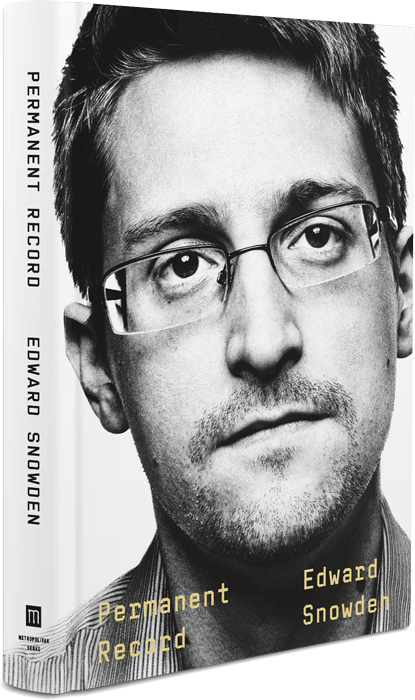 According to G. Zachary Terwillinger, U.S. Attorney for the Eastern District of Virginia who is also trying to prosecute Julian Assange for publishing embarrassing state secrets, “The lawsuit will ensure that Edward Snowden receives no monetary benefits from breaching the trust placed in him.” However, Radack says that by going after the proceeds of Snowden’s book, the government is admitting that he had a First Amendment right to publish in the first place.
The lawsuit also alleges that Snowden published the book without submitting it to agencies for a “pre-publication review,” which seems absurd in light of the fact that Snowden’s disclosures were about “government secrecy and the government breaking the law under the cloak of secrecy.”
Radack believes that the government is trying to “exact their pound of flesh” from Snowden for being two steps ahead of them “at every juncture of this saga.” Ironically, the government’s move to sue Snowden has had the unintended consequence of causing his book to skyrocket to the top of the best seller’s list. “The government gets so wrapped up in these cases, they can’t see the forest through the trees…they’re reactionary…they just can’t stand the fact that they were outsmarted by Edward Snowden once again,” explained Radack.
The challenges of whistleblowing and the legal system
The number of obstacles that national-security and intelligence whistleblowers face trying to avoid prosecution or achieve any sort of justice in both the courtroom and the sphere of public opinion is staggering. State-secrets privilege and classification programs hinder the defense’s case, broken internal mechanisms put whistleblowers at further risk, and government lies help shape public opinion about the act of whistleblowing or the whistleblowers themselves.
When it comes to the U.S. government raising state-secrets privilege and invoking classification programs, Radack points out the absurdity that even when a secret is well-known, such as the government’s illegal surveillance program first exposed by Snowden, they maintain they can’t talk about it — despite Pulitzer-winning movies being made and articles published about that exact so-called “secret” program. It’s a “theater of the absurd,” states Radack, where the government actually tries to tell hundreds of thousands of people they can’t read WikiLeaks:
I think the government would like to keep making the argument that the secrecy arguments and classification programs override the Constitution. Again, if they really believed that they would litigate that issue in court like a grown up rather than asserting a state-secret privilege to shut down any litigation about it…You can’t have a government agency that says, ‘Our employees, when they go home, they’re not allowed to use Facebook or something on their personal time on their own computer in their own home.’ The government can say what it wants but judicially it’s not going to be enforceable.”
As recently as a few days ago, the government argued in the USA v. Daniel Everette Hale case that “defense challenges to secrecy policy and classification decisions should also be prohibited,” illuminating the fact that government secrecy goes well beyond trying to invoke secrecy policy — they don’t want to allow any challenge to it. Hale has been charged under the Espionage Act after blowing the whistle on the U.S. military drone program.
Broken internal mechanisms for reporting wrongdoing also make it difficult for whistleblowers. As Snowden noted in his book, you’re supposed to go through a chain of command but what happens when that chain of command is involved in the wrongdoing or they simply don’t care? Contrary to popular belief, whistleblower laws do not protect anyone in the national-security or intelligence sectors such as the NSA or CIA. Snowden watched as Radack’s client, NSA whistleblower Thomas Drake, went through every possible channel including Congress, only to find himself charged under the Espionage Act and his life torn apart.
During an April 2019 interview with activist and radio journalist Randy Credico, Radack stated that the channels whistleblowers can follow have a glaring exception for national security violations, and that not only have these internal channels failed them, they’ve been used to entrap them.

Finally, shaping public opinion is yet another hurdle that whistleblowers and journalistic sources must try to surmount when facing government charges or discipline. Although some of Radack’s clients have since won awards like the Joe A. Callaway Award for Civic Courage and the Sam Adams Award, it’s because of lawyers like Radack who were able to “flip the narrative” on how the public viewed their client’s case. But it’s always an uphill battle.
Media outlets that have become mouthpieces for the government will oftentimes try to shape public perception about whistleblowing or a particular case, while blatant lies spewed into the official record — such as when James Clapper told Congress they weren’t intentionally spying on Americans — can manipulate not only how the public views whistleblowers but how it views the government as well. Whistleblowers will find themselves further on the losing end if they’re professionally and/or judicially gagged.
Even during successful public campaigns, Radack points out that awards and public accolades don’t help those who were courageous enough to come forward in re-establishing relationships with their families, friends, associates, and work colleagues after the government has gone to great lengths to destroy and alienate them completely. John Kiriakou, Drake, and Snowden have all been able to find life on the other side, but it’s been on the back of those who have paid an enormous price.
Justice vs. mitigating damages
John Kiriakou once said that his defense wasn’t about justice but rather about mitigating damages. When asked how she approaches a case, Radack believes that when a client is threatened with life in prison, you have to mitigate the damages while simultaneously seeking justice and getting the truth out. Making this process difficult is the fact that proceedings usually take place in secret, classification rules tie the hands of the defense, and it’s hard to raise the defense that the whistleblower was acting in the public’s interest. In Radack’s eyes, it’s important to get a whistleblower’s motive out to the public and media because the government will undoubtedly try to distort it or keep it under wraps.
One of her solutions to the myriad of problems that whistleblowers face was to create the Whistleblower and Source Protection Program (WHISPeR) at ExposeFacts.org, which “provides critical legal support for whistleblowers and media sources in the national security and human rights arena:”
By protecting whistleblowers, sources, and online activists, we facilitate robust investigative journalism, hold government to account, protect the freedoms of speech, privacy and the press, and foster the most critical component of democratic society: an informed citizenry.”
Radack was inspired to start a nonprofit with fellow attorney Kathleen McClellen that focused on national-security and intelligence whistleblowers who are subject to secrecy agreements and a government with no accountability going after them. She believes that source protection and whistleblower protections are two sides of the same coin and they try to blend a “combination of the legal system, investigative journalism, and technology” to get the best results for their clients: “We are trying to create a safe place and help journalists do their job more safely, help the whistleblowers blow the whistle more safely.”
Julian Assange, Chelsea Manning, and Edward Snowden
According to Radack, Julian Assange is in for the long haul and “the fight for his freedom is a marathon, not a sprint.” Over the course of almost a decade, Assange has been arbitrarily detained, including in the Ecuadorian Embassy in London for seven years, and is now being held at Belmarsh prison while fighting extradition to the United States. He has been charged with 18 counts under the U.S. Espionage Act for doing exactly what it is that the New York Times and the Washington Post do.
Years of harassment, court cases, and the utter travesty of justice that Assange has faced have had a tremendously negative impact on his health and — according to a report by UN Rapporteur on Torture, Nils Melzer — he’s been subjected to torture for years. Radack says it’s “abhorrent that Assange or anyone is being tortured. It flies in the face of justice and undermines any criminal case they have against him.”
But Assange has become such a “polarizing figure” right now that he “low-hanging fruit” not only for the government, but for the corporate media as well, which has made no real concerted effort to push back against the government’s attempts to prosecute a journalist for journalistic practices. That’s deeply disconcerting.
Extraditing and prosecuting Julian Assange is not only a despicable attack on an individual who has brilliantly changed the course of journalism forever (from which corporate media profited), it further puts every single journalist and news outlet in the crosshairs of both the U.S. and foreign governments. If Saudi Arabia feels that a U.S. journalist has violated its state-secret laws, who’s to say that Riyadh can’t request their extradition, which at this point might very well be granted by the Trump administration?

A figure depicts Julian Assange on a cross during a vigil outside the Ecuadorian Embassy in London. Sang Tan | AP
Although it will be a protracted fight, Radack feels that the best outcome for Assange would be for the extradition proceedings to ultimately fail, he’s kept out of U.S. claws and released with the possibility of going home to Australia
As for alleged WikiLeaks source Chelsea Manning, who has been imprisoned for over 190 days for refusing to testify in front of a WikiLeaks grand jury, Radack questioned why the government is still holding her since they now have Julian Assange in prison:
The fact that they have Jeremy Hammond in jail and have Chelsea Manning in jail, it makes me suspect or wonder behind the scenes if they’re trying to build an even bigger case against WikiLeaks or against other people who have been WikiLeaks insiders.”
It should be noted that since early 2018 the U.S. government has sought out at least three former WikiLeaks volunteers for questioning, including FBI informant Sigurdur Thordarson, Daniel Domscheit-Berg, and David House. And earlier this month it was reported that the Justice Department was trying to force imprisoned hacktivist Jeremy Hammond to testify.
Needless to say, no other media outlet that has published and profited from WikiLeaks documents, or journalists who have reported on them, have been caught in the government’s crosshairs, which screams that this entire case against Assange is politically motivated. Regardless, any chilling precedent set by prosecuting him can and will likely be used against other journalists in the future who dare to engage in watchdog journalism.
As for Snowden, Radack does see some light at the end of the tunnel and believes that, sometime in our lifetime, he will be able to come home. Despite a delayed return, she’s pleased with the fact that he’s been able to participate in “our democratic society” by being able to work, write a book, and head up a press freedom organization. She described him as a bit of “an indoor house cat.”
Generally speaking, whistleblowers do not leak as a career move, as the only personal benefit is their conscience; they usually lose their jobs, relationships, and are put under administrative or criminal investigation and on watch lists. But despite the hurdles that whistleblowers face, Snowden has been able to live a very functional and productive life. Like Thomas Drake and John Kiriakou, “he’s a really good survival story — even if the U.S. throws everything at you, you can still come out on top.”
Apathy and secrecy
The biggest challenge that Radack feels she faces today is no longer apathy but rather secrecy, despite the fact that today the internet allows us to have more transparency and access than ever before. But apathy can be driven by secrecy and one of the most important ways to circumvent that is with whistleblowers and journalists willing to publish. She believes that whistleblowing begets more whistleblowers and that courage is indeed contagious. Snowden watched what Thomas Drake did and now Radack is representing a client who saw what Snowden and Manning did.
Overall, there are about twenty national security and intelligence whistleblowers in the United States but that small group of extraordinary individuals has made the greatest impact on what we know today about what the government is actually doing. Not to mention journalists and publishers, like Julian Assange, who have the courage to publish those secrets. These men and women are vital to the democratic process in any country and it’s crucial that we protect rather than persecute them.
Just last night, journalist and Acting Chair of Pirate Parties International (PPI) Bailey Lamon, along with Pirate Parties International Board Member and activist Ray Johansen and Rico Brouwer, announced that they are writing a book with and about whistleblowers aptly titled The Whistleblowers Book of Courage. According to Johansen:
With this book we want to tell the whole story of what the whistleblower goes through and highlight the courage they have shown through their unselfish acts. The goal is of course to make it even clearer why transparency is important and why whistleblowers must be protected.”
The foreword will be written by Radack and her interview with Brouwer will be used as source material for one of the chapters in the book. Their project is the first of its kind and will undoubtedly become an important asset in the court of public opinion.
Feature photo | Lawyer for Edward Snowden and Whistleblower Jesselyn Radack holds a news conference with former United States military drone operators in New York, November 19, 2015. Stephanie Keith | Reuters
Jjimmysllama is an independent researcher and writer who provides balanced, critical analysis with a focus on the Boston bombings, Magnitsky Act, and WikiLeaks. She is currently trying to stay warm in the Midwest. You can read more of her work at jimmysllama.com


