Showing posts with label Dr Arshad M Khan. Show all posts

Tuesday, October 08, 2019

Trump Impeachment And A Boris Brexit


What could it be if not the chill of the Autumn air and the thought of winter — some people love it of course with its winter sports even if only on TV.  Whatever the reason, we have simultaneous challenges to legislatures on both sides of the Atlantic.
In the UK, with the thorny Brexit issue to be resolved, Boris Johnson offered a plan for the open border problem in Ireland:  people could go through but goods would be subject to customs inspection.  People drive through in cars and cars often have luggage.  Mr. Johnson’s plan went over like a damp squib.    Shortly thereafter, he asked MPs to consider a ‘no confidence’ vote, in fact staking his job.  There aren’t many takers for his job right now.
Then there is Donald Trump, challenging Nancy Pelosi to hold an impeachment vote.  Under pressure, she agreed to initiating an impeachment inquiry.  An exercise in futility it is for even if the House did pass articles of impeachment, the Republican controlled Senate will most certainly quash their effort  The grounds are so extraordinarily trivial that the voters are likely to teach them a lesson at the polls a little over a year hence.  And there are plenty of vulnerable Democrats in marginal seats.
The voters are not interested in the parsing of constitutional legality as the Democrats are doing.  From their point of view, he was merely asking the Ukraine president to dig for dirt on the Bidens.  Papa Joe is Trump’s main rival so why not even if Ukraine is a foreign country.
Son Hunter Biden became an international consultant when his father was Vice President — one supposes a successful one for his operations also included China.  Would you and I have had the same access to levers of power in those countries?  So what exactly was he selling?  Exactly what former legislators at Federal and State levels have to offer if they set up as consultants:  access and the services of an advocate with contacts.  It all depends on whether their actions pass the sniff test.
In Britain, Brexit looms (particularly the no-deal variety) with its gaping jaws ready to bite chunks of economic prosperity from Britain and Europe, but mostly from Britain.  A study by Goldman Sachs estimates the economic effects to be five times greater for the UK than for the EU — for example, the auto industry would be seriously hurt.  Plus a no-deal Brexit in particular would impact countries trading most  with the UK, notably Ireland.
As I was writing this, it was announced that Boris Johnson will, after all, be asking the EU for a time  extension if a deal has not been agreed to by October 19.  He seems to have ended his defiance of Parliament, in words if not deeds, and his much threatened no-deal is off, at least for the time being — although he is clearly not a man to give up easily.  If the high stakes game played by Boris has ended for the present not with a bang but a whimper, the Donald continues to push back defiantly.
He wants to run the country like his own business with complete dictatorial powers and screams twitter abuse at any who get in his way.  The problem for him is the House, controlled by Democrats at least through 2020.  It has the power of the purse and the authority to declare war, enshrined in the constitution.
For Trump, with his wheeler-dealer ways, it is all a profound pain in the proverbial …, as the not-so-elegant saying goes.
Dr Arshad M Khan (http://ofthisandthat.org/index.html) is a former Professor based in the U.S. whose comments over several decades have appeared in a wide-ranging array of print and internet media.  His work has been quoted in the U.S. Congress and published in the Congressional Record.

Wednesday, July 31, 2019

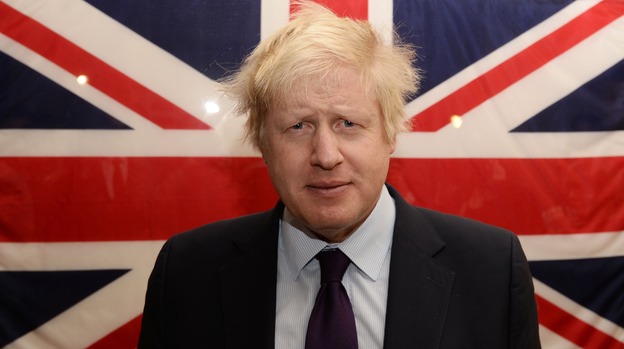
When Boris Became PM

So Boris Johnson has become Britain’s prime minister. He has been trying and scheming, scheming and trying including undermining David Cameron. A ‘remainer’ before, Johnson saw political capital in the ‘leave’ campaign, and in a sudden about turn became its face and leading campaigner. Always superb at the latter and having the inbuilt advantage of a clown’s rapport with his public, he is given credit (or blamed) for the ‘leave’ victory in the referendum. It certainly was a turnaround for when the then prime minister, David Cameron promised the referendum, no one believed Britain would vote to leave — a vote that has divided the union as both Northern Ireland and Scotland voted to remain.
Boris has promised brexit, deal or no-deal, by October 31. A no-deal brexit would hurt the EU but cause much more damage to the UK economy. Since Boris refuses to rule out prorogation of parliament to achieve his ends, parliament has voted to ensure parliament will continue to legislate by requiring it to consider a Northern Ireland bill every two weeks . In effect the Boris no-deal brexit bomb has been defused, at least for the time being.
Brexit itself and its economic cost remain. If its supporters like Nigel Farage thought trade with the US will recompense the losses, they are in for a surprise. As Trump’s ‘America first’ policy has made abundantly clear, the US will be a tough negotiator on any trade deal.
All that is later. The first problem Boris faces is one of uniting the parliamentary party and securing its support. Philip Hammond the Chancellor of the Exchequer (akin to Treasury Secretary) has resigned and the other most important job, that of Foreign Secretary is held by Jeremy Hunt his defeated rival. He has refused to quit and has turned down a demotion to defense secretary. Sajid Javid’s job as home secretary has been given to Priti Patel and Javid himself, a former banker, has been appointed to Hammond’s position as Chancellor of the Exchequer, the first ethnic minority person to hold such a high level post.
How Johnson will fare with Hunt’s supporters remains to be seen.
Dominic Raab receives the foreign porfolio with the additional title of First Secretary of State giving him the most senior rank in the cabinet after the prime minister. Raab’s father was Jewish although he himself was brought up in his mother’s Church of England faith. As a young man, he spent the summer of 1998 at Birzeit University in the West Bank near Ramallah working for one of the principal Palestinian negotiators of the Oslo Peace Accords. Will we see any progress with peace in Israel/Palestine?
At the end of the cabinet reshuffle, the startling fact is that Boris has fired over half of Theresa May”s cabinet. No room for bridge building, the new cabinet is exclusively ‘leavers’ or right-wingers or Boris supporters. Exactly how that unites is difficult to fathom. We now have to wait and see when the disgruntled former ministers or their supporters will decide to wield their knives. George Canning had the shortest term in office serving just 119 days, and Johnson’s October 31st brexit deadline is exactly 99 days from when he took office. Will he set a new record?
Meanwhile, Boris has his work cut out for him. Not just brexit but Iran is sitting on two British-flagged tankers. Does Britannia still rule the waves? Not bloody likely, to use a British colloquialism, or so it seems.
Dr Arshad M Khan (http://ofthisandthat.org/index.html) is a former Professor based in the U.S. whose comments over several decades have appeared in a wide-ranging array of print and internet media. His work has been quoted in the U.S. Congress and published in the Congressional Record.

Sunday, July 21, 2019

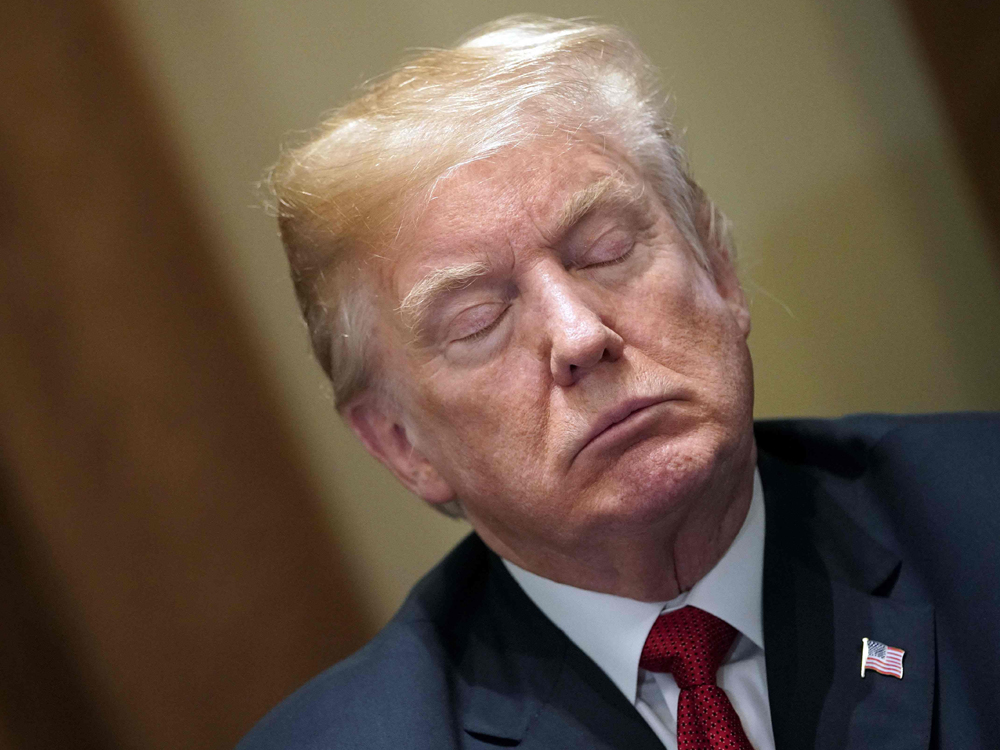
Trump: Rebukes And Worries

It’s one for the history books, as they say.  On July 16, 2019, Donald Trump was formally rebuked by the House (in a 240 to 187 vote) for his ‘racist’ tweets on four Congresswomen.  The last time the House rebuked a president was William Howard Taft over a 100 years ago.
So what did Trump do?  He told the four members of Congress to ‘go-back’ to the ‘the crime infested places from which they came’ instead of ‘viciously telling’ us ‘how our government is to be run.
Three of the women were born in the U.S. and Ilhan Omar was a refugee from Somalia.  Not difficult to guess which country was largely responsible for a proxy war in Somalia that overthrew a regime agreed to by warring parties for a rare interlude of peace.  The resulting civil war now continues, and Uganda, Kenya and Tanzania are home to more than 2 million Somali refugees.  Others have ventured further, to the EU and the US.
Trump’s assessment of all this is uniquely Trumpian.  He thinks he has won because he has now got Speaker Nancy Pelosi exactly where he wants her for the 2020 election … in the arms of the squad of four, who he positions as radicals.
Exactly how radical are they?  They want a living minimum wage, healthcare for all — something other developed countries already have — a decent shot at education, and they are strongly against Trump’s policies on the southern order.  Finally, they want Palestinians to get a fair deal.
Steny Hoyer (aged 80) the Majority Leader and Nancy Pelosi (aged 79), the first woman Speaker of the House of Representatives, both with distinguished decades’ long careers, starting together coincidentally as staffers in the office of Senator Daniel Brewster (Democrat, Maryland), have weathered difficult battles on critical issues as well as the rough and tumble of politics for many a year.
To them the squad of four appear as upstarts with a brashness and energy that have captured the attention of mainstream news, and had a heretofore unseen impact on social media.  They seem unwilling to compromise, and speak as equals despite a half-century age difference and a vast power gap in the House itself.
Not for them the lure of key committee appointments or other such carrots for a successful Congressional career.  They are out and out idealists with a platform publicized positively thanks to left-wing websites and social media, and which can not be ignored by the mainstream outlets.  The world has changed; no, these four have turned it upside down.
Trump himself has other worries.  There is the case against Roger Stone his long-time ally, friend and attorney, who was back in court for disobeying the judge’s gag order.  As the case goes forward, we will be back to the 2016 election, the Russian connection, and other efforts to smear Hillary Clinton.  Will the calls for impeachment finally find a receptive ear in Nancy Pelosi?
Then there is Iran.  Trump’s idea of a better deal is always to walk away from the present one.  No matter if its a treaty or an international agreement.  Ayatollah Ali Khamanei is not having any of it.  People in this country are unaware that most such clerics, in addition to Islamic studies, are experts in jurisprudence and philosophy, are well-read, well-informed, and above all have to be highly intelligent to have been selected for this career path.  The Ayatollah wants relief from sanctions first.
Trump’s new envoy to Iran, Senator Rand Paul is a libertarian like his father, and both are anti-war with a particular aversion for America’s misadventures abroad.  So there is hope.
Dr Arshad M Khan (http://ofthisandthat.org/index.html) is a former Professor based in the U.S. whose comments over several decades have appeared in a wide-ranging array of print and internet media.  His work has been quoted in the U.S. Congress and published in the Congressional Record.
Tuesday, July 09, 2019

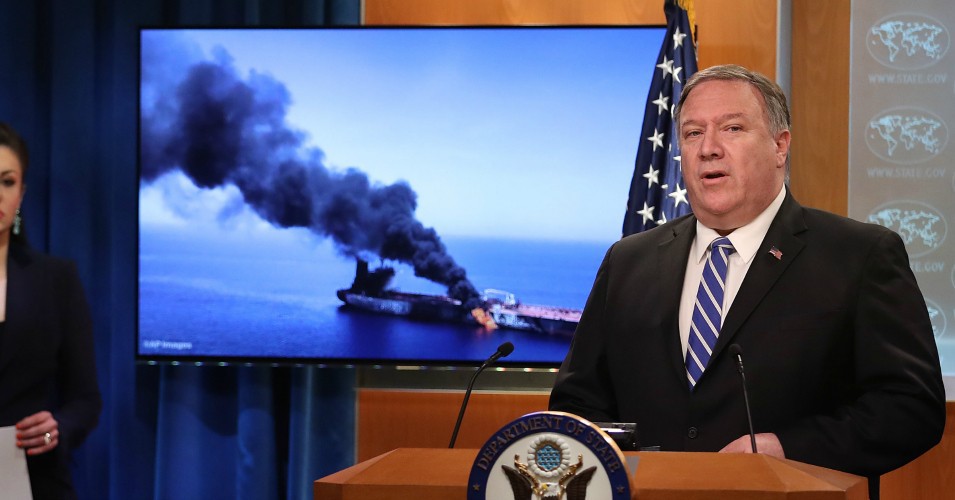
Unusual U.S. Military Display On Independence Day – Does It Signal An Iran War?

 
If the fourth of July mid-day parade in Washington D.C. was depressing, perhaps the heavy, hot and humid weather was to blame.  It seemed to take the life out of the marching bands despite being supplied by reviving swigs of water.  The evening was a different matter.
A far from usual jingoistic display of military hardware and aircraft flyovers with the president orchestrating the event and supported, as the occasion warranted, by a military band was the order of the day.  News leaks have it that military chiefs were not too keen on the president’s plans; hence the small numbers of aircraft.  There is a good reason.  If the military appears too strong and too advanced, — and it is — the public is less likely to support new hardware development programs.
Defense spending is by far the largest category of discretionary spending by the Federal government.  It is also third overall of expenditures, behind only the required disbursements for social security and medicare.  The U.S. spends not only more on defense than any other country in the world, it spends more than the next seven countries combined as noted in a May 2019 infographic report by the Peterson Foundation.
The military also extends its reach through bases across the world as well as through pacts like NATO.  If one was to ask exactly how many foreign bases the U.S. maintains … 10, 20, 50, 100, bearing in mind that Britain, France and Russia all together have about 30, an answer in two digits might be most plausible; in fact, the figure is 750 to over 800 down from a number closer to 1,000.  Since a base is loosely defined, the total can vary depending on the source.
All this firepower at a president’s finger tips is tempting.  Yes, the authority to declare war lies with Congress but modern presidents are able to manipulate that body by fake propaganda (the infamous ‘smoking gun will be a mushroom cloud’ of the Iraq war for example) and spurious attacks leading to an emergency response.
Remembering the U.S. is currently involved in a war in Afghanistan, how many years has the U.S. spent at war since independence from Britain in 1776?  The answer is a mind boggling 222 out of 239 years calculated by Freakonometrics in 2017 and we have continued to be in a war since then.
All this despite the fact that we have been notoriously unsuccessful in the latest such adventures:  still bogged down in Afghanistan; Iraq run by a Shia government beholden and closer to Iran; and, of course, Vietnam, which was a defeat par excellence.  Immense firepower wins battles certainly, as the U.S. did in these countries, though without guarantee of final victory.  Nimble asymmetric warfare has a way of paralyzing large military forces, and a tired nation then seeks peace.  None of this detracts from the sacrifice and heroism of individual soldiers.  Were it only for a worthwhile (in retrospect that is) objective?
What does all this say about Iran?  Clearly, it would be the worst of follies to go to war against battle-hardened forces, in a larger country, with greater military self-sufficiency.  More than all this, the Revolutionary Guard is almost a nascent guerrilla force armed and ready for asymmetric war and, if it happens, America’s next disaster in blood and treasure.  Can we trust Trump to see reason?
Dr Arshad M Khan (http://ofthisandthat.org/index.html) is a former Professor based in the U.S. whose comments over several decades have appeared in a wide-ranging array of print and internet media.  His work has been quoted in the U.S. Congress and published in the Congressional Record.

Saturday, June 29, 2019

Why Trump Backed Off On Iran

War is a failure of reason, it has been said, and war with Iran makes little sense after they have faithfully complied with their nuclear agreement (the Joint Comprehensive Plan of Action), endorsed as it has been by the Security Council. It was the US, and the US alone, choosing to abrogate the deal that has resulted in the current confrontation — an unequal one in the unexpected sense that the US carrier is a big fat sitting duck for Iran’s locally manufactured sophisticated missiles. Additionally, its air defenses supplied by Russia will render aerial bombing an expensive proposition in airplane losses.
A brief description of Iran’s missiles that pose a danger to the US fleet or air attacks is in order. First, Iran’s missile program is domestic with help from Russian and China. Iran now has the capacity to produce anti-aircraft missiles with up to long-range capability, such as the one used to destroy the $120 million sophisticated US drone which was not without avoidance measures.
Of greater worry to the task force must be the Qader anti-ship missile with a 300 km range (about 190 miles). It can counteract electronic warfare measures and can be launched from land, sea or air, extending its range. Deadlier still is the Khalij Fars anti-ship ballistic missile that slams down on a ship at Mach 3. It is much harder to defend against, particularly The Fateh Mobin version which uses infrared sensors for terminal guidance and is equipped with radar evasion features.
Iran’s missile inventory extends to a dozen or more functional types including medium range ballistic missiles. The Iranians often note these are of domestic manufacture, which in itself is a consequence of the long trade embargoes — yet another unintended consequence.
Of course, Iran also has the ability to use conventional weapons like mines to close off the Strait of Hormuz to tanker traffic, causing chaos in the world economy by throttling fossil fuel exports.
Iran is also now firmly within the China-Russia axis, and it remains a major supplier for China. The latter is expanding the sea port of Gwadar in Pakistan, round the corner from the Gulf, to enable tankers to unload for overland transport, cutting transit time to the Chinese border to less than 24 hours … that is when the north-south artery in Pakistan is extended to Gwadar. Infrastructure development and improvement is part of the Chinese Belt and Road Initiative to which Pakistan signed on almost immediately.
Since the rest of the signatories to the Iran Deal including the EU have declared Iran to have abided by it, the US is alone in the world in its unwarranted intransigence. In the recent past, the US has withdrawn from an anti-ballistic missile treaty with Russia, the Trans-Pacific Partnership, the Paris Agreement on climate change and has threatened to pull out of NAFTA — the latter leading to hurried minor changes. So here’s a question: if the US were not the 800 pound gorilla on the block, who would want to negotiate with such an unreliable partner?
It all goes to show that when Trump called off this military escalation, he was not just thinking of the 150 Iranians he claimed would be killed, he was also concerned about US casualties and the loss of a ship or two, future relations with China and its partners, the lack of support from Europe, and the uncertainties of war — all with one eye on the 2020 elections.
Dr Arshad M Khan (http://ofthisandthat.org/index.html) is a former Professor based in the U.S. whose comments over several decades have appeared in a wide-ranging array of print and internet media. His work has been quoted in the U.S. Congress and published in the Congressional Record.