Showing posts with label Brussels. Show all posts

Friday, July 05, 2019

Iran-Russia relations within the framework of the Prisoner's Dilemma

By Mohammad Ali Hozhabri
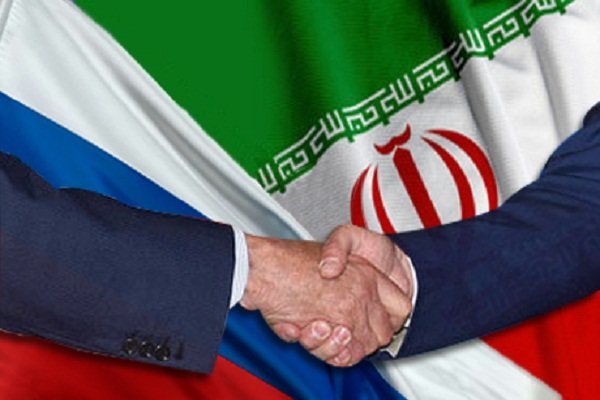
TEHRAN - The U.S. withdrawal from the Nuclear Deal (JCPOA) has put the Islamic Republic of Iran in a state of imprisonment.
Tehran's relations with Brussels and the continuation of negotiations with them, as well as consultations with Russia to reduce the economic and currency turmoil in the country, to deal with unilateral U.S. sanctions and to facilitate the delivery of energy can be analyzed within the framework of the concept of "Prisoner's Dilemma".
The JCPOA and the U.S. withdrawal from this agreement has kept Iran in captivity. The Islamic Republic of Iran should be considered a prisoner facing various charges from the United States. Charges like the 12-year statement issued by Pompeo, the Foreign Minister of the U.S., to Iran; charges such as the crisis in Yemen, Syria and Lebanon, missile and regional activities and support for terrorism.
Dr. Velayati's visit to Moscow and his concurrence with Netanyahu's trip to the country, as well as the Iran President's visit to Europe to negotiate with Austria and Sweden, and European talks of Mr. Zarif and his assistants in the foreign ministry, resembles the idea of prisoners and their attempts to escape from prison.
Each of the parties in the JCPOA pursue their maximum interests.
With the withdrawal of the U.S. from this agreement, Europe must either continue to pursue the JCPOA and cooperate with Tehran and, consequently, lose maximum interests in relations with the United States, or elect Washington and comply with its legal and political obligations under JCPOA, which have been the result of years of negotiation and bargaining. And in this case, will lose a lot of its economic interests in Tehran.
Russia, as another party in the JCPOA, will lose its maximum interest in the United States if it chooses Tehran, and faces more serious crises.
If Tehran tends to negotiate with the United States or surrender to Washington, it will get rid of the prisoner's dilemma. Russia, in the end, will lose the prospect of continuing the game.
Russia's cooperation with Netanyahu and Tramp on Syria, trying to pull Iran out of Syria, shutting down Iranian military bases in the country, agreeing on missiles issue and stopping the sale of strategic missiles to Tehran, as well as cooperating in Iran's sanctions, will bring more benefits to Moscow. These are tempting interests. The benefits like the permanent deployment of Russian military bases and the guarantee of U.S. exit, privileges in the Ukrainian crisis and energy issues such as Nord Stream 2 or strategic competition in Eastern Europe.
With these in mind, will Russia sacrifice Iran for maximum profits? No
The subtle point is that if the game (Prisoner's Dilemma) is implemented once, cooperation with the opponent will not make sense, because there is no incentive to cooperate. But playing repeatedly and prolonging it will increase the chances of cooperation between competitors because actors can profit from the flow of results, and even communicate with each other by using complex strategies (in the form of lights off).
In this regard, the long-standing disputes between Iran and the United States and the continued prisoner-like situation of Iran under its ninth and tenth government (orientalism policy) reinforce the incentive for cooperation in Russia.
As it is said, although the profits from Russia's cooperation with Iran are small compared to the profits it received from its deal-breaking, by establishing lasting cooperation, the benefit obtained during the repeated implementation of the game will be more than the benefits of one deal-breaking is obtained.
In fact, the duration of the game and the long years of Iran's sanctions by the United States and the lack of an appropriate relationship with other actors, such as Europe, leads Moscow to cooperate and non-widespread deal-breaking with Iran.
The benefit Moscow takes from Tehran's bitter relation between the United States and Iran would be more than the prospect of a treaty violation.
In my view, Moscow's behavior has always been and will be, a combination of cooperation and non-cooperation.
That is, while they vote against Iran and refuse to veto the resolution in strategic terms, like the sanctions and resolutions of the Security Council, are willing to cooperate with Tehran in tactical terms, because the Resolutions under Chapter VII of the Charter, and in the next step, "American withdrawal from JCPOA", provided the conditions for the Kremlin to play a role. Hence, when Trump spoke of his decision to withdraw from the JCPOA, Moscow, Washington agreed to stay active, no way. Moscow did not make an effort to keep Washington in the Deal.
On the days when Dr. Abbas Araghchi was in talks with European authorities to provide a package of JCPOA support and encouragement of European companies to stay in Iran, on the other side of the filed, Putin, along with Saudi Arabia, accompanied Tramp and increased its oil production to offset Iran's oil production.
To compensate for Iranian oil by Saudi Arabia and other OPEC members, in addition to offsetting the shortage of energy in the world, will prevent a steady increase in the price of oil and gasoline, something that should be considered as a green light to the White House, Republicans and against the interests of Tehran. 
Hence, Dr. Velayati brought himself to Kremlin into a rush to understand Moscow's behavior. But the outcome of this trip was nothing more than a Prisoner's Dilemma.
"The statistics, which Putin said at the meeting, indicated he insisted that Iran-Russia oil relations continue to reach $ 50 billion," Dr. Velayati told reporters after meeting with Putin. "This figure is high and can replace Western companies that have left Iran."
Russian Minister of Energy Alexander Novak, in response to the position of Velayati, announced the start of an oil agreement between the two countries as oil for goods.
This means that while in the association with Trump and Saudi Arabia increased its oil production, also did not sanction Iran. But they have refused to trade goods and oil with other currencies like euros or their own currency.
•    In this regard, if Europe guarantees a daily purchasing of one million barrels of oil in Euros, it will take a much stronger and better move than Russia. So with this criterion, Europe looks more honest and closer to Russia.
Given that oil production in the United States has increased in recent months, and Canada and the United States are also entering the Asian market over the next two months, the increase in oil production by Moscow should be considered as a logical move to maintain its share in the global market.
What is irrational is the continuation of a prisoner's dilemma that wastes the human, natural, material, and spiritual resources of this country.
Russia's "To run with the hare and hunt with the hounds" policy like its policy to relative accompanying with Tehran in purchasing energy and investing in the energy sector, at the same time as increasing oil production for accompaniment with Trump and starting to barter trade have been implemented differently several times.
Relative cooperation with Iran in the Syrian case (supporting Bashar al-Assad and the war with ISIS) and lack of cooperation with Iran in defense against the Zionist missile attack on Iran's military bases in Syria and perhaps co-operation with or silence on Zionist encroachment against the IRGC military zone in the south of the country, prolonging the S 300 sale process to Iran, and the next sale of these missiles to regional rivals such as Saudi Arabia, Turkey, and Even Pakistan, for example, are examples for balancing the region and preventing Tehran from gaining strategic superiority.
Therefore, the Russian zigzag and contradictory behavior and the use of Iran's card can be interpreted within the context of the "Prisoner's Dilemma".
The result is that the Russians intend to use the fear emanating from Iran military presence in Syria, take advantages from the United States and Israel in expense of limiting the power of Iran and the axis of resistance in Syria, and on the other hand, convince the leaders of these countries to leave the U.S. from Syria, on condition of minimal Russian support from the Syrian Kurds, who are the United States allies.
So John Bolton, the U.S. national security adviser, announced: "the likelihood of a major deal between the United States and Russia, according to which Iranian troops withdraw from Syria and return to Iran."
Lastly, in the repeated play of the game, there is the possibility of using the "Tit for tat" strategy to convey the message to the opponent and "counteract". "Tit for tat" strategy does not penalize the other party for violation of the deal.
But it seems that, given Washington's thorough pressure and the practicality of Brussels and even Asian actors such as India, South Korea and Japan in boycotting Iran, and the hatred of Iranian leaders from Washington and the reluctance to get rid of the prisoner's dilemma, the ground is ready for adopting a "tit for tat" strategy to punish Moscow's deal-breaking.
In fact, in another sense, "tit for tat" means "ignore."
So, not only Putin's paradoxical behavior towards Iran has, and is, justified, but also we should be grateful and thankful for the unilateral support of the Kremlin to the Islamic Republic of Iran!

Wednesday, July 25, 2018

“Trump Resolved to Destroy European Union”


An Iranian newspaper says the US aims to destroy the European Union, and Trump is the flag bearer of the collapse of the bloc.
A recent opinion piece published by Jomhouri Eslami newspaper says US President Donald Trump wants Europe to follow Washington’s policies and it seems the EU has to tolerate and accept this humiliating manner, even at the cost of losing their independence.
What follows is the full text of the editorial:
The negative feedbacks of Donald Trump’s visit to Brussels, his participation in the NATO Summit and his trip to Britain, indeed destroyed the credibility of Trump’s America.
During Trump’s recent trips, almost no announcement of cooperation and agreement was made by either European or American leaders. But in practice, he faced serious, organized and widespread opposition that had never been experienced in the history of US-European relations, especially with the NATO.
Trump postponed his trip to Europe and in particular his visit to Britain several times, and eventually headed to Europe in a situation that no one was willing to warmly welcome the President of the United States.
The British people urged him to return home by launching massive demonstrations. They insisted that he must change his policies and stop creating tensions, racism, and humiliating manners in dealing with the other countries.
However, the extent of the protests against Trump had already been anticipated, and that was why he delayed his trip to Europe and in particular to Britain several times.
He did his utmost to find a better chance to be welcomed warmly, but at the end of the day, it was beyond reach.
The British government informed Trump that they were unable to welcome him in London and had to receive him in another place to be able to provide security for him and his companions within highly secure and protected areas.
Trump tried to travel to England at any cost so that people would not say he was dissuaded from his British trip for such matters. But the mass demonstrations in London showed well that even London is not a good place for an adventurer like Trump. Although Britain, in particular since World War II, has been considered as America’s closest ally in Europe and the world, England is not able to welcome Trump in London.
Prior to his trip to Britain, Trump was also completely isolated at the NATO Summit. Although he tried to put pressure on other parties to pay the US’ military expenses on the territory of NATO, he was faced with serious opposition and protests that made the NATO summit tense.
It’s so hard for America’s global diplomacy that Trump and his associates are not only confronted with Russia and China, but also have to challenge with their allies in the NATO. The US at the same time has waged war on the European Union, Canada, Mexico and even Britain as a follower of Washington’s policies in Europe.
During his visit to Brussels where the NATO Summit was held and also in Britain, Donald Trump constantly tried to stabilise himself in a position with a bunch of non-diplomatic and humiliating statements. But in practice, the results were totally vice versa, and it gave rise to a clear and unequivocal isolation for Trump’s America.Perhaps if it was possible for him and his assistants to foresee, they would have cancelled or delayed the journey to Europe.
The fact is that protesting against Trump is not due to his personality. It is the extreme views of Trump and his assistants which elicited such unified and unexpected response.
Trump has problem with the survival of the European Union and explicitly calls for the collapse of the European Union. He personally and formally supported the “Brexit” and has even criticised British Prime Minister Theresa May for her flexibility on the issue of leaving the European Union. He even welcomed and supported France’s exit from the EU, and encouraged the French people to join the supporters of Frexit.
Trump still hopes to see the collapse of the European Union and, in particular, the collapse and destruction of the “Euro” as the single European currency, which will ultimately resolve the growing problems of America by eliminating and marginalizing the economic rivals.
While Britain is on the way to get out of the European Union, and is dealing with the increasing adverse consequences of this painful exodus, Trump is not happy with it yet. With his apparent interference, even the British are humiliated by the United States.
Trump’s sarcastic literature against Theresa May and her government was so blatant and undiplomatic that infuriated the British media, parties and people.
During this trip, Trump even determined the future prime minister of Britain! He hailed the British Foreign Secretary, Boris Johnson, and said that he is very smart and capable to become a great prime minister.
The US president now introduces immigrants as the main problem for Europeans and calls for taking action against immigrants, which is in fact a form of intervention in European affairs and policies.
The situation is so dire that French President Emmanuel Macron, who at the start of Trump’s job claimed he would not allow the United States to be isolated, is now in the front line of opposition against Trump. He says that France and the European Union have no choice but to confront and deal seriously with the US’ economic and environmental policies, as well as Trump’s positions towards the NATO.
Europe feels that following Trump’s policies will result in its humiliation and dependence. The continuation of such policies has created new trends in US relations with its allies. Washington wants them to follow the US policies and it seems they have to endure and accept this humiliating manners, even at the cost of losing independence. This is the policy that aims to destroy the European Union and has turned Trump into the flag bearer of the collapse of the European Union!

Hibernation How Europe Can Survive the Trump Era


Explosive narcissism and vulgar capitalism: It is impossible to engage in politics with this U.S. president. Europe should resist the temptation to fixate on Donald Trump and instead pursue its own goals. That's the lesson of a deeply disorienting week.


Politicians are used to engaging in politics -- either with or in opposition to other politicians. Traditionally, the foreign policy of one nation-state or alliance is confronted by the foreign policy of another nation-state or alliance. That's the way it has been for hundreds of years. But that's not the way it is at the moment. When Donald Trump is involved, politics is not confronting politics. Rather, politics is confronting the bizarre.
There is no precedent for such a situation in the history of the West. That fact is also contributing to the difficulties of practicing politics in this day and age. Politicians, after all, frequently look to the history books for examples to follow and traditions to pursue. But in the history of democracies, the chapter on the bizarre is rather thin. Someone like Trump is a totally new beast and requires a completely novel approach to politics.
That fact can no longer be in doubt following the U.S. president's trip to Europe,including his stopovers in Brussels, London and Helsinki. It makes little sense to hope that Trump might improve. He is the way he is and politicians from other countries have to get used to it. They have to develop a specific strategy for the period during which this president is in office.
For the European Union, the appropriate strategy can be expressed in a single word: hibernation. But that isn't quite as easy as it might sound. We're not talking here about the long, restorative slumber of a bear in her cave. Hibernation in the Trump era requires a complex political concept that Brussels should pursue in lockstep with all member states to the degree possible. Should that happen, there is light at the end of the tunnel, and perhaps even before.
Trump's embarrassing behavior during his trip has two primary causes: his explosive narcissism and his adherence to an extremely vulgar form of capitalism.
In 1989, back when Trump was nothing more than a real-estate tycoon, he suddenly said during a television interview with Larry King: "Your breath is very bad, it really is. Has this ever been told to you before?" Later, Trump explained this impertinence by saying it was a demonstration of his negotiating strategy: putting people on the defensive.
Incapable of Grasping
The last week has shown that it is a concept he apparently pursues in politics as well. He sought to unsettle German Chancellor Angela Merkel by claiming that Germany is a "captive of Russia" on the eve of his meeting with her. And he did the same to British Prime Minister Theresa May, saying just before their face-to-face that her rival Boris Johnson would make a good prime minister. It is vulgar. And it is ineffective. All it does is darken the mood and make it more difficult to find common ground. That, though, is the primary goal of foreign policy -- something that Trump is apparently incapable of grasping.
Regarding narcissism: Trump is constantly employing superlatives to praise his own deeds. Whatever he does, says or thinks necessarily has to be the best, the greatest of all time. On days when he is feeling modest, he might add a qualifier like "probably." One gets the feeling that he is seeking to insulate himself from overwhelming self-doubt. And that is what makes his narcissism so explosive. When doubts arise about his self-proclaimed magnificence, he is more or less capable of anything -- including uttering sentences that many, and not just his opponents, view as treasonous.
His election victory was not nearly as dazzling as he likes to portray it. Hillary Clinton received almost 3 million more votes than he did, with Trump only becoming president due to the peculiarities of the American electoral system. Close advisers and members of his family stand under suspicion of having maintained dubious contacts with Russians during the campaign. U.S. intelligence agencies have evidence that Russian agents interfered in the campaign.

Wednesday, July 18, 2018

NATO and the puzzle of a nuclear deal with Iran

By Mohammad Ghaderi
A meeting of NATO (North Atlantic Treaty Organization) Heads of State and Government was held on Wednesday 11 and Thursday 12 July 2018 in Brussels, Belgium. NATO leaders met in Brussels amidst a terse environment that threatens to further weaken the post-war order. This year's meeting came at a tense time for transatlantic relations since the U.S. president is set to sit down one-on-one with Russian president Vladimir Putin on May 16 in Helsinki. One of the topics the U.S. president sought to discuss with his Western counterparts in Brussels was "the nuclear deal with Iran" and its fate. Regarding this controversial issue Time wrote: “After ripping up the Iran nuclear deal in May, the Trump Administration is fanning out across the globe to rally support for a return to economy-crippling sanctions against Tehran.” It continues: “The effort comes ahead of President Donald Trump’s trip next week to Europe, where he is expected to pressure leaders into joining the far-reaching campaign to handcuff major aspects of Iran’s economy, including driving oil exports to zero. If European allies don’t join, Trump has threatened secondary sanctions on any company that does business with Tehran.” According to the Time and other Western sources, Donald Trump intends to press NATO leaders over the Joint Comprehensive Plan of Action (JCPOA), and “The president hopes his bare-knuckled approach will coerce European leaders to unite behind him, even as they publicly oppose a return to sanctions and scamper to salvage the existing nuclear deal without American participation. This is while the White House keeps to press its European allies for increasing the military and defense budget (to 2% of their GDP). While the transatlantic tensions are raising day by day due to the imposition of tariffs on steel and aluminum imported from Europe, what meaning can negotiations on the JCPOA imply? Does Trump intend to make a deal with his European partners in this regard? Do NATO's European members welcome the integration of the JCPOA amid their conflicts with the U.S.? The British Prime Minister Theresa May has recently asked other European countries to remain silent against Trump’s actions in imposing tariffs on imported goods from Europe, and not to seek retaliatory measures. She also asked European authorities to negotiate with the U.S. president on the JCPOA. Indeed, what’s going on among NATO members? The truth is that in near future, the JCPOA will turn to the Europe’s leverage for making deals with the United States in security grounds, an issue witch its signs we could well see in the Brussels summit. It shouldn’t be forgotten that in its calculations, the EU is still regarding itself as dependent to the United States. Those like Theresa May, Emmanuel Macron and Angela Merkel are adjusting their policies in the international system based on their security dependence on the United States. It might be possible that the European officials agree on “restraining Trump”, but that’s all, and we can’t expect them to go further as to fulfil their obligations in this regard. The EU would never confront the U.S. seriously, since “resisting against the White House” is in no way defined in Europe’s strategies and tactics. In the course of the G7 recent meeting in Canada, Donald Trump discussed various subjects with Angela Merkel, the German Chancellor, including Iran nuclear deal, tariffs on steel and aluminum imported from Europe, and the increase of NATO defense budget. But these talks resulted in the intensified disagreements among EU member states and Trump. The tensions were so high that the meeting ended with no final statement. Now the U.S. president is pursuing the same approach I dealing with NATO states. Trump and the European countries both regard the tensions raised in the international system as a “single package”. In this equation, Trump asks the European authorities to cease their support for the JCPOA and the continuation of the nuclear deal in exchange for a decrease in the U.S. economic and security pressures. It should be noted that one of the main reasons for the European leaders’ refusal of offering a conclusive, detailed and effective package to Iran regarding the JCPOA was their secret negotiations with the American officials. Since the U.S. withdrawal from the nuclear deal, Mike Pompeo the American Secretary of State had been constantly in contact with the European troika’s foreign ministers, and announced them the exact positions and policies of the U.S. government. In the course of the NATO summit, we witnessed the continuation of the Europe’s paradoxical game playing towards the JCPOA. It shouldn’t be forgotten that the EU’s main strategy towards Iran and the JCPOA, is to make us remain as part of the nuclear deal as long as possible, and without benefiting from its advantages, so that the influence of the U.S. sanctions would be multiplied. The offering of the EU’s unacceptable and useless package of proposals is also to be analyzed in the same vein; a weak package which is resulted from the special relations between the U.S. and Europe.