Showing posts with label Afghanistan Peace Talks. Show all posts

Wednesday, March 20, 2019

The US-Taliban talks are renewing the US occupation of Afghanistan

Masud Wadan
The United States has been pretending to leave Afghanistan, just like it pretended to leave Syria. But the fact is that the Trump administration and its warmongering officials are planning for future presence in different parts of Asia in new forms. Masud Wadan, a geopolitical analyst based in Kabul, has dealt with the issue in his article titled, The US-Taliban Talks Are Renewing the US Occupation of Afghanistan.
Reporting from Kabul: The US is spearheading a “peace negotiation” campaign with Taliban since weeks in Qatar’s capital city, Doha. The US special representative on Afghanistan Reconciliation, Zalmay Khalilzad, has been spelling out the details of conclave through his twitter account. There is no Afghan or international journalist or correspondent allowed on the scene to report on actual minutes of the meeting that allegedly took place. 
This “peace project” has been dragging on for weeks. There is no guarantee that the US-Taliban talks will end in a desired result for people of Afghanistan. It is possible that months-long talks will land in trouble due to fundamental disagreements.
History tells us that such symbolic talks have tricked us by deceitful rhetoric into another war or crisis. We have only heard in media that several rounds of negotiations have been staged so far, but we haven’t witnessed any practical development or actual scenes, as did US warplanes strike bare deserts for years in its war on Syria while media would report conversely saying that the US was fighting its own product, Daesh! The talks are tantamount to private meetings attended by US and Taliban, none of which belongs in Afghanistan, nor any of them represent the true concerns of the Afghan people.
On March 12, the bilateral talks finished without any breakthrough for an Afghan peace deal. The minutiae development in the agreement included Taliban’s severing of ties with Al Qaeda and Daesh, which is not a big deal for observers. The other items of the agenda are the withdrawal of US forces as well as preventing Afghan soil from being used against others.
For now, these developments could be seen as a last resort option for US policymakers to take an urgent turn in relation to their foreign policy war stance formulated in the immediate wake of 9/11, leading to the illegal invasion of Afghanistan on October 7, 2001.
Taking account of this fact, peace will not be easy to achieve. We are now entering into the third week of the bogus peace dialogue between the US and Taliban without any substantive achievements. It is more like a US propaganda machine that has raised “unfounded hopes” among Afghans. It is a display of efforts to the people of America that we haven’t lost the war to the Taliban.
What the weary people of Afghanistan want as an outcome of the overhyped Doha talks is a meaningful and permanent truce as well as the establishment of peace to bring an end to daily casualties occurring across the country.
The Western media tend to focus on selected issues pertaining to the US-Taliban meetings, e.g. The US proposal of a five-year troop withdrawal schedule; whereas the Taliban negotiators insist upon a total withdrawal within a one- year period.
Even if the US troop withdrawal takes effect, it will never be an all-out plan. The Trump Administration believes, that more US forces on the ground means a larger military budget that needs to be slashed, as it did with reversal of many domestic plans to cut huge costs. The US will possibly bring down the number of soldiers from 15,000 to 8,000 that would be enough to maintain operations in nine mega bases throughout Afghanistan and serve as mouth-shutting response to critics.
In the same way, President Trump has ordered to slash the number of US security forces at the US Embassy in Kabul that amounts to 1,400 and replace them with trained and loyal Afghan forces, according to the Afghan media. This scheme will apply in other areas including military bases that will help cut millions of dollars for Washington.
This so-called cost reduction policy was dictated during the Trump Administration, and it doesn’t necessarily mean the withdrawal of US forces, nor the abandonment of US military presence. When addressing US servicemen in Iraq, Trump said that we can’t serve as International Police and “defend these countries”, unless they pay for the costs. He pointed out:
“Our troops are deployed in countries that you might not know their names, isn’t it ridiculous”
The Doha-based negotiations were highlighted when US Secretary of State Mike Pompeo said that he hopes there is sufficient progress in deliberations for him to travel in the next couple of weeks to so to speak “move it further”. Of course, his comments were meant to throw weight behind it. His comments contradict his early remarks that called the Taliban a “terrorist group”. In his speech to Future Farmers of America, he said:
“I have a team on the ground right now trying to negotiate with the Taliban terrorists in Afghanistan, trying to find a way to achieve an Afghanistan that’s not at war, that’s not engaged in violence, that doesn’t present a threat to the United States of America”
This US-led campaign is also aimed at confusing both the international and national leaders involved in some way in Afghanistan’s war. The US has to work in such a way as to retain EU support for the war in Afghanistan, because they have too grown fed up with the issue of the Taliban, with regard to underlying costs of deploying their troops in Afghanistan.
The US-Europe tensions, China and US competition, India-Pakistan rivalry, Iran-US hostility, Israel-Iran enmity, Saudi-led promotion of Wahhabism, US-Russia arms race, and many more conflicts have a concrete bearing on Afghanistan which constitutes a geopolitical hub in central Asia.
Afghanistan’s death toll has reached a record level as media reports 100 to 200 dead every week. Former Afghan security advisor Hanif Atmar who is running for president in 2019 said in a gathering held on “8 March” in Kabul that almost 51,000 Afghans have been killed and 98,000 injured only in the last five years, according to Voice of America Dari. This figure stands in sharp contrast to UNAMA’s biannual report on Afghan casualties that usually release manipulated statistics on death toll.
Washington is now working to dissolve the Taliban group into the power base of Afghanistan, on the one hand, to demonstrate that it has won the Afghan war not by military means but through diplomatic channels, and on the other hand, it seeks to integrate the militant group into its puppet government in Afghanistan to protect its strategic interests and jointly call for another war against ISIS or Al-Qaeda.
The Taliban’s project has long been outdated as the group’s size and strength, by comparison, has questioned the US power in the face of Americans and rest of the world.
In 2007, United States Geological Service (USGS) survey discovered nearly $1 trillion in mineral deposits in Afghanistan, according to mining.com. Five years ago, it was found that this poor country has $3 trillion worth of underground deposits including oil and gas, iron ore, gold, copper and lithium. The USGS used high-tech radiation in mapping and collecting information about exact sites of reserves. It used hyper-spectral imaging technology and shared the gathered data with mine firms.
Evidence reveals that the UK was cognizant of these reserves and their value ten years ago, according to the Afghan media, but refrained from disclosing any information to the public, which came to surface some years ago when the UK was at odds with the US over these minerals situated mainly in southern Afghan province of Helmand, where US later stationed thousands of its troops in addition to nearly 10,000 British troops already deployed in only one province that was not wholly in war.
According to recent data, there are almost 1,400 registered mines in Afghanistan, while the US has discovered more than twice that number. Despite this wealth of mineral resources, the impoverished people of Afghanistan have not seen the potential proceeds of billions of dollars worth of minerals, which could contribute the economic development of key sectors of the economy, resulting in tangible changes in the country’s living standards.

Wednesday, January 23, 2019

Bloodshed Will Not Bring Peace to Afghanistan

By: Kayhan Int’l

The latest act of bloodshed in Afghanistan is indeed deplorable, since wanton killing of the mostly innocent people, even if it is meant to hurt the government or the American occupiers, will neither bring peace nor promote goodwill.
    What the country needs is solidarity to drive out the US forces, which are definitely pleased with the murder in broad daylight of over 190 Afghan personnel of the training centre of the National Directorate for Security in Maidan Wardak, west of the capital Kabul, on Monday, as claimed by Taliban spokesman Zabiullah Mujahid.
    It was one of the most deadly attacks in several months as the attackers rammed a captured military Humvee packed with explosives into the building while gunmen followed up, spraying the compound with gunfire.
    Who benefits from such senseless killing? Certainly not the ordinary Afghan citizen, who is tired of the misery of the nation which for the past four decades has not seen peace and tranquility. The last 18 years since the American troops formally occupied the country have been the most miserable for the Afghan people.
     Monday’s attack on a supposedly highly secured place once again showed the vulnerability of Afghanistan’s government buildings, coupled with the demoralized state of the government personnel, especially the security and intelligence forces.
    In such a situation no concrete results are expected from talks with the Taliban in Qatar involving the Americans which were called off the same day. 
    The Taliban may have realized the futility of speaking with a Afghan turncoat like Zalmay Khalilzad, who has no sympathy for his countrymen but speaks for the vested interests of the American occupiers. 
     The US insistence, through Khalilzad, of permanent bases for American troops even after withdrawal of the bulk of the occupation forces, is the sticking point in the so-called peace talks.
     Certainly, not dignified Afghan, whatever his religious affiliations or political leanings, will ever endorse the humiliation of the presence of American or any other foreign forces on the soil of Afghanistan.
     The Islamic Republic of Iran, as the sincere most neighbouring sharing the same religion, language, culture, and history with Afghanistan, will never hesitate to help the Afghan people in their efforts to find peace. 
    Bloodshed and wanton killing should, however, stop, and all patriotic Afghans should focus their efforts on combating terrorism, which the Americans are promoting through the despicable Daesh.

Thursday, December 27, 2018

Afghan Blast – Christmas Gift for People of Kabul

By: Kayhan Int’l 

Was it a parting Christmas gift to the poor Muslim people of Afghanistan by the neo-Crusader occupiers of that country from the other side of the world?
The Santa Claus in Washington will never admit that Monday’s dastardly terrorist attack in Kabul which left some 50 people dead and over a hundred injured at the National Authority for People with Disabilities and Martyrs’ Families, was the dirty work of his Takfiri agents, who always manage to slip through the security cordon as if cruising merrily through the air on an explosive lade ubiquitous sleigh that doesn’t need reindeers to make its presence felt.
The latest act of terrorism which happened only two days after US President Donald Trump announced that he is halving his 14,000 occupation forces in Afghanistan, seems to be a message from the White House: ‘Look, our absence is not news to rejoice for you and will make life more miserable for you’.
It is interesting to note that the blast came a day after Pakistani Foreign Minister Shah Mahmoud Qureshi left Kabul after holding talks for peace in Afghanistan – the first leg of his 4-nation trip that has already taken him to Tehran and Beijing and end in Moscow.
It is also worth noting that recently Islamabad had helped orchestrate peace talks in the United Arab Emirates (UAE), where representatives from Saudi Arabia, the UAE, the US and Pakistan had met with the Taliban.
Imagine the Americans talking with the very group they have designated as terrorist and had come to Afghanistan to destroy it seventeen years ago, but on the pretext of fighting it (actually unable to fight it), continue to kill unsuspecting civilians, including those attending marriage parties and funeral ceremonies!
This is diplomacy Donald Trump style, and the presence of some of the principal purveyors of terrorism – the Saudis and Emiratis – at the talks in Abu Dhabi, makes it clear of the terrible things in store for Afghanistan which was first occupied exactly 39 years ago on Christmas Day by the Soviet Union.
The occupiers of Afghanistan have long changed from the atheist Red Army to ‘Christian’ Americans, with the active support of their supposedly ‘Muslim’ allies from the British created sheikhdoms of the Persian Gulf.
The fact that the building in Kabul which the terrorists targeted supports injured soldiers and the bereaved relatives of members of the security forces killed in years of battles, leaves no doubt that the cowardly perpetrators of the latest mayhem were those who have no regard for the life of the poor Afghan Muslims and will not give them a moment’s respite.
Moreover, the appointment earlier this year of former US Ambassador Zalmay Khalilzad as Trump’s special adviser to lead the alleged US bid for peace process in Afghanistan, ought to be warning to the people of Afghanistan that their plight will continue as deals are made over their heads without their involvement.
Under the circumstances the government of President Ashraf Ghani finds itself on the horns of dilemma. 
Should it trust the Americans, who have failed to protect the Afghan people from terrorism and all the ills of a war-torn society, or should it initiate talks with Taliban by itself without the involvement of any dubious third parties involves, which had conveniently kept government officials in the dark about the suspicious meeting in Abu Dhabi? 

Wednesday, November 07, 2018

Intra-Afghan Talks Sole Way to Peace in Afghanistan: Khalili

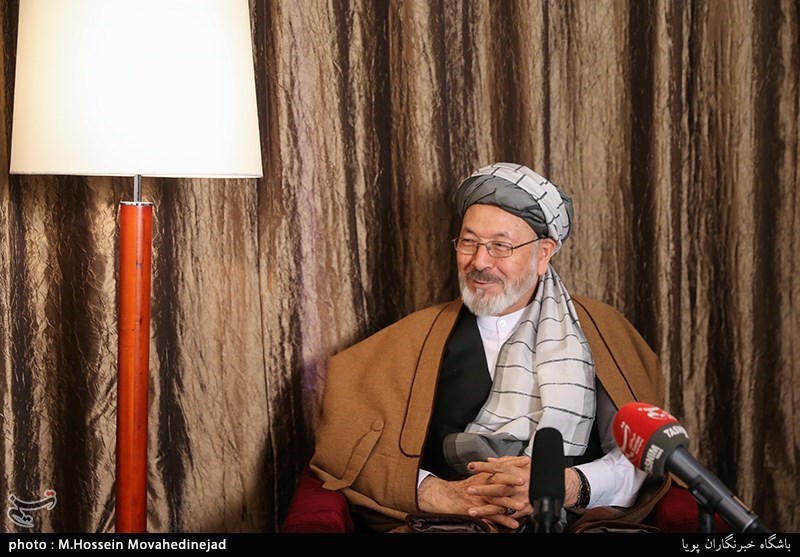
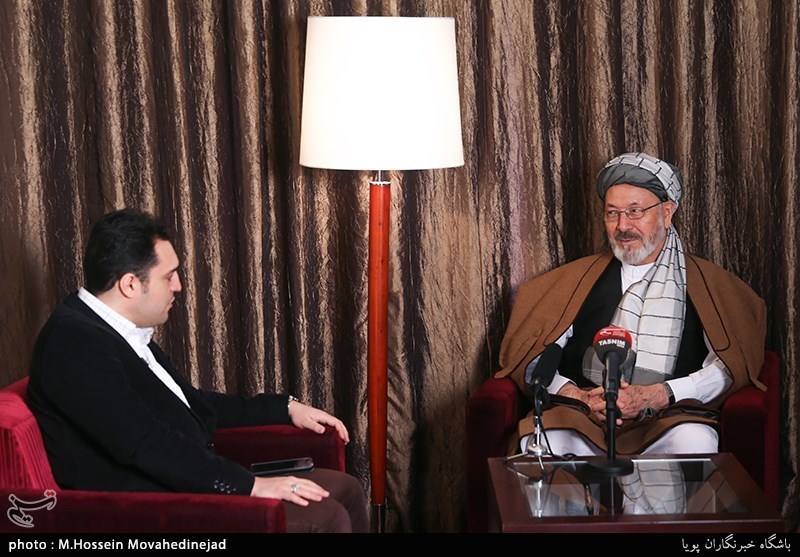
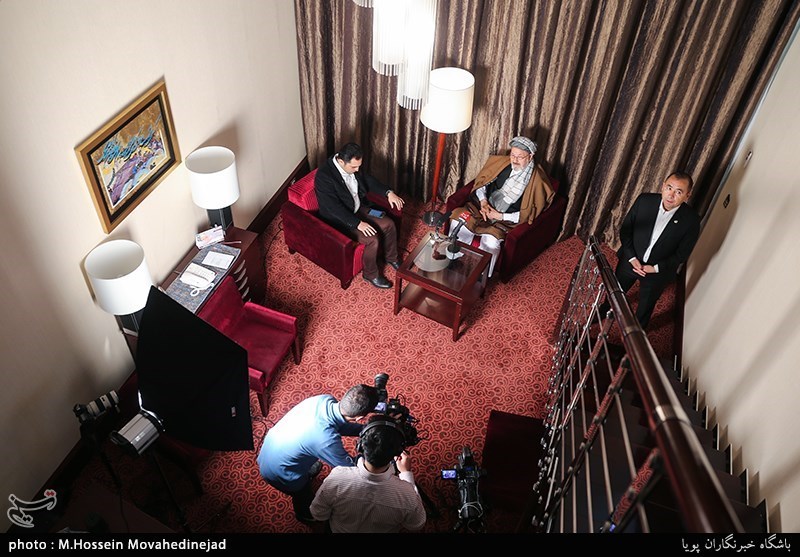
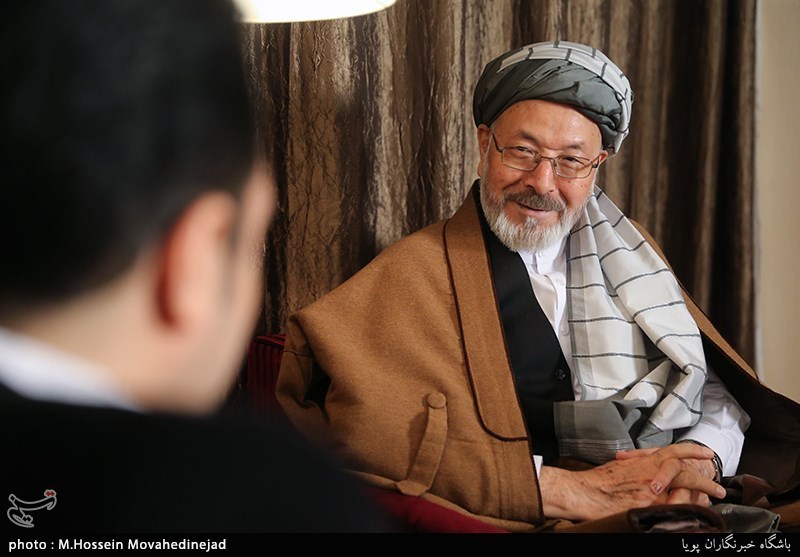
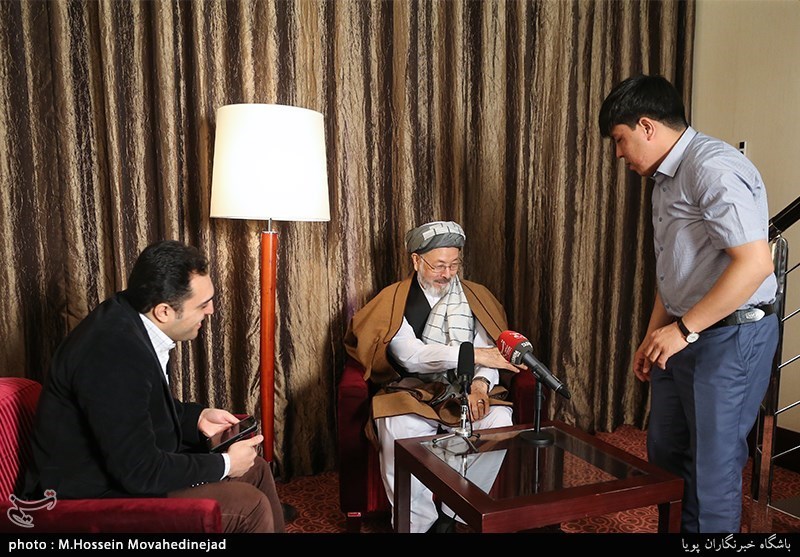
TEHRAN (Tasnim) – Chairman of the Afghanistan High Peace Council Mohammad Karim Khalili said any initiative for peace in his country needs to be exclusively supported by the Afghan people, noting that the Taliban also ought to enter talks with the Kabul government without being forced to do so.


Intra-Afghan Talks Sole Way to Peace in Afghanistan: Khalili
In an interview with Tasnim in Tehran, Khalili commented on the process 
of peace in Afghanistan, the presence of foreign forces in his country, 
the prospect of talks with the Taliban, and a conference in Moscow 
aimed at ending conflicts in Afghanistan.
Asked about the process of negotiations between the Kabul government 
and the Taliban, Khalili said if the planned conference in Moscow involves 
the Taliban representatives as well, the High Peace Council will hold talks 
with them, although it is not still clear whether such negotiations will be held 
privately.
The Taliban ought to hold talks with the Afghan government and the 
High Peace Council, regardless of the presence of US or any other 
country in the Moscow peace conference, he added.
Khalili, however, stressed that the Taliban’s involvement in the 
intra-Afghan negotiations will contribute to the pullout of foreign 
forces from his country.
“The foreign countries and Afghanistan’s regional companions could help 
the peace process, but we make it clear once again that the main peace will 
take place when Afghans themselves negotiate with each other,” he 
noted, and pointed to Iran as a good neighbor and friend of Afghanistan 
that could contribute to the peace process.
Khalili then stated that any country in contact with the Taliban is 
expected to encourage the group to join the intra-Afghan negotiations, 
adding, “No country could use force to bring the Taliban to the negotiating 
table.”  
He finally emphasized that settlement of conflicts with the Taliban and their 
inclusion in the peace process will facilitate the war against Daesh (ISIL)
terrorist group and will easily terminate the notorious group’s presence in 
Afghanistan.