
By Palestine Chronicle Staff
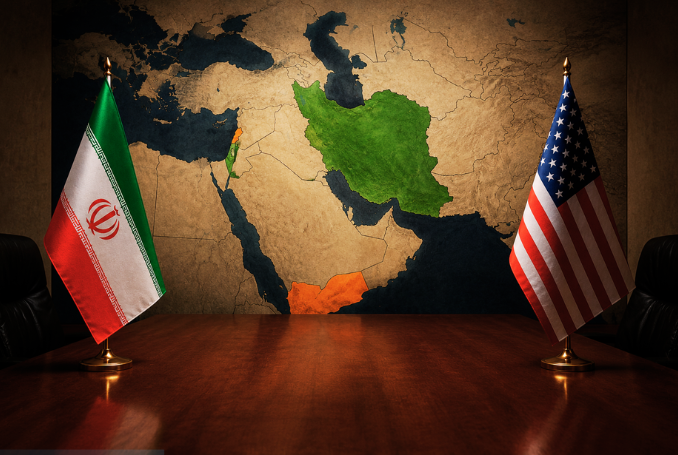 A closer look at the agreement that could reshape the Middle East. (Image Design: PC)
Iranian media have published details of a reported draft agreement outlining a ceasefire, sanctions relief, and nuclear talks.
Key Takeaways
- The reported draft calls for an immediate end to the war, including in Lebanon, and the reopening of the Strait of Hormuz.
- Iran would gain sanctions relief and access to billions of dollars in frozen assets during a 60-day negotiation period.
- Tehran’s missile program and support for regional resistance groups would reportedly remain outside the scope of negotiations.
Why Is This Draft Agreement Significant?
Iranian media outlets have published details of what they describe as a draft memorandum of understanding between Tehran and Washington, potentially marking the most significant breakthrough in US-Iran relations in years.
According to reports by Iran’s semi-official Mehr News Agency and Tasnim News Agency, the proposed framework would establish an immediate end to the current conflict while creating a pathway toward a broader political and nuclear agreement.
The reported deal follows statements from both Iranian officials and US President Donald Trump indicating that negotiations had reached a conclusion and that a formal agreement could soon be signed.
What Does the Draft Say About Ending the War?
According to Mehr, the agreement begins with an immediate and permanent cessation of military operations across all fronts.
The reported text specifically includes Lebanon as part of the ceasefire framework.
The proposal also reportedly commits the United States to respecting Iranian sovereignty and refraining from interference in Iran’s internal affairs.
In addition, Washington would be expected to avoid introducing new sanctions during the negotiation period and refrain from deploying additional military forces in the region.
What Happens to the Strait of Hormuz?
One of the most consequential provisions concerns the Strait of Hormuz, one of the world’s most important maritime trade routes.
The draft reportedly calls for reopening the strait within 30 days under arrangements coordinated by Iran.
The proposal also provides for lifting the US naval blockade imposed on Iran during the conflict.
What Economic Benefits Would Iran Receive?
According to Mehr, the draft includes several major economic concessions.
These reportedly include:
- Suspension of sanctions on Iranian oil exports.
- Suspension of sanctions affecting petrochemical products and related industries.
- Full Iranian access to revenues generated through those exports.
- Release of approximately $24 billion in frozen Iranian assets.
The report states that half of the frozen assets would be released before final negotiations begin.
The proposed framework also reportedly envisions the eventual removal of both primary and secondary US sanctions against Iran.
What About Iran’s Nuclear Program?
The draft reportedly establishes a 60-day negotiation period focused primarily on nuclear issues and sanctions relief.
According to Mehr, Iran would reaffirm its commitment under the Nuclear Non-Proliferation Treaty (NPT) not to develop nuclear weapons.
The negotiations would focus on:
- Uranium enrichment activities.
- The future of enriched nuclear material.
- Sanctions relief.
- Economic reconstruction.
The draft suggests that these subjects would form the core of the final agreement.
What Issues Are Excluded from Negotiations?
One of the most notable aspects of the reported framework is what it does not include.
According to Mehr, Iran’s missile program would be excluded from negotiations.
The report also states that Tehran’s support for regional resistance movements would not be part of the talks.
According to the agency, both issues were “definitively” removed from the final negotiation agenda.
These have historically been among Washington’s most contentious demands in previous rounds of negotiations.
What Does the Draft Say About Reconstruction?
The reported framework also includes provisions related to Iran’s post-war recovery.
According to Mehr, the United States and its allies would be required to present reconstruction plans worth at least $300 billion.
The draft reportedly envisions a broader economic normalization process tied to the lifting of sanctions and reintegration into international markets.
What Role Would the United Nations Play?
According to the reports, any final agreement would ultimately be endorsed through a United Nations Security Council resolution.
Such a step would provide international legal backing for the agreement and could help institutionalize its provisions beyond changes in political leadership in either country.
What New Details Emerged from Tasnim’s Report?
Tasnim News Agency reported that several provisions were added during the final stages of negotiations.
According to the outlet, these included arrangements related to the administration of the Strait of Hormuz and guarantees concerning Lebanon’s sovereignty and territorial integrity.
Tasnim further reported that those guarantees contributed to Iran’s decision not to carry out a planned response to recent Israeli attacks on Beirut’s southern suburbs.
Has the Agreement Been Officially Confirmed?
Not entirely.
While Iranian officials and media outlets have described the memorandum as finalized, the specific provisions published by Mehr and Tasnim have not been independently verified by all parties involved in the negotiations.
As a result, many details remain subject to confirmation until the agreement is formally signed and released.
(Mehr, Tasnim, Anadolu, PC)

No comments:
Post a Comment