
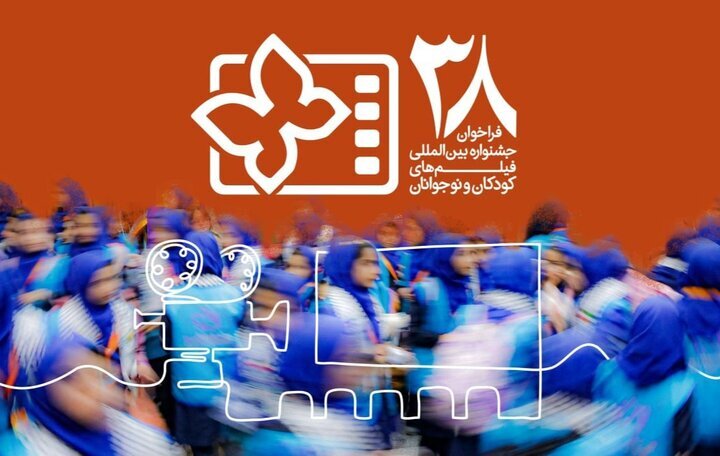
TEHRAN- The Farabi Cinema Foundation has officially released the call for entries for the 38th International Film Festival for Children and Youth (ICFF), featuring a new special category dedicated to Minab’s martyred students.
The upcoming edition of the festival will include both competitive and non-competitive sections, Mehr reported.
The event is set to showcase a diverse range of productions, including feature films, short stories, documentaries, animations, and notably, works created using Artificial Intelligence (AI) in the field of children’s and youth cinema.
In the main competition, Iranian and international entries will vie for the prestigious Golden Butterfly awards in various categories. As per tradition, a dedicated jury of children and teenagers will also select their top favorite films.
The 38th edition introduces a "Minab Special Section," which focuses on children and the hardships caused by the recent imposed war. Furthermore, the "Mirror of Child and Youth Cinema" section will review and evaluate selected works previously aired on television or released through domestic VOD platforms.
Filmmakers and producers can register and submit their review copies from June 20 to August 23. The final deadline for submitting the finished versions of the accepted films is set for September 22.
The festival’s history, spanning over 37 editions since its inception in 1982, demonstrates its importance as a cultural institution. With 22 editions held in Isfahan, six in Tehran, five in Hamedan, and one in Kerman, it has served as a platform for showcasing Iranian and international children’s cinema.
The 33rd and 34th editions were held simultaneously in Tehran and Isfahan and were conducted virtually due to the COVID-19 pandemic, which also led to adjustments in screening formats, with only feature films shown in dedicated venues while observing health protocols. Over the years, the festival has mostly been held in October, with occasional editions in other months.
On February 28, the Shajareh Tayyebeh girls' elementary school in Minab, Hormozgan province, became the site of a devastating massacre as the United States and Israel initiated their strikes against Iran.
While dozens of girls and boys aged between 7 and 12 were beginning their lessons, the school was targeted by a missile strike that caused the building to collapse, trapping children and teachers beneath the rubble. Iranian authorities confirmed a final death toll of 168 people, with at least 95 others wounded, marking one of the most harrowing incidents of the conflict's opening day.
Despite attempts by US and Israeli authorities to distance themselves from the carnage as images of the tragedy spread across social media, detailed forensic and digital investigations have painted a starkly different picture.
An analysis by Al Jazeera’s digital investigations unit, utilizing over a decade of satellite imagery and recent video clips, revealed that the school was a clearly distinct civilian facility, separated from any adjacent military sites for at least ten years. Furthermore, witness accounts and satellite-based analyses confirmed that the school was triple tapped by three separate, deliberate strikes, leaving no doubt about the nature of the attack.
The international community has faced mounting evidence regarding the responsibility for this atrocity, with investigations from major global outlets including The New York Times, BBC Verify, CBC, and NPR all concluding that the United States was responsible for the strike.
These findings have raised fundamental questions about the intelligence used to justify the bombing, as the patterns of the strike suggest a direct targeting of a civilian educational institution. The Minab school tragedy now stands as a somber testament to the immense human cost of the aggression and a focal point for those demanding international accountability.

No comments:
Post a Comment