
Tehran, IRNA— An exhibition titled Taste of the Museum serves up a slice of Iranian history and narrates cultural identity at Niavaran Palace in Tehran.

At the ground floor of the palace, there are a reception hall, dining room, private cinema hall, waiting room, lateral halls, and Blue saloon (Talar-e-Abi).
The reception hall, the dining room, and a corridor have been dedicated to the exhibition.
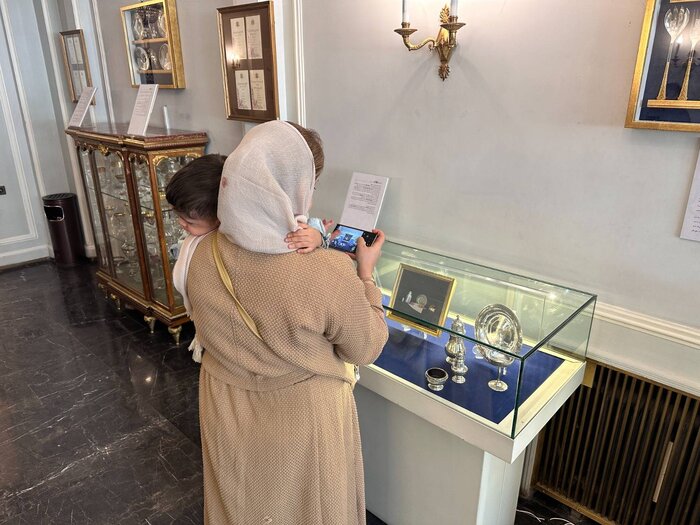
Curated by the Public Relations of the Niavaran Cultural Historical Complex, the display goes beyond mere gastronomy.
In an interview with IRNA on the sidelines of the exhibition on Saturday, Neda Shanaghi, the director of the Niavaran Museum, said that the event positions food as a cultural artifact, narrating a story of tradition, modernity, national identity, and the subtle shifts in daily life from the royal court to the common household.
The exhibition, she said, offers visitors a unique journey through Iran’s culinary heritage, showcasing how food, its rituals, and its tools have been a fundamental mirror of the nation’s social and artistic evolution from the Qajar era to the modern Pahlavi period.
She pointed to the Baluchi embroidered napkins put on display, noting that the napkins were delicately crafted with the Soozan Doozi technique.
Soozan Doozi, also known as Baluchi needlework, is a stunning and intricate technique embroidered on cotton, silk, or wool using fine needles and vibrant threads, practiced primarily by women in the Baluchestan region of southeastern Iran.
Held in alignment with World Food Day and the slogan of the Food and Agriculture Organization (FAO), “Hand in Hand for Better Food and a Better Future,” this exhibition offers a distinctly Iranian perspective.
Visitors encounter tableware, cooking utensils, and art primarily from the Pahlavi era, showcasing a period of transition through items used in both traditional Iranian and Western-style gatherings.
Elegant dinner sets, silver cutlery, and crystal glassware imported from Europe represent the era’s common dining among wealthy families.
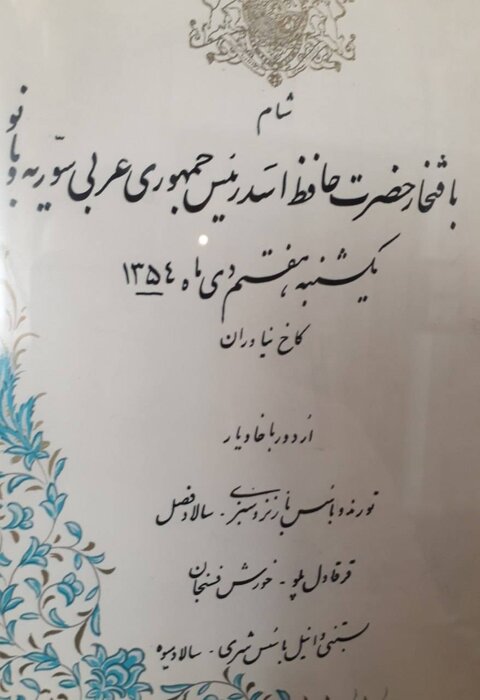
The special menus prepared for high-profile authorities from several countries are also on display at the exhibition.
The menus related to officials from the USA, the UAE, Afghanistan, Bahrain, the Ivory Coast, Turkey, Egypt, Austria, Saudi Arabia, Venezuela, Syria, and India have been put on display.
Placed next to these present-day signs, The Cooks, a vital oil painting from the earlier Qajar period, sets the historical scene for the Pahlavi transformation.
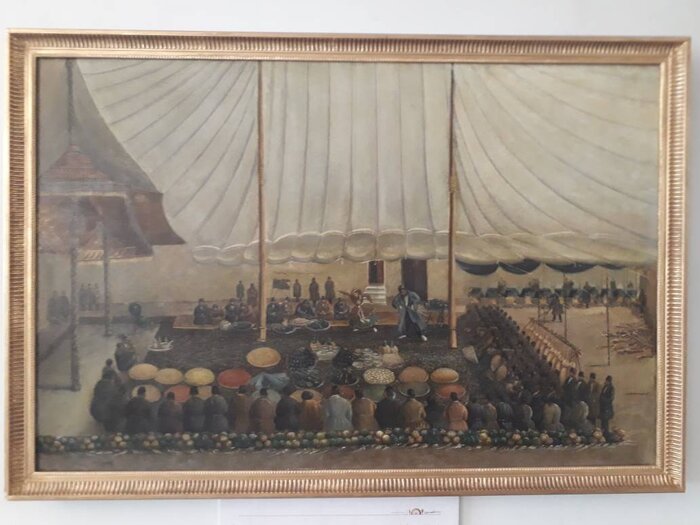
This exhibition shows that the nation’s history can be savored not only in history books but also through the evolution of its palates and the artistry of its tableware.
The exhibition is open to the public at the Niavaran Palace for the duration of its one-month run.
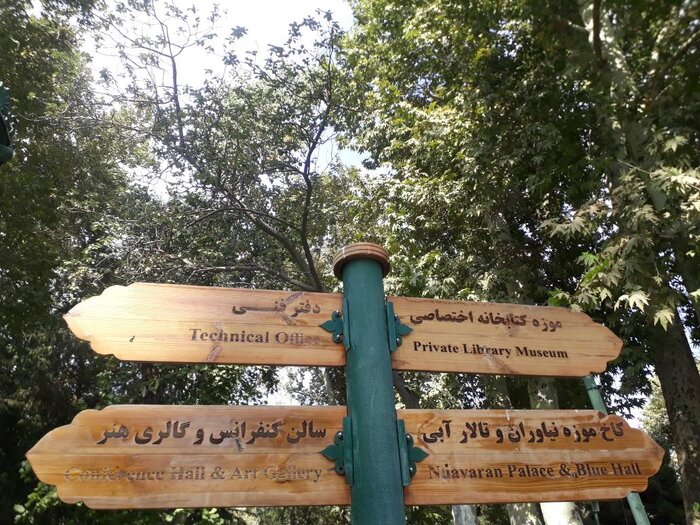
Niavaran Palace is situated on the eastern side of Niavaran Garden, occupying a nearly 9,000-square-meter area over two floors and a half-story.
The construction of the palace began in 1958 by Iranian architect Mohsen Foroughi and was completed in 1968 as the main residence of the Pahlavis.

No comments:
Post a Comment