
By Mariam Mushtaha
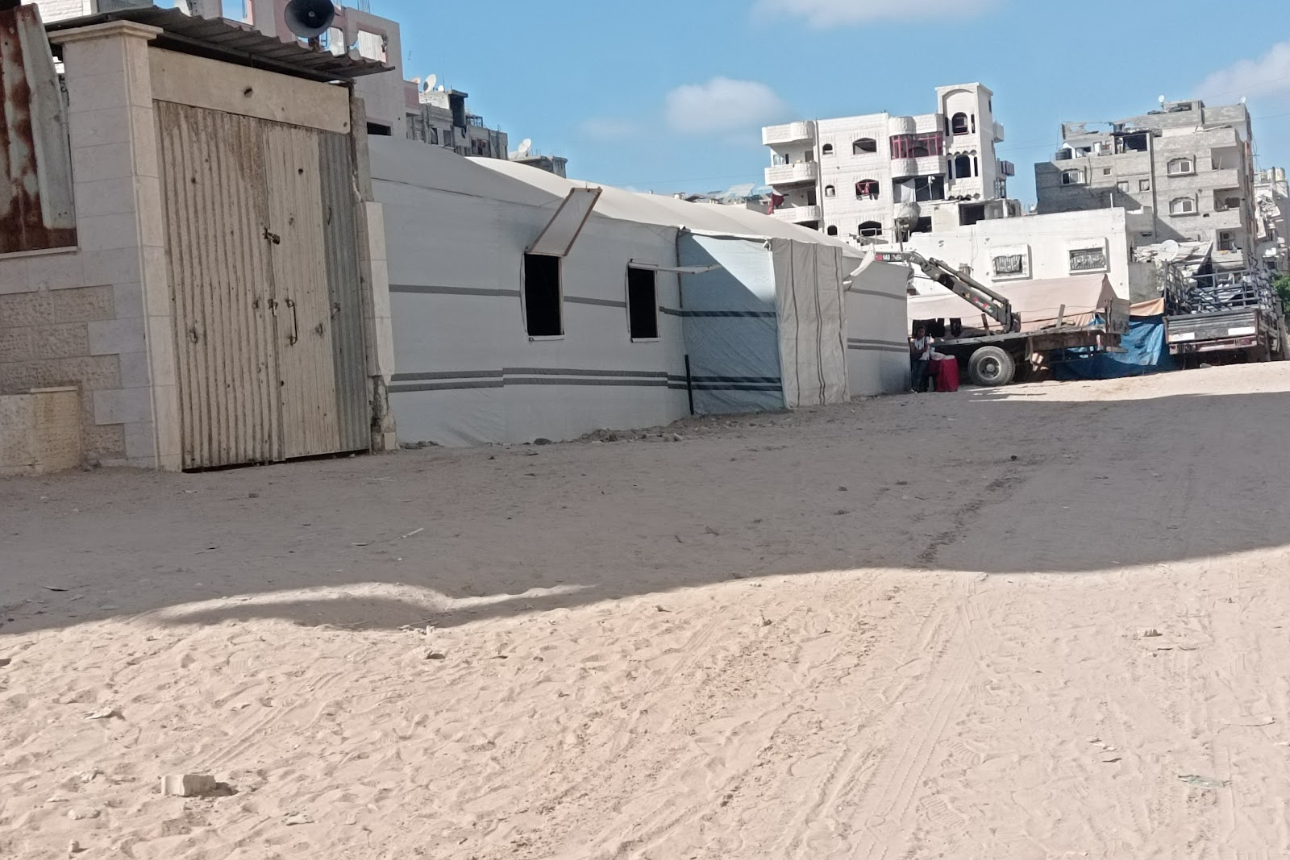 A Chapel located in the Tel Al-Hawa neighborhood. (Photo: supplied)
Throughout the genocidal war, churches served as refuge not only for Christians, but for Muslims as well — just like mosques, which Israel has largely destroyed, writes Mariam Mushtaha.
A soul of religious harmony has always filled the air throughout the years in Gaza. Muslims and Christians living side by side — not just as neighbors, but as one family. Their homes have stood close; their hearts even closer.
They used to share in each other’s joys and sorrows, exchanging visits with care and kindness. During previous Israeli escalations, they shared the same suffering, the same fear, and the same injustice — because they are both Palestinian, sharing the same land regardless of their religious beliefs.
Gaza had never witnessed tension between Muslims and Christians. Even though Christians are a small minority — about 1,000 people across the entire Strip — they have always been an integral part of Gazan society. Their presence blends naturally with the predominantly Muslim community, united by shared values, traditions, and a deep-rooted sense of belonging to the same homeland.
‘Our Voices Unheard’
I have three Christian friends: Mera, Elina, and Nataly, who attended the same secondary school. They were always kind-hearted and respectful. Every Eid, they would celebrate with us, bring chocolates, and warmly wish us joy, peace, and a long life. Their gestures were not just polite traditions, but signs of love and unity, proving that in Gaza, faith does not divide us; it brings us closer.
After finishing school, I joined the university, and our friendship remained strong. But then the war began, and our lives were turned upside down.
The internet and communication networks were cut off, and even a single phone call became nearly impossible. We were completely disconnected from the outside world, feeling as if we had become invisible — our voices unheard, our presence forgotten.
‘Bombed Within Minutes’
On the night of October 18, in the Tel Al-Hawa neighborhood, we received a call from an anonymous person, warning us to quickly flee the house because it would be bombed within minutes.
Panic consumed us, and we immediately packed our belongings. As we fled, the building became rubble, memories, and scattered walls. I did not even find time to cry before the destruction of my room, the place where I once dreamed, laughed, and lived. It was now gone.
There was a hospital near our house called Al-Quds Hospital, where we took refuge for a day before heading to my grandparents’ home in the old town.
In the Zaytun Quarter of the old town of Gaza, there are three churches: the Church of Saint Porphytius, a Greek Orthodox church in Gaza and the third-oldest in the world was established in 1160; the Ahli Baptist Church near the Ahli Baptist Hospital, a Protestant church founded in 1950; and Holy Family Church, the only Catholic church in Gaza, where my friend Elina and her family were displaced.
Throughout the genocidal war, churches served as refuge not only for Christians, but for Muslims as well — just like mosques, which Israel has largely destroyed. Many people turned to churches for shelter, believing they would be spared, thinking Israel’s aggression targeted only Muslims. However, this war has shattered those assumptions and revealed Israel’s true intention: to annihilate Gaza and its people — Muslims and Christians alike.
Church of Saint Porphyrius
On our first night at my grandparents’ house — on October 19 — a powerful explosion shook the area. My uncle rushed out to see where the bombing had occurred, and when he returned, his face was pale. He told us the attack had targeted the Church of Saint Porphyrius, where over 450 Christian and Muslim Gazan residents were sheltering; many of them had been injured and others killed.
When I was finally able to reach Elina, she shared with me the mournful news — eighteen people had been killed in that bombing, including her aunt, her aunt’s husband, and their son. Elina and her family had been sheltering in the Holy Family Church since the beginning of the genocide. Now, after the attack on the Church of Saint Porphytius, they were living in constant fear that their refuge would be the next target — just like the church that was bombed.
What Elina and her family were afraid of unfortunately happened. On the morning of Thursday, July 17, 2025, an Israeli airstrike hit the Holy Family Church. Three people were killed and ten were severely injured, including the Parish Priest of the church, “Father Gabriele Romaelli.”
There has been widespread condemnation of the attack, but this does not change the fact that Israel intentionally targeted the church and continues to kill civilians to this moment.
Mosques Not Spared
Mosques have also not been spared from deliberate targeting, as many were severely damaged across different areas of the Strip. This has greatly affected Muslims and deprived them of practising their religious rituals freely and safely.
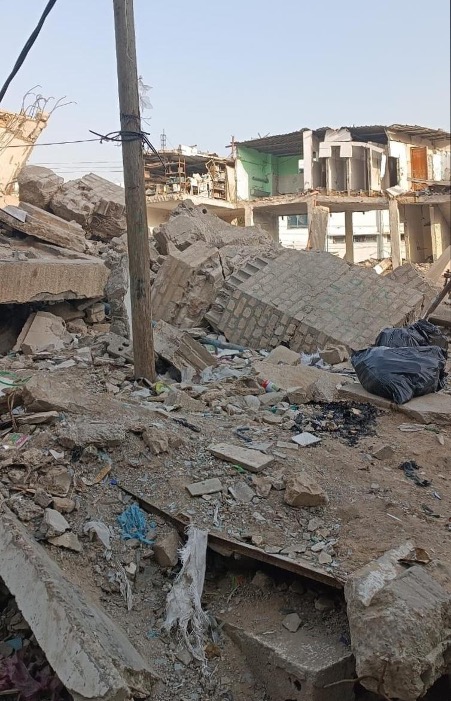
The Great Omari Mosque, the largest and oldest mosque in Gaza, was attacked in November 2024 when we were displaced at my grandparents’ house.
The 1,400-year-old mosque’s minaret was destroyed, and parts of the mosque were damaged. My grandfather’s health worsened when he heard that the mosque where he used to pray was destroyed.
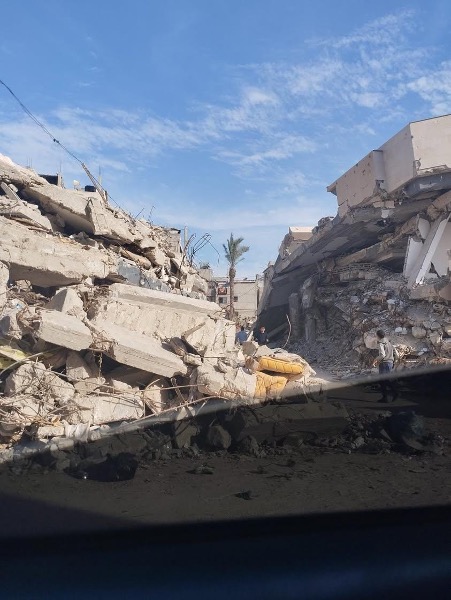
It felt like a provocation to Muslims — making them witness their holiest places reduced to rubble. These are not just buildings — they are where we pray, where we cry, where we find relief, and where we leave our burdens behind to embrace the silence between their walls.
They are spaces where we gather, share lessons and advice, and read and memorize verses from our Holy Quran.
Makeshift Spaces
Muslims’ love for their prayers was clearly shown through the creation of chapels in some areas of the Strip — open spaces where people can pray together, like in mosques. But these makeshift spaces have no walls or ceilings, only fabric or plastic sheets that barely shield prayers from the scorching sun and the heavy rain.
But hasn’t Israel targeted religious sites? In fact, many attacks on these chapels have taken place without mercy. Each time, Israel offers a justification, claiming that such places are being used by Hamas leaders for “terrorist” activities or as hiding spots.
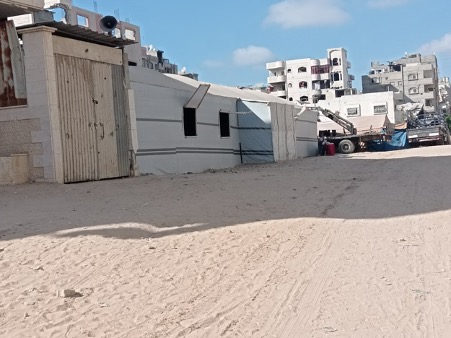
Targeting churches, mosques, and chapels has been part of Israel’s systematic campaign to destroy all that is sacred — to erase people’s faith by showing that even their holiest places can be reduced to rubble and so their faith.
But what they fail to understand is that faith does not reside in buildings. It lives in hearts and minds, and no missile can uproot what is deeply rooted within.
We once longed to hear the sound of the Adhan — the call to prayer. We were deprived of it for months simply because Israel destroyed the minarets that used to carry the prayer’s call.
Violation of International Laws
Even during Ramadan, we couldn’t pray in mosques — a reality that left Gazan Muslims both sad and angry at a world where Israel’s actions are justified, even when they clearly violate international laws and target medical, educational, and religious institutions without accountability.
And for Christians, they know that their churches are no longer safe, and they could be targeted at any moment.
At least 1.9 million Palestinians have been displaced during the genocide, forcing them to seek refuge in places like schools and churches. All they want are wałls that can protect them from the harsh reality faced by those living in tents.
In Israel’s opinion, Gaza’s mosques, hospitals, churches, and schools are “terrorist” places that should be destroyed, regardless of the international laws that prevent any of these places from being touched. Yet this destruction continues every day in full view of 194 countries standing by with arms crossed, watching the annihilation but doing nothing to stop it.
(The Palestine Chronicle)
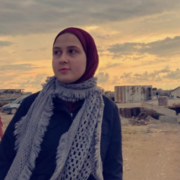
– Mariam Mushtaha is a second-year student at the Islamic University of Gaza, majoring in English translation. Despite the hardships of war, she discovered a deep passion for writing, using it as a means to express her experiences, document reality, and share untold stories. She contributed this article to the Palestine Chronicle.

No comments:
Post a Comment