
From Afghanistan, Iran, Pakistan to Central Asia, China positions itself not just as an economic juggernaut, but as a regional stabilizer and strategic mediator between key Eurasian states.
The Cradle

From Tehran's point of view, the emerging multipolar world is being accelerated by strong alliances, with the Iran-Russia-China axis central to reducing Washington's destructive regional footprint.
With its memberships in BRICS+ and the Shanghai Cooperation Organization (SCO) secured, and a Free Trade Agreement (FTA) signed with the Eurasian Economic Union (EAEU) in May, Iran now has a pathway to boost energy corridors, regional trade, joint investments, technological access, and deeper economic ties with neighbors.
Notable in this regard is Pezeshkian's August visit to Islamabad and the Iranian parliamentary initiative toward establishing a comprehensive strategic pact with Pakistan, a move seen as deepening bilateral and multilateral engagement instead of the border strife that has long sullied their relations.
Yet, despite the US exit from Afghanistan four years ago, the Islamic Republic is increasingly facing challenges with its eastern neighbor – with migrants, drug trafficking, border security, and water resource management among the main points of friction between the two sides. In addition, Tehran, along with its strategic Eurasian partners, has repeatedly voiced concern over the Taliban’s inaction on Afghanistan's humanitarian situation and its delay in forming an inclusive government.
Tehran’s current approach towards the Taliban is pretty much a region-wide standard: managing and controlling tensions, expanding relations, identifying mutual interests, and maintaining relative stability – all while keeping a distance from “official recognition.”
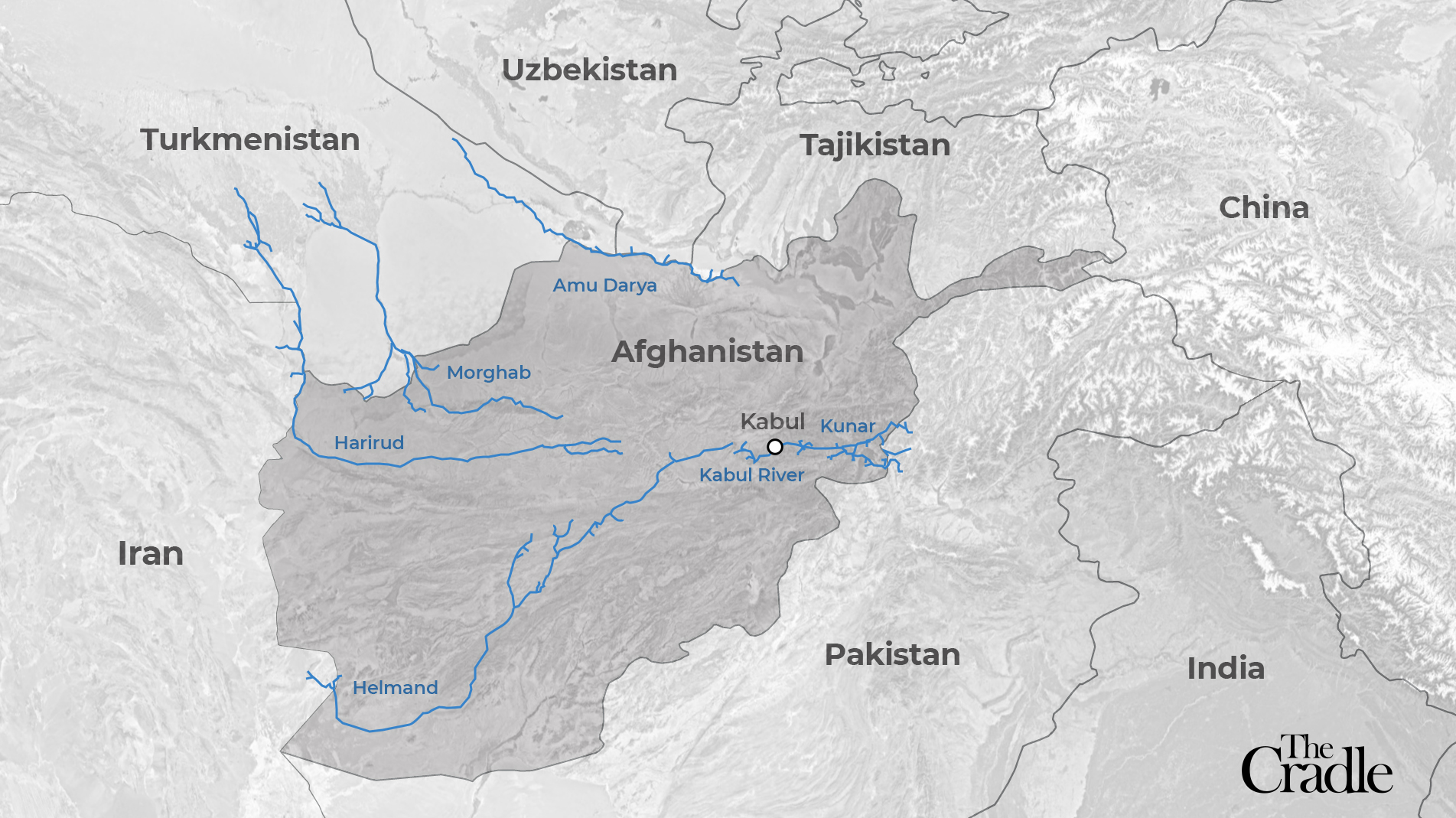
But the water dispute between Iran and Afghanistan over the Helmand River, exacerbated by climate change, prolonged drought, and Kabul’s dam-building campaigns, is bringing tensions to a head. Taliban Deputy Prime Minister Mullah Abdul Ghani Baradar’s recent assertion of Afghan water sovereignty at the Pashdan Dam inauguration further alarmed Tehran, particularly as projects like the Bakhsh-Abad Dam in Herat and curbs on the Friendship Dam's flow deepen the crisis.
Water, power, and the Taliban's regional posture
Iran is not the only nation suffering – four neighboring countries of Afghanistan are dependent on Afghanistan's water reserves. Given the fundamental importance of water and energy, the Taliban has made efforts to expand energy production and water resource management in order to reduce dependence and increase domestic production, energy self-sufficiency in electricity generation, and water control.
Afghanistan's water politics are now firmly entrenched in Taliban statecraft. For the group, water is not just a resource but a strategic instrument. As Taliban Minister of Defense Mohammad Yaqub Mujahid has declared:
“We are not violating the rights of our neighbors regarding the Amu Darya water, but we are taking our right and no one should prevent this.”
The Taliban’s policy on the Amu Darya River, which borders Tajikistan, Uzbekistan, and Turkmenistan, includes completing the 258-kilometer Ghosh Tepe canal to divert its waters deeper into Afghanistan, and its plans for the Harirud River include reinforcing the Salma Dam and initiating new dam construction projects. But Kabul's refusal to engage in trilateral water coordination with Iran and Turkmenistan signals a worrying turn toward unilateral action that fails to consider its neighbor's critical water needs.
Meanwhile, water disputes with Pakistan are escalating. Despite shared transboundary rivers, there is no formal water-sharing agreement between Islamabad and Kabul. The Taliban is restricting water flows into Pakistan and advancing multiple dam initiatives, most notably the Shah Tut Dam on the Kabul River and a planned dam on the Kunar River. These developments are setting the stage for a serious, potentially destabilizing crisis for Pakistan.
Beijing courts Kabul, but on its own terms
Elsewhere, the Taliban is leaning heavily on Beijing to help revive Afghanistan's economy and secure a place in the Belt and Road Initiative (BRI). Though Afghanistan's inclusion in the China–Pakistan Economic Corridor (CPEC) remains largely symbolic, the Taliban views China as a gateway to economic revitalization.
During the Sixth China–Afghanistan–Pakistan Trilateral Foreign Ministers' Dialogue, which was held in Kabul last week, the Taliban’s acting Foreign Minister, Amir Khan Muttaqi, stated that the Islamic Emirate intends to turn Afghanistan into a regional economic hub. He noted that cooperation between Afghanistan and China has expanded in various fields.
Taliban Prime Minister Mullah Mohammad Hassan Akhund also praised the Chinese government and people for holding a friendly and positive attitude towards Afghanistan, and thanked Beijing for speaking up for the country on the international stage.
Beijing, for its part, views Afghanistan through a geopolitical lens: as a land bridge between West Asia, Central Asia, and South Asia, and as a strategic extension of its 25-year cooperation pact with Iran.
After the Taliban came to power in Afghanistan in August 2021, Beijing has pursued greater economic engagement with the group, encouraged international engagement with the Taliban, lifted economic sanctions, and supported the construction of a cross-border railway from Uzbekistan to Pakistan, through Afghanistan.
Still, China is wary about the risks. The Taliban's lack of international legitimacy, Afghanistan's internal instability, and the threat of extremist groups, including ISIS and Uyghur militants operating via the Wakhan Corridor, remain major deterrents to larger-scale investment.
Nevertheless, Beijing continues to push for sanctions relief, promoting infrastructure projects like the trans-Afghan railway, and signaling support for greater regional integration.
China's trilateral formula: Economic glue or security shield?
Through platforms like the SCO Working Group on Afghanistan, China is crafting a model of multilateral engagement that hinges on trilateral diplomacy. The trilateral meeting of foreign ministers in Kabul strengthened this approach: economic cooperation, yes, but also counterterrorism pledges.
Beijing has facilitated the elevation of Taliban–Pakistan diplomatic ties, brokered trust-building steps like high-level visits, and encouraged pragmatic security coordination. Trilateral mechanisms, including those in May and July, have aimed to stabilize Afghanistan–Pakistan ties amid persistent cross-border violence.
While Islamabad welcomes renewed political and trade momentum with Kabul, it remains dissatisfied with Taliban inaction on security cooperation, particularly in curbing militant threats.”
In this approach, China and Pakistan are considering pressuring the Taliban to take concrete and verifiable actions against the Tehreek-e-Taliban Pakistan (TTP) and the Balochistan Liberation Army (BLA).
China's message is clear: Economic carrots come with security strings. The Taliban’s top diplomat Muttaqi may insist on decoupling economic cooperation from political demands, but Beijing seeks ‘guarantees.’
Beijing builds multipolar momentum
China is trying to include the Taliban in multilateral processes by playing the role of a Big Brother and a facilitator, but these interactions do not amount to granting full legitimacy.
In this framework, joint coordination in the fight against terrorism seems to be seen as an important prerequisite, followed by deepening trilateral cooperation in trade, transit, regional development, health, education, culture, counternarcotics, and the expansion of the CPEC.
However, China’s strategic calculus is not limited to Kabul and Islamabad. Beijing’s earlier success in brokering the Iran–Saudi rapprochement demonstrated its growing credibility as a Eurasian mediator. Reinforcing this notion, Zhu Yongbiao, the executive director of the Research Center for the Belt and Road at Lanzhou University, was quoted by the Global Times as saying, “This approach has further shaped China's image as a positive and reliable diplomatic actor.”
Tehran could now be eyeing a China–Iran–Taliban trilateral format to de-escalate water tensions and improve cross-border coordination. Such a platform would allow Iran to bypass western-dominated institutions while engaging both Kabul and Beijing in mutually beneficial arrangements.
Crucially, China’s role in these trilaterals is not one of passive facilitation. It is actively shaping outcomes that serve its long-term interests, which include regional stability, secure trade routes, and containment of extremist threats to its own frontier.
Whether viewed as a Big Brother or facilitator, China is setting the terms of engagement in a region long destabilized by western military adventurism. The trilateral mechanisms may be fragile, but they are a test case for a new kind of diplomacy anchored in Eurasian multipolarity.

No comments:
Post a Comment