

In the aftermath of a political assassination, myth often rushes in to fill the vacuum of fact. Saeed Zahedi's seminal work stands as a powerful corrective, using a vast archive of primary sources to reconstruct the bombing that killed Iran's top officials.
The assassination of then-President Mohammad Ali Rajaei and then-Prime Minister Mohammad-Javad Bahonar on August 30, 1981, remains one of the most pivotal and destabilizing events in the early history of the Islamic Republic of Iran.
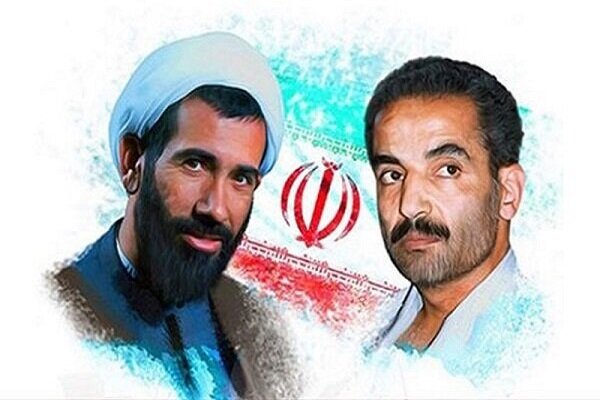
The bombing, which targeted a high-level National Security Council meeting, was not merely a tragic loss of life but a profound political earthquake whose aftershocks reshaped the nation's trajectory.
Understanding this complex event requires moving beyond simplistic narratives and confronting a web of political intrigue, conspiracy, and enduring mystery.
This report provides an analysis of Saeed Zahedi's seminal work, “A Reliable Account of the Prime Minister's Office Bombing.” Zahedi's book distinguishes itself as a meticulously researched investigation that eschews sensationalism in favor of a sober, evidence-based approach.
Drawing on an extensive archive of primary sources—including documents from the Islamic Revolution Document Center, contemporary newspapers, and firsthand accounts—the author reconstructs the event in three critical phases: pre-explosion, explosion, and post-explosion.
Our report on the book will examine Zahedi's key arguments, including his exploration of the "martyrdom-making scenario" involving Masoud Kashmiri, the role of infiltrators (operatives), and the intense political maneuvering that followed the power vacuum.
Furthermore, we will assess the book's significant contribution to the historiography of the Iran-Iraq War era, evaluating how it challenges accepted conclusions and contextualizes the bombing within the broader internal conflicts and external pressures of the nascent Revolution.
Ultimately, this report aims to elucidate how Zahedi's balanced and thorough account provides an indispensable resource for understanding the complexities of this tragedy and its enduring impact on Iranian politics and society.
Saeed Zahedi's “A Reliable Account of the Prime Minister's Office Bombing” offers a detailed historical investigation into the August 30, 1981, bombing of the National Security Council meeting at the Iranian Prime Minister’s Office, which resulted in the deaths of then-President Mohammad Ali Rajaei and then-Prime Minister Mohammad-Javad Bahonar.
Drawing on extensive research from the Islamic Revolution Document Center, the Institute for Contemporary Historical Studies, and period newspapers (Kayhan, Ettela'at, and Jomhouri Eslami), Zahedi reconstructs this pivotal event.
The book, structured in seven chapters, meticulously examines the pre-explosion, explosion, and post-explosion phases.
It navigates documented narratives and firsthand accounts to clarify ambiguities, political complexities, and untold stories surrounding the disaster.
Specific topics explored include the "martyrdom-making scenario" involving Masoud Kashmiri, the role of infiltrators in shaping post-explosion narratives, subsequent accusations and speculation, President Rajaei's trust in Kashmiri, and Kashmiri's alleged attempts to target Imam Khomeini's residence.
This book provides historians, researchers, and anyone interested in Iranian history with a documented and reliable perspective on this significant tragedy.
Zahedi's work stands out for its commitment to presenting a balanced and thoroughly researched account, avoiding sensationalism and partisan narratives.
By cross-referencing various sources and meticulously analyzing discrepancies, the author challenges previously accepted conclusions and sheds light on the event's enduring impact on Iranian politics and society.
The book delves into the immediate aftermath, exploring the power struggles and political maneuvering that followed the assassination of two of Iran's highest-ranking officials.
It investigates how the bombing was used to consolidate power and shape the political landscape in the years that followed.
Furthermore, "A Reliable Account…" contextualizes the bombing within the broader framework of the early years of the Islamic Revolution, examining the internal conflicts and external pressures that contributed to the volatile political climate.
It provides a valuable resource for understanding the complexities of this period and the enduring legacies of the individuals and events involved.
Reported by Tohid Mahmoudpour

No comments:
Post a Comment