
By Robert Inlakesh
 Iranian Supreme Leader Ali Khamenei, US President Donald Trump and Israeli Prime Minister Benjamin Netanyahu. (Design: Palestine Chronicle)
When Israel attempted the same kind of decapitation strike against the Islamic Republic, it clearly backfired and did not inflict anything resembling a kill blow.
As Israel prepares for a new showdown with Iran, it is working alongside the United States to put a stranglehold on Tehran by imposing a range of challenges across the region. The goal is to rob the Islamic Republic of its allies and set up new security challenges that could prove existential.
A new article published by Foreign Policy claims that Israel will launch a new war of aggression against Iran by December, noting that it could possibly begin before the end of August.
As noted in the piece, the Iranian military is preparing for such a showdown and has been putting various defense measures in place.
The rhetoric coming from senior Iranian officials, both on the diplomatic and military levels, has also been notably aggressive. For the first time in recent memory, the Islamic Revolutionary Guard Corps (IRGC) has even been making references to the historic battle of Karbala, in anticipation of the kind of all-out war they anticipate facing.
Another major shift has been a similar change in tone from the Hezbollah leadership in Lebanon, which is also referencing Karbala and whose Secretary General has adopted the Hamas motto of “victory or martyrdom” in its approach to the war with Israel.
Couple this with the surprising confidence from the leadership of the Hamas armed wing, Al-Qassam, and it is clear that there is an anticipated regional showdown afoot.
Yet the signs of an upcoming war are not limited to rhetoric, nor is it only coming from one side. It has become clear that Hezbollah has been growing in strength and spending time rebuilding its arsenal following its war with Israel that technically ended in late November 2024.
Even Zionist think-tanks like the Washington Institute for Near East Policy (WINEP) have admitted that it appears weapons transfers through a destabilized Syria have managed to continue, despite crackdowns from the regime in Damascus.
In an isolated conflict between Israel and Hezbollah, it is understood that a stalemate is the anticipated outcome. This hypothesis was proven as the Israeli military failed to achieve success during its ground operation inside southern Lebanon, even after assassinating most of Hezbollah’s senior leadership and carrying out its terrorist pager and beeper attacks.
Even with all of the advantages possible, beyond what any analyst had anticipated, the Israelis had still failed to achieve a knockout blow against the group.
When Israel attempted the same kind of decapitation strike against the Islamic Republic, it clearly backfired and did not inflict anything resembling a kill blow.
In Lebanon, while the ceasefire did not end the Israeli aggression or occupation of Lebanese territory, allowing for daily attacks across the country without a response, the Iran conflict ended in a stalemate, where Tehran managed to fire the last shots.
Strangling Iran
Understanding well that Israel does not possess the power to force regime change in Tehran alone, even with the US playing a support role during the “12-day war”, it decided a ceasefire rather than a regional conflagration was a better choice. Iran, for reasons still unknown, decided to play ball and ended what it called “Operation True Promise 3”.
Perhaps Iran saw it better to halt all operations, hoping to learn from its mistakes, tackle a vast network of spies, terrorist cells, and Mossad operatives across the country, while building new capabilities. However, nobody truly knows the answer to this question, especially as Israel was beginning to buckle under the pressure of Iran’s daily ballistic missile attacks.
As mentioned above, any war that is to occur between Hezbollah and Israel is viewed as resulting in an inevitable stalemate, where one side will be weakened more than the other, but there will be no decisive kill blow.
However, if Hezbollah were to engage in a war with Israel as one of multiple fronts, suddenly the conflict would be transformed into an existential one.
Knowing this, Israel desperately seeks to prevent Hezbollah from rebuilding to peak strength and maintaining a large capacity for intense fighting in the event of a larger-scale conflict with Iran. Although it could handle Iranian missiles alone, a major assault from Lebanese Hezbollah at the same time could prove fatal.
Forwarding the Israeli agenda that would prepare them for a new round of hostilities with the Islamic Republic, the United States has sought to pressure the Iraqi government to dissolve the Iranian-aligned Hashd al-Shaabi or Popular Mobilization Units (PMU), while also ordering its puppets in Beirut to disarm Hezbollah by force.
The PMU is the largest non-state armed force in the region, with approximately 240,000 soldiers according to the latest estimates. Hezbollah, meanwhile, has a standing armed force of around 100,000 men. This also fails to consider what smaller militias, especially the Palestinian resistance in Lebanon, could also muster, given the need to do so.
Another initiative launched by the US Trump administration has been the pursuit of US development and security rights over what is known as the Zangezur Corridor – a narrow passage between Armenia and Azerbaijan – as part of a wider peace deal between both sides.
The push for this deal came only shortly after the US-Israeli attack on Iran and would essentially crush Iran’s role in the Caucasus, which was met with harsh criticism from Ali Akbar Velayati, senior adviser to Ayatollah Seyyed Ali Khamenei, who vowed to destroy the “American corridor” and that it would become a “graveyard for Donald Trump’s mercenaries”.
Disarmament of Hezbollah and the PMU would ultimately leave Iran in an extremely weak position regionally, which is the US-Israeli goal. The idea is that, failing an attempt to cut off the head of the Iranian-led Axis of Resistance, they are instead slicing off its arms and legs, leaving Iran isolated and without defensive mechanisms.
This is also why there has been a push from the pro-US Arab regimes, all of whom are fully complicit in the Gaza genocide. They have followed US orders and are attempting to pressure Hamas to disarm.
To this effect, Egypt is reportedly training a Palestinian Authority collaborator force to control Gaza and even proposing an international coalition to invade the besieged territory to uproot Hamas for Israel, selling this as a means of saving Palestinians. However, if this plan is forwarded, it is likely to collapse very quickly for a range of reasons.
Israel’s publicly announced intentions are to occupy Gaza as of now, as its leadership refrains from commenting on Lebanon. Yet their alleged plans for Gaza don’t make much sense at all, as I explained in more depth in a recent piece here for the Palestine Chronicle.
Another major sign that Israel’s alleged operation to occupy Gaza, which they had then changed to claim would only target Gaza City, is that we are hearing a large number of unconfirmed reports about major clashes between Israel’s senior leadership.
Approaching this rationally, we have all witnessed the enormous efforts of the Israeli military censorship regime to block almost all security-related content from leaking into the Israeli media.
Even in the aftermath of Iran’s strikes against Israel, there are no whistleblowers, major damage assessment reports, or even leaked photos/videos of the countless sites struck throughout the country by Iranian missiles and drones, yet somehow we are hearing daily reports about a breakdown amongst the senior leadership who manage security issues. This does not seem plausible.
We also know that Israeli media have worked alongside their contacts in US media to launch several deception campaigns throughout the course of the past 22 months, including in manufacturing a completely fabricated feud between Trump and Netanyahu.
While regime change in Iran is the ultimate goal, Israel has clearly set goals to achieve in Lebanon, and a scheme is certainly being hatched. Whether this will mean an invasion, particularly through using Syrian territory in order to invade the Bekaa, or a large-scale bombing campaign to weaken Hezbollah and stunt its growth amidst a State crackdown on its weapons, a new war has to be anticipated.
It is plausible that the Israelis will again decide to launch a surprise attack on Iran, this time attempting to assassinate Ayatollah Khamenei, but it would appear more strategically beneficial for them to first deal a blow in Lebanon first. Yet, every move it can take will result in a likely backlash.
(The Palestine Chronicle)
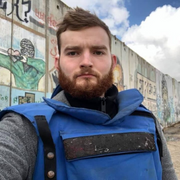
– Robert Inlakesh is a journalist, writer, and documentary filmmaker. He focuses on the Middle East, specializing in Palestine. He contributed this article to The Palestine Chronicle.

No comments:
Post a Comment