TEHRAN, (MNA) – The 61st meeting of the OPEC+ Joint Ministerial Monitoring Committee (JMMC) was held via video conference with the oil minister as the 2025 OPEC Conference president in attendance.
The committee convened Monday with Mohsen Paknejad participating. In the meeting, the OPEC Secretariat presented a brief report, projecting a positive outlook for the remainder of 2025 through 2026.
OPEC’s latest monthly report forecasts global economic growth at 2.9% in 2025, rising to 3.1% in 2026. Oil demand growth is expected to reach about 1.3 million barrels per day in both 2025 and 2026. Low oil inventory levels also indicate healthy and balanced fundamental market conditions.
The committee reviewed member production levels for May and June 2025, noting OPEC+ members’ strong compliance with output commitments aimed at ensuring oil market stability. It stressed the need for full adherence by all participating countries.
The OPEC+ ministerial committee, which serves as a monitoring body for the OPEC+ agreement, meets every two months and can recommend policy adjustments. These proposals are then discussed and approved at OPEC+ ministerial meetings attended by all members. The next committee meeting will be held on October 1.
TEHRAN, (MNA) – President Masoud Pezeshkian says no power will be able to bring the Iranian people to their knees, and no obstacle can hinder their progress as long as they maintain their unity and coherence.
Speaking in a ceremony in the city of Zanjan on Thursday, Pezeshkian hailed the “honorable” and strong defense of the Iranian people, police, and security forces, as well as missile scientists, during 12 days of Israeli-US war of aggression against the Islamic Republic on June 13.
He appreciated the great efforts made by the Iranian Armed Forces, including the Army and the Islamic Revolutionary Guards Corps (IRGC), during the imposed war.
"Despite all the enemies’ threats and pressure, these forces …defeated both the Zionist regime [which was equipped] with Iron Dome as well as the United States, which enjoyed all its advanced military equipment, and targeted them with their missiles,” the president said.
Pezeshkian emphasized that the Iranian nation and Armed Forces defended national sovereignty and territorial integrity despite facing harsh sanctions.
TEHRAN, (MNA) – German Foreign Minister Johann Wadephul signaled his government could speed up the process of recognizing a Palestinian state should Israel annex the West Bank.
Ahead of a two-day trip to the occupied Palestinian territories, Wadephul said his government won’t deviate from its goal of a two-state solution, adding that “for Germany, the recognition of a Palestinian state is rather the end of the process. But such a process must begin now.”
As other European governments are hardening their position on Israel with respect to the humanitarian disaster in Gaza, Germany, too, is under growing pressure despite its traditionally close alliance with the Jewish state. There’s been a groundswell within Europe and beyond, urging Israeli Prime Minister Benjamin Netanyahu to address the crisis, according to Bloomberg.
After a meeting of Germany’s security cabinet on Monday, Chancellor Friedrich Merz called on Israel to immediately alleviate the “catastrophic” humanitarian crisis in Gaza. Merz added that his government was considering potential further steps should the situation not improve, although he didn’t elaborate on what they were.
While both French President Emmanuel Macron and UK Prime Minister Keir Starmer have said this month that their governments could recognize a Palestinian state, Merz made clear that recognition of Palestinian sovereignty can only be among the last steps toward a comprehensive agreement, the report added.
Iranian professor Mahmoud Fotouhi-Firouzabad has been honored with the prestigious 2025 IEEE PES Roy Billinton Power System Reliability Award, in recognition of his outstanding contributions to the field of power system reliability and engineering.
In a statement on its website, the IEEE Power & Energy Society (PES) announced that Professor Fotouhi-Firouzabad, the former president of Sharif University of Technology, had won the prestigious award for the current year.
Fotouhi-Firouzabad, a professor at the Department of Electrical Engineering at Tehran’s Sharif University of Technology, received the award “for contributions to methods, algorithms, and solutions for assessment and enhancement of reliability, resilience, and operational efficiency of electric power delivery systems under uncertainty,” the statement said.
The award was established by the IEEE Power & Energy Society (IEEE PES) in honor of Professor Roy Billinton, a pioneer in power system reliability, and is granted to individuals who have made outstanding contributions in this field.
Professor Fotouhi-Firouzabad “has published over 850 papers and 8 books, gave tutorials, presentations and seminars in over thirty countries and delivered over one hundred short courses on system reliability, and served IEEE PES committees and other industry committees,” the statement went on to say.
“He supervised more than 120 Ph.D. and Master degree candidates who are spread out in US, Canada and other countries,” it added.
The award ceremony took place on July 29, 2025, during the IEEE PES General Meeting 2025 held in Austin, Texas, the United States.
According to the IEEE Power & Energy Society, awards and scholarship programs are dedicated to annually recognizing industry leaders and engineering students for their technical expertise and significant service contributions to society and to the power and energy industry.
TEHRAN, (MNA) – The Palestinian Islamic Resistance Movement, Hamas, says that the resistance movement will continue the path of its former Politburo Chief Ismail Haniyeh who was assassinated in an Israeli airstrike in Tehran pn July 31, 2024.
In a statement released on the occasion of the first anniversary of former Politburo Chief of the Palestinian Islamic Resistance Movement, Ismail Haniyeh, Hamas stated that the attack occurred just a day after Haniyeh attended the inauguration ceremony of Iran’s President Masoud Pezeshkian, underscoring the Zionist regime’s blatant disregard for international norms and sovereignty.
This cowardly act of aggression, aimed at silencing a towering figure in the Palestinian struggle, has only galvanized the resolve of the Palestinian people and their resistance, the statement added, Turkish Ilkha News Agency reported.
Haniyeh, a symbol of resilience and unity, was celebrated across Palestine and beyond as a preacher, mujahid, skilled orator, and national leader whose life was dedicated to the liberation of his homeland. A close companion of Hamas’ founder, Sheikh Ahmad Yassin, Haniyeh’s journey was marked by sacrifice, courage, and an unyielding commitment to the Palestinian cause. His assassination came during the historic Battle of Al-Aqsa Flood, a transformative moment that continues to reshape the political and military landscape of the region. As stated on Hamas’ official website, this battle, launched on October 7, 2023, marked a seismic shift, exposing the fragility of the Zionist occupation and affirming the Palestinian people’s unbreakable will.
The anniversary of Haniyeh’s martyrdom arrives as the Palestinian resistance, led by the heroic Al-Qassam Brigades, continues its relentless struggle against the Israeli occupation’s ongoing aggression and genocide in Gaza. From the northern strongholds of Beit Hanoun and Beit Lahia to the southern fronts of Khan Younis and Rafah, resistance fighters have executed daring operations, such as “David’s Stones,” targeting the occupation’s so-called “Gideon Wagons” and setting deadly ambushes in neighborhoods like Al-Shuja’iya and Al-Zaytoun.
Hamas reaffirmed Haniyeh’s vision, stating, “Our people, who rose on October 7 against shackles and oppression, will not retreat until the land is free of occupation, crowned with freedom, independence, return, and self-determination, the statement added.
TEHRAN, (MNA) – Iranian parliament speaker has stressed to his Russian counterpart that the two countries need to strengthen their bilateral ties in the security, military, economic, political, and even social fields.
Speaker of the Iranian Parliament Mohammad Bagher Ghalibaf and the Chairwoman of the Federation Council of the Russian Federation Valentina Matviyenko in a meeting in Geneva emphasized strengthening relations between the two countries in the security, military, economic, political, and even social areas.
In the meeting, the Iranian speaker stated that the events that occurred in Gaza, as well as the Zionist regime's aggressive attack on Iran, have changed regional equations and international conditions, adding that "This criminal attack carried out by the Zionist regime and the United States was a deceptive move and contrary to international law."
Ghalibaf stated that the aggression by the United States and the Zionists took place two days before the sixth round of nuclear negotiations, adding that "They martyred a number of our commanders, scientists, and people in a terrorist manner, but they were met with a very strong and decisive response from the Islamic Republic."
Stating that the Americans and the Zionist regime targeted Iran's nuclear facilities in violation of international law, he added, "In the meantime, I appreciate Mr. Putin's position and the support of the Russian Duma, which condemned such an act of aggression."
On July 18, 2025, George Galloway and I launched the "One-State Palestine" campaign alongside Professor David Miller.
Ten days later, British Prime Minister Keir Starmer announced his government would recognize the state of Palestine in September.
I’m not claiming our campaign forced Starmer’s hand. It’s the public outrage against the Israeli regime—now reaching fever pitch—that seems to be concentrating Starmer’s mind.
He has refused to describe the slaughter of tens of thousands of Palestinians as genocide, and he has previously publicly stated his unqualified support for Zionism.
So, Starmer’s announcement was nothing more than political expediency—an attempt to give the impression that he is responding to public pressure.
Recognizing the state of Palestine while allowing the genocidal Zionist colony to remain in place would be wholly inadequate.
But even Starmer’s mealy-mouthed proposition will not go ahead, it seems, if Israel agrees to a ceasefire and revives what he described as “the prospect of a Two-State Solution.”
But, importantly, there is no such thing as a “Two-State Solution.”
The 1993 and 1995 Oslo Accords were supposed to pave the way for a two-state solution, but Israel reneged on the agreement signed by then-Palestinian President Yasser Arafat, then-Israeli Prime Minister Yitzhak Rabin, and then-US President Bill Clinton.
The only credible and long-term resolution to this 77-year-long injustice is one singular state from the Jordan River to the Mediterranean Sea where all citizens have equal rights.
It must also afford the absolute right of return for all Palestinians and their descendants who have been ejected from their homes, going right back to the Nakba in 1948.
The truth is that the creation of Israel was an abomination from the very start. There was no justification for Britain to offer a land that didn’t belong to it to a people who had no legitimate claim to it, at the expense of the people who lived in it.
The decision followed a lengthy campaign of terrorism by Zionist extremists that went on for decades.
Not content with the UN’s proposed borders for the planned Israeli "state," which encompassed a significantly larger area than that allocated to the Palestinians, Zionists made a land grab in 1948. Yet the Jewish population was around half that of the indigenous Palestinian population.
Zionists then made a further land grab in 1967 and have been illegally occupying the West Bank, East Jerusalem, and the Golan Heights ever since. Now, the Knesset has voted by a majority of 71 to 13 to formally annex the occupied West Bank.
The arrogance of the Zionist regime is off the scale. In addition to its illegal occupations, the Knesset passed the so-called "Nation-State Law" in 2018. This legislation officially relegated non-Jewish inhabitants to second-class citizens.
It enshrined Jewish supremacy into law by asserting that only Jews have the right to national self-determination and downgraded Arabic from an official language.
The international community has shamefully turned a blind eye to Israel’s failure to abide by its legal obligations, which has led directly to the ongoing genocide in Gaza. These failures are numerous and have allowed Israel to think it can act with impunity.
They have stood by while Israel atomised the occupied West Bank, constructed a 9-metre-high separation wall, and populated the territory earmarked for a future Palestinian state with 700,000 Zionist settlers.
This illustrates the implausibility of a Palestinian state being established alongside a Jewish supremacist state.
By contrast, the One-State Palestine campaign advocates a unitary democratic state—a single sovereign body encompassing Israel and the Palestinian territories, guaranteeing equal citizenship to all inhabitants, irrespective of ethnicity or religion.
This model draws inspiration from other historical transitions from outright racist regimes to democracies, such as the end of apartheid in South Africa.
It was Nelson Mandela himself who said, “We know too well that our freedom is incomplete without the freedom of the Palestinians.”
Under such a system, all residents would enjoy equal voting rights, freedom of movement, access to land and resources, and protection under the same laws.
Jews and Palestinians alike could maintain their cultural and religious identities within a shared civil framework. Hebrew and Arabic could remain co-official languages, and both historical narratives could coexist in public discourse and education.
But there is a crucially important caveat: just as it would be inconceivable to establish a sovereign Palestinian state alongside a Jewish supremacist state, the same is true for Palestinians and Jewish supremacists coexisting in a unified state.
It would be entirely wrong to expect Palestinians to live alongside the very people who have been oppressing them since the Zionist colony was created.
At the end of World War Two, the Allied powers initiated a denazification process to remove Nazi ideology and influence from German and Austrian society.
It involved eliminating Nazi symbols, Nazi laws, and Nazi personnel from public institutions in order to dismantle the Nazi regime's structures and prevent the resurgence of Nazi ideology. It also saw prominent Nazis being tried for war crimes and crimes against humanity.
There are clear parallels with Israel today. When the Zionist entity is eventually toppled, I suspect that those Israelis with dual nationality will go back to where they originated.
But for those who remain, there will need to be a comprehensive de-Zionisation process similar to the denazification of Germany and Austria, because Jewish Israelis have been radicalised.
A poll published by the Israeli newspaper Haaretz in June this year found that 82% of Israeli Jews support the expulsion of the Palestinians from the Gaza Strip to other countries. Furthermore, 56% even wanted to see the forced expulsion of Arab citizens of Israel to other countries, too.
It is clear that a dangerous derangement has gripped the Jewish Israeli population, which will have to be exorcised to secure a long-term, harmonious future for a unitary state.
Achieving the goal of a One-State Palestine is undeniably difficult and will be beset by enormous challenges. But the principle at stake is the moral imperative of the twenty-first century.
No group should have supremacy over another, and everyone should be treated as equals under the law.
I believe that the One-State Palestine proposal that we are advocating offers the best chance of achieving that. I know that some people say that our idea is outlandish and unachievable.
So, let me conclude by quoting Mandela again, who said, “It always seems impossible until it's done.”
Sign up to support One-State Palestine here: onestatepalestine.org
Chris Williamson is a former Labour MP and Shadow Minister, who served in British Parliament from 2010–2015 and 2017–2019. He also hosts Palestine Declassified show on Press TV.
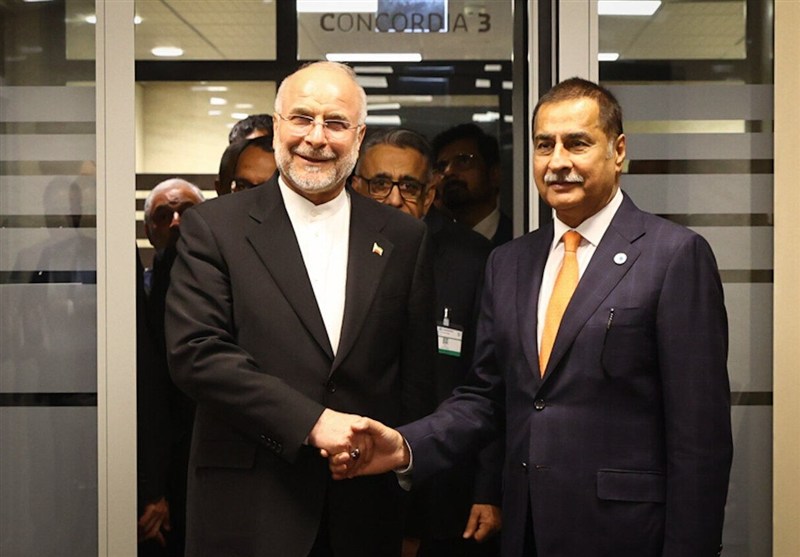
TEHRAN (Tasnim) – Iranian Parliament Speaker and his Pakistani counterpart Ayaz Sadiq, during a meeting on the sidelines of the Sixth World Parliament Speakers' Conference in Geneva, called for stronger unity among Islamic nations to confront the schemes of the Zionist regime.
Mohammad Baqer Qalibaf praised Pakistan’s firm stance against recent Zionist and American aggression against Iran and expressed gratitude for Islamabad’s continued cooperation with Tehran.
“In the aggression that took place, a number of our country's commanders were assassinated,” Qalibaf said, referring to Israeli airstrikes carried out with full American backing.
“The Islamic Republic gave them a decisive and crushing response.”
He warned that the Israeli regime, emboldened by US support, would not cease its belligerent actions against Muslim nations.
“They seek to divide Islamic countries,” he added.
“We must seriously stand against them.”
Both officials reaffirmed the importance of Islamic solidarity in the face coordinated Zionist efforts to destabilize the region and sow discord among Muslim states.
TEHRAN, (MNA) – Western media have reported that the Islamic Republic of Iran has been able to import five second-hand Boeing 777-200ER aircraft by circumventing sanctions.
In a bold move defying international sanctions, the Islamic Republic of Iran has quietly acquired five second-hand Boeing 777-200ER aircraft, formerly operated by Singapore Airlines and NokScoot. The aircraft, stored in Australia and Cambodia, were transferred through a complex arrangement involving a shell company registered in Madagascar. Now carrying the Madagascar registration prefix “5R,” these widebody jets are the first of their kind to join Iran’s civil fleet—and they’re already reshaping the future of Iranian aviation and tourism.
The new additions are widely believed to be destined for Mahan Air, Iran’s largest private carrier, which has long operated under U.S. sanctions. Despite restrictions, Mahan has continued flights across the Middle East, Asia, and parts of Europe. With the addition of long-haul Boeing 777s, the airline is expected to boost international connectivity and compete more effectively in regional markets.
The fleet expansion comes at a critical time for Iran, as the country pursues a tourism-driven strategy to attract foreign visitors and reintegrate into global travel circuits. The larger aircraft will enable the airline to serve a wider range of long-haul destinations, particularly from key markets such as Central Asia, Europe, and the Gulf.
Namibian President Netumbo Nandi-Ndaitwah (L), Zimbabwean President Emmerson Mnangagwa, and South African President Cyril Ramaphosa (R) are seen during the liberation movement summit in Kempton Park, South Africa.
Liberation movements from six African countries have gathered in Johannesburg, South Africa, to strengthen unity against Western interference, warning that external forces are attempting to divide African countries and recapture the continent economically.
Several heads of African states whose liberation movements now serve as governing parties in their respective countries gathered in Kempton Park, Johannesburg, over the weekend.
They reflected on their roles in the struggle for freedom and recommitted to unity while defending democratic gains against neo-colonialism.
The delegates also reflected on their role in improving and uplifting the standard of living on the continent.
Apart from internal political issues gripping the organizations, the leaders of the political parties also criticized the interference of Western countries in African affairs, blaming external forces from the West for fueling divisions on the continent.
In a united front, the parties, which were mostly represented by their presidents, vowed not to allow colonialists to recapture the continent through economic and other sanctions.
In response to the latest sanctions by US President Donald Trump, Zimbabwean President Emmerson Mnangagwa said the external forces have been unrelenting in their quest to obliterate liberation movements from the political radar in the region.
“However, we must remain emboldened by our rich liberation history, which is our greatest teacher. The millions of people who look to liberation movements with hope for a better tomorrow should be a source of inspiration,” he noted.
Mnangagwa added that the liberation movement needs the same vigor and energy that defeated the colonial powers to defeat them again.
“We defeated them in the past, and we shall defeat them again, and again and again. Through our unity and unbreakable solidarity, victory is always certain,” he said.
The president of Namibia and Swapo, Netumbo Nandi-Ndaitwah, said that there were concerted efforts by those who were opposed to independence, who masqueraded in economic, political and diplomatic conspiracies to undermine the gains of the movement.
“They are motivated, as we are all aware, by both domestic and foreign policy interests and actively seek to undermine the political dominance of our liberation parties, with the long-term objective of weakening and unseating us from power altogether,” she said.
Nandi-Ndaitwah underlined that those external forces wanted to divide and conquer while extracting the wealth of the continent to benefit their countries.
South African President Cyril Ramaphosa, for his part, said liberation movements should refuse to accept colonialism as fate.
“We also recall that the project to dismantle apartheid, racism, colonialism and hate was one which profited from international solidarity with the [Organization of African Unity] OAU Liberation Committee as well as the progressive diaspora and friends at the forefront,” he said.
Ramaphosa reminded the delegates that the struggles were not simply for political independence but for the total liberation of their people: economic, cultural, intellectual and social.
The African National Congress (ANC) closed the summit by handing over the leadership to the Chama Cha Mapinduzi (CCM) of Tanzania, which is scheduled to host the forthcoming summit.
TEHRAN, (MNA) – President of the National Assembly of People's Power and the Council of State of Cuba Juan Esteban Lazo Hernández has called for the implementation of international law and end of genocide in Gaza.
The Cuban speaker made the remarks in a meeting with Iranian Parliament Speaker Mohammad Bagher Ghalibaf on the sidelines of the Sixth World Conference of Speakers of Parliament in Geneva, Switzerland, on Wednesday.
Ghalibaf appreciated Cuba's clear positions in condemning the act of aggression by the Israeli regime and the United States against Iranian territory, noting that the two countries enjoy high potentials to expand their cooperation in all areas.
Iranian parliament speaker assessed capacity of cooperation between the two countries in various fields, especially in the field of economy, as good.
Referring to the Islamic Republic of Iran's capacities for joint cooperation with Cuba, Ghalibaf stated that there are good opportunities in this regard that can be achieved by operationalizing the agreements inked previously between the two countries.
The Cuban parliament speaker, for his part, said that the developments in the Middle East and North Africa (MENA) show that the Americans are trying to secure their interests through coercion.
Hernández noted that his country will spare no effort to take any action to implement the internation law and end the genocide in Gaza.
The president of the National Assembly of Cuba also called for the enhancement of bilateral cooperation between Cuba and Iran.
The Sixth World Conference of Speakers of Parliament is organized by the Inter-Parliamentary Union (IPU) in close collaboration with the United Nations. The event is taking place from July 29 to 31 at the Palais des Nations.
In another significant cultural milestone for Iran, the prehistoric sites of Khorramabad Valley in western Iran were officially inscribed on the UNESCO World Heritage List during the 47th session of the UNESCO World Heritage Committee in Paris on Friday.
This recognition marks Iran’s 29th site to receive the prestigious UNESCO designation.
Nestled within the vast cultural landscape of the central Zagros Mountains, these valleys chronicle an uninterrupted human presence and rich historical legacy, spanning from the ancient depths of the Paleolithic era to the dawn of the Iron Age.
The area proposed to UNESCO, known as “Khorramabad Valley,” covers a region stretching from Tang-e Shabikhun and Kaldar Cave in the north to Kanjeh Cave in the south, and Yafteh Cave in the west.
The core zone encompasses 414 hectares, with a buffer zone extending over 7,000 hectares.
Now, the rich tapestry of prehistoric caves in Khorramabad Valley, including Kaldar, Yafteh, Kunji, Gilvaran, Qamari, and the rock shelter of Ger Arjeneh, is proudly inscribed on UNESCO’s prestigious global list.
Archaeological evidence from these caves reveals an invaluable narrative of the continuous coexistence of Neanderthals and modern humans throughout various Paleolithic periods, dating back more than 63,000 years.
Gar Arjeneh Rock-Shelter
This momentous UNESCO inscription brings not only international acclaim to Iran’s cultural heritage but also presents a strategic opportunity for Lorestan Province in western Iran.
Experts say it offers a chance to showcase the region’s historical identity, cultivate sustainable tourism, attract cultural investments, and generate significant employment opportunities in handicrafts, services, and archaeological research.
Seyyed Reza Salehi Amiri, Minister of Cultural Heritage, Tourism, and Handicrafts, hailed the accomplishment as “Iran’s return to the global narrative of civilization.”
“This World Heritage inscription is not merely a symbolic victory; it is Iran’s clear declaration to the world that our voice in global dialogue is rooted in culture, diplomacy, and history,” he said.
“Carbon dating tests and internationally recognized documentation verify that the sites in Khorramabad Valley boast a human habitation history of over 63,000 years—an unmatched statistic for a single human settlement in any other country,” he added, referring to the scientific importance of the UNESCO inscription.
Kaldar Cave
The minister framed the achievement as a cultural response to the enemy’s Iranophobia project.
“At a time when our region is consumed by war and violence, the Iranian nation advances with the language of culture. The inscription of Khorramabad underscores that we are a people built upon stone, earth, peace, and wisdom -- not violence and dominance.”
While the dossier included Falak-ol-Aflak Fortress and the Broken Bridge, these sites were not inscribed in this round of UNESCO evaluations, despite Iran’s proposal.
However, Salehi Amiri confirmed that once the necessary documentation is complete, Falak-ol-Aflak Fortress will also be submitted for World Heritage registration.
The fortress, which has safeguarded the history, security, and identity of Lorestan province for centuries, is poised to reemerge on the international stage as part of global human heritage.
Ata Hassanpour, Lorestan’s Cultural Heritage Director-General, noted that UNESCO’s advisory body, ICOMOS, has acknowledged the prehistoric significance of the valley while leaving open the likelihood of including Falak-ol-Aflak Fortress in the future.
ICOMOS noted that the fortress, part of the Falak-ol-Aflak Mound, has yet to be fully explored, and if further research uncovers substantial evidence from the Upper Paleolithic period, it could be added to the heritage ensemble.
Kunji Cave
Why world heritage registration matters?
The global registration of a heritage site elevates its status on the international stage, allowing the world community to recognize its value as a significant legacy, Hassanpour told the Press TV Website.
“When a site is inscribed on the World Heritage List, its universal values are acknowledged, affirmed, and respected by the international community. This formal recognition emphasizes the global importance of the site and brings with it a sense of shared responsibility for its preservation,” he noted.
According to Hassanpour, the registration also improves protection standards.
In the aftermath of the destruction caused by World War II, a treaty was established to protect cultural and natural heritage, emphasizing its universal value and prioritizing its preservation, the provincial heritage director explained.
Countries that are parties to the Convention Concerning the Protection of the World Cultural and Natural Heritage can request assistance for training specialized personnel in conservation and preservation, he added.
“World Heritage registration also ensures that the protection of the site is carried out within a framework of international legal standards. As a result, such registration contributes to the preservation of the site for future generations and shields it from potential damage or destruction.”
Gilvaran Cave
The inclusion of a site on the World Heritage List, Hassanpour states, can significantly increase tourist visits, especially among heritage-seeking international travelers.
“This is particularly important for developing regions and countries, as it can become a source of relatively sustainable income and job creation.”
He also pointed out that the registration can revitalize handicrafts and create economic opportunities.
“World Heritage registration can stimulate the development of traditional handicrafts by promoting their sale and, in turn, encouraging the expansion of artisanal workshops in areas surrounding World Heritage sites. This can play a significant role in local economic development.”
Furthermore, the global recognition of a heritage site can instill pride among citizens and reinforce national identity, Hassanpour said.
“Seeing a piece of their culture acknowledged by the world can enhance collective self-esteem and cultural cohesion. World Heritage registration also opens the door for cultural exchange and international cooperation in fields such as research, preservation, and restoration," he noted.
"These collaborative efforts can lead to strengthened diplomatic relations among nations through shared cultural engagement and mutual understanding.”
Qamari Cave
What role did locals and NGOs play?
In the case of this World Heritage registration, several non-governmental organizations in both environmental and cultural heritage sectors became involved, the official told the Press TV website.
“They played a crucial role in cleaning and organizing the caves and nearby rivers. These NGOs participated extensively and supported our efforts, especially through public engagement campaigns and community mobilization," he remarked.
“This collaborative approach became one of the strengths of our nomination file. Their active involvement was a key factor both in the inscription process and in the broader context of preserving these invaluable cultural resources.”
In addition to this, he noted, the local communities have been thoroughly trained in preservation efforts and now view these caves as national treasures and are deeply committed to their protection.
Kaldar Cave
Iran’s diverse UNESCO treasures
Before the inscription of Khorramabad Valley, Iran had 28 sites on the UNESCO World Heritage List, scattered across various regions of the country.
These include ancient cities and monumental complexes like Persepolis and Pasargadae near Shiraz, Naqsh-e Jahan Square and the Jameh Mosque in Isfahan, and the Golestan Palace in Tehran.
The Burnt City (Shahr-e Sukhteh) lies in Sistan and Baluchestan in the southeast, while the Cultural Landscape of Maymand is in Kerman Province.
In the west, Kermanshah is home to the Bisotun Inscription, and Hamadan hosts Hegmataneh, an ancient Median capital.
Other sites are scattered throughout the country: Chogha Zanbil is located in Khuzestan, Soltaniyeh Dome in Zanjan, and the Armenian Monastic Ensembles in East and West Azerbaijan.
Shushtar’s Hydraulic System and Shush (Susa) are in the southwest, while the Hyrcanian Forests stretch along the Caspian Sea coast.
Yazd is known for its historic desert architecture, and Tabriz in the northwest for its grand bazaar. Lorestan’s Uramanat, the Sassanid sites in Fars, the Trans-Iranian Railway, and ancient caravanserais reflect Iran’s historical significance as a crossroads of civilizations.
TEHRAN (Tasnim) – Canada announced its plan to officially recognize the State of Palestine at the upcoming UN General Assembly, amid escalating outrage over Israel’s genocidal campaign in Gaza.
Canadian Prime Minister Mark Carney declared Wednesday that Ottawa will formally recognize Palestine in September, aligning with similar moves by France and Britain and intensifying diplomatic isolation of the Tel Aviv regime.
Carney attributed the decision to the catastrophic humanitarian crisis in Gaza, directly blaming the Israeli regime for engineering mass starvation.
"The prospect of a Palestinian state is literally receding before our eyes," Carney told reporters.
"Canada condemns the fact that the Israeli government has allowed a catastrophe to unfold in Gaza."
France had announced recognition last week, and Britain followed with a conditional pledge, threatening to do the same if Israeli aggression persists until September.
Carney said Canada's decision was partly based on assurances from the Palestinian Authority to pursue internal reforms and elections by 2026—excluding Hamas.
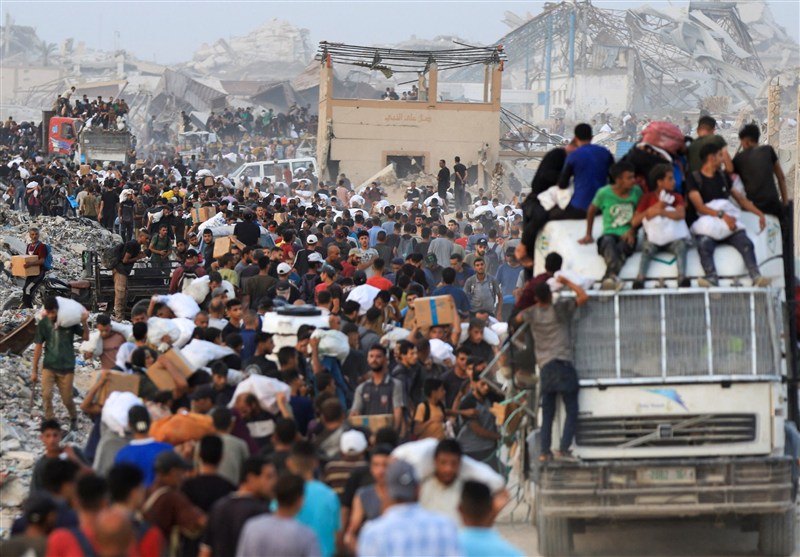
The move reflects rising global anger over Israel’s total blockade of humanitarian aid and its continued massacres of civilians. According to Gaza health officials, at least seven more people—including a two-year-old girl—died from starvation on Wednesday.
In the same timeframe, Israeli forces killed at least 50 Palestinians attempting to access food from UN trucks.
Despite overwhelming evidence of deliberate famine and collective punishment, the Israeli regime and its principal backer, the United States, condemned Canada's announcement.
“The change in the position of the Canadian government is a reward for Hamas,” Israel’s foreign ministry said, whitewashing its own war crimes.
US President Donald Trump echoed these claims, with a White House official saying recognition would be “wrongly rewarding Hamas.”
Trump’s envoy, Steve Witkoff, is expected in Israel Thursday to discuss Gaza, while Washington continues to shield Israel from international accountability.
Palestine has held UN observer status since 2012, recognized by more than three-quarters of member states—support now accelerating amid Israel’s deepening moral and political collapse.
Former US intelligence official Jonathan Panikoff said the recognition aimed to “increase pressure on Israel” but predicted limited impact unless Western support is fully withdrawn.
French President Emmanuel Macron welcomed Canada’s stance and said it revives “a prospect of peace,” though Tel Aviv’s far-right cabinet continues to escalate threats.
Zeev Elkin, a member of Benjamin Netanyahu’s security cabinet, warned that Israel could move to annex Gaza territory—further erasing any illusion of peace talks.
Meanwhile, Israeli finance minister Bezalel Smotrich openly called for rebuilding illegal settlements in Gaza, labeling it “an inseparable part of the Land of Israel.”
Efforts to mediate a ceasefire and prisoner exchange have stalled, as the Gaza death toll from starvation alone climbs to 154, including 89 children, according to Gaza’s health ministry.
In Deir al-Balah, Salah al-Gharably watched his two-year-old daughter die of hunger after doctors failed to obtain specialized milk.
“She starved,” he said. “We stood helpless.”
Though Israel promised a limited daily pause for aid convoys, UN officials say the deliveries remain woefully inadequate.
The Israeli war, launched on October 7, 2023, in response to Hamas operations, has turned into a systematic campaign of extermination.
Since then, Israeli forces have murdered over 60,000 Palestinians and reduced Gaza to rubble.
Despite international calls for restraint, Tel Aviv’s aggression persists—fueled by Western complicity and impunity.
But the tide is turning, and more nations are now choosing to stand with justice and the Palestinian people.