Thursday, October 31, 2024

Al-Aqsa Flood Examined: Realist Critics VS. Resistance Realities

In his article, Bader al-Ibrahim examines the critiques surrounding the Al-Aqsa Flood operation. Some critics frame their opposition through a "realist" lens, emphasizing stability and the human toll, often accusing supporters of ignoring civilian suffering. Al-Ibrahim questions whether this form of realism genuinely serves the Palestinian cause or simply aligns with prevailing power structures. In contrast, he suggests that resistance aims to challenge these structures, creating momentum for historical change.

Al-Ibrahim identifies Arab regime liberals as primary critics, many of whom advocate for a peace-centric realism focused on a two-state solution. He argues, however, that this approach lacks a genuine understanding of “realism”: over thirty years after the Oslo Accords, settlement expansion, and violence have eroded any meaningful prospects for a two-state framework, leaving these calls as little more than slogans. Other critics, he notes, predict inevitable Zionist victories based on Western technological superiority, viewing resistance as naive. Al-Ibrahim challenges this assumption, pointing out that technological dominance alone has not always guaranteed success in historical conflicts.
In addition to these ideological critiques, criticism also comes from Arab Spring liberals, including left-leaning liberals and Islamists, who question the costs of the Al-Aqsa Flood operation. Al-Ibrahim finds irony in their stance, pointing out that many of these same critics previously endorsed armed resistance and even jihadist factions in Syria, often overlooking the resulting human toll. He argues that, in the face of colonial power intent on extermination, these critics suddenly turn to pragmatism, now questioning the operation's effectiveness and costs.
Additionally, criticism arises from humanitarian concerns about civilian impact and displacement. Al-Ibrahim acknowledges these concerns, suggesting that while resistance incurs a human cost, it must be weighed against the consequences of passivity amid a long-term threat to the Palestinian cause. He frames resistance as a cumulative process, with each action contributing to an eventual transformation, even if some steps fall short initially.
In conclusion, al-Ibrahim stresses the urgency of action as West Bank displacement, the Judaization of Al-Aqsa, and Gaza’s siege continue. He argues that while resistance involves risks, the dangers of inaction are far greater, leading to further ethnic cleansing. This view proposes a balance between realism and resistance, underscoring that active resistance creates an opportunity to counter these outcomes, reinforcing the idea that "non-defeatist realism" requires the emergence of "the flood".

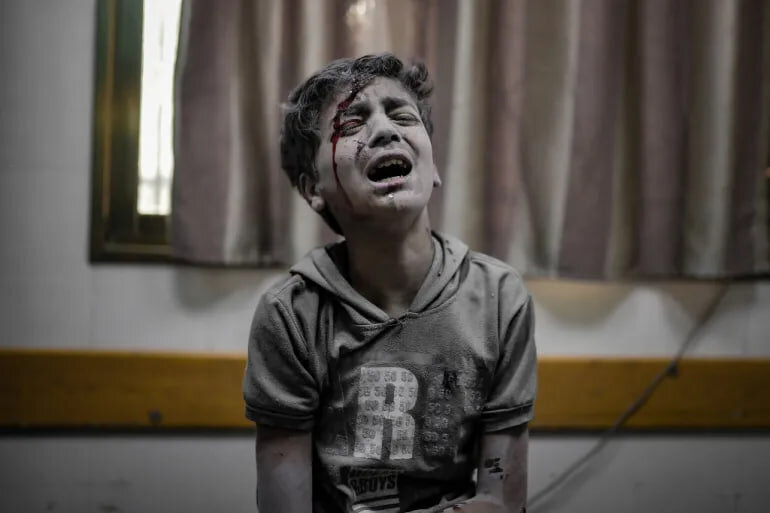
Gazan civilians are shockingly helpless

 By Matin Jamshidi

TEHRAN - The sufferings of Palestinian civilians in Gaza are heartrending. It seems the world is largely ignoring the tragedy the Gazans are facing. The civilians are being butchered in Gaza like the chickens in a slaughterhouse.

The silence of the world in the face of the horrific crimes against Gazans and the intimidation and humiliation of the Palestinians in the West Bank is disgraceful.

Like all other people around the world, the Gazans are human beings. Probably their only sin is that they are being born in their native land.

What happened to civilians in Beit Lahiya on Oct. 29 is just one example of more than a year of indiscriminate killings, collective punishment, displacement, horror, starvation, grief, mourning, etc.

They have been fleeing from one place to another in the tiny, besieged enclave, and wherever they go fighter jets hover over their heads to bury them under the rubble.

They have been left alone and helpless and the insatiable wolfs are tearing them apart.

The world will surely feel shameful for being so unjustifiably passive in the face of all these tragedies against the Gazan civilians.

Unfortunately, there is no trust in international organizations to bring the perpetrators of these indescribable crimes to justice. Even those who have been aiding and abetting the perpetrators of these horrible crimes in Gaza have unbelievably started a campaign against the International Court of Justice and the International Criminal Court.

Report: Xi Asked Biden to Change Language on Taiwan

WASHINGTON/BEIJING/TAIPEI (Reuters) -- Chinese President Xi Jinping asked U.S. President Joe Biden last year to change the language the United States uses when discussing its position on Taiwanese independence, according to two U.S. officials familiar with the private conversation.
During last November’s Biden-Xi meeting near San Francisco, Xi and his aides asked Biden and his team to tweak the language in U.S. official statements.
China wanted the U.S. to say “we oppose Taiwan independence,” rather than the current version, which is that the United States “does not support” independence for Taiwan, said the people, who requested anonymity to speak about private diplomatic exchanges they participated in or were briefed on.
Xi’s aides have repeatedly followed up and made the requests in the months since, according to two U.S. officials and another person familiar with the exchanges.
The U.S. has declined to make the change.
The White House responded to a request for comment with a statement that repeated the line that Washington does not support Taiwan independence. “The Biden-Harris administration has been consistent on our long-standing One China policy,” the statement read.
China’s foreign ministry said: “You should ask this question to the U.S. government. China’s position on the Taiwan issue is clear and consistent.”
The defeated Republic of China government fled to Taiwan in 1949 after losing a civil war with Mao Zedong’s communists.
The Republic of China remains Taiwan’s formal name and the government says it has no plans to change that given they are already a sovereign, independent state and Beijing has no right to claim Taiwan as its own.
For several years, Chinese diplomats have pushed the United States to make changes to how it refers to Taiwan’s status, which remains the most sensitive area in U.S.-China relations. The unusually direct and renewed push at the leader level has not been reported previously.
The United States severed official relations with the government in Taipei in 1979 but is bound by law to provide Taiwan with the means to defend itself. China claims Taiwan as its own territory and has never renounced the use of force to bring the island under its control.
It was not clear why Xi chose to raise the issue with Biden, but he has made opposition to Taiwan independence a focus of his time in office and China’s military has significantly ramped up its activities around the island in recent years.  

Tehran urges international response to escalating humanitarian crisis in Sudan

TEHRAN –Iranian Foreign Ministry Spokesperson has called on the global community, particularly international humanitarian organizations, to respond urgently to Sudan's worsening humanitarian crisis.

Esmail Baqaei made the remarks on Tuesday, highlighting the alarming conditions as the civil conflict in Sudan continues to devastate the population.

Addressing ongoing reports of civilian casualties and mass displacement, Baqaei expressed deep concern about the prolonged violence and deteriorating humanitarian landscape. He described the conditions as “deeply troubling,” underscoring the need for immediate action to alleviate the suffering of affected communities across Sudan.

Baqaei urged international humanitarian agencies to increase efforts to halt the violence and provide essential aid. Emphasizing the critical importance of international solidarity, he appealed for a coordinated response to deliver urgent assistance to displaced persons and those most in need.

The Sudanese civil conflict began in April 2023, ignited by a power struggle between the head of Sudan's army, Abdel Fattah al-Burhan, and his former deputy, now the leader of the Rapid Support Forces. The violence has since spiraled, leaving Sudan teetering on the edge of what the United Nations has described as a humanitarian catastrophe.

As of mid-October, data from the Armed Conflict Location & Event Data Project (ACLED) reports over 24,850 fatalities, with new deaths recorded daily. The United Nations and other international bodies have sounded the alarm, describing Sudan as being on the verge of a “cataclysmic breaking point.”

The International Organization for Migration (IOM) recently highlighted the staggering displacement figures: more than 14 million Sudanese have been forced from their homes. According to IOM Director-General Amy Pope, 11 million are internally displaced, marking a 200,000 increase since September alone. An additional 3.1 million have fled the country to escape the violence. Overall, nearly 30 percent of Sudan's population has been uprooted.

Pope described the situation as “catastrophic,” pointing to the immense suffering and the surging demand for assistance, which now encompasses nearly 25 million people. She warned that without immediate international intervention, Sudan’s crisis could escalate further, bringing an already dire situation to an irreversible breaking point. 

Timeless art of knife making in Zanjan Province

For centuries, Zanjan Province has been renowned for its high-quality knives, crafted by skilled artisans. Historical evidence indicates that the tradition of knife-making in the region dates back to the era of the salt men, with knives discovered among the artifacts, highlighting a long-standing legacy in the area.

Zanjan knives represent some of the earliest and most significant documentation of the local knife-making industry. They are celebrated for their distinctive qualities, including elegance, balance, blade coating, and cutting power—all of which showcase the craftsmanship of both past and present artisans.
During the Safavid era, masters like Abdolghaffar Sekak greatly contributed to the prosperity of this vital industry. Additionally, credible records from the National Archives and Library reveal correspondence from 1944 CE listing the names and signatures of 31 Zanjan knife makers, IRNA wrote.
Today, the knife-making industry in Zanjan continues to thrive, facing both challenges and triumphs. Some artisans have established noteworthy reputations through their exceptional work, while others are dedicated to preserving this authentic craft for future generations.


These artisans pay close attention to their clients’ preferences, producing a diverse range of knife models in various sizes and shapes. Some feature decorative handles, making them ideal for display in museums or as collector’s items.
According to the Deputy Head of Zanjan Province’s Cultural Heritage, Tourism, and Handicrafts Organization for handicrafts and traditional arts, approximately 2,000 small and large workshops currently operate in the province. Zanjani knife makers typically engrave their names and unique emblems or seals on the blades of their knives.
Seyyed Mikaeil Mousavi highlighted that these craftsmen incorporate decorative elements such as jewels, mother-of-pearl, and ivory into their creations. The workshops in Zanjan produce a wide variety of items, from small decorative knives that can be used as keychains to large swords.
He further noted that the knife handles showcase the artisans’ artistry, as they strive to enhance the beauty and uniqueness of their pieces through intricate carvings and the addition of decorative elements. Zanjan knives are recognized for their spring-like flexibility, enduring sharpness, and ease of handling.
Mousavi explained that the various types of Zanjan knives are influenced by the creativity and innovation of the artisans and can be categorized into two types: simple or regular knives and compound or intricate knives.
He mentioned that most collectible knives are exported, with Zanjan’s pocket and carving knives unmatched in beauty, decoration, and the quality of their blades and coatings. In the city of Zanjan, artisans possess expertise in constructing over 40 types of knives, and many skilled craftsmen also excel at creating carving knives, kitchen knives, and sugar cutters.
Moreover, decorative collectible knives are primarily exported to Arab and European countries, swords are shipped to Arab nations, and pocket knives are sent to both European and Arab markets. Various types of knives produced in Zanjan are available in both domestic and international markets, including pocket knives, hunting and outdoor knives, kitchen knives, butcher knives, gardening and grafting knives, as well as cleavers and kebab knives. The Zanjan carving knife, available in single and double blade options, is renowned for its high sharpness and durability, making it suitable for carving materials such as reed, bamboo, and rattan.
Mousavi concluded by emphasizing that preserving, maintaining, and rejuvenating the knife industry in Zanjan requires supporting and encouraging children, youth, and individuals interested in this craft.
Hadi Fazli, a prominent knife-making artist in the province with over 34 years of experience, shared his journey: “I entered this art in 1989 during my adolescence and have been dedicated to it ever since.” At around 50 years old, this seasoned Zanjani artist conveyed his passion for the trade, stating, “Not only I, but many artists in this field have embraced this work with love and passion. As one of the late knife-making artists from the province remarked, it is love and passion that create a knife.”
Fazli highlighted the various challenges facing the knife-making art in Zanjan Province, noting, “In meetings with organizations such as the Cultural Heritage Department, and the knife-making union, we’ve discussed the issues troubling this industry.”
He pointed out the detrimental impact of some individuals using low-quality raw materials for knife-making, saying, “Despite the recent resurgence of Zanjan knives, opportunistic individuals are tarnishing the reputation of this authentic art by selling subpar knives.”
The veteran Zanjani knife maker emphasized that the knives produced in this province belong to all its people, not to any individual or group. “Most people recognize this province by its knives, and the lack of serious inspection and oversight in this industry has compromised the production of quality knives,” he said.
Fazli also stressed that while a variety of knives are available, higher-quality options are significantly more expensive. He mentioned, “In meetings with the officials of Islamic Azad University, we agreed to brand and standardize Zanjan knives.” He believes that branding could lead to positive outcomes, adding, “The lack of quality packaging is another issue within this industry.”
Additionally, he stated that insufficient income poses challenges for newcomers to the knife-making profession, remarking, “Creating a knife takes a considerable amount of time, making it difficult for those new to this craft, often resulting in lower earnings.”
Fazli expressed optimism about the potential for exporting fine knives to Persian Gulf countries, asserting, “The lack of a suitable market and insurance issues also dissuade participants in this field.” He urged officials to offer greater support for the enduring and authentic art of knife-making, highlighting, “This industry has a rich history, and we hope that officials will provide the necessary backing to enable artisans to export their products comfortably throughout the country and abroad without concerns.”

Global literati pledge boycott of Israeli cultural institutions

Sally Rooney, Arundhati Roy and Rachel Kushner are among more than 1,000 writers and publishing professionals who have signed a letter pledging to boycott Israeli cultural institutions that “are complicit or have remained silent observers of the overwhelming oppression of Palestinians”.


Signatories to the pledge say they will not work with Israeli publishers, festivals, literary agencies and publications that are “complicit in violating Palestinian rights”, including operating “discriminatory policies and practices” or “whitewashing and justifying Israel’s occupation, apartheid or genocide”.
Institutions that have never publicly recognised the “inalienable rights of the Palestinian people as enshrined in international law” will also be boycotted, The Guardian reported.
The campaign was organised by the Palestine festival of literature (also known as PalFest), which runs an annual festival with free public events in cities across Palestine, alongside campaign groups Books Against Genocide, Book Workers for a Free Palestine, Publishers for Palestine, Writers Against the War on Gaza and Fossil Free Books.
“We, as writers, publishers, literary festival workers, and other book workers, publish this letter as we face the most profound moral, political and cultural crisis of the 21st century,” begins the statement, which goes on to say that Israel has killed “at the very least 43,362” Palestinians in Gaza since last October, and that this follows “75 years of displacement, ethnic cleansing and apartheid”.
Culture “has played an integral role in normalising these injustices”, it says. Israeli cultural institutions, “often working directly with the state, have been crucial in obfuscating, disguising and art-washing the dispossession and oppression of millions of Palestinians for decades”.
Industry workers have a “role to play”, states the pledge. “We cannot in good conscience engage with Israeli institutions without interrogating their relationship to apartheid and displacement,” it reads, noting that “countless authors” took the same position against apartheid in South Africa.The letter ends with a call to the signatories’ peers to join the pledge.
In response to the letter, UK Lawyers for Israel (UKLFI), an association of lawyers supporting Israel, has sent its own letter to the Society of Authors, the Publishers Association and the Independent Publishers Guild. “This boycott is plainly discriminatory against Israelis. The authors do not impose similar conditions on publishers, festivals, literary agencies or publications of any other nationality,” the UKLFI alleged, adding that its members believe there are legal risks involved in participating in the boycott.
Omar Robert Hamilton, co-founder and current festival director of PalFest, said he believes the UKLFI’s letter “is only notable for its moral bankruptcy and proves that Israel’s apologists have nothing to say.”
Rooney, the author of Normal People and, most recently, Intermezzo, has long been an outspoken advocate for Palestinian rights, and in 2021 refused to sell the Hebrew translation rights of her third novel, Beautiful World, Where Are You, to an Israeli publisher.
Roy and Kushner are also vocal critics of Israel. Upon accepting the PEN Pinter prize earlier this month, Roy used her speech to discuss Gaza, and said that she would donate her prize money to the Palestinian Children’s Relief Fund.

Tech diplomacy; Iranian Communications Ministry’s strategy to break digital monopoly

By Sattar Hashemi

Iran’s communications & IT minister

In recent years, the world has witnessed an unprecedented leap in technological interactions and communications between nations. This phenomenon, like any emerging technology, has brought about a mix of opportunities and threats. Notably, the intertwining of the internet, particularly social media, and satellites with the fabric of private and public life of the majority of people has made current and future opportunities in this field extremely valuable, while the existing and potential threats are equally perilous.
There is no doubt that achieving the valuable goal of “maximizing benefits” from the output of communications and information technology developments, and containing the “challenging pitfalls” that come with it, is beyond the power of one or a few organizations or even countries. In fact, the nature of the ICT (information communication technology) sector is such that without expanding international cooperation and collaboration with states and leading multinational companies, its development is almost impossible.

Therefore, the formation and strengthening of regional and international alliances in this field has become an inescapable necessity. Relying on this reality, technological interactions have taken a key place in the theoretical and practical structures of forward-thinking governments’ diplomacy, to the point where it is rare to find a pragmatic government that has not prioritized “tech diplomacy.”   
The philosophy of tech diplomacy is based on three core pillars: 1) digital transformations and the redistribution of power in international relations, 2) the emergence of new challenges and conflicts, and 3) the consolidation of digital governance in countries, covering over 50 critical issues and challenges in international relations and digital governance. Some of the most pressing challenges include:

Cyber governance challenges
 Interference by some states in the economic, social, cultural, and security affairs of other countries through the widespread production of misinformation, conspiracy theories, online radicalization, and fake news dissemination on social media and messaging platforms, as well as cyberattacks and the development of cyber weapons such as Stuxnet.
 The emergence of transnational and satellite internet service providers from the East to the West.
 Resolving frequency interference and establishing new international standards in the field of communications.
 The rapid expansion of artificial intelligence and its global challenges.
 The increase in sellers and providers of services and products from outside the traditional borders of countries in the virtual space.
 Supporting the international growth and development of private digital companies.
 The continuous rise of cryptocurrencies and digital assets.
 Cybersecurity, privacy, and dependence challenges, as well as strengthening national capabilities.
These challenges pose a pervasive threat to all countries active in the field of communications and technological interactions. The harsh reality is that no country is immune to these challenges, although the intensity and vulnerability of each country vary for different reasons. More regrettably, Iran has been subject to more targeted and widespread cyberattacks, mainly due to the illegitimate and unlawful political motivations of some rival countries, and has been imposed with numerous technological sanctions on users, as well as unjustifiable sanctions on private businesses and some official organizations.
In the era of globalization, participating in international institution-building to establish standards in the ICT sector is crucial, as governments that set standards will dictate the agenda for other governments and gradually dominate them.
Therefore, in recent years, the Islamic Republic of Iran has, through international organizations such as the International Telecommunication Union and the United Nations, regional alliances like the Shanghai Cooperation Organization and BRICS, and bilateral interactions with countries like China, Russia, Cuba, Venezuela, and others, pursued synergies with a view to laying the groundwork for collectively rooting out obstructions and illegal measures, as well as politically motivated disruptions, thereby narrowing the room for maneuver for cyber activists, in order to provide a safer virtual space for all citizens and businesses.