Wednesday, October 31, 2018

‘A Cruel Choice’: Why Israel Targets Palestinian Schools

By Ramzy Baroud


As Israeli writer Orly Noy has observed, by targeting schools, Israel is forcing Palestinians to choose between their land and their children's futures.

Several Palestinian students, along with teachers and officials, were wounded in the Israeli army attack on a school south of Nablus in the West Bank on October 15. The students of Al- Sawiya Al-Lebban Mixed School were challenging an Israeli military order to shut down their school based on the ever-versatile accusation of the school being a “site of popular terror and rioting.”
“Popular terror,” is an Israeli army code for protests. The students, of course, have every right to protest, not just the Israeli military Occupation but also the encroaching colonization of the settlements of Alie and Ma’ale Levona. These two illegal Jewish settlements have unlawfully confiscated thousands of dunams of land belonging to the villages of As-Sawiya and Al-Lebban.
“The Israeli citizens” that the Occupation army is set to protect by shutting down the school, are, in fact, the very armed Jewish settlers who have been terrorizing this West Bank region for years.
According to a 2016 study commissioned by the United Nations, at least 2,500 Palestinian students from 35 West Bank communities must cross through Israeli military checkpoints to reach their schools every day. About half of these students have reported army harassment and violence for merely attempting to get to their classes or back home.
However, this is only half of the story, as violent Jewish settlers are always on the lookout for Palestinian kids. These settlers, who “also set up their own checkpoints”, engage in regular violence as well, by “throwing stones” at children, or “physically pushing (Palestinian children) around.”
“UNICEF’s protective presence teams have reported that their volunteers have been subjected to physical attacks, harassment, arrest and detention, and death threats,” according to the same UN report.
In other words, even the ‘protectors’ themselves often fall victim to the army and Jewish settler terror tactics.
Add to this that Area C—a major part of the West Bank that is under full Israeli military control—represents the pinnacle of Palestinian suffering. An estimated 50,000 children face numerous hurdles, including the lack of facilities, access, violence, closure and unjustified demolition orders.
The school of Al Sawiya Al Lebban located in Area C is, therefore, under the total mercy of the Israeli military, which has no tolerance for any form of resistance, including non-violent popular protests by school children.
What is truly uplifting, however, is that, despite the Israeli military Occupation and ongoing restrictions on Palestinian freedom, the Palestinian population remains one of the most educated in the Middle East.
According to the United Nations Development Program (UNDP), the literacy rate in Palestine (estimated at 96.3%) is one of the highest in the Middle East and the illiteracy rate (3.7% among individuals over the age of 15) is one of the lowest in the world.
If these statistics are not heartening enough, bearing in mind the ongoing Israeli war on Palestinian school and curricula, consider this: the besieged and war-stricken Gaza Strip has an even higher literacy rate than the West Bank, as they both stand at 96.6% and 96% respectively.
In truth, this should not come as a total surprise. The first wave of Palestinian refugees that were ethnically-cleansed from historic Palestine were so keen on ensuring their children strive to continue their education, they established school tents, operated by volunteer teachers as early as 1948.
Palestinians understand well that education is their greatest weapon to obtain their long-denied freedom. Israel, too, is aware of this dichotomy, knowing that an empowered Palestinian population is far more capable of challenging Israeli dominance than a subdued one, thus the relentless and systematic targeting of the Palestinian educational system.
Israel’s strategy in destroying the infrastructure of Palestinian schooling system is centered on the allegation of ‘terror’: that is, Palestinians teach ‘terror’ in their schools; Palestinian school books celebrate ‘terrorists’; schools are sites for ‘popular terror’ and various other accusations that, per Israeli logic, compels the army to seal off schools, demolish facilities, arrest and shoot students.
Take for example, the recent comments made by the Israeli mayor of Jerusalem, Nir Barkat, who is now leading a government campaign aimed at shutting down operations by the UN organization that caters for Palestinian refugees, UNRWA.
“It is time to remove UNRWA from Jerusalem,” Barkat announced early October.
Without any evidence whatsoever, Barkat claimed that “UNRWA is strengthening terror,” and that “the children of Jerusalem are taught under their auspices, terror, and this must be stopped.”
Of course, Barkat is being dishonest. The jibe at UNRWA in Jerusalem is part of a larger Israeli-US campaign aimed at shutting down an organization that proved central to the status and welfare of Palestinian refugees.
According to this skewed thinking, without UNRWA, Palestinian refugees would have no legal platform, thus closing down UNRWA is closing down the chapter of Palestinian refugees and their Right of Return altogether.
The link between the shutting down of Al Sawiya Al Lebban, the targeting of UNRWA by Israel and the US, the numerous checkpoints separating students from their schools in the West Bank and more, have more in common than Israel’s false allegation of ‘terror.’
Israeli writer Orly Noy summed up the Israeli logic in one sentence. “By destroying schools in Palestinian villages in Area C and elsewhere, Israel is forcing Palestinians to make a cruel choice — between their land and their children’s futures,” she wrote earlier this year.
It is this brutal logic that has guided the Israeli government strategy regarding Palestinian education for 70 years. It is a war that cannot be discussed or understood outside the larger war on Palestinian identity, freedom, and, in fact, the very existence of the Palestinian people.
The students’ fight for their right to education in Al Sawiya Al Lebban Mixed School is by no means an isolated skirmish involving Palestinian school kids and trigger-happy Israeli soldiers. Rather, it is at the heart of the Palestinian people’s fight for their freedom.

Tuesday, October 30, 2018

Saudi Arabia: A Dark Stain on Islam


Many people around the world wrongly believe that Saudi Arabia “represents” Islam. Nothing could be further from the truth. Islam is not represented by any nation, at least not Saudi Arabia. Like all enemies of Islam, Saudi Arabia has blackened the name of Islam.
Since its creation by the Anglo-American imperialism in the early 1930s, Saudi Arabia has served AngloZionism interests with distinction at the expense of Islam, the region, and the people of the region, including the people of Saudi Arabia. As AngloZionism most obedient regime, the Saudi regime – the House of Al-Saud, a Mafia-like tyranny – has plotted (with U.S.-Israel and Britain complicity) against Muslim-majority nations from Palestine to Egypt and from Afghanistan to Iraq and Iran, and from Libya to Syria and Yemen, creating one humanitarian catastrophe after another. The Saudi-sponsored terror in Syria, Iraq and in Yemen, and its ongoing animosity and threats (colluding with the fascist regime of Benyamin Netanyahu) towards Iran are for everyone to see. In fact, overwhelming evidence shows that the Saudi regime has a record of active complicity in every U.S. war against Muslim-majority nations. The Saudi regime collusion with the Israeli fascist regime poses the biggest threat to the entire region. The two religio-extremist regimes have much in common and their alliance is not different from that of Hitler-Mussolini alliance. Together, they have been and remain the greatest destabiliser of peace and prosperity in the region.
The Saudi regime services to AngloZionism go way beyond merely propelling U.S. economy and supplying oil to the U.S., which has significantly declined in importance. It involves vital interests of: (1) maintaining the dollar as the global exchange currency for oil trade, (2) massive annual purchases (in hundreds of billions of dollars) of U.S., British, French, and Canadian weapons, (3)funding of many C.I.A. clandestine terror operations – including recruiting, financing and arming al-Qaeda and ISIS terrorists – around the world, and (4) the projection of Anglo-Zionist power across the Middle East and West Asia, including helping Israel in the dispossession of the Palestinians. As U.S. President Donald Trump acknowledged recently: Among many things, the Saudis have “been helping us a lot with respect to Israel. They’ve been funding a lot of things”, including mass atrocities and terror
The second most important service to AngloZionism is Saudi Arabia apparent version of “religious extremism” or Wahhabism. The Saudi regime uses Wahhabism as a political subterfuge to recruit terrorists, and to spread not only Saudi, but also U.S. influence throughout West Asia, Africa and beyond. International terrorism – masquerading as “Islamic terrorism” – has been a joint venture of the U.S., Britain, Israel, Saudi Arabia and other Gulf Cooperation Council (GCC) theocratic tyrannies. International terrorism is not only used by the U.S. and its allies to demonise Islam and Muslims but also as a proxy army to attack majority-Muslim nations.
The tyrannical Saudi regime has turned Saudi Arabia into an example of intolerance, extremism and the world’s most regressive regime. The Saudi regime regularly ranked as one of the “worst of the worst” by Freedom House annual survey of political and civil rights. The barbaric preaches and practices of the Saudi regime are antithetical to Islam and the teaching of the Prophet Muhammad (Peace and Blessings be Upon Him). Apart from Mecca – Islam’s holiest city and Prophet Muhammad birthplace – and al-Madinah – Prophet Muhammad burial place –, Saudi Arabia has nothing to contribute to Islam. The Saudi regime lives by the sword and rules according to pre-Islamic (dark age) tribal vengeance law. This barbaric Saudi regime does not deserve to be the custodian of Islam’s most holy and sacred sites.
Saudi Arabia and its “Islamic” extremism are cleverly used by the U.S., Europe and Israel to justify demonising and attacking Muslims, particularly Arabs Islam. Islam is portrayed as violent, backward and misogynist religion. The same goes for Arabs and Muslims.  If Westerners want to criticise Arabs and Islam, Saudi Arabia provides (a distorted) image of Islam. In fact, Saudi Arabia distorts the true teaching and image of Islam as a way of life and has for decades been destroying Islamic heritage, including Islam’s holiest stone of the Ka’ba.
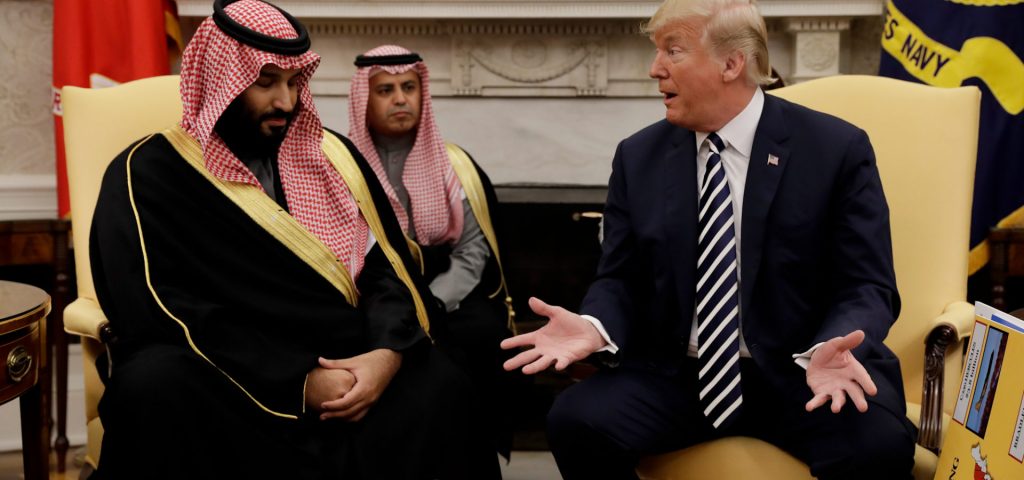
The Saudi regime relies on U.S.-British protection and promotion, including the elevation of Clown Prince Mohammed bin Salman (MBS as he is known in the West) to the rank of “reformist”, a.k.a. Western-oriented.  The ill-informed garbage bag Clown Prince is directly responsible for the murder of Mr Khashoggi. The Saudi regime is always depicted by Western politicians and Western media as the region “leader”. However, very often U.S. leaders remind the Saudi stooges who is boss. Because without the U.S. and Britain, the Saudi regime wouldn’t have survived seven decades, not because of external threat, but because the oppressed Saudi people will revolt and take the regime down. As President Trump reminded the current Saudi ruler: “I love the king [of Saudi Arabia], King Salman, but I said: ‘King, we’re protecting you. You might not be there for two weeks without us. You have to pay for your military, you have to pay”. In his last speech in Minnesota, Trump said: “Excuse me, King Salman, he is my friend, ‘do you mind paying for the military? Do you mind? Pay!’… I said, ‘do you mind paying?’ ‘But nobody has asked me’, I said ‘but I’m asking you, King.” It was humiliating. Of course, the Saudi regime pays, not only to stay in power but also to destroy nations that challenge its extremist ideology as it did pay for the U.S.-Britain illegal aggression and wanton destruction of Iraq, Libya, Syria and Yemen.
For its services to Anglo-Zionism, the Saudi regime is allowed to get away with heinous war crimes and abhorrent human right abuses at home and abroad. The unprovoked violent aggression against the people of Yemen and the premediated murder and decapitation of the U.S.-based Washington Post journalist and former Saudi-C.I.A. asset Mr Jamal Khashoggi are current examples.
The murder of Mr Khashoggi in the Saudi Consulate in Istanbul by a 15-member Saudi death-squad was a criminal act perpetuated by a Mafia-like regime that have been beheading and even crucifying its critics and opponents for decades with Western blessing. President Trump called it, “the worst coverup in history” of criminal coverups, helped of course by no other than the U.S. It was “a total fiasco from day one”, Trump added. The Saudi regime was self-defeating, it has not thought about the consequences of its gruesome crime.
First, we were told Mr Khashoggi supposedly left the Consulate from a “backdoor” and there was blanket denial of any Saudi regime involvement. Then, a “fistfight” broke out and Khashoggi was killed inside the Consulate. And now it was an “aberration” or “huge and grave mistake” that he died in the Saudi Consulate. It was a preposterous explanation to coverup Khashoggi’s murder. It was obvious that Khashoggi was tortured to death and decapitated Saudi-style. It was a premediated murder, according to Saudi Attorney-General Saud al-Mojeb confirming Turkish President Recep Tayyip Erdogan who – while holding back vital and damning evidence – revealed that, it was a “pre-planned” gangsters’ operation rather than a spontaneous incident. “No sooner had the Saudis issued their latest lie to coverup previous lies, U.S. President Trump was lending White House prestige to travesty”, writes columnist Finian Cunningham. Like all his predecessors, Trump is cosying up to the Saudi tyrants. British media that Khashoggi was about to disclose details of the Saudi regime’s use of chemical weapons in its war on Yemen when he was killed.
Lets’ also bear in mind that, the Saudi rulers wouldn’t have acted so recklessly unless they were certain of U.S. green light and complicity. The U.S. is complicit in their long list of crimes, and for decades the U.S. has been providing political-diplomatic cover for Saudi criminal policies that have caused disastrous consequences for the region. According to a Bloomberg report, the U.S. knew the Saudis planned to seize Mr Khashoggi because the C.I.A. had intercepted communications between Saudi officials discussing the plan. Furthermore, the Saudi regime did inform British intelligence (MI6) of its intention to abduct and kill Khashoggi three weeks before he was murdered.
Of course, it was not the first time. The Saudi regime have for years been abducting dissidents abroad and returning them to the Kingdom to be secretly murdered. “There is a long and shameful history of Saudi Arabia abducting dissidents and bringing them back to the kingdom and they never appear again,” says Bruce Riedel, a former C.I.A. agent and now a senior fellow at the Brookings Institution. There are thousands of male and female scholars, clerics, intellectuals, economists, university professors, and political activists languishing in Saudi jails, ignored by Amnesty International and Human Rights Watch. (For more see: Telesurtv.net).
Now, imagine an Iranian journalist residing in the U.S. or Europe had walked into the Iranian Consulate in Istanbul and never came out alive. It transpired that he was murdered inside the Iranian Consulate by an Iranian death-squad sent to Turkey from Tehran. You can be sure that the U.S. and its allies will demand the UN Security Council urgently convene to condemn the Iranian regime. The U.S. and it allies will impose harsh sanctions on Iran and would call for airstrikes on targets in Iran. Western-based “human rights” organisations will demand severe actions against Iran.  When it comes to double standards and hypocrisy, the U.S. and its allies are the world’s champions of double standards and hypocrisy. The deafening silence of the British government and the British media is outrageous, considering their ongoing attacks on Russia regarding the Skripal scandal.
Since March 2015, a Saudi-led “Coalition” of tyrants – including Kuwait, the United Arab Emirates, Bahrain, Egypt, Morocco, Jordan, Sudan and Senegal – bribed a coerced by the Saudi regime have waged a criminal war on Yemen and terrorised the Yemeni people. Actively armed and supported by Western regimes and Israel, the tyrants have killed tens of thousands of defenceless Yemeni civilians – according to UNHRC 50,00 children were killed by daily Saudi air raids using British-made bombs and U.S.-supplied war planes –, destroying Yemen’s civilian infrastructures and causing a deadly cholera epidemic  and famine for more than 10 million people. Saudi-led air strikes – guided by U.S. and British Special Forces – have systematically bombed Yemen’s civilian infrastructure destroying Yemen’s public water and sewage systems.
The Saudi regime war crimes in Yemen is modelled on its Anglo-Zionist masters, the U.S., Britain and Israel war crimes in Syria, Iraq and Libya. The Saudi-led Coalition’s blockade of food and medicine into Yemen has also brought the country to the brink of famine. Some 18 million Yemenis now at risk of starving to death — including over 5 million children, while thousands more are dying frompreventable diseases in a country which is under indiscriminate daily bombardment by the Saudi regime. According to the UN Office for the Coordination of Humanitarian Affairs: “An alarming 22.2 million people in Yemen need some kind of humanitarian or protection assistance, an estimated 17.8 million are food insecure — 8.4 million people are severely food insecure and at risk of starvation — 16 million lack access to safe water and sanitation, and 16.4 million lack access to adequate healthcare. Needs across the country have increased steadily, with 11.3 million who are in acute need — an increase of more than one million people in acute need of humanitarian assistance to survive”. Furthermore, at least 14 million Yemenis are facing “pre-famine conditions,” relying on food aid for their very survival. The U.S. and European regimes are complicit and shared responsibility for the deaths and atrocities caused by Saudi barbarism, because without their weapons, many Yemini women and children would be alive today.
A study for the World Peace Foundation by Professor Martha Mundy of London School of Economics writes: “While the US and UK back their Coalition allies unfailingly in their wider political and strategic objectives, the two major Arab actors in the Coalition, Saudi Arabia and the [UA] Emirates, have different economic priorities in the war. That of Saudi Arabia is oil wealth, including preventing a united Yemen’s use of its own oil revenues, and developing a new pipeline through Yemen to the Indian Ocean; that of the Emirates is [colonisation and] control over seaports, for trade, tourism and fish wealth. The attack on al-Hudayda [a major port] explicitly aims to complete the economic war militarily. That the immense suffering of Yemen’s people has still not brought surrender by those in Sanʾa [the Yemeni capital] does not give credibility to the tactic of further hunger and disease. Yet for the Coalition, as a senior Saudi diplomat responded (off the record) to a question about threatened starvation: ‘Once we control them, we will feed them,’” according to Saudi barbaric agenda. What the Saudi regime is doing in Yemen is not different from what the U.S., British and Israeli regimes have been doing in the region for decades. The media play an important role in diverting public attention away by turning blind eye to Western atrocities. One hardly hears about Saudi atrocities in Yemen and Israel’s terror in Palestine. While the outrage over Khashoggi’s murder is justified, one wonders why is the death of one privilege “journalist” receives global coverage by Western media while the deaths of hundreds of thousands of Yemenis by ongoing Saudi aggression are ignored?
Finally, it is worth noting that, while Saudi Arabia is among the wealthiest regimes in the world, the country remains backward, completely dependent on the sale of oil and foreign imports. Youth unemployment is very high. Most of Saudi Arabia’s wealth is wasted by the regime on purchasing weapons and indulging in decadence “entertainments”. The U.S. primary goal has been to keep Saudi Arabia (and all the fiefdoms of the Gulf) backward, feudal and unindustrialised to benefit U.S.-Western industries. In fact, the U.S. has an agenda to keep countries under its tump, dependent, backward and in constant conflict. It is not Saudi Arabia that is known for its advanced public health care and education system. Iraq and Syria were the region’s envy, with very advanced free public health care and free public education. Libya had the region’s highest Human Development Index (HDI) under the leadership of Muammar al-Qadhafi. Iraq and Libya have been terrorised and destroyed violently. Their massive reserves of gold and oil reserves (assets) were stolen by the U.S. and its vassal states allies, including Saudi Arabia and other Gulf fiefdom regimes.
The Saudi regime and its barbaric practices and politics have no place in Islam. The murder of the Jamal Khashoggi, one of countless murders by the Saudi regime, is an opportunity for civilised nations to distance themselves from and pressure the Saudi regime to change its barbaric behaviour, stop arming and financing international terrorists and end its aggression against the people of Yemen. It is the duty of the people of Saudi Arabia to remove the dark stain that has blackened the images of Islam for decades.
Ghali Hassan is an independent political analyst living in Australia.

Beijing supports full membership of Iran in Shanghai Cooperation Organization: Ambassador

By Javad Heirannia & Maryam Khormaei


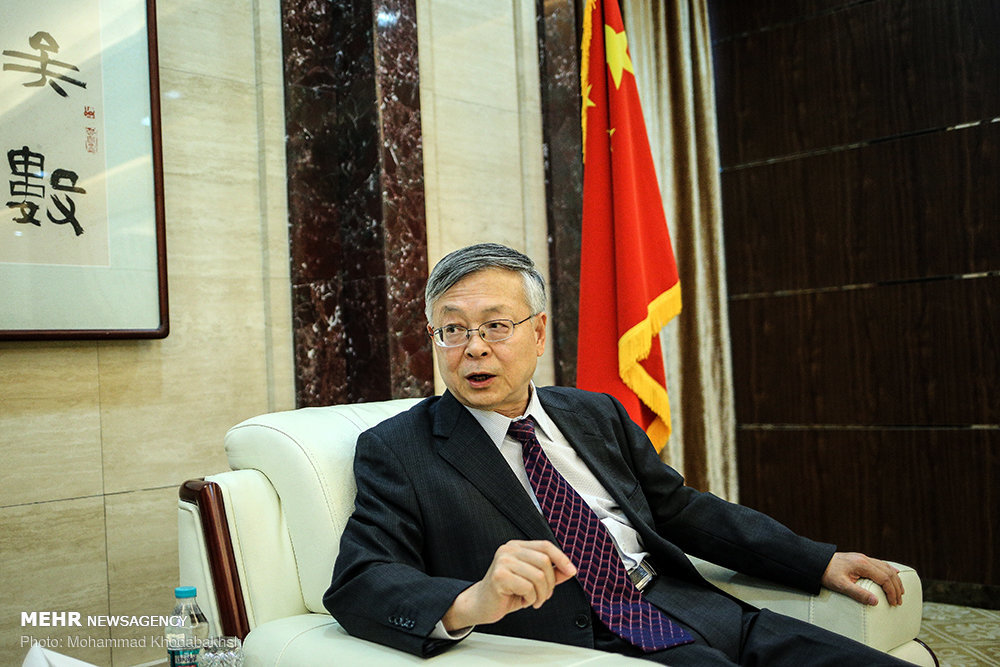
TEHRAN - China Ambassador to Tehran Pang Sen hailed the deeply-rooted relations between the two nations. But while expressing support for Iran's full membership in SCO, he underlined the need for more work to strengthen the comprehensive strategic partnership.
Following is the full text of his interview with Tehran Times and Mehr News Agency: 
Q: What are the areas of integration between China and Iran? The two countries believe in multilateralism and disagree with U.S. shift towards unilateralism. For example, Shanghai Cooperation Organization is a good example of multilateral policy. Where does china stand on Iran's permanent membership in SCO?
A: In June this year President Rouhani visited China to attend the Shanghai Cooperation Organization (SCO) summit held in Qingdao. The meeting was a great success. We made very good progress to map the direction of the future development of the organization. President Rouhani played there an active role and made positive contribution to the success of the summit. Two presidents also held a bilateral meeting on the sidelines of the summit. They discussed intense cooperation between 2 countries. I think that the relationships between our countries are mutually complementary. It is for the benefits of two countries as well as our nations. So there is a great potential for two countries to work together. We can build on the previous achievements to make further progress in political, economic, security, cultural areas and people to people exchange.
You mentioned about the possible membership of Iran in SCO. I would like to say that during president Xi’s visit to Tehran, two leaders issued a joint statement in which China made its position quite clear on this issue. China would be happy to see Iran play a greater role in SCO and we support Iran to be a full member of the organization.  We wish to emphasize the bilateral economic cooperation. The cooperation between two countries are in line with obligations that each of us undertake. The cooperation is transparent and legitimate.
f course we are facing some obstacles created by certain external factors among which are the U.S. sanctions against Iran. But I think that our relation is based on mutual respect and benefits which are deeply rooted in our longstanding friendship and civilization. So in the face of such difficulties we need to work together and consult on an equal footing to find ways to overcome the hardships caused by unilateral sanctions. Chinese position has always been clear. We are against such unilateral sanctions and so-called long arm jurisdiction because they are the manifestation of unilateralism and against the spirit of multilateralism. In the past two years, China and Iran have maintained close contact with each another. FM Zarif traveled to China and later the foreign ministers of remaining signatories of JCPOA met recently in New York to discuss ways how to overcome the difficulties in order to maintain the treaty because the JCPOA is an important multilateral deal and all signatories must fulfill their obligations. We are happy to see that Iran has been in full compliance with all its obligations under the deal. IAEA has issued 12 reports to certify that Iran is in full compliance with its obligations. The other partners including EU, France, Germany, UK, China and Russia have all expressed their readiness and willingness to support the continuation of the treaty. It shows that Iran is enjoying the support of the international community. I would like to mention the need to combat terrorism. Terrorism is a threat to all countries and the common enemy of the international community. There should not be any distinction between good and bad terrorism.  All of them should be seriously defeated. We need to address the issue of terrorism in its root causes for example by strengthening international cooperation, eliminating poverty and eradicating the extremist ideology. In our view, terrorism is not associated with any particular country, group of people or religion. Any form of terrorism should be fought with. There should be no double standards. China and Iran, both are victims of terrorism. We witnessed the recent terrorist attack in Ahvaz. China condemns such acts of atrocity. In the past time, we have had a very good cooperation in law enforcement and exchanging information to fight against drug trafficking, trans-boundary crime and etc. We will continue such cooperation because it is not only in the best interests of two countries and two nations but it is also for maintaining peace and stability of the region as a whole.  I also wish to say a few words about China-U.S. relations. There is an escalating trade friction between two countries. The root cause is not as we heard from the U.S. by the unilateral trade benefit gained by China because trading is beneficial for all involved parties. We are not seeking unilateral trade surplus. China wishes to set this issue through bilateral consultation and negotiation on an equal footing. Unfortunately the U.S. side is engaged in flip flopping. It rolled backed on our agreement and changed the mind. So this has made consultation between two countries very difficult. We made it clear from the beginning that China had no wish of engaging in trade war or conflict. This is not the case that China is afraid of but we don’t want such a war. But if the U.S. is determined to wage such a conflict, we are ready to fight back. China has sufficient confidence and capability to defend its interests, sovereignty, development and security. 
Recently U.S. vice president Mike pence delivered a speech at a think tank. The relevant speech made unwarranted accusations against China's domestic and foreign policies and slandered China by claiming that Beijing meddles in U.S. internal affairs and elections. This is nothing but speaking on hearsay evidence, confusing right and wrong and creating something out of thin air. The Chinese side is firmly opposed to it. 
China unswervingly pursues the path of peaceful development and commits itself to developing friendly and cooperative relations with all other countries on the basis of five principals of peaceful coexistence and forging a community with a shared future for mankind. China always follows the principle of non-interference in others' internal affairs and will by no means seek its own developments at the expense of other countries' interests. Meanwhile, we are determined to safeguard our sovereignty, security and development interests. It is very ridiculous for the U.S. side to stigmatize normal exchanges and cooperation with China. 
China's policy towards the U.S. is consistent and clear-cut. We are committed to joining hands with the U.S. to work for non-conflict, non-confrontation, mutual respect and win-win cooperation. We advise the U.S. to reflect on its own human rights issues and stop its unwarranted accusations and slander against China and take concrete actions to maintain the sound and steady development of China-U.S. relations. 
     
Q: On Nov. 4, the U.S. sanctions on Iranian oil come into effect. Do you think that China will comply with the U.S. demands or continue trade with Iran? Shall we expect them to reduce crude imports from Iran?
A: As for bilateral trade, I should make clear that the relations between two countries including our cooperation in energy and oil sectors is in full compliance with obligations we both have undertaken respectively. It is transparent and legitimate. We are firmly opposed to any unilateral sanctions. We know that the next round of sanctions are coming and will merely target on Iran’s' exports. Our position is to be opposed to U.S. sanctions. We will continue our cooperation with Iran. As for the specific modality of the cooperation, the two sides have been in contact over the past few months. We consult to make every efforts to make sure that our cooperation will continue. Of course over the past years, with or without sanctions there have been fluctuations in the exports and imports of the commodities including oil that is natural. So we don’t have to be surprised if there is an increase or a decrease in the import volume of oil by China from Iran.
Q: China seeks to revive the Silk Road via the Belt and Road Initiative. Where does Iran stand on China's Belt and Road and what are the mutual interests of the project? Which Iranian capabilities can help to secure mutual benefits?
A: First of all, I wish to emphasis the concept or initiative of one belt one road is open and transparent. Any country that wishes to join, they will be welcomed. So it is not a block limited to a few countries. We are happy to see that more and more countries are expressing their willingness and support to join this initiative. There are countries in Africa and Latin America and internal organizations also showed readiness to join the initiative. We have signed more than one hundred agreements with different countries about how to proceed the construction of one belt one road. This initiative is based on equality, openness, transparency and mutual benefits. We emphasis that one belt one road will be consulted and built collectively by all countries concerned so it is not for the self-interest of any particular country but for the joint benefits of all participating countries. Since ancient times, Iran has been a very important link on the Silk Road. More than two thousand years ago, the Silk Road existed along which China and Iran maintained very close links. The Silk Road is not limited to commercial activities but it has been a way for cultural, philosophical and religious exchange. So it is a pathway for friendship. Iran certainly has been playing a very important role form ancient times to present. We regard Iran as an important partner in the one belt one road initiative. In the past few years, we have conducted a very fruitful cooperation in a broad range of sectors. We have achieved grate progress and I think in the future, we can even work more closely for the benefits of the two countries and nations.
Q: A few years ago, Barak Obama claimed the U.S. had no idea to let China write the rules for 21st century trade. As you know the American order is based on liberalism. What is the difference between American order and Chinese order?
A: First of all, we firmly support a multilateral trading system based on WTO. Of course, in addition to WTO, there are many regional arrangements for example bilateral trade treaties or regional initiatives as you know there are different trading blocks and partners.
About this so-called TPP initiated by President Obama, they had some progress but as President Trump took office, he pulled away from this trade arrangement. Not only TPP, but under Trump administration, the U.S. withdrew from other international treaties. The same thing happened for Paris Climate Change pact and President Trump withdrew from it when it came to office. The one belt one road initiative is not aimed at or against any particular country. It is formulated for the benefits of all countries which are ready to join. That is why we see many countries such as Germany, France and UK also joined the Asian Infrastructure Investment Bank (AIIB).The one belt one road initiative is inclusive rather than exclusive. The TPP is to promote a certain group of countries in the cost of other ones and that is the main difference between TPP and one belt one road initiative. 
Q: Some experts believe that China doesn’t want to transform the SCO into an anti-western organization. As a result, it avoids giving a proper support to Iran's membership. What is your opinion on this matter?
 A: As I told you, President Xi visited Iran in 2016. The two presidents issued a joint statement in which China confirmed its position to support Iran to be a full member of SCO. During the recent visit to China by President Rouhani, China made it clear again its position to support Iran. There are some countries who are not happy to see the close friendship between China and Iran. They are trying to create division between the two countries by spreading rumors. For example, a couple of years ago, I read a piece of news by BBC. It claimed that China was opposing the full membership of Iran in SCO. I had to talk to Iranian Press to make clear that this ironic story was a sheer fabrication. As I told you, China fully support Iran's membership but the ultimate decision should be taken within SCO and by consensus. So, any decision has to go through consultation and that is why we suggested Iran should talk to other members to get a united support. As for the nature of SCO, I think that it mainly focuses on two areas: fighting terrorism and joint economic development. The membership expansion is a slow process. For example, recently, we received India and Pakistan as new members. The organization has initiated internal discussion about further expansion.  So, I wish to correct the impression and make clear that China is supportive of Iran's membership in SCO.
 Q: What are the areas of counter-terrorism cooperation? The Iranian Parliament Speaker's Special Aide Hossein Amir-Abdollahian said an international meeting would be held on issue of terrorism in Tehran. Will china attend the meeting? 
A: We have received invitation letter from Iranian Majlis Speaker Ali Larijani and sent it to Beijing. The matter is still under consideration.
Q: Iran and China have a common position on counter-terrorism. Have there been any moments of disagreement on this very important issue? 
A: First of all, we will focus on political area to form an international consensus in the UN and other forums. We have signaled opposition to the terrorism. For example, all agree that terrorism should be defeated. We also try to pull the international community together in order to fight terrorism in a collective way and avoid associating a particular country or religion with terrorism. China would also like to strengthen bilateral cooperation. For example, we can exchange information in regional formats such as SCO.
Q: Some experts believe that Iran and China aren’t yet strategic partners and their relationship is based on the principle of simple cooperation. How do you assess the relationship between two countries?
A: I have already mentioned that the comprehensive strategic partnership had been announced by presidents of China and Iran. Since then we have been making continuing efforts to strengthen bilateral cooperation in all areas. We have made very good progress and in June this year when President Rouhani visited China, they once again had in-depth discussion on how to enhance bilateral cooperation. There is always room for improvement and this is the same case for our bilateral cooperation. For example, in political area, we can have more frequent dialogues in different sectors and levels ranging from government departments to legislator and then people to people exchange as well as media exchange. Soon, the Chinese Xinhua News Agency will send a delegation to Iran in order to increase our media exchange. That will help to strengthen the mutual understanding between two countries. We need to take new approaches in order to overcome new challenges and keep up the level of our cooperation. We have more work to do in order to strengthen our comprehensive strategic partnership.
Q: The U.S. and China are on the brink of a trade war. How do you predict the future of this war? 
A: I can’t really speak on behalf the U.S. government but on behalf of Chinese government I should say that our position is clear. We don’t want such a war but aren’t afraid to fight back. We have full confidence and sufficient capability to defend our national interests, sovereignty, security and development. We hope that the two countries will be able to sit down and find a solution to the disputes. China and the U.S. have trade differences that is natural. The trade is not unilaterally beneficial for China but the U.S. also benefits a lot. We hope that the U.S. will understand that the best way to overcome the problem is trough consultation and negotiation rather than threat, coercion or sanction. Taking a different road will hurt both china and the U.S.
Q: As you know, low labor costs in China allows a reduction in the price of consumer goods and Trump is also critical of China's approach to cut tariffs on some goods. What’s your opinion on this matter? 
A: The fact is that there is a trade imbalance between two countries. China has a trade surplus but this is not intentional. It is the result of comparative advantage and international division of labor. On the other hand, China wish to buy more (for ex. high tech products) from the U.S. But they set up a lot of obstacles. I think that sanction is not the right way to solve the problem but we should do it through consultation and negotiation. China doesn’t build an unfair advantage against the U.S. There are trade policies and China is complying with the rules of WTO. So, the U.S. accusations against China are based on imagination and hearsay. 
Q: Is China seeking a mechanism to get rid of the U.S.-led monetary and financial order as well as dollar burden? If the answer is “Yes”, how will such a mechanism work?
A: We formally support multilateralism as well as the implantation of WTO rules. The U.S. practice to protect self-interests at the expense of others is wrong. We hope that all countries will oppose unilateralism and stick to the principals of multilateralism in order to protect our common interests.  
Q: The Realist theorists believe in the military aspect of the power and don’t pay much attention to other aspects. Talking about China, they bring up this argument that its economic power might be translated into military power. That's why they suggest that China will be the major threat to the U.S. in the future. What’s your opinion in this matter?
A: Over about forty years, China has adopted policy of reform and opening up. We have achieved tremendous progress. So China’s GDP has grown in a way that we stand as the world's No. 2 economy.  Living condition of Chinese people have been greatly improved. A lot of people have been lifted out of poverty. On the other hand, we are fully conscious that there is a big gap between Chinese level of development and the rest of the world. There are many countries which have a far higher level of GDP per capita income. If we take per capita GDP into account, China is lagging behind many countries. So in the future, we will still concentrate on our domestic economic development in order to improve living conditions furthermore of Chinese people. Meanwhile we will also have cross-sector development in all other areas such as science, technology, education and defense because China needs to upgrade our defense capability so that we will be able to safeguard our national security as well as sovereignty. I hope that our development will be balanced. China's growing economy and influence will bring more benefits to the world. We will make greater contribution to people's welfare and promote peace and stability all around the world. So China's growing influence is not for global dominance but to make a greater contribution to the common development of the entire world.
Q: China puts a great emphasis on the model of sustainable development. What are the major components of China's model of development and how much attention will be paid to political development in this model?
A: I think this is not only a goal of China but also a goal of the UN that the development should be sustainable and green. To bring benefits to our people, we need to safeguard our environment. Over the past two years, China has worked hard in this area to combat pollution. On the other hand, we need to pay attention to the political advancement of the country in order to improve the legal system and rule of law. The political satiability is also important because without it the society gets in trouble and all efforts for economic development will be damaged. So we should strive for good governance and improve our rule of law as well as economic development. So this is a two way approach. 

Mohammed bin Salman is the next Saddam Hussein

By Ryan Costello & Sina Toossi


In the 1980s, the United States embraced a brutal Middle Eastern tyrant simply because he opposed Iran. Washington should not repeat the same mistake today.
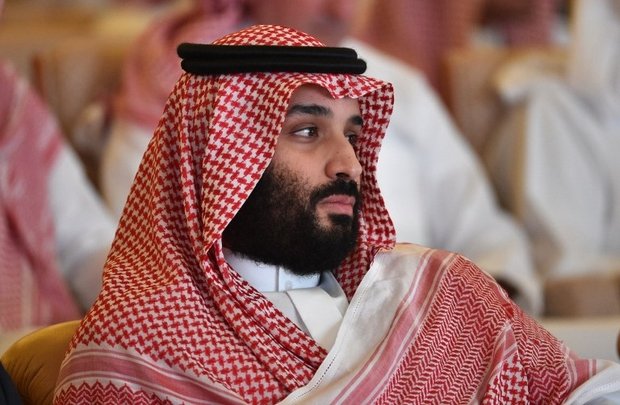
Saudi Crown Prince Mohammed bin Salman is reportedly shocked over the backlash to his government’s killing of Washington Post columnist Jamal Khashoggi. In a recent phone call with U.S. President Donald Trump’s son-in-law and advisor Jared Kushner, according to the Wall Street Journal, his confusion over official Washington’s furor “turned into rage,” as he spoke of feeling “betrayed by the West” and threatened to “look elsewhere” for foreign partners.
Saudi Arabia’s indignation at the United States would not be the first time an autocratic U.S. ally in the Middle East has assumed it could act with virtual impunity due to its alignment with Washington in countering Iran. Indeed, the Saudi prince’s meteoric rise to power bears striking similarities to that of a past U.S. ally-turned-nemesis whose brutality was initially overlooked by his Washington patrons: former Iraqi dictator Saddam Hussein.
Years before Saddam became Washington’s chief foe, he enjoyed significant support from the United States and other Western countries. This ended after he decided to invade Kuwait in 1990. However, the lead-up to that conflict and Washington’s earlier patronage of Saddam provide instructive lessons for U.S. regional policy today and the major risks of not responding forcefully to the assassination of Khashoggi.
Mohammed bin Salman’s gradual and brutal consolidation of power, marked by the detention and torture of his domestic rivals, evokes the “nation-changing assault on dissent within Iraq’s ruling party in 1979 by a young President Saddam Hussein,” Toby Dodge, a consulting senior fellow for the Middle East at London’s International Institute for Strategic Studies, told Bloomberg last year. “The concentration of power in one youthful, ambitious and unpredictable pair of hands is worrying now as it was then.” Washington’s steadfast support of Saddam during the 1980s not only enabled his rampage against his own people and neighboring countries, but also eventually threatened U.S. security interests.
The U.S. relationship with Saddam Hussein began in 1963, when, according to the former National Security Council official Roger Morris, the CIA under President John F. Kennedy “carried out in collaboration with Saddam Hussein” a coup to overthrow the government of Gen. Abdel Karim Kassem, who had five years earlier toppled Iraq’s pro-American monarchy.
However, U.S. ties with Saddam truly began to solidify in February 1982, when the Reagan administration removed Iraq from the State Department’s terrorism list, paving the way for providing military assistance to Iraq. This occurred roughly 17 months after Saddam’s invasion of Iran, while Iraqi forces were occupying the oil-rich southwestern Iranian province of Khuzestan that Iraq sought to annex. In December 1983, President Ronald Reagan dispatched Donald Rumsfeld as a presidential envoy to meet Saddam and set the stage for normalizing U.S.-Iraqi relations. U.S. support for Saddam during the war would grow to include, according to the Washington Post, “large-scale intelligence sharing, supply of cluster bombs through a Chilean front company, and facilitating Iraq’s acquisition of chemical and biological precursors.”
Saddam’s devastating use of chemical weapons during the Iran-Iraq War, both against Iranian military and civilian targets and on his own people, did not deter U.S. support. Rumsfeld’s meeting with Saddam took place despite Washington possessing firm evidence of Iraqi chemical weapons use beginning in 1983. Prior to Rumsfeld’s trip, on Nov. 1, 1983, senior State Department official Jonathan Howe had told Secretary of State George Shultz of intelligence reports showing that Iraq was resorting to “almost daily use of CW [chemical weapons]” against the Iranians.
Toward the end of the war, “U.S. intelligence was flowing freely to Hussein’s military,” according to a 2013 article in Foreign Policy, despite U.S. officials being “fully aware that Hussein’s military would attack with chemical weapons.”
According to declassified CIA documents, two-thirds of all Iraqi chemical weapons deployed during the war were used in the last 18 months of the conflict, when U.S.-Iraqi cooperation peaked. This included the March 1988 genocidal chemical weapons attack on the Iraqi Kurdish town of Halabja, which led to the deaths of as many as 5,000 civilians. Ironically, this attack would later be used by the George W. Bush administration in 2003 as part of its pretext for invading Iraq to eliminate the country’s by then nonexistent weapons of mass destruction.
A few months after the Halabja attack, in September 1988, Assistant Secretary of State Richard Murphy wrote in a memo on the chemical weapons question that “the U.S.-Iraqi relationship is … important to our long-term political and economic objectives.” Today, the Trump administration is echoing this language when discussing the U.S.-Saudi relationship, despite Saudi Arabia’s killing of Khashoggi and its devastating assault on Yemen, with U.S. Secretary of State Mike Pompeo recently proclaiming that Saudi Arabia is “an important strategic alliance of the United States” and that “the Saudis have been great partners in working alongside us.”
It was no surprise, then, that on the eve of Iraq’s invasion of Kuwait, Saddam felt he had unconditional backing from the United States. This impression was reinforced by Saddam’s meeting with then-U.S. Ambassador to Iraq April Glaspie on July 25, 1990, a week before his invasion of Kuwait. During their fateful encounter, according to a diplomatic cable summarizing the meeting, Glaspie stressed “President [George H.W.] Bush’s desire for friendship” and that “the president had instructed her to broaden and deepen our relations with Iraq.” When Saddam raised the issue of Kuwait, which he had been relentlessly threatening, Glaspie stated that the United States took “no position on these Arab affairs.”
To this day, academic experts such as the Harvard University professor and FP columnist Stephen M. Walt contend that “the United States did unwittingly give a green light to Saddam” to invade Kuwait—much as he invaded Iran—without a strong response from the United States. Walt adds that, contrary to some perceptions, Glaspie was “following the instructions she had been given” and that “she was doing what the Bush administration wanted at this crucial meeting.” U.S. diplomatic cables from Glaspie’s era also reveal, according to Germany’s Der Spiegel, that “Glaspie and her predecessor painted the regime in an extremely favorable light from the very outset, overlooked Saddam’s widely-known crimes, and were so influenced by mutual enmity for Iran as to be negligently uncritical.”
The United States was wrong to back Saddam simply because he opposed Iran, a mistake that has haunted it for decades. Not only were more than 500,000 U.S. troops required to dislodge Saddam from Kuwait, resulting in 382 U.S. military casualties, but it also placed the U.S. government on a warpath that resulted in the 2003 toppling of Saddam.
Today, the Trump administration’s reflexive support of Mohammed bin Salman is heading in the same direction as Washington’s ill-fated support of Saddam Hussein. Washington’s backing of Riyadh today even has the same justification: countering Iran. Trump has endorsed the crown prince’s purge of his domestic rivals and has given him carte blanche in his botched endeavors to rout the Houthis in Yemen while massacring civilians, turn Qatar into a vassal state, unseat the Lebanese prime minister, and punish Canada over a human rights complaint. The apparent order to assassinate Khashoggi is only the latest of Mohammed bin Salman’s reckless and impulsive decisions to which the United States has failed to react forcefully.
In the wake of Khashoggi’s killing, Trump administration officials have shamelessly warned that punishing the kingdom could jeopardize the escalating pressure campaign against Iran. A desire to bleed Iran shouldn’t once again overshadow a growing threat to the region: an unchecked, ambitious Saudi crown prince who has already presided over the decimation of Yemen and the butchering of a prominent journalist in his quest to consolidate absolute power.
Mohammed bin Salman, if allowed to ascend to the throne without facing any consequences from Washington for his outrageous behavior, will likely terrorize the region for decades, just as Saddam did. If Khashoggi’s brazen slaughter, carried out in utter disregard for international norms or the political cost for its allies, is a sign of a new Saudi playbook, the world may be facing an even greater threat than Saddam posed. Not only has the crown prince made clear his willingness to use force against neighboring countries, but his country also still enjoys vast oil wealth — giving him the ability to disrupt the global economy (although not to the extent of the 1973 Arab oil embargo) and threaten the profits of Western defense firms, given that the kingdom is the world’s third-largest military spender after the United States and China.
The Trump administration must act now to make it clear to the Saudi royal family that there will be severe consequences for such transgressions and end the unqualified support provided to Saudi Arabia. At a minimum, this should include an end to U.S. participation in the Yemen war, a halt to arms sales, and Magnitsky Act sanctions against all Saudi officials connected to Khashoggi’s killing.
(Source: Foreign Policy)

Sanctions and the Hypocrisy of Washington and London

Sanctions and the Hypocrisy of Washington and London
BRIAN CLOUGHLEY

On March 4 this year a British spy and former Russian citizen, Sergei Skripal, was poisoned in the town of Salisbury, England. He recovered, as did his daughter who had also been affected, and is now in deep security with a new face and name and an increase to his already generous British salary. The toxin involved was a nerve agent usually referred to as Novichok. The British government immediately blamed the Russian government for the incident and ten days after it took place the BBC reported that the British prime minister had expelled 23 Russian diplomats which she described as “actions to dismantle the Russian espionage network in the UK.”
It is notable that it took only ten days for the British government to decide to take action against Russia, in spite of there being no proof whatever that the Russian government was involved in the toxin-induced collapse of Skripal. And London didn’t only expel diplomats, it cancelled all high-level bilateral contacts with Russia and froze “Russian state assets where there is evidence that they may be used to threaten the life or property of UK nationals or residents.”
Then Washington joined in, expelling 60 diplomats, and Reuters reported that “US sanctions against Russia tied to a nerve agent attack in Britain” would add “to the array of economic penalties it has imposed on Moscow in recent years.”
The definition of “sanction” is generally accepted as being “an economic or military coercive measure adopted usually by several nations in concert for forcing a nation violating international law to desist or yield to adjudication” (Merriam Webster), or in the same vein, but with slightly different emphasis, “measures taken by a state to coerce another to conform to an international agreement or norms of conduct” (Oxford).
The swift imposition of sanctions against Russia by the United Kingdom and the United States was presumably taken because of their high moral principles, in that the Trump Administration in Washington and the May Government in London were shocked — shocked — by what they regarded as an international crime. To their minds the “norms of conduct” had been violated and it was necessary to punish the country that they alleged had done something wrong, even if there was no evidence that Russia was responsible for violating any national or international law.
Now we come to their actions following the murder of the journalist Jamal Khashoggi in Turkey, after he entered the Saudi Arabian consulate in Istanbul on October 2 and was never seen again by anyone in the outside world. There were many reports that hard evidence in video of his torture and death was held by the Turks, but they played things down, presumably because they didn’t want the world to know they spy on diplomatic missions of various countries, which would excite the amusement of such organisations as the CIA and the British techno-dweeb spy agency, Government Communications Headquarters, or GCHQ. (For example, Germany’s Federal Prosecutor, Harald Range, stated on June 4, 2014 that “sufficient factual evidence exists that unknown members of the US intelligence services spied on the mobile phone of Chancellor Angela Merkel” and in the superbly named “Operation Socialist” the previous year, GCHQ had hacked in to “Belgacom, Belgium’s largest telecommunications provider, which serves millions of people across Europe.”)
According to Voice of America, “Saudi officials at first said that Khashoggi walked out of the consulate and that they did not know his whereabouts. Then they said he died in a fistfight in the consulate. Then they said Khashoggi was killed in a chokehold when he tried to leave the consulate to call for help.” But VOA reported that the only certain proof of his murder is a voice tape that was listened to by CIA Director Gina Haspel when she visited Turkey on October 22. The BBC noted that “Turkey's Sabah newspaper said she had listened to audio recordings of Khashoggi's interrogation and death, but gave no details about the contents or how the audio had been obtained.”
Gina Haspel is a person who has much experience with torture, and when asked about it during her confirmation hearing before the US Senate Intelligence Committee behaved in exactly the manner one would expect of a dedicated intelligence professional:
“Senator Kamala Harris, of California, asked her a simple question: ‘Do you believe that the previous interrogation techniques were immoral?’ Those techniques — acts of torture adopted by the CIA in the years after the 9/11 attacks — included repeated waterboarding, confinement in a coffin-like box, exposure to extreme temperatures, sleep deprivation, and forced rectal infusions. After a pause, Haspel began to answer, in careful tones, ‘Senator, I believe that CIA officers, to whom you refer —‘
‘It’s a yes-or-no answer,’ Harris said. She clarified, ‘I’m not asking, do you believe they were legal? I’m asking, do you believe they were immoral?’
There was another pause, and then Haspel, again, dodged the question. ‘Senator, I believe that the CIA did extraordinary work to prevent another attack on this country, given the legal tools that we were authorized to use’.”
Then she declared “under my leadership, on my watch, CIA will not restart such a detention and interrogation programme.” She refused to answer the question “Do you believe in hindsight that those techniques were immoral?”
In other words, she knew exactly what was going on, but it didn’t even cross her mind that she should protest or resign because “those techniques” were illegal, immoral and made you dead. So she’s exactly the sort of person who would fully understand the vicious, disgusting, remorselessly savage treatment of the doomed Mr Khashoggi. In other words, she is a total hypocrite.
Which takes us back to the actions of the United States and the United Kingdom following the Khashoggi murder on October 2.
When the Saudis stated that Khashoggi died in a fistfight in its consulate, Donald Trump said this was credible and a “good first step.” Then on October 23, three weeks after the murder, the United States announced that Washington is “taking appropriate actions” against Saudi Arabia. These “appropriate actions” involve revoking visas of those identified as being involved in the murder in Istanbul.
Then the Secretary of State, Mike Pompeo, who had travelled to Saudi Arabia to smilingly discuss the murder of Khashoggi with the Saudi dictator, Mohammad bin Salman, declared “These penalties will not be the last word on this matter from the United States. We will continue to explore additional measures to hold those responsible accountable.”
On the other side of the Atlantic, Germany’s Chancellor Merkel, an outstanding Western leader with moral convictions she actually puts into practice, said “The case of journalist Khashoggi is, of course, something incredible, I told the Saudi king yesterday in our telephone conversation. We need to clarify the background of this horrible crime and until then, we will not supply weapons to Saudi Arabia.”
And what happened in Westminster, London’s stronghold of moral values?
Three weeks after the Khashoggi murder it was announced that Prime Minister Theresa May “said the Home Secretary is taking action against all suspects in the murder of Mr Khashoggi to prevent them entering the UK. If these individuals have visas, they are being revoked.”
There is no question of cessation of all the lucrative arms sales, or sanctions — or any other action whatever — against a country that clearly violated international law by torturing and killing one of its citizens.
All is explained on the Washington side by Lockheed Martin’s chief executive Marillyn Hewson who announced on October 25 that “Lockheed has made selling to foreign governments a key target for growth. Further, “Hewson said her company’s international sales had jumped from 17 percent of total sales in 2013 to 30 percent in 2017. Saudi Arabia played a key role in that growth, she said, and made it clear that the relationship would continue. ‘Saudi Arabia has expressed its intent to procure integrated air and missile defence systems, combat ships, helicopters, surveillance systems and tactical aircraft in coming years’.”
Members of the European Parliament voted to “impose an EU-wide arms embargo on Saudi Arabia”, but the selectively righteous Prime Minister May paid no attention, which is not surprising because the UK’s arms deals with the Saudi dictatorship are extremely lucrative, and she rejected a call in her own Parliament to end sales.
The message is clear: The US and Britain are determined to damage and if possible destroy Russia, and will continue to use whatever means they can to do this, by military confrontation and inflicting economic sanctions. On the other hand they are steadfast in their resolve to support the Saudi dictatorship in pursuit of their money-spinning arms industries, no matter what evil excesses may be perpetrated by the Riyadh regime.
In other words, they are complete hypocrites.
Brian CLOUGHLEY
British and Australian armies’ veteran, former deputy head of the UN military mission in Kashmir and Australian defense attaché in Pakistan