Showing posts with label tragedy of Karbala. Show all posts

Tuesday, September 25, 2018

Nasrallah to Israelis: It’s all over; You can’t imagine your fate in future war


Once again, Seyyed Hassan Nasrallah, the Secretary General of Lebanon’s legendry anti-terrorist movement, Hezbollah, reminded the illegal Zionist entity that the entire balance of power between the Resistance Front in Lebanon and Israel has changed.
Last Thursday, on the anniversary of the Ashura Uprising commemorating the martyrdom in Karbala of Imam Husain (AS), the grandson of Prophet Mohammad (blessings of God upon him and his progeny), Seyyed Nasrallah told the Zionists that all their attempts to prevent Hezbollah from possessing advanced and accurate missiles have been foiled, stressing that the issue “is all over” and that the Israelis themselves can’t imagine their fate if these missiles are used in any future war.
Addressing attendees of the grand Ashura march in Beirut’s southern suburb of Dhahiyeh, he voiced Hezbollah’s stances on several regional and local issues.
He started his speech with a discourse on the tragedy of Karbala and the impact of the Ashura epic till this day on all conscientious people. Seyyed Nasrallah offered condolences to the Lord of the Age, Imam Mahdi (AS) the Promised Saviour of mankind, on the martyrdom anniversary of Imam Husain (AS).
He saluted all those who took part on the Ashura march and ceremonies in the last ten days in Dhahiyeh and in other areas across Lebanon. He reiterated Hezbollah and the resistance’s commitment to the path of Imam Husain (AS), as the path of dignity, stressing that all sacrifices and victories were achieved due to the commitment to this path and this school.
Seyyed Nasrallah said: “the famous saying of Imam Husain (AS) “Never to Humiliation” will last forever. Today, the presence of all people in Lebanon’s Dhahiyeh, south, Bekaa and in the entire region is an indication that the Martyr of Karbala’s sacred blood indeed triumphed over swords.”
Seyyed Nasrallah stressing that the tenth of Muharram is the “day of stances”, reiterated Hezbollah’s firm position in supporting the oppressed people of Palestine, Yemen and Bahrain.
He hailed the ‘Return Marches’ at the border between Gaza and Zionist usurped Palestine, saying: “First, we reiterate our ideological commitment to Palestine and al-Quds. We reiterate our support to the Palestinian people and their legitimate rights to confront the so-called ‘deal of the century’ touted by the US.
“Second, we stress our firm stand by Yemeni people who have been witnessing Karbala for nearly four years. This oppressed people have been demonstrating all forms of steadfastness, courage and patience, just like Karbala… It is the duty of all Muslims including the Arabs to denounce and act in order to prevent the Saudi war in Yemen. This is a moral responsibility.
“Third, we reiterate our support to the peaceful people of Bahrain whose scholars and youths have been jailed and suppressed by the regime.”
Seyyed Nasrallah lashed out at Bahrain’s repressive Aal-e Khalifa minority regime’s policy of naturalization of foreigners in the country in a bid to make demographic changes in the Persian Gulf Island state.
He stressed that “it is our duty to stand by” the Islamic Republic of Iran in the face of all kinds of pressures. Iran is being punished by the US for a clear reason: it refuses to subdue to the Americans like other states. It wants to stay independent as a sovereign state. We have to recall Iran’s support to the resistance in Palestine and Lebanon, its support to Iraq and Syria in face of the Daesh terrorists.”
On Lebanon, Sayyed Nasrallah reiterated the call for calm and dialogue, as well as the call to hasten the formation of the new cabinet.
Turning to the struggle with the illegal Zionist entity, he said the resistance has to stay on alert, noting that the Israeli enemy has been furious because its scheme in the region has failed.
He said: “They (the Israelis) were betting on the events in Syria and Iraq. But now they know well that the axis of resistance is more powerful and that more sides joined this axis. Israelis are concerned, and we have to be vigilant… We should not be at ease. The enemy fears any future confrontation in the region, especially with Lebanon. The enemy knows well that any future war will have massive repercussion, and that his points of weakness are known to us.”
Seyyed Nasrallah referred to the recent remarks of the Zionist war minister, Avigdor Lieberman, who talked about what he called strategic changes in West Asia.
Seyyed Nasrallah said: “Few days earlier, the Zionist war minister said that in West Asia strategic changes took place, noting that the first change is that the opponents of Israel have acquired accurate missiles and that the Israeli home front has now become the main theater in any future war. The Zionist war minister said that in the 1973 war Israelis in Tel Aviv were at calm, they were taking coffee and reading newspapers. But he noted that now, everything has changed.”
 Seyyed Nasrallah said: “Yes, I tell the Zionist minister, everything has indeed changed.”
Seyyed Nasrallah pointed out to Israeli attempts to prevent Hezbollah from acquiring advanced and accurate missiles in Syria, saying: “They (the Israelis) have been working hard to cut off the road and prevent us from possessing accurate missiles. I say whatever you do to cut off the road on us, it’s all over, we are now in possession of accurate missiles that if used in any future war you can’t expect what your fate will be.
“The Zionist enemy knows well that technology alone cannot have the final word in the battle without the human capabilities.”
He furthermore hit back at Israeli remarks that the Hezbollah Secretary General “threatens from a shelter,” by saying: “Allah has elongated my lifespan and you have been trying in day and night to kill me but I’m still alive. Staying alive is an indication for your failure.”
The Resistance Leader concluded his speech by saying that all of Hezbollah’s power and steadfastness “is from Imam Husain (AS),” stressing that: “All our days are Ashura and we have written ‘At Your Service O Imam Husain’ with blood and patience.”
http://parstoday.com/en/radio/middle_east-i93391-nasrallah_to_israelis_it%E2%80%99s_all_over_you_can%E2%80%99t_imagine_your_fate_in_future_war

Monday, September 24, 2018

Why Zainab’s (SA) mandate is heavier than Hussain’s (AS)

By: Syed Zafar Mehdi


TEHRAN - Ashura was marked across the world with tremendous religious fervor this weekend. Massive processions were taken out in different countries to pay glowing tribute to the martyrs of Karbala. Mourners wore black dresses, recited soul-stirring elegies and reaffirmed their pledge to uphold the sacrosanct principles exemplified by the grandson of the Holy Prophet (pbuh) on the desert plains of Karbala more than 1400 years ago.
Ashura is over but Muharram is not. The tragedy of Karbala does not culminate with the killing of Imam Hussain and his companions. It begins after that. Imam Hussain’s (AS) mandate is over. The ‘Master of the Martyrs’ has returned to his Lord, well pleased, obliging the command of his creator in Surah Fajr.
Hussain (AS) chose death with dignity rather than life with humiliation, raising the slogan of ‘Hayhaat mina Zilla’ (never to humiliation). He gave blood to revive human values, to uproot despotism, to pave the ground for Islamic awakening and social reformation. He accomplished his task.
Zainab bint Ali’s (SA) mandate has now begun. Her ordeal has also begun. She will be paraded through the crowded marketplaces of Kufa and Shaam, manacled and chained, along with other female members and children of the holy household. Yet, she sees beauty in her ordeal. The beauty of God.
Zainab (SA) is no ordinary woman. She is the daughter of Ali ibn Abi Talib (AS) and Fatima bint Mohammad (SA). She is Fasihah (skillfully fluent), Balighah (intensely eloquent) and Alimah Ghayr Mu’allamah (who has knowledge without being taught).
Her mission is equally important, to reveal the truth, to unmask the tyrants, to be an eloquent tongue of her brother’s blood.
Martyrs gave blood and now survivors have to convey the message of that blood to future generations. Zainab’s (SA) mandate is heavier than her brother’s mandate. If blood has no message, it remains unspoken in history. She is well aware of her mandate and responsibilities.
As Dr. Ali Shariati reminds us, those who died committed a Hussainic act, those who remain must perform a Zainabic act. Hussain (AS) is the martyr of Karbala and Zainab (SA) is the messenger of Karbala. We have to choose either blood or the message, to be a martyr like Hussain (AS) or a messenger like Zainab (SA). Fence-sitters have no place in this revolutionary movement that has gripped hearts and minds of people for more than fourteen centuries.
The caravan Hussain (AS) led from Medina to Karbala was led by Zainab (SA) from Karbala to Syria. When the caravan halted in Kufa, Zainab (SA) courageously confronted the people of Kufa who had betrayed her brother after inviting him.
“O people of Kufa! Do you know whose heart you have burned, what blood you have shed, and what sanctity you have violated? You have done a monstrous deed, something for which the heavens are about to split asunder and so is the earth, and for which the mountains crumble. You have done something most defaced, duskiest, most horrible as much as the fill of the earth and of the sky,” said the daughter of ‘the leader of faithful’.
When the caravan reached Yazid’s court in Damascus, Zainab (SA) stood up and spoke with the valor and eloquence of her father and the indomitable spirit of her brother. Her sermon shook the foundation of Yazid’s mighty empire.
“O Yazid! I swear by Allah that I do not fear anyone except Him and do not complain to anyone but Him. You may employ your deceit and trickery, but I swear by Allah the shame and disgrace you have earned by the treatment meted out to us cannot be eradicated,” she said. The people present in the court were astonished, some were crying and some others were feeling remorseful.
Zainab (SA) carried out many responsibilities in the aftermath of Karbala. She protected the ailing son of her brother when the tents were set ablaze by the marauding soldiers of Yazid. She consoled little children like Roqayya and Sukaina when everything that belonged to them was forcibly snatched away. She led the caravan that was accompanied with the severed head of her brother perched atop a spear.
Zainab was crestfallen with grief but she stood firm because the mandate given to her was heavy. She wrote and recited marsiyas (poetic elegies) that jolted people out of their slumber and eventually led to the decline and fall of Yazidi empire. Today, nobody remembers Yazid, Ibn Ziyad, Umar Saad or Shimr. And everyone remembers Hussain, Abulfazl Abbas, Ali Akbar, Qasim, Asghar. Zainab is the savior of Karbala, who redefined patience and resilience in the face of insurmountable odds.
Zainab (SA) kept alive the movement of Karbala and inspired future generations to unmask Yazids and Ibn Ziyads of their time.
Her courage, steadfastness and resilience gives sense of hope and optimism to those who believe in the righteousness of their cause, like the women in Kashmir, women in Yemen, women in Palestine, women in Syria, women in Afghanistan. They are the flagbearers of Zainab (SA).
Last week, on Muharram 8, pictures of police personnel beating women during a Muharram procession in Indian controlled Kashmir, leading made it to newspapers and news channels across the world. Muharram processions remain banned in Kashmir since 1990, which human rights defenders have termed ‘blatant mockery of religious freedom’.
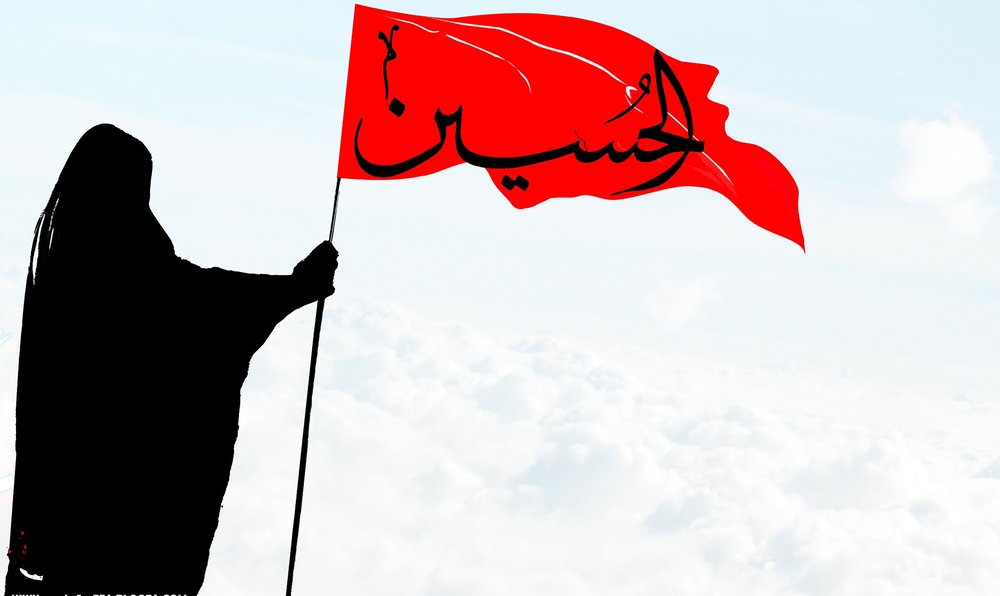
These women, part of a peaceful Muharram procession, carried banners of ‘Ya Hussain’, when they were confronted by a battalion of policemen carrying guns and sticks. The women stood their ground even when the shameless policemen started to smash them with big sticks. They reminded one of Zainab’s (SA) struggle in carrying the same flag through Kufa and Shaam.
As Dr. Shariati reminds us, it was Zainab (SA) who stood against and confronted the ruling oppressive power and who destroyed all resistance, and it was Zainab (SA) who spread the thoughts and ideas of Hussain’s (AS) school of revolution and martyrdom everywhere. She took the drops of the blood of Karbala as a symbol of courage and justice to all places and all times.

Monday, September 17, 2018

‘Islamic revolution in Iran paved new course for Muharram commemorations in Kashmir’

By Syed Zafar Mehdi
We are again in the month of Muharram, the month in which blood triumphed over sword and truth prevailed over falsehood. In this month, the campaigners of truth and justice across the world reaffirm their pledge to the principles exemplified by Imam Hussain (as) and his companions in the desert plains of Karbala 1400 years ago.
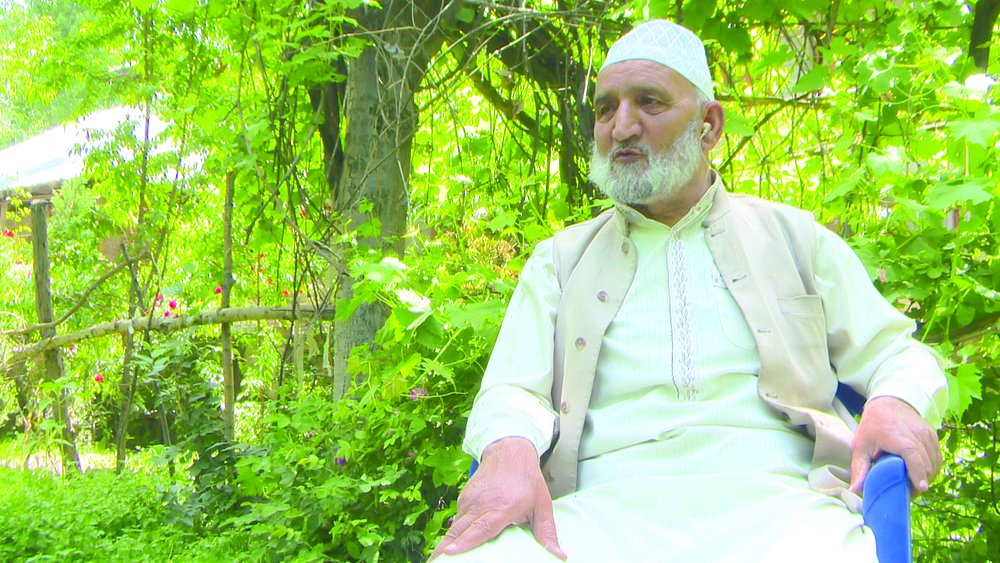
Syed Mohammad Anis Kazmi is a Kashmir-based Islamic scholar, historian and author of many books. In this interview, he talks about the history and philosophy of annual Muharram commemorations, unique tradition of mourning in Kashmir, and impact of the Iranian revolution on the tradition of mourning in Kashmir.
The genesis of Muharram commemorations
Muharram commemorations began soon after the tragedy of Karbala in 61 AH. The members of the holy household (Ahlulbayt), including Sayyeda Zainab (sa), Sayyeda Umme Kulsoom (sa) and Imam Zainul Abideen (as), were taken as prisoners to Damascus. After their release from the dark dungeon of Yazid, they returned to Medina where proper commemorations were held for the martyrs of Karbala in which Zainab (sa) and Umme Kulsoom (sa) played a key role.
Bashir bin Jazlam (ra), a lover of Ahlulbayt, first addressed people and narrated the chain of events that culminated in the greatest tragedy recorded in human history. Then Umme Kulsoom (sa), who had a poetic aptitude, recited a marsiya (elegy), the first marsiya written on Karbala, which virtually shook people out of their slumber. That was the beginning.
Then there was Fatima alias Ummul Baneen (sa), the mother of Abbas ibn Ali (as), who composed and recited soul-stirring marsiyas on the tragedy of Karbala. When Yazid was informed by Marwan about these mourning gatherings in Madina, he feared public backlash and ordered the re-arrest of Imam Zainul Abideen (as). He was taken in chains back to Syria. That’s how the tradition of azadari originated, first in Madina, followed by other places.
Muharram commemorations over the centuries
The tradition of azadari (mourning for the martyrs of Karbala) was kept alive by Imam Zainul Abideen (as) and after him by other Imams during their time. They used to invite prominent poets to write and recite elegiac poetry in the memory of the martyrs of Karbala.
Once Imam Zainul Abideen (as) went to Mecca for the Hajj pilgrimage. Hasham bin Abdulmalik bin Marwan, the Khalifa of that time, was also present there. Khalifa tried hard to touch Hajrul Aswad but was unable to do so. In the meantime, a young man, shining like a full moon, walked in. When he approached Hajrul Aswad, the crowd immediately dispersed. The Khalifa, who was watching the spectacle, was astonished.
He knew Imam Zainul Abideen (as) well but when someone asked him about the young man, he feigned ignorance. A poet named Furuzduq, who was hearing the conversation, said he knew the man. He stood up and recited a beautiful poem, eulogizing the Imam and his holy household. The poet was soon arrested.
After Imam Zainul Abideen (as), Imam Mohammad Baqir (as) during his time kept alive the tradition of azadari. After him came Imam Jafar Sadiq, who invited the famous poet and the lover of Ahlulbayt, Jafar Affan (ra) to recite marsiyas. During this time, Umayyads and Abbasis were fighting for power, so Imam Jafar Sadiq (as) had ample opportunites to propagate the message of Islam and popularize the Karbala movement started by his great grandfather in the desert plains of Karbala.
During the time of Imam Musa Kazim (as), some changes were introduced in the practice of marsiya nigaari (writing of Muharram elegies). He asked the poets of that time to write in their respective languages as per their own linguistic and cultural traditions. The practice continued till the last Imam’s (as) occultation and continues till date, although some innovations have been introduced over the centuries.
History of Muharram commemorations in Kashmir
In Kashmir, the tradition of azadari was popularized by three Sufi saints who came to Kashmir from Iran in the 14th century. First of them was Mir Syed Ali Hamdani (ra), who was a staunch lover of Ahlulbayt. He brought many taburrukaat from Karbala, which have become quite popular in Kashmir over the years. Then came Syed Sharafuddin Mosvi aka Bulbul Shah (ra), who also professed Shia faith according to historical accounts, although Shias and Sunnis were not segregated so much that time so his identity remained largely concealed.
The third and most important missionary who played an instrumental role in the dissemination of the message of Ahlulbayt and Karbala was Mir Shamsuddin Araqi (ra). During his time, the practice of azadari became widespread. He took the message of Imam Hussain (as) to every Shia household in Kashmir.
The first marsiya, recorded in the history of Kashmir, was recited in 822. During that time, Muharram commemorations were not held publicly. There were no azadari processions that time. Mourning ceremonies were organized inside packed halls, mainly at night time. It used to be a quiet affair and it continued that way until the time of former Chief Minister of Kashmir Sheikh Mohammad Abdullah.
He said all religious communities have the right to practice and preach their religious rituals, including azadari. During his time, a Muharram procession used to be taken in Srinagar city at night, led by Mirza Mohammad Ali. Later, during the time of Chief Minister Gul Shah, these processions were banned and the ban remains in place till date.   
The tradition of Kashmiri marsiya nigaari
From the historical point of view, the first marsiya nigaar (elegy writer) in Kashmir was Mir Syed Hassan during the Shahmiri dynasty rule. His marsiyas were a blend of Kashmiri and Sanskrit, which was the language of Kashmir’s erstwhile chief priest Nooruddin Noorani. He passed away in 822 hijri. After the Shahmiri dynasty came Chaks. During the Chak rule, Kashmiri marsiyas gained unprecedented prominence, since Chaks were Shias. After Chaks came Mughals, who imposed imperial diktats against marsiya nigaars, forcing them to write and recite marsiyas clandestinely.
Then in 1180 hijri, Khwaja Hussain Mir of a village called Gund broke a new ground in marsiya nigaari. He divided a Kashmiri marsiya into five parts: hamud, dumbaal, gath, kreakh, nishast. Before he emerged on the scene, Shias were persecuted and used to observe taqiyya (seclusion). He gave a fresh impetus to the tradition of marisya nigaari and azadari in Kashmir.
Persecution of Kashmiri Shias for observing Muharram
The role of clergy, right since the time of Mir Shamsuddin Araqi (ra), has been greatly significant in promoting the message of Karbala through marsiyas, sermons and various other means. They had to face myriad hardships though. For example, Kashmiri marsiyas were construed by some people in Ahle Sunnat community in a wrong way. They alleged that these marsiya nigaars showed ‘sahaba e kiraam’ (companions of Holy Prophet) in a poor light. They apparently considered Yazid ibn Abu Sufyan a ‘subaha’ too.
That was primarily why Shias were attacked and looted almost 21 times and the shrine of Mir Shamsuddin Araqi (ra) was set ablaze at least nine times. At one time, streets in Srinagar city were flooded with the blood of Shias.
Impact of Iranian revolution on azadari in Kashmir
Until the Islamic revolution in Iran, Kashmiri Shias had a different perception of Iran. Imam Khomeini’s (ra) Islamic revolution had a deep impact on Shia youth in Kashmir. It gave a whole new direction to the practice of azadari in Kashmir. And it brought some fundamental changes in the way we studied the history of Karbala, as the culture of research became common.  
Why Muslims do azadari to commemorate Karbala
The tyrant always seeks to hide his tyranny. It has happened throughout the history. We commemorate Karbala through azadari to keep the memory of martyrs alive, so that people know who was killed, who killed him and why.
Hussain, the son of Ali ibn Abi Talib (as) and Fatima bint Mohammad (sa), was killed by Yazid, the son of Muawiya. Who was Muawiya? The son of Abu Sufyan and Hinda. Who was Hinda? The woman who chomped the liver of Hazrat Hamza (as) in the Battle of Ohad.
When people know these facts, they will obviously hate the tyrant and his tyranny. That’s precisely why the sympathizers of these tyrants oppose the practice of azadari, to hide the oppression unleashed on the oppressed.

Wednesday, April 17, 2002

Fundamental historical realities explain Muslims’ present plight and the way forward

Zafar Bangash


 At a time when Muslims are reeling from the cumulative effects of numerous attacks, ZAFAR BANGASH, Director of the Institute of Contemporary Islamic Thought (ICIT) puts our plight and struggle in historical perspective
Most Muslims feel that the Ummah is undergoing one of the most difficult phases of its history so far. Whether one considers the plight of the Palestinians facing zionist atrocities, Afghans being burned alive by 15,000-pound bombs and killed by "thermobaric bombs" that suck air out of lungs, or millions of Iraqi children being starved by the world’s "sole superpower", the feeling of helplessness is not entirely misplaced. This made worse by the cowardice of Muslim rulers before the Muslims’ tormentors. There are 56 "Muslim nation-States", yet their combined success in helping Muslims anywhere is negligible. So what can be done to rescue the Ummah from its present predicament?
It is not the first time that the Ummah has confronted such problems. In the past, however, the problems were mostly from outside the House of Islam; now we are confronted by an enemy who has penetrated the House of Islam and recruited Muslims to its anti-Islamic campaign. This makes the task of recovery much more difficult. While the Ummah will no doubt recover from its present predicament (there is no better place to start than at the bottom), a necessary prerequisite is a clear understanding of both the external and internal enemies. Similarly, the Ummah must shed the intellectual disabilities that it has acquired in its downward slide into darkness.
Before identifying our enemies, it would help to review the setbacks suffered in the early days of Islam which have helped since then to weaken the Ummah. The first breach in the system established by the Messenger of Allah (saw) in Madinah, and followed by his rightly-guided khulafa, occurred at the Battle of Siffin, when Mu’awiyah rebelled against the legitimate authority of Imam Ali (ra). Malek Bennabi, the Algerian scholar (d.1973), has said that "the battle of Siffin, in the year 37 of the Hijrah [657 CE]... already contained — so soon after its birth — an internal contradiction: the Jahili spirit contending with the Qur’anic spirit. It was, moreover, Mu’awiyah, who broke a synthesis — in principle established for a long time, perhaps for evermore, thanks to the equilibrium between the spiritual and the temporal [life in Islam]" (Islam in History and Society, 1991. p.9).
This rupture was to manifest itself again between the children of the two protagonists of Siffin: like his father, Imam Husain (ra) stood for truth and justice, while Yazid ibn Mu’awiyah represented everything that Islam considers reprehensible. The tragedy of Karbala, although it enabled the jahili spirit to triumph at the time, was not really a victory for Yazid. By making the supreme sacrifice of his life and his family, Imam Husain denied to all future tyrants the opportunity to cloak their illegitimacy in the garb of Islam. The world of Islam has suffered a long line of tyrants and their court ulama masquerading as "Islamic saviours". It is this mindset that needs to be exposed and banished from Muslim political thought if Muslims are to regain their rightful position as leaders of humanity, a position assigned to us by Allah subhanahu wa ta’ala Himself, provided that we are faithful to the path laid down by Him for us.
The conversion of khilafah into mulukiyah (hereditory kingship) put the Ummah on a downward spiral whose logical conclusion was its disintegration, first into competing empires, then into colonies of a resurgent Europe, and finally as nation-States still subservient to the kuffar. The intellectual disintergration of the Ummah —helped by the injection of alien ideas into the body politic of Islam and foreign habits into the social and collective life of the Muslims— was more devastating than its physical subjugation. Today Muslims are like animals in a zoo, in the words of the late Dr Kalim Siddiqui; worse still, they have accepted these cages (the nation-States) as their permanent condition. And, like animals in a zoo or circus, Muslim rulers jump when the ringmaster cracks his whip. No longer do Muslims think in terms of the Ummah, a concept given to us by our Rabb (Sustainer) in His Book (21:92). Yet Muslim rulers continue to confuse the Ummah by such constructs as the Arab League, or the Organization of the Islamic Conference (OIC), as if these can be substitutes for a unified Ummah. Such groupings reflect the intellectual and political bankruptcy of the ruling elites in the Muslim world.
A quick comparison between the Muslims’ past and present shows that the present is much worse than even the darkest days of the past in several vital respects. In 1099 CE the Crusaders invaded Palestine, sacked Jerusalem and perpetrated a bloodbath: more than 70,000 Muslim men, women and children were killed in one week. This dark period in Muslim history was reversed in 88 years: in 1187 CE Salahuddin Ayyubi reclaimed Jerusalem. Before doing so, he first had to deal with the rulers surrounding Palestine who had aligned themselves with the invaders. A similar situation occurred with the sacking of Baghdad by the Mongol/Tatar hordes under Halaku Khan in 1258 CE. The largest library in the world, with priceless manuscripts, was torched; Mu’tassim Billah, the Abbassid ruler, was executed.
Despite this setback, the Muslims recovered. The barbarians who had defeated the Muslims themselves soon embraced Islam. This is a unique event in history: the victors accepting the religion of the vanquished. From Baghdad, the Tatars surged northwest into Russia, where, after defeating the Dutchy of Muscovy, they ruled for 200 years. In its entire history Russia has not been ruled by any foreigners except the Muslim Tatars. The last of the Tatar rulers were finally defeated by Ivan the Terrible in 1556 when he sacked Kazan, their capital, and executed all their leaders. The turban-shaped domes of the Cathedral in the Red Square, Moscow, stand for the severed heads of the eight Kazan rulers. The defeat of the Tatars occurred barely 60 years after the loss of Cordova (present-day Spain) in 1492, but Islam continued to show its resilience in the face of repeated defeats. When Andalus (Spain) was lost, the Turks had already established themselves in the Balkans by defeating the Serbs in the Battle of Kosova (1389). Their rule in the Balkans lasted more than 500 years.
It is important to note that Muslims made these remarkable gains despite the corruption that had seeped into Islam’s core since the tragedy at Karbala. In fact, soon after Karbala, Muslims made spectacular gains geographically and went on, especially during the Abbassid period (750-1258 CE), to make major contributions in science, astronomy, mathematics and medicine. This remarkable intellectual flowering also influenced and inspired much of Europe, which was still in its Dark Ages. The early Abbassid years are often referred to as the golden period of Islam.
Today, however, Muslims would be hard pressed to point to even one such recent achievement; at one level, there appears no hope in the foreseeable future. Some have even characterised it as the Muslims’ darkest period, with poverty, misery, suffering and defeat being the lot of the vast majority. Yet this is a superficial diagnosis of the Ummah’s condition. The question we should be asking is: who represents the Ummah today? Perhaps it needs to be put differently: who understands and shares the aspirations of the Ummah? the rulers of the nation-States, or the Islamic movement, struggling to retrieve the honour and dignity of Muslims in the face of internal and external onslaught? With few exceptions (Iran, for instance), the Muslim regimes are subservient to kufr led by the US. The degree of control and manipulation exercised by external powers in the House of Islam is humiliating to any Muslim with even a shadow of conscience and self-respect. The Muslim masses, however, have played little or no part in bringing about this humiliation.
Let us name the Muslims’ external enemies first: the US, Israel, Britain, Russia, India et al. Under their jurisdictions— Afghanistan, Iraq, the Philippines etc. (under US), Palestine (under Israel), Chechnya (under Russia), and Kashmir and Gujarat (under India) — Muslims are being brutalised and terrorised. In many places the external powers have also co-opted Muslim rulers into their agenda. The most recent manifestation of this is the so-called "war on terrorism". It appears that whatever the US says is terrorism is terrorism; the others simply jump to do America’s bidding. No distinction is made between people struggling to regain their fundamental rights, such as the fighters in Palestine, Lebanon, Kashmir and Chechnya, and those indulging in violence: the zionists in Palestine and the Serbs in Kosova and Bosnia not so long ago, for instance.
Israeli state terrorism is financed by the US, and the zionist state is protected from international opprobrium by America’s use of its veto at the UN Security Council, while the Palestinians’ legitimate struggle, whether waged by Hamas or Islamic Jihad, is labelled "terrorism." The Hizbullah fighters were called "terrorists" for struggling to liberate their land, but zionist state terrorism is defended as "security measures." In the eighteen months of the second intifada more than 1,400 Palestinians (a third of them children) have been murdered by the zionists, while 400 dead Israelis, most of them soldiers, are considered a major crime.
But should we expect anything else from the Muslims’ avowed enemies? Our real problem is internal: the ruling elites who are pursuing the agenda of the enemies of Islam. Most Muslim societies are governed by laws that were imposed during the colonial period to serve the interests of the colonial powers, unchanged since except in trivial details. Even in societies where Islamic laws are in force, such as Saudi Arabia, their application is selective and intended to terrorise the populace, rather than guide by the spirit of adhering to Allah’s commands. There is effectively one law for the rich and powerful, and another for the rest of society; this is clearly unacceptable from the Islamic point of view. Societies that are not governed by Allah’s Laws are in open rebellion, as the Qur’an makes clear (5:46 and 47). The Muslim ruling elites fall into this category.
At a time when the Palestinians are being subjected to fire and steel by the zionists, and the Afghans are being pulverized by the Americans and their allies, there are Muslim rulers who want to offer the zionists ‘peace’, while others have joined the US’s campaign for "moderation", "toleration" and "sense." Never before have Muslims heard more nonsense from their rulers; expecting anything different from them, however, would be naive. The ruling elites are a product of that period in history when Muslims were under subjugation; their inferiority complex is born of such subjugation, and their ambition is to find acceptance with their slave-masters. They are, in the words of Malcolm X (Al-Hajj Malik El-Shabazz), the "house negroes" of today, identifying totally with the slave-master’s well-being instead of struggling to free themselves and their own people.
The solution to the Muslims’ current problems cannot come from faulty thinking or with tools acquired during the colonial era. True liberation will only come from thinking within the framework of the divine message revealed to the noble Messenger (saw) and put into practice by him, and by following his example. For this the Muslim world is in need of an intellectual revolution before external change can be brought about. In fact external, physical change will follow once our thought-processes and understanding have been corrected. This is the greater challenge facing the Ummah today, despite the immense suffering to which it is subjected by its enemies.


Zafar Bangash