Showing posts with label iran-saudi arabia conflicts. Show all posts

Sunday, December 31, 2017

Iran in 2017: Boosting regional power, confirming US distrust policy


December 31, The Iran Project – The year of 2017 was full of ups and downs for the Islamic Republic of Iran. In one hand, coming to power of US president Donald Tramp created serious challenges for Iran in dealing with its most important international treaty after the end of Iran-Iraq war (the eight-year war imposed by the regime of former Iraqi dictator Saddam on the Islamic in the 1980s). On the other hand, Iran’s endeavors to restore its regional power during the past years had brought up fruitful results.
Tramp vs Iran: Mutual Confrontation
Although, Trump became president in November 2016, he actually came to power on January 19, 2017. From the very first moments after he took the presidency helm, the viewpoints of many Americans and non-Americans changed about the US.
The ex-US president, Barack Obama’s strategy in dealing with Iran was based on a soft approach and changing the officials’ opinions in decision-making. In the meantime the slogan of “regime change” also had been removed from the American authorities’ literature. But after Trump presidency, the American authorities’ literature also changed, and what they were thinking behind the scene about the Islamic Republic of Iran publicly become apparent.
Tramp, who described the nuclear agreement clinched with the P5+1 group of countries as the worst deal for US, was looking for a way out of deal or at least was seeking to withdraw from the deal, known as Joint Comprehensive Plan of Action (JCPOA) in words.
For sure, the US’ withdrawal from JCPOA is not appropriate for Americans’ dignity and even speaking of it would fuel a wave of distrust to  United States among other countries. Of course, the disloyalty of US had already been predicted by the Supreme Leader of the Islamic Revolution Ayatollah Seyyed Ali Khamenei and inside Iran the move reinforced the oppositions’ stance that were against amending relations with US.
Syria: End of Daesh, resistance Neighborhood with Israel
One of the most pivotal achievements of Iran, which its ground was prepared in the past years, was the official annihilation of Daesh terrorist group in Iraq and Syria and the terror campaign approximate destruction.On Nov 21, Commander of Quds Force of the Islamic Revolution Guards Corps (IRGC) Major General Qasem Soleimani in a letter to Supreme Leader announced the termination of the corrupt tree of Daesh and congratulated the glorious victory to the Islamic World.
Thanks to the Islamic Republic of Iran’s leading role, the resistance axis managed to defeat the evil axis in Saudi Arabia, Turkey, the United Arab Emirates and the United States which were undermining the process of defeating Deash in Syria. This resistance also brought about another important results which paved the way for stationing of resistance forces in joint border areas between Syria and Israel, and if Iran and its allies intend to “cut the head off the snake”, then land access from Syria and Lebanon would be provided to them.
Tearing out of Persian Gulf Cooperation Council and Iran’s big hug for Qatar
Another achievement for Iran in 2017 was Saudi Arabia’s siege against Qatar which was formed far from Tehran’s will and eventually served the interests of the Islamic Republic.  The siege of Doha in fact fanned the flames of Saudi Arabia’s rivalry with Qatar in the region. Riyadh believed that Qatar’s siege would change its foreign policy and even its rulers, but thanks to Iran and Turkey supports, Riyadh’s dreams did not come true and led to a change in Qatari mass media viewpoints toward the Saudi Arabia.
Yemen, friend of Iran, the thorn in Saudi Arabia’s eye
Saudi Arabia will have the right if it finishes 2017 year with a blockade nightmare from Iran.Thanks to enjoying US, UK and other Western countries’ state-of art weapons, Saudi Arabia is incessantly bombarding Yemen and not yet succeeded in defeating this Arab country. In a meantime, the nightmare of missile attacks to Riyadh by Houthis has been terrified them.
The Houthis mostly shared same stances with Iran and are considered the new member of resistance axis. Besides, this new member is Saudi Arabia’s neighbor, and it is possible to get involved in more conflicts with Al Saud.
To sum up, it could be said that the 2017 was a triumphant year for Iran’s regional policy, and on the other hand, with regard to Trump’s threats to tear up the JCPOA, the correctness of Tehran’s policy of  distrust to US proved again.
It seems the 2018 year would be considered for Iran as the year of development of regional power and extension of influence in the international arenas. Despite the presence of global and regional rivals, Iran will be more successful to achieve its goals.

Saturday, December 23, 2017

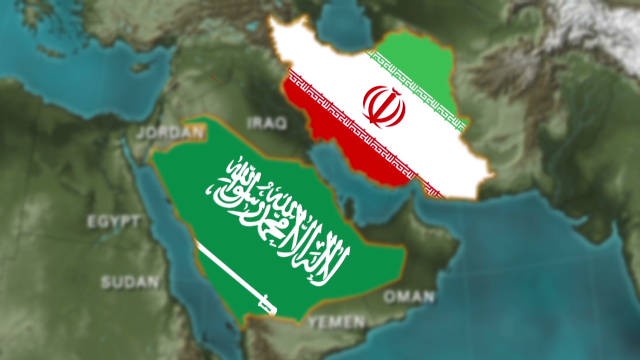
The long war between Iran and Saudi Arabia


December 22, The Iran Project – The relationship between Iran and Saudi Arabia has reached a certain level in recent months and can be compared with the Cold War between the United States and the Soviet Union, but the main problem in this upward and downside situation is what will happen in the future.
From Cooperation to Confrontation
Iran and Saudi Arabia have not just become acquainted with each other. In the 20th century, both countries have witnessed the emergence of totalitarian kings which were totally supported by world powers and since that time, the religious rivalries have been emerging between Shia in Iran and Sunni in Saudi Arabia.
During the US-backed Pahlavi dynasty, Iran’s military  was more powerful than Saudi Arabia, and Iran was deemed as the gendarme of the sensitive area of the Persian Gulf.
After the triumphs of Islamic Revolution in 1979, Iran became a religious rival for Saudi Arabia. On the other hand, the official policy of confronting Israel also Saudi Arabia was abandoned by the Arabs as a supporter of Palestine.
Other issues also fanned the flames of concerns in Saudi Arabia to the extent that Saudi government expressed distress over the emergence of revolution in Saudi Arabia and then the repression of Masjid al-Haram (Grand Mosque) prayers happened.
Iran boycotted the Hajj for three years between 1988 and 1990 after clashes between Iranian pilgrims and Saudi police in 1987 left around 400 people dead.
Although Iran and Saudi Arabia re-established their relationship after the bloody Hajj year of 1987, these relations did not go away like before, and over time the tensions was skyrocketed despite the desire of both sides and eventually the 2015 Mina tragedy during the Hajj rituals fueled tensions between the two countries.
Saudi Arabia severed its diplomatic relations with Iran in January 2016, following demonstrations in front of the Saudi embassy in Tehran and its consulate in the northeastern city of Mashhad.
Angry protesters set the diplomatic missions ablaze for the execution of top Shia cleric Nimr al-Nimr by Saudi Arabia.
Tehran, Riyadh Rivalry over Regional Influence
The sphere of authority of Iran and Saudi Arabia in the Middle East has seriously intertwined in many arenas in a way that the cooperation between the two countries is not possible. On the other hand, due to the presence of a large number of Sunnis in the Middle East, Saudi Arabia has long been promoting ideology of Wahhabism to control Iran’s authority in its sphere of influence.
Iran has also expanded its sphere of influence by supporting Shia and Sunni anti-arrogance movements.
Who Supplies Europe’s Energy?
Iran and Saudi Arabia, both, enjoy rich oil and gas resources and also are competing for supplying Europe energy.
In the meantime, the mediation role of big American companies in the energy deal for Europe and other countries cannot be ignored.
Saudi Arabia had always being in fidelity with US companies for oil extraction and sales, and the companies also shown that they consider no limits to protect their economic interests. In the other hand Saudi Arabia is a key energy, economic, and security partner to the US.
Riyadh’s Failure in the Region
In Syria, Saudi Arabia has made great efforts to defeat Syrian Prescient Bashar al-Assad and the Islamic Republic of Iran. Because Riyadh thinks that fall of Assad would undermine Lebanon’s Hezbollah and Israel would become source of power in the region. And that situation would pave the way for transferring of energy to Europe via Syria without Iran’s meddling.
To accept Iran-Iraq cordial relations and empowerment of Shia was too hard for Saudi Arabia. As a result, Riyadh is keeping no stone unturned to create obstacles for Iraq and separate this Arab country from the Islamic Republic of Iran.
Alternatively Afghanistan was another scene for Saudi Arabia to curb Iran by supporting Taliban and Al Qaeda in the desert.
Saudi Arabia even did not tolerate the proximity of rhetoric between Iran and Yemen’s, and is imposing an all-out attack along with economic blockade against that Arab country.
Saudi Arabia perceives the Houthis as an Iranian proxy. Domestically, the Houthis are unlikely to be able to govern the country and deal with its multiple insurgencies alone. Yemen will also require the financial backing of its much wealthier neighbors, above all Saudi Arabia, to prevent its economic collapse.
Due to the complex structure of the region in many disputed areas between Iran and Saudi Arabia, Riyadh has not achieved its desired results. Meanwhile, the Saudi Arabia’s failure in mass media was more higher than Saudi Arabia’s real failures, and the Saudi crown prince does not tolerate such humiliation.
Military confrontation, yes or no?
The possibility of a military confrontation between Iran and Saudi Arabia is better understood by comparing the current situation of this Arab state with the situation in Iraq before the attack on  Iran. Iraq’s dictator Saddam Hussein turned the country into a stockpile of weapons, even after the end of the war with Iran, he invaded Kuwait.
Thanks to Saudi Arabia’s all-out support by US and other European countries, Riyadh enjoys various military systems.
Hence, it is unlikely that Mohamed bin Salman in the shadow of such weaponries dares to attacks Iran.
Besides, some experts believe that if Saudi King enters into a military confrontation with Iran, the war may  pave the way for the Arab monarch collapse.
Due to Saudi Arabia’s engagement in Yemen war, Riyadh is too weak to enter into another military confrontation with a powerful country like Iran and attacking Iran now seems to be larger than Saudi Arabia’s size.
Animation Wars
The military conflict between Iran and Saudi Arabia has already happened in animations made by both sides. In a short animation, Iran has shown its military superiority to Saudi Arabia, and the Arab country has recently launched a pre-emptive attack on Iran in another animation.
In their fiction short story, Saudis enter the capital Tehran with victory and among the popular enthusiasm. These animated clashes are more a reminder of the US-Soviet cinematic rivalries during the Cold War, which were inspired by the Star Wars series and some other famous works and numerous non-famous works.
Efforts for Mediation
Mediatory efforts are being made by Oman, Russia and some other countries to reduce the tension between Iran and Saudi Arabia.
The United States is not also reluctant to reduce the tension and the possibility of a military conflict between the two sides.
But there is one country that is very happy over escalation of tension between Iran and Saudi Arabia which is not too hard to guess its name.