Showing posts with label international terrorism. Show all posts

Wednesday, September 04, 2019

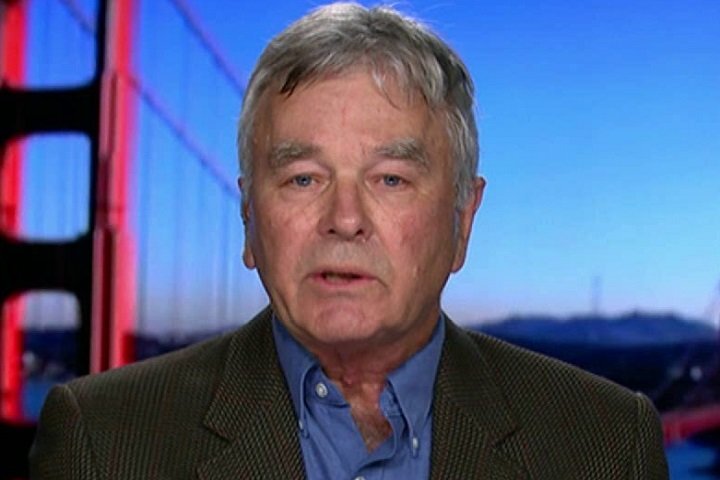
U.S. prefer to maintain ISIS against Syria: Rick Sterling

By Damir Nazarov

 Rick Sterling is a  journalist and member of the Syria solidarity movement.Below is the full text of the interview.
Q: What do you think is connected with the sudden activity of businessmen from the UAE in Damascus?
A: It was good to see the United Arab Emirates re-open its Syria embassy last December. Now it is good to see them at the Damascus International Fair which is taking place now. We will see if they make significant investments or not. Just the other day, the US issued a warning. The US is threatening repercussions against any country or company which does business in Syria. We will see if the UAE business community stands up to this bullying or not. We hope that the UAE will stand up to the USA and invest in redevelopment and reconstruction in Syria. 
Q: The US imposed sanctions on a Lebanese Bank Jammal Trust Bank, formerly Washington has sanctioned individuals associated with the official Damascus and businessman Samir Faza. For what purpose is the US pursuing a policy of sanctions against Syria?
A: Economic sanctions have been used by Washington to punish many countries. In Chile under Salvador Allende, the US set out to "make the economy scream" in preparation for the  1973 coup.  In Nicaragua, the Sandinistas were punished in the 1980s and again now. Iraq in the 1990s was under horrendous sanctions as the US prepared to invade. Today we have Iran, North Korea, Russia, Venezuela and many countries under some form of US sanctions. Regarding Syria, the US wants to prolong the conflict and prevent the Syrian people from recovering. Thus they maintain the sanctions and try to bully other countries into compliance. They don't care if it hurts ordinary civilians. The purpose is to punish countries that disobey the US dictates and make an example as a warning to others.  
Q: In April 2014, as part of an international delegation, you visited several cities in Syria. Could you tell us briefly whether the protesters had "political leadership"? And what were the local, so-called "moderate opposition"?
A: Yes, in April 2014  we met with leaders of seven different opposition groups in Damascus.   This is the real moderate opposition as opposed to the armed militants.  These individuals, both men, and women, were very impressive. They wanted changes in Syrian policy in various ways. Some of them said that they supported President Assed in the current crisis; some did not.  But all of them denounced the armed opposition and said it was foreign funded. They called for dialogue and stopping the foreign funding of armed groups. The groups called "moderate rebels"  in the West do not exist.  It is a pretense to allow the West to continue supporting fanatics and mercenaries who are the armed opposition. 
Q: Is it true that public figures living in the West and criticizing the activities of the "White helmets" often face threats?
A: Those who criticize the western narrative on Syria, including the White Helmets, used to be harshly criticized and sometimes threatened. Supposedly the opposition wanted "freedom and democracy" in Syria but opposition supporters would try to shut down anyone who questioned their narrative. Sometimes they issued threats of physical harm. Even though the media broadcast their narrative 95% of the time, they tried to shut down and threatened people who presented the facts. Now that the Syrian government has prevailed, and the facts about the White Helmets have been more widely seen, opposition supporters are on the defensive and not so outspoken and aggressive.
Q: Are there reasonable politicians in the US Congress who support the Syrian Government in the fight against international terrorism?
A: On the national level Tulsi Gabbard has tried to get Congress to pass the "Stop Arming Terrorists in Syria" resolution.  She understands the US has been colluding with terrorists like Al Qaeda. She is trying to make the public aware of this and open it up to debate. Most Americans agree with her but the political establishment does not.  They are trying to derail her candidacy to be the Democratic Party nominee and to stop the discussion that she wants to initiate.  Bernie Sanders is another national politician who would probably stop US collusion with terrorism in Syria. As for the rest of candidates, we don't know but they seem compliant to the foreign policy establishment which is unduly influenced by Israeli interests.  Israel and the US prefer to maintain Al Qaeda and ISIS as a tool and threat to the Syrian government.  

Saturday, September 08, 2018

Tehran Summit: Putting the Last Nail in the Coffin of Terrorists in Syria


TEHRAN (FNA)- The presidents of Iran, Russia and Turkey are meeting for a third summit in Tehran to end the Syrian conflict.
Iranian President Hassan Rouhani and his Russian and Turkish counterparts Vladimir Putin and Recep Tayyip Erdogan are also scheduled to have bilateral talks on the sidelines of the tripartite summit on Friday, September 7. The three presidents previously met in the Russian resort city of Sochi and the Turkish capital Ankara, where they discussed developments in Syria, among other things.

A major item on this summit agenda is the terror-held Northwestern province of Idlib which President Bashar al-Assad wants to recapture. Iran and Russia are the main allies of the Damascus and their military support tipped the balance of the seven-year war in government’s favor. Turkey has backed rebels seeking to oust the government but since late 2016 it has been working closely with Iran and Russia to avoid the fate of Qatar and Saudi Arabia who have been excluded from the equation in Syria, and maintain its presence on the stage.

At any rate, the three leaders have agreed to consider further joint efforts to ensure long-term normalization of the situation in the Arab country. This includes bilateral talks and discussing further measures aimed at finally liquidating the hotbed of international terrorism in Syria, where according to the United Nations the conflict has killed more than 400,000 people since 2011, and made millions more refugees.

The discussions further look at promoting the process of a political settlement with the opposition groups (not Salafi, Takfiri, Wahhabi terrorists), including creating the conditions for the return of refugees and the internally displaced. Unlike the United States and its allies which seek to prolong the war, Rouhani, Putin and Erdogan back Syria peace talks based in the Kazakh capital of Astana (Astana Process), aimed at reinforcing, rather than undermining, a parallel UN peace process in Geneva.

On the other hand, Iran and Russia could speed up normalization of the situation in Syria through Turkey's companionship. The good news is that Turkey is looking for new allies and is in the anti-US camp. Turkey has come so close to Iran that it has informed Washington of its defiance of the US sanctions policy against Tehran. Ties are also warming between Turkey and Russia, even though they supported opposing sides in the war and Turkey shot down a Russian warplane before. Now thanks to the Tehran Summit, Erdogan backs an Iranian-Russian truce plan for four areas in Syria, and has sent troops to assist in its execution. All in all, the Friday summit means collaboration because of common interests among Iran, Russia and Turkey happening at the right time and the right place.

They meet at a sensitive time. Defying Trump, Russian air strikes have resumed against Qaeda-allied rebels in Northwestern Idlib province. The Syrian Army is also preparing a phased offensive to regain the "nest of terrorists". The province and surrounding areas is the last major enclave held by Qaeda-allied insurgents fighting the Syrian government, such as the Nusra Front.

With the foreign-backed terrorist groups still operating there, the government cannot start rebuilding the country. Damascus cannot put in place the legal and regulatory authorities to implement its vision of reconstruction as a process of stabilization when the country is still in the midst of various regional and international tensions and rivalries. With its military victory close at hand in Idlib, the government can use reconstruction to re-impose law and order.

For all intents and purposes, the Tehran Summit means the structure, governance and organization of post-conflict reconstruction in Syria are settled issues. The government has consolidated its dominance over the levers of reconstruction, rendering it virtually impervious to external pressure. The American hope, however modest, that its terror proxies in Idlib might someday set the stage for external actors to engage in partition programming in Syria, or through interventions influence the course of reconstruction and political process, is deeply misguided and out of picture now. 

In brief, much has been accomplished this year in the campaign against terrorism in Syria. This struggle will require further vigilance, perseverance and sacrifice on the part of all parties involved. The Tehran Summit will help end the seven-year conflict and liquidate the hotbed of international terrorism in embattled Syria.

At the same time, it will help normalize the situation, promote the process of a political settlement, create the conditions for the return of refugees and internally displaced, herald international reconstruction support and funds, and take away any remaining pretext for the United States and its allies to occupy the country further and destabilize the entire region for some illicit interests and designs.