Showing posts with label and Yemen. Show all posts

Thursday, December 05, 2019

Why US Inciting Riots in Iran Doesn’t Work

Why US Inciting Riots in Iran Doesn’t Work
TEHRAN (FNA)- The US Congress has passed the so-called "Hong Kong Human Rights and Democracy Act of 2019" to turn on a green light for atrocities and any attempt to incite violence to contain China.
The problem is that just like in Iran, the US attempt to incite violence and vandalism won’t work to give the desired result in China. The reasons are plenty.
A large number of facts show that the United States has long been involved in Hong Kong affairs. The Congress proposed from 1984 to 2014 more than 60 bills concerning Hong Kong. WikiLeaks had disclosed that the US Consulate General has repeatedly published opinions aimed at interfering in Hong Kong affairs and frequently met with opposition figures. 
From the various support provided by the US National Endowment for Democracy to anti-China elements in Hong Kong, to open meetings between US politicians and Hong Kong's  pro-independence leaders; from some US media's biased reporting on the violence to attempts to implement the long-arm jurisdiction through the latest bill, the intentions of those US politicians to bring trouble to Hong Kong and contain China are clear.
The international community has generally slammed and condemned the acts. Indeed, no country would ever allow violence to disrupt its society and undermine its economy. So the act is detrimental for the United States, and for the world, as well as for China.
Iranian Foreign Ministry Spokesman Abbas Mousavi has said that the United States' violation of international norms through such acts will definitely cause serious damage to global stability. The United States has become a target of criticism for inciting violence for its own interests and that its attempt to intervene in Iran or in Hong Kong affairs is unpopular and doomed to failure.
However, in the minds of some politicians in the United States, "riots" could be dealt with employing double standards. A riot happening inside the United States must be heavily suppressed. As a result, people have seen US police dealing harshly with the 2011 Occupy Wall Street campaign and the 2015 Baltimore riots in Maryland. When it comes to external riots in Iran or Hong King, the same politicians immediately change their tones and paint the "riots" as "a beautiful sight to behold". 
They ignited and instigated riots, launched wars and "color revolutions", plunging many places in the world into chaos in order to seek political interests and safeguard US global hegemony.
In the past few decades, wherever the United States intervened, turmoil and poverty have been commonplace. That's why when some US politicians professed to stand with Iran or Hong Kong, many netizens ridiculed them. Thus is because when they stood with Libya, Syria, Iraq, and Yemen, they were all burned to the ground.
A just cause attracts much support, while an unjust one finds little. By publicly supporting violence in Iran and Hong Kong, the politicians in the United States have seriously violated the basic norms of international law and international relations, and invited uncertainties to the future of their own country.  
For example, the United States ignited war and turmoil in the Middle East, which has helped brew a large-scale refugee crisis, and had a tremendous impact on the social order of the Western countries. Its wrong policies and interventions in Latin America have contributed a major role in triggering major flow of illegal immigration into the United States.
Iran is not a kite in the hands of some Americans who could pull it as they wish. Iran’s resolve to implement its Islamic-democratic principles and resist any outside interference in its internal affairs is unwavering. Any attempt to incite violence to contain Iran’s progress is simply not going to work. The same could be concluded about China’s rise.

Sunday, September 02, 2018

Essential Qualities of Islamic Leadership


Rulers are not necessarily accomplished leaders
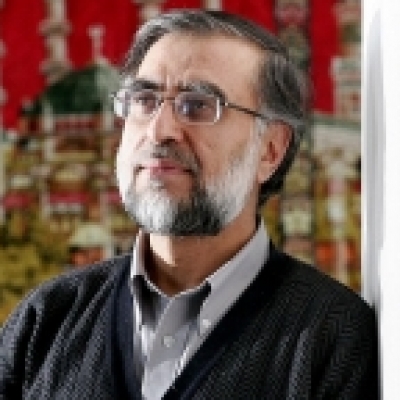
Zafar Bangash


“There always have been people who kept saying things like ‘we can’t do it,’ ‘our enemy is too strong,’ ‘we don’t have this,’ ‘we don’t have that.’ The Islamic Republic is a blessing that has proven to us, ‘yes, we can do it.’” – the Rahbar, Imam Seyyed Ali Khamenei
In Islamic governance, leadership is extremely important, as indeed it is under any other system. This is also true of industry and other organizations. There are certain qualities unique to Islamic leadership that are often lacking in other systems. Similarly, rulers are often confused with leaders. Is there a difference?
A ruler is a person who occupies a certain position in government, such as president or prime minister. Even if such a person has come to occupy this position by winning an election, it does not automatically confer on him (and rarely her) the title of leader.
Today, Donald Trump is the president of the United States but does it make him a leader? True, he won the election in 2016 (although some would dispute that) but most Americans would agree that he does not inspire much confidence, much less show any ability to lead. A ruler simply occupies a position. The moment he is knocked off that perch, the person is consigned virtually to oblivion. A ruler follows routine matters and if he is able to do so with efficiency, then he is considered a good ruler.
Leaders, on the other hand, are made of different material. First and foremost is the fact that they have a vision. Second, they are able to give a directional course for people to follow. Then they inspire people by their own example. Leaders also have certain qualities such as modesty, simplicity, sincerity, courage and self-sacrifice. This is what Islam calls taqwa — doing everything that Allah (swt) orders them to do, and refraining from what He has forbidden. They pursue no personal or parochial interests. Instead, they are motivated by the desire to serve the people and strive to realize their legitimate aspirations.
Leaders are also able to withstand pressure, such as threats, inducements, and other impediments in the pursuit of their goal. Entrenched vested interests in society try to first ridicule them and if unsuccessful, they resort to intimidation. If intimidation does not work either, inducements are offered to derail them off their course. “Every man has a price,” is an old adage. Leaders, however, are not for sale, at any price. They cannot be intimidated or bought. These are the qualities that distinguish ordinary people (rulers) from leaders.
Let us cast a cursory glance at the world today and see how many rulers truly qualify as leaders? We will not detain ourselves too much with the Western world where a number of institutions exist to ensure the system works smoothly even if a totally dumb person reaches the top (Trump in America is a good example).
What about the Muslim world and what constitutes ideal leadership there? Committed Muslims know that none other than the noble Messenger (pbuh) was and remains the model for them, as Allah (swt) says in the majestic Qur’an (33:21). Many people including some Muslims might argue that he was the Messenger of Allah and we are ordinary human beings. True, but the ideal has been shown to us and we are required to emulate his example to the best of our abilities.
In the Muslim world today, only a few personalities — the Rahbar, Imam Seyyed Ali Khamenei of Iran and Hizbullah leader Sayyid Hasan Nasrullah — qualify for this honor. It would be immediately obvious that both emerged from the roots of Islamic tradition and not from Western or other forms of secular education or institutions. It is a sad reflection on the Ummah that out of nearly 1.8 billion Muslims, we cannot point to any other examples.
Among the qualities of a great leader are his ability to accurately analyze the prevailing situation and offer a directional course of action. To bring about a convergence of words and deeds, there is also need to ensure that officials and people think alike. This is also among the responsibilities of a leader to guide officials and people so that they work toward a common objective.
Only a leader with steely determination and sterling qualities of fearlessness and wisdom can guide a country such as the Islamic Republic of Iran that is faced with so many grave challenges. Similarly in Lebanon where Sayyid Hasan Nasrullah has led Hizbullah to defeat an enemy — Zionist Israel — many times “stronger” and more heavily equipped. It is almost certain that leaders with lesser qualities elsewhere would have and indeed have buckled under such pressure exerted by their enemies. Not so the Rahbar of the Islamic Revolution or Sayyid Nasrullah of Hizbullah.
Let us remain with the Islamic Republic for a while. Perhaps no other country in modern history has faced such severe pressures as the Islamic Republic. It has been subjected to decades of illegal sanctions and an external war that had the backing of the entire world. Islamic Iran fought that war alone and valiantly defended its honor and integrity.
Simultaneously, there was a relentless campaign of sabotage and assassinations carried out by the munafiqin. Both the leadership and people of Iran they inspired withstood all these tests with courage and determination. It was only possible because the leadership guided the people in the right direction and kept them motivated.
Far from buckling under or surrendering to the bullying tactics of the enemies, the Islamic Republic has increased its global influence, especially in the surrounding region. Today, the Islamic Republic has influence in countries like Lebanon, Iraq, Syria, Palestine, and Yemen. This influence has not come about through coercion, à la the US or its European allies, but by means of extending sincere help. This is referred to as Islamic Iran’s “strategic depth.” In a speech delivered on May 23, 2018, the Rahbar addressed this issue, “One element of power is our defensive capability: defense at a distance. Another element of power is our strategic depth. Presence in regional countries and support for the people of the region is the strategic depth of the Islamic Republic: the Islamic Republic cannot give this up. No wise government will give this up.”
Referring to the demands of Western hegemonic powers led by the US, especially relating to Iran’s missile capabilities, the Rahbar stated firmly, “Building various missiles and missile power is a source of security in the country.” Addressing scientists and academics, the Rahbar pointed out that the young generation does not remember the days when Tehran was subjected to barrages of missile attacks day and night. “Houses were destroyed and innocent lives were lost in Tehran! The enemy’s missiles reached cities near the front-lines — like Dezful, Ahwaz, Suse, and other towns and cities — and other cities even farther! We did not have missiles or other means of self-defense, we simply had to watch all the suffering as our hands were tied,” the Rahbar said in another address on June 4, 2018.
This is how the enemies of Allah (swt) and humanity operate. They subject people, especially committed Muslims, to horrendous crimes because they dare to chalk out a separate path based on justice and fairness. Such a path is seen as detrimental to the interests of the predatory powers, especially the US.
To confront such imperialist and Zionist plots, a country has to be strong internally. There has to be internal unity and cohesion and it must have the means to defend itself. This is what the Islamic Republic has achieved.
The Rahbar referred to this when he said, “Our youth have made us the foremost missile power in the region. The enemy must know if they strike us just once, we will strike back tenfold! So, missiles are a source of security and strength for Iran. Notice that the enemy has focused on our strengths: they have set their sights on our missile program. Unfortunately, some inside the country are going along with the enemy, echoing the enemies’ words by saying, ‘What’s the use of our missile program?’”
The US military budget is $719 billion. It has also allocated $1.1 trillion to modernize its nuclear arsenal. The US maintains more than 900 military bases worldwide, many of them in countries bordering the Islamic Republic. Yet the Americans and their Zionist allies insist that Iran should not have any missiles and that it must withdraw its advisors from Syria. They realize that Iran’s presence in Syria gives it strategic depth.
America has entered Syria illegally in violation of international law and without the permission of the Syrian government. Iran’s advisors are there at the specific invitation and request of the Syrian government to defend it against the imperialist-Zionist-Saudi-backed takfiri terrorists that have caused havoc in the country.
Iran’s missile capabilities and its presence in Syria frustrate the predatory powers’ evil design, hence their shrill propaganda against the Islamic Republic. “They are opposed to the country’s defensive and military strength because this is an element of power and because this is the strategic depth of the country. Our enemies are opposed to every means of power and every element of national strength,” said the Rabhar in his address Iranian to scientists.
“My intelligent and talented youth,” the Rahbar went on, “today arrogance is fighting against us because our power has engulfed the region. Such is the power of the Islamic Republic. What is considered as elements of national power in our opinion is seen as disturbing elements in the eyes of our enemies and that is why they are fighting against those elements. They are opposed to the expansion of the Islamic Republic’s power among and beyond regional countries. They are opposed to the country’s defensive and military strength because this is an element of power and because this is the strategic depth of the country. Our enemies are opposed to every means of power and every element of national strength.”
Providing guidance in the form of a question, the Rahbar said, “What is the way to confront this?” He advised the assembled young scientists and youth, “We should rely on our elements of power despite and contrary to the wishes of the enemy. We have announced before and we would like to announce once more that the defensive resources and power of the country are not negotiable and they cannot be bargained over. Can they come and criticize us for having such and such defensive means, for having such and such forms and versions of them and for producing and researching into them in the first place?”
The Rahbar firmly rejected any bargain with the enemy on these crucial issues, “We will not bargain and negotiate with the enemy over those things that increase, provide, and support national power. We are moving forward on the path of the country’s power and this falls on you” (address to the scientists and youth on 10-25-2017).
Iran’s strategic depth continues to expand at the expense of the enemy powers that have no right to be in the region in the first place. When this wave of awakening spreads to other people in the region, they would rise up against the presence of arrogant powers and demand their expulsion from the region. That day is not far off, insha’allah.

Wednesday, August 01, 2018

Islamophobia Now Official US Policy


US Supreme Court legalizes “Muslim ban”

Kevin Barrett

In upholding US President Donald Trump’s “Muslim ban” — originally conceived as “a total and complete shutdown of Muslims entering the United States” — the Supreme Court of the United States has effectively eliminated the First Amendment to the Constitution, and made Islamophobia official US policy. Alongside Trump’s move of the US embassy to colonized Jerusalem (al-Quds), the Supreme Court’s rubber-stamping of the “Muslim ban” makes it unmistakably clear that the US government is now on record as a mortal enemy of Islam and Muslims, and of religious freedom in general.
Justice Sonia Sotomayor, in her dissent, belabored the obvious, “Taking all the relevant evidence together, a reasonable observer would conclude that the Proclamation was driven primarily by anti-Muslim animus.” The “relevant evidence” includes Trump’s initial statement calling for the exclusion of “all Muslims” from the US, and a long series of statements and tweets conveying the same, arguably genocidal intent (the First Amendment of the US Constitution mandates absolute religious neutrality on the part of the government).
Chief (in)Justice John Roberts, writing for the majority, approvingly noted Trump’s deceptive inclusion of two non-Muslim-majority nations, North Korea and Venezuela, in the latest version of the travel ban — alongside Muslim-majority Iran, Libya, Somalia, Syria, and Yemen. Roberts found that the relevant issue was not presidential intent, but rather the president’s power to do just about anything he wants in the name of “national security” (if the Founding Fathers of the USA were in power today, they would execute Roberts for treason, for the Constitution explicitly defines the US as a Republic, the diametric opposite of a monarchy in which the King has unlimited “national security” powers).
Roberts further argued that Trump’s alleged national security concerns regarding travelers from the seven targeted countries were legitimate. That argument is absurd on its face. There is no evidence that any immigrant or visitor from any of the seven named countries has ever threatened American national security in any way. Nor did Trump even try to present any actual evidence for that thesis.
So how could Roberts uphold Trump’s ridiculous “national security” pretext? Apparently Roberts accepted the empty propaganda bromide that the US is fighting a “war on terror” because “terrorism” threatens “national security.” The seven targeted countries, according to Roberts, might present “threat of terrorism” despite the complete absence of actual evidence that this is the case. In other words, the myth of the “war on terror” completely annihilated any reference to empirical reality in the mind of the Chief Justice of the United States.
Had the Chief Justice bothered to look at the evidence, he would have learned that America faces no statistically significant threat from terrorism, and even less of a threat from terrorists who claim to be Muslim. All terrorist attacks taken together, including such false flag events as 9/11 and the Boston bombing, rank far below lightning strikes and bathtub drownings as threats to Americans. And Muslims are blamed (whether accurately or not) for only 6% of terrorist attacks in America, according to the FBI. As for the seven countries on Trump’s list, not one terrorist event in America has ever been attributed to anyone from any of those countries! It seems Trump and Roberts are living in a paranoid fantasy with no reference to reality.
There is, of course, no actual “war on terror.” Terrorism, which is defined as “intentionally targeting civilians to incite fear,” is a military tactic. One cannot fight a war against a military tactic.

Moreover, it is national armies and their corporate and paramilitary allies, not insurgent fighters, who commit more than 99.9% of all terrorism. According to Vltchek and Chomsky’s On Western Terrorism, the US has murdered approximately 60 million people worldwide, almost all civilians, in CIA and military incursions since WWII. That makes the USA the world’s biggest terrorist.
Per capita, the world’s worst terrorist nation is Israel. That small nation of eight million people “raised terrorism to the level of a sacred principle” according to Moshe Sharett, foreign minister from 1948–1956 and prime minister from 1954–1955. Sharett blamed Israel’s devotion to terrorism on Ben Gurion, Pinhas Levon, Moshe Dayan, Shimon Peres, and the rest of the dominant faction of Zionist leaders, who wanted “to set the Middle East on fire” and “to frighten the West into supporting Israel’s aims.” For details on Israel’s history as the world’s worst-ever terror state, see Thomas Suarez’s book State of Terror: How Terrorism Created Modern Israel; and for evidence that Israel is by far the world’s worst perpetrator of political assassinations, see Ronen Bergman’s Rise and Kill First: The Secret History of Israel’s Targeted Assassinations.
So given that the US, Israel, and their allies are the worst terrorist nations; and that Venezuela, North Korea, Iran, Libya, Somalia, Syria, and Yemen have nothing to do with terrorism inside the US, which is a statistically insignificant non-threat anyway, why in the world did Trump select these seven countries for his “Muslim ban”?
Obviously the “Muslim ban” was a political ploy. Trump got elected by playing the Islamophobia card and pandering to ordinary Americans. They were brainwashed by 9/11 propaganda, “the most successful and most perverse publicity stunt in the history of public relations” according to National Medal of Science winner Lynn Margulis. Following the neocon-Zionist-orchestrated PR stunt on 9/11/2001, roughly half the US population suffered from clinical Post Traumatic Stress Disorder (PTSD) according to research cited by Martha Stout in The Paranoia Switch. Lingering PTSD from 9/11 is the one and only significant causal factor behind the ongoing wave of Islamophobia in the US, and Trump rode that wave into the White House.
So why were these particular seven countries targeted by Trump’s Islamophobic ploy? Ironically, the one thing that Venezuela, North Korea, Iran, Libya, Somalia, Syria, and Yemen have in common is that they are all victims of massive US-sponsored terrorism! Venezuela is under attack by US and Colombian trained terrorists seeking to destabilize the country and overthrow the democratically elected government of Nicolas Maduro. North Korea has lost many millions of people to US bombs and bioterrorism. Iran has lost 17,000 innocent civilians to terror attacks by such groups as the MKO, the darling of the Trump Administration. Libya lost tens, perhaps hundreds of thousands after American terrorists bombed civilian infrastructure, destroyed the government, murdered President Muammar al-Qadhdhafi, and essentially annihilated the country. Somalia has likewise been massively degraded since the US sent in proxy terrorists from Ethiopia and other puppet nations to destroy that country, just when it had finally stabilized under the Islamic Courts Union. Syria has seen nearly half a million killed and millions of lives destroyed by US-backed terrorists on a Zionist-American regime change mission. And many tens of thousands of Yemenis have been murdered by US-armed Saudi terrorists.
Bottom line: Trump and Roberts are leaders of the world’s biggest terrorist group, the so-called US government. They and others like them — not the innocent people of nations victimized by American terrorism — would be the real targets of any real war on terror.

Sunday, July 22, 2018

Triangle of resources: Iran, Pakistan and Afghanistan

By Zia Sarhadi

Three countries in South Asia—Iran, Pakistan and Afghanistan—have between them enormous mineral and energy resources. This makes them the special target of predatory powers.
Wars occur for many different reasons: to acquire territory; to establish hegemony in the region; to grab the natural resources of a targeted country and now more frequently, to build pipelines for oil and gas. In some cases, more than one reason may be at play: both to grab a country’s natural resources as well as use it for building pipelines or establish regional hegemony.
Palestine and Kashmir fall under the first category where alien invaders — the Zionists and Indians respectively — have illegally occupied others’ lands and are perpetrating horrible crimes against indigenous populations to hold on to territory. Hegemonic ambitions also play a role in such belligerence and aggression.
Coveting the natural resources of target countries is a much more common practice these days. The era of direct occupation with resultant costs in manpower — soldiers getting killed, which leads to discontent at home — has given way to the destabilization of targeted regions. Again, numerous excuses are offered for what is essentially naked aggression: fighting terrorism, humanitarian intervention under the rubric of the “Right to Protect” or bringing to power a “representative regime” — euphemism for a regime that would do the predatory power’s bidding. Afghanistan, Iraq, and several countries in Central Asia fall under this category.
Building oil and gas pipelines are the latest reason for destabilizing or occupying other countries. Afghanistan, Iraq, Syria, and Yemen are victims of this phenomenon. Notwithstanding the US’ claim that it attacked Afghanistan in October 2001 because Osama bin Laden was somehow responsible for the 9/11 attacks — he was not and the US has offered no proof whatsoever but that is a moot point now — and the Taliban refused to hand him over to the Americans for trial. The real reason was that the Taliban had refused to agree to the proposal to allow the American company, UNOCAL, to build oil and gas pipelines from Turkmenistan through Afghanistan. There was and is another reason as well: Afghanistan’s vast mineral resources, especially cadmium, estimated at some $4 trillion. This was also the reason why the erstwhile Soviet Union had invaded and occupied Afghanistan in 1979. That adventure, however, turned disastrous and crashed on the arid rocks of the Hindu Kush.
Refusing to learn from the Soviet experience and suffering from imperial hubris, the Americans blundered into Afghanistan. It has turned out to be America’s longest war with costs exceeding $1 trillion so far, but the country is nowhere near being subdued. The Taliban, for all their faults, have not been defeated. Instead, they have made an incredible comeback and have occupied large swathes of territory. The rural areas are virtually under their control and they are also pressing against major urban centres in Afghanistan.
Two of Afghanistan’s immediate neighbors — Iran and Pakistan — have also been deeply affected by America’s war. The Central Asian Republics have escaped largely unscathed because these are considered Russia’s area of influence, the “Near Abroad,” and Moscow has worked hard to keep these regions shielded from the destabilizing influence of Washington. In addition to the destabilizing impact of war, both Pakistan and Iran are also targeted for their natural resources. Both are extremely rich in mineral and other resources.
Iran has suffered decades of Western, primarily US-imposed sanctions because it broke out of the stranglehold of the Western-crafted system that was imposed in the aftermath of the Second World War. Only two countries in the world — Cuba and Islamic Iran — have managed to withstand the US-led onslaught despite paying a heavy price.
The question that must be asked is: what do Iran, Pakistan, and Afghanistan possess that have made them special targets of predatory powers? Let us call these three countries the triangle of resources and begin with Islamic Iran. In addition to breaking out of the Western stranglehold and, therefore, refusing to allow the predatory powers to pillage its resources are the reasons that have so aroused their wrath.
Iran is ranked as the second largest economy in the Muslim East (aka the Middle East) and North Africa in terms of Gross Domestic Product (GDP). In 2012, it was estimated at US$549 billion (it is much higher today). Apart from oil and natural gas, the country’s other natural resources include coal, chromium, copper, iron ore, lead, manganese, zinc, and sulphur. Iran has the second highest gas reserves in the world and coupled with its highly educated manpower, it is the engine of growth for the entire region.
The US Geological Survey has reported nearly $1 trillion worth of untapped mineral deposits in Afghanistan. The deposits, which include huge veins of iron, copper, gold, cobalt, and lithium, are enough to turn the country into one of the world’s leading mineral centers.
Its strategic location enhances its importance serving as gateway to Central Asia and the region’s vast oil and gas riches. Iran links with Central Asia both via land and sea. There is a rail link between Iran and Turkmenistan. Further, Tehran has entered into an agreement with its Central Asian neighbor to use its oil in the north of Iran and load oil tankers for export on its behalf at the Persian Gulf terminal, thus avoiding freight costs and the risk of accidents. The Caspian Sea links a number of countries to Iran: Turkmenistan, Kazakhstan, Russia, and Azerbaijan directly and several others indirectly.
The third side of this resource-rich triangle is Pakistan. Like the other two, Pakistan is also extremely rich in natural resources. These include coal, gas, gemstones, copper, minerals, and gold reserves. Other resources included oil, iron, titanium, and aluminum.
As an agricultural country, Pakistan has numerous rivers and dams (water reservoirs) that irrigate its fertile plains. Pakistan has the capacity to produce enough grain to feed not only its own people but the entire region. Similarly, Pakistani fruits, especially mangoes, are known worldwide. There are also large forests and timber although these resources are not properly utilized. Pakistan’s dams on its mighty rivers — Indus and Jhelum — not only provide water storage but also generate electrical power.
The three countries’ natural resources and strategic locations have made them targets of external powers. While Afghanistan languishes under direct occupation, Iran and Pakistan suffer the fallout from that war. But that is not all; both are targeted and being destabilized because Iran and Pakistan have the potential to lead the Muslim world in meaningful ways. Pakistan remains the only Muslim country to have mastered nuclear technology, a fact that has caused much angst among imperialists, Zionists, and their Hindu allies. Pakistan’s nuclear bomb was dubbed the “Islamic” bomb. The bombs possessed by predominantly Christian countries — the US, Britain ,and France — never earned the epithet of a Christian bomb nor has Israel’s bomb been called a Jewish bomb or India’s a Hindu bomb!
Pakistan’s nuclear prowess alone is sufficient reason to lead the Western powers and their regional allies to destabilize Pakistan. Take the example of Balochistan. The Baloch people reside on both sides of the Pakistan-Iran border. External powers — the US, Britain, Israel, and India — are stoking irredentist tendencies on both sides of the border. There is ample proof that the Baloch insurgency in Pakistan’s Balochistan province is being directly financed and instigated by Pakistan’s archrival India.
In March, an Indian intelligence agent, Kulbushan Jadhav was captured in Balochistan. He had sneaked into Pakistan from Iran and was planning sabotage activities. Under interrogation, he admitted to being a serving Indian naval officer and had already carried out sabotage activities in Karachi. His latest assignment was to coordinate terrorist activities with the Baloch insurgents as well as carry out terrorist attacks in Karachi and at the Gwadar port.
Far from showing any contrition for one of its spies being caught red-handed, Indian Prime Minister Narendra Modi openly admitted in his Independence Day speech on August 15, 2016 that Delhi was instigating trouble in Balochistan. Modi was addressing a crowd in front of the Red Fort, a massive structure built by the Mughal Emperor Shah Jahan in 1648 that served as the Mughals’ administrative building for 200 years. Successive Muslim rulers built most of India’s great monuments. All that the Hindus have managed to produce are busty statues of their multiple goddesses (Hindus believe in millions of gods including monkeys, elephants, snakes, and an assortment of other ludicrous things!).
In his August speech, Modi vowed that India would continue to undermine Pakistan by instigating terrorist activities in Balochistan. This makes India a state-sponsor of terrorism as well as a terrorist state. Yet there has hardly been a whisper of protest from the self-proclaimed champions of peace and human rights in the world. This should not surprise anyone since Hindu India is the latest poster child that the West wants to use against the emerging global superpower China.
For Iran, Pakistan, and Afghanistan, the future direction is clear. They should forge closers links economically and politically. It will not be easy given divergent views and outlooks but nothing is impossible if goodwill exists on all sides. The larger powers — Iran and Pakistan — should assure Afghanistan that its long term interests would be best served by working with them rather than looking further afield. Both countries should help to stabilize Afghanistan so that its dependence on the US, and to a lesser extent on India, is reduced.

The future trend is for closer relations between these three that could later be expanded to incorporate others as well. The success of this project, however, will depend much on how their leaders and decision-makers utilize the emerging potential.