
Al-Akhbar Newspaper | Translated by Al-Ahed News
The Americans are continuing to play the game of procrastination when it comes to Lebanon’s imports of gas and electricity from Egypt and Jordan. They have also resumed threatening sanctions on Lebanon in the event Beirut accepts any gifts from Iran or inks an agreement with Tehran on fuel for power plants. The great irony is that the need for these agreements stems from the decades-long American blockade imposed on Lebanon which has exacerbated its crises, depriving the country of the ability to come up with solutions.
The blatant American interference in Lebanese affairs was evident at the meetings held by the US special envoy Amos Hochstein in Beirut on Sunday. His positions confirmed that his country will continue to interfere and impose itself as a decision-maker in Lebanon.
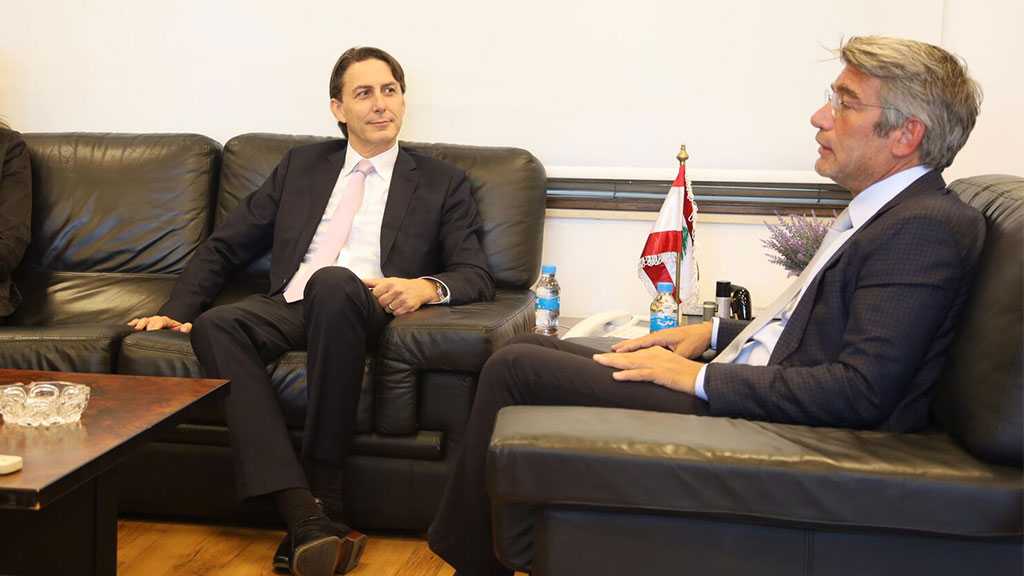
Hochstein's meeting with Lebanon’s Energy Minister in the caretaker government, Walid Fayyad, in the presence of the US ambassador in Beirut Dorothy Shea revealed clear American dissatisfaction with the Iranian gift Hezbollah’s Secretary General His Eminence Sayyed Hassan Nasrallah announced a few days ago.
According to details by Al-Akhbar Newspaper, Fayyad pointed out that “a long time has passed since the initiative to import gas and electricity from Egypt and Jordan, and there are no solutions so far. It is clear that the matter is related to what America says, whether with regard to the World Bank or the Treasury Department's decision."
He further pointed out that "Lebanon can no longer bear this pressure, and there are offers to support Lebanon, including the Iranian gift, which will help increase feeding hours."
Fayyad added, "I, as a minister, agree to the gift, and I cannot refuse it under any pretext."
Hochstein was quick to interrupt him, saying, “The decision to accept the gift comes from the government and not from the Ministry of Energy.”
Fayyad replied, “It is true, but the mechanisms for accepting the gift sometimes allow special decisions. And you know that the Lebanese army, for example, accepts financial and in-kind donations without returning to the Council of Ministers and without the prior approval of the government.”
For her part, Shea bluntly intervened and responded, as usual, with a kind of sarcasm, “Are you like the Lebanese army?”
Fayyad replied, “No, I am not like the army, but the matter has become pressing, and Lebanon is in front of an Iranian oil gift, and I cannot refuse it as long as it will help address part of the electricity problem. The conditions that we see have become severe, and we have heard repeated promises without results."
The US envoy replied in the negative, noting that the matter "is related to negotiations with the World Bank, and I spoke with them and will talk with them again. I hope that we will reach a conclusion quickly," acknowledging that the World Bank "is making the matter difficult."
Hochstein reiterated his promise to "work with the World Bank to facilitate the task because the approval of contracts requires its approval."
He noted that "the World Bank's requests regarding tariffs and the regulatory body are actually aimed at reducing the risks of the requested loan. [...] The World Bank is not a commercial bank, and every shareholder in it knows that the risks of non-payment are always present. We hope to convince them to ease their requests and make it easier.”
With regard to the Iranian gift, Hochstein said, "We do not believe that Iran is serious about its offer to give fuel as a gift. In any case, I advise leaving the matter to the prime minister to take the appropriate decision."

No comments:
Post a Comment