Thursday, September 30, 2021

No Place for ‘Israel’ in Iran’s Neighboring Countries - IRG

No Place for ‘Israel’ in Iran’s Neighboring Countries - IRGBy Al Ahed Staff, Agencies

Commander of the Islamic Revolution Guard [IRG] Ground Force warned the neighbors not to allow the Zionist regime to use their soil as a safe haven, saying the neighboring governments themselves know why Iran holds war games at border areas.

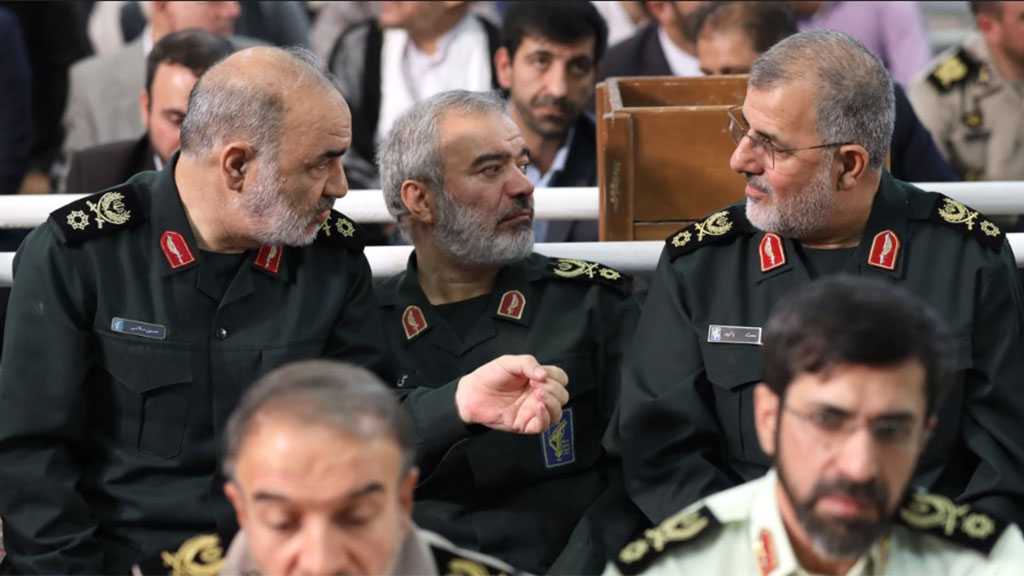
Speaking to reporters in the western city of Sanandaj on Wednesday, Brigadier General Mohammad Pakpour said the Islamic Republic would by no means tolerate the territories of neighbors turning into “a safe haven and a base for the presence and anti-security activities of the fake Zionist regime.”

Without naming the Republic of Azerbaijan, whose president has voiced concern about the Iranian military exercises near the common border, the IRG general said, “We cannot accept that some countries would make unreal and provocative comments about the enhancement of preparedness of the Islamic Republic’s combat units under the influence of third countries and would harm our activities.”

“The neighboring governments are aware more than anyone else of the reasons for Iran’s war games,” he added.

In an apparent criticism of the Azerbaijan Republic whose military employed ‘Israeli’-made attack drones during the recent war with Armenia, General Pakpour said the neighbors of Iran are expected to prevent a stranger like the Zionist regime from using their soil for its evil and criminal purposes.

“There’s no doubt that the Zionist regime helps and supports certain regional countries with the purpose of creating disagreements and rift among Muslim nations,” he stated.

The commander warned that any trouble in the international boundaries of countries will definitely create new conflicts and tensions, especially if such problems are created to serve the ‘Israeli’ regime’s objectives.

“We will never allow the soil of a country in our neighborhood to become the source and base of creation and spread of such troubles,” he stressed.

Describing efforts to prevent any change in the frontiers of the neighboring states as a serious policy of the Islamic Republic, the commander said, “We deem any geopolitical change in the region disruptive to our domestic security and have always declared it as a red line. Accordingly, it is natural that we won’t remain indifferent to it.”

CIA Plot to Murder Assange Is Open Season on Independent Journalism

Finian CUNNINGHAM

If Assange is not freed then the war on truth is going to explode. All independent journalism and basic human rights are under threat.

A report that the CIA was plotting to murder or kidnap Julian Assange is credible and it should not be in the least bit surprising that the agency sometimes known as Murder Inc would stoop to such criminality.

The CIA has for decades since its formation in 1947 involved itself in assassinating foreign political leaders and is implicated in the 1963 killing of its own President John F Kennedy in what amounted to be a coup d’état in the United States. The agency has operated as a rogue shadow government, an unelected permanent bureaucracy or deep state, that is above the law.

However, what is disturbing about the revelations from the Yahoo News investigation based on interviews with 30 former U.S. national security officials is that the “extreme measures” were being touted against an internationally renowned journalist and publisher. It was around 2017 during the Trump administration when Assange was being sheltered in the Ecuadorian embassy in London. He fled there after breaching bail in 2012 to escape fabricated extradition to Sweden on behalf of the United States.

President Donald Trump reportedly asked personally about the assassination option (a claim which he has since denied). The then CIA director Mike Pompeo and his deputy Gina Haspel were reportedly more unequivocal about using extreme methods. They both wanted vengeance against Assange over Wikileaks’ publishing of NSA whistleblower Edward Snowden’s disclosures about CIA global hacking techniques known as Vault 7. Those disclosures caused immense embarrassment for U.S. intelligence especially in light of hoary American allegations of Russian and Chinese cyberattacks.

Pompeo went on to become Secretary of State until Trump left the White House in January this year. Haspel was elevated to become CIA director by Trump in 2018, a position she still maintains under President Joe Biden. She gained notoriety for overseeing torture and rendition programs while a CIA station chief in Thailand during the GW Bush administration.

It is a shocking revelation that the extrajudicial murder of a renowned journalist supposedly protected by international laws of asylum and Vienna Conventions respecting consular inviolability could be so breezily discussed by senior CIA figures and top U.S. government officials.

The conceptual trickery giving a pseudo-legal cover to the heinous plot was the U.S. intelligence designation of Assange as a collaborator of a foreign enemy state – Russia. After the 2016 presidential elections, it was asserted that Russian military intelligence had hacked the Democratic National Convention (DNC) and supplied troves of emails to Wikileaks that were damning of Hillary Clinton’s corruption. The damage to Democratic candidate Clinton cost her the presidential election allowing Donald Trump to pull off a remarkable victory against the odds.

Julian Assange categorically stated that his source for the Clinton emails was not the Russian intel services. It is believed that the source was a disgruntled DNC insider who leaked the information to Wikileaks.

But the designation of Assange as a foreign enemy gave the CIA a legalistic license to use offensive counterintelligence techniques that do not require oversight by the president or congress. In short, the agency gave itself a license to kill Assange based on the spurious designation that he was colluding with a foreign adversary – Russia.

This got to the point where the CIA reportedly believed that Russia was going to exfiltrate Assange from London under diplomatic secrecy. The Americans drew up plans to have a shoot-out with Russian agents in London to thwart them, or even blow out the tires of a Russian jet trying to take off with Assange onboard.

The Kremlin has not responded to these reported claims. The hunch is that those racy details are a red-herring in an otherwise credible account of what the CIA was planning to do with Assange. The Russian intrigue facet is simply being used to lend credence to the false premise that Assange was working with the Russians and that the Kremlin hacked the DNC computers with the objective of influencing the 2016 election in favor of Trump over Clinton. Moscow has consistently denied that it interfered in the election or subsequent ones.

The purported scenario of a CIA shoot-out with Russian intelligence on the streets of London is a distraction from the heart of the story which is that the U.S. government and its rogue agency were ready and willing to murder an innocent civilian. Because the journalistic integrity of this civilian – Australian national Julian Assange – led him to publish damning revelations about Washington’s systematic war crimes and crimes of mass surveillance against its own citizens.

Acts of state terrorism by the CIA have always been carried out under cover or with plausible deniability. But in the case of Julian Assange Murder Inc was discussing “termination with extreme prejudice” (the euphemism for murder) as if it were ordering in coffee and donuts.

In the end, for whatever reason, the CIA did not go through with its assassination plot against Assange. But it got the next option: extraordinary rendition. The raiding of the Ecuadorian embassy in April 2019 by British police to snatch Assange was rendition under the guise of British justice. Assange has been in solitary confinement for two and a half years in a British maximum security prison reserved for psychopaths and dangerous terrorist offenders, awaiting an extradition appeal by the United States. In that event, Assange will die inside a U.S. prison. So, while Washington’s powers-that-be didn’t get to murder Assange outside prison, they have succeeded in rendering him to a black site.

That is where we are now at. Journalists telling the truth are openly targeted for murder or burial under concrete as a prisoner of the state.

The public case is clearer than ever after the latest revelations of the CIA plotting to murder or kidnap Assange. He must be freed from such blatant, premeditated persecution. If Assange is not freed then the war on truth is going to explode. All independent journalism and basic human rights are under threat.

Tension with Riyadh and tea in Tel Aviv – what is MbZ's real goal in the region?

By Giorgio Cafiero

Who is MbZ, why is he punching above his weight, and what are his global aspirations? We take a deep dive into the calculations of this enigmatic Gulf emir.

UAE Crown Prince Mohammed bin Zayed's opaque ambitions and alliances in West Asia. Photo credit: The Cradle
Last month, the global media made much ado about the OPEC clash between Saudi Arabia and the United Arab Emirates (UAE). But this standoff was not just about oil policies. It was also about geopolitics. Put simply, with Abu Dhabi’s Crown Prince and Deputy Supreme Commander of the UAE Armed Forces Mohammed bin Zayed (MbZ) at the helm of Emirati foreign policy, the UAE sees itself as a rising power that will not exist in any Saudi shadow.

Compared to his Saudi counterpart, Crown Prince Mohammed bin Salman (MbS), MbZ is the topic of fewer discussions in the United States and other western countries. But who is he and what is his background? And what were the pivotal events that shaped his outsized vision for Abu Dhabi today?

MbZ was born in Al Ain in 1961 – exactly one decade before the UAE achieved national independence – when Al Ain still belonged to the Trucial States, an informal British protectorate. As a member of the royal Al Nahyan family, MbZ began his education in Morocco at the Royal Academy in Rabat and later studied for a summer in Scotland at Gordonstoun School. MbZ then went on to the Royal Military Academy Sandhurst in the UK, where he received training on tactical aircraft and helicopters, and graduated at age 18.

Amid the Kuwaiti crisis of 1990/91, MbZ, then a 29-year-old commander in his country’s air force, wanted the UAE to purchase military hardware in amounts so great that American lawmakers expressed fears that a heavily armed UAE would lead to further West Asian instability. Nonetheless, keen to strengthen US–Gulf Cooperation Council (GCC) relations, Washington saw the UAE as a serious partner to invest in. Ultimately, Abu Dhabi spent USD 4 billion on US weapons during the Kuwaiti crisis to strengthen the UAE’s national security.

Since becoming the Crown Prince of Abu Dhabi in 2004, MbZ has emerged as the UAE’s de facto ruler. He has shifted Abu Dhabi’s foreign policy in a militaristic and interventionist direction. Today, with an estimated personal net worth of roughly USD 30 billion (and family wealth around USD 150 billion), MbZ carries much clout across West Asia.

The UAE’s muscular foreign policy 

In 2011, US hegemony was declining and the Arab world’s historic power brokers – Egypt, Syria, and Iraq – were bogged down in internal crises. While waves of revolts across Arab countries took the world by surprise, the UAE, like Qatar, seized this opportunity to establish itself as a regional heavyweight capable of shaping the region.

St. Antony’s College Fellow Dr. Toby Matthiesen calls that period the start of the ‘Gulf moment’ in which some Gulf Cooperation Council (GCC) members became increasingly proactive in the wider region, keen to fill voids created by the decline of US influence and the fall of target governments like Moammar Qaddafi’s Jamahiriya. Grabbing the ‘moment,’ MbZ moved quickly to establish the UAE as a powerful Arab bulwark against projects of political Islam. The leadership in Abu Dhabi views virtually all Islamist parties and causes — whether Sunni or Shia — as a major threat. Unlike other some Arab governments, the UAE sees no distinction between moderate and radical Islamists.

Given Emirati officialdom’s animosity toward political Islam, it is easy to understand why Abu Dhabi actively opposed the 2010/2011 Arab Uprisings. The popular revolts represented unique opportunities for civil society to strengthen, for political systems to undergo democratic openings, and for Islamists such as Muslim Brotherhood-affiliated parties to take power through elections. As revolts accelerated, UAE and other Gulf Arab monarchies grew increasingly unsettled by the possibility of these regional winds of change leading to more revolutionary activism the Arabian Peninsula, where many local grievances paralleled those of young Arabs protesting on the streets of Benghazi, Cairo, Damascus, and Tunis.

To thwart the demise of allied Arab dictatorships, Abu Dhabi launched an aggressive foreign policy aimed at rolling back the Arab Uprisings to its advantage. “Driven by grand strategic ambitions of building a neo-mercantilist empire at the crossroads between East and West, Abu Dhabi’s leadership has (since 2011) come to believe that the void left in the region by a retreating West could be filled by a new authoritarian, counter-revolutionary order led by a middle power, such as the UAE,” said Dr. Andreas Krieg, a lecturer at the School of Security Studies at King’s College London, Royal College of Defence Studies.

Bahrain

Abu Dhabi’s counter-revolutionary agenda was perhaps first on display in Bahrain in 2011, when about 500 Emirati police officers, along with 1,000 Saudi troops entered the archipelago kingdom to help the Manama regime put a lid on the Shia-led uprising. Since then, the UAE has invested heavily in Bahrain’s economy, helping to ease internal pressures on its GCC ally and making Abu Dhabi arguably even more influential in Bahraini affairs than Saudi Arabia. That Manama has aligned more closely with Abu Dhabi than Riyadh on some major issues in recent years (restored relations with Syria, normalization of ties with Israel, and the GCC’s Qatar rift, etc.) indicates that the UAE has gained significant clout in Bahrain.

Egypt

The Emiratis and Saudis sunk billions of dollars into Abdel Fatah el-Sisi’s government to achieve some degree of economic stability after the 2013 coup that  ousted the elected Muslim Brotherhood leadership. An end to Islamist rule in Cairo was in Abu Dhabi’s interest, especially given Egypt’s geographic, political, and economic significance in the wider Arab region. Helping Sisi remove former president Mohammed Morsi was critical to the UAE’s quest to turn the tide against both the Arab Uprisings and the rise of Islamist groups in 2011.

Libya

Post-Qaddafi Libya is another example in which Emirati foreign policy became heavily militarized. Direct Emirati military intervention in this oil-rich north African state began in August 2014. Emirati–Egyptian airstrikes, launched from Egypt, targeted Islamist militias in Libya. Notably, Abu Dhabi and Cairo did not inform the Obama administration of these attacks, underscoring the UAE’s determination to communicate to Washington that Abu Dhabi will not hesitate to take actions on its own – or in coordination with regional allies – when it suits its interests to do so. At odds with the US and the majority of western governments (save France), the UAE strongly supported General Khalifa Haftar after Libya’s civil war erupted in May 2014. Abu Dhabi was the renegade general’s most important external sponsor from 2014 until 2020, when Libya’s warring factions agreed to a ceasefire that remains in place today.

During Libya’s civil war, the UAE carried out air and drone strikes to help Haftar’s self-styled Libyan National Army (LNA). Additionally, Abu Dhabi sent international mercenaries to Libya, and financed mercenary groups such as Russia’s Wagner Group, to fight on Haftar’s side against the then-UN-recognized and Tripoli-based Government of National Accord (GNA). These mercenaries came from various countries such as Australia, South Africa, Sudan, and the United States.

The UAE’s fast-growing use of mercenaries is, quite simply, astonishing. According to the Rights Radar Foundation, the UAE has hired 30,000 mercenaries from just Latin America as of September 2020.

Not surprisingly, the UAE’s mercenary activities in Libya have been criticized and condemned by human rights organizations. This was particularly so during the LNA offensive to capture Tripoli in April 2019, which led to Amnesty International accusing Haftar’s forces of “possible war crimes.” Numerous voices in the international community have condemned the UAE, Turkey, and Russia for sending arms into Libya, all in violation of a 2011 UN army embargo. The Emiratis have allegedly also transferred planes, attack helicopters, armed drones, and military vehicles to an airbase established by the UAE in Khadim, 105 kilometers east of Benghazi.

Yemen

In Yemen, the UAE has also acted as an outside power, using mercenaries to help achieve on-the-ground objectives while risking as few Emirati nationals as possible. Emirati and Saudi direct military intervention in Yemen began in March 2015, both initially united in their quest to defeat the Houthi rebels. But as the war dragged on and public criticism and outrage over Yemen’s worsening humanitarian crisis grew, the UAE tried to disassociate itself from the conflict. In 2019, Abu Dhabi announced the withdrawal of UAE forces from Yemen, essentially transferring the burden of fighting the Houthis to Saudi Arabia, a further cause of friction between the two allies.

Despite the official Emirati withdrawal, Abu Dhabi remains highly involved in Yemen. The nature of the UAE’s interference in Yemeni affairs is primarily through the Southern Transitional Council (STC), which some experts describe as Abu Dhabi’s ‘proxy’. Emirati interests in southern Yemen relate to the southwestern Arabian Peninsula as well as the Horn of Africa, the Indian Ocean, the Gulf of Aden, and the Red Sea. With an ambitious foreign policy in these regions and bodies of water, establishing a UAE-friendly order in Aden remains a major priority for Abu Dhabi.

Experts have also challenged the UAE’s control of the Socotra islands – a UNESCO designated world natural heritage site – which are sovereign Yemeni territories located 400 kilometers south of the country’s coastline. The Saudi-based, UN-recognized government of Abdrabbuh Mansur Hadi sees this as a violation of Yemen’s national rights. In fact, back in 2017, Hadi accused the UAE of acting like an “occupation power” in Yemen. For its part, Abu Dhabi views its control over Socotra as vitally important because of its geographic positioning in relation to Iran and the Horn of Africa (where the UAE has established a military presence), and major strategic shipping routes.

Qatar and Turkey

Arguably, MbZ sees the Qatari–Turkish axis as the biggest threat to the UAE and GCC states. For the past decade or so, Abu Dhabi has become increasingly focused on countering Doha and Ankara’s influence in the region, which it views as largely responsible for the Muslim Brotherhood’s post-2011 ascendancy.

Abu Dhabi was the main agent behind the 43-month blockade of Qatar that began on June 5, 2017. And when Turkey launched its offensive in north-east Syria in October 2019, Abu Dhabi was the key actor driving the push for Arab unity against the ‘neo-Ottoman’ threat.

Syria

Despite initial UAE support for anti-Assad rebels at earlier stages of the Syrian conflict, in recent years Abu Dhabi has changed course in order to counter Turkish gains in Syria’s north and to thwart the rise of the Syrian Muslim Brotherhood. At any rate, the 2015 Russian military intervention in Syria pushed Abu Dhabi to conclude that Assad’s continued rule had become inevitable. It was notable when Emirati officials responded to Russian military action in Syria by affirming that Moscow was targeting a “common enemy,” albeit without an outright expression of  support for the Russia-allied Syrian government.

By December 2018, the UAE’s decision to fully re-normalize diplomatic relations with Damascus was in no small part due to Abu Dhabi’s interests in countering Turkey’s ‘neo-Ottoman’ agenda in northern Syria. Abu Dhabi has essentially embraced the Baathist government as a bulwark against the forces of political Islam and Ankara’s foreign policy. MbZ’s objectives in Syria are solidly aimed at bringing Syria back in from the cold and luring Damascus toward the fold of Arab states, in hope of denying the Turks and Iranians the opportunities to further expand and consolidate their clout in Syria.

Shifting Away from ‘Maximalist’ Foreign Policies

A handful of West Asian states have recalibrated their foreign policies in 2021. Countries which quite recently were on hostile terms, now engage each other diplomatically. Both Egypt and Saudi Arabia have significantly improved their relations with Turkey and Qatar over the past six months. Diplomatic engagement between Saudi Arabia and Iran is also taking place in Baghdad. Meanwhile, Saudi Arabia is slowly and cautiously reengaging Syria and talking to the Houthis via Omani interlocutors in pursuit of a diplomatic settlement to the conflict in Yemen.

Although governments in the region have no illusions about quickly resolving all their differences and disputes, there is now a greater emphasis on managing – as opposed to escalating – these tensions. This shift toward greater diplomacy and pragmatism has much to do with the change of leadership in Washington. Whereas the Trump presidency incentivized some regional actors to pursue increasingly maximalist foreign policy agendas, US President Joe Biden’s harsher tone toward certain US allies/partners like Saudi Arabia and Egypt has given these governments reason to believe that Washington will no longer automatically support the more bellicose aspects of their conduct. This is a critical factor driving regional states to seek out diplomatic and cooperative measures to solve their disputes.

The COVID-19 crisis has been another important part of the picture. With the difficult economic environment created by the global pandemic, more states in the region want to find common ground with their permanent neighbors. The view in Arab capitals like Riyadh and Cairo is that current circumstances require foreign policies to be less costly.

There is also recognition that some of the Gulf Arab monarchies­ – chiefly Saudi Arabia and the UAE – pursued bold and aggressive foreign policies in the post-2011 period which failed to produce desired results.

So, how does the UAE fit into this wider regional trend of countries recalibrating their foreign policies?

The UAE’s aggressive interventions in the region were largely unsuccessful. With the lifting of the siege on Doha in January 2021 – without the Qataris meeting a single demand from the UAE-Saudi-Egypt bloc – the blockade had clearly failed to strongarm Doha into changing its policies in accordance with Abu Dhabi’s desires. In Libya, the Turkish military intervention of 2019–2020 prevented Haftar from achieving his objectives on the ground, which the UAE, Egypt, Saudi Arabia, France, and Russia were, to various extents, supporting. In northern Syria, Turkish influence is consolidating, especially in Idlib where it is not yet clear if Damascus will regain control, despite Emirati efforts to unite Arab governments against Ankara’s military interventions.

A change in MbZ’s foreign policy? 

With MbZ at the helm, the UAE has managed to conduct its foreign policy in flexible ways, making it possible for Abu Dhabi to recalibrate its approach to regional issues in ways which probably would not have happened had Trump won a second term. Indeed, in 2021, the UAE has offered to serve as a diplomatic bridge between India and PakistanIsrael and the Palestinians, and between Sudan and Ethiopia.

“At least during Biden’s term of office we may expect MbZ to follow a foreign policy that is less confrontational and more pragmatic than it was under Trump, especially as the UAE consolidates its regional priorities in a more economically challenging environment where the expansive foreign policies of the pre-2019 period are no longer sustainable financially or politically,” said Dr. Kristian Coates Ulrichsen, Middle East fellow at Rice University’s Baker Institute for Public Policy, in an interview with this author.

Libya is perhaps the best illustration of a possible shift in Emirati foreign policy toward greater diplomacy and less militarism. Abu Dhabi is officially supporting Libya’s Unity Government, which came to power through UN-sponsored peace talks and has been governing Libya since March 2021. That Abu Dhabi is lending its support to this Unity Government is significant, given the UAE’s previous support to Haftar.

Yet some experts warn against reading too much into (real or perceived) shifts in Emirati foreign policy. As Dr. Krieg recently argued, the idea that the UAE is “trading its assertive foreign and security policy for a more measured diplomatic approach…resembles a key Emirati talking point in recent months, as Abu Dhabi is trying to rebrand itself in the Biden era as a constructive, and not disruptive, player in the region.”

Rather than witnessing any real Emirati withdrawal from hotspots where the UAE has become increasingly involved, this year the Gulf country is just “shifting from an expansion to a consolidation phase, where secured objectives are protected through a disruptive approach of divide and rule” via Abu Dhabi’s “surrogate network [which] continues to ensure that its objectives are being met.” According to Dr. Krieg, “Abu Dhabi will continue to impose its vision on the region, while protecting the infrastructure and access that is required to maintain its empire.”

Others agree that without abandoning its regional aims, Abu Dhabi is simply working on shifting the looks, but not substance, of its foreign policy. “They need to be careful with their image,” said Tarek Megerisi of the European Council of Foreign Relations. “There is a new administration in the US, and the Emiratis need to get the optics right.”

Changes in the MbZ–MbS relationship 

Even prior to this month’s UAE–Saudi Arabia OPEC clash, experts had seen how the impact of the Biden presidency on the MbZ–MbS relationship had served to create greater distance between the two crown princes. Years ago, various analysts described MbZ as MbS’s ‘mentor’, maintaining that the UAE was in the driver’s seat in terms of the Abu Dhabi–Riyadh alliance. At this stage, however, neither of these two leaders take cues from the other. Although attributing this fully to the US would be an oversimplification, Washington’s role is an important variable in the equation.

“With Trump’s loss of the presidency, MbS knew that he needed to signal to Biden that he and Saudi Arabia were not a liability,” said Annelle Sheline, a research fellow at the Quincy Institute for Responsible Statecraft, in an interview with this author. “[The Saudi Crown Prince] had two choices to show that Saudi Arabia could work to resolve regional tensions and not just create them: end military actions against Yemen or reconcile with Qatar. From MbZ’s perspective, keeping up pressure on Qatar was a higher priority than staying in Yemen: the UAE had already mostly pulled out. But for MbS, resolving the Qatar crisis would be easier than admitting defeat in Yemen. MbZ knew he could not maintain the blockade of Qatar without the Saudis, so to avoid looking overly belligerent, he agreed to engage with Qatar as well, though to a lesser degree than the Saudis.”

When MbS needed greater international support earlier on in his ascendancy to power as Saudi Arabia’s crown prince, the UAE’s high level of influence in Washington was extremely useful to him. In the process of helping MbS navigate the landscape in Washington during the Obama and Trump eras, Abu Dhabi used its leverage over Saudi Arabia to move the kingdom’s foreign policy in directions that suited the UAE’s interests.

“MbZ found in MbS an opportunity to have the Saudi Kingdom get out of the traditional thinking in terms of foreign policy, especially with neighbors like Qatar,” according to Nabeel Nowairah, an independent Gulf and Yemen analyst. “This personal relationship was somewhat mutually beneficial. MbS was able to consolidate power in the Kingdom at the expense of his royal cousins and aggressively silence opposition, which the Trump Administration did nothing to discourage. On the other hand, MbZ was able to take the tension with Qatar to much higher levels, and was able to have a strong foothold in Yemen, while Saudi Arabia got most of the international blame.”

Today, the two countries are approaching sensitive regional issues with different perspectives, priorities, and strategies, as illustrated by the OPEC rift and other issues, such as Yemen, Qatar, Syria, and Israel/Palestine. Supporting the STC in Yemen has pitted Abu Dhabi against Saudi Arabia’s support for North–South unity in the war-torn country. The Emiratis have not been pleased with the pace at which Riyadh and Doha have progressed in their reconciliation following the GCC January 2021 summit in Al-Ula that ended the blockade of Qatar.

In Syria, Abu Dhabi has re-embraced Assad’s government as fully legitimate – a move that Saudi Arabia has, at least thus far, refused to make. In terms of Israel/Palestine, the UAE has led the latest wave of Arab–Israeli normalization accords, while the Saudi leadership has refrained from joining the Abraham Accords. Likewise, as Riyadh warms up to Turkey, which wants to see Riyadh somewhat pulled away from the Abu Dhabi camp, the UAE seems to be holding off on pursuing rapprochement with Ankara.

Both MbS and MbZ command “different types of power and have reached a stage in their own individual development where they need each other less than they did five years ago,” said Dr. Ulrichsen. “What will be interesting to observe is whether and how the power relationship changes if/when one of them becomes head of state and the other remains a crown prince, and if that state of affairs continues for any considerable length of time.”

On July 19, one day after the Emirati-Saudi OPEC dispute was resolved, the UAE’s de facto ruler paid MbS a visit in Riyadh. Although there was a resolution of the OPEC clash, MbZ’s visit to the Saudi capital came amid a difficult period in bilateral affairs with scores of Saudi commentators who are pro-government like Suleiman al-Oqeliy criticizing aspects of Abu Dhabi’s foreign policy such as the UAE’s approach to Yemen on social media. Nonetheless, despite tensions over political and economic issues set to persist, MbS and MbZ are trying to somewhat compartmentalize their countries’ differences and present a show of unity. To be sure, on the fundamental issues that concern Saudi Arabia and the UAE’s national security interests, such as preventing democratization to take place in the Middle East, Abu Dhabi and Riyadh remain largely on the same page.

The ways in which media personalities and pro-government analysts in the UAE and Saudi Arabia reacted to the President of Tunisia’s July 25 power grab underscore Abu Dhabi and Riyadh’s alignment against democratization, pluralism, and political Islam virtually everywhere in the Arab region. Therefore, we should not expect any major or official break between the two GCC countries despite various issues in the region adding some distance between the two Gulf powerhouses.

An independent foreign policy

Critical to the UAE’s ability to succeed in terms of maintaining its geopolitical independence are the relationships that Abu Dhabi has formed with China, India, and Russia. As a strategic and a shrewd leader, MbZ operates in an increasingly multipolar world that affords Abu Dhabi the opportunity to escape the pressure of any single power by diversifying its global relationships. Abu Dhabi’s alignment with Moscow (as opposed to western governments) on several regional issues such as the Syrian crisis underscore how the UAE does not serve as a client state of either Washington or London. Instead, Abu Dhabi carefully balances powers in the West and East off each other to its advantage.

But what remains to be seen is how easily the UAE can influence countries in the region at a time in which there is growing dialogue and efforts on the part of various states to find common ground, notwithstanding continued ideological and ideational tensions. Whereas a few years ago, many analysts described the UAE as a state that was leading in terms of uniting Arab governments against Ankara and Doha, there is now a growing determination on the part of Abu Dhabi’s key regional allies – Egypt and Saudi Arabia – to move toward new understandings with the Turks and Qataris.

A positive and major turning point in the Arab world could result from the UAE joining this regional move toward diplomacy and away from confrontation, especially with the UAE due to serve as a non-permanent member of the UN Security Council for the 2022–2023 period. But that would require Abu Dhabi to be less rigid in its stances on issues such as political Islam, and there are no indicators that Abu Dhabi is softening in that area.

Tel Aviv behind Baku’s Anti-Iranian Propaganda: Expert

Alwaght- Recently, an unprecedented verbal dispute between Azerbaijani and Iranian officials reached a high level. President Ilham Aliyev of Azerbaijan claimed that over the past month, Iranian trucks entered Karabakh region illegally, triggering Azerbaijani security forces' intervention. The climax of the crisis in the neighbors' relations appeared after unfounded remarks by Hussein Quliyev, an Azerbaijani lawmaker, about the Iranian territorial integrity. Alwaght has talked to Hassan Beheshtipour, an Iranian expert of Caucasus affairs, asking him about the challenge that is throwing off balance the Azerbaijani-Iranian ties. 

Aliyev's remarks are "false" 

Asked for comment about the remarks by the Azerbaijani president, Mr Beheshtipour said that there must be a distinction between the comments of the lawmaker and the president in the interview with Anadolu news agency. 

"The positions of the member of the parliament of Azerbaijan can be considered as a repetitive story and positions that have been repeated many times by such people. These statements are mostly propaganda and are motivated by graft offered by the Israeli regime. Over the past years, the Israeli regime has always tried to republish all kinds of accusations and statements against Iran's security in the media of the Republic of Azerbaijan. In general, it can be said that such statements are not so important and are mostly made by some mercenaries of Tel Aviv, but the remarks of Aliyev as a head of state should be taken into consideration."

Mr Beheshtipour further called the president's comments "an official stance of the state." What the president said about a recent Iranian military drills are very important. Aliyev admitted that it is Iran's definite right to hold military exercises on its borders but the reason and timing of the Iranian drills raise questions for Baku. 

"We need to ask Aliyev some questions? Why did you hold military exercises jointly with Turkey and Pakistan? Have you been responsible for spying and counter-security measures of the Israeli regime on your borders with Iran? Concerning the timing of the Iranian drills, we should make it clear that Iran has the right for maneuvers whenever Tehran finds it necessary and in any part of the country, without need for permission from any party. So, the Azerbaijani question is categorically wrong. Determining the time and location of the military drills is the job of a country's officials."

Israeli regime managing the crisis-generating efforts 

Mr Beheshtipour noted that so far many media reported such stances by some Azerbaijan politicians. But why did Aliyev made his stance during interview with the Turkish official news agency Anadolu? This indicates that Aliyev intends to portray himself as backed by Ankara and Erdogan. It is highly unlikely that Turkey wants to instrumentalize Azerbaijan for anti-Iranian agenda, because the relations between Tehran and Ankara, despite all the ups and downs, have had a positive course and have never witnessed military conflict or threats. 

"We should not be caught by Azerbaijan's media propaganda and psychological warfare. This is a war designed by Tel Aviv. Rocking Tehran-Ankara-Baku relations by tensions has been and will be a long-term Israeli aim. The Israeli destabilizing efforts come while the three countries have always been friendly and tensions will serve Israelis interests. Essentially, Tel Aviv finds continuation of its life in crisis and tensions." 

Israeli trap should be averted

"Before Aliyev's remarks, we could consider the tensions within media war boundaries. But now the matter is official and state-level. I believe that if we accept that the tensions of Iran with Ankara and Baku are an Israeli scheme, we should discontinue escalation. Still, this does not mean that Tehran should appease Baku. The objective should be de-escalation, but not at any price." 

Palestinian Prisoners Continue Hunger Strike, Boycott ‘Israeli’ Courts

Palestinian Prisoners Continue Hunger Strike, Boycott ‘Israeli’ CourtsBy Al Ahed Staff, Agencies

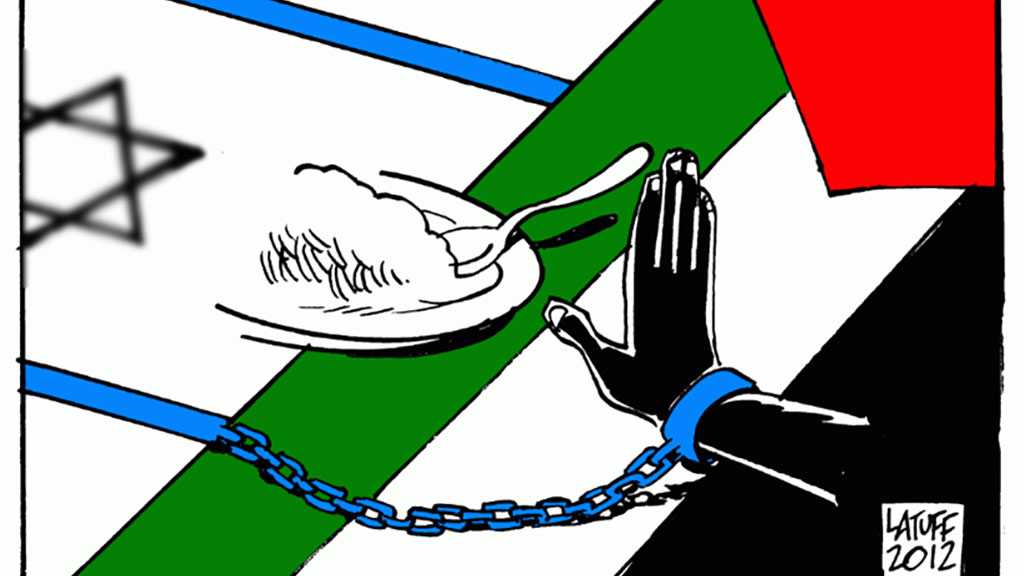
A number of Palestinian prisoners languishing in Zionist occupation jails have been on hunger strike for months to protest their arbitrary incarceration under inhumane conditions and to demand freedom.

Imprisoned under the so-called policy of “administrative detention,” at least seven Palestinian prisoners are registering their protest against their ill-treatment and repressive ‘Israeli’ policies in illegal detention through hunger strikes and boycotting military court hearings.

Kayed Fasfous has been on hunger strike for 76 days, Mikdad Qawasme for 69 days, followed by Hisham Abu Hawwash for 43 days, Rayeq Bisharat for 38 days, Shadi Abu Aker for 35 days, and Hasan Shoukeh for 9 days, according to prisoners’ advocacy groups.

Qawasme was recently shifted to a hospital following a rapid deterioration of his health, while Fasfous and three other inmates have been put in Ramla prison clinic, Palestinian Prisoners' Society [PPS] said in a statement.

A 24-year-old resident of the southern occupied West Bank city of al-Khalil, Qawasme recently decided to up the ante by refusing to take any supplements or intravenous fluids during the indefinite strike.

PPS has expressed grave concern over his deteriorating condition, including extreme weight loss, low heart rate, shortness of breath, blurry vision, migraines and severe pain, and inability to stand.

Under the “administrative detention” policy, the Zionist occupation regime has been detaining Palestinians without legal trial or charges for long periods of time.

To protest the Zionist occupation’s use of administrative detention and neglect of ailing Palestinian prisoners, at least five other Palestinian prisoners have announced that they would boycott the Zionist military courts and refuse to take any medicine.

French Fury over Decision on Licenses for Boats to Operate In UK Waters

French Fury over Decision on Licenses for Boats to Operate In UK WatersBy Al Ahed Staff, The Independent

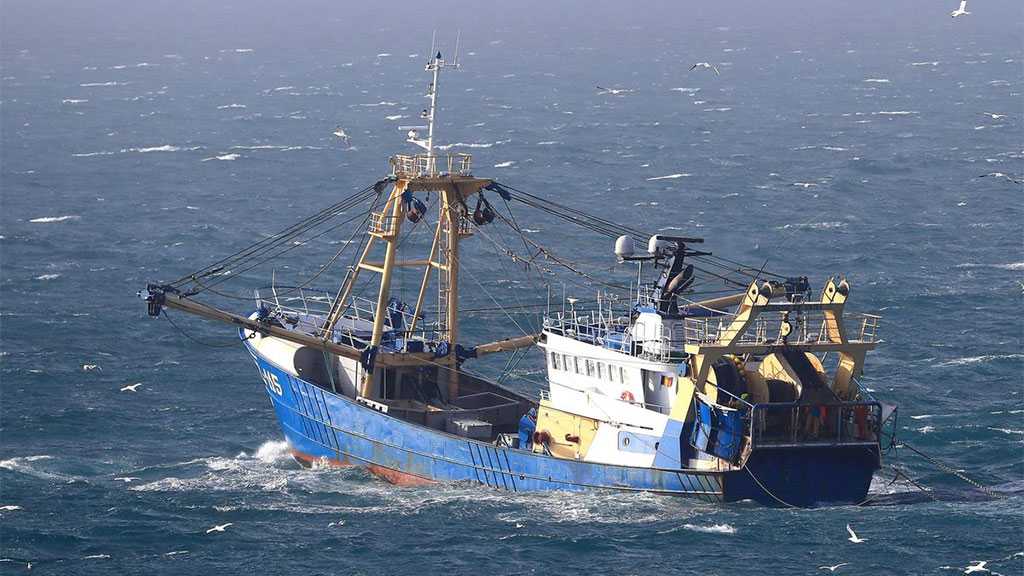
The French government has reacted with fury after just 12 fishing licenses for small boats to operate in UK waters were granted out of 47 applications.

The UK was accused of taking French fishing “hostage” and warned of “retaliatory action” following the decision.

The prospect of a new cross-channel fishing war came after the UK issued licenses based on evidence of a boat’s track record of fishing in its territorial waters, in line with the Brexit deal.

Some 47 applications were received from boats under 12 meters in length to be able to operate in the UK’s territorial sea.

A Department for the Environment, Food and Rural Affairs spokesman said: “The Government has this year issued a large number of licenses to EU vessels seeking to fish in our exclusive economic zone and our territorial sea.

“Our approach has been reasonable and fully in line with our commitments in the Trade and Cooperation Agreement [TCA].

“As regards the 6-12nm zone, as set out in the TCA, EU vessels must provide evidence of a track record of fishing activity in those waters.

“We have been considering applications for vessels of under 12m in length to fish in this zone and, on the basis of the evidence available, we are able to grant licenses for 12 of the 47 applications made.”

The spokesman said the UK will continue to work with the European Commission and French authorities “and will consider any further evidence provided to support the remaining license applications”.

France’s minister for the sea Annick Girardin, quoted in Le Monde, said: “It is a new refusal of the British to apply the conditions of the Brexit accord despite all the work undertaken together.

“I have only one watchword; to obtain definitive licenses for our fishermen as the accord foresees.

“French fishing must not be taken hostage by the British for political ends.”

French minister for Europe Clement Beaune said “we will not hesitate to take retaliatory action, collectively”, the Daily Telegraph reported.

“We understand and share the exasperation of our fishermen.”

Iran & the Taliban’s Afghanistan: Will they share — or fight over — water?

Story by Alireza Hashemi

Over the past several weeks, the world watched as the Taliban bounced back to power in Afghanistan, effectively nulling the war that had been launched by the United States 20 years earlier to eradicate them.

No country has so far recognized the caretaker government formed by the Taliban following their takeover of Afghanistan, and there is widespread speculation that the former militants will not be able to properly govern the country on their own.

Still, the Taliban have become all but a solid force in the country, even though they conquered Afghanistan too conveniently, as foreign forces awkwardly withdrew and as the Afghan military put up zero resistance. At least for now, the Taliban seem resolutely in power.

In Iran, Afghanistan’s immediate neighbor to the west, the rise of the Taliban has prompted debates in political circles about potential threats and opportunities. One matter is of particular concern: how will the Taliban’s seizure of power impact the long-running dispute between Iran and Afghanistan over shared water resources?

Iran has good reason to be concerned. A recent report by the Iranian Parliament’s Research Center said 282 out of 1,245 Iranian cities are currently suffering from water shortages. The situation is especially concerning in Iran’s southeast. An Iranian lawmaker from the region warned in 2016 that 25% to 30% of the region’s population had left over the past two decades because of water shortages.

There are hopes that the creation of a stable government in Kabul that ends the permanent state of war in the country could offer a better chance of alleviating the water scarcity in Iran’s southeast, which is hit by declining rainfall as well as water mismanagement. But there are also concerns that a new Taliban government would be even more uncompromising than a previous regime that was run by the Taliban from 1996 to 2001.

A long-running feud

A dispute over access to the river Hirmand (called Helmand in Afghanistan) has been going on for one and a half century. The river begins in Hindu Kush mountains and flows over a thousand kilometers before feeding the Hamoun Lake, shared between Iran and Afghanistan. The lake, designated a world biosphere reserve in 2016 by UNESCO, is of top importance for the environment and economy of the largely arid and poor regions of Iran’s southeast.

The two countries signed a treaty in 1973 to share the waters, which stipulated that Afghanistan would each year release around 850 million cubic meters of water to Iran. But the treaty was never implemented in full and negotiations never advanced, as Afghanistan plunged into decades of instability and various governments adopted different policies toward Iran. In 1999, for instance, the Taliban’s previous government totally shut down the flow.

After the 2001 US-led invasion of Afghanistan, Iran frequently complained that far less water was entering Iran than was agreed under the treaty. Tehran has also objected to the development of dams on the river that further restricted the rivers’ flow.

In late March this year, following the opening of the Kamal Khan dam on the river, Afghanistan’s then-president Ashraf Ghani used discourteous language to say that Tehran would have to offer Afghanistan oil for any amounts of water above what had been agreed in the 1973 treaty, which is 850 million cubic meters per year.

Many ordinary Iranians reacted with fury, and bilateral relations were strained. Iran said the dam would significantly decrease the water’s flow and cause the further drying up of the Hamoun Lake. But Ghani — who fled Kabul earlier this year as the Taliban arrived at the gates of the Afghan capital — dismissed Iran’s concerns, arguing that the construction of dams was meant to ensure water security and wouldn’t affect Iran’s share.

Reasons for optimism

Since their return to power, the Taliban have been striking a less confrontational tone toward Tehran. Top Taliban officials have said both Afghanistan and Iran, as two Muslim countries, must enjoy fair access to shared water resources.

Further boosting optimism among the Iranians, reports emerged in recent weeks that more water had been flowing to Iran since the Taliban took power, even though the Taliban rejected those reports.

Potentially, then, there is room for talks between Iran and the new rulers in Kabul on the shared water resources. Any negotiations could even involve the environmental flow to feed Hamoun wetlands, which was not part of the 1973 treaty negotiations.

Hossein Rabiei, an assistant professor of Political Geography at Kharazmi University, told Press TV’s website that there were reasons to be optimistic about cooperation by the Taliban. However, Mr. Rabiei said all rulers, the Taliban included, would base many of their political decisions on economic and social considerations as well.

“The Taliban government might refuse to give Iran its fair share of water if the Afghan nation faces a serious drought. They might also use water as their only leverage to extract concessions from Iran if they cannot find ways to ease their energy shortages or if they need access to international waters,” Mr. Rabiei said.

Some speculate that the friendlier Taliban behavior may be a tactical decision. Nozar Shafiei, an Iranian professor of international relations and a former lawmaker, said the Taliban might be hoping to buy time to solidify their grip on Afghanistan, citing the failure of the previous Taliban regime to observe the 1973 treaty.

But Mr. Shafiei also raised the possibility that the new Taliban government might act more tactfully, considering that it vitally needs Iran’s assistance for running the land-locked country.

“Iran might be able to solve its water problem in eastern regions through other resources, including the Persian Gulf. But the Taliban might not be able to find a replacement for the many opportunities Tehran could offer,” he told Press TV’s website.

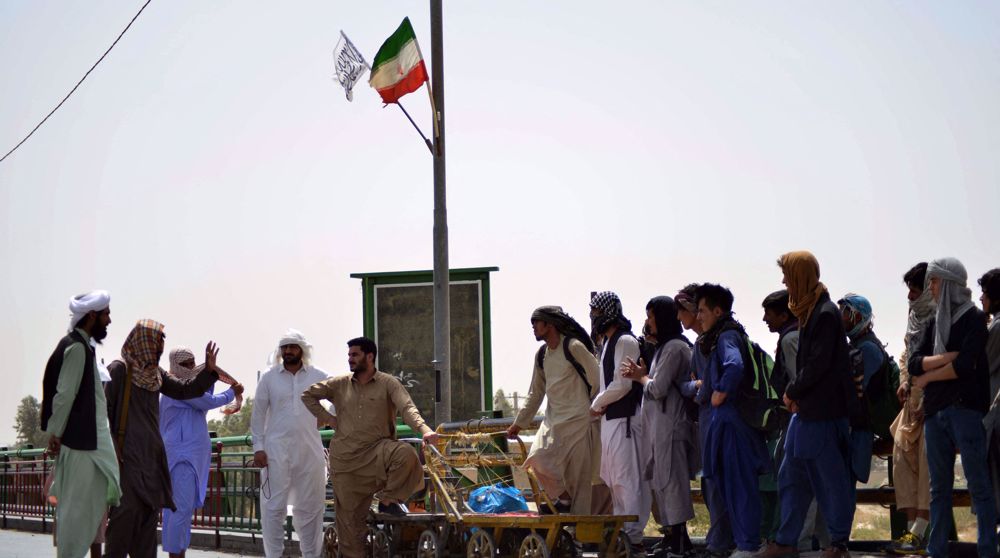
Afghan men wait in line to cross into Iran at an Afghan-Iran border crossing in Zaranj, on September 8, 2021. (Photo by AFP)

Many uncertainties ahead

Aside from the water issue, there is a host of other areas where Iran could hope to enlist Afghan cooperation, including to prevent more Afghan migrants coming to Iran, fight drug trafficking, eliminate the presence of militant groups on Iran’s borders, and expand trade. In return for Afghan cooperation in those areas, Iran can contribute to Afghanistan’s future development.

Hamed Hekmatara, a PHD student of political geography at Tehran University, said Iran could both resolve the water issue and advance the war on drug trafficking by offering assistance to the Taliban in the agriculture sector.

“The Taliban have banned poppy farming and asked foreign governments to help replace poppy cultivation with other agricultural products. Iran can help improve farming technologies and practices and provide farmers with efficient irrigation systems,” Mr. Hekmatara said.

“This allows Iran to get rid of the long-running problem of drug trafficking. Tehran can also ask the Taliban for more water in exchange for the assistance. This would be a win-win situation,” he added.

On Wednesday (September 29), AFP reported that prices of opium in Afghanistan had skyrocketed following an announcement by Taliban spokesman Zabihullah Mujahid last month that the Taliban did not want to see “any narcotics produced” in the country anymore.

Previously, the Taliban have been no friend to Iran. It remains to be seen whether mutual interests would encourage collaboration, including in the vital area of water resources, where cooperation could mean better life for drought-affected communities on both sides of the border.

(Editing by Hossein Jelveh)