Friday, July 31, 2020

One state for all: The only alternative to Israeli apartheid

Haidar Eid
Justice and peace can only be achieved in the context of a single democratic state that would include, and benefit equally, all residents and repatriated refugees

Photo: Palestinians demonstrate to mark the Nakba on 13 May (AFP)
The establishment of a sovereign, independent Palestinian state on 1967 borders has become unfeasible, largely thanks to Israel’s policy of settlement expansion and its apartheid wall. 
There are lessons to be learned from the struggle against apartheid in South Africa. Measures similar to those applied against South Africa’s apartheid regime are necessary to bring an end to Israel’s genocidal policies towards Palestinians, both within Israel and throughout the occupied territories.
A system of Bantustans - isolated, impoverished communities as developed in apartheid South Africa - does not guarantee a long-lasting, comprehensive peace. 
An alternative that has been slowly gaining momentum, especially after the end of apartheid in South Africa and the election of the first black president in 1994, is the establishment of a secular democratic state in historic Palestine - a state for all its citizens, regardless of religion, race or gender. 

Abolishing apartheid

What boggles the mind is how some secular, liberal intellectuals and activists warn against such a solution. 
Unlike the Oslo Accords, signed in 1993 between the government of apartheid Israel and the leadership of the Palestine Liberation Organisation, this alternative guarantees a long-term solution, as the two populations - natives and settler-colonists - in historic Palestine would be guaranteed equal rights, allowed to coexist on the basis of citizenship. It would guarantee total equality by abolishing apartheid, Bantustans and separation in Palestine.
It is high time that Palestinians start moving away from racist solutions that do not meet their inalienable right to self-determination, namely the two-state solution
This alternative solution should be encouraged by liberals and leftists alike, by those who were involved in anti-apartheid activities. If the world learned anything from the South African experience, it was that race, ethnicity and religion should not be the only determinants of one’s citizenship, and that separation does not guarantee security as defined by the powerful party, in this case Israel. 
The first to call for this solution have been Palestinians who see clearly the complexities of their reality, and who recognise that a Palestinian state in parts of the West Bank and the Gaza Strip, even in the best case, could hardly constitute a comprehensive solution to the Palestinian problem. Rather, it would only contribute towards a solution for Palestinians in the West Bank and Gaza - about 35 percent of the Palestinian people. 

‘Imagined communities’

Such a move would necessarily lead to a permanent fragmentation of the Palestinian community, and to the perpetuation of the problems of the many Palestinians who live outside of this limited state. As historian Benedict Anderson showed, all nations are “imagined communities”, and borders can be drawn to encompass and exclude any number of individuals, both between and within geopolitical entities.
The combination of political vision and practical measures on various fronts - the West Bank and Gaza, 1948 Palestine, the Arab world, and the international solidarity community - is the necessary precondition for the materialisation of any solution. Yet, thanks to the Oslo Accords, we have reached an impasse: either a Bantustan, or nothing. 
Buildings in the Palestinian Shuafat refugee camp are surrounded by the Israeli separation wall on 30 January (AFP)
Nevertheless, a “third way” is available. It is high time that Palestinians start moving away from solutions that do not meet their inalienable right to self-determination, namely the two-state solution. 
As more people are recognising the futility - not to say absurdity - of attempting to partition Palestine, there is an urgent need for a new vision to bring about decolonisation and justice in historic Palestine. This vision must be committed to the struggle for Palestinians' internationally stipulated rights; it must be humanist and genuine in its attempt to provide a just solution to the Palestine question. 
Palestinian rights will never be realised outside the framework of a unitary state with equality for all its citizens. This is the only way forward.

Lessons from South Africa

More and more Palestinians are starting to believe that the one-state solution is the only viable option for comprehensive peace in the Middle East.
Justice and peace can only be achieved in the context of a single democratic state that would include, and benefit equally, all current residents of historic Palestine - after the return of Palestinian refugees - irrespective of race, ethnicity or religion.
How can this happen? The implementation of non-violent measures, including mass mobilisation and a global boycott, divestment and sanctions (BDS) campaign, should be maintained until apartheid Israel recognises the Palestinian people’s inalienable right to self-determination and the establishment of a democratic state in Mandatory Palestine - a state for all its citizens.
Dr Haidar Eid is an associate professor in the department of English literature at Al-Aqsa University in the Gaza Strip.How can this happen? The implementation of non-violent measures, including mass mobilisation and a global boycott, divestment and sanctions (BDS) campaign, should be maintained until apartheid Israel recognises the Palestinian people’s inalienable right to self-determination and the establishment of a democratic state in Mandatory Palestine - a state for all its citizens.

What happened —and didn’t happen— at the Israel-Lebanon border?

By Sayed Hasan for The Saker blog

On the night of Sunday, July 19th, airstrikes hit Damascus International Airport. Though Israel didn’t claim responsibility for them, sticking to their longtime “zone of denial” policy, no one doubts they were the perpetrators. On Monday, the Syrian Army announced 7 soldiers were injured. It could have been one strike among hundreds of others, soon forgotten because of the lack of Syrian retaliatory measure. But the day after, Hezbollah announced the martyrdom of one of its combatants, Ali Kamel Mohsen, killed during the Israeli raid. As an Israeli commentator on Arab affairs put it in a tweet, this announcement “certainly changes the picture”. In fact, it is an understatement: it turned a tactical success into a PR disaster for the Netanyahu government, and a nightmare for the Israeli’s Army Northern Command and settlers living close to the Lebanese border. Because as everyone knew, a Hezbollah retaliation was inevitable.
We cannot understand what is happening now if we don’t put it in its broader context. Hezbollah’s rules of engagement against Israel in Syria were spelled out in January 2015, after Israel targeted two of their vehicles in Syria’s Quneitra region, killing 6 Hezbollah fighters (including Jihad Moghniyeh, son of Hezbollah’s martyred commander Imad Moghniyeh), along with an Iranian IRGC colonel. Back then, Nasrallah didn’t make any speech until the retaliation, which came out 10 days later, on January 28, when Hezbollah destroyed 3 vehicles in an Israeli convoy patrolling the occupied Shebaa farms, killing 2 to 5 soldiers —the sources differ— and wounding seven others (Israel retaliated by symbolic strikes, harming no Lebanese life or property but killing a Spanish UN soldier). Here is what Nasrallah stated in a speech two days later:
“The Resistance operation happened in broad daylight (just before noon), at the highest state of alert of the Israeli enemy, who until now is incapable of understanding how it happened. […] Because they are cowards and not (real) men, and because “They will not fight you (even) together, except in fortified townships, or from behind walls” (Quran, 59, 14), they struck us treacherously and didn’t dare to claim responsibility for the attack. As for Hezbollah fighters, because they are (real) men who don’t fear death, they attacked them frontally, face to face, and we claimed responsibility for the attack immediately after it happened. […] My message today is the following: from now on, any Hezbollah cadre or commander, any young Hezbollah (combatant) who will be assassinated (in Lebanon or in Syria), we will blame Israel for it, and we will consider it our right to retaliate anywhere, anytime and in any way we see fit.”
This equation was put in practice and even broadened in August 2019, after Yasser Dhaher and Hassan Zbib, two Hezbollah combatants, were killed in an Israeli airstrike in Damascus suburbs, and an Israeli drone attack against Beirut’s southern suburb, a Hezbollah stronghold, was foiled. Here is what Nasrallah stated in an August 25th speech:
“We will retaliate from Lebanon, and not (necessarily) from the Shebaa farms! I declare to the Israeli soldiers at the border tonight: wait for us against the (separation) wall (standing) on one foot and a half (be ready to flee for your lives)! Wait for us on one foot and a half! Wait for us (because we’ll certainly come at you)! In one day, two days, three days, four days… Just wait for us!”
While Hezbollah used to attack Israel exclusively in the Shebaa farms, a Lebanese territory occupied by Israel, they now vowed to strike anywhere, a dramatic development which put tremendous pressure on the Israeli side, for whom any human loss is a national disaster. Drastic & unprecedented measures were taken to foil Hezbollah’s retaliation: Israeli forces didn’t “hole up” in their bases as Nasrallah had advised them to, but went as far as evacuating all their positions close to Lebanon, in a width of 5 to 7 kilometers, and along the whole length of the border line. All Israeli defenses were activated. Strict security measures were taken to evacuate some settlements and forbid the remaining settlers to perform most daily activities —video footage showed empty streets & closed shops, most people being holed up in their house all day long.
For 8 days, the mighty Israeli army appeared as the “spider web” it was, frightened and terrorized, its border barracks and outposts left deserted —as was shown by an RT crew who got inside—, its vehicles abandoned with dummy soldiers inside, with tanks scattered everywhere for days hoping to lure Hezbollah to attack an empty target (see all security measures Israel took detailed in Nasrallah’s speech back then).
Psychological warfare, perfectly mastered by Hezbollah, is a key element to understand what is happening —and not happening— right now, even before we speak of the retaliation itself. As Nasrallah put it in his 2019, September 2nd speech,
“We warned the enemy that he had to expect us (any time) from now on. This is a strength point of the Resistance. We could have remained silent, refrained from threatening (Israel of an imminent retaliation), not revealing our intentions, keeping quiet as we say, for 1, 2 or 3 days, then hit them by surprise. The military know that one of the most important aspects of a military operation is the element of surprise. But we have not done so, because our fight against the Zionist entity has a major psychological component, affecting the morale and soul of the enemy (which we strive to undermine). So we told them from the beginning to wait for us, because we were coming. In itself, it is an enormous challenge issued by the Resistance.[…] [This high alert of the enemy and the evacuation of the border outposts] are part of the punishment (we inflicted on Israel). Before we retaliated with our military operation, some people were (ironically) asking: where is your response? But (this terror situation on the Israeli side) was already a punishment and a retaliation. […] [The whole world saw the staggering difference between] our good Lebanese people (who) was normally moving in border areas, whether in villages or fields, and led a completely normal life, [while Israeli settlers were forbidden to approach “their” fields in occupied Palestine and where holed up in their houses].”
Thus, Israel seemed humiliated and defeated even before the retaliation came. It did happen on September 1st, when a moving Israeli military vehicle was destroyed in broad daylight by two anti-tank missiles near Avivim barracks, killing or wounding its occupants. While Israel had promised to hit Lebanon hard and return it to the Stone Age via all channels (diplomatic, media, etc.) in case of retaliation, the IDF didn’t hit back at all, merely firing “defensive phosphorous strikes aimed at building a smokescreen to protect themselves from further strikes”, as Nasrallah put it. Israeli TV channels showed the evacuation of a seemingly badly wounded soldier by helicopter, and his arrival at a Haifa hospital.
odbp9
But Netanyahu claimed there was not as much as a scratch in the Israeli side, and that everything had been staged in order to convince Hezbollah they had avenged their martyrs and avoid any further escalation. While this seems like a PR stunt aimed at damage control (especially when we consider that at the same time, Israeli media reported that a soldier stationed in the North was severely injured by a bizarre game of stone-throwing, suggesting a ludicrous cover-up only made possible by the strict military censorship), Nasrallah didn’t rule it out, and stated in a September 10th speech:
“Everything that was done by the Israelis in recent days, for example the Israeli dummy soldiers (in their vehicles), this shows the weakness of the Israeli army. And when things have come to what they called “the deception operation”, in which they allegedly staged the evacuation of soldiers with fake injuries that they carried on stretchers, covered in fake blood, and would thus have deceived Hezbollah (into believing that his goal was reached, to prevent him from launching new strikes). Let us imagine that you really tricked us: all that would prove is, in few words, that your renowned legendary and invincible army has turned into a Hollywood army, which makes movies for the cinema, because it became helpless on the ground, incapable, weak, fearful and cowardly, withdrawing from the border to a width of 5 to 7 kilometers (for fear of the promised response by Hezbollah.”
It would be difficult to conclude that this 2019 round ended in anything but a crushing defeat for Israel, be it on the military, psychological or PR level. Though all of this is little known to the Western public, where the media is but an echo chamber of the Israeli Army’s propaganda (even RT, Sputnik and most alternative media often take their claims at face value), there is no doubt that it was strongly present in the mind of Israel’s political & military leaders when they heard of a Hezbollah operative killed in their latest strike on Syria ten days ago. Israeli media reported the high alert status of the Army in the North, where military drills were canceled, reinforcements sent and units & defenses put in high alert in the expectation of an imminent Hezbollah attack. The usual huff and puff about Israel’s forceful response in case of an attack was heard from Netanyahu & Gantz. But as Israel is in the eye of the storm because of the coronavirus crisis & current civil unrest and daily & violent protests against Netanyahu, another round against Hezbollah, Israel’s most dreaded enemy, is the last thing they’d want. That’s why Israel took the unprecedented step of sending an apology letter to Hezbollah via the UN representative in Lebanon, as was reported by Lebanese & Israeli media, and confirmed by Hezbollah’s Deputy Secretary General Naim Qassem, though the latter wouldn’t speak of its contents, and only stated that Hezbollah didn’t and wouldn’t reply to it.
Commenting on this development, Senior Lebanese political analyst Anis Naqqash, closely linked to Hezbollah, stated the following in an interview to Al-Mayadeen on July 26:
Anis Naqqash: This letter is the greatest proof of Israel’s weakness and fear of Hezbollah’s response. (Recall that in the past) Israel slaughtered (civilians) by the hundreds, and did not apologize or send (explanatory) letters. Israel committed aggressions and occupied territories, and did not apologize or send (explanatory) letters. (But) today, fearing Hezbollah’s reaction, Israel sends an urgent letter via the UN as an apology, because they are afraid of the reaction.
First, the fact that Hezbollah did not make the contents of the letter public helps to make it irrelevant. If they had published it, they would have given the impression of wanting to make public what Israel said. Second, the fact that Hezbollah did not respond to the letter confuses Israel. Despite their apologies and asking for forgiveness, what is Hezbollah’s response? Absolute silence. This leaves Israel in a state of great disarray. (Hezbollah) has also confirmed (via its Deputy Secretary General) that Hezbollah will do what they have to do when the time comes, which also leaves more to fear (in Israel).
Therefore, today Israel is clearly in a state of continued confusion and fear, and the statements of Sheikh Naim (Qassem) today will not allow them to sleep peacefully, on the contrary, they are even more worried (after hearing him).
Journalist: Israel therefore stands on one foot and a half (Nasrallah’s formula to designate the fear and terror of Israeli soldiers, ready to flee at full speed at the slightest alarm) without even the Hezbollah Secretary General needing to speak (and warn them of an imminent response)?
Anis Naqqash: The last time he warned them, but this time they (already) know what to expect. It’s like an unruly pupil standing up and facing the wall on his own every time he does something silly. Today Israel stands up and faces the wall, and does so on one foot and a half, taking (drastic) precautions. No one can say if the response will come before the Eid-el-Kebir (on July 31st) or after, or even if the response will take the Eid festival into account or not. Everything is possible on the part of the Resistance.
Journalist: But isn’t the fact that Hezbollah has not made public the contents of the letter a sign of seriousness, respect and responsibility given that it is an official letter that has been delivered via the United Nations? Isn’t that an important sign (of maturity)?
Anis Naqqash: This can only be understood by comparison with what the Arab leaders and Presidents, and even the former leaders of the Palestinian resistance factions, used to do when they received such marks of attention from the (Israeli) enemy, or from the United States or Europe. The mere fact that one of these countries paid attention to them, made a mere gesture of consideration towards them, they were quick to show it to everyone (as a sign of pride), (boasting) that they had received a glance, a letter from such or such country, an apology, etc. Their opponents saw them as eager for any sign of recognition from the enemy.
As far as Hezbollah is concerned, it is quite the opposite. Hezbollah does not attach any importance to the enemy and its stances. Of course, they study them closely (one has to know its enemy very well), but they do not give them this importance; they don’t manifest this avidity (towards any sign of respect from the enemy). Hezbollah doesn’t rush to their people telling them, “Look, look, they’ve apologized to us!” The confidence of Hezbollah’s grassroots in the Resistance is much higher than that, and they know Israel is afraid of it regardless of what they can say in any letter. This is why Hezbollah does not attach importance to it and does not bother to respond to it, making it clear that for them, whether Israel sent the letter or not, it is the same thing and it will not change anything (about the inevitable response). We have to analyze this from the point of view of psychological warfare, of politics, in order to correctly assess the strategic capacities of the Resistance with regard to political, security and media battles. […]
While Israel’s “apologies” to Hezbollah are pathetic and can prevent in no way the inevitable retaliation, it must be emphasized that Israel certainly does everything it can to avoid hitting Hezbollah operatives when it strikes Syria —and therefore tries hard not to kill anyone at all—, going so far as warning them before hitting one of their vehicles, as we can see in this video from last April.
Israel was therefore left with the crushing pressure of the unknown, especially that Hezbollah didn’t comment on what it would do or not do, Naim Qassem merely stating that the rules of engagement previously stated were still in force, and that the coming days would answer everyone’s questions. There were no doubts in Israel & Lebanon that an imminent Hezbollah retaliation was coming. The pressure & nervousness —and downright panic— at the border are probably the cause of the death of an Israeli soldier on July 22 when his car crashed in the Shebaa farms, near the Lebanese border. As a Koweiti put it on Twitter, “Hezbollah’s silence is sometimes more powerful and painful to the Zionist enemy than their missiles, because they live hours, days and weeks in a state of fear, terror and high nervousness. Silence is a destructive weapon of psychological warfare against the Israeli entity, both at the political and psychological levels.” Avigdor Lieberman, former Israeli Defense Minister, stated that “I am still worried because the North is paralyzed by the killing of one single Hezbollah member in Damascus. Unfortunately, Nasrallah proved that he does what he says, an eye for an eye, a tooth for a tooth.”
In this extremely tense situation, on July 27th, the Israeli Army, parroted by the Western media (both mainstream and alternative), stated that it had foiled a Hezbollah attempt to infiltrate the Israeli-occupied Shebaa Farms, killing and wounding the operatives in the following skirmish while suffering no death or injuries itself. Later reports made no mention of Hezbollah casualties, alleging that their lives were willfully spared as a de-escalation measure. Here is the account of the “battle” by Haaretz’s military correspondent Amos Harel:
“While some of the details are still shrouded in fog, it’s clear that the IDF forces – soldiers from the Nahal Brigade, the elite Egoz unit and a tank crew – weren’t taken by surprise and were well prepared for their mission. An IDF lookout spotted the Hezbollah cell while it was still moving toward Har Dov (Shebaa Farms). When the cell had made it about 20 meters into Israel, in a hilly, wooded area where there’s no border fence, tanks and machine guns opened fire at it from a few hundred meters away.The Shi’ite militiamen quickly left the area.
There have been no reports of them taking casualties.
They entered Israel not that far from an IDF outpost and a road that serves troops in the area. (Har Dov is always closed to civilian traffic.) Their goal was presumably to carry out an attack – via sniper fire or bombs – on the IDF forces posted there. But given what has been reported about how the cell operated, the attempt does not seem to have been particularly sophisticated.
Thick vegetation makes it hard to hit an enemy moving cautiously even in broad daylight. The IDF has refused to say whether the soldiers were ordered to shoot to kill, or whether the plan was always to drive off the Hezbollah cell without causing casualties.
Nevertheless, there are fairly solid grounds for assuming that Israel deliberately decided on the latter course of action. Any such decision would have had to be made at the highest levels.
Had Hezbollah suffered losses in the incident, it might have felt compelled to mount an additional retaliation, and that could have escalated the situation along the border. Thus what looks like a tie with no casualties appears to be very convenient for both sides.”
This scenario makes Israel look good: according to this report, not only did they successfully foil an attack, but they did it with a concern for enemy human lives in order to avoid an escalation. Hezbollah’s “unsophisticated” attack, for a change, is supposed to make its outcome more plausible, and more acceptable to the Party of God, who can go along with it, claim he retaliated somewhat and climb down the ladder. Thus, this alleged round would give a military & PR victory for Israel, while allowing Hezbollah to save face, and Netanyahu & Gantz wasted no time in collecting their medal and warning Nasrallah that he was “playing with fire”, and that any further Hezbollah operations against Israel “would be a mistake and would be followed by a harsh military response”. Interestingly, both Netanyahu and Gantz left directly after reading their short statement, without taking any questions from the journalists. One wonders why they wouldn’t enjoy their victory.
In reality, this story is very unlikely, as the Israeli media themselves were quick to point out. In an article titled ‘Was Mount Dov incident another Hollywood show for Hezbollah?’, the Jerusalem Post recalled the Avivim mascarade and asked:
“In this day and age, everything is filmed. So where is the footage of the infiltrators crossing into Israel? Where is the drone footage of the area at the time of the incident?”
The IDF stated that they had footage of the incident and were considering releasing it, but haven’t done so far, which adds to the skepticism. Even Naftali Bennett, former Defense Minister, seemed to indirectly deny that any skirmish happenned, stating to Israel’s Channel 13 that in the region of the incident, one can get the impression that something is moving while there is nothing at all.
As for Hezbollah, they denied that any skirmish had taken place in the following statement:
“It appears that the state of terror in which the Zionist occupation army and its settlers on the Lebanese border find themselves, the high alert status and the extreme concern over the Resistance’s reaction to the enemy crime which led to the martyrdom of our mujahid brother Ali Kamel Mohsen, as well as the enemy’s complete inability to know the intentions of the Resistance, all these factors made the enemy extremely nervous on the ground and in the media, and he behaves as someone afraid of his own shadow.
Everything that the enemy media claim about Israel thwarting an infiltration operation from Lebanese territory into occupied Palestine, as well as their claims that there were martyrs and wounded on the Resistance side as a result of the bombardments which took place near the occupation sites in the Shebaa farms, is absolutely not true. This is just a futile attempt to forge illusory & bogus victories.
The Islamic Resistance affirms that there has been no clash or shooting on its part in the events of the day so far. Rather, it was one single part, meaning the frightened, anxious and nervous (Israeli) enemy, who fired all the shots.
Our response to the martyrdom of our mujahedin brother Ali Kamel Mohsen, who found martyrdom in the Zionist aggression on the outskirts of Damascus International Airport, will inevitably come, and the Zionists have only to await punishment for their crimes.
Moreover, the strikes which took place today on the (Lebanese) village of Al-Habaria and hit a civilian’s house will not go unpunished.
The next few days will soon deliver their verdict (our response to all of this is imminent).
Victory comes only from Almighty God.
Islamic Resistance in Lebanon”
Even if it was a matter of Hezbollah’s word against Israel’s, given their respective PR record, it would be safe to trust Hezbollah’s account. In fact, the Israelis themselves believe Nasrallah more than their own leaders, as was shown by polls held in Israel, Hezbollah’s huge credibility being one of its great achievements —as Norman Finkelstein statedIsraeli leaders carefully scrutinize Nasrallah’s every word. Anyway, Israel has gained nothing from what is most likely a new PR stunt. Whether the incident started as a mistake of Israeli troops firing at inexistent Hezbollah combatants conjured by their panicked imagination (IDF soldiers are world-class cowards), or whether it was all staged from the beginning in order to claim a fake victory before the inevitable, real retaliation, it is safe to believe that no Hezbollah attack happened, and that Israel further humiliated & discredited itself with this umpteenth lie.
However, it would be a mistake to think that all this show was futile. First, Hezbollah stated for the first time that the retaliation was coming indeed, though it was pretty much a given anyway. Second, they now have two reasons to strike back: their combatant killed in Damascus, and the attack against a civilian house, which puts all the Israeli settlers in the line of fire. Thus, Israel went from a bad situation to an even worse one. Back in August 2019, Nasrallah had already stated that the failed drone attack against Beirut’s southern suburb meant that from now on, the settlers would be seen as fair game:
« I declare to all the inhabitants of northern Israel and everywhere in occupied Palestine: do not live (normally), do not be in peace, do not feel safe, and do not think for one second that Hezbollah will accept such a scenario (where he would suffer such attacks in his neighborhoods without retaliating against settlers). »
Hezbollah still refrained from attacking settlements back then, focusing on military targets, but the latest escalation, even if it was likely accidental, could very well change their mind.
The only remaining question is when and where Hezbollah’s retaliation will come, and how will it unfold? As surprise is a major component of Hezbollah’s strategy, it would be vain to speculate, even if one can think that Hezbollah will take its time, in order to keep the enemy on tenterhooks. But Nasrallah gave us an interesting hint in his ‘Hollywood Army’ Speech:
“O Hollywood army, the lesson we draw from this experience, if indeed it is real (it remains to be proven true that you tricked us), is that the next time, you invite us not be content to hit one vehicle or one place, but several vehicles and several positions, so as not to be fooled by new Hollywood movies. (This comedy simulating injuries so that we’d stop hitting you) is a demonstration of weakness and helplessness (and not a sign of strength or intelligence).”
Also, many wonder if Hezbollah’s inevitable retaliation can lead to a war. It is most unlikely, and this idea has been dismissed by Hezbollah Deputy Secretary General, though he stated that they were always ready for war. But the daily threats from Netanyahu or Gantz should fool no one: Israel’s bite has never been a match for its bark, and their threats towards Hezbollah always turned out to be a damp squib. Netanyahu boasted of having won an imaginary round only because he knew that he had already lost the real one at all levels —military, psychological, PR—, and that when the deterrence & rules of engagement between Hezbollah and Israel change, it is only at the latter’s expense.

Gulf states will be among the biggest losers if Trump is defeated this fall

Mohammad H Fadel

As the US president's approval rating tanks in the run-up to the November election, his allies in the Gulf have serious cause for concern
US President Donald Trump shakes hands with Saudi Crown Prince Mohammed bin Salman at the 2019 G20 Summit in Osaka, Japan (Saudi Royal Palace/Bandar al-Jaloud/AFP)
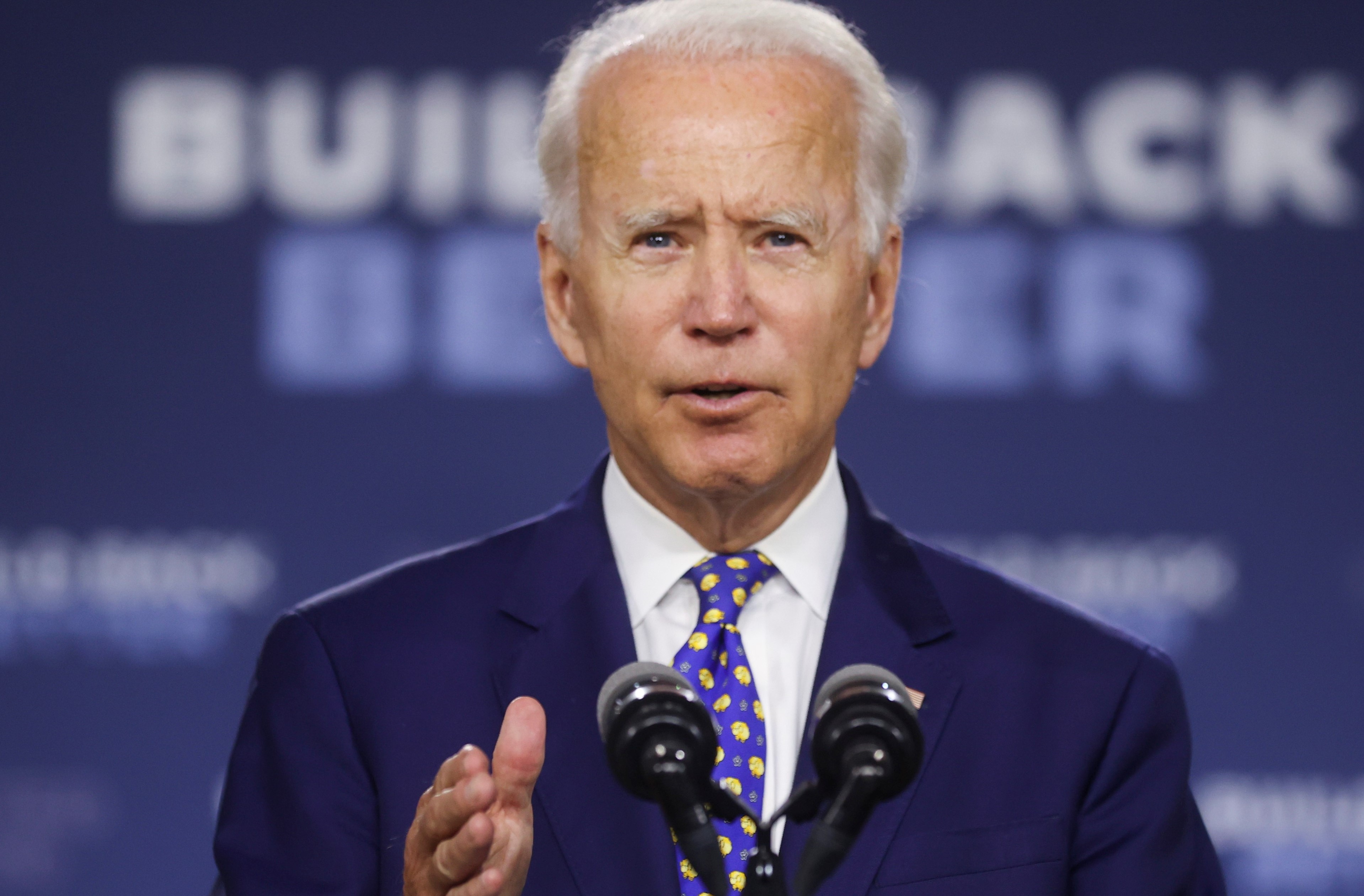
The US is just a few months away from an election in which the American people will have the opportunity to re-elect President Donald Trump, or make him one of the few one-term presidents in the country’s history by electing his Democratic opponent, Joe Biden. 
While a lot can happen between now and November, Trump faces an uphill battle for re-election. Buffeted by a combination of the devastating public health and economic impacts of the coronavirus pandemic, alongside waves of protest over police brutality against African Americans after the brazen killing of George Floyd, Trump’s campaign is in deep trouble, with recent polls showing Biden holding a 50-41 lead. 

Biden likely to win

Although it is theoretically possible for Trump to win re-election while losing the popular vote, something he already accomplished when he defeated Hillary Clinton in 2016, Biden is reportedly leading in key battleground states, including Michigan, Pennsylvania and Wisconsin, which Trump carried by the narrowest of margins in 2016 and which edged him to victory in the electoral college. 
In short, unless something dramatic changes in the political environment, there is a strong likelihood that Biden will defeat Trump decisively in this fall’s election - and even a good chance that the Democrats will recapture the Senate, giving them control over all three branches of government. 
Trump has been willing to give Gulf Arab leaders cover to pursue whatever policies they deem necessary for their own security, without regard to questions of human rights or democracy
Trump, in the mind of his detractors, represents a unique combination of arrogance, narcissism, cruelty, incompetence, greed and racism. He has polarised US politics to an unprecedented extent, and all of those associated with his rise face the prospect of a dramatic reversal in fortunes should he and his Republican allies lose the coming election.
The Trump years have seen a strange recalibration of US-Arab relations, under the guise of the “deal of the century”. The general contours of the deal entail Arab states, and particularly Gulf states, abandoning any resistance to Israeli ambitions in Palestine, in exchange for complete US and Israeli support for Gulf states in their confrontation with Iran. 
A secondary aspect of the recalibrated relationship has been a no-questions-asked approach on the part of the US regarding arms sales to Gulf states, combined with turning a blind eye to the human rights violations of Gulf Arab allies. 

Weapons sales

The Trump administration’s insistence on selling offensive weapons to Saudi Arabia and the UAE was especially controversial in the face of US congressional opposition, due to the massive humanitarian suffering these two countries have inflicted upon the Yemeni people since their intervention in Yemen’s civil war starting in March 2015. 
The gruesome murder of Saudi journalist Jamal Khashoggi in the Saudi consulate in Istanbul in October 2018 laid bare the contradictions between Trump’s transactional approach to foreign relations, in which he said he would not jeopardise lucrative Saudi arms contracts by pressing for real justice, and the demands of the US Congress that Saudi Arabia be held accountable for this brazen act of criminality.  
Trump has been willing to give Gulf Arab leaders cover to pursue whatever policies they deem necessary for their own security, without regard to questions of human rights or democracy - so long as they give Israel a free hand in Palestine, continue buying astronomical amounts of US weapons, and stand ready to resist Iran. 
US presidential candidate Joe Biden (Reuters)
All things being equal, it would not be inconceivable that a Democratic administration would support these same policies - but everything Trump does is divisive. For many Democrats, Trump’s embrace of Arab autocrats, such as Saudi Crown Prince Mohammed bin Salman, has not been understood as a shrewd strategy to further US interests, but rather as his embracing another autocrat - a fellow traveller in the world community who acts in open defiance of international legality. 
In short, even as Gulf states have in Trump a valuable ally in the White House - both in their external confrontation with Iran, and in their internal confrontations with reformers at home - they seem to have underestimated the extent to which Americans now view them as irredeemable Trumpists, a fact that renders them virtual pariahs to the more than half of Americans who despise Trump.  

Resetting US-Gulf relations

There is a strong likelihood that in the event of a sweeping Democratic victory this fall, the Biden administration and Democratic congressional leaders will seek a complete reset of US-Gulf relations. 
Taking a hard line against these regimes would come at a relatively low cost to the US internationally, but play very well to US domestic audiences. The coalition that replaces Trump would be multi-ethnic, multi-religious and working class, keenly attuned to issues of income and wealth inequality, and respect for human rights.
Bernie Sanders, although he did not win the Democratic nomination, remains a highly popular figure among the party’s base, and there is no doubt that the base is moving closer to his ideals. His public condemnations of Saudi Arabia, for example, are likely representative of the views of the vast majority of Democratic Party voters and activists. They would not be terribly sympathetic to the Gulf states in light of their vast (unearned) wealth, the vast income and wealth inequality in those states, and the states’ contempt for human rights and democracy. These states could easily become punching bags for the new Biden administration. 
As the global economy’s need for Gulf oil declines in conjunction with the rise of alternative energy technologies and the discovery of massive new oil fields in North America, the global importance of the Gulf has declined and will continue to decline. The collapse of oil prices in the wake of the Covid-19 pandemic has only accelerated this trend. 
The brittle nature of Gulf regimes has made them even more dependent on external support to survive. Americans are increasingly unwilling to provide this support, especially if it means risking substantial losses, as would follow in a new war with Iran. 

Existential questions

This will be especially true if Biden defeats Trump and the US populace sees Gulf states solely through the lens of their previous relationship with a despised and failed president. At the same time, it is unlikely that other external powers, such as Russia or China, will be able to replace the US as guarantors of the Gulf states’ security.  
Gulf states are increasingly facing existential questions: they can either seek to bolster their security by re-establishing their states on democratic grounds, and seeking regional peace, integration and development - something that would require a radical (but much more equitable) redistribution of political and economic power - or they can openly embrace Israel and become its client states. 
Gulf states, having bet so much on Trump, are unlikely to see a substantial payoff before the end of his first term
If they refuse to undertake fundamental political reforms, both domestically and in their regional politics, they will find that Israel, which has an abiding interest in maintaining disarray in the Arab region, is the only state that could reliably guarantee the status quo. 
But an open embrace of Israel, despite increasingly clear attempts to lay the groundwork for normalisation of relations, carries substantial risks for the Gulf states, especially as Israel proceeds apace with annexation and de jure apartheid. Gulf states, having bet so much on Trump, are unlikely to see a substantial payoff before the end of his first term - and ironically, they now stand to be among the biggest losers if he and the Republicans lose decisively this fall.
Mohammad H Fadel
Mohammad H Fadel is Professor of Law at University of Toronto. Professor Fadel has published numerous articles on Islamic legal history, theology and Islam and liberalism.

Between Safa and Marwa

I began to run, looking for water, looking for Zamzam for my baby. I began to run faster and faster between Safa and Marwa asking Allah to help my baby. Please let me find water. It was at this point that I stopped, right in the middle of everyone, and could not believe what was happening. I literally was reenacting what Hajjar did. 

Life is seldom foreshadowed for us like in a work of fiction. We usually have to wait to understand the significance of an event. So, when it happens in real life, it holds your attention transfixed. For months my dreams were filled with images of Ibrahim (AS), Hajjar and the desert, and the sweeping expanse between Safa and Marwa. I tucked the dreams away in the folds of my mind with little expectation. 
Soon after my family and I received an invitation to attend Ummrah, all expenses paid. It was an invitation extended to several convert sisters living in the United Arab Emirates. It was a once-in-a-lifetime opportunity, but I was not traveling alone. 
When the idea was first proposed to me, I was anything but enthusiastic. The idea of traveling with a ten-year-old, eight-year-old, six-year-old, five-year-old and a nursing six-month-old, during Ramadan in the middle of summer, was daunting. My five children and their father would all embark for Ummrah together. 
I thought about all the extra clothes, piles of diapers, and a ready supply of snacks I would need to pack – contemplating dragging five children around Saudi Arabia while attempting to perform Ummrah was not how I envisioned this spiritual journey. I was focusing so much on what could go wrong, and yet, I did not want my children or me to miss out on such a great opportunity and a few of the women joining us volunteered to help me. We were living in Dubai and the opportunity may not come again, so I agreed.
In my experience, I’ve found that if I just let go, and rely on Allah, everything has a way of unfolding in the most incredible way. I knew that if Allah was planning this trip, I did not need to worry. I also knew that with the help of Allah, enough diapers and baby’s on-demand food supply (me), and a little help from my sisters in Islam anything was possible. So, I prepared the family for the journey.
I wanted to experience something great and out of the ordinary when we walked out the front door – and it was with this sentiment and a strong desire to connect with Allah that I set off for Ummrah. Flying into Madinah, it was apparent to me that there was something special about this trip. I had hoped for this to be a special trip, but I didn’t want to start reading anything into this yet. However, at the risk of sounding cliché, the visit was dreamlike. I moved around Madinah as if surrounded by a gossamer haze. My children loved being in this blessed city, mashAllah, and didn’t fuss, not even the baby.  
The day I entered the masjid of the Prophet (swa), I was filled with such joy and elation. I was finally going to meet the Prophet (swa), the man who had occupied so much time in my dreams. No one could understand what this moment meant to me. I walked slowly and softly, tears in my eyes. I was hoping something would happen. Would the ground shake? Would I hear his voice? I did not know, but I was there and I wanted to savor the moment so I could remember its taste for the rest of my life. While everyone around me rushed to the Prophet’s (swa) grave, I crept slowly, trying to stretch the time.
I felt like it was only he and I. Everyone else seemed like ghosts or beings occupying a parallel dimension. It was only Rasul Allah (swa) and I. 
I hoped I was not going to be a disappointment to him. I stood in front of his grave as the crowd swirled around me and the guards rushed them by. I said asalaam alaikum and prayed for his family. I wanted to thank him (swa) for being my friend when I was alone. I wanted to tell him how much he meant to me, but all I could do was cry softly because I knew he already knew. What words could I say anyway? I stood there for as long as I could, the crowd, the guards, and my children moving me on, but it felt so special. I was visiting an old friend and inshaAllah I would again. Did anyone else feel this way? Did it matter?
We took a bus to Makkah a few days later. I was a bit tired, well, I was very tired, and the baby was constantly nursing, but fatigue would soon be lifted. The tops of the minarets of the Kabbah came into view. You could not help but openly sob, your body filled with a surge of energy and purpose. Here we were, fulfilling the deepest desire of every Muslim; you had to be grateful. The duaa you say as you approach Makkah are almost frantic – you do not want to waste one moment to pray after you see the Kabbah. 
We arrived at about two in the morning. The group decided we would sleep for a bit and perform our Ummrah after fajr prayer. We slept for literally a few hours because we had to eat suhur before fajr. I prepared my daughters and my husband helped our sons get ready. Before we left, I put the baby in her backpack and put her on my back for the first part of our Ummrah. 
You hear horror stories about people’s negative experiences in Makkah, but everyone was so polite to us. Even the Makkah policeman called my daughter habibati as he asked her to move out of the way. Three of my children would perform their Ummrah without me. They were with sisters that were traveling with us, but as a mother, I still needed to keep then in my sight. There were not too many people at this time and the summer heat was not yet upon us. I tried to concentrate, but I do have to admit that I kept looking for my children. At one point the kickstand to the baby backpack came out and I was turned around in a circle by the mass of people. Someone eventually put it down and I could walk straight ahead again.
My five-year-old was also with me. I remember her little legs moving quickly as she kept up with me. I kept whispering into her ear how good she was doing. Towards the end I saw how hot and tired she was. At that point, she looked up at me – “help me” was written all over her face. I thought what can I say, I cannot pick her up, I have the baby on my back. Oh Allah, what can I say to encourage her these last few steps?  I told her, “After we finish, habibati, I will buy you anything you want.” Her face lit up and she charged ahead, al hamdulillah.
I prayed two rakka in front of Kabbah, but I was hot, and my back was aching. I felt a bit dazed by how many people there were and wondered how I could keep track of all my children. So, I prayed, there was nothing else I could do. I am still amazed at how smoothly the trip went and how I had the strength physically and mentally to deal with everything. This was Allah’s mercy.
We went to perform the last part of our Ummrah, the part between Safa and Marwa. The baby now went to her father. I started to say my duaa as soon as we started to move. I whispered to my children what they should say. After we completed two circuits, I noticed the baby did not look well. I touched her hand and she did not respond. I touched her cheek; she was very hot. I told her father I would bring Zamzam water inshallah. I went to each waterspout, but they were empty, it was Ramadan.
I then went in the direction of Safa and checked the rows of water faucets, but no water. I walked faster to catch up to the baby. I said to my husband, “there’s no water, but I’ll try again.”  I touched the baby’s cheek and her head flopped to the side; her eyes were listless. This was not good, but all I could do was pray that she would be ok. There was no way to leave. I began to run, looking for water, looking for Zamzam for my baby. I began to run faster and faster between Safa and Marwa asking Allah to help my baby. Please let me find water. It was at this point that I stopped, right in the middle of everyone, and could not believe what was happening. I literally was reenacting what Hajjar did. 
I knew this was a special moment, something that did not happen all the time. It was what all mothers do. We fight for our children. We work for them, even to the extent of neglecting our worship of Allah. I knew I had to make a choice then; what was I going to do? I could not let my baby die, but I also could not neglect my worship or lose this opportunity to perform my Ummrah properly.
I began to run as fast as I could, but I said my duaa as I did, and as I did, I felt a real sense of purpose. I had to finish my Ummrah and go get Zamzam for my baby. It was another fifteen minutes before I could get the Zamzam water to her. When I did I said “Safaki allho afaki,” may Allah heal you, into the cup. Within seconds she was fine.
As I ran between Safa and Marwa I was reminded that even though I am a mother, I am still a woman and I had to find a balance between the two. Life is about finding balance, about the choices we make and how we respond to the obstacles we face.
All too often society asks women to make sacrifices. It is expected. Women sacrifice to become mothers and as mothers, we continue to make sacrifices for our children. Our role is important and many times our contributions are undervalued by society because we are seldom honored as women by our Muslim communities. This needs to change in order to build healthy and strong societies to replace the brittle and weak communities this Ummah has become. We need to remember the sacrifices of Ibrahim (AS) and learn from them while implementing them into our lives. As mothers, we are all Hajjar in search of Zamzam water for her child. As Muslim women and men, we are called on to sacrifice, in big and small ways, to make a strong Ummah.
Our choices not only define who we are, but they also define what the Ummah is. Our Ummah is collapsing one person at a time, one family at a time, one community at a time, and country by country. Islam can no longer only be a collection of rituals we perform with no connection to our private and collective lives. It needs to live in each of us and be our guide if we hope for Allah to change our situation. We are all running between Safa and Marwa right now, looking for Zamzam, that thing that will heal us and bring us life and comfort. 
The foreshadowing did not lay in my pre-Ummrah dream, but instead in pointing to the tremendous changes that were about to happen to my family and I. It was a message that would serve as my guide in the days and years ahead. It was a comfort during an extremely painful and lonely time and a reminder that Allah would send the help when I needed, just as He helped Hajjar in her time of need. Islam and life are about sacrifice, but it is also about trusting in Allah’s plan and putting in the work – saying bismillah and tying your camel.