Sunday, June 01, 2025

Dimensions, Obstacles, and Prospects of the Zionist Regime’s New Plan to Control the Gaza Strip

Strategic Council Online –Opinion: More than 19 months have passed since the Zionist regime’s comprehensive military attack on Gaza—an attack that has so far failed to achieve any of its declared objectives.

Barsam Mohammadi – Regional Affairs Expert
During this time, Hamas has not been destroyed or eliminated, nor have all the prisoners been fully released, nor has Gaza come under the control of the Israeli regime’s army. Most importantly, the resistance of the people of Gaza has not been broken, and the people, as in the early days of the war, continue to stand with the Palestinian Resistance and have not left Gaza.

The Gideon’s Chariots Plan

While all available intelligence assessments—particularly within the Occupied Territories—largely deem the Zionist regime’s success and victory in this war as “impossible,” Netanyahu’s government, which has a peculiar insistence on continuing the war, has recently approved, with the green light from the U.S., a new military operation plan called “Gideon’s Chariots,” which in practice amounts to nothing but the continuation of genocide and the destruction of the people of Gaza.

Netanyahu has stated that the goal of the new military operation in the Gaza Strip—which will be carried out in three phases over two months, with the first phase already underway—is to control the Gaza Strip. The ultimate objective of the Gideon’s Chariots plan is the complete occupation of Gaza and the transfer of approximately one million of its residents to Libya.

Review of the Plan’s Details and Dimensions

Gideon’s Chariots is, first and foremost, a military and security plan that, after consolidating the Israeli regime’s field position in Gaza, seeks to establish a specific political situation in which resistance in all its forms is eradicated in Gaza. Following economic and infrastructural reconstruction, Gaza would be governed through five autonomous local councils—North Gaza, Urban Gaza, Central Gaza, Khan Younis, and Rafah—which would recognize the Zionist regime and have no affiliation with Palestinian factions.

Obstacles and Challenges

Apart from the fact that Palestinian Resistance and Hamas will never allow such a plan to materialize, its implementation faces various obstacles and challenges at three levels: domestic, regional, and international.

  1. A) Domestic

Netanyahu’s new plan faces three major obstacles within the Occupied Territories: public opinion challenges, a lack of political party cooperation, and logistical issues.
The people in the Occupied Territories, through protest gatherings, demand only the release of prisoners and an end to the war. The continuation of the war holds no appeal for Zionist citizens, who see it as Netanyahu’s tool for political survival.

Executing the new operation in Gaza, which is more time-consuming and intense than previous ones, requires manpower and resources. However, the regime’s army and reserve forces are grappling with severe crises, including psychological pressure from the prolonged war, exhaustion, lack of motivation, disobedience, insubordination, and desertion.

Moreover, the escalating internal disagreements among Zionist officials pose another significant obstacle to implementing the Gideon’s Chariots plan.
In the history of the Zionist regime, there has never been a case where opposition parties and even elements within the cabinet have so openly and explicitly opposed a matter as critical as war, which is a matter of life and death for the regime.

  1. B) Regional

Given that the occupation of Gaza and the displacement of its population is a red line for many regional countries, Arab and Islamic nations, even those that have shown poor performance regarding the Gaza war, will not allow such a scenario to unfold.

More importantly, the Resistance forces in the region, particularly Yemen’s Ansarullah, which is at the forefront of the battle against the Zionist regime, have reacted strongly to this plan. In response to the Zionist regime’s military operation, Ansarullah has announced a blockade of the port of Haifa, described as the backbone of Israel’s economy.

The Zionist regime’s economy depends on Haifa for 75% of its production, trade, imports, and exports, and for 80% of its food and medical security. Therefore, given Haifa’s strategic importance in meeting Israel’s essential needs, the blockade of this port will undoubtedly have significant consequences for the regime’s economy and foreign trade.

  1. C) International

Gideon’s Chariots has also faced widespread international opposition, with many Western countries condemning the plan. In response, they have initiated moves to recognize an independent Palestinian state—a move strongly opposed by the Israeli regime.

In addition to Western condemnations, the joint statement by the leaders of Britain, France, and Canada regarding Gaza and their threat to impose sanctions on the Zionist regime and recognize an independent Palestinian state cannot be unrelated to the regime’s military operation in Gaza and serves as a deterrent to the plan’s success.

France’s Foreign Minister, in a recent interview with France Inter Radio, stated:
“We cannot leave a legacy of violence and hatred for the children of Gaza. All of this must stop, and that is why we are determined to recognize the Palestinian state. I am actively working on this because we seek a political solution that benefits the Palestinians as well as Israel’s security.”

Final Point

Over the past 19 months, the resistance of Hamas and the people of Gaza—despite heavy losses and the deaths of many commanders, and the Zionist regime’s all-out war on Gaza with unprecedented U.S. support—has clearly proven that there is no hope for the regime to achieve its military, field, or even political objectives in Gaza.

Given the above, it is already evident that the Zionist regime’s new military operation in the Gaza Strip, dubbed Gideon’s Chariots, which is essentially a new version of war crimes, will ultimately lead nowhere. The capabilities of Hamas and the will of the people of Gaza are far too resilient to be destroyed by war and slaughter. In the end, the Zionist regime will have no choice but to accept a ceasefire and end the Gaza war.

Prospect of Military Conflict Between Ansar Allah and the Israeli Regime

Strategic Council Online – Interview: A regional affairs expert stated that the months-long history of conflict between the Israeli regime and Ansar Allah has shown that the leaders and structure of Ansar Allah will not collapse, even with continued intense attacks by the U.S. and the Zionist regime, nor with the potential assassination and loss of their leaders. They will continue their resistance and warfare against the Israeli regime. In reality, the Yemeni resistance has demonstrated that the Israeli regime is incapable of defeating or pushing back Ansar Allah from their positions in support of the people of Gaza and Palestine.

Hadi Borhani, in an interview with the website of the Strategic Council on Foreign Relations, stated: The areas under Ansar Allah’s control in Yemen are mostly mountainous and difficult to access, which helps them withstand the regime’s airstrikes. Ansar Allah forces are Zaydis, considered among the most resilient and combative sects within Islamic and Shia denominations, and throughout history, they have emphasized armed struggle against oppression. Additionally, Ansar Allah’s six-year war with Saudi Arabia has taught them the principles of resistance well. Overall, the Yemeni nation, especially Ansar Allah, is self-sacrificing and devoted, willing to live a simple life but never abandoning their struggle and beliefs. They hold a firm conviction to fight the Israeli regime and aid Palestinians, as evidenced by the massive rallies they have every Friday in support of Palestine.

He emphasized that Ansar Allah has shown steadfast resistance against attacks by the Israeli regime and the U.S., adding: Beyond the geographical and individual characteristics of Ansar Allah forces, multiple external factors, including aid from certain countries and grassroots groups, have enabled them to withstand these attacks. In West Asia, there are numerous countries, groups, and organizations supporting Ansar Allah’s resistance against the Israeli regime. Though they may not openly declare their support, many Islamic nations and peoples practically admire Ansar Allah’s struggle and provide military, economic, and political assistance in various ways.

The regional expert highlighted Iran’s explicit political support for Ansar Allah, noting that Iran’s name has consistently been mentioned in this context, and Iranian officials have repeatedly expressed their support for Ansar Allah. However, there are other countries and groups in the region and globally that assist Yemenis in resisting the Israeli regime and the U.S.

Regarding Netanyahu’s recent statements about planning extensive strikes against Ansar Allah, including assassinating its leaders, Borhani said: First, the Israeli regime has a ruthless history of assassinating opposing leaders, with many regional leaders targeted throughout its conflicts. Second, the Israeli regime’s attacks on Yemen reveal its lack of precise intelligence dominance over strategic areas under Ansar Allah’s control, as it has so far failed to target critical Yemeni regions to disrupt Ansar Allah’s missile and drone operations.

Borhani continued: The Israeli regime has only targeted Yemen’s airports, ports, and fuel resources to pressure the population. Otherwise, no significant strikes damaging Ansar Allah’s military centers or missile stockpiles have occurred. The reality is that the Israeli regime has been incapable of delivering a significant, impactful blow to Ansar Allah.

The regional expert stressed: Among Ansar Allah’s forces, there is a spirit of sacrifice and dedication such that even if their leaders are assassinated, they will not abandon their support for Gaza. Ansar Allah’s history shows that assassinating their commanders does not harm their structure or resolve.

On the prospect of conflict between the Israeli regime and Yemen, he noted: Ansar Allah’s military attacks on Ben Gurion Airport, prolonged flight suspensions, and insecurity in occupied territories have inflicted significant political, international, and economic losses on the Israeli regime.

Regarding the possibility of a permanent Gaza ceasefire, Borhani stated: Predicting a lasting ceasefire agreement is difficult, but it appears the Gaza battle is approaching a critical juncture. The Israeli regime is unlikely to sustain this fight much longer. Famine in Gaza is spreading, which global public opinion cannot tolerate. If the Israeli regime does not halt its attacks on Gaza, Yemeni missile and drone strikes will continue, inflicting heavy losses on Netanyahu. However, Ansar Allah’s recent ceasefire with the U.S. was strategic in removing America from direct conflict with the Israeli regime. Ultimately, if Israel continues this war, Ansar Allah will persist in resisting and attacking the occupied territories.

Supreme Court gives Trump green light to strip legal status of 500,000 migrants

The Supreme Court on Friday again cleared the way for the Trump administration to strip temporary legal protections from hundreds of thousands of immigrants for now, pushing the total number of people who could be newly exposed to deportation to nearly 1 million. 

The justices lifted a lower-court order that kept humanitarian parole protections in place for more than 500,000 migrants from four countries:  Cuba, Haiti, Nicaragua and Venezuela. The court has also allowed the administration to revoke temporary legal status from about 350,000 Venezuelan migrants in another case. 

Republican President Donald Trump promised on the campaign trail to deport millions of people, and in office has sought to dismantle Biden administration’s policies that created ways for migrants to live legally in the U.S. Trump amplified false rumors that Haitian immigrants in Ohio, including those with legal status under the humanitarian parole program, were abducting and eating pets during a debate with then-President Joe Biden, according to court documents. 

His administration filed an emergency appeal to the Supreme Court after a federal judge in Boston blocked the administration’s push to end the program. 

Iran to become self-sufficient in importing vaccine

EIKO chairman

Iran to become self-sufficient in importing vaccine

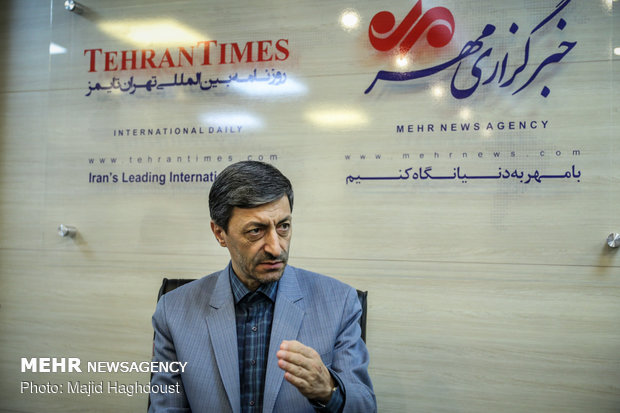
TEHRAN, (MNA) – The chief of the Execution of Imam Khomeini Order (EIKO) says that Iran will become self-sufficient in importing the vaccine required in the country.

Parviz Fattah made the remarks on Saturday, noting that “Barkat” Pharmaceutical Town is currently one of the towns that has been fully designed and implemented, and its technical infrastructure has been fully provided for the establishment of reputable companies and pharmaceutical factories in the country.

Iran to become self-sufficient in importing vaccine

Many reputable pharmaceutical companies have been set up in this town, he said, adding that this town will become one of the most important hubs of the country's pharmaceutical industry.

In the field of vaccine production, especially sensitive vaccines, a complete investment has been made, which has been funded entirely by the Headquarters of the Executive of Imam Khomeini Order (EIKO).

Syrian villagers drive out Israeli unit

 By Wesam Bahrani

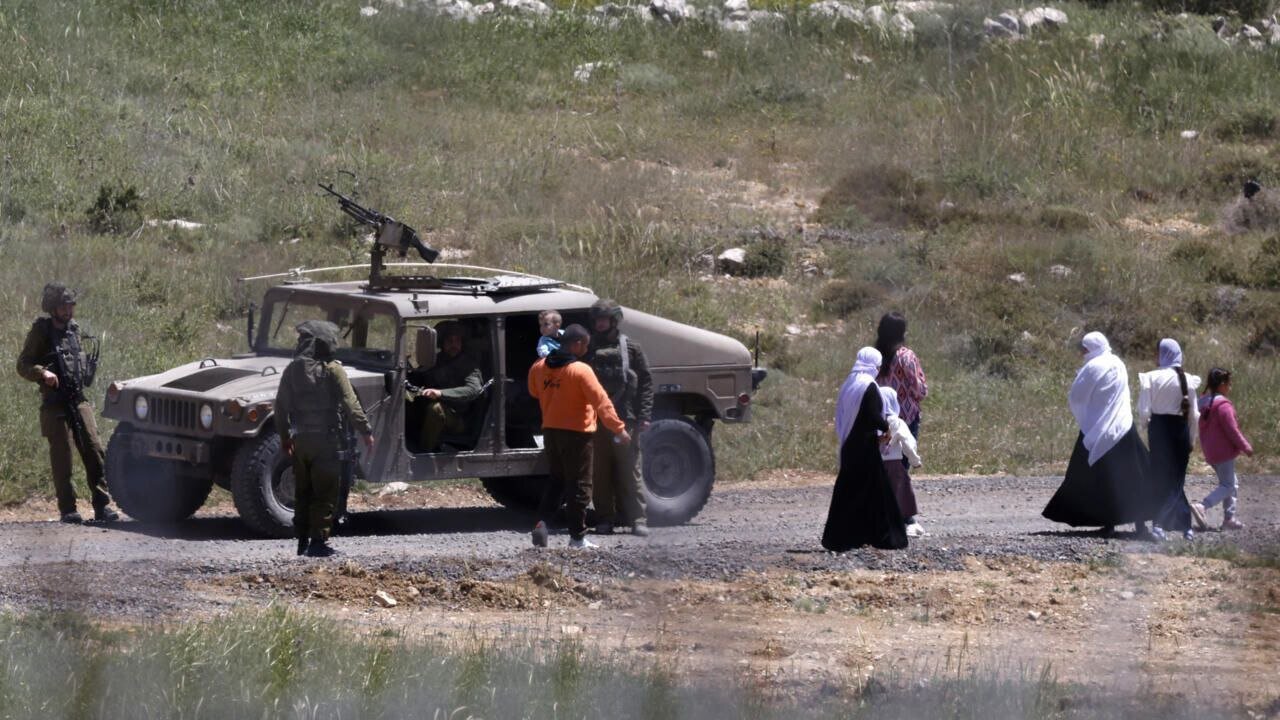
TEHRAN – Residents in southern Syria compelled the Israeli Occupation Forces (IOF) to retreat from a village.

The Syrian Observatory for Human Rights reported that residents of Ruwayhina village in Syria’s Quneitra province forced out an Israeli patrol after it entered the area.

This incident comes amid repeated incursions and a sharp escalation by the IOF, met with no response from Syria’s new government.

Villagers in central Quneitra countryside confronted the IOF after they entered the village and harassed civilians.

Angered by the intrusion, residents hurled stones at the military vehicles and set fire to an Israeli flag after tearing it down from one of the vehicles.

The event reflects continued grassroots resistance to the Israeli occupation of southern Syria, according to the Syrian Observatory for Human Rights.

It follows a series of similar Israeli invasions in both Quneitra and the neighboring Daraa province in southwestern Syria.

Local sources said the Israeli patrol provoked villagers by harassing passersby, which led to an immediate reaction from the residents.

The episode underscores growing community unrest in response to the expanding Israeli military occupation in Syria.

In a separate case, a unit of six IOF vehicles entered the Yarmouk Basin region in western Daraa.

The convoy briefly stationed itself along the road between two villages before retreating shortly afterward. No further information was available about the motive or outcome of that incursion, according to the Syrian Observatory.

Just days earlier, two Israeli tanks and two military vehicles moved from a former Syrian army base toward a village in the Quneitra countryside.

Since the collapse of the previous government in December 2024, Syria has experienced repeated Israeli attacks, including ground raids and unprecedented airstrikes in several regions, including the capital.

The new government in Damascus has yet to respond to the escalating and illegal Israeli occupation and aggression.

Israeli strikes targeted Syria's coastal cities of Latakia and Tartous, killing one person, the Syrian state news agency reported on Friday, despite recent talks between Israel and Syria's interim government.

The Israeli military confirmed shortly after it struck what it called as weapon storage facilities containing missiles that "posed a threat to international and Israeli maritime freedom of navigation" in Latakia.

Iran-China workshop on increasing climate change resilience underway

TEHRAN –Supported by the Iran National Science Foundation (INSF) and the National Natural Science Foundation of China (NSFC), an Iranian-Chinese workshop is being held on Saturday and Sunday, focusing on emerging ways to boost climate change resilience.

The workshop titled ‘Emerging Technologies and Methods for Climate Resilience’ is organized by Sharif University of Technology and Chongqing University, China. It is being conducted both in person and online in the English language. The main objective of the workshop is to identify the most innovative ways to strengthen urban climate change resilience, IRNA reported.

The workshop is centered around climate-responsive urban design and technologies, climate risk management and new technologies to manage risks, urban energy transitioning, climate resilience, water resilience and integrated system planning, smart governance and social adaptation to climate change, and climate system modeling to assess and predict climate change. 

It also highlights using artificial intelligence, machine learning, and big data in analyzing and adapting to climate change, sustainable infrastructure, resource management for climate-resilient cities, international cooperation, and the development of joint solutions to enhance urban resilience.

Affecting rainfall patterns, pollination, flowering, and even harvest time, climate change has greatly affected the agriculture sector and food security in many countries, most significantly in Iran, according to the country’s former permanent representative and ambassador to the Food and Agriculture Organization (FAO).

In some parts of the country, the air temperature has increased by 2 degrees while the highest temperature set in the world amounts to 1.5 degrees, IRNA quoted Mohammad-Hossein Emadi as saying.

Studies have shown that for a degree increase in temperature on the planet, the amount of evaporation rises by 23 percent, which negatively affects the agriculture and animal husbandry sectors.

Climate change also alters plant growth patterns, disturbing the nutritional values of crops, he stressed.

In addition, unexpected effects of climate change like drought, flood, and landslide,s have all affected food security.

INSF, NSFC to support implementation of 10 joint  projects

According to a report released in January, Iran and China will support the implementation of 10 out of 136 research projects proposed subsequent to the fourth joint call by the INSF and NSFC.

These projects cover the three fields of energy, regenerative medicine (bioengineering or materials for regenerative medicine), and environment (water and solid waste treatment).

In addition to these research projects, three out of 21 joint workshops on climate change, artificial intelligence, and big data in industrial engineering, advanced materials, and construction have been approved to be conducted.

The proposals were initially discussed in each country, then, specialized working groups evaluated the project in an international committee. Subsequently, the results were exchanged with the Chinese Academy of Sciences. 

Hamas shows restraint

 By Sahar Dadjoo

TEHRAN- The recent response by Hamas to the U.S.-proposed ceasefire in Gaza marks a significant yet cautious development in a protracted and devastating conflict. 

According to the latest reports, Hamas has replied to the American initiative calling for a 60-day pause in hostilities, the release of approximately 33 Israeli hostages, and the facilitation of humanitarian aid into Gaza.

However, this response should not be misconstrued as full acceptance. Hamas remains skeptical and is carefully weighing the offer, insisting on a comprehensive ceasefire and Israeli withdrawal from the Gaza Strip as non-negotiable conditions.

Hamas’s stance shows rare pragmatism amid ongoing violence but highlights deep mistrust of the Israeli side. While Hamas is willing to engage with the ceasefire proposal, Israel, led by Prime Minister Netanyahu, accepts it only with conditions Hamas rejects, especially disarmament.

Netanyahu’s reluctance to end the war is tied to his political survival, as ending the conflict could weaken his power. Thus, prolonging the war serves both domestic political interests and his vicious goals.

Meanwhile, the United States, despite its professed role as a mediator, continues to demonstrate a clear bias toward Israel. Although Washington possesses the political and military leverage to end the devastating conflict and alleviate the immense suffering of Gaza’s civilian population, it consistently gives priority to Israel’s evil demands.

The U.S. proposal, while framed as a peace initiative, effectively supports Israel’s conditions without adequately addressing the humanitarian catastrophe unfolding in Gaza.

Israel’s acceptance of the ceasefire proposal is seen purely as tactical, with Netanyahu using the war to strengthen his political position. Ending the conflict could weaken his power, suggesting Israel may prolong the war despite civilian suffering and global pressure. 

Conversely, Hamas shows rare pragmatism by engaging with the U.S. proposal, demanding full Israeli withdrawal and a lasting ceasefire. However, Hamas remains skeptical about the proposal’s sincerity and its chances of being fully implemented.

The U.S., as the supposed initiator of peace talks, continues to act as an unquestioning ally of Israel, facilitating policies that allow for the continuation of occupation and suffering in Gaza. 

Hamas has made a small attempt in the direction of negotiating a ceasefire, while Israel is unwilling to end the war. Part of this unwillingness is driven by Netanyahu’s political survival. 

The world looks on as Gaza suffers ceaselessly. Hoping for a resolution may be unrealistic given the current political situation.