Friday, October 01, 2021

Al-Quds International Institution: Al-Aqsa Mosque Enters a Critical Stage of Identity Obliteration

Al-Quds International Institution: Al-Aqsa Mosque Enters a Critical Stage of Identity Obliteration

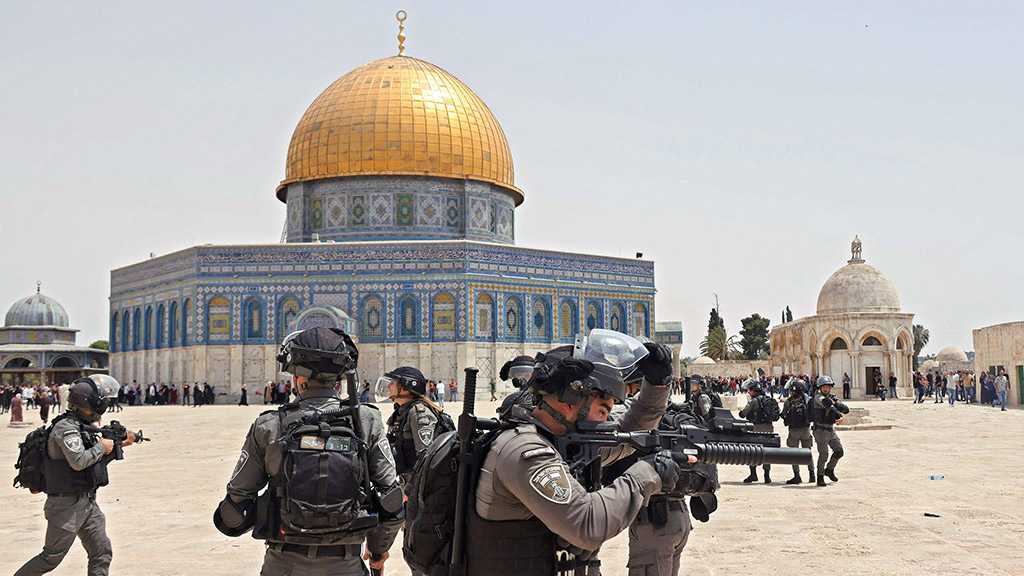
Al-Quds International Institution asserted that the al-Aqsa Holy Mosque has entered a critical stage of identity obliteration as Jewish rituals are being imposing there.

The international institution considered that the responsibility of defending al-Aqsa implies urgent duties on the people of al-Quds and the occupied land as well as the Resistance and Arab and Muslim nations.

The institution pointed out that the al-Aqsa Holy Mosque has witnessed throughout the current Jewish holiday season an unprecedented assault since its annexation in 1967. That’s because extremist “temple” groups and the occupation regime are moving forward in implementing the agenda of the “morally founding the temple” by imposing Jewish rituals in al-Aqsa.

“Today, our duty is to transport our cry to the Arab and Muslim countries and their vital forces that al-Aqsa Mosque has entered a stage of identity obliteration, and the battle over al-Aqsa is a battle of existence, either we are in it or not. This requires us to direct the interest and energy towards defending al-Aqsa and to bear responsibilities towards it in such a practical way that surpasses statements and verbal stances”, the institution added.

The international institution appealed to the stationed people, al-Quds residents and the citizens of the 1948 occupied territory and the West Bank, saying that al-Aqsa has become vulnerable more than ever before. “But your will has proved with real evidence that it’s louder and sharper than any linebacker to be resorted to in defending al-Aqsa, for you are the owners of the five holy blessings that had always stopped the enemy from  going too far”, it added.

It further said, “It’s your persistence and defense of al-Quds and Sheikh Jarrah neighborhood that called to action the other elements of strength and deterrence in the blessed Operation al-Quds Sword”.

The institution also urged them to “renew their determination and keep their pledge to al-Aqsa, for the nation and Allah Almighty are with them, and al-Aqsa was the trigger of conflict for the last three decades, and it seems it will remain this way until it becomes the trigger for the battle to freedom, God willing”.

It also called upon the resistance everywhere to set a political and military strategy that places the attack on Al-Aqsa in the heart of the escalation and appeasement equation within the available resources.

“The 19-day-period of the cease of incursions to al-Aqsa Holy Mosque, achieved by the Operation al-Quds Sword, was the longest period of incursion cessation since 21/8/2003. It made the occupation think twice about repeating incursions and the extent of attack, fearing the repercussions of the response”, it added.

It stressed that “the responsibility for al-Aqsa being a Muslim sanctity rests on the shoulders of the nation with all its peoples and generations. Its safety and liberation is our responsibility, as is maintaining Christian sanctities and the Arab identity of al-Quds.”

“The current attack against al-Aqsa makes it necessary to launch a popular movement to support and help the stationed people, to lobby governments to make them assume their responsibilities towards al-Aqsa and to undermine the normalization that adds legitimacy to the attack against al-Aqsa and forms a contract of selling it,” it said.

It added, “We call for the popular movements and groups to consider the safety of al-Aqsa and al-Quds as their priority and center of attention, and never allow to let such a blatant attack go unnoticed without a popular, effective movement against it.”

Abgoosht: One of the Most Traditional Foods of Iran

Abgoosht: One of the Most Traditional Foods of Iran

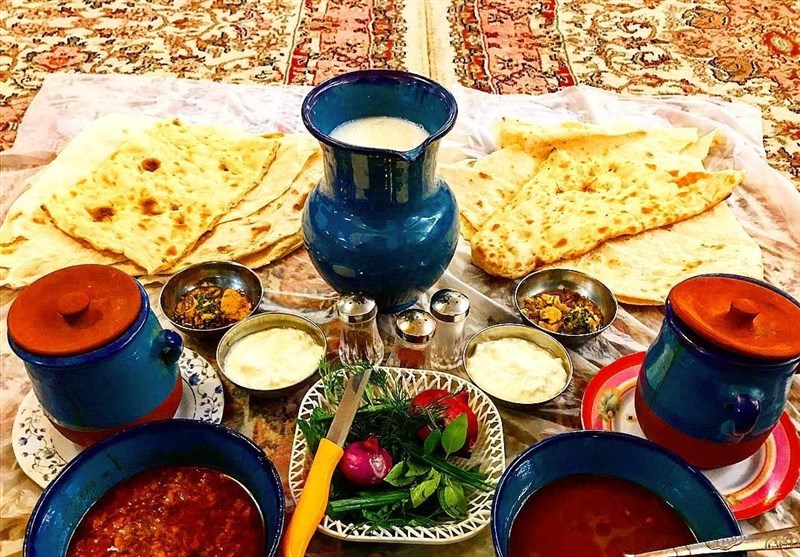
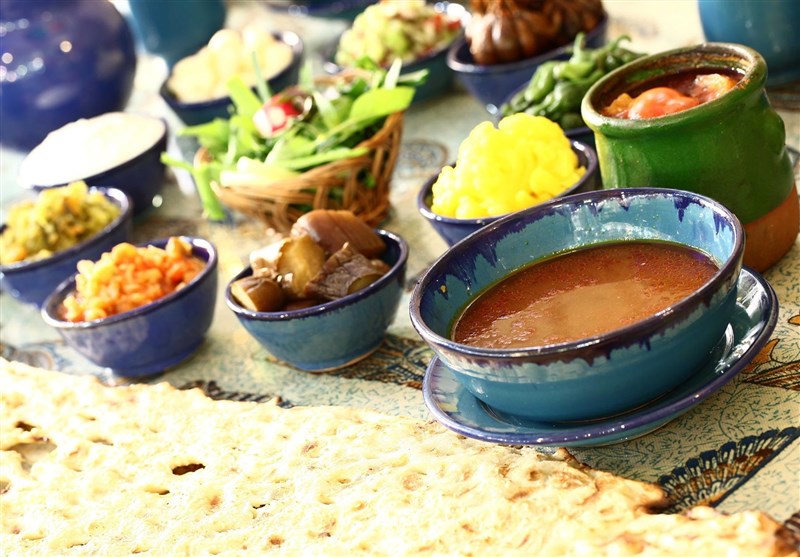
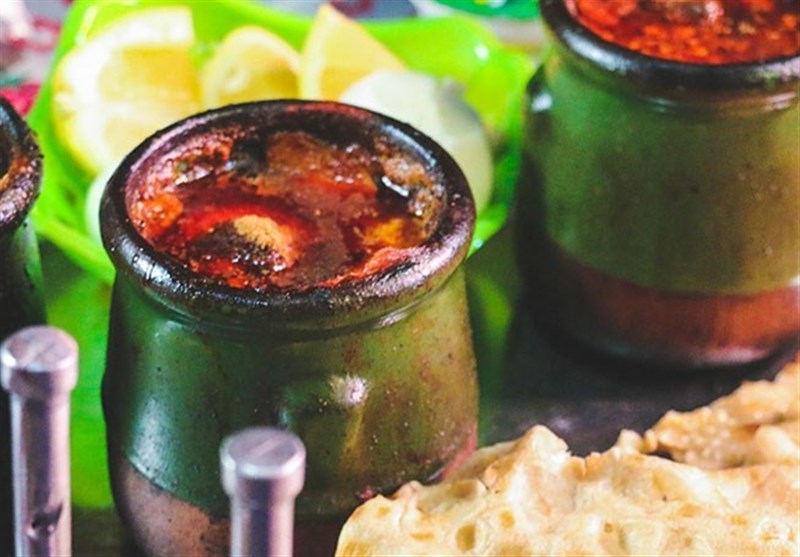
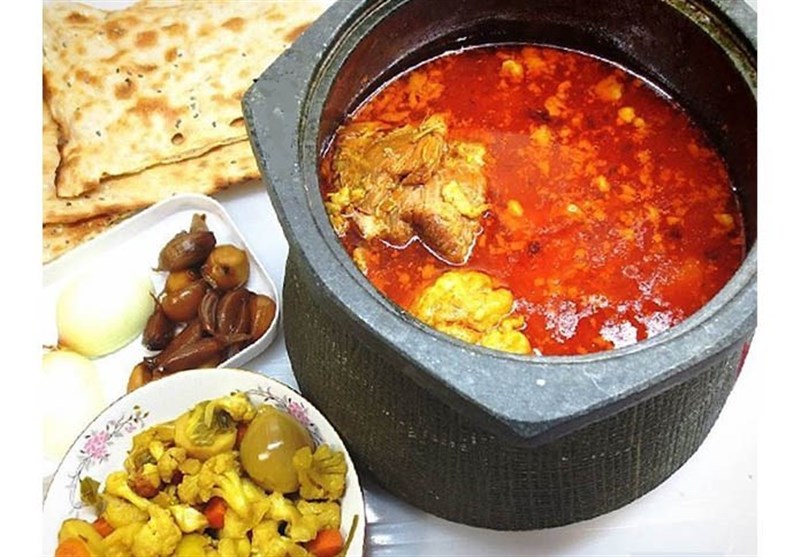
TEHRAN (Tasnim) - Abgoosht is a Persian and Mesopotamian stew. It is also called Dizi, which refers to the traditional stone crocks it is served in.

 Some describe it as a "hearty mutton soup thickened with chickpeas." Abgoosht is usually made with lamb, chickpeas, white beans, onion, potatoes, and tomatoes, turmeric, and black lime.

Iranians also call this traditional Persian dish Abgoosht, which literally means “meat broth”. This high-calorie food, which is a good source of protein, is more common and preferred in winter. It would be originally made with lamb and chickpeas only before tomatoes and potatoes were introduced to Iranian cuisine and developed the recipe.

Other variations exist in the beans used, such as kidney beans and black-eyed peas.

The ingredients are combined together and cooked until done, at which point the dish is strained. The solids are then mashed and served with the broth, but in a separate dish, along with flatbread. It is a form of Piti, which encompasses many similar dishes in the region.

There is a similar dish in Armenia, called the same, Abgoosht stew, the difference between these two is that in Armenia they use beef instead of lamb.

The Abgoosht soup is a traditional Persian meal, often eaten daily in the winter time due to the fact that is a warm meal that contains a good source of protein.

Source: Iran Review

Iranian Foreign Ministry to Proudly Follow Path of General Soleimani - Amir Abdollahian

Iranian Foreign Ministry to Proudly Follow Path of General Soleimani - Amir AbdollahianBy Al Ahed Staff, Agencies

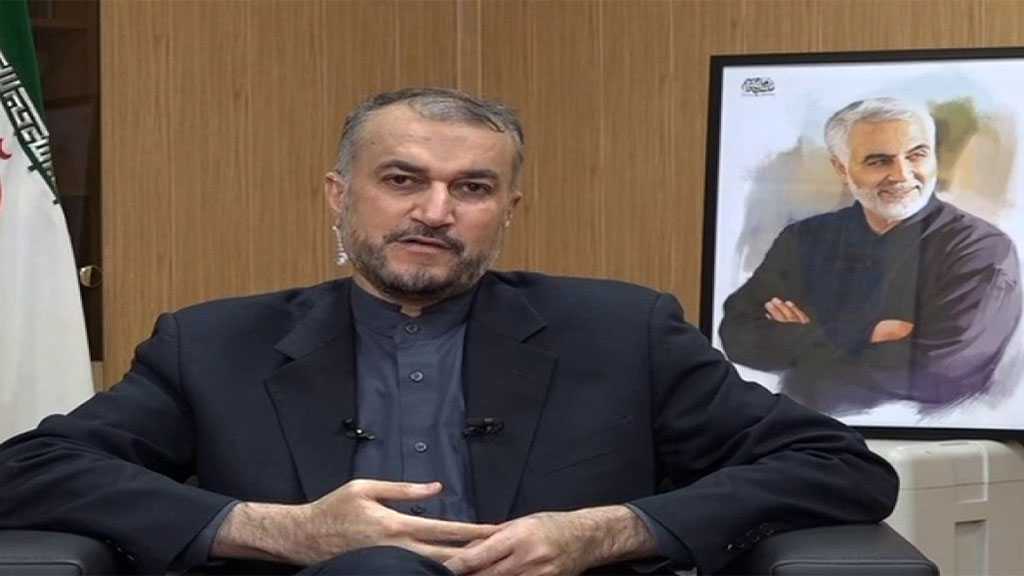
Iranian Foreign Minister Hossein Amir Abdollahian said that Islamic Revolutionary Guard [IRG] Quds Force contributes a lot to spreading peace and security in the international arena.

Amir Abdollahian made the remarks on Wednesday in his meeting with the Quds Force Commander, Brigadier General Esmail Ghaani, at the complex of Iranian Foreign Ministry in Tehran.

The top diplomat called the Quds Force as a borderless soldier that plays a key role in helping spread peace and security both in the region and the world.

During the meeting, Amir Abdollahian also pointed to the unprecedented and unparalleled role of former IRG Quds Force Commander Martyr Lt. Gen. Qassem Soleimani in the fight against terrorism and said, “Had it not been for the key role of Iran’s anti-terror commander and hero of fight against terrorism Martyr Lt. Gen. Qassem Soleimani, today, the region would look differently.”

If Daesh [Arabic for ‘ISIS/ISIL’] had succeeded in Syria and Iraq, the world would have faced terrorism and extremism, Amir Abdollahian emphasized.

The Iranian Foreign Ministry will proudly follow the path of Commander of Peace, Martyr Lt. General Qassem Soleimani persistently in line with institutionalizing peace and friendship with countries of the region and in the fight against terrorism, he further underscored.

Al-Aqsa Mosque; An intifada whose achievements continue

Qodsna Editorial Board

Tehran (Qodsna) - September 28th in the history of Palestine is one of the turning points in the struggles of this honorable nation. On September 28, 2000, Ariel Sharon, who was seeking the post of Prime Minister of the Zionist regime, entered the Al-Aqsa Mosque with the support of about 2,000 troops and officially threatened the Palestinians, saying that he would suppress all Palestinian protests within 100 days.


This action of Sharon, which was considered as a kind of campaign against Al-Aqsa Mosque, was strongly condemned by the Palestinian society.


The Zionists severely suppressed the protests, but this action did not hold back the Palestinian community, and the next day, the Zionists suddenly faced a massive Palestinian uprising.


The various Palestinian movements, with the experience gained in the first intifada, started another intifada in the geography of Palestine, which is recorded in the history of Palestine under the title of "Al-Aqsa Mosque Intifada".


The intifada of Al-Aqsa Mosque had bitter consequences for the Zionists:


- Due to the spread of insecurity, the migration of Jews to occupied Palestine decreased.

- Reverse migration has started significantly, so much so that updated statistics indicate that the number of reverse migration is over one million and two hundred thousand people who left occupied Palestine and live in Western countries.

- Insecurity reduced foreign investment in the occupied territories.

- Insecurity caused by Al-Aqsa Mosque Intifada caused capital to flow out of the occupied territories.

- A significant part of the Zionist regime's revenue is from the tourism industry, but this industry was severely damaged due to the expansion of the Al-Aqsa Mosque Intifada.

- Public opinion in the region and the world became against Israel and in support of Palestine, and this imposed a heavy cost on the Zionist regime at the international level.

- Ariel Sharon, the prime minister of the Zionist regime, was forced to order a withdrawal from the Gaza Strip to quell the intifada, and Gaza was finally liberated after 38 years of occupation.

- Another consequence of the Second Intifada for Israel was the defeat of the Sharon coalition government, as well as the widespread split in the major Zionist parties, especially the Likud party.


Now, after 21 years, the Palestinian resistance has not only managed to maintain its achievements and even defeated the Zionist regime’s war machine in re-occupying Gaza and disarming the resistance during several wars.


Today, the resistance is in a situation where it can start a conflict with the Zionist regime. Sword of al-Quds operation is defined as the first step of resistance in this area.

Resistance groups lambaste Israeli FM’s trip to open ‘Israeli spy nest’ in Bahrain

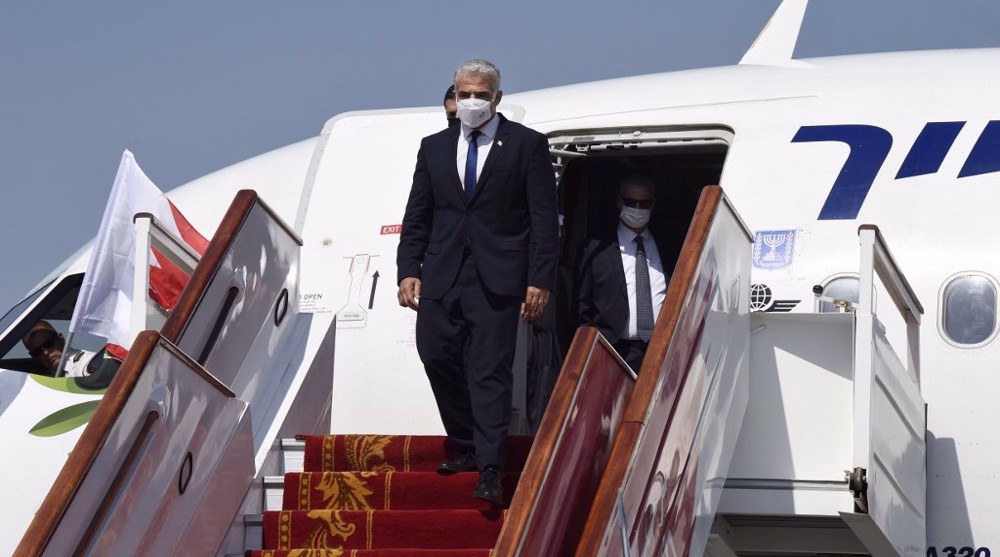
Israeli Foreign Minister Yair Lapid’s visit to Bahrain has drawn a sharp rebuke from regional resistance groups, which say any attempt to normalize relations with the Zionist entity is doomed to failure, and call for collective efforts against such moves that only contributes to the regime’s occupation of Palestine.

Lapid arrived at Manama airport on Thursday to become the highest-ranking Israeli official to visit the Persian Gulf country since Israel and Bahrain established formal relations last year.

He met King Hamad bin Isa Al Khalifah and Crown Prince and Prime Minister Salman bin Hamad Al Khalifah.

His visit is aimed at advancing the US-pushed normalization deals between Israel and a number of Arab countries, namely the United Arab Emirates, Bahrain, Sudan and Morocco, which agreed to establish formal diplomatic relations with Israel under pressure from former US President Donald Trump.

The Israeli foreign minister is set to open the Israeli embassy in Manama. According to Reuters, he has already signed deals on cooperation in medicine, healthcare, sports, and on water and environmental conservation with his Bahrain counterpart.

The normalization accords, however, have been denounced by Palestinians and the people of the region as “treacherous,” and sparked protests in the countries that signed them.

On Thursday, Bahraini activists circulated on social media footage of protesters across Bahrain denouncing Lapid’s visit.

Hamas slams ‘national crime’ against Arab, Muslim interests

Palestinian resistance group Hamas denounced Bahrain’s reception of the Israeli foreign minister as an extension of the sin of signing normalization deals with the Israeli regime and a “national crime” against the interests of Arabs and Muslims.

The Gaza-based group’s spokesperson Hazem Qassem said in a statement on Thursday that the move represented an encouragement to Israel to continue perpetrating crimes against the Palestinian people and the holy sites of all Muslims.

“We call on the free peoples of the Arab and Muslim world to raise their voices against normalization, which only serves the Israeli occupation’s interests and its settler-colonial narrative,” Qassem added.

‘Normalization won’t succeed in resistance countries’

Hizam al-Assad, a member of the political bureau of Yemen’s Ansarullah movement, said the “dissonant voices” striving for normalization with the Israeli regime are “abnormal” and should not be trusted.

In a statement carried by Iraq’s Arabic-language al-Maalomah news agency, al-Assad said normalization with Israel will never succeed in the countries of resistance groups.

“Israel’s attempts to make a breakthrough in the path of normalization here or there, or by drawing the Axis of Resistance countries to this path, are failed attempts,” he said.

The Ansarullah official added that the Zionist regime is seeking to foment ethnic conflicts in Arab countries in order to reach its goal.

‘Embassy to serve as Israeli spy nest’

According to a senior leader in the Islamic Jihad, another Gaza-based resistance group, Lapid’s trip to Bahrain is part of a conspiracy to change the identity of the region.

In a statement on Thursday, Khader Habib also denounced the opening of an Israeli embassy in Bahrain, describing it as an “intelligence and security outpost” of the enemy in Manama under the name of an embassy.

The Israeli regime “is not a legitimate entity, and therefore relations with it are invalid, and what the rulers of Bahrain are doing in terms of normalization and alliance with the Zionist entity does not represent the Bahraini people,” he added.

Meanwhile, the head of the Fatah (Conquest) Alliance in Iraq’s Parliament also stressed the necessity of confronting efforts to normalize ties with Israel.

“The Fatah Alliance and the men of resistance will stand up against plots to support the normalization of relations [with Israel],” Hadi al-Ameri said.

However, he made the remarks concerning an event in his own country last week, during which more than 300 Iraqi men and women attended a conference in a hotel in Erbil, the capital of the Kurdistan region, during which they demanded that Baghdad join the so-called Abraham Accords and normalize relations with Israel. The event was immediately rebuked by Iraqi resistance groups, which called for immediate action against the attendees, including their arrest.

‘I apologize to Muhammad al-Durrah’

Many on social media noted the coincidence of Lapid’s visit and the 21st anniversary of the Israeli military’s brutal murder of Muhammad al-Durrah and his father Jamal al-Durrah, who became the symbol of Palestinian people’s resistance against the occupying regime.

“On the anniversary of the martyrdom of the child Muhammad al-Durrah on September 30, 2000, Bahrain receives the foreign minister of the deadly enemy!!” tweeted Yousif al-Khaja, a Twitter user.

Another user apologized on behalf of the Manama regime to the Palestinian martyrs. “I apologize to Muhammad al-Durrah,” the user tweeted.

Others also pointed to the coincidence of the two events, saying it carried a message for the world.

On September 30, 2000, Muhammad, a 12-year-old Palestinian boy, and his father were filmed while they came under fire by the Israeli military on the Saladin Road, south of Gaza City. Muhammad was mortally wounded and died soon after.

The video of Jamal trying to shield his son became one of the most powerful images of the Second Intifada.

General Milley Strikes Out Demonstrating What Is Wrong With the American Military

Philip GIRALDI

There is no solid evidence, only innuendo, that Trump ever seriously contemplated war with China, Philip Giraldi writes.

Most Americans do not know that the United States now here are approximately 900 Active-duty generals and flag officers today to lead 1.3 million troops in the combined armed forces. This is a ratio of one senior officer per every 1,400 men and women. During World War II, an admittedly different era, there were roughly twice as many flag and general officers for a little more than 12 million active duty troops a ratio of one to 6,000. In the Navy there are 32 flag officers for each ship currently in commission. In 1944, there was one flag officer for every 24 ships.

This development is referred to as “rank creep” which does not improve performance and instead clutters the chain of command by adding multiple bureaucratic layers to decision-making while also costing more due to funding the higher paygrades. And lest one be confused about why there continue to be so many flag officers, possibly concluding that they are needed to provide the leadership to fight wars, it could be pointed out that most of them will never get anywhere near combat even if the U.S. continues its belligerency on a global scale in an effort to establish and enforce its leadership of a fictional “rules based international order.”

It turns out that current Chairman of the Joint Chiefs of Staff Mark Milley was, during the latter days of the Donald Trump Administration, talking to his counterparts in China as well as to some folks in Congress who had no love for Trump. Some of the conversations were routine, but others were apparently driven by the notion that Donald Trump just might do something stupid like starting a war unless some restraints were placed on his ability to do mischief. Inevitably, there have emerged major differences of opinion regarding the propriety of what Milley was engaged in, with Democrats in general and Trump haters in particular finding no problem with the intrusion into policy-making while many Republicans have been calling for a thorough investigation to include possible consequences up to and including court-martial.

The various conversations were reported in a just released book “Peril” written by Bob Woodward and, Robert Costa and, based on a claimed 200 interviews, are generally conceded to be accurate by both sides to include the Milley camp plus the journalists involved. Some of the calls at least were made with other officials in the room and on separate phone lines, though there were also conversations with politicians like Nancy Pelosi, Speaker of the House of Representatives, that were clearly considered off-the-record as they dealt with keeping nuclear weapons out of the president’s hands.

Milley, according to the book, reportedly told the Chinese General Li Zuocheng in a back-channel phone call that had as a subject the possibility that the president might order an attack directed against China, something in the nature of a “surprise attack.” He reportedly said “General Li, you and I have known each other for now five years. If we’re going to attack, I’m going to call you ahead of time. It’s not going to be a surprise.” Milley apparently justified the action by stating that he disapproves of surprise attacks in principal and his defenders cite the example of “Pearl Harbor,” which was viewed so repugnantly by the American public that something like a war of extermination became inevitable. Unstated by the Milley supporters, though implicit in their argument, is the assumption that Donald Trump was both ignorant and a loose cannon on deck who would do something stupid like initiating a conflict with China.

Milley also shared his view that Trump had experienced a “mental decline” after the election with Nancy Pelosi in a phone call to her on January 8th, two days after the alleged insurrection at the Capitol. Pelosi reportedly demanded that Milley take the nuclear launch codes away from Trump, which admittedly he did not seek to do. On the same day Milley also reviewed procedures with the senior officers at the National Military Command Center for launching nuclear weapons, insisting that he also had to be involved. To be completely clear, Milley had no legal authority or power to insert himself into the chain of command, though “Peril” reports that he did just that and at a minimum he was acting “extra-constitutionally” in his interpretation of his government role.

But it is the outreach to China is most disturbing. It is indeed possible to regard Donald Trump negatively while at the same time responding rationally with one’s international nuclear armed adversaries. One does not know what Milley intended to do by his phone call, but “Peril” makes the case, without providing any evidence, that “American intelligence showed that the Chinese believed that Mr. Trump planned to launch a military strike to create an international crisis that he could claim to solve as a last-ditch effort to beat Joseph R. Biden Jr.” In any event, it is unlikely that the Milley phone call reassured Li of anything. Indeed, Li and the Chinese government would have only two possible responses to the threat. First would be to shut up shop, batten down the hatches, and sit still for punishment. The other option would be to preemptively strike U.S. forces in and around China which presumably would be used for the attack. Either option could easily lead to a nuclear exchange once things cease to go according to plan, presuming that the surprise attack itself was not intended to include nuclear weapons in the first place.

Colonel Richard Black observes sagely that “If the report of Milley’s intentions is accurate, he should be relieved for cause, for though he did not consummate a criminal act by making that promise, the promise was so fraught with impropriety that an officer who betrayed his government in such fashion should ever be trusted to serve. Indeed, it is likely that had his Chinese counterpart made such a promise to General Milley, he’d have been executed for doing so.”

Beyond the disruption of the chain of command and ignoring the Constitution, there are, of course, some other problems with Milley’s line of thinking. Trump has, to be sure, demonstrated enough irrational behavior to make one suspect that he is not in full possession of all his marbles, but that is not the point. He was elected president of the United States and the U.S. Constitution was set up to ensure civilian control of the military, not vice versa.

And there is no solid evidence, only innuendo, that Trump ever seriously contemplated war with China. Indeed, he ran for office pledging to end the pointless wars that Washington was engaged in in Asia and towards the end of his administration he negotiated an exit from Afghanistan, which Joe Biden then postponed before bungling the evacuation. Trump did indeed assassinate a senior Iranian General and also launched cruise missiles against Syria based on bad intelligence, but otherwise his record is significantly better than that of his predecessor Barack Obama who both initiated and broadened the policy of assassinating American and Afghan citizens overseas by drone and also was party to the overthrow of the Libyan government while also conniving to replace the government of Ukraine.

In any event, in America war is clearly playing politics by other means. President Joe Biden has already declared that he has full confidence in Milley. Several Republican Senators, including Marco Rubio, have instead demanded that he be fired. Given the fact that at least one of the general’s phone calls to his Chinese counterpart could have started a war that might have gone nuclear, he should at least have the integrity to resign and take up his expected board appointment with a defense contractor.

Thursday, September 30, 2021

Qatar’s first-ever election unsettles its neighbors

By Giorgio Cafiero

Qatar's maiden Shura Council elections are being heavily scrutinized for their potential domestic and regional ramifications. While voter eligibility criteria has caused ripples within the country, some Gulf Cooperation Council (GCC) neighbors fear the Qatari vote will widen demands for representative government among their own citizens.

Qatar's autocratic neighbors look on with unease as Qataris prepare to cast votes in their first-ever Shura Council elections.
Qatar plans to hold its first elections to the Shura Council in October of this year. While these elections will not transform Qatar into a democracy, they will almost certainly bring about greater citizenship participation in the country’s fledgling legislative process. This would be a small step towards democratization, and it is for that reason that some other Gulf Cooperation Council (GCC) states find Qatar’s electoral opening highly problematic.

The Shura Council is Qatar’s dominant legislative body. To date, the Qatari head of state has appointed the body’s 45 members, but starting in October, Qatari voters will directly elect thirty of these members, with the the remaining fifteen appointed by Emir Tamim bin Hamad al-Thani. While the legislative body has the authority to propose laws, approve annual budgets, and sack ministers, the Qatari emir retains the ability to veto decisions of the Shura Council.

To be sure, there’s been much talk about elections to the Shura Council throughout this century. And after a Qatari constitutional referendum was held in 2003, the plan to elect two-thirds of the legislative body was finally formalized.

On past occasions (in 200720102011, and 2017), the leadership in Doha pledged to hold Shura Council elections, but they never came to pass. As Dr. Khalid al-Jaber, the director of MENA Center in Washington DC, recently wrote: “One of the reasons for the delay was Doha’s concern about influence on one of the elected Shura Council members by a neighboring country. Another, was the lack of popular pressure to turn the Shura Council into an elected body.”

Timing is everything

Considering the sensitive issues that sidelined elections in the recent past, why is Qatar now planning to hold the long-promised Shura Council elections with much fanfare? There are at least four important factors in play:

First, these elections could help boost Doha’s image internationally as a forward-thinking and reform-oriented Gulf country in the lead-up to the 2022 World Cup, hosted in Qatar. Opening the country’s main legislative body to elections could counter arguments that because Qatar is an “undemocratic and backwards nation” it should not host the global event – an argument that western Orientalists have been advancing ever since Qatar won the bid in 2010.

Second, the three-and-a-half year blockade against Doha has significantly impacted attitudes and popular sentiments among Qatari citizens. Today, the Qataris are less politically apathetic and more driven to mobilize. “[The Qataris] want to contribute, and the [Qatari] government wants to give them the opportunity to now participate,” says Dr. Andreas Krieg, a senior lecturer at the School of Security Studies at King’s College London, Royal College of Defence Studies.

Third, the leadership in Doha views the holding of elections to the Shura Council as critical to Qatar National Vision 2030, which is “a master vision and roadmap towards Qatar becoming an advanced society capable of sustainable development with the goal of providing a high standard of living for all citizens by the year 2030.”

These elections are “part of [Qatar’s] development and the next step in its political development,” according to Dr. Krieg. “It is a form of public participation with quite sincere impact on policy decision-making, because the Shura will have a lot more powers under the new law that will potentially set in motion a process that might end up in something more – maybe a constitutional monarchy.”

Fourth, with social contracts in the wider Arab region coming under higher levels of stress because of ‘Arab uprisings’ and economic downturns, Qatar’s leadership has likely decided to proactively introduce reforms and empower its citizens before they demand it on the streets.

So how will these elections to Qatar’s Shura Council impact intra-GCC relations? Almost eight months after the Al-Ula accord (the agreement between Qatar on one side, and the remaining five GCC members and Egypt on the other, which resulted in the lifting of the blockade against Qatar) was signed, there has only been partial reconciliation within the Gulf. None of the divisive issues over Doha’s support of political Islamists or its engagement with Iran and Turkey have been resolved, nor has Qatar’s independent streak been brought to heel.

Pushback from neighbors

If anything, the upcoming Qatari elections keenly demonstrate that Qatar continues to toe its own line on matters domestic and regional. The Shura Council vote is unsettling its direct neighbors, who see potentially dangerous ‘democracy’ implications for the internal dynamics of their autocratic states.

In a period in which Arab monarchies of the Persian Gulf prepare for the post-hydrocarbon era, social contracts have been weakened, economies have faltered, and new, often-unprecedented forms of taxation have been introduced. As the relationship between state and citizenry shifts, some of Qatar’s fellow GCC members have concerns about their own citizens making demands for greater and more direct representation in government. Of all its neighbors, Saudi Arabia seems to have the most anxiety over Qatar’s looming public vote.

Dr. Kristian Coates Ulrichsen, a fellow for the Middle East at Rice University’s Baker Institute for Public Policy, explains that “Bahrain has more of a participatory element although this has been watered down significantly in recent years, while the UAE has had a mix of elected and appointed members of the FNC since 2006. The move toward greater representative inclusion in Qatar could be watched most closely in Saudi Arabia, given that the Saudi Shura Council will, by 2022, be the only remaining such body in the Gulf that is wholly appointed.”

And, according to Dr. Krieg, “whatever happens in Qatar [matters to Riyadh] because Saudis look toward Qatar, so for the Saudi regime the issue of elections is one of regime security. They’re saying, if the Qataris have the right to vote and participate in policy making, then Saudis will probably ask for the same rights, particularly as the social contract in Saudi Arabia is failing and the regime is unable to provide as much as they used to provide in the past. The logical consequences of that would be more participation.”

Part of the resentment from some of Qatar’s neighbors stems from the fact that the social contract in Qatar is far stronger than in some other GCC states that have less wealth, and larger populations and territories. For Doha’s leadership, gravitating toward a more representative system of governance comes with far lower risks than for other GCC governments.

In Qatar, there is virtually no genuine domestic opposition to the ruling government – nor do citizens endure any real poverty. This cannot be said about other GCC countries, where anti-regime movements and organizations have been present and active over the years.The rulers of these states fear how free and fair elections with universal suffrage could challenge their legitimacy and the status quo.

Indeed, it would be difficult to imagine the Al-Saud rulers, for example, agreeing to any electoral opening in the Saudi kingdom, especially with Crown Prince Mohammed bin Salman (MbS) at the helm. The risks would be too high, and the consequences, potentially too dire and predictable.

The weeks ahead

With the elections slated for October, what can we expect in the interim from Qatar’s neighbors?

“What we expect, and what we’ve already seen over the past couple of weeks,” says Dr. Krieg, “are efforts, especially in the information space, to implement fake trends through trolls and bots that attack the integrity and reputation of the elections, trying to make the elections look as though they are illegitimate or unsuccessful.”

Just as Saudi and Emirati media outlets have long cited Kuwait’s internal problems as justification for continued autocracy in the region, there will likely be further efforts from some of Qatar’s neighbors to depict these elections as ‘disastrous.’

“They will look at voter turnout in particular,” says Dr. Krieg. “If voter turnout is low, Saudi Arabia and the UAE will try to make it look like a failure, and portray it as such in their local press because they need to make sure this looks unsuccessful, showing their own public that this is something you don’t want – democracy in this part of the world doesn’t work. We’ll probably have to expect that there will be more information campaigns, particularly as the election is taking place over a two-week period. In that time, we will probably see more interference by [Qatar’s] neighbors in the information space.”

On 10 August, Dr. Marc Owen Jones, an associate professor at the Hamad Bin Khalifa University in Qatar, shared his analysis of the Twitter “Qatar Revolts” hashtag. The Doha-based scholar demonstrated that there were “approximately 1789 fake accounts, all dedicated to promoting hashtags around the Qatar elections – more specifically, hashtags meant to portray the country as being in a state of revolt.”

Tribal sensitivities and eligibility controversies 

This is not to say that the Shura elections expect to be entirely smooth-sailing inside Qatar. The country is indeed grappling with several election-related challenges, which may explain why its leaders have shied away from a public vote in the past. These difficulties relate mainly to tribal elements inside Qatar, and questions of eligibility that are highly sensitive among locals.

There are concerns about the significant role that tribes are bound to play in these elections to the Shura Council. The MENA Center’s Dr. Al-Jaber explains that “tribal loyalty, particularly in Qatar’s rural areas, has remained very strong, to the extent that there are worries that tribesmen will simply vote for their tribe’s candidates on the basis of their affiliation, rather than their policies or proposed agenda.”

As an example, one of Qatar’s largest tribes, the Al-Murra tribe, is also heavily present in Saudi Arabia and has had a history of conflictual relations with the Qatari state. This month, there have been a number of rare protests in Qatar, with Al-Murra tribal members voicing their opposition to the Shura Council law that governs who can vote. “The controversy centers on the question of who counts as a full Qatari, as the country takes tentative steps toward democratization,” explained Dr. Annelle Sheline, a research fellow for the Middle East at the Quincy Institute for Responsible Statecraft.

Under the law, eligible voters and those permitted to run in elections must be Qatari citizens, aged 18 and above, who can prove that their family was residing in Qatar prior to 1930, over four decades before the country gained independence – effectively, excluding members of the Al-Murra tribe and others from both voting and running in the elections. The current law denies about 20 to 25 percent of Qatari citizens the eligibility to vote.

Social media accounts have shown footage, purportedly from somewhere inside Qatar, of men protesting. One video featured a tribesman who sought to appeal to Qatar’s head of state, saying that “unfounded political inequality and selective citizenship could lead to divisions.” In response to such debates on social media, Qatar’s Interior Ministry decided to “transfer seven people to the public prosecutor for spreading false news and inciting strife.”

In a discussion on the Qatari Shura Council elections, Dr. Kristian Coates Ulrichsen, a fellow for the Middle East at Rice University’s Baker Institute for Public Policy, says that “the issues of eligibility speak to the conduct of politics in its rawest form, who’s in, who’s out, and who gets to make that decision, as well as to issues of identity.”

What remains to be seen is whether the rules governing voter eligibility may loosen up a bit to make the electoral system more inclusive during future elections to the Shura Council, set to take place every four years. Either way, following the vote, Qatar is likely to experience ramifications domestically, perhaps both positive and negative. As for the consequences from its neighbors, they will have to wait and see.