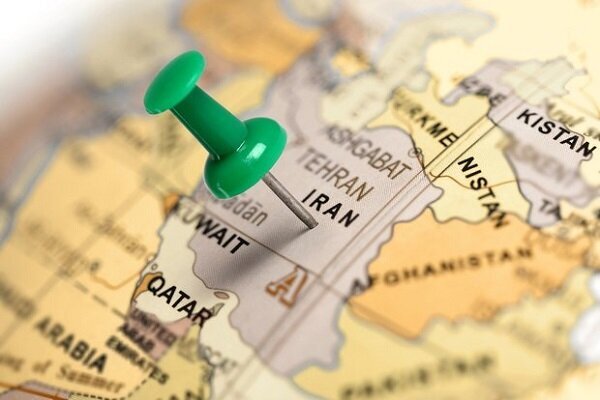
In a report published by Reuters on Thursday, it is said that Iran is struggling to buy medicine and food under the United States’ sanctions despite such supplies being exempt from sanctions.
Pointing to the Swiss Humanitarian Trade Agreement (SHTA), a trade channel launched by the Swiss government to facilitate such Iranian purchases from Swiss companies, it said, “Yet Iran’s central bank (CBI) has been unable to transfer the billions of dollars worth of oil export cash it had built up between 2016 and 2018 to bank accounts working with the SHTA, the five sources with knowledge of the matter told Reuters.”
It added, “That money was accumulated in bank accounts in countries that Iran sold oil to, especially in Asia, with its biggest customers including South Korea and Japan, in the years after Iran signed the nuclear accord with world powers, but before the Trump administration withdrew and reimposed sanctions in 2018.”
“The funds were frozen when the sanctions, which target the CBI as well as dollar transactions with Iranian entities, were reintroduced. As a result, international banks and their governments - whom they seek clearance from - are wary of allowing funds to be released without specific authorisation from Washington for each transfer, the sources said.”
It is also said in the report that the blockage, according to the sources, illustrates how the complexity of the U.S. sanctions has made many banks, companies, and countries wary of doing any business with Iran, even when exemptions exist because breaches can involve huge financial penalties and being effectively shut out of the crucial U.S. financial system.
“The impact has also been felt in other areas, with Reuters previously reporting many foreign shipping companies and insurers are unwilling to provide vessels or cover for voyages, even for approved commerce,” it added.
Switzerland’s government said on Monday that a Swiss pharmaceutical company had completed the first transaction under the new humanitarian trade channel with Iran, adding more transactions would follow.
The State Secretariat for Economic Affairs (SECO) told Reuters that the SHTA needed “regular transfers of Iranian funds from abroad for its functioning”, adding that U.S. authorities had given assurances that they would support such transfers.
“We are in talks with the USA and other partners on this matter. However, we cannot provide information on individual transfers,” SECO said, without providing further details.
SECO also did not comment on how the first confirmed transaction was funded.
An Iranian official, speaking on condition of anonymity, said Tehran had been in contact with countries where it had funds to try to transfer the money under the Swiss initiative.
“These countries have approached the U.S. to secure its approval for such a transfer, but to no avail,” the official said.
Swiss bank BCP is the only financial institution that has committed to the SHTA so far and agreed to receive Iranian funds under the scheme, the sources said.
TEHRAN – July 31 is World Ranger Day, which celebrates the work rangers do to protect the planet's natural treasures and cultural heritage and commemorates the guardians of nature killed or injured in the line of duty.
Climate change, poaching, and armed conflict, in addition to the Covid-19 pandemic, are the issues affecting natural resources and those who protect them, particularly during this difficult time across the globe.
Humans may have not thought about environmental protection since urbanization reached a point that severely affected nature and made them think of a solution, because humans were highly depended on nature and could not survive without it.
Therefore, institutions such as the Department of Environment in Iran and others were formed in the world, but it was the beginning of human involvement, so the relevant institutions were forced to physically protect these areas and unfortunately, a large number of them lost their lives defending the environment.
The international community decided to designate July 31 as World Ranger Day to commemorate rangers killed or injured in the line of duty and to celebrate the work rangers do to protect the world's natural and cultural heritage.
In Iran, rangers have been working for about half a century in four protected areas under the management of the DOE, to protect wildlife and biological species, and during this period 140 rangers lost their lives, in the world also more than a thousand environmental defenders have been killed over the last 12 years.
To preserve the existing biodiversity over the wide geographic expanse of Iran, four types of areas have been designated for preservation and protection, including, national parks, wildlife refuges, protected areas, and natural national monuments. In 1997, the DOE held supervision over 7,563,983 hectares of such areas. By the year 2003, the size of the DOE supervised areas reached 11,791,788.225 hectares.
According to the international standard, there should be one ranger per thousand hectares, but in Iran, there is one ranger per 12,000 hectares, which means that the number of rangers in Iran is one-twelfth of the world standard, while the rangers protect 11 percent of the country's natural areas, Jamshid Mohabbat-Khani, commander of the protection unit of the DOE has stated.
To compensate for this shortage, we obtained a license to hire rangers for 10 consecutive years, through which 300 ranchers were employed each year, he said, adding, but given the size of the country, it seems that we are still far from the international standard, and public participation seems to be the best way to make up for it.
Of course, the people have always been present and did not give up any help, so that we witnessed the death of seven people in the recent wildfires, he regretted, noting, but it shows that people are interested to participate in the environmental protection, so the slogan of the environment comes true as we have 80 million environmentalists.
But we also have a number of responsibilities towards these people, one of which is to educate them, he said, adding, in this regard, we also prepared a booklet on fire control in nature and sent it to the provinces and asked them to educate people and prevent any harm. In the law for the protection of rangers, we made a clause in support of nature conservationists, which was not approved and was removed, but we are seriously pursuing the issue to protect them legally, he highlighted.
He went on to say that we are trying to provide equipment to the rangers by the end of this year, which will include bulletproof vests, electric shocker, tear gas, backpacks, and other necessary items.
TEHRAN - Indian media has strongly criticized a nascent Sino-Iranian partnership plan that could cloud India’s investments in some Iranian development projects, but an India expert tells the Tehran Times that India’s decision to abide by U.S. sanctions on Iran has led to its loss of the Iranian market.
Iran and China are carefully negotiating over a strategic partnership plan that will raise the economic cooperation between Tehran and Beijing to unprecedented levels. The plan, officially known as “Comprehensive Cooperation Plan between the People's Republic of China and the Islamic Republic of Iran,” has raised some concerns in many countries in the region and beyond, though it is yet to be finalized.
India is one of the countries that clearly voiced concerns over the deepening of economic ties between its archrival China and Iran. It sees the plan through the prism of its competitions with China and Pakistan.
“India has literally lost Iran, probably for good. Now that Iran has landed in the Chinese jaws, chances of any release from its deadly grip is almost remote. That’s the fact of life and the sooner India gulps this unpalatable truth, the better,” said an op-ed published by the New Delhi Times newspaper.
The newspaper put the Iran-China cooperation plan in the context of India’s competition with China and the risks it poses to the Indian investments in the Iranian port of Chabahar. It was also keen to take a jab at Pakistan.
“Pakistan need (s) not jump with glee. Chabahar port will adversely impact Pakistan’s Gwadar port also. This also means that the CPEC [China–Pakistan Economic Corridor] is out. Looks like China has abandoned Pakistan-its iron brother,” the newspaper added.
In separate articles, the Indian think tank, Observer Research Foundation (ORF), echoed the same concerns.
“Iran is already part of China’s Belt and Road Initiative (BRI), and in September 2019 China announced its intent to infuse $400 billion worth of investments in Iran’s oil and gas, infrastructure and transportation sectors. These massive numbers are a direct challenge to both Western, and more specifically, American economic might on a regional and global stage, but also creating new geopolitical flashpoints as Beijing expands its reach around the world, which now includes a base in Djibouti, operations of Gwadar port in Pakistan, ever-increasing naval port calls across the world and so on,” the ORF said in an article authored by Kabir Taneja, a fellow with Strategic Studies Program.
Taneja added, “The U.S.–China tussle arriving in Iran would be a new challenge within a challenge for New Delhi, which has over the past few years been balancing its relations with the U.S. and Iran.”
With respect to the 25-year Iran-China partnership plan, India’s concerns center around a possible Chinese investment in Chabahar port, which some Indian analysts call it “India’s strategic magnum opus in Iran,” and the prospect of China finding a naval footprint in the Western Indian Ocean, where New Delhi has strategic interests.
“New Delhi’s strategic interests are ‘weighted west’: the oil flows are from the west, the bulk of trade is west, as is the diaspora, and India major investments. Not only are India and the U.S. badly coordinated in the Western Indian Ocean, but observers also say Washington’s Iran policy actively impinges on Indian interests,” wrote Abhijit Singh, a former Indian naval officer, who currently heads the Maritime Policy Initiative at the ORF.
Indian analysts also express concern over the possibility that China replaces India in development projects in Iran such as Chabahar port and the Chabahar-Zahedan railway, but an India expert told the Tehran Times that India’s concern is a problem of its own making.
“India was involved in Chabahar port’s development project, and it was expected to complete the project as soon as possible, but India didn’t complete the project due to U.S. pressures. The Indian government was eager to move forward with its investments at Chabahar port, but the Indian firms were dragging their feet about continuing the project because they had business dealings with American firms,” Mohsen Rouhisefat, an India expert, told the Tehran Times, adding that Iran can’t wait for India to complete the port project at a later time, because it urgently needs to develop its economic infrastructures given its growing population.
According to the expert, Iran has already invested $1b in Chabahar port, and it invited other countries like Australia and Japan to invest in the port, while India was working there.
“The Chabahar port development project includes five phases. Only one phase has been developed with the participation of India. Iran has invited all countries to make investments in the port, and thus a possible Chinese investment in Chabahar port is natural,” said Rouhisefat, noting that the Chinese have already paid a visit to the port.
He also said that Iran and India have signed an agreement similar to the current Iran-China one about two decades ago, but the Indians failed to take advantage of their agreement with Iran.
Under the Iran-China agreement, Tehran will supply Beijing with oil for a period of 25 years in exchange for Chinese investment in many sectors in Iran, including oil and gas projects. The Indian media expressed concern that the agreement could allow for China to deploy its navy forces in areas of great importance for India like the Western Indian Ocean.
However, Rouhisefat ruled out the possibility that China deploy military forces according to the agreement, saying the Iran-China partnership plan is only an economic blueprint that doesn’t entail any military aspect.
TEHRAN (Kayhan Intl.) -- Iran’s Hajj and Pilgrimage Organization on Thursday issued a statement on the fifth anniversary of the Mina disaster and the Mecca crane collapse, saying Tehran is seriously pursuing the rights of victims. On September 24, 2015, a human crush occurred during Hajj rituals in Mina near Mecca, leaving thousands of Muslims, including 465 Iranian pilgrims dead. Unofficial sources, based on individual reports from countries whose nationals had been among the victims of the incident, put the death toll at almost 7,000 people. Earlier that month, a massive construction crane operated by the Saudi Binladin Group conglomerate collapsed onto Mecca’s Grand Mosque, killing more than 100 pilgrims, including 11 Iranians, and injuring over 200 others, 32 of them from Iran. The statement on Thursday criticized the silence of international rights bodies and media on the deadly incidents, saying it was only Iran that spoke in defense of the victims’ rights. "Although the Mina tragedy and the crane collapse incident at Mecca’s Grand Mosque happened before the eyes of the Islamic Ummah, the silence of international organizations and media added to the pain of the families of the two disasters’ martyrs,” read the statement. Iranian officials in charge of the Hajj affairs have repeatedly called for the formation of a fact-finding committee including the representatives from the countries that lost their pilgrims in the incident to probe the incident. The Saudi government has not published an official report on how the tragedy occurred and has not taken responsibility for it. "On the fifth anniversary of the Mina tragedy, the representative of Leader of the Islamic Revolution Ayatollah Seyyed Ali Khamenei in Hajj Affairs and Iran’s Hajj and Pilgrimage Organization … emphasize that they have diligently followed up on the rights of the martyrs of Mina and Grand Mosque and will keep doing so until the desired results are achieved,” the statement read.
TEHRAN (Kayhan Intl.) – Leader of the Islamic Revolution Ayatollah Seyyed Ali Khamenei said on Friday Iran will not open talks with the United States that will only benefit Donald Trump, adding the U.S. president’s sanctions policy has failed. Tensions between Tehran and Washington have been rising since 2018, when Trump withdrew the United States from a landmark nuclear accord and unilaterally reimposed the most inhuman sanctions ever on Iran. "The sanctions are a crime against a nation; even though it seems to be against the establishment, it is indeed against the entire nation,” said Ayatollah Khamenei in a televised speech. "But the smart Iranian nation has made the best use of this attack, this animosity and benefited... by using sanctions as a means to increase national self-reliance.” Ayatollah Khamenei said Western "think tanks admit that the maximum pressure of sanctions and U.S. force has not succeeded.” Iran has responded to sanctions by boosting its non-oil exports, particularly to neighboring countries. "This has caused the country’s economy to be naturally less reliant on oil,” Ayatollah Khamenei said. The Leader said surrendering to the enemy is not the way to lift the sanctions. "The only cure for sanctions is rather relying on domestic capabilities.” "Some argue and propagate the idea that if you want to stop the U.S. from bullying, you need to back off. No sir! A person who is accustomed to aggression will come forward if you back off. This is a clear and natural issue. If you accept the U.S. demands, they will raise new demands. "What the U.S. wants is that we totally abandon our nuclear industry, reduce our defensive equipment to one-tenth, and give up our regional power,” the Leader said. "Unfortunately, some people, under the influence of the enemy, say what good nuclear power has got for us. Nuclear power is the definite need for our country’s future. We need at least 20,000 or 30,000 megawatts of nuclear power, which we cannot get from any other source, unless it is not cost-effective. What should we do on the day we needed it? Whose door should we go to? Should we beg from America and Europe to give us electricity or do enrichment for us? Will they do that? We have to think about tomorrow. These are not the needs that will be ready in a few months or two years. It must be prepared in advance and we have prepared the ground for it,” he added. Ayatollah Khamenei said the "core” of the nuclear industry has been maintained despite numerous damage caused because of the 2015 nuclear deal, officially known as the Joint Comprehensive Plan of Action (JCPOA). The Leader denounced calls for Iran to open new talks with the United States, saying it is useless for Iran. "Everyone must pay attention; I have said this for several times, and I have to repeat it, because some either fail to understand or pretend they can’t understand. "If the enemy talks of negotiation, it means ‘come to the negotiating table and don’t develop missiles’. If you give in to their demands … you’d make yourself defenseless; and if you don’t, you’d have to face the same story: disputes, threats and sanctions again. This is what negotiation means.” Without naming U.S. President
Donald Trump, the Leader said, "This old man in charge, he apparently made some propaganda use out of his negotiations with North Korea. Now he wants to use (talks with Iran) for the (November 3 U.S. presidential) election.” However, Ayatollah Khamenei stressed, the ruling system in the U.S. seeks to achieve broader objectives beyond what the incumbent president seeks to gain from talks with Iran. "They say you should abandon your defensive equipment, your regional power and national might. No man of honor interested in maintaining the country’s interests would give in to such demands. This is why I am opposed to negotiation; moreover, we are in talks with the entire world, except for the U.S, and the fake Zionist regime, and there’s no problem with that.” Goals of Sanctions Ayatollah Khamenei said the enemies of the Islamic Republic seek to achieve short-term, mid-term, and long-term goals by imposing sanctions against the Iranian nation. In the short-term, they want to impose so much pressure that the nation gets weary, exhausted, and disturbed, so much so that they stand against the establishment, he said. "You know that last year they said and this year they say there will be a hot summer – meaning the people should come and stand against the establishment, but they themselves got the hot summer,” the Leader said, apparently referring to anti-racism rallies which have been going on in the U.S. for two months now. Their mid-term goal, he said, is to prevent the country’s development through sanctions. "They mainly seek to prevent the country’s scientific development,” the Leader said, citing the assassination of Iranian nuclear scientists as an example of the enemy’s efforts to hinder the country’s scientific progress. Ayatollah Khamenei said the enemy’s long-term goal is to lead the country and the government into bankruptcy. "One of the other goals they pursue is to dismantle the country’s economy; if a country’s economy collapses, it is not possible to live in that country anymore.” The enemies also seek to achieve a collateral goal, which is to cut the Islamic Republic’s ties with the resistance forces in the region, Ayatollah Khamenei noted. "That’s because they know the Islamic Republic will keep helping them as much as it can.” The Leader said, "We have a strategic depth in the region, based on which many nations and governments are our supporters and interested in Iran, ready to strive in the service of our goals. The enemies say you ‘should give this up’, but even if we do that, they will not stop there. "When you are willing to reduce your ability to defend yourself and destroy your power in the region; when you are willing to totally abandon your nuclear industry which is vital to the country, the enemy will not be satisfied yet and will demand something new,” the Leader said. However, these dreams will never come true and as a Persian proverb says, "A camel dreams of cottonseed,” Ayatollah Khamenei added.
Disinformation campaign
The Leader further pointed to a disinformation campaign, which works hand in hand with the sanctions and includes distortion of the truth and misrepresentation of the realities. The main purpose of the disinformation campaign is to undermine the people’s morale, and to offer wrong solutions to people’s problems, Ayatollah Khamenei said. The enemies, the Leader said, suggest that if Iran wants the sanctions to be lifted, it must give in to U.S. demands. "This is the gist of what they say.” "Some people fall for such talks and exactly repeat what the enemies want, whether regarding the country’s weaknesses or its points of progress which they belittle and offer wrong solutions,” he said. However, this campaign will fail to influence the majority of the Iranian people, because they have known the enemy and how biased it is, Ayatollah Khamenei added. The Leader said the disinformation campaign tries to convince the Iranian people that the Islamic Republic must succumb to the U.S. demands. "If the distortion process fails, so will the sanctions,” the Leader said. "The arena is the arena of war of wills; when the process of sanctions is defeated and the will of the Iranian nation remains the same, it will prevail over the will of the enemy.”
The US, or more properly the regimes, whether Republican or Democrat, that march in and out of the White House, have since 1979 following the victory of the Islamic Revolution in Iran, indulged in feverish propaganda to portray the Islamic Republic as an existential threat to American interests. Accordingly, Washington has resorted to the most weird and wildest sanctions against Tehran in the vain hope of changing the popular system of government, but all its intricate economic, political, technological, cultural, military, and media plots, have gone haywire as Iran continues its march towards the pinnacles of progress. It is obvious that the Great Satan’s dream of destroying the Iranian economy, disrupting its dynamic defence capabilities that deter any aggressor, and rolling back Iran’s popular appeal and positive influence in the region and beyond, have turned into nightmares. In contrast to the unending hostile policy of the White House in causing harm and hardship to the Iranian people, the Islamic Iran has never been the enemy of the American people, neither has it harassed US citizens, nor does it incite the various badly discriminated ethnicities that make up the bulk of the population of the United States of America to rise up and bring down the white racist system. In fact, there is no need for the Islamic Republic to indulge in such inhuman and unprincipled behaviour vis-à-vis criminal cliques who dig their own graves and whose policy of state terrorism, both at home and abroad, have set the clock ticking for the collapse from within. Those still in doubt are advised to look at the nature of the nationwide protests that have entered the third month following the brutal daylight murder by white policemen of Afro-American citizen George Floyd, and the growing atrocities of an increasingly isolated administration to try to end the unstoppable unarmed demonstrators, who want justice and removal of social discrimination. The pace of developments in the US, coupled with the insulting attitude of a grossly incompetent and idiotic president (Donald Trump) in stoking violence through the use of racist slurs and terroristic tweets, speak for themselves. The writing on the wall is crystal clear. It is obvious that the fall of symbols of slavery, racism, and oppression of the masses, including statues at public places of the hated figures of the past as well as the frequent burning of the Star & Stripes banner which American citizens view as nothing more than indicative of barbed wire and instruments of torture to hold their innate longing for equality in perpetual thralldom, are all undeniable proofs of the determination of the people to confront the world’s most brutal regime. In view of these facts, the Leader of the Islamic Revolution made the most logical evaluation when he stated "the main enemy of the US administration is not the Islamic Republic of Iran; rather, it is the people of that country, who will ultimately destroy the present political system in the US.” Ayatollah Seyyed Ali Khamenei, in his televised speech on Friday on the occasion of Eid al-Adha (Feast of Sacrifice) that was widely reflected by the international media, rightly remarked: "Current events in the US are like a simmering fire that has burst into flames. Even if they manage to extinguish it, it will flare up again and burn down the current US regime, because the politico-economic philosophy of that system is wrong and condemned to destruction.” He pointed out that unable to resolve class inequalities, racial discrimination, economic problems, a high rate of unemployment, and rapid spread of the Coronavirus pandemic, the morally bankrupt US regime, which is abhorred and isolated throughout the world today is in a state of acute confusion. This is the reason, he said, "the regime in Washington desperately conjures up outside enemies, by laying the blame for its problems on Iran, and at other times on Russia and China, but the fact of the matter is that, the US has no enemy bigger than its own nation, and this very enemy will bring that regime to its knees.” What an apt description of the fast approaching end of the most evil empire that the world has ever seen, and which in its death throes might resort to misadventure somewhere abroad that will only accelerate its downfall, thanks to the vigilance of the ever alert free world!
By Arwa Ibrahim Trump's declaration negates the 1993 Oslo Accords' assumption that the US would mediate between Israel and Palestinians, say analysts
Palestinian leader Yasser Arafat watches as US President Bill Clinton, King Hussein of Jordan, Egyptian President Hosni Mubarak and Israeli Prime Minister Yitzhak Rabin fix their ties at the White House (AFP)
The Oslo Accords marked the first time Israel and
the Palestinian Liberation Organisation formally
recognised one another.
Not a peace treaty in itself, the Oslo Declaration of Principles signed in the early 1990s aimed to establish interim governance agreements and a framework to facilitate further negotiations for a final agreement that would be concluded within five years.
Crucially, many key issues - including the status of Jerusalem, Israeli settlements in the West Bank and the right of return for Palestinian refugees - were not agreed upon and were set aside for later negotiations.
But nearly 25 years later, there has virtually been no progress.
This move reiterates what everybody already knows: that the US is not an honest broker
- Mazen al-Masri, senior lecturer in law
Trump’s move to recognise Jerusalem - a prominent historic, religious and poltical symbol for the Palestinian cause - as the capital of Israel, has brought the role of the US as an honest peace broker between both parties under sharp criticism.
Many observers say that Trump's announcement proves, more than ever, that the US can no longer be a neutral mediator, rendering the peace process more meaningless than it has already been.
US mediation
To confirm the agreement signed in the early 1990s, then US president Bill Clinton, Israeli prime minister Yitzhak Rabin and Palestinian leader Yasser Arafat, along with then foreign minister Shimon Peres, met on the White House lawn.
In the most iconic moment, a smiling Arafat extended his hand to Rabin who, after a brief hesitation, accepted it. The sight of the two longtime adversaries shaking hands was hailed across the world as a major breakthrough in a conflict that at that point had already lasted nearly 50 years.
Palestinian youths demonstrate on 25 October 1989 in the Deir el Balah refugees camp against the Israeli army in the Gaza Strip (AFP)
But following Trump’s announcement on Wednesday, many Palestinians called for the rescinding the Oslo Accords and everything that they established.
“The only appropriate response [to Trump’s move] is to annul the Oslo Accords, dissolve the Palestinian Authority and renounce the so-called peace process," Tamim al-Barghouti, Palestinian academic and poet, told Aljazeera on Wednesday. "The Palestinian Liberation Organisation (PLO) should return to its initial aim of liberating the whole of Palestine."
“The so-called peace process was founded upon the assumption that Palestinians would renounce armed resistance and redefine Palestine as merely the West Bank and Gaza Strip… in exchange for the US pressuring Israel into giving back some of the Palestinian lands occupied in 1967.”
Barghouti went on to call on Palestinian President Mahmoud Abbas to step down. “Abbas has been telling the Palestinian people that armed resistance will lead to nothing based on the promise that the Americans would give us something. He can't allege this any longer", he said.
The so-called peace process was founded upon the assumption that Palestinians would renounce armed resistance and redefine Palestine as merely the West Bank and Gaza Strip
- Tamim al-Barghouthi, Palestinian academic and poet
“If Abbas continues, does not resign, dissolve the PA, abolish the Oslo Accords and declare the original manifesto of the PLO, which considers Palestine all of the Palestinian lands, he has sold the Palestinian cause as a whole.”
For Mazen al-Masri, a senior lecturer in law at City University, Trump’s move only reaffirms the ineffectiveness of the US as a sponsor for the Accords and a mediator meant to pressure both sides into reaching a settlement.
“This move reiterates what everybody already knows: that the US is not an honest broker,” Masri told MEE.
“Trump’s statement won’t make any changes on the ground but intensify the the reality of the Israeli apartheid,” he added.
Israeli forces scuffle with Palestinian protesters at Damascus Gate in Jerusalem's Old City on 8 December (AFP)
How did the Oslo Accords come about?
The Oslo Accords ended six years of mass protests and armed resistance by the Palestinians known as the First Intifada that began in 1987.
Although the Intifada failed in its goal of ending Israel's occupation of the West Bank and Gaza Strip, images of teenagers throwing stones at tanks won international sympathy for the Palestinian cause and deepened many Israelis' disquiet about the continued occupation.
It also prompted PLO chairman Yasser Arafat to shift his movement's strategy in November 1988, from seeking to reverse the creation of Israel in 1948 with its attendant displacement of the Palestinians, to seeking Palestinian statehood in the West Bank and Gaza Strip.
Israel did everything, but it was not able to break the will of the Palestinian people (during the Intifada). Oslo broke it.
- Abu Ahmad, West Bank
So following the Madrid Peace Conference in 1991 and eight months of secret negotiations in the Norwegian capital, the accords were signed in Washington in 1993 and Taba, Egypt, in 1995. They were the first peace treaties signed between Israel and the Palestinian leadership.
What did the agreement achieve?
The 1993 agreement led to the establishment of the Palestinian Authority (PA), an institution intended to serve as a transitional government before the creation of an autonomous Palestinian state. The PA was given limited powers of self-rule, initially in only parts of the Gaza Strip and in the West Bank town of Jericho.
The 1995 agreement divided the West Bank into three zones known as Areas A, B and C.
Area C - some 60 percent of the West Bank - was meant to be "gradually transferred to Palestinian jurisdiction" but remains under full Israeli military and civil control to this day.
While the agreement did not stipulate the creation of a Palestinian state, it implied and foresaw further phased pullbacks by the Israeli army which would eventually lead to one being created.
The hope was that limited Palestinian self-government and incremental Israeli withdrawal would boost mutual trust that would empower leaders on both sides to negotiate final-status agreements on the thorniest issues.That two-state vision required Israel to abandon its negation of Palestinian claims to national sovereignty, and Palestinians accept that such claims would be limited to only a small part of the entire territory of historic Palestine for which the PLO had been fighting, recognising Israel’s sovereignty over the remainder.
A Palestinian demonstrator during a protest in Ramallah on 19 May 2000 (AFP)
Slow death
There was no single moment when the Oslo Accords can be said to have broken down. Instead, they saw a steady process of attrition as both sides accused one another of failing to implement key aspects of the agreements.
A 1994 massacre by an Israeli settler in Hebron fuelled Palestinian anger, and then, a few months after the second Oslo agreement was signed, a Jewish militant opposed to the agreements shot Prime Minister Rabin at a Tel Aviv peace rally. He died in hospital several hours later along with, many Israelis would argue, the Oslo accords.
Peres took over, but within a year he lost an election to Benjamin Netanyahu - Israel's current prime minister and an outspoken opponent of the agreements.
'For Palestinians, there was no unanimity on the signing of the Oslo Accords. What this statement does, is prove for the one-thousandth time that this approach will not yield any results'
- Mazen al-Masri, City University
Although Netanyahu was ousted in 1999 by Ehud Barak, by then mutual distrust and hostility ran deep, and President Bill Clinton's effort to broker a final-status agreement at Camp David in 2000 ended in failure. The following year, Israel elected another Likud leader, Ariel Sharon, who vowed to end the Oslo Accords.
Sporadic attempts to restart talks over the past decade have produced no further progress towards a final-status agreement. Instead, the Oslo Accords' interim arrangements established a new status quo.
According to Abu Ahmad, a resident of the occupied West Bank refugee camp of Dheisheh who participated in the First Intifada: “Today I believe that no one supports Oslo but those who benefit from Oslo, those who benefit from the continued existence of the PA.
“Israel did everything, but it was not able to break the will of the Palestinian people (during the Intifada). Oslo broke it. The impact of Oslo on the will of Palestinians was twice the impact of the Israelis,” he told MEE.
Palestinian youngsters flee Israeli soldiers during riots 26 November 1993 in Gaza City (AFP)
“In 1987, there were Palestinians and the occupation,” Abu Mahmoud said. “Categorising people was easy: you were either with the Palestinian people or against the Palestinian people. But today there are Palestinians, the PA and the occupation. The existence of the PA in the middle is a huge issue for this generation.”
Masri agrees: “For Palestinians, there was no unanimity on the signing of the Oslo Accords and there have always been people opposed it. What this statement does, is prove for the one-thousandth time that this approach will not yield any results.”